If you're looking at your smile in a photo and noticing teeth that seem more crowded than you remembered, or you've started waking up with jaw tension and aren't sure why, you're not alone. Many adults and parents in Walnut Creek first notice a bite problem in small, everyday moments. A child chews on one side. A teen feels embarrassed about overlapping front teeth. An adult asks why one tooth keeps chipping or why flossing a certain area is always difficult.
Those concerns often trace back to malocclusion, which is the dental term for a bite that doesn't line up the way it should. Some cases are mostly cosmetic. Others affect comfort, cleaning, chewing, speech, or long-term tooth wear. The good news is that malocclusion treatment has come a long way. Today's options are more personalized, more comfortable, and often more discreet than many people expect.
Your Guide to Malocclusion Treatment in Walnut Creek CA
A healthy bite works like two sets of gears. When they meet properly, chewing feels smooth and your teeth share pressure evenly. When those “gears” don't fit together well, certain teeth take too much force, some areas become harder to clean, and your jaw muscles may have to work harder than they should.
That's what malocclusion is. In plain language, it means your teeth or jaws are out of alignment. You might hear people call it a bad bite, but that phrase can sound harsher than it needs to. Many bite problems are common and very treatable.
The three main bite patterns
Dentists often describe malocclusion in three broad classes:
- Class I malocclusion means the bite relationship is generally close to normal, but the teeth may still be crowded, rotated, or spaced irregularly.
- Class II malocclusion often looks like an overbite or a bite where the upper teeth sit too far forward compared with the lower teeth.
- Class III malocclusion often looks like an underbite, where the lower teeth or jaw sit forward.
If those labels sound technical, don't worry. Patients don't need to memorize them. What matters is understanding how your own bite functions and what kind of treatment fits your goals.
Why malocclusion happens
Sometimes the cause is straightforward. You may have inherited a jaw shape that doesn't leave enough room for all your teeth. In other cases, childhood habits, early tooth loss, tooth size differences, or shifting over time can play a role.
A few examples make this easier to picture:
- A child loses a baby tooth early, nearby teeth drift, and the permanent tooth has less space.
- An adult had mild crowding for years, then notices it more after natural age-related shifting.
- A patient has a jaw relationship that puts uneven pressure on the front teeth every time they bite.
Practical rule: If your bite feels off, cleaning certain teeth is unusually difficult, or your smile has changed over time, it's worth getting it checked before the problem becomes more complicated.
Malocclusion treatment isn't just about straight teeth. It's about helping your bite work better, feel better, and stay healthier over the long term.
Understanding Malocclusion More Than Just Crooked Teeth
Some people assume malocclusion means “my teeth aren't perfectly straight.” That can be part of it, but the issue is broader than appearance. Bite alignment affects how your teeth meet, how your jaw moves, and how evenly chewing forces are distributed.
Malocclusion is one of the most prevalent dental conditions, affecting 60-75% of the world's population. Globally, Class I malocclusion is the most common at 74.7%, followed by Class II at 19.56%, and Class III at 5.93%, according to Dental Tribune's report on the growing burden of malocclusion.

What patients usually notice first
Patients don't walk in saying, “I think I have malocclusion.” They say things like:
- “My front teeth overlap and I can't floss that spot well.”
- “My child's bite looks uneven.”
- “One side of my jaw gets tired when I chew.”
- “I don't like how my teeth come together in photos.”
Those are useful clues. They tell us where to look, but they don't tell the whole story. A bite can look mild and still create functional problems. The opposite can also be true.
What a diagnostic visit feels like
A good exam should feel calm, not intimidating. Most appointments start with a visual evaluation of your smile, bite, tooth wear, gum health, and jaw movement. Your dentist is looking for patterns, not judging your smile.
Dental X-rays help show what can't be seen from the outside. They can reveal root positions, bone support, and whether the bite issue is mainly dental, jaw-related, or a combination of both. In some cases, impressions or digital scans help create a more precise model of how the teeth fit together.
Here's why each part matters:
- Visual exam: shows crowding, spacing, wear, and bite contact
- X-rays: reveal roots, bone, and underlying structure
- Models or scans: show how upper and lower teeth line up from every angle
A bite problem is easier to treat when the diagnosis is precise. Straightening visible teeth without understanding the way the jaws and roots relate can miss the real issue.
Why treatment can protect more than your smile
When teeth don't line up well, certain surfaces can become harder to clean. That may make plaque control more difficult and can contribute to future dental problems. Some patients also notice jaw soreness, uneven wear, or stress on specific teeth.
That's one reason bite alignment matters for overall oral health, not just appearance. If you'd like a patient-friendly explanation of that connection, this discussion of why alignment matters for healthy teeth is a helpful companion read.
A Complete Guide to Modern Malocclusion Treatments
No single treatment is right for every bite. The best option depends on your age, the type of malocclusion, how severe it is, whether the issue involves the teeth, the jaws, or both, and how much flexibility you want in daily life.
Traditional braces
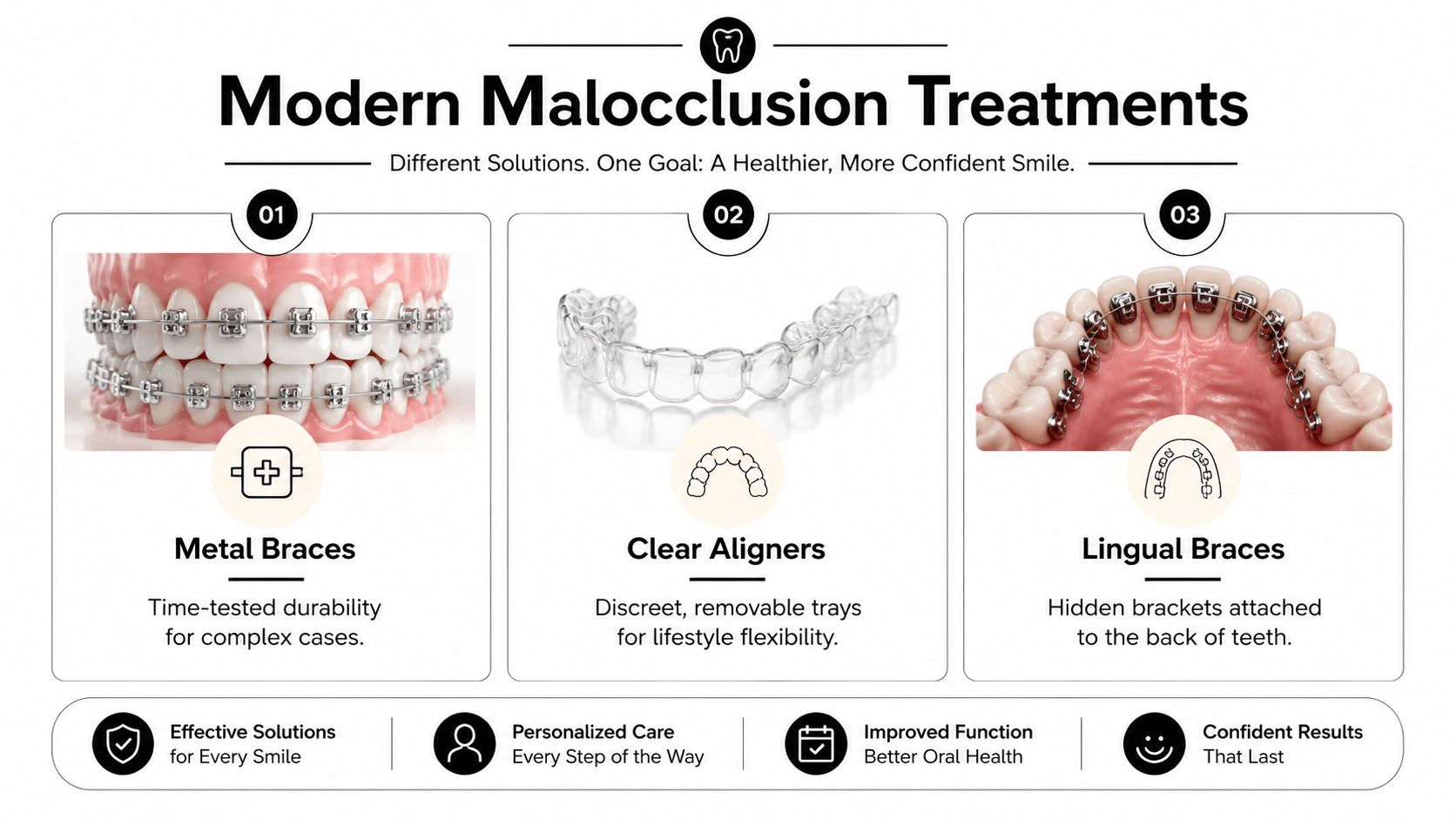
Metal braces are still one of the most dependable ways to treat many bite problems. Brackets attach to the teeth, and wires guide movement gradually over time. They're especially useful when the bite is more complex, when rotation control matters, or when a patient would rather not worry about removing aligners.
Braces don't rely on the patient remembering to put them back in after meals. That makes them a practical choice for many kids, teens, and adults with demanding schedules.
Typical advantages include:
- Strong control: helpful for complex tooth movement
- Always working: they stay on the teeth
- Predictable mechanics: useful in cases that need detailed correction
Clear aligners such as Invisalign
Clear aligners use a series of removable trays to move teeth in planned stages. Many adults like them because they're discreet and easier to remove for meals, brushing, and special events. For the right case, they can be an excellent form of malocclusion treatment.
They do require consistency. If aligners aren't worn as directed, progress can slow or become less predictable. That's why lifestyle and habits matter when choosing this option.
Patients interested in a more cosmetic approach often appreciate the everyday benefits described in this overview of the dental health benefits of Invisalign.
A short visual explanation can help if you're comparing options:
Other appliances for specific cases
Not every bite problem is best treated with standard braces or aligners alone. Some cases call for additional appliances, especially when jaw position is part of the issue.
For certain adult Class III malocclusions, the modified fixed reverse Twin Block Appliance has been reported to resolve anterior crossbite and TMD symptoms in an average of 14 months, often avoiding invasive orthognathic surgery, as described in this PMC article on the modified fixed reverse Twin Block Appliance.
That doesn't mean every underbite can be treated this way. It means selected patients may have non-surgical options that many people don't know exist.
Tooth extraction and space management
People often feel nervous when they hear the word extraction. In orthodontic care, extraction is never the automatic answer. It's considered only when creating space may improve alignment, function, or long-term stability.
Sometimes a crowded case can be managed without removing teeth. Other times, keeping every tooth may push the front teeth too far forward or leave the result less stable. The right decision depends on the full diagnosis.
Clinical insight: The goal isn't to force every mouth into the same plan. The goal is to choose the option that creates a healthier, more stable bite.
Orthognathic surgery
Some severe skeletal bite problems involve jaw position in a way that orthodontics alone can't fully correct. In those situations, orthognathic surgery may be part of treatment. This is usually reserved for more significant discrepancies, not routine crowding or mild bite irregularities.
For patients, the important point is simple. Surgery is not the default. It's one tool among several, used only when the diagnosis shows it's needed.
Comparing Popular Malocclusion Treatments Invisalign vs. Braces
| Feature | Invisalign Clear Aligners | Traditional Metal Braces |
|---|---|---|
| Appearance | Clear and less noticeable | More visible |
| Removal | Removable for meals and cleaning | Fixed in place |
| Oral hygiene | Usually easier to brush and floss | Requires more technique around brackets |
| Compliance | Depends on consistent wear | Works continuously without removal |
| Complex movements | Best for selected cases | Often preferred for more complex cases |
| Food restrictions | Minimal when removed for eating | More food limitations to protect brackets |
| Office experience | Tray changes and monitoring | Wire adjustments and monitoring |
Your Treatment Journey at William M Schneider DDS
Many patients delay an evaluation because they're worried they'll be rushed into a plan or overwhelmed with technical terms. A good consultation should feel the opposite. You should know what's happening, why it matters, and what your choices are.
Older U.S. data found that 54.2% of youths had malocclusion warranting some level of care, ranging from elective to mandatory treatment, according to this PMC review of orthodontic treatment need data. That's one reason careful diagnosis matters. Bite concerns are common, and they deserve a thoughtful, individualized look.
What the first visit usually includes
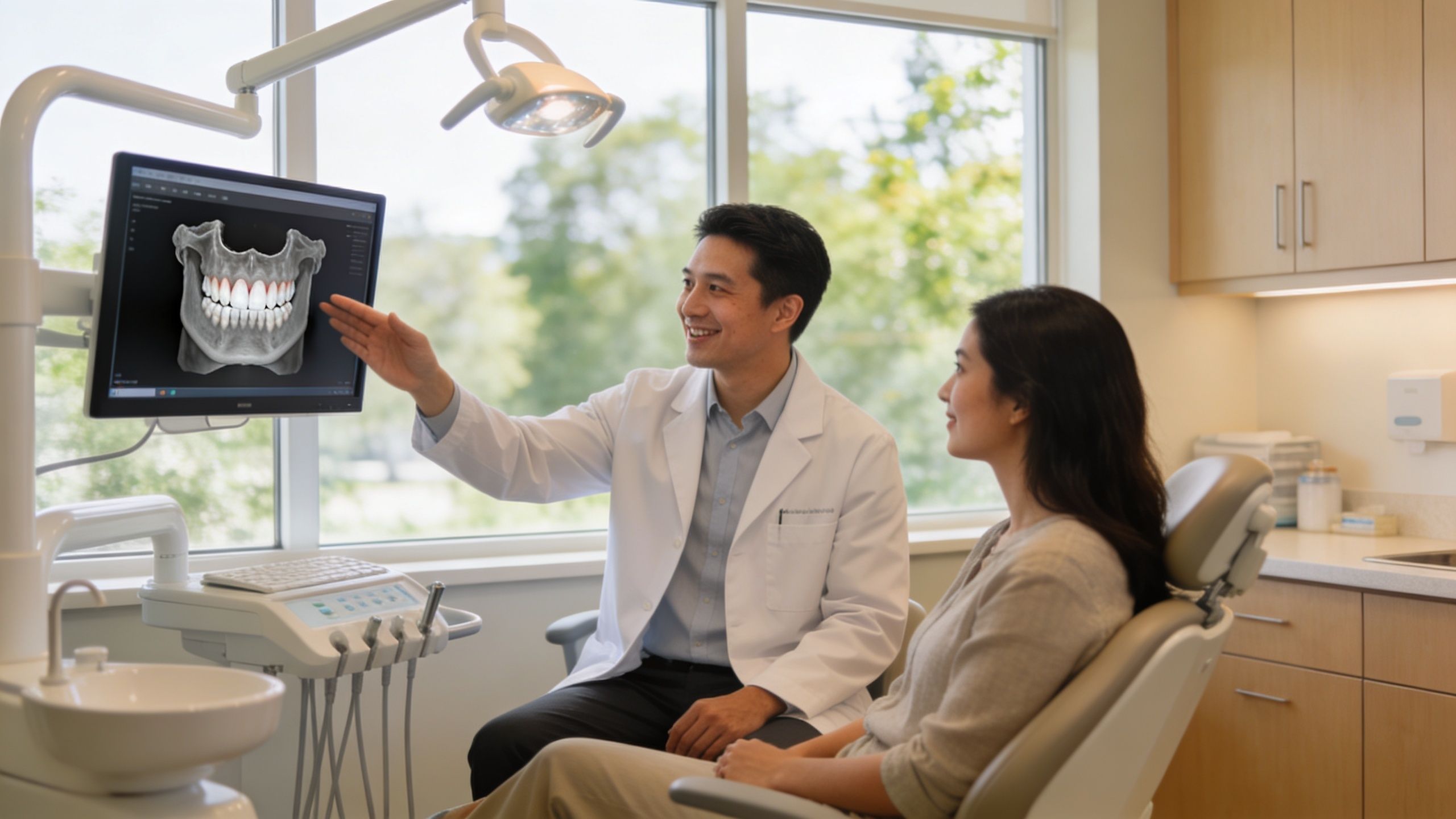
Most first visits for bite concerns follow a clear progression. It starts with conversation. You talk about what you've noticed, whether it's crowding, jaw discomfort, an uneven bite, cosmetic concerns, or trouble cleaning certain teeth.
From there, the appointment may include:
- A visual exam: checking alignment, wear patterns, gum health, and bite contacts
- Dental X-rays: looking beneath the surface at roots and supporting structures
- Impressions or digital records: capturing how your teeth fit together
- Treatment discussion: reviewing options in language you can use
That process matters because treatment shouldn't begin with guessing. It should begin with understanding.
How personalized planning helps
Two people can have teeth that “look crooked” for very different reasons. One may have simple crowding. Another may have a jaw relationship that affects function. The treatment plan should reflect that difference.
A personalized plan may consider:
- Whether your main concern is appearance, comfort, function, or a mix of all three
- Whether removable aligners fit your routine
- Whether other restorative needs, such as worn teeth or missing teeth, should be coordinated with bite correction
That broader view can be especially helpful if you're also searching for a dentist in Walnut Creek, CA, a cosmetic dentist near me, or even guidance about dental implants near me after tooth loss has affected your bite. Sometimes malocclusion treatment stands alone. Sometimes it works best as part of a larger restorative plan.
The best dental visits don't leave you wondering what just happened. You should leave knowing what the problem is, what can be done, and what your next step would be if you choose treatment.
Maintaining Your Results After Malocclusion Treatment
Finishing active treatment feels great. Your teeth look better aligned, your bite feels more balanced, and it's tempting to think the work is done. In reality, this is the stage where protection matters most.
Teeth can shift. That's normal biology, not a sign that treatment failed. Bone and surrounding tissues need time and support to hold the new positions, which is why retainers matter so much.
Why retention is part of treatment
Think of retention as the final phase, not an optional extra. After braces come off or the last aligner is worn, the teeth need ongoing support to maintain the result.
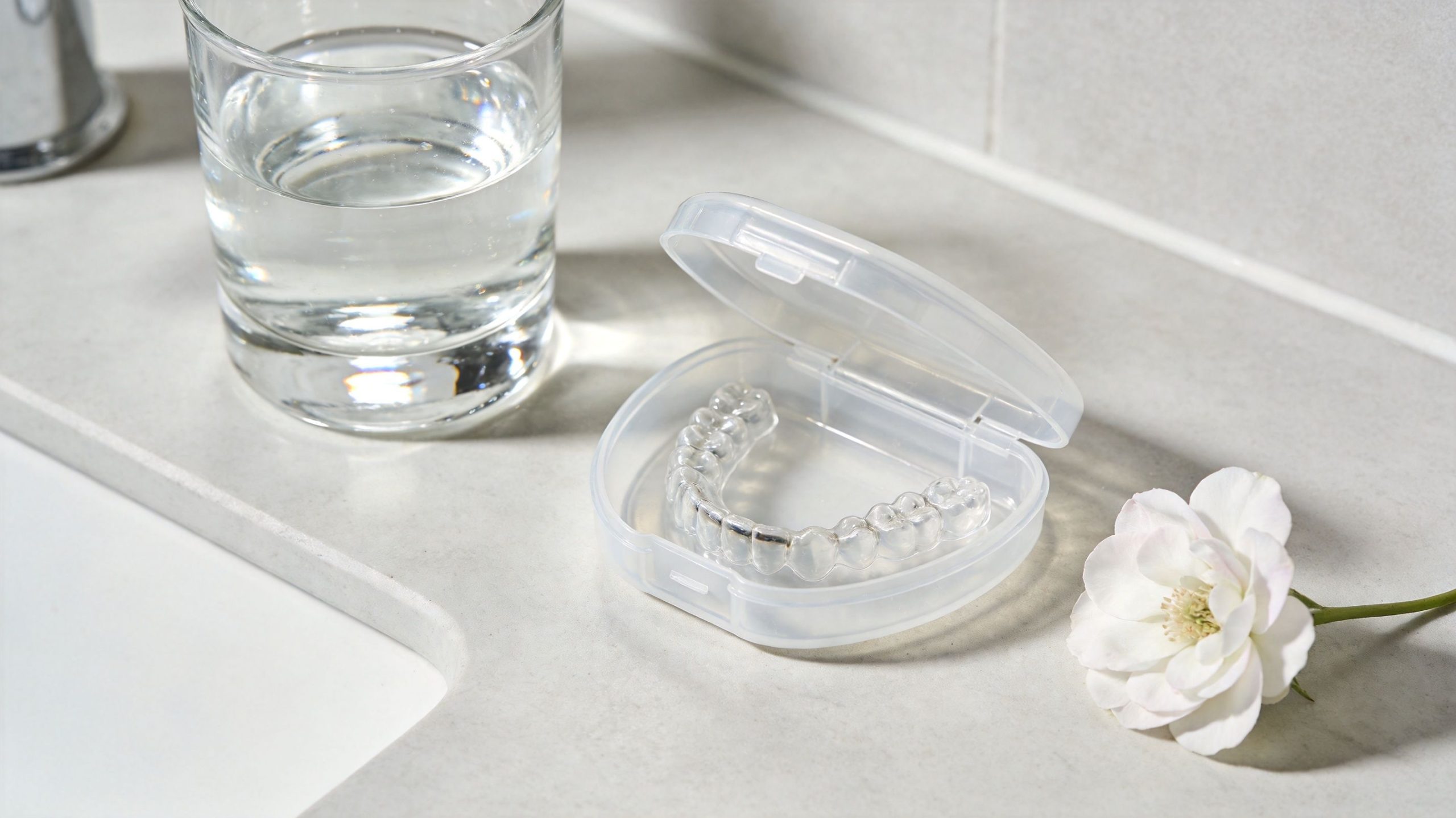
Retainers generally fall into two categories:
- Removable retainers: worn on a schedule your dentist recommends, often at night after the initial phase
- Fixed retainers: a bonded wire placed behind certain teeth to help keep them from drifting
Some patients do well with one type. Others benefit from a combination.
Daily habits that protect your new bite
Long-term success usually comes down to simple habits done consistently.
- Wear your retainer as directed: Skipping nights can allow movement.
- Keep it clean: Rinse and brush removable retainers gently and store them properly.
- Protect your teeth: If you clench or grind, ask whether additional protection is appropriate.
- Stay current with exams: Follow-up visits help catch small changes before they become bigger ones.
For mild to moderate skeletal Class III cases, modern low-force biomechanics can correct anterior crossbite in 3-6 months with an 85-90% success rate in establishing a proper bite, according to this PMC article on Transmission Straight-Wire Therapy. That kind of progress is encouraging, but it also highlights why preserving the result matters.
Hygiene after teeth are aligned
Once teeth are straighter, many patients find brushing and flossing easier. That's a real benefit. Still, it's important to keep up with routine cleanings and exams, because alignment alone doesn't prevent cavities or gum disease.
If your treatment was part of a broader plan that also involved restorative dentistry, cosmetic care, or management of wear, regular maintenance becomes even more important. A stable bite supports the work you've already invested in.
Navigating Costs Insurance and Common Questions
When people search for a dentist near me, an emergency dentist, or help with tooth extraction and bite problems, they're often trying to solve two questions at once. First, what treatment do I need? Second, how practical is this going to be in real life?
Here are the questions patients ask most often.
How much does malocclusion treatment cost
The honest answer is that cost depends on the diagnosis. A mild alignment issue treated with clear aligners is different from a case that includes jaw discrepancy, multiple phases, or coordination with restorative care.
The main factors usually include:
- Type of treatment: braces, aligners, appliances, or combined care
- Complexity of the bite: simple crowding versus a more involved bite correction
- Length of treatment: longer cases often involve more visits and adjustments
- Related dental needs: extractions, restorations, or follow-up retention
A consultation is the best way to get a realistic estimate because the same label, like “overbite” or “crowding,” can mean very different things from one person to another.
Does dental insurance cover it
Some dental plans include orthodontic benefits, while others don't. Coverage can also differ for children and adults. The practical first step is to review your plan's orthodontic section and ask whether there are age limits, waiting periods, or lifetime maximums.
Bring your insurance information to the office when you schedule. A dental team can often help you understand what benefits may apply and what portion may be your responsibility. That guidance matters, especially when treatment is part of a larger plan that may also involve preventive, cosmetic, or restorative services.
How long will treatment take
Treatment length varies widely because teeth don't all move the same way and bite problems aren't all the same type. Some cases are straightforward. Others need staged care to protect the teeth, bone, and bite function.
What matters more than chasing the shortest timeline is choosing the right one. A realistic plan is better than a rushed one.
Is malocclusion treatment painful
Most patients describe treatment as manageable, not severe. You may feel pressure, tightness, or soreness after starting treatment or changing trays or wires. That's expected because the teeth are responding to gentle force.
The feeling usually settles as your mouth adapts. Soft foods, good hydration, and following care instructions can help during adjustment periods.
A little tenderness at the start is normal. Ongoing pain, a loose appliance, or something that feels sharp isn't something you should just “tough out.” Call your dental office.
Can adults still fix their bite
Yes. Adults seek malocclusion treatment every day for cosmetic reasons, functional reasons, or both. Treatment planning for adults may also take into account crowns, bridges, missing teeth, gum health, or clenching habits, but age alone doesn't rule treatment out.
What if my child's bite doesn't look obviously severe
This is an important question because not every developing problem is dramatic at first glance. As noted in Pocket Dentistry's discussion of developing and nondeveloping Class III malocclusions, Angle Class III asymmetries without a visible crossbite can be underestimated in children, and early multidisciplinary intervention may help prevent progression into more complex adult skeletal malocclusions.
That doesn't mean every child needs treatment right away. It means subtle asymmetry or jaw imbalance shouldn't be ignored just because the front teeth don't show an obvious crossbite.
When should I schedule an evaluation
Schedule an evaluation if you notice crowding, an uneven bite, jaw discomfort, difficulty cleaning certain areas, frequent tooth wear, or smile changes over time. The same applies if your child's jaw or facial symmetry seems off, even if the bite problem isn't easy to describe.
If you're already looking for a dentist in Walnut Creek, CA who can evaluate both function and appearance in one setting, booking a consultation is the simplest next step.
If you're ready to get clear answers about your bite, comfort, and treatment options, schedule a consultation with William M. Schneider, DDS. The practice welcomes Walnut Creek patients who want thoughtful guidance, modern dental care, and a plan built around long-term oral health.