If you're searching for cosmetic dentistry Walnut Creek options, you're probably already aware of the small things that bother you. Maybe a front tooth looks darker in photos. Maybe a chip catches your eye every morning. Maybe your teeth are healthy, but they don't look the way you want them to.
Many individuals don't start by asking for a dramatic smile makeover. They start by wanting to feel less self-conscious when they laugh, speak, or meet someone new. That's a reasonable goal, and it's one worth taking seriously.
Begin Your Smile Transformation in Walnut Creek
A better smile should never feel out of reach or frivolous. The American Academy of Cosmetic Dentistry estimates that Americans spend approximately $2.75 billion annually on cosmetic dentistry procedures, which shows how common and accepted these treatments have become for adults who want to improve both appearance and confidence (AACD spending estimate discussed here).
That number matters for one simple reason. It tells you that if you've been thinking about whitening, veneers, Invisalign, or replacing a missing tooth, you're not chasing a vanity project. You're considering a form of dental care that many people view as a meaningful investment in how they look, feel, and function every day.
What patients usually want
In Walnut Creek, most cosmetic concerns fall into a few familiar categories:
- Stained teeth that no longer respond well to store-bought whitening products
- Chipped or uneven edges that make the smile look older or less balanced
- Small gaps or mild crowding that draw attention when you talk
- Missing teeth that affect chewing as much as appearance
- Old dental work that looks darker, bulkier, or less natural than the surrounding teeth
These concerns often overlap. A patient may come in asking about whitening and discover that slight alignment changes would make the result look even better. Another may ask for veneers when a conservative mix of contouring, whitening, and bonding would be the wiser route.
A good cosmetic plan starts with restraint. The right treatment is the one that solves the problem without doing more dentistry than necessary.
Patients looking for a cosmetic dentist near me or a dentist in Walnut Creek, CA usually want two things at once. They want a smile that looks natural, and they want confidence that the work will hold up over time. Both matter.
The strongest cosmetic dentistry doesn't chase trends. It respects your face, your bite, your habits, and your long-term oral health. That's why every smile plan should begin with a careful conversation about what bothers you, what you're hoping to change, and what level of treatment makes sense.
What Can Cosmetic Dentistry Achieve for You
Cosmetic dentistry can do more than make teeth look whiter or straighter. When treatment is planned properly, it can improve how your smile fits your face, how your bite functions, and how easy your teeth are to maintain.

Aesthetic changes that also help oral health
Straightening teeth with clear aligners can make crowded areas easier to brush and floss. Restoring a worn or broken tooth with a crown can improve both appearance and chewing comfort. Replacing a missing tooth can support bite balance and help prevent the surrounding teeth from shifting.
Patients sometimes separate cosmetic care from restorative care, but in practice they often overlap. A smile that looks balanced is usually easier to keep healthy than one with fractured edges, uneven spacing, or unstable restorations.
Here are a few common ways cosmetic treatment helps:
- Improved cleanability because straighter, properly spaced teeth are often easier to maintain
- Better bite support when damaged or missing teeth are restored
- More even wear when the smile is aligned more predictably
- Greater confidence in work, social settings, and family photos
Confidence is not a small thing
People often apologize for wanting cosmetic dental work. They shouldn't. If you're covering your mouth when you laugh or avoiding close-up photos, that affects daily life.
A confident smile changes how people carry themselves. They speak more freely. They stop thinking about whether one tooth shows too much. They stop editing themselves in ordinary moments.
Many patients come in asking for a cosmetic fix, but what they really want is relief. They want to stop noticing their smile for the wrong reasons.
That emotional side matters just as much as the clinical side. Cosmetic dentistry in Walnut Creek should feel practical, not indulgent. If treatment helps you smile comfortably, chew normally, and stop worrying about your teeth every time you meet someone, that's a meaningful improvement.
Your Guide to Smile Makeover Services
Cosmetic treatment works best when the procedure matches the problem. Some concerns need a simple solution. Others need a staged plan. If you're comparing options, it helps to understand what each service does well and where its limits are.
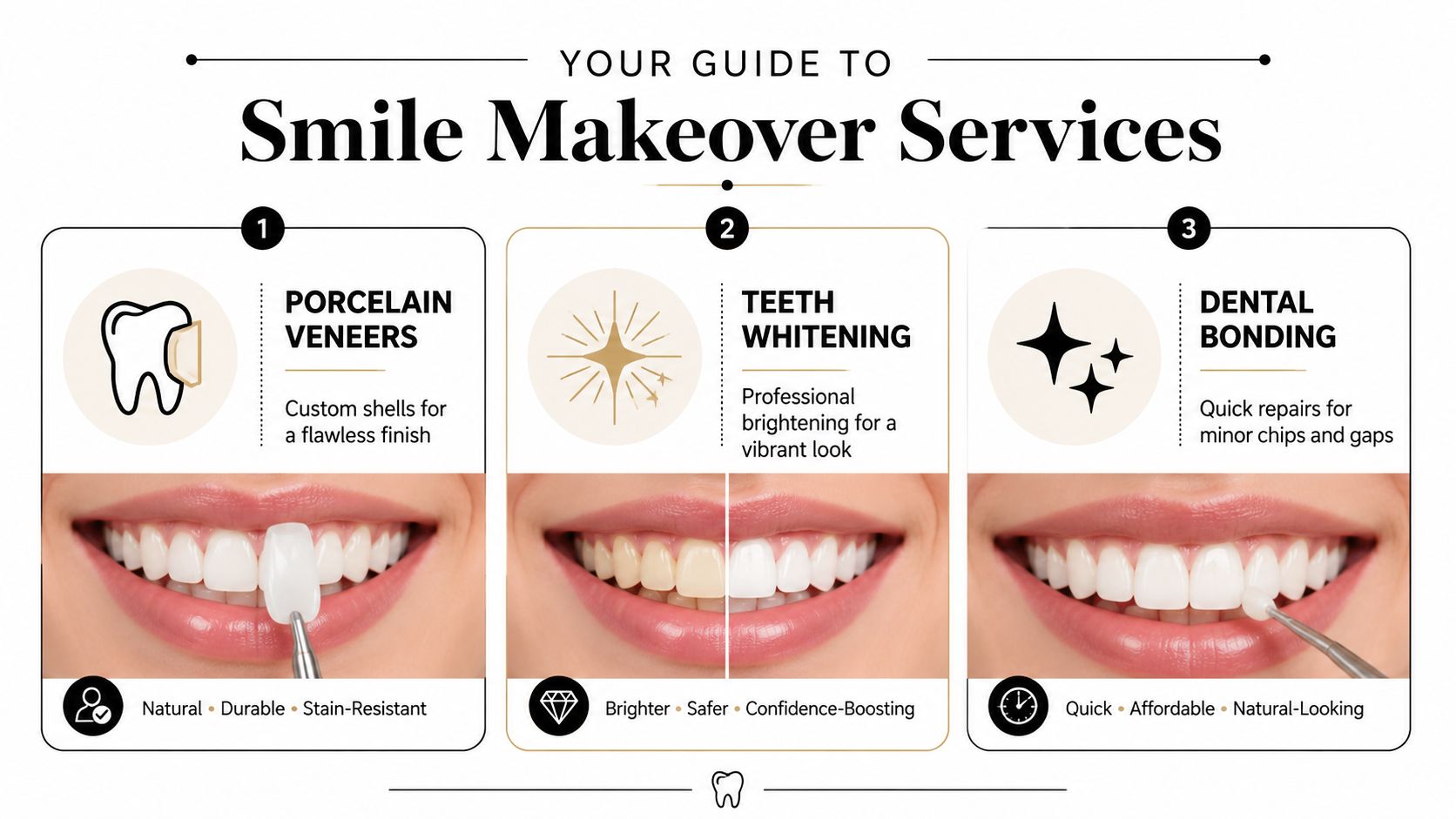
For a broader overview of treatment types, this guide to popular cosmetic dentistry treatments to consider is a useful starting point.
Porcelain veneers
Veneers are thin porcelain shells bonded to the front of visible teeth. They're often the right choice when a patient wants to correct several concerns at once, such as discoloration, minor chips, uneven shape, or small gaps.
Verified clinical details matter here. Porcelain veneers are described as ultra-thin shells, often around 0.3 to 0.5 mm thick, and the available reference also notes 10-year survival rates of 92 to 95 percent in major market studies (technical veneer overview). In plain terms, well-planned veneers can be conservative and durable.
What veneers do well:
- Mask stubborn discoloration
- Refine shape and symmetry
- Close small spaces
- Create a more uniform smile line
What veneers don't do well:
- They aren't the best first step if the underlying issue is bite instability.
- They won't replace good oral hygiene.
- They can disappoint if a patient wants an unnaturally white or oversized look.
Professional teeth whitening
Whitening is often the simplest cosmetic improvement. It's a good fit for patients whose main concern is color, not alignment or shape.
The advantage of professional whitening is control. Shade changes can be planned more carefully than with over-the-counter products, and sensitivity is usually easier to manage when the process is supervised. Whitening also works well before other cosmetic decisions, because many patients realize they need less treatment once the teeth are brighter.
Whitening has limits, though. It won't reshape teeth, close gaps, or repair chips. It also won't change the shade of crowns or veneers already in place.
Invisalign
For adults who want straighter teeth without metal braces, Invisalign is often the most appealing option. The verified data describes Invisalign as using sequential clear trays and reports success rates of 85 to 90 percent for mild to moderate malocclusions in multicenter trials, with typical treatment timing of 12 to 18 months in adults when compliance is strong (Invisalign details from Walnut Creek service information).
That tells patients two useful things. First, Invisalign can be highly effective in the right cases. Second, it depends on follow-through. The trays only work when they're worn as directed.
Dental implants
A missing tooth changes more than appearance. It can affect speech, chewing, and how the surrounding teeth function over time.
The verified historical reference notes that dental implants have success rates over 95 percent in modern care (implant success note in this cosmetic dentistry history overview). Implants are often the most complete way to replace a missing tooth because they restore the space independently rather than relying on adjacent teeth.
They are a strong option when you want:
- A fixed replacement
- Natural-looking support for the smile
- A long-term restorative solution
- Improved chewing stability
They are not always the fastest option, and they require healthy planning around bone support, gum health, and bite forces.
Dental crowns
Crowns sit at the intersection of cosmetic and restorative dentistry. If a tooth is cracked, heavily filled, worn down, or structurally weak, a crown may be the better answer than a veneer.
A crown covers more of the tooth, so it can provide added strength where a more minimal cosmetic option would be risky. For many patients, crowns are how we restore comfort and appearance at the same time.
A quick comparison
| Treatment | Best for | Main trade-off |
|---|---|---|
| Veneers | Front teeth with shape, color, or minor spacing concerns | Needs careful case selection |
| Whitening | Teeth that are healthy but discolored | Doesn't change shape or position |
| Invisalign | Mild to moderate alignment concerns | Requires steady daily wear |
| Implants | Replacing missing teeth | Usually takes more time and planning |
| Crowns | Teeth that need both strength and improved appearance | Covers more tooth structure than a veneer |
The Evolution of Safe and Beautiful Smiles
You sit down for a cosmetic consultation because you want a brighter, more even smile. A fair question usually follows. How do I know the result will still look right years from now?
Part of that answer comes from how far cosmetic dentistry has come. Earlier generations of treatment had more limits in shade matching, bonding strength, and long-term predictability. Today, materials are more lifelike, planning is more precise, and we can make decisions with much better information before any treatment begins.
That progress matters because cosmetic dentistry should protect your teeth, not just change their appearance.
Why that history matters to patients now
Older cosmetic work often asked patients to accept bigger compromises. Teeth were reduced more aggressively, restorations could look flat or opaque, and dentists had fewer tools to study bite forces before treatment. Modern cosmetic dentistry gives us better ways to preserve healthy tooth structure while improving color, shape, and symmetry.
I pay close attention to that distinction in treatment planning. A smile can look beautiful on the day it is delivered and still be the wrong choice if it creates avoidable wear, chipping, or replacement costs later. Good cosmetic dentistry has become safer because the profession has shifted toward conservative preparation, stronger bonding, and better case selection.
That is also why rushed cosmetic decisions can be expensive. The actual standard is not whether a smile looks good in photos next month. It is whether the result still fits your bite, your habits, and your maintenance routine years later.
Cosmetic dentistry should look natural, feel comfortable, and hold up under normal daily use.
The modern standard
Current cosmetic care benefits from stronger ceramics, improved bonding systems, digital imaging, and more careful bite analysis. Those tools do not make every patient a candidate for every procedure. They do help us choose treatment with fewer surprises and better long-term value.
A modern cosmetic evaluation should consider:
- Tooth proportions and how they relate to your face
- Gum display and smile balance
- Bite function and signs of clenching or wear
- Material choice based on appearance, strength, and repairability
- Future maintenance needs before treatment starts
That last point gets overlooked too often. Safe and beautiful smiles are the result of better materials and better planning, but they also depend on honest discussions about upkeep, longevity, and replacement. In my view, that is one of the biggest ways cosmetic dentistry has improved. Patients can make clearer decisions because the conversation is no longer only about what looks good today. It is also about what continues to make sense for the long term.
Protecting Your Long-Term Investment
This is the part many patients don't hear enough about. Cosmetic treatment isn't just about getting a great result. It's about keeping it.
One of the more honest points in the verified guidance is that many dental resources focus on the initial smile makeover but leave out the long view, including veneer replacement timelines that are typically 10 to 15 years and the importance of retention strategies to prevent Invisalign relapse (long-term maintenance gap noted here). That omission causes problems, because long-term success depends on what happens after treatment.
What lasts and what needs upkeep
Every cosmetic procedure has a maintenance profile.
Veneers can look beautiful for many years, but they still require daily care, regular exams, and sensible habits. Whitening can refresh a smile quickly, but foods, drinks, and tobacco can dull the result over time. Invisalign can straighten teeth, but retainers protect the result after active movement ends.
A practical way to think about it is this:
- Veneers need protection from grinding, clenching, and careless biting habits
- Whitening needs occasional touch-ups and stain awareness
- Implants need healthy gums and consistent home care
- Crowns need the same brushing, flossing, and bite monitoring as natural teeth
- Invisalign needs retention, or teeth may drift back
What works and what doesn't
What works is surprisingly ordinary. A soft brush, non-abrasive toothpaste, nightguard use if you clench, routine hygiene visits, and early attention when something feels off.
What doesn't work is assuming cosmetic dentistry is maintenance-free. Patients get into trouble when they use their front teeth as tools, skip retainers, ignore grinding, or wait too long to have a rough edge or bite change checked.
Long-term value comes from maintenance, not from hoping the dentistry will take care of itself.
If you're investing in cosmetic dentistry Walnut Creek patients often ask for, the smart question isn't only "How will this look when we're done?" It's also "What do I need to do to keep it looking and functioning well?"
That mindset leads to better decisions from the start.
Your Comfort-Focused Experience at Our Walnut Creek Office
A cosmetic consultation should feel calm, clear, and unrushed. Many patients arrive expecting pressure or a sales pitch. What they usually need instead is a careful exam, plain-language explanations, and enough time to talk through options without feeling cornered.

What a first visit should feel like
At William M. Schneider, DDS, patients are seen with that long-term perspective in mind. The practice provides cosmetic, restorative, and preventive care at 1855 San Miguel Dr., Suite 31 in Walnut Creek, with services that include Invisalign, whitening, crowns, bridges, dental implants, cleanings and exams, and support for anxious patients through a compassionate environment and sedation when appropriate.
That matters because cosmetic care rarely exists in isolation. A patient may come in searching for a cosmetic dentist near me, but the right plan can also involve a cleaning, updated exam, a crown evaluation, or restorative work before aesthetic treatment begins.
A thoughtful first visit usually includes:
- A conversation about your goals so the plan reflects what bothers you
- A health review to make sure the teeth and gums can support cosmetic treatment
- Photos or digital records when useful for planning and communication
- A plain explanation of trade-offs so you know what each option can and can't do
Comfort is part of good dentistry
People with dental anxiety often delay cosmetic work because they assume the process will be uncomfortable. It doesn't have to be. Gentle injections, clear explanations, and pacing the appointment correctly make a real difference.
For many patients, comfort also means knowing they have choices. Some prefer a gradual approach. Others want to combine treatment efficiently. Sedation can be appropriate in certain cases, especially when anxiety has kept someone away from the dentist for a long time.
This short video gives a feel for the kind of supportive environment many patients are looking for in a local practice.
The best consultation is the one where you leave understanding your options, not feeling pushed into one.
That standard matters whether you're coming in for whitening, Invisalign, crowns, or asking if a damaged tooth needs extraction before moving toward a more complete smile restoration.
How to Choose the Right Cosmetic Dentist for You
Choosing a cosmetic dentist shouldn't come down to who promises the fastest makeover. It should come down to judgment, communication, and whether the dentist plans for the years after treatment, not just the reveal on day one.
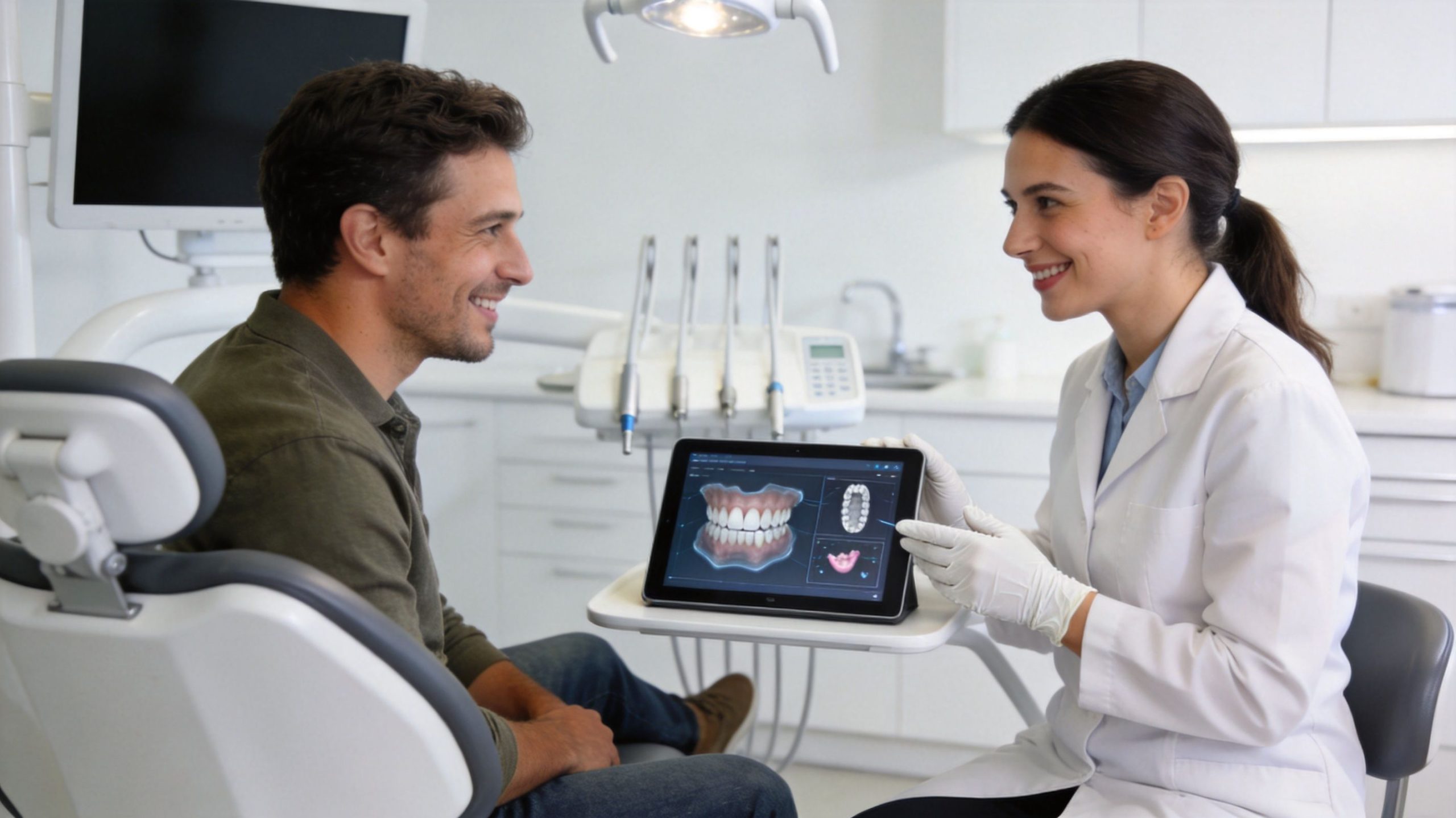
A useful place to start is this guide on how to choose a cosmetic dentist near you, then bring those questions into your consultation.
A short checklist that actually helps
Look for a dentist who offers the following:
- Experience that matches the treatment. Veneers, Invisalign, crowns, and implants each require different planning skills.
- Clear explanations of trade-offs. A good dentist will tell you when whitening is enough and when veneers would be excessive.
- Attention to comfort. If you have anxiety, ask how the office handles injections, pacing, and sedation options.
- A long-term view. Maintenance should be discussed before treatment starts, not after.
- Full-service care. Cosmetic dentistry works better when the office can also manage cleanings, exams, restorative needs, and follow-up.
Trust your reaction in the consultation
Patients usually know when a consultation feels right. You should feel heard. Your concerns should be taken seriously. The recommendations should fit your actual smile, not a generic template.
If you're in Walnut Creek, CA and you're looking for a dentist near me who can handle cosmetic dentistry, restorative needs, and ongoing dental care under one roof, take the time to choose a practice that values precision and honesty over pressure.
If you're ready to talk through your options, schedule a consultation with William M. Schneider, DDS. Whether you're considering teeth whitening, Invisalign, veneers, crowns, or a more complete smile plan, the next step is a conversation about what fits your goals, your comfort level, and your long-term oral health.