You're brushing before work, you spit, and there's blood. Not all over your mouth. Just around one tooth.
That's the kind of detail people notice right away, and it's also the kind of detail that makes people worry. If only one spot is bleeding, is it minor? Is it gum disease? Did something get stuck? Should you call an emergency dentist, or just watch it for a few days?
In many cases, gums bleeding around one tooth points to a localized problem, not a whole-mouth problem. That's important, because the fix may be very specific. Sometimes it's plaque at one hard-to-clean spot. Sometimes it's food packed between teeth. Sometimes a filling edge, crown margin, crack, or deeper pocket is irritating that exact area.
At William M. Schneider, DDS in Walnut Creek, CA, patients often come in with this exact question. The right next step usually isn't guessing. It's identifying what's happening at that one tooth, treating the cause, and making sure the area can heal.
A Guide for Walnut Creek Patients with Localized Gum Bleeding
A patient calls after brushing and says, “There's blood around one tooth every time I clean there. The rest of my gums seem fine.” That detail matters, because a single bleeding spot usually points us toward a specific area to inspect, not a vague problem affecting the whole mouth.
The reassuring part is that one bleeding tooth does not automatically mean widespread gum disease. It often means one small area is being irritated over and over. A trapped seed hull, plaque tucked under the gumline, or a rough edge on a filling can act like a pebble in a shoe. Everything else may feel normal, but that one spot keeps getting aggravated until the source is found and removed.
Why one bleeding spot deserves attention
Bleeding is the gum tissue's way of signaling inflammation. In a whole-mouth problem, that inflammation tends to show up in many places. In a single-tooth problem, the pattern is different. The question becomes, “What is unique about this tooth, this contact point, or this piece of dental work?”
That difference is useful. It helps narrow the diagnosis.
A localized problem often responds best to a targeted fix. If debris is packed between two teeth, the treatment may be careful removal and guidance on cleaning that exact area. If tartar has collected below the gumline at one tooth, a focused periodontal cleaning may be the answer. If a crown margin or filling edge is catching plaque, smoothing or replacing that restoration may let the gum settle down and heal.
Why guessing often leads to the wrong fix
Many people assume bleeding means they should reduce brushing in that area or wait to see whether it stops. That can miss the underlying cause. One tooth can bleed because the gum is inflamed, but the reason for that inflammation may be mechanical, bacterial, or structural.
That is why the diagnostic process matters so much with a single-tooth complaint. The goal is not just to confirm that the gum is irritated. The goal is to identify why this one site is behaving differently from the teeth around it, then match the cause to the right treatment.
Seeing a dentist in Walnut Creek, CA because one tooth keeps bleeding is a smart, proactive step. At William M. Schneider, DDS in Walnut Creek, CA, that kind of visit starts with a close look at the exact tooth, the gum around it, and any nearby dental work so the treatment fits the problem.
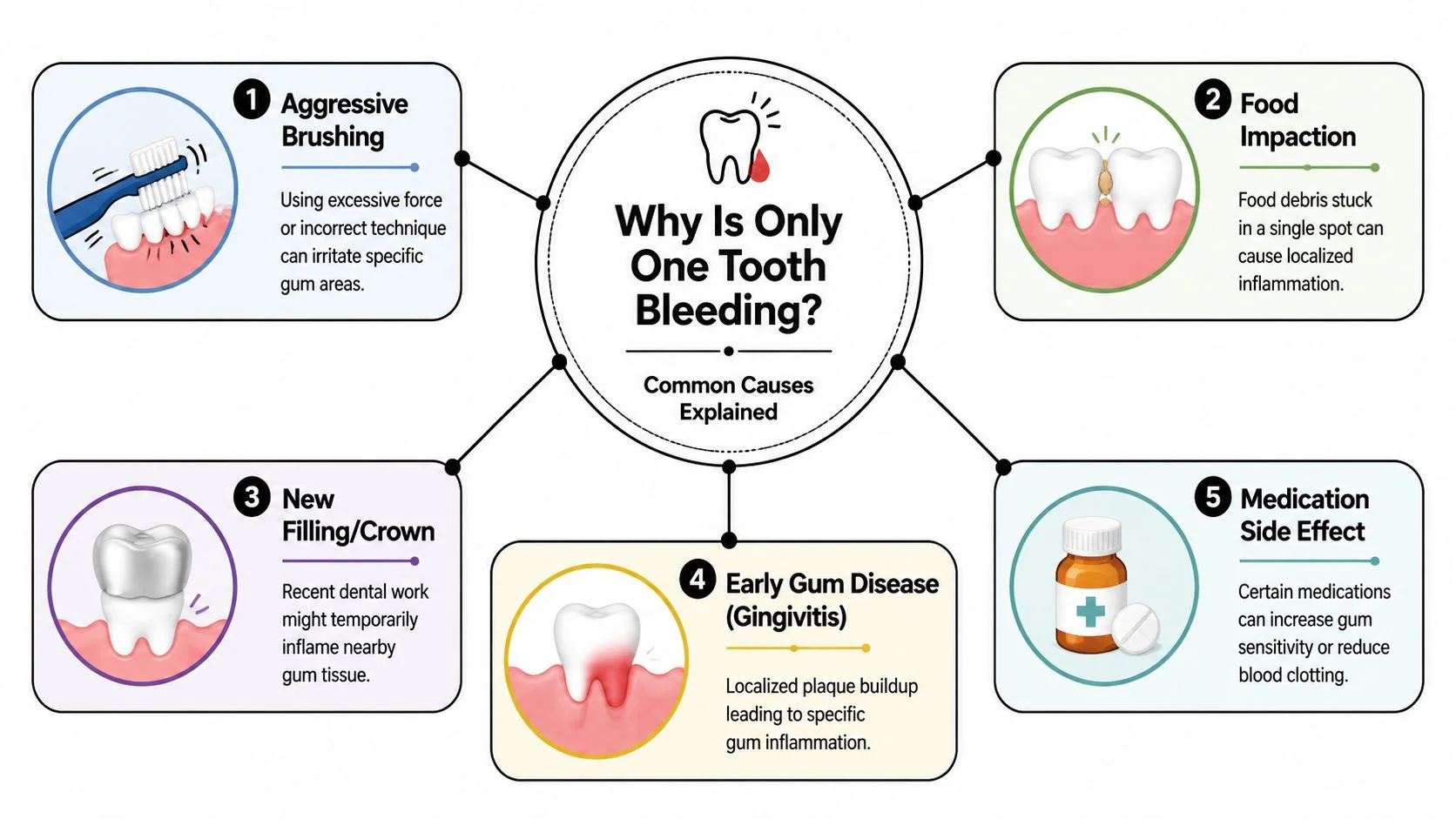
Why Is Only One Tooth Bleeding Common Causes Explained
When only one area bleeds, the first question isn't “Do I have gum disease everywhere?” It's “What is happening at this exact tooth?”
The most likely local causes
Sometimes the cause is simple. Food gets trapped between two teeth and presses into the gum. A popcorn hull is a classic example. So is meat fiber or a seed fragment. The gum swells, you brush, and that exact spot bleeds.
Other times, the problem is the tooth itself or the dental work around it.
A single site can bleed because of:
- Plaque buildup at one edge. One area may be harder to clean because of tooth position or crowding.
- Calculus under the gumline. Once plaque hardens into tartar, home brushing won't remove it.
- Food impaction. Debris repeatedly packs into the same contact point.
- A rough filling or crown margin. If an edge catches floss or traps plaque, the gum may stay irritated.
- A cracked or fractured tooth. The crack can change how the tooth fits together or allow irritation around the gumline.
- A deeper periodontal pocket. Bacteria can collect in a small pocket around one tooth.
- Foreign-body irritation. This could involve a tiny splinter lodged in the gum.
Why this gets confused with gingivitis
The word gingivitis is commonly known, and that's useful, but it can also be misleading. Gingivitis is usually plaque-related and often affects the gums more generally. Mayo Clinic and NIDCR also support the idea that a single bleeding site may reflect a more localized issue, such as food impaction, calculus, a cracked tooth, or a failing filling or crown edge, especially if it persists beyond about two weeks, as described in Mayo Clinic's gingivitis overview.
If one tooth bleeds every time you floss, that pattern matters. Repetition often points to a problem at that exact site, not random irritation.
A simple way to think about it
This table helps sort out the difference between a broad gum problem and a localized one:
| Pattern | What it may suggest |
|---|---|
| Bleeding in many areas | General plaque-related gingival inflammation |
| Bleeding around one tooth only | A local irritant, pocket, crack, or restoration issue |
| Bleeding with food catching there | Contact problem or trapped debris |
| Bleeding with pressure on biting | Possible crack, infection, or tooth-related issue |
People often search for a cosmetic dentist near me or cleaning and exams when the problem starts because they think it may just be plaque. Sometimes that's true. But if the bleeding keeps returning at one tooth, diagnosis matters more than guesswork.
Immediate Home Care What To Do Before Your Dental Visit
If one spot is bleeding, your job at home is to keep the area clean without making it angrier.

What to do today
Start with the basics. The CDC guidance says gingivitis is preventable and reversible with brushing twice daily and flossing daily, and Cleveland Clinic states that if bleeding gums don't improve within two weeks, a dental appointment is warranted, as noted in Cleveland Clinic's bleeding gums guidance.
Here's the practical version:
- Brush gently, not lightly. Use a soft toothbrush and clean the area thoroughly. Skipping it lets plaque sit there longer.
- Floss carefully. Don't snap floss into the gum. Slide it down the side of each tooth and lift debris out.
- Rinse with warm salt water. This can help soothe irritated tissue.
- Watch for patterns. Does it happen only when brushing, or also when eating or flossing?
- Keep the rest of your routine normal. A single bleeding spot doesn't mean you should stop cleaning your mouth.
For more practical guidance, the practice also has a helpful page on what to do if your gums bleed.
What not to do
This part matters just as much.
- Don't scrub harder. More force usually means more trauma.
- Don't dig with sharp objects. Toothpicks, pins, or fingernails can injure the gum and push debris deeper.
- Don't stop flossing entirely. Gentle cleaning helps. Avoiding the area usually makes plaque build up faster.
- Don't assume mouthwash alone will fix it. If tartar or a defective filling edge is the cause, rinsing won't remove it.
A short demonstration can help if you're unsure about technique.
Bleeding that settles down quickly may come from short-term irritation. Bleeding that keeps returning from the same tooth needs a closer look.
How Our Walnut Creek Dentist Diagnoses the Problem
Knowing what the visit involves often brings comfort. A focused exam for one bleeding tooth is usually straightforward and very specific.
What we look for first
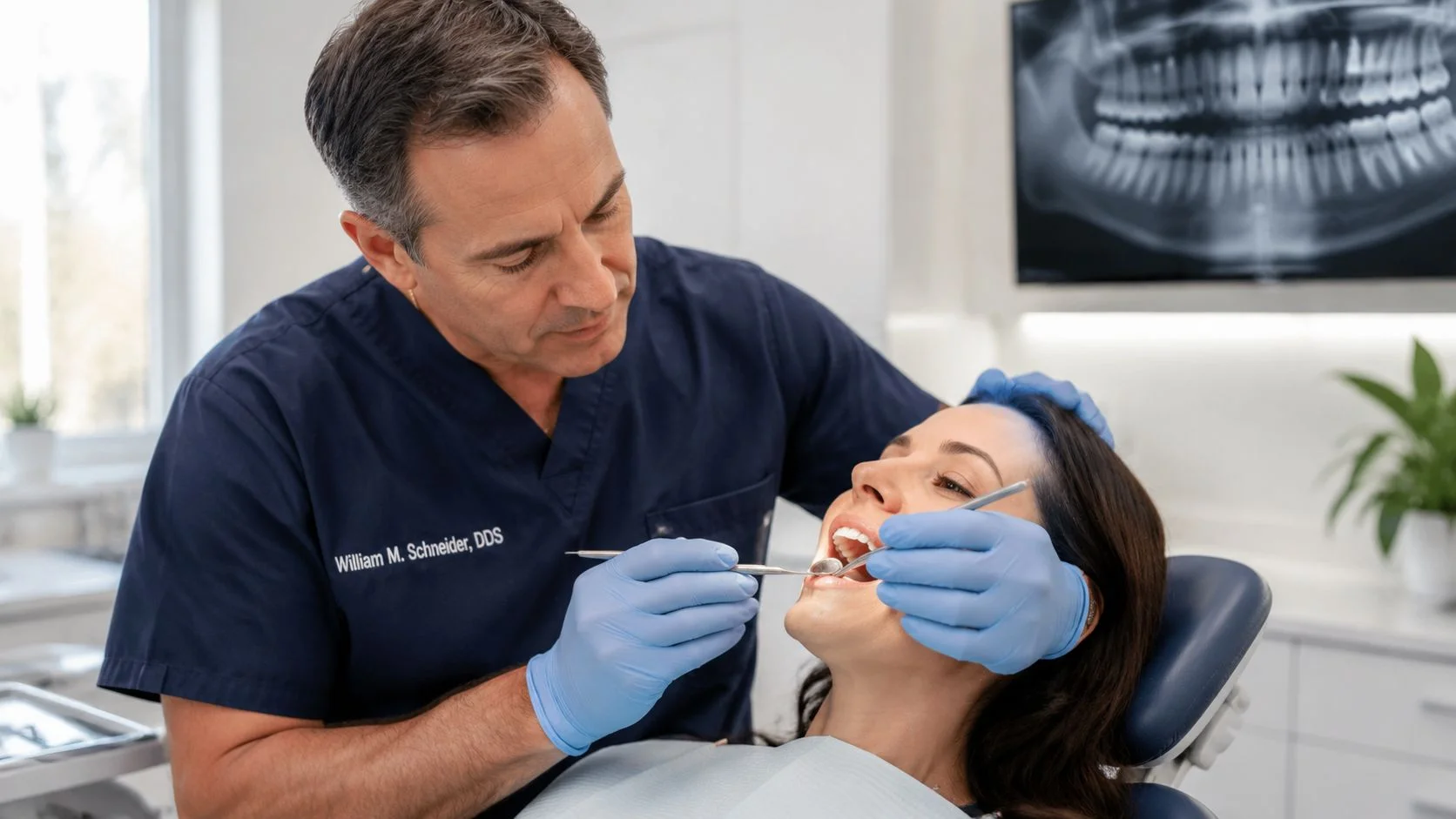
The exam starts with the obvious questions. Is the gum puffy only between two teeth? Is there visible plaque or tartar? Does floss shred? Is there a rough edge on a crown or filling? Is there swelling, drainage, or tenderness?
Then the dentist checks the area more closely with instruments designed to find the source, not just the symptom.
A gentle periodontal probe can help measure whether there's a deeper pocket around that one tooth. An explorer can help detect rough restoration margins or calculus. If the history suggests a structural issue, dental X-rays may help show what's happening below the gumline or around the root.
Why brushing better sometimes isn't enough
NIDCR explains that plaque not removed every day can harden into tartar, and only professional care can remove tartar. It also notes that a persistent single bleeding site can reflect a biofilm-driven pocket environment that may require professional debridement, with inspection for a deep pocket, overhanging restoration, fractured tooth, or trapped debris, as outlined by NIDCR gum disease information.
That's the key point. If the area has a local anatomic or infectious driver, the gum won't fully calm down until that source is found and removed.
What patients can expect in the chair
A focused visit for this concern often includes:
- Visual exam to inspect the gumline, contact point, and restoration edges
- Periodontal measurements around the tooth to check for pocketing
- Dental X-rays when needed to look below the surface
- Bite evaluation if a crack or pressure issue is suspected
- A clear explanation of whether this looks like hygiene-related inflammation, a restoration problem, or something deeper
If you've been looking for an emergency dentist because the area feels suddenly worse, that same careful process helps separate urgent infection from a more routine but still important problem.
Targeted Treatments for Localized Bleeding
Once the cause is clear, treatment becomes much more logical. The right treatment for one bleeding tooth depends on what's driving that one site.
When the problem is buildup or a pocket
If plaque and tartar are the main issue, a professional cleaning may be enough. If the inflammation extends below the gumline, the treatment may be more targeted. That can mean localized periodontal cleaning to remove bacterial deposits from the pocket and help the gum reattach.
If the pocket stays inflamed because bacteria are concentrated in that area, the dentist may also discuss options such as localized antibiotic therapy. Patients who want to understand one such treatment can review information about Arestin, which is used in some periodontal situations as part of localized care.
A good treatment plan doesn't just stop bleeding. It removes the reason the tissue keeps getting inflamed.
When the problem is the tooth or the dental work
If a filling or crown edge is overhanging, rough, or trapping plaque, the solution may be to smooth, adjust, or replace that restoration. In that case, restorative dentistry is not cosmetic window dressing. It's part of gum treatment because it changes the environment around the tooth.
If the contact between teeth is faulty and food packs there repeatedly, reshaping or replacing the restoration may stop the cycle. If the tooth is cracked, treatment may range from a protective crown to root canal therapy, depending on what the exam shows.
When the tooth can't be predictably saved
Sometimes the bleeding is the first visible sign of a more serious problem, such as a significant fracture or advanced localized infection. If a tooth can't be restored to health, tooth extraction may be the healthiest option.
After healing, some patients ask about long-term replacement choices and search for dental implants near me. That's a reasonable next step when preserving function matters. A dental implant can replace a missing tooth and help prevent the shifting and chewing imbalance that often follow an extraction.
Matching the treatment to the diagnosis
Here is the simplest explanation:
| Cause | Possible treatment |
|---|---|
| Plaque or tartar at one site | Professional cleaning or targeted periodontal cleaning |
| Localized pocket with infection signs | Debridement, drainage if needed, possible localized antibiotic therapy |
| Rough filling or crown edge | Adjustment or replacement through restorative care |
| Cracked tooth | Further diagnosis, crown, root canal therapy, or other tooth-saving treatment |
| Tooth beyond repair | Extraction and discussion of replacement options |
This is why a one-tooth problem deserves a one-tooth diagnosis. The bleeding may look similar from the sink mirror. The solutions are very different.
Your Visit with Dr Schneider and Preventing Future Issues
You notice one spot of blood near a single tooth while brushing, but the rest of your mouth seems fine. That usually points to a local problem, not a whole-mouth problem, and the visit is designed to figure out which one it is.

At William M. Schneider, DDS in Walnut Creek, patients are guided through the process step by step. The goal is simple. Find out why that one tooth is bleeding, show you what the team sees, and match the treatment to that exact cause. For one patient, that may mean a focused cleaning around a stubborn buildup site. For another, it may mean adjusting a filling edge, treating an irritated pocket, or checking whether a crack or deeper infection is involved.
That kind of clarity matters. Gum bleeding can start as a small warning sign, and earlier care usually means simpler care.
Prevention also becomes more straightforward once the cause is clear. If the bleeding came from plaque collecting in one hard-to-clean area, you may need a different flossing angle or an interdental brush for that space. If a crown margin or filling shape is trapping debris, changing the restoration can remove the source of repeat irritation. If grinding or clenching is stressing one tooth, protecting that area may help prevent the tissue from flaring up again.
Regular checkups and cleanings help catch these isolated changes before they turn into pain, swelling, or damage that is harder to repair. As noted earlier in the article, bleeding gums are common enough that they should never be ignored, even when only one tooth seems involved.
If you live in Walnut Creek or nearby East Bay communities and you keep seeing blood around the same tooth, a focused exam can usually sort out the cause and the next step.
If you're ready to get a clear answer, contact William M. Schneider, DDS to schedule an appointment in Walnut Creek, CA. Whether you need a routine exam, help with bleeding gums, restorative treatment, or an urgent evaluation, the office can assess the area, explain your options, and help you protect your long-term oral health.