You notice a little pink in the sink when you spit after brushing. Maybe your gums feel puffy near one tooth, or flossing has become something you avoid because it always seems to irritate the same spot. That moment is common, and it's also the moment many people in Walnut Creek start searching for a dentist near me or a dentist in Walnut Creek, CA because they want a clear answer before a small problem turns into a bigger one.
Gum disease can begin subtly. At first, it may look like minor bleeding, tenderness, bad breath, or gums that seem to pull away from your teeth. For busy East Bay families and professionals, it's easy to assume it's “just sensitive gums.” But your gums are the support system for your teeth, and when that support weakens, your whole mouth can be affected.
This guide is meant to make the subject easier to understand. Some gum disease risk factors are things you can change right away, like tobacco use or daily home care. Others, like age or certain medical conditions, aren't really choices at all. The important part is knowing how those risks interact in your own life, and what you can do next.
If you've been looking for local dental care, cleaning and exams, new patient exams, or even help with advanced problems that might later involve restorative dentistry, tooth extraction, or dental implants near me, starting with gum health is smart. It often tells us a lot about the overall condition of your mouth.
Worried About Gum Health? Your Walnut Creek Dentist Explains
A lot of patients come in with the same concern: “My gums bled a little. Is that normal?” Usually, they're hoping the answer is yes. The more honest answer is that bleeding gums are worth paying attention to, but they're also very treatable when caught early.
One of the hardest parts about gum problems is that they can feel vague. Tooth pain is obvious. A broken filling gets your attention. Gum disease often whispers instead of shouting. That's why people put it off until they notice gum recession, persistent bad breath, or a tooth that feels a little different when they chew.
Why concern is a good first step
Worry isn't the problem. Ignoring it is.
When you pay attention to early signs, you give yourself more options. A professional exam, updated dental x-rays, and a close look at the gums can tell us whether you're dealing with early inflammation or something more advanced. That's useful whether you need a straightforward cleaning or more involved periodontal care.
Practical rule: If your gums bleed repeatedly when you brush or floss, don't wait for pain before scheduling an exam.
For many people in Walnut Creek, concern about gum disease is tied to a bigger search. They may also be looking for an emergency dentist, a cosmetic dentist near me, or help after years of missed dental visits. Gum health matters in all of those situations because healthy gums make every other part of dentistry work better, from routine care to crowns to implant planning.
A local, practical approach
Patients usually don't need a lecture. They need a clear explanation of what's happening, what puts them at risk, and what to do next. That's the goal here. If you've noticed changes in your gums, it doesn't automatically mean you're headed for tooth loss. It does mean your mouth deserves attention.
In Walnut Creek, early care often makes the difference between simple treatment and more complex restorative work later. That's positive news, because it means action today can protect your smile tomorrow.
Understanding Gum Disease and Its Systemic Impact
Healthy gums are like the firm foundation under a house. You may focus on the visible part, your teeth, but the structure underneath is what keeps everything stable. When gums and supporting bone become inflamed or damaged, teeth can lose the support they need.
Gingivitis and periodontitis are not the same
Gingivitis is the early stage. Gums may look red, swollen, or bleed during brushing and flossing. At this point, the damage is still reversible with good home care and professional treatment.
Periodontitis is more advanced. The inflammation goes deeper, affecting the tissues and bone that hold teeth in place. At that stage, the damage is not merely a surface issue. It can lead to gum recession, deeper pockets around teeth, loose teeth, and sometimes tooth loss.
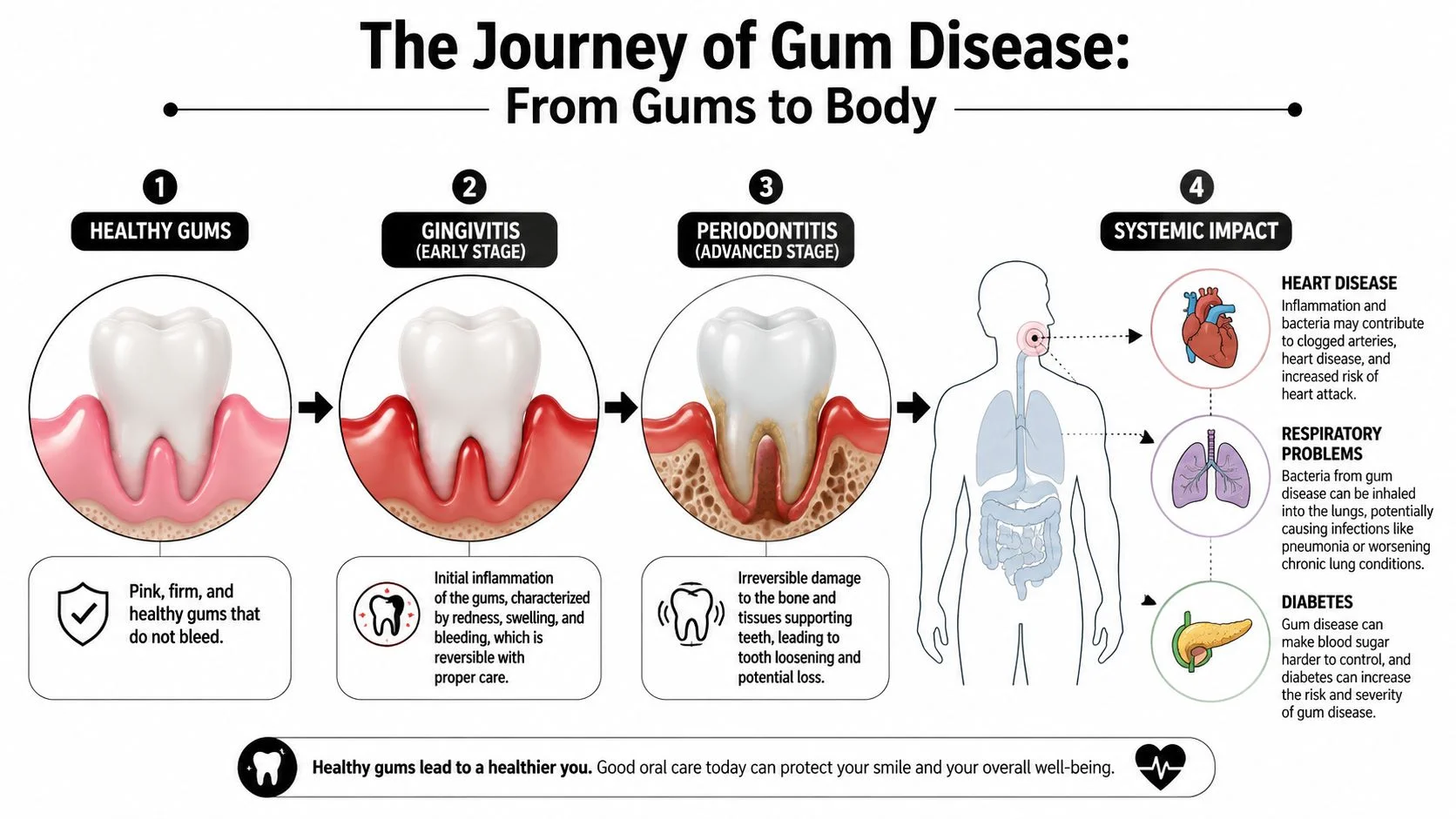
If you'd like to compare what you're seeing at home with common early warning signs, this guide to signs of gum disease is a helpful place to start.
Why it matters beyond your mouth
Gum disease isn't only about your gums. It's also about inflammation, immune response, and how your body handles infection. That's why dentists pay close attention to the medical history behind the mouth.
A major example is diabetes. Approximately 60% of individuals with diabetes also suffer from periodontal disease, according to the National Institute of Dental and Craniofacial Research data summarized in the verified information provided for this article. The relationship goes both ways. Diabetes can make gum disease harder to control, and severe gum disease can make blood sugar management more difficult.
Gum health and general health affect each other. Your mouth isn't separate from the rest of your body.
The progression patients often miss
People sometimes get confused because symptoms don't always match severity. Mild bleeding can mean early inflammation, but some higher-risk patients don't notice dramatic symptoms right away. That's one reason regular exams matter so much.
A simple way to think about it is this:
- Early stage problem: Inflammation is mostly in the gums.
- Deeper stage problem: The support around the teeth is affected.
- Whole-body concern: Ongoing inflammation can complicate existing health conditions.
That's why gum disease deserves more than a quick internet search. A proper diagnosis helps determine whether you need preventive care, periodontal treatment, or a broader plan that coordinates with your overall health.
Modifiable Risk Factors You Can Control
Some gum disease risk factors feel frustrating because they're tied to routines you repeat every day. The good news is that those are also the factors where small changes can make a real difference. You don't have to do everything perfectly. You do need to know which habits are moving you in the wrong direction.
The daily habits that shape risk
Plaque buildup is the obvious one. When brushing and flossing are inconsistent, bacteria stay along the gumline longer, and the gums respond with inflammation. That's why “I brush most days” often isn't enough to fully protect the gums.
Food and drink choices matter too. Frequent sugary snacks, acidic drinks, and all-day grazing can keep the mouth in a state that favors bacterial growth. It's not about never having coffee or sweets. It's about how often your gums and teeth are exposed, and whether your routine gives your mouth time to recover.
Tobacco is one of the most important risks to understand. Current smokers are about three times more likely to develop severe periodontitis compared to non-smokers, according to the CDC data summarized in the verified information for this article. Tobacco also impairs the body's immune response and slows healing, which means your gums may not repair themselves well after irritation or dental treatment.
Why smoking confuses people
Smoking creates a particularly misleading pattern. People often expect unhealthy gums to bleed a lot. Tobacco can reduce obvious warning signs, so a smoker may think their gums are “fine” because they don't bleed much, even while deeper damage progresses.
That's one reason a dental exam matters more than guesswork.
Takeaway: A lack of bleeding doesn't always mean a lack of disease, especially if tobacco is part of the picture.
Gum disease risk factors at a glance
| Modifiable (Can Be Changed) | Non-Modifiable (Can Be Managed) |
|---|---|
| Inconsistent brushing and flossing | Age |
| Smoking or other tobacco use | Family history |
| Diet patterns that favor plaque buildup | Certain systemic health conditions |
| Delaying cleanings and exams | Hormonal shifts across life stages |
| Weight-related inflammation concerns | Natural differences in immune response |
Practical changes that help
You don't need an extreme plan. Start with the basics that are easiest to repeat:
- Brush with intention: Clean along the gumline, not just the biting surfaces.
- Floss where the toothbrush can't reach: If regular floss is hard to use, ask about other tools during your visit.
- Reduce tobacco exposure: Cutting back is worthwhile, and quitting helps even more.
- Stop waiting for pain: Gum disease often progresses before it hurts.
- Keep preventive visits on schedule: Professional cleanings remove buildup you can't remove at home.
If you've been searching for a dentist near me because you know your routine has slipped, that's a practical reason to book. The goal isn't judgment. It's to reset the situation before inflammation becomes damage.
Non-Modifiable Risks and How We Help Manage Them
Some patients feel discouraged when they learn that certain gum disease risk factors aren't fully under their control. Maybe gum problems run in the family. Maybe diabetes, age, or hormonal changes affect how the gums respond. That can sound like bad news at first, but it shouldn't be read as a prediction.
Non-modifiable doesn't mean untreatable. It means your prevention plan needs to be more intentional.
Age changes the conversation
According to the CDC, over 70% of Americans aged 65 and older have some form of gum disease on its gum and periodontal disease overview. That doesn't mean aging automatically causes severe dental problems. It does mean older adults deserve closer monitoring because gum tissues, medical history, medications, and dexterity can all affect oral health over time.

For seniors in Walnut Creek, that may mean more frequent maintenance, closer tracking of gum pocket depths, and extra attention to home care techniques that are comfortable and realistic.
Family history and body-wide health still need a plan
Genetics can influence how strongly someone's gums react to bacterial plaque. Two people can have similar habits and very different outcomes. That's confusing for patients, but it's common in health care. The answer isn't to give up. It's to stop comparing your mouth to someone else's.
Hormonal changes can also affect gum response. So can immune-related health issues. Some people need more support, more often, to stay ahead of inflammation.
A reassuring way to think about this is that risk is not destiny. It's information. When we know your risks, we can watch the right things more carefully and intervene earlier.
What management often looks like
Rather than using one standard schedule for everyone, a higher-risk patient may benefit from care that's more personalized, such as:
- Closer periodontal monitoring: Looking for subtle changes before they become obvious symptoms.
- More frequent professional cleanings: Especially when inflammation tends to return quickly.
- Medical history review: Connecting oral findings with conditions that affect healing or inflammation.
- Home care coaching: Adjusting techniques and tools to fit arthritis, dexterity limits, or sensitivity.
Patients with higher baseline risk often do well when they stop asking, “Can I avoid all risk?” and start asking, “What plan fits my body?”
That shift is powerful. It turns fear into a care strategy.
How We Protect Your Smile from Gum Disease in Walnut Creek
The right treatment depends on what we find. Some people need reassurance and a routine cleaning. Others need deeper periodontal therapy, updated imaging, and a long-term maintenance plan. The key is matching treatment to the stage of disease and the risks behind it.
Preventive care comes first
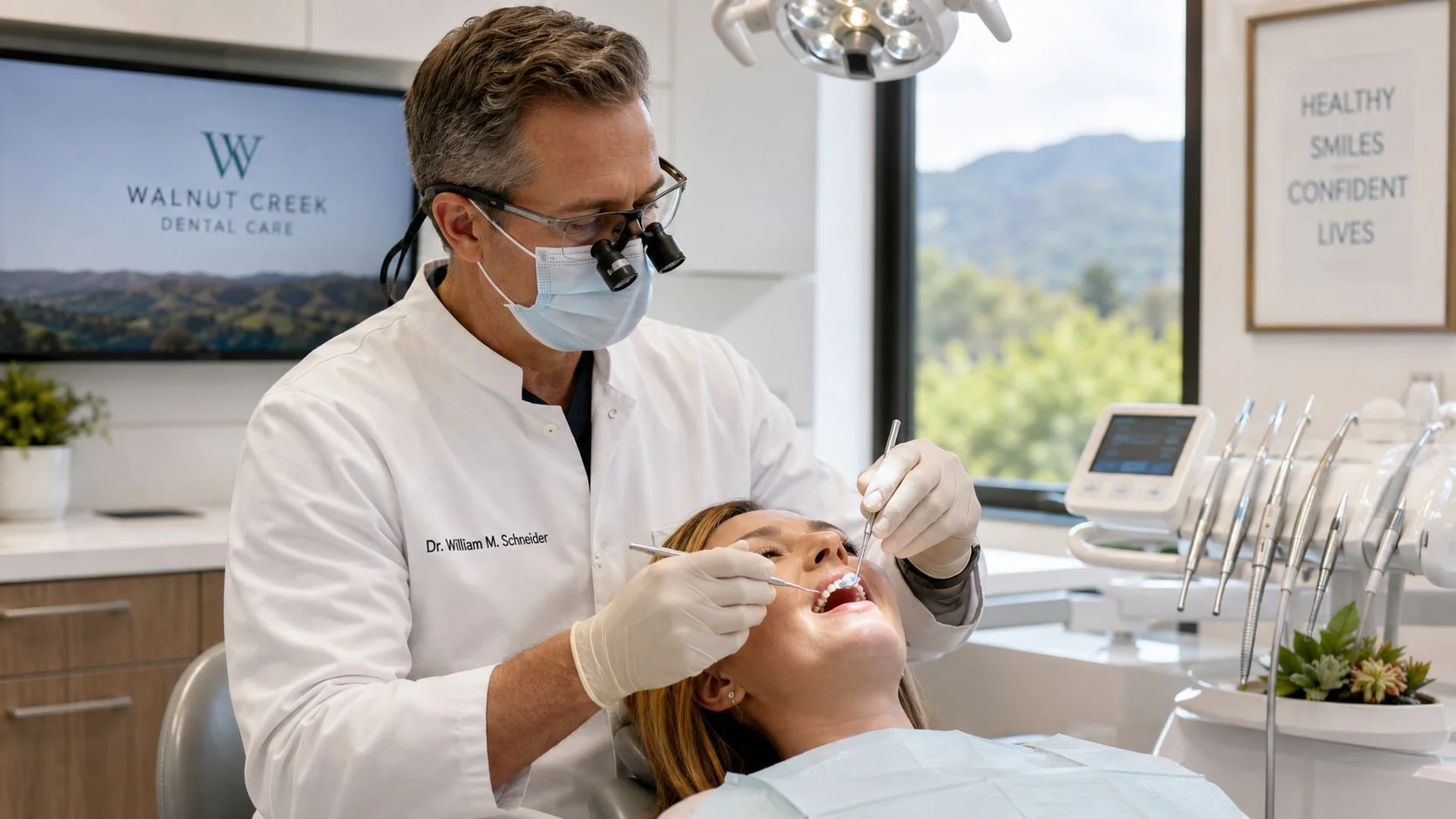
For many Walnut Creek patients, the first step is a thorough exam. That may include new patient exams, gum measurements, dental x-rays, and professional cleaning and exams that remove buildup above and below the gumline. When inflammation is still early, that combination often puts people back on solid ground.
If deeper pockets or more advanced buildup are present, treatment may include scaling and root planing, often called a deep cleaning. This is a more focused approach that removes bacteria and hardened deposits from areas a standard cleaning can't fully reach.
Patients who want more detail about therapy options can review periodontal disease treatment.
Gum care is connected to the rest of dentistry
Obesity is an important modifiable risk factor, and evidence in this PMC review on periodontal risk factors suggests that individuals with higher body mass index are at increased risk for periodontal disease. In practice, that means a dentist isn't just looking at teeth. A dentist is also watching for signs that inflammation may be part of a bigger health picture.
That whole-person view matters when planning treatment. William M. Schneider, DDS provides preventive, restorative, and cosmetic dental care in Walnut Creek, which allows gum treatment to connect naturally with other needs such as crowns, bridges, and long-term maintenance.
Here's a short overview of how treatment decisions often fit together:
- If gums are inflamed but teeth are stable: A professional cleaning, home care adjustments, and follow-up may be enough.
- If pockets are deeper: Scaling and root planing may be recommended.
- If teeth are damaged or missing: Restorative dentistry can rebuild function after gum health is addressed.
- If a tooth can't be saved: Tooth extraction may be part of care, followed by replacement planning.
- If tooth loss has already happened: Dental implants near me becomes a relevant search, because implants may help restore chewing function and smile stability.
For patients who like to see a visual explanation before their visit, this video offers a useful overview:
Support for routine and urgent needs
Sometimes gum disease is found during routine care. Sometimes people call because something feels urgent, like swelling, tenderness, or a sudden change around one tooth. In those moments, an emergency dentist evaluation can help determine whether the issue is infection, trauma, advanced periodontal inflammation, or a different dental problem altogether.
Healthy gums also support cosmetic outcomes. If you're considering whitening or searching for a cosmetic dentist near me, stable gum tissue helps those treatments look and feel better.
Your New Patient Experience at Our Walnut Creek Office
For a lot of people, booking is the hardest part. They've been meaning to call. They've searched for a dentist in Walnut Creek, CA more than once. They may feel embarrassed that it's been a while, or nervous that the visit will be uncomfortable.
That anxiety is common, and it shouldn't stop you from getting care.
What the first visit usually feels like
When you arrive for a new patient visit, the appointment starts with listening. You'll talk through what you've noticed, whether that's bleeding gums, bad breath, tenderness, loose teeth, or a sense that something isn't right. Your medical history matters here because many gum disease risk factors show up in the bigger health picture.
From there, the clinical side becomes much more straightforward. The team checks the teeth and gums carefully, reviews needed dental x-rays, and looks for signs of inflammation, recession, or deeper periodontal concerns. If you've also been thinking about teeth whitening, cosmetic dentistry, or restorative needs, those goals can be part of the discussion too.
You don't need to know exactly what treatment you need before you come in. That's our job.
Clear explanations matter
Patients usually relax once they understand what the dentist is seeing and why a certain recommendation makes sense. If the issue is early and reversible, you'll hear that clearly. If deeper treatment is needed, it should be explained in plain language, including what the process involves and how it helps.
For anxious patients, comfort matters just as much as clinical skill. Gentle technique, painless injections when possible, and a calm environment can make a big difference. That's especially important for people who have delayed care because of past dental experiences.
A practical next step for Walnut Creek families
Many people who come in for gum concerns are also looking for a long-term dental home. They want one office for preventive care, restorative treatment, and future needs. That continuity helps because your dental history, risk patterns, and treatment response become easier to track over time.
If you're in Walnut Creek and you've been putting off an exam, this is a good time to change that. A small concern is easier to treat than an advanced one, and clarity usually feels better than uncertainty.
If you're looking for thoughtful, local dental care and want help understanding your personal gum disease risk factors, schedule a visit with William M. Schneider, DDS. Whether you need a routine exam, periodontal evaluation, restorative planning, or answers about symptoms that have been worrying you, the office can help you take the next step with clear guidance and patient-focused care in Walnut Creek.