If you’re reading this, there’s a good chance you’re dealing with a gap in your smile and trying to decide what to do next. Maybe chewing on one side feels awkward. Maybe certain words don’t sound quite right. Maybe you’ve caught yourself smiling with your lips closed more often than you used to.
Those concerns are real, and they’re common. A missing tooth can affect appearance, but it can also change how your bite feels day to day. When patients search for a dentist near me or a dentist in Walnut Creek, CA, they’re often looking for two things at once. They want a clear answer, and they want to feel comfortable with the person giving it.
A dental bridge is one of the most established ways to replace a missing tooth or several missing teeth in a row. The process is usually more straightforward than people expect. In many cases, it involves preparing the teeth next to the gap, taking an impression for a custom restoration, wearing a temporary bridge while the lab makes the final one, and then returning for placement.
Your Trusted Dentist for Dental Bridges in Walnut Creek CA
A missing tooth can make everyday life feel less simple than it should. You notice it at lunch when food catches in the space. You notice it in conversation when you’re more aware of your mouth than usual. You notice it in photos, even if nobody else does.
That’s why people often start with a practical search like cosmetic dentist near me or dentist in Walnut Creek, CA. They want treatment that restores the look of the smile, but they also want function back. A bridge can often do both.
Why patients often ask about bridges first
A bridge is a familiar option because it’s fixed in place and designed to fill the gap left by a missing tooth. For many patients, that sounds less intimidating than they expected. The idea is simple. Replace the missing tooth with an artificial tooth and support it using the teeth nearby or, in some cases, implants.
A bridge isn’t just about appearance. It helps restore balance to the bite so everyday things like chewing and speaking feel more natural again.
People also appreciate that the process is usually completed in stages they can understand. There’s an exam, a treatment plan, a preparation visit, a temporary phase, and a final placement visit. When the steps are explained clearly, the procedure tends to feel much more manageable.
Why local, gentle care matters
If you’re looking for restorative dentistry in Walnut Creek, comfort matters as much as the technical work. Many adults put off treatment because they’re worried the visit will be stressful, uncomfortable, or hard to fit into a busy week. That hesitation is understandable.
A calm dental office makes a difference. So does a dentist who explains what’s happening in plain language, answers questions without rushing, and pays attention to anxiety before treatment starts. That matters whether you came in for a bridge consultation, a routine cleaning and exam, dental x-rays, teeth whitening, or even an emergency dentist visit after a broken tooth.
Here, the goal is simple. Help you understand what is a dental bridge procedure, what it feels like from the patient side, and what to expect before, during, and after treatment in Walnut Creek.
Understanding Why You Should Replace a Missing Tooth
Some patients think, “If I can still chew, maybe I can leave it alone for now.” Sometimes the gap doesn’t seem urgent, especially if it’s toward the back. But the mouth works as a system. When one tooth is missing, nearby teeth and the opposing tooth no longer have the same support and contact they were designed to have.
That can create a slow chain reaction. Your bite can start to feel uneven. Food can pack into the area more easily. Cleaning around the gap can become trickier. Over time, what started as one missing tooth can affect the way the rest of your mouth functions.
What changes after a tooth is lost
The space itself is only part of the issue. The bigger concern is how your mouth adapts around it.
- Chewing changes: You may start favoring one side, which can make eating feel less efficient and sometimes less comfortable.
- Speech can feel different: Certain sounds rely on teeth and tongue working together in a precise way.
- Neighboring teeth can drift: Teeth naturally respond to open space. If there’s room to move, they may begin to tip or shift.
- Cleaning gets harder: New angles and tight spots can collect plaque more easily.
These changes aren’t always dramatic at first. Patients often describe them as “small annoyances” that slowly become harder to ignore.
Why this is more than a cosmetic issue
A missing front tooth is easy to think of as a cosmetic problem. A missing back tooth can seem less important because it’s not visible. In reality, both can affect long-term oral health.
When your bite changes, the forces on your remaining teeth can change too. That can make some teeth work harder than they should. If gum health is already a concern, a difficult-to-clean gap can add another challenge. If a tooth broke and led to the space, the same visit might also involve evaluation for related restorative care such as crowns, root canal treatment, or, in some cases, tooth extraction planning for other damaged teeth.
Practical rule: Replacing a missing tooth is often easier than dealing with the added wear, shifting, and bite problems that can develop when the space is left untreated.
When to have it evaluated
You don’t have to decide on treatment the day you notice a gap. You do want a proper exam. A dentist can look at the condition of the neighboring teeth, your gums, your bite, and whether a bridge, implant, or another option makes the most sense.
That evaluation often includes a visual exam and dental x-rays. It’s the same careful approach used in new patient exams and broader restorative planning. The earlier the space is assessed, the more options you usually have.
What Exactly Is a Dental Bridge
The easiest way to understand a bridge is to think about a real bridge over water or a road. There’s a gap in the middle, and there are supports on either side holding the structure in place. In dentistry, the gap is where the missing tooth used to be, and the replacement tooth spans that space.
The replacement tooth is called a pontic. The supporting teeth or implants are called abutments. Together, they create a fixed restoration that fills the gap and restores the shape of your bite.
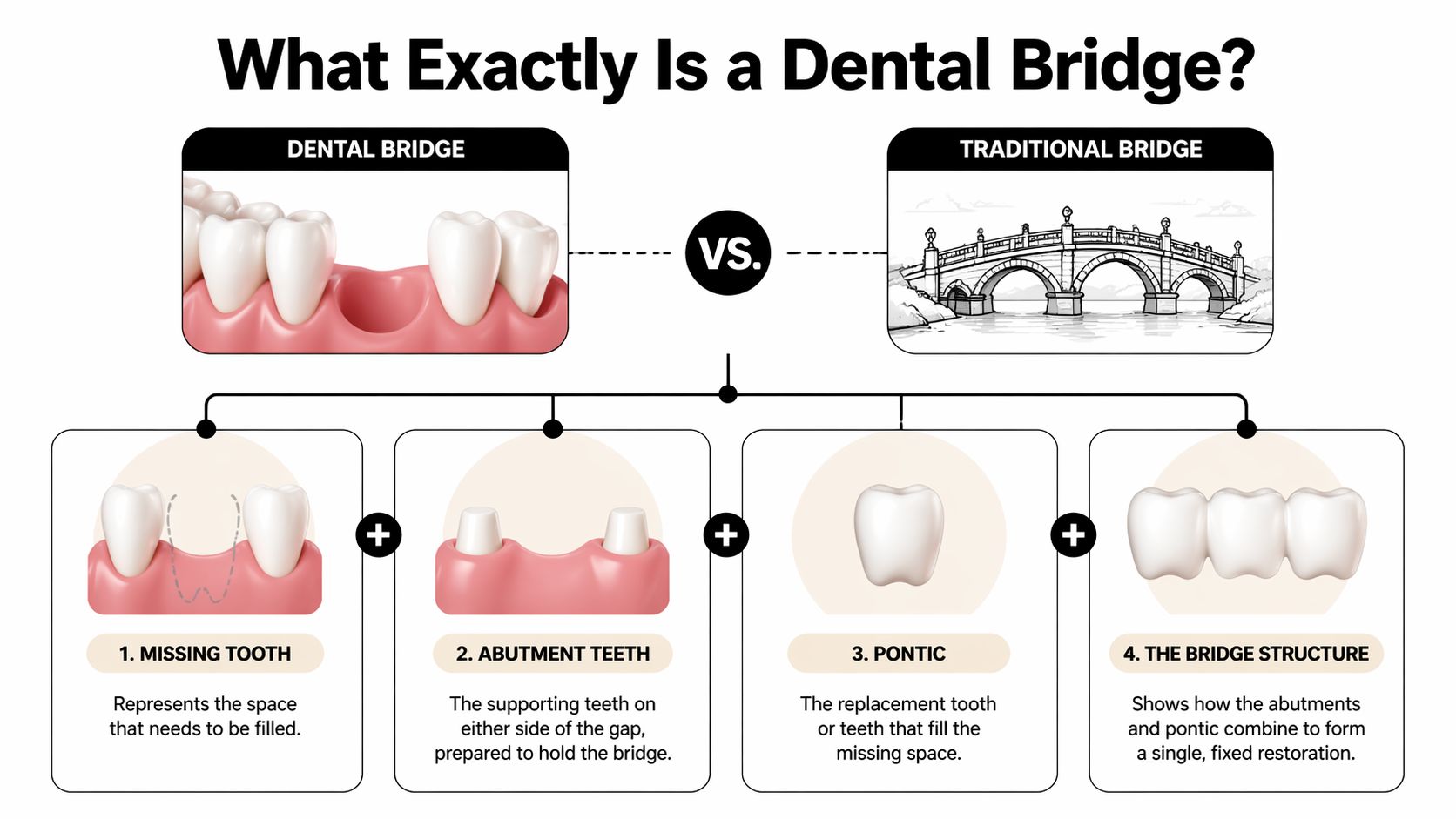
The basic parts of the bridge
Patients often get confused by the terminology, so let’s keep it simple.
| Part | What it means | What it does |
|---|---|---|
| Pontic | The artificial tooth | Fills the empty space |
| Abutment tooth | A nearby supporting tooth | Helps hold the bridge in place |
| Crown | A covering placed over a prepared tooth | Anchors the bridge when natural teeth are used |
| Bridge | The connected restoration as a whole | Replaces the missing tooth or teeth |
If you’ve ever looked at services for dental bridges and crowns, you’ve probably seen how often these two treatments are discussed together. That’s because a traditional bridge commonly uses crowns on the neighboring teeth to support the artificial tooth between them.
For a local explanation of replacement options, you can also read about bridging the gap with replacement teeth.
The main types of dental bridges
Not every bridge is built the same way. The right design depends on where the gap is, how many teeth are missing, and what kind of support is available.
Traditional bridge
This is the type many people picture first. A crown goes on the tooth on each side of the gap, and the artificial tooth sits between them. It’s often used when the neighboring teeth are strong enough to support the restoration.
Cantilever bridge
A cantilever bridge uses support from just one adjacent tooth. That can work in selected situations, though it isn’t right for every area of the mouth because the forces on the bridge need to be carefully considered.
Maryland bridge
A Maryland bridge usually relies on a framework bonded to the backs of nearby teeth. It can be a more conservative option in some cases because it may require less alteration of the neighboring teeth.
Implant-supported bridge
Instead of using natural teeth for support, this type uses dental implants. It can be useful when several teeth are missing and implant support is the better foundation.
Some patients come in asking for “a bridge,” but what they really need is a conversation about which kind of support will work best for their specific bite and tooth structure.
What makes bridges so common
A bridge remains popular because it’s fixed in place and can usually restore function without the longer healing phase required for implant integration. The dental bridge procedure is also familiar to many patients because it typically follows a predictable sequence of preparation, temporary restoration, and final placement.
The Dental Bridge Procedure A Step-by-Step Overview
If you’re sitting in the chair wondering, “What happens, and will it be uncomfortable?” that’s a normal place to start. Dr. Schneider walks patients through the process step by step so there are no surprises, and for many people in Walnut Creek, that clear plan is what makes the experience feel manageable.
A dental bridge is usually completed over two visits, with time in between for the dental lab to make your custom restoration. During that period, you are not left with an open space. A temporary bridge is typically placed to protect the teeth and help you get through daily life with less sensitivity and less self-consciousness.
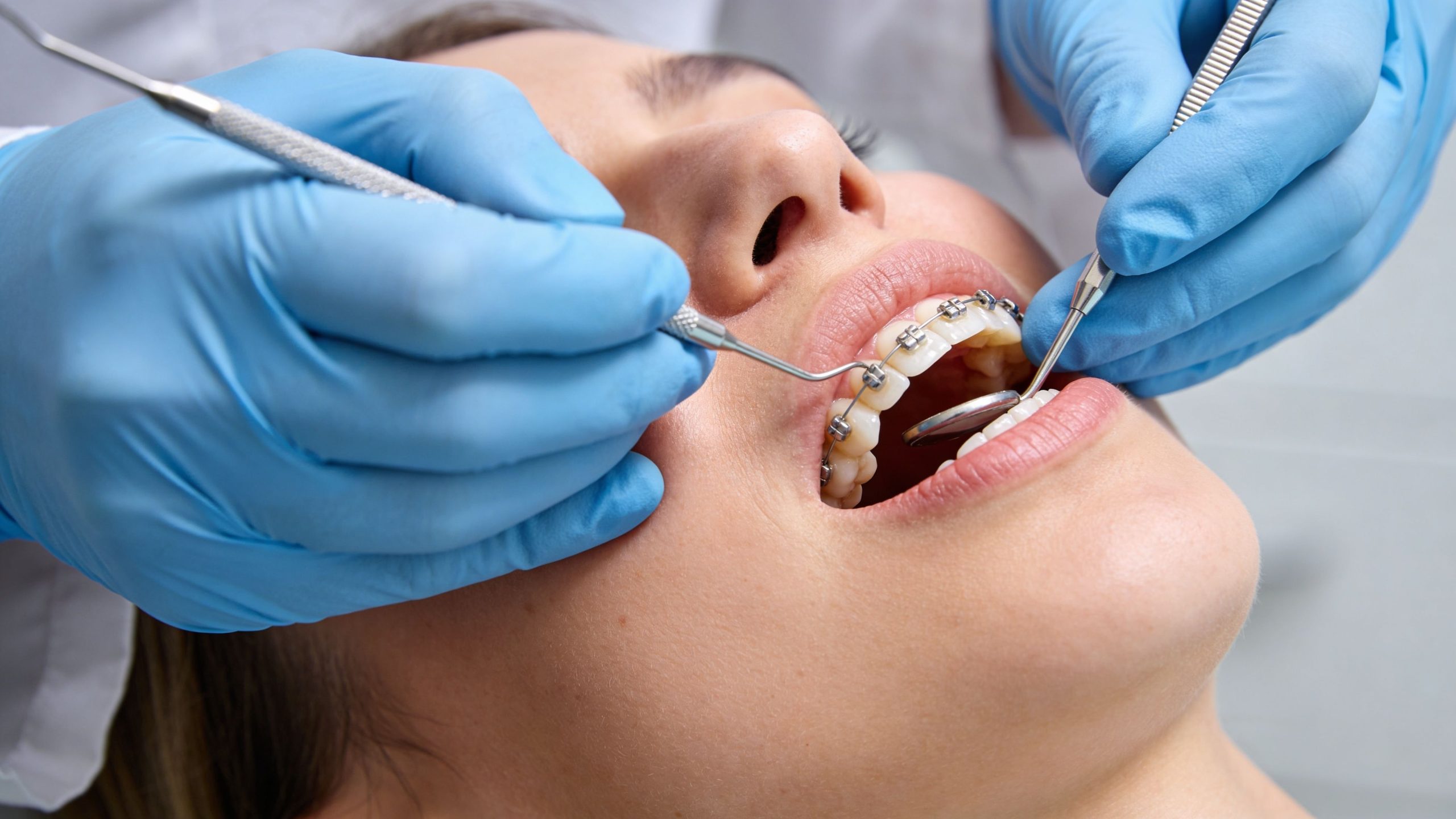
Visit one starts with planning and preparation
The first appointment is the one where the foundation is created. If you’re receiving a traditional bridge, the supporting teeth on either side of the gap are carefully shaped so the crowns can fit over them, much like preparing solid anchors before placing a span between them. Before any of that begins, the area is numbed thoroughly.
For anxious patients, comfort is part of the treatment plan, not an afterthought. At William M. Schneider, DDS, we explain what you’ll feel before we begin, pause when you need a break, and discuss options that help the visit feel calmer. Many patients are surprised by how routine the appointment feels once they are numb and know what to expect.
After the teeth are prepared, impressions or digital records are taken. These give the lab the details needed to make a bridge that matches your bite, the shape of your teeth, and the look of your smile.
The temporary bridge protects the area while you wait
Before you leave the first visit, a temporary bridge is usually placed. Its job is simple but important. It covers the prepared teeth, holds the space, and lets you eat and speak more comfortably while the final bridge is being made.
The temporary is a bit like a placeholder while the custom piece is being built with more detail and precision. It may feel slightly different from your natural teeth at first. That does not mean anything is wrong.
You will usually be asked to avoid very sticky foods, extra-hard foods, and habits that could loosen it. A little caution during this stage helps everything stay on track.
If the temporary feels a little bulky or unfamiliar, that can be normal. The permanent bridge is the one refined for final fit, bite, and appearance.
Visit two is the fitting and final placement
At the second appointment, the temporary bridge is removed and the final bridge is tried in. This is the careful checking stage. Dr. Schneider looks at how the bridge fits, how it meets the opposing teeth, and whether it looks natural in your smile.
Small adjustments can be made before the bridge is cemented into place. That matters because even a restoration that looks beautiful on the model has to feel right in your mouth. Your bite should come together evenly, without one spot hitting too soon or too hard.
Once everything is confirmed, the bridge is cemented securely.
Here’s a visual overview many patients find helpful before treatment:
What it feels like during and after
The first visit is usually longer because more is happening. The second is often shorter and more focused. From the patient’s point of view, the process often feels less dramatic than it sounds on paper.
After the final bridge is placed, your mouth may need a little time to get used to the new shape. Chewing can feel different for a short period, the same way a new pair of shoes can feel unfamiliar before they feel natural. Mild tenderness or awareness around the area can happen, especially if the teeth were prepared recently.
If your bite feels off, call the office. A small adjustment is sometimes all that is needed to make the bridge feel comfortable and balanced. That follow-up is part of good care, especially in a gentle practice where the goal is not just to place the bridge, but to help you feel confident living with it.
Benefits and Candidacy for a Dental Bridge
A missing tooth often affects more than the space you see in the mirror. Patients usually notice it in small, everyday moments first. Chewing on one side becomes a habit. Certain words feel a little less clear. Smiling can start to feel more self-conscious than it used to.
A dental bridge helps restore that sense of normal function. It fills the gap with a fixed replacement, which means it stays in place and works as part of your bite. For many patients in Walnut Creek, that feels reassuring. They want something stable, natural-looking, and straightforward to care for.
At William M. Schneider, DDS, candidacy is never decided by the gap alone. Dr. Schneider looks at the whole picture, including your comfort level, the health of the nearby teeth and gums, how your bite comes together, and what kind of treatment experience will feel manageable for you.
What a bridge can improve
A bridge works a bit like a span that reconnects traffic after part of a road is missing. Once that space is restored, everyday function tends to feel more balanced again.
Here are some of the main benefits:
- Chewing support: Food can be chewed more evenly instead of pushing most of the work onto one side.
- Smile appearance: The visible space is replaced with a tooth-shaped restoration designed to blend with your natural smile.
- Bite stability: Nearby teeth have less opportunity to drift or tip into the open area over time.
- Speech clarity: Sounds that depend on tooth position may feel easier and more natural again.
- Confidence: Many patients feel more at ease once the gap is no longer drawing their attention.
Some people ask whether replacing one missing tooth really matters if they can still get by. It often does. Your teeth work as a group, much like books lined up on a shelf. When one is missing, the others can start shifting into the extra room, and that can change how your bite feels over time.
Who may be a good candidate
A bridge may be a good fit if you are missing one tooth, or several teeth in a row, and there is healthy support available around that space. That support may come from natural teeth, or in some cases from implants.
The best candidates usually have:
| What Dr. Schneider checks | Why it matters |
|---|---|
| Dental x-rays | Show the roots, bone support, and any hidden concerns under the gums |
| Nearby teeth | Help determine whether those teeth are strong enough to support a bridge |
| Gum health | Healthy gums support comfort and long-term function |
| Bite pattern | Helps prevent excess pressure that could shorten the life of the bridge |
This evaluation also helps answer questions that patients with dental anxiety often have but do not always say out loud. Will treatment feel manageable? Do we need to calm inflammation first? Would a fixed bridge feel more comfortable day to day than partial dentures? Those details matter just as much as the technical design.
A bridge is not the right choice for every situation. If the supporting teeth are weak, if gum disease needs treatment first, or if you want an option that does not rely on neighboring teeth, Dr. Schneider may recommend a different path. If you want a side-by-side comparison, this guide to bridge vs implant treatment options can help clarify the differences.
Why many patients choose a bridge as a long-term solution
Bridges have been used successfully for many years because they solve a practical problem in a predictable way. With good planning, healthy supporting teeth, and regular home care, they can serve patients well for a long time.
No dentist can promise that every bridge will last the same number of years. Habits such as grinding, the condition of the gums, bite pressure, and daily cleaning all affect longevity. Still, for the right patient, a bridge is often a dependable choice that restores comfort, appearance, and confidence without adding unnecessary complexity.
Exploring Alternatives Dental Implants and Partial Dentures
A bridge is one reliable way to replace a missing tooth, but it is not the only path. In the consultation room, this part of the conversation often comes down to a simple question. Do you want something fixed in place, or would a removable option fit your health, budget, and comfort level better?
That question matters even more for patients who feel anxious about dental treatment. Some people want the shortest, most familiar process possible. Others are comfortable with a longer timeline if it means the neighboring teeth do not need to support the replacement. At William M. Schneider, DDS, we talk through those tradeoffs in plain language so you can choose with confidence, not pressure.
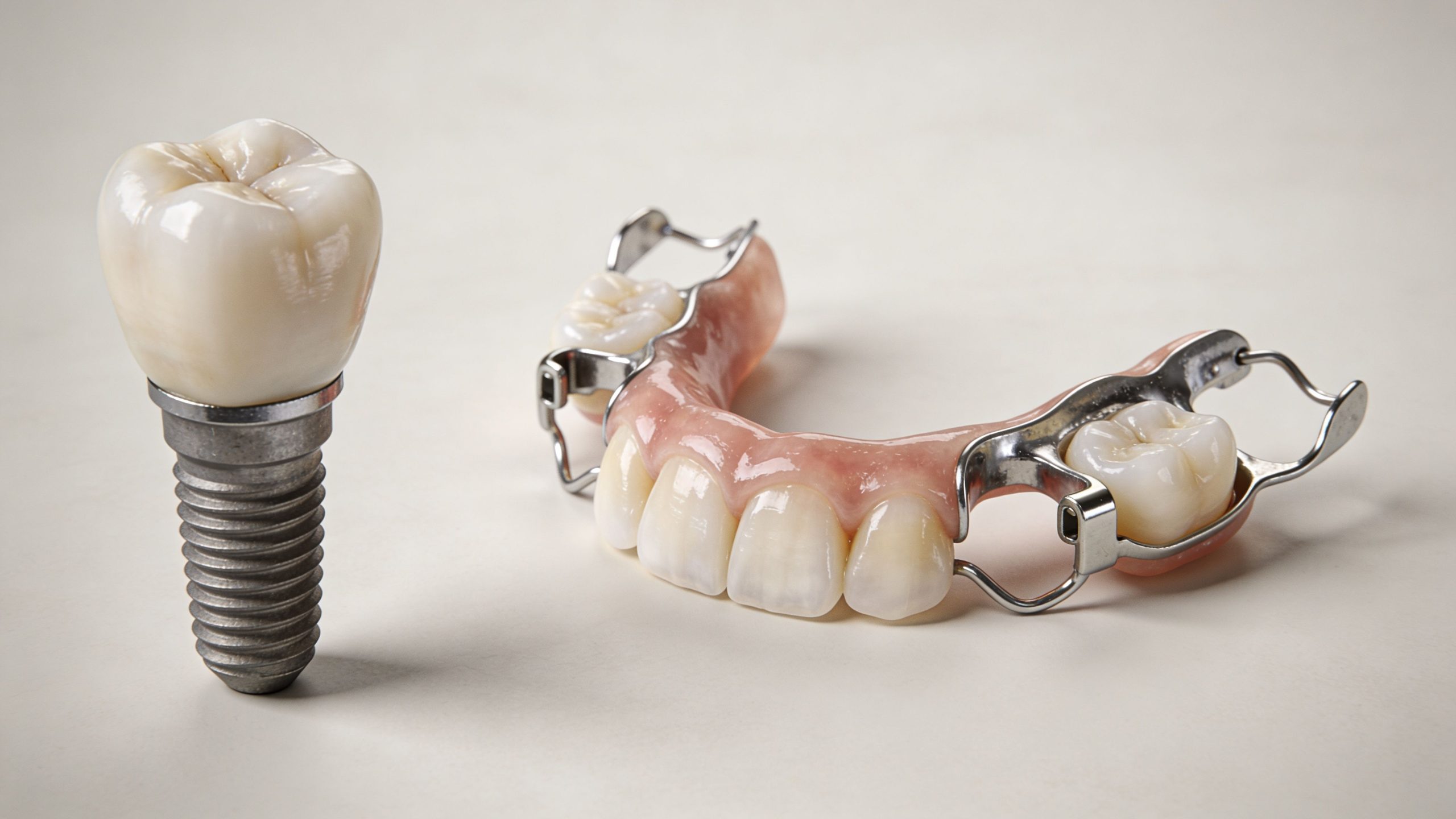
How the options differ
| Option | Main idea | What patients often like | What patients should know |
|---|---|---|---|
| Dental bridge | Fixed replacement supported by teeth or implants | Stays in place, familiar process | May rely on neighboring support |
| Dental implant | Replacement tooth supported by an implant in bone | Does not depend on adjacent teeth | Usually takes longer and includes a surgical phase |
| Partial denture | Removable appliance replacing one or more teeth | Less invasive and removable | May feel less stable for some patients |
A helpful way to picture it is this. A bridge works like spanning a gap with support on each side. An implant stands on its own. A partial denture fills the space with a removable appliance that you take out for cleaning.
When implants may be a better fit
An implant often makes sense when the teeth next to the space are healthy and you would rather leave them untouched. Many patients also like that an implant feels independent, since it does not depend on neighboring teeth for support.
The tradeoff is time and complexity. Implant treatment usually involves surgery, healing, and several stages before the final crown is placed. For some Walnut Creek patients, that longer process feels worthwhile. For others, especially those who want a gentler or faster route, a bridge may feel easier to accept.
If you want a closer local comparison of fixed options, this guide on bridge vs implant treatment options explains the decision in more detail.
When a partial denture may make sense
A removable partial can be a practical choice when you need to replace several teeth, want to avoid surgery, or prefer a treatment that usually asks less of the surrounding teeth at the start. It can also serve patients who want to restore function first and consider a fixed option later.
The adjustment period is different, though. Because a partial is removable, it can take more time to get used to how it feels when speaking or chewing. If you want a plain-language overview of caring for partial dentures, that guide is a useful companion to this decision.
The best option is the one that fits your mouth, your priorities, and your comfort level in the chair. For some patients, that is a bridge. For others, an implant or partial denture is the better match.
Your Comfort-Focused Bridge Procedure in Walnut Creek
You finally decide to replace the missing tooth, then a different worry shows up. What will the appointment feel like?
For many Walnut Creek patients, that is the core question. The dental bridge itself is familiar to a dentist. To a patient, the bigger concern is often comfort, control, and knowing what to expect before anyone even reclines the chair.
That is why planning starts with a conversation, not a drill. Dr. Schneider takes time to explain the visit in plain language, review your health history and medications, and talk through comfort measures before treatment day. For patients who feel tense in dental settings, that early discussion often lowers stress because the day no longer feels full of unknowns.

What comfort planning often includes
A bridge procedure is easier when the small details are handled ahead of time. In the same way a good flight feels calmer when you know the route, timing, and what happens at each step, a dental visit feels more manageable when the process is clear.
According to guidance on preparing for a dental bridges procedure, preparation may include a professional cleaning, a review of medications, and a personalized comfort plan that can include sedation when appropriate. That guidance fits what anxious patients often need most. Fewer surprises, more communication, and a plan that matches the person in the chair.
Simple ways to prepare before your visit
- Bring your medication list: Your dentist needs an accurate picture of prescriptions, supplements, and health conditions.
- Ask about sedation early: If anxiety is part of the picture, mention it when scheduling so the team can plan with you.
- Arrange transportation if needed: Some sedation options mean you should not drive yourself home.
- Take care of your gums first: A cleaning or other preventive care may be recommended before restorative treatment begins.
You do not need to force your way through a stressful appointment. Telling the team you feel nervous helps them slow the pace, explain more clearly, and build a visit that feels manageable.
What patients often want from the appointment
Patients usually ask practical questions. Will I be numb enough? How long will I be here? What happens if I get anxious in the middle?
Those concerns are reasonable. A gentle approach makes a significant difference. Clear explanations, pauses when you need them, and comfort options chosen in advance can make the bridge process feel far more predictable and calm. At William M. Schneider, DDS, bridges are provided alongside crowns, dental implants, cleanings, exams, and other restorative and cosmetic care, with close attention to patient comfort and sedation options when appropriate.
Cost Aftercare and Lifespan of Your New Dental Bridge
Many patients feel a sense of relief once the bridge is placed. Then the practical questions come right away. What will this cost? What will daily care look like? How long can I expect it to hold up?
Those questions matter because a bridge is not just a one-day procedure. It is a restoration you will live with every time you eat, smile, and brush your teeth. My goal is always to make sure you leave the office knowing what to expect, both financially and at home.
What affects the cost
The fee for a dental bridge depends on the details of your case. The number of teeth being replaced matters. The material matters. The condition of the supporting teeth matters too, because those teeth may need treatment before they are ready to hold a bridge securely.
Cost can also change if gum care, fillings, or replacement of older dental work is needed first. In other words, two bridges may sound like the same treatment, but they may involve very different amounts of preparation.
Insurance benefits vary from plan to plan, so a consultation is usually the clearest starting point. At that visit, Dr. Schneider can examine the area, review X-rays if needed, and explain your options in plain language. For anxious patients, that first conversation often lowers stress because it replaces guesswork with a clear plan.
How to care for your bridge every day
A bridge works like a connected unit. The replacement tooth fills the gap, and the neighboring teeth do the supporting. That means home care is focused not only on the bridge itself, but also on the teeth and gums around it.
A simple routine goes a long way:
- Brush carefully along the gumline: Plaque often collects where the bridge meets the gums.
- Clean under the replacement tooth: Threader floss, interdental brushes, or other hygiene aids can reach the space a regular toothbrush misses.
- Keep up with checkups and cleanings: Small problems around the supporting teeth are easier to fix early.
- Use common sense with very hard or sticky foods: A bridge is durable, but it still benefits from reasonable care.
If cleaning under a bridge feels awkward at first, that is normal. Many patients need a short demonstration before it clicks. At William M. Schneider, DDS, part of aftercare is showing you exactly how to clean the area so it feels manageable at home, not confusing.
How long a dental bridge can last
A well-made bridge can serve you for many years. Its lifespan depends less on luck and more on the health of the supporting teeth and gums, your bite, and how consistently the area is kept clean.
The easiest way to picture it is this: the bridge is only as dependable as the foundation beneath it. If the anchor teeth stay healthy, the bridge has a much better chance of lasting well. If plaque builds up, gum disease develops, or decay starts around those supporting teeth, the bridge can fail sooner.
Pay attention to changes. Food catching in a new spot, tenderness when biting, a loose feeling, or gum irritation are all good reasons to call the office before a small issue grows into a larger repair.
If you’re dealing with a missing tooth and want a clear, comfortable plan, schedule a consultation with William M. Schneider, DDS. We’ll examine the area, explain whether a bridge or another option makes sense, and help you feel informed and comfortable here in Walnut Creek.