You’re probably here because you want a straighter smile, but you also want clarity. In Walnut Creek, that can be harder than it should be. You start searching for an orthodontist, then quickly run into a wall of options, different treatment types, and a lot of vague promises.
That’s especially true for adults. Some people want Invisalign because they’d rather keep treatment discreet at work. Others need more than tooth alignment alone. They may also need crowns, implants, treatment for worn teeth, or a plan that fits around years of existing dental work. In those cases, choosing the right orthodontist walnut creek patients can rely on isn’t just about appearances. It’s about getting the sequence right so your long-term dental health doesn’t suffer.
Finding Your Trusted Orthodontist in Walnut Creek
A common story starts like this. Someone has thought about straightening their teeth for years, but life kept moving. Work got busy. Kids needed care first. The idea stayed in the background until one day they saw a photo of themselves smiling and decided it was time.
Then the second problem appeared. Walnut Creek gives patients a lot of choice. The area has 52 to 55 orthodontists within a 10-mile radius, and the same market reflects a broader shift where 1 in 3 orthodontic patients are adults, according to Healthgrades listings and the local orthodontics overview. Choice is good, but too much choice can make it difficult to know who will understand your needs.

Why local patients need more than a basic consultation
Many people searching for a dentist near me or dentist in Walnut Creek, CA aren’t only looking for straight teeth. They’re looking for a practice that can connect orthodontics with the rest of their oral health. That matters if you’ve had fillings, old crowns, gum concerns, missing teeth, or cosmetic goals you want to address after alignment.
A good consultation should help you answer practical questions like these:
- What needs correction so your bite functions better, not just looks better
- Which treatment fits your lifestyle if you have meetings, travel, sports, or family demands
- Whether other dental work should happen before or after orthodontics so you don’t create avoidable delays
- How comfort is managed if dental visits make you nervous
Practical rule: The right orthodontic plan should make the next phase of your dental care easier, not more complicated.
What trust looks like in real treatment
Trust usually comes from simple things done well. Clear explanations. A realistic timeline. Honest trade-offs between braces and aligners. A team that notices when a patient is anxious and slows down enough to help.
That’s what many desire when they search for cosmetic dentist near me, dental implants near me, or even emergency dentist after a dental problem has exposed deeper bite issues. They want one trusted team that sees the whole picture.
For many adults in Walnut Creek, the goal isn’t just a straighter smile. It’s a healthier, more comfortable, more confident mouth that works well every day.
What Is Orthodontics and Why Does It Matter
Orthodontics is the part of dental care that focuses on how teeth line up and how your bite fits together. Most patients first notice the cosmetic side. Crooked teeth, crowding, spacing, or a smile that doesn’t look balanced. But the function matters just as much.
Think of your bite like the alignment of a car. If the wheels are off, the car may still move, but parts wear down unevenly and problems build over time. Teeth work the same way. When they don’t meet correctly, certain teeth absorb more force than they should, gums can become harder to clean, and chewing may feel less efficient.
Problems orthodontics can help correct
Orthodontic treatment may help when you have:
- Crowded teeth that trap plaque and make brushing or flossing more difficult
- Spaces between teeth that affect appearance or how teeth contact each other
- Bite problems such as overbite or underbite that can strain the jaw and wear enamel
- Teeth that have shifted over time after past dental work, grinding, or natural aging
These aren’t just appearance issues. Misalignment can make routine dental care harder. If you can’t clean certain areas well, those spots become more vulnerable to decay and gum irritation. If your bite is uneven, you may notice chipping, soreness, or tension when chewing.
Why straight teeth can also mean a healthier mouth
Orthodontics helps by improving both position and function. When teeth are in better alignment, home care gets easier. Your toothbrush and floss can reach more effectively. Your bite can distribute pressure more evenly. In many cases, patients also find that speaking, chewing, and smiling feel more natural.
Orthodontic treatment works best when it’s planned around long-term oral health, not only short-term cosmetics.
That’s one reason orthodontic care often connects with other services patients already search for, including cleaning and exams, restorative dentistry, cosmetic dentistry, teeth whitening, dental x-rays, and new patient exams. Straightening teeth can create a better foundation for those treatments, and those treatments can help protect the result after orthodontics is complete.
What orthodontics does not do on its own
Orthodontics improves alignment, but it doesn’t replace every other kind of care. If a tooth is damaged, infected, or missing, that issue may need separate treatment. If gum disease is active, it usually needs to be stabilized before moving teeth. If a patient wants a brighter smile, whitening may come later.
That’s why the best outcomes usually come from planning the whole case carefully instead of treating tooth movement as a stand-alone project.
Invisalign vs Traditional Braces Comparing Your Options
The question most patients ask early is simple. Should I choose Invisalign or traditional braces? The right answer depends on your teeth, your bite, your habits, and how much flexibility you want during treatment.
Clinically, Smile Power Orthodontics notes that metal braces offer superior force delivery for severe malocclusions, while clear aligners like Invisalign are often better suited to patients who prioritize aesthetics and convenience. In everyday terms, braces usually give the doctor more control in harder cases, while aligners can be a strong option when the case and the patient are a good fit.
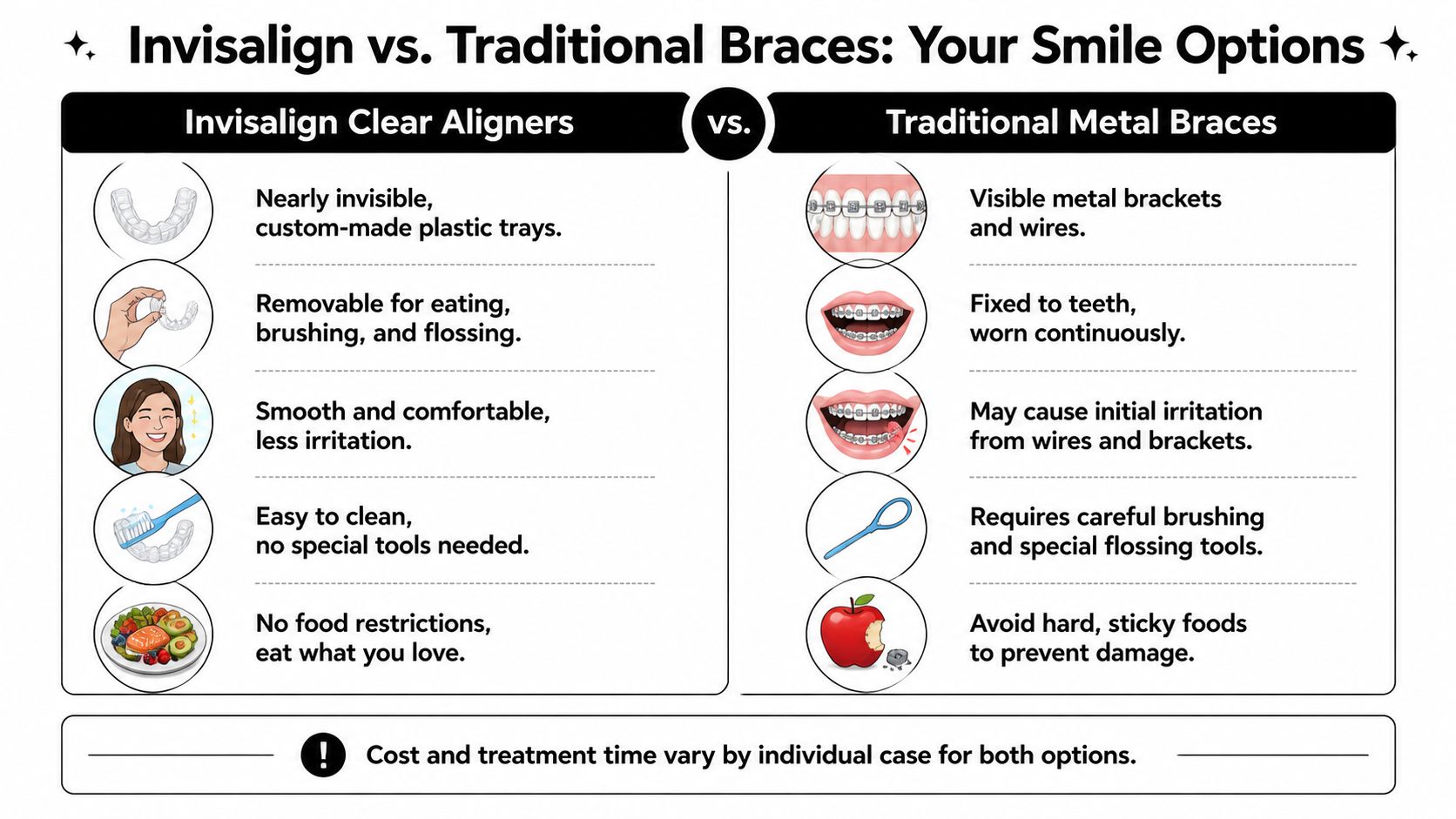
Invisalign vs. Traditional Braces at a Glance
| Feature | Invisalign Clear Aligners | Traditional Metal Braces |
|---|---|---|
| Visibility | Nearly invisible in daily life | Visible brackets and wires |
| Removability | Removable for meals and cleaning | Fixed to the teeth |
| Comfort | Smooth trays, often less rubbing on cheeks | Can irritate lips and cheeks, especially early on |
| Oral hygiene | Easier to brush and floss normally | Requires more careful cleaning around brackets |
| Food restrictions | Fewer restrictions because trays come out | Hard and sticky foods can create problems |
| Best fit | Patients who value aesthetics and can follow directions closely | More complex tooth movement and severe bite correction |
When Invisalign works well
Invisalign appeals to adults and teens who want treatment to be less noticeable. The trays come out for eating, brushing, and flossing, which is one reason many busy professionals prefer them. If your schedule includes client meetings, public speaking, or social events, that discretion matters.
Aligners also tend to fit more comfortably into routines involving cosmetic dentistry and daily oral hygiene. Patients usually find it easier to keep teeth clean during treatment because they can brush and floss without working around brackets.
The trade-off is responsibility. Invisalign only works well when you wear it consistently and follow instructions carefully. If trays are left out too often, treatment can stall or become less predictable.
When braces are the stronger choice
Traditional braces still have clear advantages. For severe crowding, difficult bite relationships, and more demanding tooth movement, braces often provide better control. They stay on the teeth full time, so treatment doesn’t depend on remembering to put trays back in after every meal or coffee break.
Braces can also be the better choice for patients who know they won’t want the burden of removable appliances. Some people do better with a fixed system.
If a case is complex, convenience shouldn’t be the deciding factor. Control and predictability matter more.
What patients often get wrong
Patients sometimes assume the more modern-looking option is always the better one. That isn’t how orthodontics works. The best appliance is the one that matches the problem.
Other patients focus only on appearance and forget about maintenance. Invisalign sounds simple, but if you snack often, drink coffee throughout the day, or tend to misplace things, aligners can become frustrating. Braces require more careful cleaning, but they remove the daily decision-making.
A good consultation should compare both options objectively. The goal isn’t to push one system. It’s to choose the one that gives you the safest and most efficient path to a stable result.
Your Orthodontic Journey at Our Walnut Creek Office
The first visit usually feels easier once patients know what to expect. Patients often arrive with a mix of curiosity and concern. They want answers, but they also worry about discomfort, time, and whether treatment will fit their life.
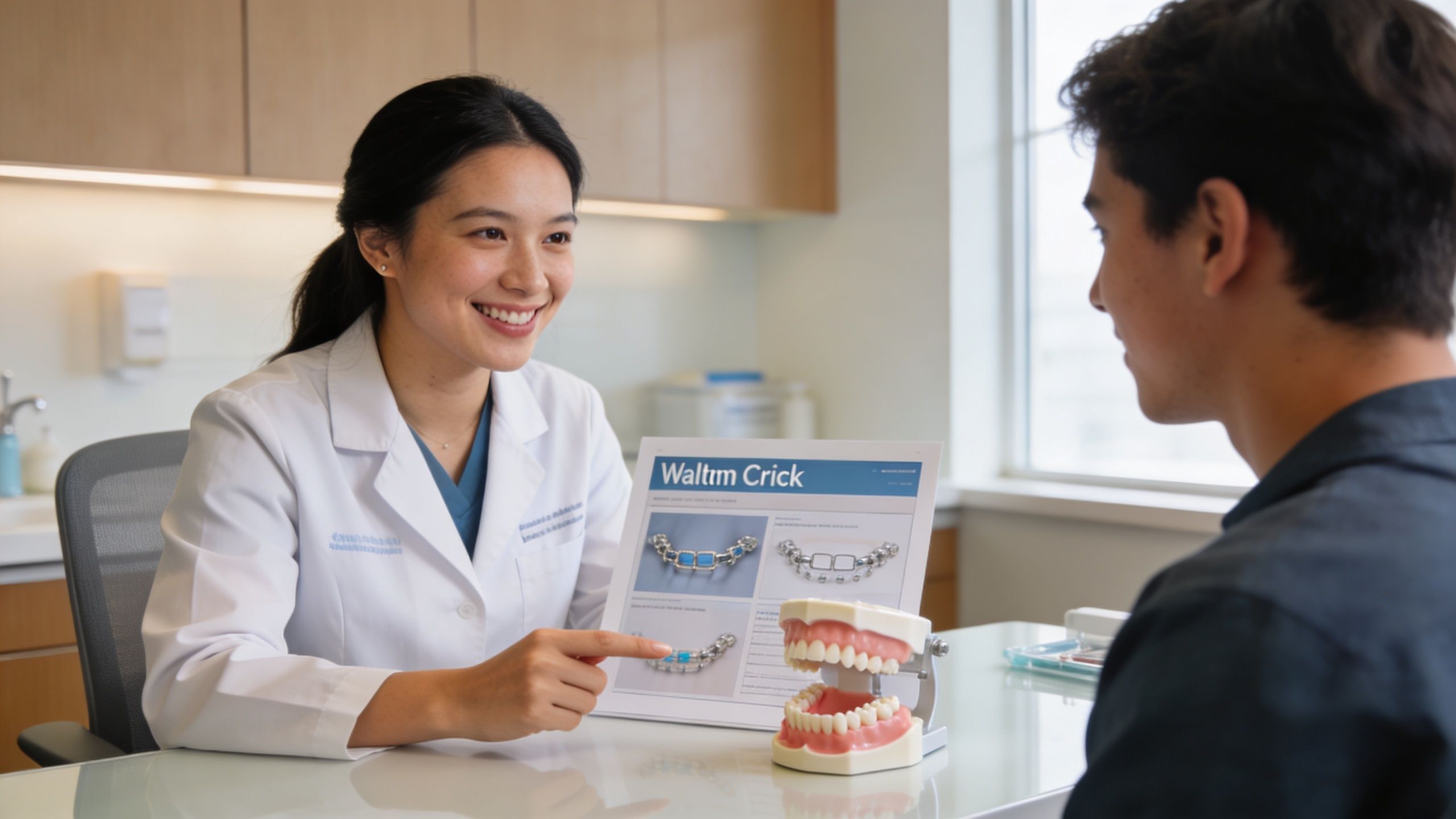
The first consultation
At the beginning, the focus is on understanding your bite, your goals, and any other dental issues that could affect treatment. Some patients want straighter front teeth. Others are dealing with crowding, a shifting bite, or older restorative work that needs to be protected.
Our practice uses advanced 3D optical scanning technology such as CEREC Primescan to capture detailed digital images of the teeth and gums, which avoids traditional impressions and improves the fit and accuracy of appliances like Invisalign, as described on our advanced dental technology page. For patients, that usually means less mess, better comfort, and clearer planning from the start.
A strong consultation should answer practical questions in plain language, including whether you’re a better candidate for aligners or braces and how your treatment may affect future restorative work. If you’re considering aligners, many patients also want a realistic sense of timing, and our overview of how long Invisalign can take helps explain the factors that influence that process.
Building the treatment plan
Once records are gathered, the next step is choosing the right path. This isn’t just a matter of saying yes to straightening teeth. It means deciding what should happen first, what should wait, and what will give you the most stable result.
That planning stage often includes questions like:
- Is your bite stable enough to move forward now, or does another dental issue need attention first?
- Would braces or aligners give better control for your specific tooth movement?
- Are there worn, broken, or missing teeth that change how the final bite should be designed?
Patients appreciate this stage because it replaces uncertainty with a sequence.
Here’s a closer look at what many patients want to understand before starting:
What treatment feels like day to day
If you choose Invisalign, you’ll receive a series of custom trays and clear instructions on how to wear and care for them. If you choose braces, the first adjustment period usually involves learning new brushing and eating habits. In both cases, follow-up visits matter because small corrections early can prevent bigger problems later.
During treatment, the best results usually come from a few steady habits:
- Keep appointments consistent so tracking and adjustments stay on schedule
- Protect oral hygiene with careful brushing, flossing, and regular cleanings and exams
- Speak up early if something feels off, whether it’s tray fit, a poking wire, or bite discomfort
Good orthodontic care isn’t only about moving teeth. It’s about monitoring how those changes affect comfort, function, and the health of the surrounding teeth and gums.
The final phase matters more than people expect
When active treatment ends, retention begins. Teeth can shift if they aren’t supported after movement. Retainers help protect the work you’ve invested in and preserve the result over time.
This is also when other care may come into focus. Some patients move on to teeth whitening. Others need crowns, implants, or restorative refinements once tooth positions are improved. A well-managed orthodontic journey doesn’t end with straight teeth. It ends when your smile functions well and is ready for the next stage of long-term care.
How to Choose the Right Walnut Creek Orthodontist
Choosing an orthodontist walnut creek patients can trust shouldn’t come down to marketing alone. You need someone who can diagnose accurately, explain clearly, and recommend treatment based on what your teeth need, not what sounds easiest.
Start with experience and clinical range
Experience matters because orthodontic decisions are full of trade-offs. A patient may look like an easy Invisalign case at first glance, but existing crowns, gum recession, bite wear, or missing teeth can change the plan.
Dr. William M. Schneider has over 25 years of established expertise in the Walnut Creek community, backed by advanced AEGD training and a commitment to modern technology and patient-centered care. That kind of background matters because orthodontics often overlaps with restorative and cosmetic needs in ways patients don’t always see at first.
Look for practical signs of quality
A good office should make it easy to understand both the treatment and the reasoning behind it. When evaluating a provider, pay attention to details like these:
- Technology that improves planning so you’re not relying on outdated impressions and guesswork
- Clear communication about whether your case is straightforward or more complex
- A comfortable environment if you’re anxious about dental treatment
- Access to related services when alignment is only one part of the solution
These things affect the patient experience, but they also affect outcomes. Cleaner records support better appliance fit. Better explanations improve follow-through. A calmer visit helps anxious patients complete care.
Ask one question many people forget
Ask whether the office can handle your case if treatment becomes more complicated than expected.
That question matters for adults especially. Teeth that have old crowns, previous root canals, gum changes, or spacing from missing teeth often need a broader plan. If your orthodontic care sits in isolation from the rest of your dentistry, treatment can become fragmented.
The right provider doesn’t just tell you what can be straightened. They tell you what has to be protected along the way.
Comfort and trust should be visible
You shouldn’t have to work hard to get a straight answer about pain control, maintenance, or what happens if something breaks. A trustworthy office explains the routine parts and the inconvenient parts. That honesty is a good sign.
If you’re already searching for a dentist in Walnut Creek, CA who can support preventive care, restorative dentistry, cosmetic improvements, and orthodontic planning under one roof, that broader capability is worth serious attention.
Integrated Care for Adults with Complex Dental Needs
Adults often come in with a more layered situation than teenagers do. Their teeth may have shifted over time, but they may also need a crown replaced, an implant planned, or gum health stabilized before orthodontic movement starts. That’s where isolated treatment can create delays.
A key gap in local patient education is the lack of guidance for adults who need both orthodontic and restorative care. As noted by Walnut Creek orthodontic market analysis focused on integrated adult treatment planning, this combined path is clinically important because poor sequencing can slow treatment and compromise the final result.
Why sequencing matters
Orthodontics can create the space needed for a future implant. It can improve tooth position before a crown is redesigned. It can also reveal where a bite needs support before cosmetic work begins.
If those steps happen out of order, patients can end up redoing work or waiting longer than necessary. In contrast, coordinated planning lets each phase support the next one.
Examples include:
- Moving teeth before an implant because implants don’t move like natural teeth
- Aligning a bite before final crowns so restorations fit the corrected position
- Addressing gum concerns first when periodontal health could affect tooth movement
For patients interested in a broader perspective on bite development and function, our page on an airway-focused orthodontist adds helpful context.
Why one coordinated team helps
When one office understands both alignment and restoration, communication gets simpler. The treatment plan stays centered on the final outcome, not just the first procedure. That’s especially valuable for adults balancing convenience, aesthetics, chewing comfort, and long-term stability.
This is often the difference between a smile that only looks straighter and a mouth that works better after everything is complete.
Frequently Asked Questions About Orthodontic Treatment
How much does orthodontic treatment cost
Cost depends on the complexity of the case, the type of appliance, and whether other dental issues need attention along the way. For a general starting point, national ranges published in local orthodontic cost guidance place traditional braces at about $3,000 to $7,000 and Invisalign at about $3,500 to $8,000.
Those numbers are only broad reference points. The right way to understand your cost is through a personalized exam and treatment plan.
Does insurance cover braces or Invisalign
Some dental plans include orthodontic benefits, while others don’t. Coverage can depend on age limits, plan details, and whether pre-authorization is required. That’s why insurance questions should be handled early, before treatment starts.
Our team helps patients review benefits, understand likely out-of-pocket costs, and look at flexible payment options when needed.
Is orthodontic treatment painful
Most patients describe treatment as pressure or soreness rather than sharp pain. That can happen after starting braces, switching aligners, or having an adjustment. The feeling is usually temporary, and comfort improves as your mouth adapts.
Patients with dental anxiety often do better when they know exactly what to expect before treatment begins. Clear communication, a gentle approach, and thoughtful planning make a real difference.
Can I get orthodontic treatment if I also need other dental work
Yes, but the order matters. If you need crowns, implants, gum treatment, or restorative care, those services should be coordinated with your orthodontic plan. That’s one of the biggest advantages of choosing a practice that can evaluate the full picture from the beginning.
A straighter smile is important. A straighter smile that also protects your bite, restorations, and long-term oral health is better.
If you’re looking for a clear, comfortable path to orthodontic care in Walnut Creek, schedule a consultation with William M. Schneider, DDS. You’ll get a thoughtful evaluation, honest guidance on braces or Invisalign, and a treatment plan built around your full oral health, not just one isolated concern.