A hard fall, a sudden cry, and then you notice a chipped tooth. For most parents, that moment feels bigger than it is. It’s upsetting, your child is frightened, and you’re trying to decide whether this is something to watch, something to fix, or something that needs help right away.
The good news is that baby chipped tooth repair is something dentists see often. In many cases, treatment is straightforward. The key is staying calm, protecting the area, and getting the tooth evaluated so you know exactly what happened and what your child needs next.
Chipped Baby Tooth? A Walnut Creek Parent’s Guide
A toddler slips on the floor, bumps the coffee table, and starts crying before you even see what happened. Then you notice a small corner missing from a front baby tooth. Parents usually have the same first thought. “Did we just create a long-term problem?”
Most of the time, the answer is no. But it is something worth checking.

Why this happens so often
Young children fall. They run before they can fully balance, climb before they can judge distance, and lead with their faces more often than parents would like. As many as 1 in 4 children experience a dental injury during childhood, with chipped baby teeth being a common occurrence in younger kids according to GoodRx’s overview of chipped baby teeth.
That number matters because it should take some of the panic out of the moment. A chipped baby tooth is common. It doesn’t mean you did anything wrong, and it doesn’t automatically mean your child is facing a major dental procedure.
Practical rule: A baby tooth injury is common, but the right response is still a prompt dental evaluation, not guesswork at home.
Why a baby tooth still matters
Some parents assume they can ignore the problem because baby teeth eventually fall out. That usually leads to trouble. Baby teeth help your child bite, chew, speak clearly, and hold space for the adult teeth developing underneath.
A small chip may stay small. A deeper crack may not.
The challenge is that those two situations can look similar to a parent in the kitchen or living room. That’s why a calm exam matters. A dentist can determine whether the issue is only cosmetic, whether the tooth edge needs smoothing, or whether the injury goes deeper than it appears.
Gentle care close to home in Walnut Creek
If you’re looking for a dentist in Walnut Creek, CA after a fall, it helps to have a practice that treats children with patience and clear communication. Parents need answers, and kids need a calm room, a gentle voice, and a plan that doesn’t make the experience scarier than it already feels.
That first visit is often less dramatic than families expect. The goal is simple. Keep your child comfortable, find out what’s going on, and choose the least invasive option that protects the tooth and your child’s smile.
What to Do Right Now for Your Child’s Chipped Tooth
The first few minutes after the injury matter most because your child will take emotional cues from you. If you slow things down, they usually settle faster too.
Start with comfort and a quick check
Pick your child up, hold them upright, and look gently at the mouth. You’re trying to answer a few basic questions:
- Is there bleeding? A little bleeding from the lip or gum is common after a fall.
- Is the tooth sharp or jagged? Rough edges can cut the lip or tongue.
- Is the tooth still in place? If it looks pushed sideways or inward, call right away.
- Can your child close their mouth normally? If they can’t, the injury may involve more than the tooth.
If there’s dirt or blood around the area, rinse the mouth gently with water. Don’t scrub the tooth.
Reduce swelling and protect the area
A cold compress on the outside of the cheek can help with swelling and soreness. Keep meals simple for the rest of the day. Soft foods are easier and less likely to irritate the tooth.
A few practical moves help:
- Rinse gently to clear away blood and debris.
- Use a cold compress on the cheek, especially if the lip is swollen.
- Avoid hard or crunchy foods until the tooth is evaluated.
- Pause brushing directly on that tooth if the area is tender.
- Save any tooth fragment if you find it.
If your child is uncomfortable, many parents use over the counter pain relief as directed for age and weight. Keep the tooth area clean, but don’t force a toothbrush into an already sore mouth.
If you find the broken piece
Place the fragment in a clean container and bring it to the appointment. In some situations, reattachment may be possible. Even when it isn’t, the fragment can help the dentist understand the shape and extent of the break.
If the chip seems small but your child keeps pointing to the tooth, don’t dismiss that. Young children are often good at telling you which tooth feels “not right,” even when they can’t explain why.
When it’s an emergency
Call right away if the tooth looks displaced, your child has ongoing bleeding, there’s significant swelling, or the injury appears deeper than a small surface chip. The same is true if your child is in clear pain when the tooth is touched or when they try to bite.
For families searching for an emergency dentist after a fall, this page on emergency dental care in Walnut Creek can help you decide the next step.
When it can wait for a prompt office visit
A small chip without major pain, swelling, or displacement usually doesn’t require an ER visit. It still deserves professional evaluation soon, but many of these injuries can be handled during normal office hours.
What doesn’t work is “waiting to see” for too long when the tooth has a rough edge, visible damage, or signs that your child is avoiding chewing on that side. Small problems stay manageable when they’re checked early.
How We Repair Chipped Baby Teeth at Our Walnut Creek Office
Parents usually want one clear answer. “Can this be fixed?” In many cases, yes.
Repairs for minor to moderate chipped baby teeth are often achievable same-day through bonding or fillings, and these treatments may cost $100-$300 depending on severity and insurance, as noted by SoCal Kidz Dentistry’s discussion of chipped front teeth in children.
That doesn’t mean every chip gets the same treatment. The right repair depends on where the tooth broke, how much structure remains, and whether the injury is only on the surface or closer to the nerve.
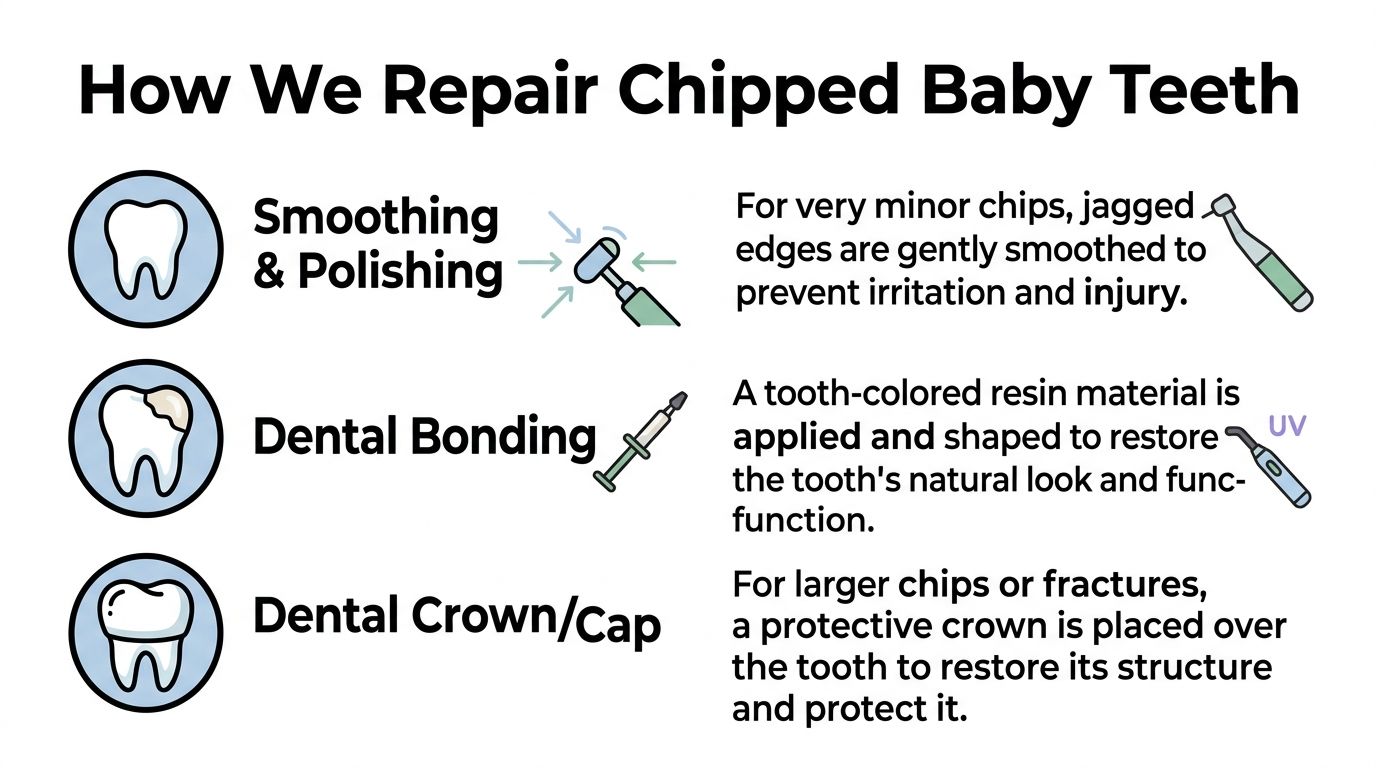
When smoothing is enough
A tiny chip often needs the least treatment. If the edge is rough but the tooth is otherwise healthy, smoothing and polishing may be the best option.
This works well when the main problem is irritation. The goal isn’t to rebuild every microscopic contour. It’s to stop the tooth from catching on the lip or tongue and keep the area comfortable.
This is often the most practical approach for very small chips on baby teeth that aren’t causing pain or functional problems.
When bonding makes the most sense
For visible front teeth or moderate chips, dental bonding is often the best balance of appearance and function. A tooth-colored composite resin is shaped onto the tooth and blended to match the natural surface.
According to Memorial Pediatric Dentistry’s explanation of bonding for children, the process typically takes 30-60 minutes per tooth. It involves a mild etching solution, layered composite resin, and a special curing light. That same source notes a 10-year durability rate of approximately 60% for direct composite restorations in children, with success rates reaching 100% when enough tooth structure remains.
Here’s the trade-off. Bonding looks natural and is conservative, but it depends on how much healthy tooth is available and how much biting force that tooth handles.
| Repair option | Best for | Main advantage | Main limitation |
|---|---|---|---|
| Smoothing | Tiny chips | Fast and simple | Doesn’t rebuild missing shape |
| Bonding | Moderate chips, visible teeth | Natural look | May need future touch-up |
| Crown | Larger fractures | Strong protection | More involved than a small repair |
When a crown protects the tooth better
Some chips are too large for a small bonded repair. In those cases, a dental crown or cap may be the more reliable option because it covers and protects the remaining tooth structure.
Parents sometimes hesitate at the word “crown,” but on a damaged baby tooth it can be the most sensible way to restore shape, keep chewing comfortable, and lower the risk of further breakage. If you want a clearer overview, this page explains what a dental crown procedure involves.
When the nerve is involved
A deep fracture changes the conversation. If the injury reaches the inner part of the tooth, a pulpotomy, sometimes called a baby root canal, may be recommended to preserve the tooth as a placeholder for the adult tooth.
That sounds intimidating to parents. In practice, it’s a preservation-focused treatment used when saving the baby tooth is better for long-term development than losing it early.
William M. Schneider, DDS provides restorative dental care in Walnut Creek that may include smoothing, tooth-colored fillings, bonding, crowns, and other treatment based on the child’s exam findings.
A good treatment plan doesn’t chase the fanciest repair. It chooses the simplest option that keeps the tooth comfortable, functional, and safe.
What to Expect at Your Walnut Creek Dental Appointment
Children usually arrive more worried about the unknown than the tooth itself. The visit goes better when everyone knows what will happen.
A calm appointment starts with pace. No rushing, no big dramatic language, and no surprise moves around a frightened child.
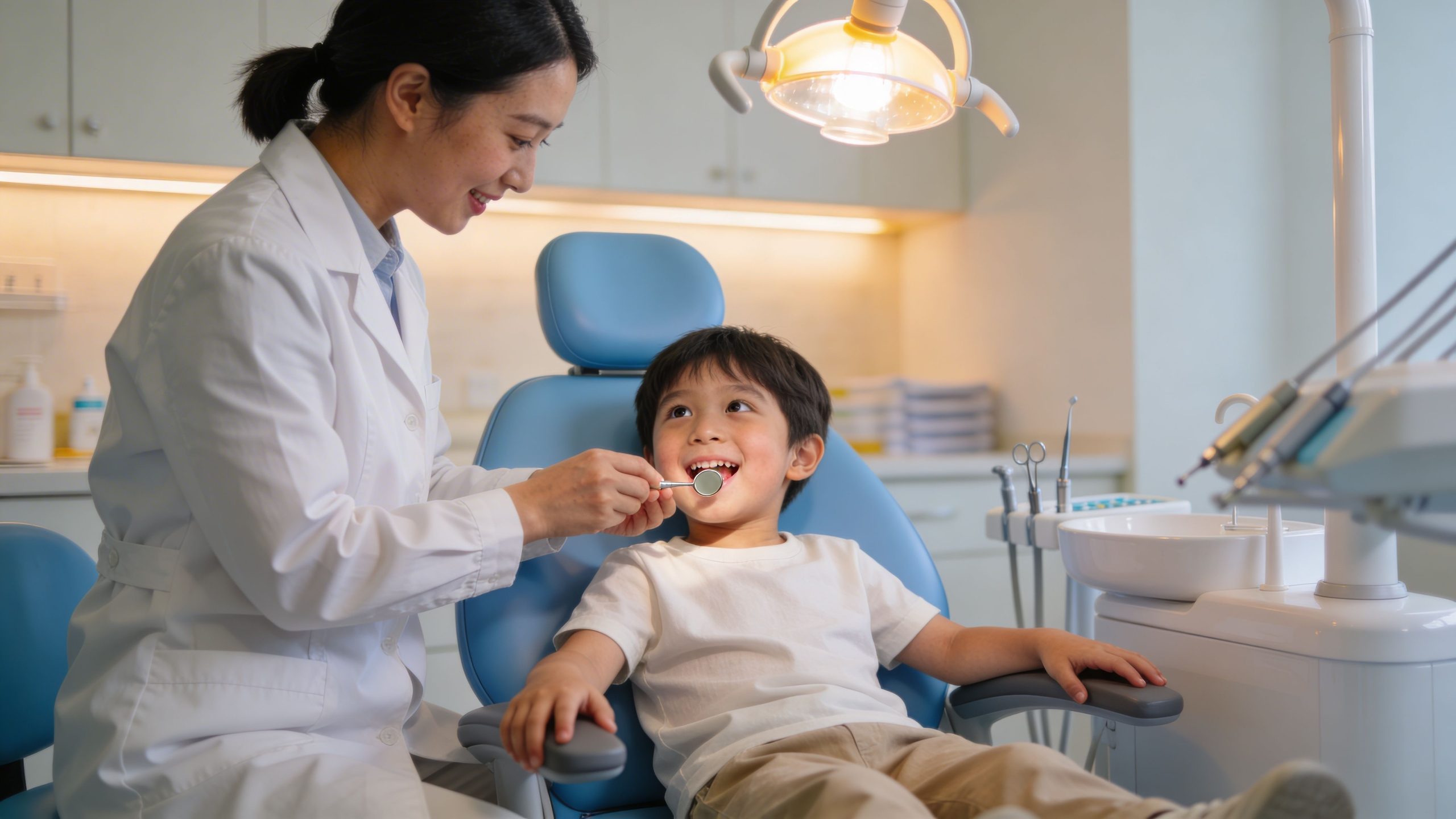
The first few minutes matter
When you arrive, your child doesn’t need a lecture about being brave. They need a sense that they’re safe. Parents can help by keeping the explanation simple. “The dentist is going to look at your tooth and help it feel better.”
That’s usually enough.
If your child is upset, the exam often begins with conversation, not instruments. Young children cooperate better when they feel seen first and examined second.
How the exam guides treatment
A chipped tooth can be more complex than it looks from the front. That’s why the exam focuses on more than the missing piece. The dentist checks the tooth, surrounding gum tissue, bite, and whether there are signs the root or pulp may be involved.
Expert pediatric dental management follows a clear hierarchy. A thorough exam, often including an X-ray, helps assess root and pulp risk. Minor chips may need smoothing, moderate chips are often suited to bonding, and severe damage with pulp exposure may require a pulpotomy to preserve the tooth as a placeholder for the permanent tooth, as described by Sweet Tooth Weston’s overview of pediatric chipped tooth repair.
That imaging step matters because what parents can’t see is often the deciding factor. A child may have a small visible chip but a deeper line or impact injury underneath.
The exam isn’t just about fixing what broke. It’s about confirming what stayed healthy.
Helping an anxious child settle in
Parents often ask what to say before the visit. The best approach is honest and brief.
Try language like this:
- Keep it simple and say the dentist will look at the tooth and help.
- Avoid promising “nothing will happen” because children remember that if treatment is needed.
- Skip scary words if your child doesn’t need them.
- Bring a comfort item if that helps your child feel anchored.
For some children, comfort measures and a gentle pace are enough. For others, sedation options may be appropriate when anxiety would otherwise make treatment harder than it needs to be.
A short video can also help parents feel more familiar with the visit process before they come in.
Before you leave
You should expect clear answers before you head home. That includes what the injury involves, whether treatment was completed that day, what your child can eat, and what signs would justify a follow-up call.
That kind of clarity matters as much as the repair itself. Parents relax when they know what was found, what was done, and what comes next.
Aftercare, Prevention, and Costs for Chipped Tooth Repair
The repair is only part of the job. The next few days help determine how comfortable your child stays and how well the tooth settles.
Aftercare at home
Keep the area clean, but be gentle. If the tooth or gum is sore, offer softer foods and avoid hard biting on that side for a bit. Mild temperature sensitivity can happen after treatment, especially if the tooth took a significant hit before it was repaired.
A few basics help most children recover smoothly:
- Choose softer foods such as yogurt, eggs, pasta, mashed vegetables, or other easy-to-chew meals.
- Return to brushing carefully and keep the area clean without scrubbing an already tender tooth.
- Watch behavior, not just words because younger children may stop chewing on one side before they tell you the tooth hurts.
- Call if symptoms change and your child develops swelling, worsening pain, or new sensitivity that doesn’t seem to settle.

Preventing the next injury
No parent can prevent every fall. Still, some habits lower the chances of another chipped tooth.
For toddlers, focus on home safety and supervision during climbing and rough play. For older kids, sports protection matters. If your child is active, ask about a mouthguard for activities where collisions or falls are likely.
Parents also ask about habits that may affect baby teeth over time. If your child grinds at night, this practical article on Why Do Babies Grind Their Teeth? gives helpful parent-focused context about what bruxism can look like and when it may deserve closer attention.
What about cost and insurance
Cost worries are real, especially when the injury was unexpected. Minor to moderate baby chipped tooth repair is often done the same day with bonding or fillings, and those services can fall in the $100-$300 range depending on severity and insurance, based on the earlier referenced clinical overview.
That range is useful, but it’s not a substitute for an exam. The exact fee depends on what the tooth needs, not just how the chip looks from the outside.
Ask for the treatment options in plain language. Parents make better decisions when they understand the difference between “could do” and “should do.”
A good dental office should explain what is urgent, what is optional, and how insurance may apply before treatment moves forward whenever possible. That kind of transparency lowers stress for parents and keeps the focus where it belongs, on your child.
Your Partner for Pediatric Dental Health in the East Bay
A chipped tooth may be the reason you call today. It shouldn’t be the only time your family feels supported by a dentist.
Children do better when they have a dental home. They recognize the setting, they know the faces, and routine visits feel normal instead of tense. That familiarity can make a big difference when an unexpected injury happens and they need care quickly.
Why long-term care matters
Baby teeth are temporary. Dental habits are not.
Regular dental care helps parents catch issues before they become painful or expensive. It also gives children repeated positive experiences with cleanings, exams, and dental X-rays when needed, which can reduce fear over time.
For many families in Walnut Creek and the East Bay, that relationship matters just as much as any one procedure. A practice that can care for your child after a fall can also support routine checkups, restorative dentistry, and future smile needs as your family grows.
Care that grows with your family
Parents searching online for a dentist near me often aren’t only looking for one emergency visit. They’re looking for a place that can handle everyday preventive care, a chipped tooth, and adult treatment needs without sending the family in different directions.
That may include:
- Cleaning and exams for ongoing preventive care
- Dental X-rays when symptoms or trauma require a closer look
- Restorative dentistry such as crowns, fillings, or tooth extraction when necessary
- Cosmetic dentistry for adults interested in teeth whitening or smile improvements
- Dental implants near me searches from patients who want long-term tooth replacement options
When one office can support both urgent needs and long-term oral health, care becomes easier to manage. Parents spend less time starting over and more time working with a team that already knows their history and preferences.
A calm next step
If your child chips a tooth, don’t let uncertainty make the situation harder than it needs to be. Get the tooth evaluated, get a clear plan, and give your child the benefit of early care.
Families in Walnut Creek, CA often want two things in that moment. Competence and calm. Both matter.
A thoughtful dental visit can turn a scary afternoon into a manageable problem with a clear solution. That’s what parents need, and it’s what children remember.
If your child has a chipped baby tooth and you need clear guidance from a local dental team, contact William M. Schneider, DDS to schedule an appointment in Walnut Creek. Whether you’re dealing with a recent fall, need an emergency dental evaluation, or want a long-term family dentist in the East Bay, the office can help you take the next step with practical, compassionate care.