You may be putting this off right now. Maybe your tooth has been bothering you for weeks. Maybe you're overdue for a cleaning and exams visit, but the sound of a drill, the thought of an injection, or a bad memory from years ago keeps pushing the appointment to next month.
That hesitation is common. It also has a name in many practices: untreated dental anxiety that turns a small problem into a bigger one. The good news is that modern dental care in Walnut Creek, CA can feel very different from what you remember. A thoughtful office, clear communication, painless injections, and sedation options can change the entire experience.
If you've been searching for a dentist near me, dentist in Walnut Creek, CA, emergency dentist, or even a cosmetic dentist near me, compassionate dental care should be part of what you're looking for, not an extra.
Anxious About the Dentist You Are Not Alone
A lot of anxious patients tell the same story. They book an appointment, then cancel it. They promise themselves they'll call back after work, after the weekend, after the holidays. Meanwhile, the tooth still hurts when they chew, their gums still bleed when they brush, or the broken filling still catches on food.
That cycle usually isn't about neglect. It's about fear, embarrassment, and a sense that once they sit in the chair, they'll lose control.

Why dental fear feels so personal
Dental anxiety doesn't look the same for everyone. Some patients are uneasy about pain. Others worry about gagging, feeling trapped, hearing difficult news, or being judged because it's been years since their last new patient exam.
Those concerns are understandable. Dentistry is close, personal care. You're lying back, someone is working in a sensitive area, and you may already be uncomfortable before the visit starts.
You don't need to “tough it out” to deserve treatment. A good dental experience starts with being heard.
That's where compassionate dental care matters. In practice, it means the office adapts to the patient, not the other way around. The dentist explains what's happening, checks in often, and uses comfort-focused techniques from the first conversation through the end of treatment.
What this looks like in a real office
At a Walnut Creek practice, compassionate care should show up in practical ways:
- Before treatment begins: staff members listen without rushing and note your concerns.
- During the exam: findings are explained in plain language, not jargon.
- When treatment is recommended: you're given options, not pressure.
- If you're nervous about procedures: the office discusses comfort methods, including sedation when appropriate.
That approach matters whether you need routine dental x-rays and preventive care, a tooth extraction, a same-day emergency dentist visit, or a larger restorative plan involving crowns, bridges, or dental implants near me.
For many East Bay patients, the first relief comes before any procedure starts. It comes from realizing they aren't being judged, and they aren't expected to manage fear alone.
What Compassionate Dental Care Really Means in Walnut Creek
Compassionate care isn't vague kindness. It's a clinical philosophy with visible habits, systems, and standards. If you're choosing a dentist in Walnut Creek, CA, it helps to know what that should include.
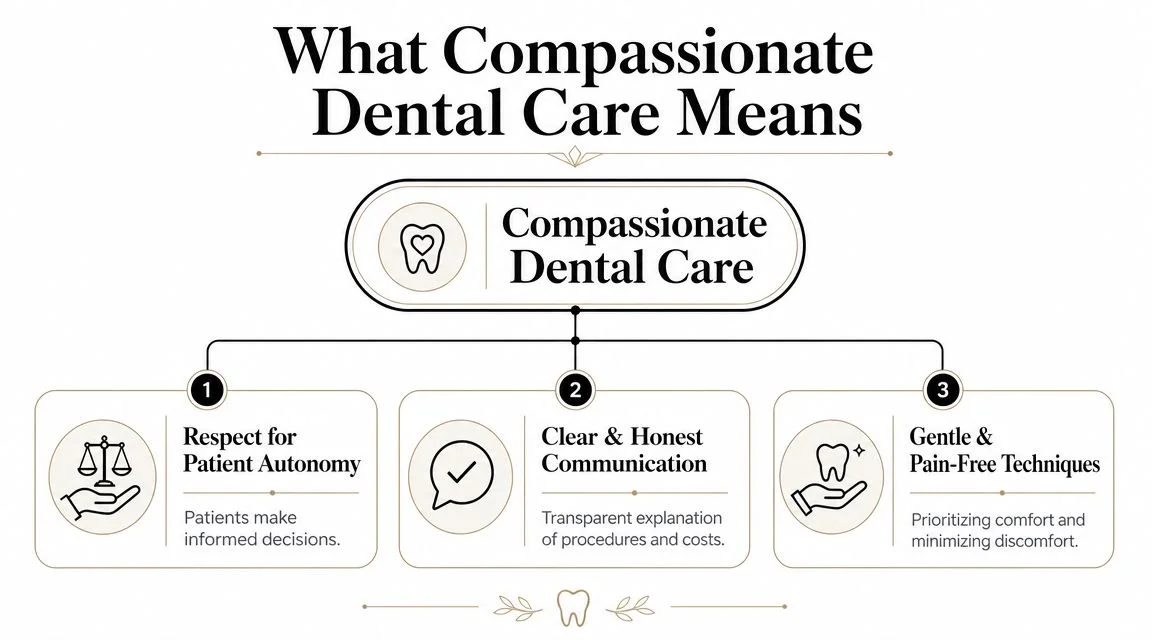
Respect for patient autonomy
A compassionate dentist doesn't treat questions as resistance. Patients need room to understand their condition, compare options, and make informed decisions.
That can mean talking through whether a tooth can be restored or whether a tooth extraction makes more sense. It can mean discussing timing, sequencing, or a phased plan when care needs to be broken into manageable steps.
For some people, autonomy also includes cost conversations. Compassion in dentistry isn't just chairside manner. It also includes practical access, transparent pricing, realistic treatment planning, and honest discussion of tradeoffs. Clinics serving uninsured and low-income adults often make that reality plain. For example, Compassion Dental in Northern Nevada describes its free exams, x-rays, fillings, extractions, and cleanings for uninsured, low-income adults, which highlights how closely compassionate care and access are connected.
Clear and honest communication
Patients usually get more anxious when they feel surprised. Good communication lowers that uncertainty.
A dentist should explain:
- What the problem is: decay, infection, gum inflammation, bite wear, or a cracked tooth
- What happens if you wait: pain may worsen, damage may spread, or treatment may become more involved
- What the options are: monitor, restore, extract, replace, or improve function and appearance with cosmetic dentistry or restorative dentistry
- What the visit will feel like: numbness, pressure, sounds, timing, and what to expect after
Gentle techniques with real clinical value
Comfort-focused care isn't only about bedside manner. It can affect outcomes. A 2024 scoping review found that among 30 studies discussing compassion in dental treatment, only 2 measured effects on oral health outcomes. In one included study, provider empathy training was associated with statistically significant improvements in oral hygiene and fewer cavities. The review notes that the evidence base is still limited, but the findings connect compassionate care to clinical results, not just patient satisfaction, as described in the 2024 scoping review on compassion in dental treatment.
Practical rule: If a practice says it's gentle, you should be able to point to what that means in the operatory, not just in the marketing.
In Walnut Creek, that usually means slowing the pace when needed, using anxiety-sensitive communication, and giving patients control points throughout care.
Gentle Dentistry Services for a Comfortable Experience
Compassionate care becomes real when it changes how treatment is delivered. A patient doesn't feel “cared for” because a website says so. They feel it when the injection is easier than expected, when the team pauses before anxiety spikes, and when a difficult procedure is broken into manageable steps.
Painless injections and gentler numbness
For many anxious adults, the injection is the biggest mental barrier. That fear often has less to do with the procedure itself and more to do with anticipation.
A comfort-focused office reduces that stress by paying attention to technique. Topical numbing, a slow and controlled approach, and clear warning before anything starts can make local anesthesia far more tolerable. Patients also do better when the dentist tells them what they may feel, such as pressure or vibration, instead of saying nothing and letting them guess.
What doesn't work is rushing. Fast, impersonal treatment tends to increase tension, and tense muscles make the experience harder.
Sedation dentistry for patients who need extra help
Some patients can get through a cleaning and exams appointment with reassurance alone. Others need more support, especially if they're having a root canal, multiple restorations, a tooth extraction, or implant treatment.
Sedation dentistry can help in several situations:
- High anxiety before routine care: some patients avoid even preventive visits without added support
- Longer appointments: extended treatment is harder when you're already tense
- Strong gag reflex: calming the body can make care smoother
- Emergency dentist visits: pain and urgency often amplify fear
- Complex restorative work: treatment planning is easier when comfort is addressed upfront
If you want a straightforward overview, this guide on how dental sedation works explains how sedation is used to support a calmer appointment experience.
Comfort should apply to every type of dentistry
Gentle dentistry isn't only for one kind of patient or one kind of visit. It should carry through the full range of care.
A patient looking for dental implants near me may need reassurance about surgery, healing, and follow-up. Someone searching for a cosmetic dentist near me may be less worried about pain and more worried about being pressured into treatment they don't want. A patient with a broken tooth who needs an emergency dentist may need fast pain relief and a calm explanation of options. The same compassionate framework should work in all of those moments.
Here is where a private practice can make a difference. William M. Schneider, DDS provides preventive, cosmetic, and restorative treatment in Walnut Creek with painless injections, clear explanations, and sedation options when appropriate. Those details are what turn the phrase “gentle dental care” into something patients can feel.
Gentle treatment isn't passive. It's deliberate, skilled, and organized around reducing stress at each step.
What doesn't help anxious patients is minimizing their fear, overexplaining with technical jargon, or delivering a one-size-fits-all experience. What does help is matching the pace, language, and comfort plan to the person in the chair.
Your First Visit to Our Walnut Creek Dental Office
The first appointment matters because it shapes whether you'll feel comfortable coming back. For many patients, especially those new to the East Bay or returning to care after a long break, the biggest source of stress is not knowing what will happen.

From the first phone call to the front desk
A comfortable visit starts before anyone looks at your teeth. Scheduling should feel straightforward, not intimidating. If you mention anxiety, pain, time away from care, or a concern about treatment, the team should respond calmly and help you understand the next step.
When you arrive at a Walnut Creek office, the environment should lower stress instead of adding to it. Clean, organized spaces matter. So does a front desk team that welcomes you without making you feel behind or embarrassed.
For a new patient exam, expect the visit to focus first on understanding your current needs. That may include symptoms, past dental experiences, medical history, dental x-rays when indicated, and a clinical exam to identify decay, gum issues, worn restorations, bite concerns, or cosmetic goals.
What the appointment should feel like
A good first visit doesn't feel like a sales pitch. It feels like a conversation.
The dentist should review findings in plain English, show you what matters, and explain which issues are urgent versus which can be planned over time. If you need restorative dentistry, that may include fillings, crowns, bridges, root canal therapy, or discussion of replacement options after tooth loss. If your goals are cosmetic, the conversation may shift to teeth whitening, Invisalign, or smile improvements that still respect function and long-term health.
This short video can help you get a sense of the office experience before you visit.
No pressure and no judgment
The most important part of a compassionate first visit is often what doesn't happen. No one should lecture you for postponing care. No one should make you feel foolish for being nervous. No one should pressure you into saying yes on the spot.
Instead, expect a plan that accounts for real life.
- If you're in pain: immediate relief takes priority.
- If you're anxious: future visits may be paced differently or planned with sedation support.
- If you have multiple needs: treatment can often be sequenced in a practical order.
- If appearance matters to you: cosmetic goals can be discussed without losing sight of health and function.
That kind of visit helps patients from Walnut Creek and the surrounding East Bay move from avoidance to action because the process feels understandable and manageable.
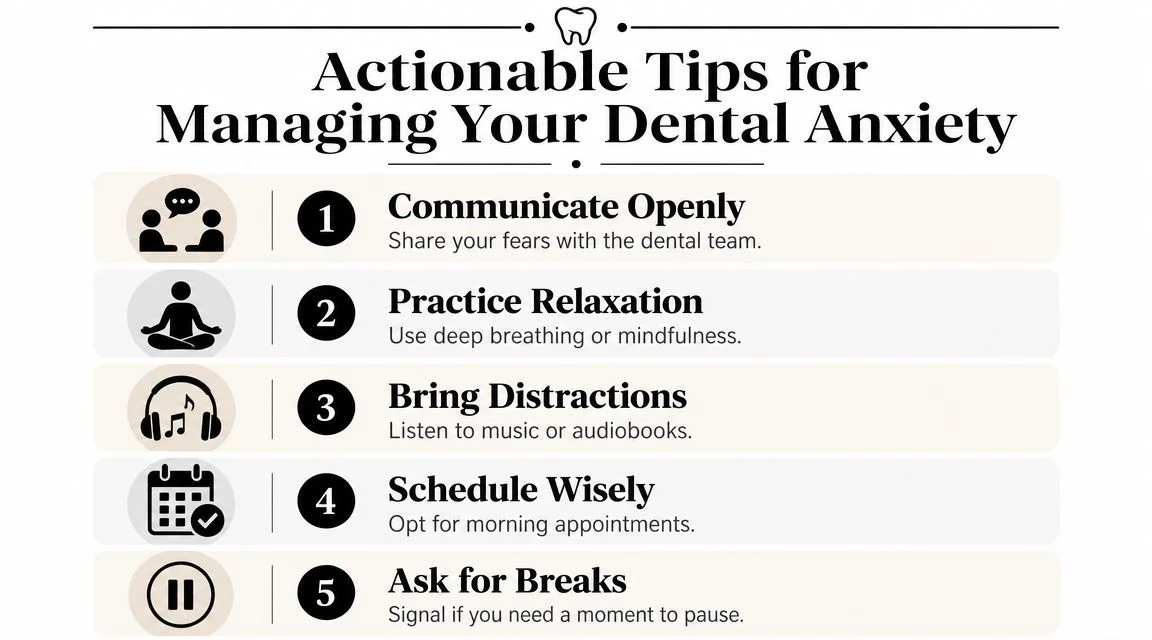
Actionable Tips for Managing Your Dental Anxiety
You can do a lot before and during an appointment to make the visit easier. The goal isn't to pretend you aren't nervous. The goal is to give yourself more control.
Small changes that often help
Start with your schedule. If possible, choose a time when you're less rushed and less likely to arrive already stressed. Many patients prefer morning appointments because they don't spend the whole day building up worry.
Bring your coping tools with you. Headphones, a calming playlist, an audiobook, or a familiar routine can make the environment feel less intense.
A few useful habits to try:
- Tell the team early: mention your anxiety when you schedule so the office can plan accordingly.
- Use a stop signal: agree on a hand raise before treatment begins.
- Practice slower breathing: longer exhales can help your body settle.
- Eat and hydrate as advised: following pre-appointment instructions prevents added discomfort.
- Ask for the next step only: some patients do better hearing one step at a time instead of the whole procedure upfront.
If you know what triggers your anxiety, say it plainly. Fear of needles, gagging, bad news, or loss of control each call for a different approach.
Give yourself permission to start small
You do not have to solve everything in one visit. For some patients, the right first step is a consultation, a limited exam for a problem tooth, or a basic cleaning and evaluation.
That kind of pacing can build trust. Once the first visit goes better than expected, the second visit usually feels easier.
If dental fear has been a long-running problem, this article on how to overcome dental anxiety offers additional guidance you can use before your next appointment.
What usually doesn't help
Trying to hide anxiety rarely makes the appointment smoother. Neither does waiting until you're in the chair to mention you're panicking.
It also helps to avoid reading too much into old experiences. Dentistry changes. Techniques improve. Communication styles vary widely from office to office. A rough visit years ago doesn't mean your next one will feel the same.
Your Questions About Gentle Dental Care Answered
Is sedation dentistry safe?
Sedation can be an appropriate option for many patients when it's selected carefully and reviewed in the context of medical history, current health, and the planned procedure. The key is individualized evaluation, not assuming every patient needs the same solution.
What if I panic during treatment?
That should be discussed before treatment starts. A stop signal, shorter appointments, breaks, and a step-by-step explanation can help prevent anxiety from building. If you do become overwhelmed, the team should pause and help you regain control before deciding whether to continue.
Will the dentist be upset if I haven't been in for years?
A professional office should focus on your current needs, not on blame. Many adults delay care because of fear, finances, time, or past experiences. The useful question isn't why you waited. It's what needs attention now and what the most manageable next step looks like.
Can compassionate care still be efficient?
Yes. Compassion doesn't mean dragging out every appointment. It means being organized, clear, and responsive so treatment is smoother. Patients often do better when the process is predictable and the team communicates well.
If you're looking for a calmer dental experience in Walnut Creek, the next step can be simple. Contact William M. Schneider, DDS to ask questions, request a consultation, or schedule an appointment for anything from cleaning and exams to tooth extraction, cosmetic dentistry, restorative care, or emergency treatment. A comfortable visit starts with a conversation.