You might be looking for a dentist in Walnut Creek, CA because something finally started bothering you. Maybe a tooth hurts when you chew. Maybe your gums bleed when you brush. Maybe nothing feels urgent, but you know it's been too long since your last exam and you're worried about what a new dentist might find.
That feeling is common. Many people don't need a lecture. They need a clear plan, a calm conversation, and a dental office that sees more than one tooth at a time. They want someone who can help with today's concern while also protecting their smile for the years ahead.
Your Partner for Lifelong Oral Health in Walnut Creek
A lot of new patients arrive with a simple question that hides a bigger concern. They ask whether they need a cleaning, a filling, or maybe a crown. What they're really asking is, “What's going on in my mouth, and how do I take care of it without feeling overwhelmed?”
That's where a holistic approach matters. Oral health isn't just about fixing one problem when it becomes painful. The World Health Organization estimates that oral diseases affect nearly 3.7 billion people worldwide, and it notes that untreated dental caries in permanent teeth is the most common health condition in the Global Burden of Disease 2021 dataset, which is one reason public health is shifting toward preventive and integrated care rather than a purely curative model (World Health Organization oral health fact sheet).
In everyday terms, that means your dentist should look at the whole picture. A cracked tooth may connect to a grinding habit. Bleeding gums may affect how long a future crown lasts. A missing tooth may change your bite and put stress on nearby teeth. If nobody steps back and connects those dots, treatment can feel scattered.
What patients often want most
People searching for a dentist near me, an emergency dentist, or a family dentist in Walnut Creek usually want three things:
- Relief first: If you're in pain, you want that addressed promptly.
- Honest guidance: You want to know what matters now, what can wait, and why.
- A practical path: You need a plan that fits your life, your goals, and your budget.
The best dental care doesn't make patients feel rushed or confused. It makes the next step clear.
That's the value of complete dental care. Instead of treating your mouth like a list of unrelated problems, your dentist helps you build a manageable plan for long-term health, comfort, function, and confidence.
For families and professionals in Walnut Creek and the East Bay, that kind of relationship matters. If you're choosing a new dental home, you're not just choosing a place for cleanings and exams. You're choosing a healthcare partner who will help you make decisions over time, whether you need preventive care, tooth extraction, dental implants near me, cosmetic improvements, or urgent treatment.
What Exactly Is Comprehensive Dental Care
You come in for one problem, maybe a sore tooth or a smile concern. Then the exam shows a few connected issues under the surface. That can feel unsettling at first, but it is often the moment patients begin to understand the value of complete dental care.
A single focused visit solves one immediate concern. A full-scope approach looks at your mouth the way a good primary care doctor looks at the rest of your health. It checks what hurts now, what may be developing subtly, and what could create bigger problems later if no one connects the pieces.
A cleaning plays an important role, but it cannot answer every question by itself. Good dental care also includes diagnosis, planning, timing, and long-term maintenance. Your dentist is evaluating your teeth, gums, bone, bite, soft tissues, and dental history so treatment decisions are based on how your whole mouth works together.
What makes an exam thorough
A thorough exam includes a visual inspection, a review of your dental history, and radiographic imaging such as X-rays. It also includes a periodontal evaluation so your dentist can assess gum health and the support below the gumline.
That fuller picture matters because many dental problems do not cause pain right away. Early decay, bone loss, leaking fillings, and bite stress can be easy to miss without the right information. At a practice focused on family dental care in Walnut Creek, these details help shape a plan that fits your needs instead of relying on guesswork.
What this looks like in real life
A patient may ask about teeth whitening because their smile looks dull. During a careful evaluation, the dentist may also find gum inflammation, worn edges from clenching, or older fillings that no longer seal well. Whitening may still make sense, but it may come later, after the foundation is healthier.
Another patient may search for a cosmetic dentist near me because they want straighter front teeth. The exam may show that the bite needs attention first, or that gum health should be stabilized before Invisalign or veneers are considered.
That order matters. Dental treatment works a lot like home repair. You can repaint a wall with a crack in it, but if the structure underneath keeps shifting, the surface result will not last.
More complete does not mean more treatment
This point causes a lot of confusion for new patients. A fuller evaluation does not mean you will be told to do everything at once. It means your dentist understands the full picture first, then helps you sort it into clear categories. What needs attention now. What can be monitored. What is optional. What best matches your goals and budget.
That's why this approach often feels more reassuring than a quick fix. You leave with priorities, not pressure. You understand what your dentist sees, why one step may come before another, and how today's choices support your long-term comfort, function, and confidence.
Our Comprehensive Dental Services for East Bay Families
A family may come in for very different reasons on the same day. One person is due for a cleaning. Another has a cracked tooth. A teenager wants straighter teeth. A grandparent is having trouble chewing on one side.
Good family dentistry brings those needs together under one roof and then helps sort out what should happen first, what can wait, and what best supports long-term health. For many East Bay households, that matters as much as the services themselves.
Preventive care that protects the foundation
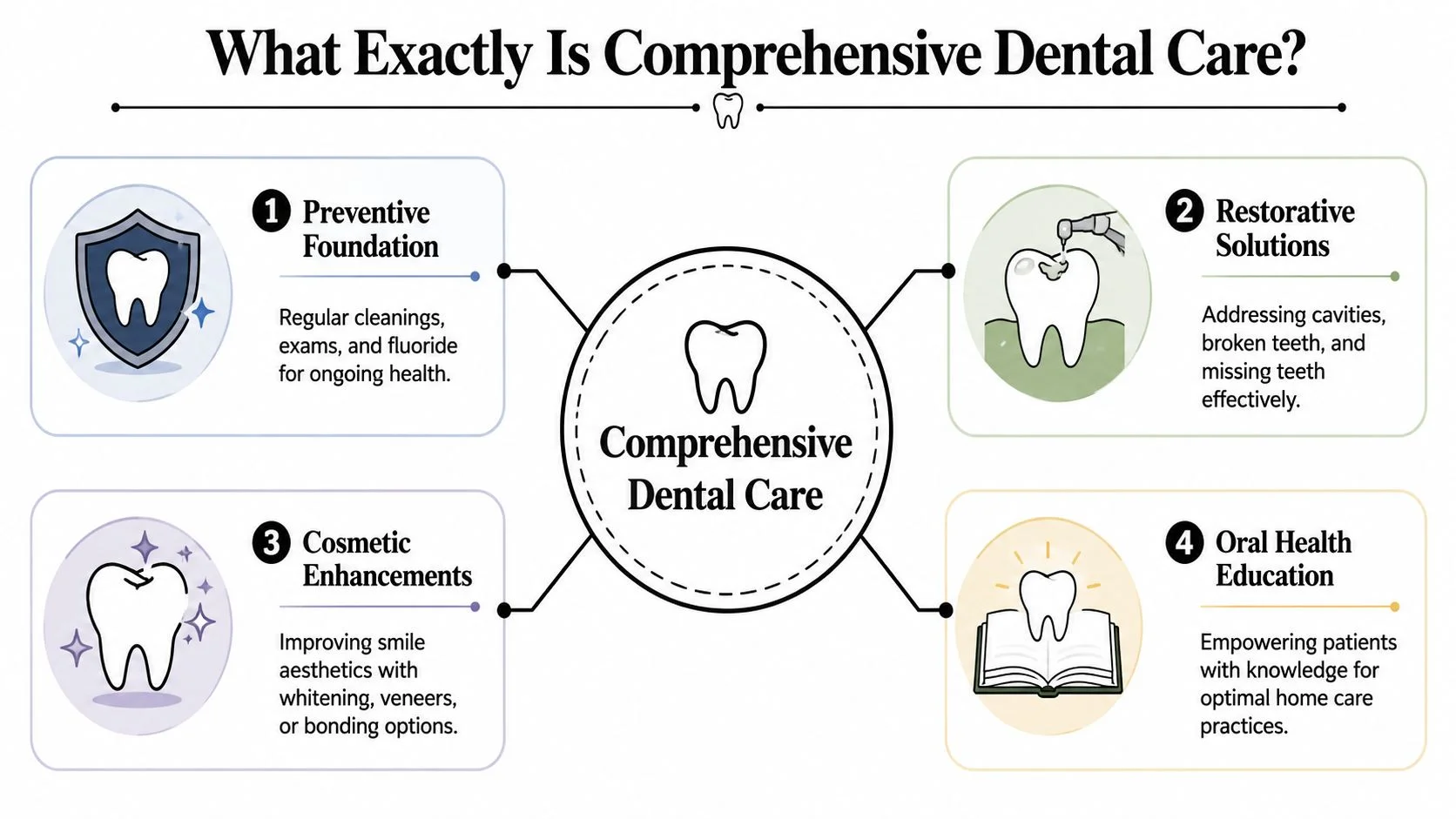
Prevention is the part of dentistry that keeps small problems from turning into bigger ones. It often includes cleanings and exams, dental X-rays, new patient evaluations, and coaching on home care habits.
These visits do more than check for cavities. They let your dentist track patterns over time, such as plaque buildup, early gum irritation, worn enamel, or changes in the bite. It works a lot like routine car maintenance. Catching a small issue early is usually simpler, less invasive, and easier on the budget than waiting for a breakdown.
Restorative dentistry that rebuilds function
Restorative care focuses on repairing teeth that are damaged, infected, worn down, or missing. The goal is not only to fix a single tooth, but to help your mouth work comfortably as a system.
Depending on your needs, that may include:
- Tooth-colored fillings: Used to repair decay while preserving as much healthy tooth structure as possible.
- Crowns and bridges: Helpful when a tooth needs more support or when a missing tooth affects chewing and bite balance.
- Root canal treatment: Used when infection or inflammation reaches the inside of the tooth.
- Tooth extraction: Sometimes the healthiest option when a tooth can't be saved.
- Dental implants: A long-term replacement option for missing teeth that can support chewing and help maintain jawbone function.
If you're exploring Walnut Creek family dentistry services, this is often the area patients are asking about when they want to get back to eating, speaking, and smiling without discomfort.
Cosmetic options that improve smile confidence
Smile-focused treatment can include teeth whitening, bonding, veneers, and Invisalign clear aligners. Some patients want one small change. Others are looking at several options and want help deciding what is worth doing now, later, or not at all.
That guidance matters. A brighter or straighter smile should fit the health of your teeth and gums, the way your bite comes together, and the result you want to maintain for years. Cosmetic care works best when it is planned with function in mind, not added on top of unresolved problems.
Periodontal care and health beyond the tooth surface
Healthy gums and supporting bone hold everything in place. If those structures are inflamed or weakened, even beautiful teeth and restorations may not stay stable.
Periodontal care may include deeper cleaning, ongoing monitoring, and a home-care plan suited to your risk factors. This part of dentistry often surprises patients because gum disease can stay quiet for a long time. Bleeding when brushing, tenderness, persistent bad breath, or teeth that seem to shift can all be signs that the support system needs attention.
A healthy smile depends on healthy support structures. Teeth don't function well for long if the gums and bone around them are unstable.
Additional care that improves daily comfort
Dental care also includes concerns patients do not always expect to discuss at a checkup. Clenching, grinding, bite imbalance, jaw soreness, and possible sleep-related issues can all affect tooth wear, comfort, and energy during the day.
That broader view is why integrated care often feels more thoughtful than one-visit, one-problem dentistry. Your preventive visits, repairs, gum treatment, and smile goals are considered together, then arranged in an order that makes sense for your health, your budget, and your life.
The Personalized Treatment Planning Journey
The part that worries many patients most isn't the exam. It's what happens after the exam, especially if more than one issue shows up.
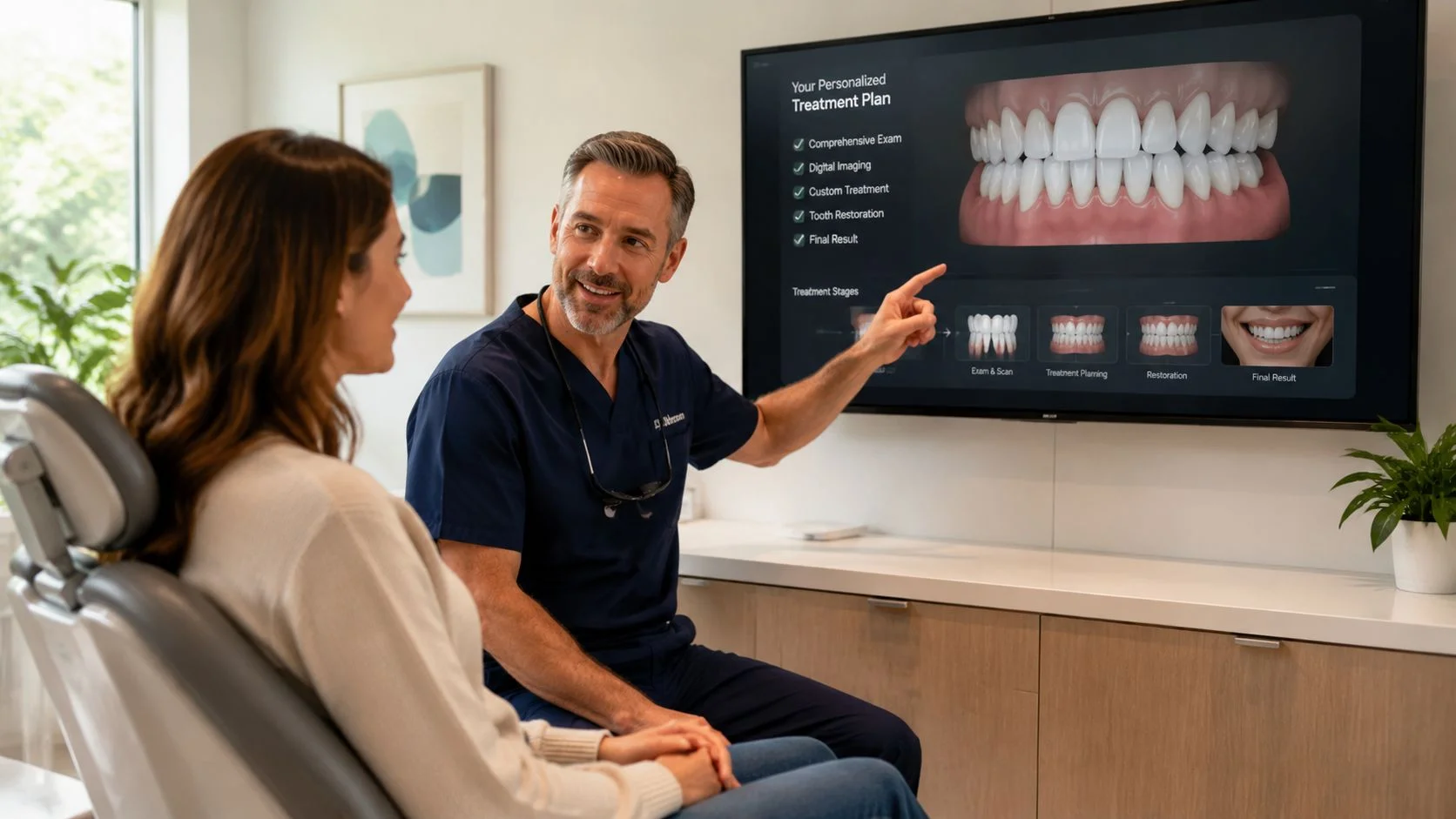
When people hear they may need several kinds of care, they often assume treatment has to happen all at once. It usually doesn't. Good treatment planning is a conversation about priorities.
First priority is comfort and disease control
If you have pain, swelling, infection, a broken tooth, or a problem that keeps getting worse, that comes first. Expert protocols also require a control phase to stop active disease, including issues like periodontitis, before moving on to cosmetic or restorative treatment. That matters because untreated oral inflammation can contribute to systemic health risks, and bypassing this phase often causes later dental work to fail.
In plain language, a dentist shouldn't place beautiful final work into an unhealthy environment.
Here are common examples of what might happen first:
- Urgent relief: Addressing pain, infection, or trauma.
- Stabilization: Managing gum disease, decay, or failing restorations.
- Protection: Preventing additional breakdown while the full plan is scheduled.
Then the plan gets sequenced around your life
Once active problems are under control, the next step is deciding what order makes the most sense for function, budget, and personal goals. At this point, complete care becomes very personal.
A patient missing a back tooth may choose to restore chewing ability first with a crown, bridge, or implant plan. Another patient may decide to stabilize gum health and replace old fillings before starting Invisalign. Someone preparing for a wedding or job change may want cosmetic improvements built into the plan, but only after the dentist confirms the mouth is stable.
A helpful way to think about priorities
Dentists often sort treatment into practical categories:
| Priority level | What it usually includes | Why it matters |
|---|---|---|
| Immediate | Pain, infection, fractured teeth, urgent problems | Prevents worsening and restores comfort |
| Functional | Chewing issues, broken restorations, missing teeth, bite concerns | Helps you eat, speak, and protect other teeth |
| Preventive | Cleanings, periodontal maintenance, fluoride guidance, home-care support | Lowers the chance of future damage |
| Elective | Whitening, veneers, alignment, other appearance-focused changes | Improves confidence once health is stable |
This is also where a long-term relationship with your dentist matters. Research summarized by the National Academies notes that access and affordability are major barriers to completing care, and a practical way to overcome that is to sequence preventive, restorative, and cosmetic treatment around risk, function, and budget (National Academies discussion of oral health access and care sequencing).
You don't need to do everything today. You do need to know what matters first.
For patients who want a clear, phased approach, this is often the moment when dental care starts to feel manageable instead of intimidating.
Benefits of a Long-Term Dental Partnership
A dentist who knows your history can make better decisions than a dentist who only sees isolated problems. That's the simplest argument for building a long-term dental partnership.
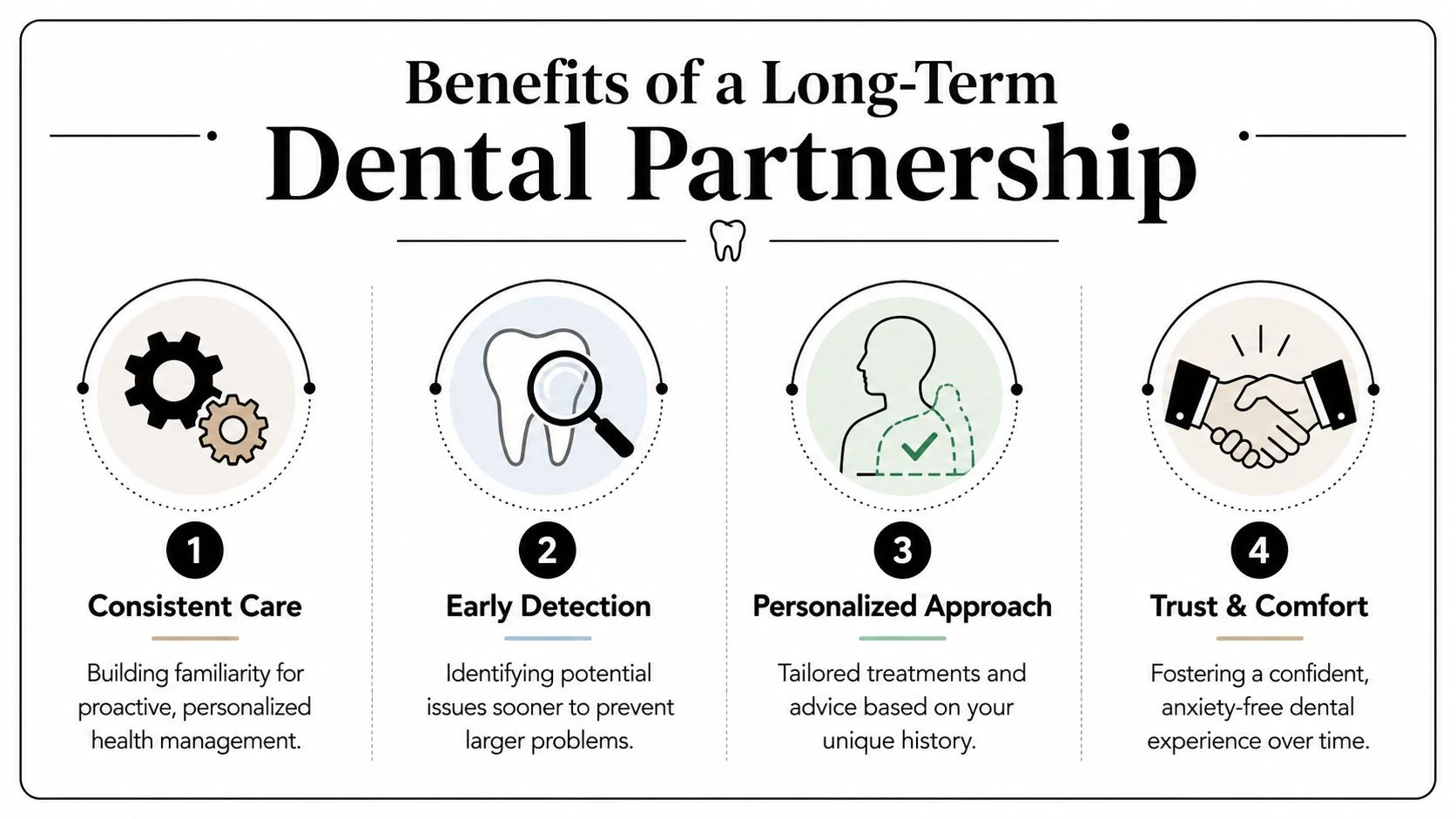
When you return to the same office over time, your dentist can compare old X-rays with current ones, track how your gums respond to home care, monitor bite changes, and notice small shifts before they become larger concerns. That continuity helps you avoid the stop-and-start feeling that many people associate with dental care.
Why continuity changes the experience
A long-term relationship also makes treatment more personal. Your dentist learns how sensitive your teeth are, whether you grind at night, how you prefer information explained, and which concerns matter most to you. That knowledge improves care in small but important ways.
Patients often notice these benefits over time:
- Fewer surprises: Changes are easier to spot when your dentist knows your baseline.
- Better prioritization: Treatment can be phased around what matters most to your health and daily life.
- More useful prevention: Home-care advice is more effective when it's based on your habits and risk areas.
- Greater comfort: Familiarity lowers stress for many patients, especially those who have had difficult dental experiences before.
Why this matters for real-world decision making
A long-term partnership helps when treatment decisions involve tradeoffs. If you can't do every recommended service at once, your dentist can help you preserve what's most important first and plan the rest responsibly. That's very different from reacting to one emergency after another.
This kind of continuity also supports better communication between preventive, restorative, and cosmetic goals. If you're considering a future implant, crown replacement, or smile upgrade, earlier decisions can be made with that future in mind.
Good dentistry isn't only about what gets treated. It's also about what gets preserved.
For many patients in Walnut Creek, the biggest benefit is peace of mind. They know who to call, they know their history is understood, and they know there's a thoughtful plan behind the care they receive.
Comfort-First Dentistry for Anxious Patients in Walnut Creek
Dental anxiety doesn't always look dramatic. Sometimes it looks like canceling a cleaning twice. Sometimes it looks like waiting until pain forces the appointment. Sometimes it's feeling tense the minute you smell a dental office.
That's why comfort matters. It's also why a calm environment can influence whether people return for routine care. In 2022, only 57% of privately insured adults saw a dentist, according to the verified data for this article, and creating a comfortable, anxiety-free environment is recognized as an important provider-level factor in encouraging consistent visits (U.S. dental coverage and utilization review).
What comfort-first care actually means
Comfort-first dentistry isn't just about being friendly. It means the team explains what's happening before treatment begins, checks in during the appointment, and adapts the pace when a patient needs a break.
For anxious patients, a few details often matter a lot:
- Clear explanations: Knowing what will happen reduces the fear of the unknown.
- Gentle technique: Small differences in injection technique and communication can change the whole experience.
- A slower pace when needed: Some patients do better when treatment is broken into manageable steps.
- Sedation support when appropriate: For some people, that extra help makes necessary care possible.
If dental visits have felt difficult in the past, care for anxious dental patients in Walnut Creek can make returning to the dentist feel more realistic.
Rebuilding trust one visit at a time
Many nervous patients worry they'll be judged for how long it has been. A good dental visit doesn't begin with blame. It begins with understanding what kept you away and what would help you feel safe coming back.
This short video may help you get a feel for a calmer patient experience before your appointment.
Sometimes the first win is getting through an exam comfortably. After that, treatment becomes easier to discuss because trust has already started to form.
Your First Visit with William M Schneider DDS
You call for an appointment because something feels off. Maybe a tooth has started to ache, maybe you chipped a filling, or maybe it has been a while and you want a clear starting point. In that moment, one question usually matters most. What will happen at the first visit, and will anyone help me sort out what needs attention first?
That first appointment should give you a map. A good dental visit does more than check teeth. It helps you understand your current health, separates urgent problems from issues that can wait, and outlines a plan that fits your goals and budget.
Before the appointment
Scheduling is easier when the office knows why you want to come in. If you have pain, swelling, a broken tooth, or another urgent problem, mention it right away so the team can schedule appropriately. If you want a new patient exam, a routine cleaning, a cosmetic consultation, or a second opinion, that helps shape the visit too.
Before you arrive, you may be asked for:
- Basic health information: Medical conditions, medications, and allergies
- Dental history: Past treatment, concerns, and recent symptoms
- Insurance details if applicable: So the team can review benefits with you
- Your questions: A short list helps you remember what you want answered
This step may seem routine, but it matters. Your mouth is part of your whole health, and even a small detail in your medical history can affect how treatment is planned.
During the new patient exam
A first visit with William M. Schneider, DDS often begins with a conversation. That is where the dentist learns what you are feeling, what you have noticed, and what you want your smile to do better. A front tooth you dislike may be a cosmetic concern on the surface, but the underlying cause could be bite wear, gum changes, or an older restoration that is no longer holding up well.
The exam itself works like building a house plan before any repairs begin. You look at the foundation first, then decide which projects come first and which can wait. In dentistry, that usually means checking your teeth, gums, soft tissues, and bite, and taking current X-rays when needed to see problems that are not visible from the outside.
A new patient exam may include:
- Reviewing your concerns, symptoms, and goals
- Checking teeth, gums, soft tissues, and how your bite comes together
- Taking current dental X-rays if needed
- Explaining findings in plain language
- Outlining treatment in a practical order based on urgency, function, appearance, and cost
That last step is often the one patients worry about most. If several issues are found, you usually do not need to fix everything at once. The dentist can help you sequence care in a way that makes sense, much like handling a car repair by addressing the brakes before the paint job.
What you should leave with
By the end of the visit, you should know three things. What needs prompt attention, what should be monitored or treated soon, and what can wait until later. You should also understand why those recommendations are being made.
You should leave with a plan, not a pile of confusing terms.
That plan might lead to preventive care, restorative treatment, follow-up imaging, cosmetic work at a later stage, or a focused visit for an urgent problem. The key is clarity. When patients understand the order of care and the reason behind it, the next decision feels much more manageable.
A good first visit should leave you feeling informed and clear about your options.
If you have delayed care because the process felt hard to predict, the first appointment often changes that. Once the situation is explained step by step, it becomes easier to choose what to do first and feel confident about what comes next.
Frequently Asked Questions About Dental Care
You call a new dental office because one tooth has started bothering you. Then a bigger question comes up. Will this visit turn into a long list of problems and pressure to do everything at once?
That fear is common. Good dental care should replace uncertainty with a clear plan. The goal is to help you understand what needs attention now, what can wait, and how treatment can fit your health priorities, schedule, and budget.
Common questions from new patients
| Question | Answer |
|---|---|
| Do I need a thorough exam if I only want a cleaning? | Often, yes, especially if you are new to the office or have not been seen in a while. A cleaning removes plaque and tartar. An exam checks the bigger picture, including areas that may look fine but still need attention. |
| What if I think I need a lot of dental work? | You do not have to do everything at once. Your dentist can help you phase care in a practical order based on urgency, comfort, function, prevention, and cost. It works much like home repairs. You fix the roof leak before repainting the walls. |
| Can cosmetic treatment wait until later? | In many cases, yes. If you have gum disease, decay, infection, or bite problems, those issues are usually addressed first so cosmetic work has a healthier foundation. |
| When is a dental problem an emergency? | Pain, swelling, facial pressure, a cracked or knocked-out tooth, bleeding that does not stop, or signs of infection should be reported promptly. The office can tell you how soon you should be seen. |
| Do you help patients who feel anxious? | Many offices do. Look for a practice that explains each step clearly, checks in often, and discusses comfort options if needed. If dental anxiety is part of your history, say so when you schedule. |
| What if I am interested in dental implants near me? | The first step is an evaluation. Your dentist needs to check your gums, bone support, bite, and overall oral health before deciding whether an implant is the right fit. |
| Can one office handle preventive, restorative, and cosmetic care? | Often, yes. A full-service dental office may provide exams, gum care, crowns, bridges, root canal treatment, Invisalign, whitening, and implant planning through one coordinated process. |
| How long does a first visit usually take? | It depends on the reason for the visit and whether you need X-rays, an exam, or urgent treatment. The office should be able to give you a clearer time estimate when you call. |
| Will the office explain costs and insurance? | Most established practices review recommended treatment and discuss expected costs and insurance benefits before care begins, so you can make decisions with fewer surprises. |
| Who benefits most from complete dental care? | Almost anyone can benefit, especially patients with older dental work, gum concerns, missing teeth, several issues happening at once, cosmetic goals, or a long gap in care. |
A final note for patients comparing options
If you are choosing between dental offices, listen to how the dentist explains next steps. A thoughtful practice will do more than name services. It will help you sort problems by priority and build a treatment sequence that feels realistic for your life.
That is how a dental office becomes a long-term home for your care.
If you are ready to talk through your needs and options, schedule a visit with William M. Schneider, DDS. Whether you need a new patient exam, help with tooth pain, cosmetic guidance, or a long-range plan for your oral health in Walnut Creek, the first step can start with a simple conversation.