That nagging feeling in your tooth—is it just a fleeting sensitivity, or is something more going on? It’s a question we hear all the time from our patients here in Walnut Creek, CA. If you're experiencing a subtle toothache, a new sensitivity to hot or cold, or notice a small, visible dark spot in the mirror, you might be dealing with a cavity. These are classic red flags that your smile needs attention from a trusted local dentist.
While these symptoms are common, only a professional dental exam can confirm if tooth decay is the culprit. At William M. Schneider, DDS, we provide compassionate and precise dental care to help our Walnut Creek community find relief and restore their oral health.
Recognizing the Early Warning Signs of a Cavity
When you're trying to figure out if you have a cavity, it helps to know exactly what to look (and feel) for. Tooth decay can be sneaky. It often begins silently, without any obvious symptoms, but as it progresses, your body will definitely start sending signals that something isn’t right.
For many of our Walnut Creek patients, the first clue appears while eating or drinking. That sudden jolt of pain when you sip your morning coffee or dig into a bowl of ice cream is a tell-tale sign. This happens because the decay has worn through the tough outer layer of your tooth—the enamel—and exposed the more sensitive layer underneath, called dentin. You might also just feel a persistent, dull ache that doesn’t seem to let up.
Common Symptoms to Monitor
Pain is a big one, but there are other specific clues you can watch for. Take a moment to really look at your teeth and notice how they feel.
Is there any new discoloration? A cavity can actually show up as a chalky white spot in its very earliest stage before eventually turning into a more obvious brown or black stain. Sometimes, you might run your tongue over a tooth and feel a rough or jagged edge where the enamel has started to break down.
Other key indicators that you may need to see a dentist near you include:
- Pain When Biting Down: A sharp, localized pain when you chew can mean decay has reached a point where it’s putting pressure on the nerves inside your tooth.
- Bad Breath or a Bad Taste: Cavities are caused by bacteria, and those bacteria can produce some pretty foul odors, leaving you with a persistent unpleasant taste or bad breath that mouthwash can’t fix.
- Visible Holes or Pits: In more advanced cases, you might actually be able to see a physical hole or pit in your tooth. If you see this, it’s time to call an emergency dentist right away.
To help you sort through what you might be experiencing, here is a quick guide to the most common symptoms.
Quick Guide to Common Cavity Symptoms
This table summarizes the most frequent signs of tooth decay to help you quickly assess what you're feeling or seeing.
| Symptom | What It Feels or Looks Like | Why It Happens |
|---|---|---|
| Tooth Sensitivity | A sharp, sudden pain when eating or drinking something hot, cold, or sweet. | The decay has worn through the enamel, exposing the sensitive dentin layer underneath. |
| Persistent Toothache | A dull, constant ache or spontaneous pain that doesn't have an obvious trigger. | The decay may be progressing closer to the tooth's nerve, causing inflammation. |
| Pain When Chewing | A sharp pain that occurs specifically when you bite down on food. | Pressure from biting is being transferred through the weakened tooth structure to the nerve. |
| Visible Stains or Spots | Chalky white, brown, or black stains on the surface of a tooth. | These are visual signs of enamel demineralization and the breakdown of the tooth's surface. |
| Holes or Pits | A noticeable hole, pit, or rough spot you can see or feel with your tongue. | This indicates that the tooth structure has been physically destroyed by advanced decay. |
Remember, these symptoms are your body's way of telling you something is wrong, so it's best not to ignore them.
This flowchart can also help visualize how different symptoms might point toward potential dental issues.
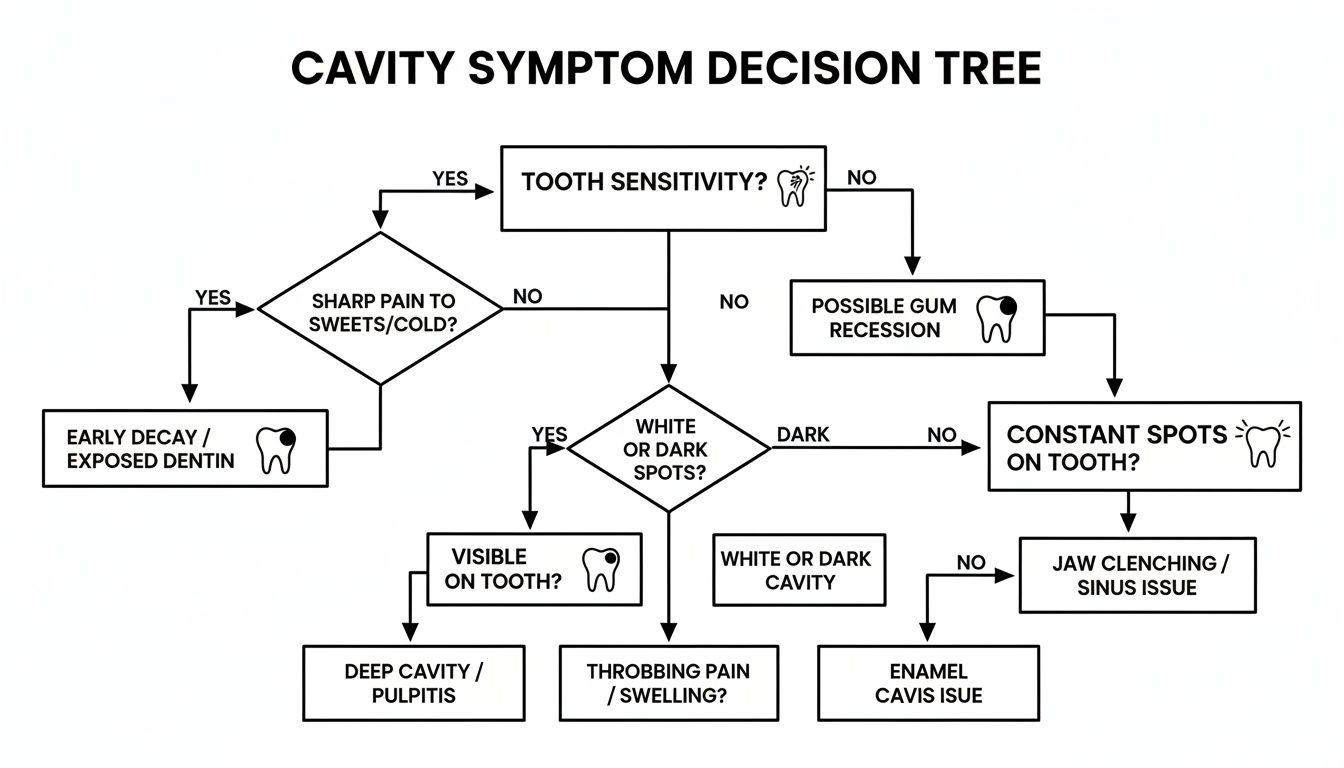
As the chart shows, things like sensitivity, visible spots, and aches are all primary indicators that should prompt a call to your dentist in Walnut Creek. While a cavity is often the main suspect, it’s also helpful to understand the causes of tooth sensitivity, as it can sometimes be related to other issues like gum recession or teeth grinding.
Ultimately, the best first step is always getting a professional diagnosis to know for sure.
Understanding What Cavity Symptoms Really Mean for Your Health

It’s one thing to know the textbook list of cavity symptoms. It's another thing entirely to understand what they're actually telling you about the health of your tooth.
Every sensation—from a dull, persistent ache to a sharp, sudden twinge—is a clue. By connecting these everyday feelings to what’s happening on a clinical level, you can get a much clearer picture of when it’s time to call a trusted Walnut Creek dentist.
Think of your tooth's enamel as its first line of defense, a hard outer shell. When bacteria produce acids that wear down this shell, they eventually expose the softer, more sensitive layer underneath called dentin. That’s where the trouble really starts.
The Story Behind the Sensation
Have you ever felt that sudden, sharp pain when sipping hot coffee or eating ice cream? That’s a classic sign. The dentin is filled with thousands of microscopic tubules that lead straight to the tooth's nerve.
When extreme temperatures hit this exposed layer, the nerve sends a jolt of pain to your brain. It’s your body’s alarm system, letting you know the tooth’s defenses have been breached.
Similarly, that wince you feel after eating something sugary isn't just in your head. Sugar acts like fuel for the bacteria that cause decay, which then produce even more acid. This acid irritates the exposed dentin and nerve, causing that distinct, sweet-induced sensitivity.
When you feel a new sensitivity or a persistent ache, your body is sending a clear signal that the natural balance inside your mouth has been disrupted. Ignoring these signs allows the decay to progress, potentially leading to more complex dental issues.
From Subtle Annoyance to Serious Pain
Not all cavity pain is sharp and sudden. A dull, throbbing ache that just seems to linger is often a sign of a deeper problem. This type of pain can mean the decay has moved past the dentin and is now affecting the tooth’s pulp—the central chamber containing nerves and blood vessels.
Here’s how different feelings can point to different stages of decay:
- A Rough Spot: If your tongue keeps catching on a rough or jagged spot on your tooth, it could mean the enamel has physically started to break down. This isn't just a feeling; it's a structural sign of decay.
- Pressure Pain: Feeling pain specifically when you bite down can mean the decay has weakened the tooth so much that chewing pressure irritates the nerve below. In some cases, it might even signal an infection forming at the root.
- Visible Discoloration: That dark spot you noticed isn't just a stain. It's often a visual confirmation that the tooth structure has been compromised by decay and is one of the most direct ways to tell if you have a cavity.
These symptoms aren't random. They are the direct consequences of tooth decay, and understanding them empowers you to take action.
If you're experiencing any of these sensations, it’s a clear indicator that a professional new patient exam and dental X-rays are needed to see what’s truly happening inside your tooth. For residents in Walnut Creek, CA, and the surrounding East Bay, getting an accurate diagnosis is the essential first step toward relief and restoring your oral health.
Why Cavities Happen and Who Is at Risk
Cavities aren't just a matter of bad luck; they’re the result of a specific biological process that unfolds in your mouth every single day. Getting a handle on this process is the first real step toward preventing them.
In the simplest terms, a cavity is a tiny hole in your tooth caused by decay. It all starts with the bacteria that naturally live in your mouth. When you eat sugary or starchy foods, these bacteria have a feast. As they break down these food particles, they produce acids that go on the attack against the hard, protective outer layer of your teeth, known as enamel.
Over time, these constant acid attacks can leach essential minerals from your enamel. This process is called demineralization, and it creates weak spots. If you don't intervene, the acid will eventually break right through the enamel, forming a cavity. It’s a slow process, but a persistent one.
The Most Common Risk Factors for Tooth Decay
While everyone has some risk of getting cavities, certain habits and conditions can seriously ramp up your chances. The good news? Most of these are well within your control, especially with a great local dentist in your corner.
- Your Diet: Frequently sipping on sugary drinks or snacking on starchy foods is like giving cavity-causing bacteria a constant fuel source. Sodas, candies, and even crackers can stick to your teeth, giving the acid more time to do its damage.
- Your Oral Hygiene Routine: Inconsistent brushing and flossing allow plaque—that sticky film of bacteria—to build up. If it's not removed daily, plaque hardens into tartar, which only a professional cleaning and exam can get rid of. It's surprising how many common dental hygiene mistakes can contribute to this problem without you even realizing it.
- Dry Mouth: Saliva is your mouth's unsung hero. It naturally rinses away food debris and neutralizes harmful acids. Certain medications, health conditions, or simply getting older can reduce saliva flow, leaving your teeth much more vulnerable.
Some of us are also just more susceptible due to genetics, which can affect the natural strength of our tooth enamel. Others might have deep grooves in their molars that are just plain hard to keep clean.
Dental cavities are one of the most widespread chronic diseases on the planet. The data is pretty staggering—dental caries affects over 3.9 billion people worldwide. This isn't some distant problem; it's a condition affecting people right here in our East Bay communities.
This is exactly why preventive care is so crucial. Regular check-ups at our Walnut Creek dental office allow Dr. Schneider to spot the earliest signs of demineralization, often long before a cavity fully forms. Through consistent dental care, we can work together to manage your personal risk factors and keep your smile healthy and strong for years to come.
How We Diagnose Cavities in Our Walnut Creek Office
Knowing what to expect during a dental visit can make all the difference, especially when you’re worried about a potential cavity. Here in our Walnut Creek office, Dr. Schneider and our team are all about a gentle, thorough process that puts you at ease. We blend years of hands-on experience with modern tools to make sure we get a complete and accurate picture of your oral health.
The first thing we do is a careful visual exam. Dr. Schneider will meticulously inspect the surfaces of each tooth, looking for those sneaky tell-tale signs of decay. This might be chalky white spots—an early warning of enamel demineralization—or the more obvious brown or black spots that signal a cavity has taken hold.
A Gentle and Thorough Approach
During your exam, Dr. Schneider uses a specialized tool called a dental explorer. It’s a slim instrument that lets him gently feel the tooth surfaces for any soft or sticky spots, which are classic giveaways of a cavity. Healthy enamel is hard as a rock, but areas weakened by decay will feel different to the touch. That tactile feedback is priceless for finding cavities that aren’t easy to see.
Of course, this hands-on method goes hand-in-hand with a conversation about what you've been experiencing. We'll listen carefully to everything you've noticed—whether it’s a zinger when you eat something sweet, pain when you chew, or a dull, persistent ache. Your personal experience gives us critical clues that help us zero in on the problem.
Seeing Beyond the Surface with Digital X-rays
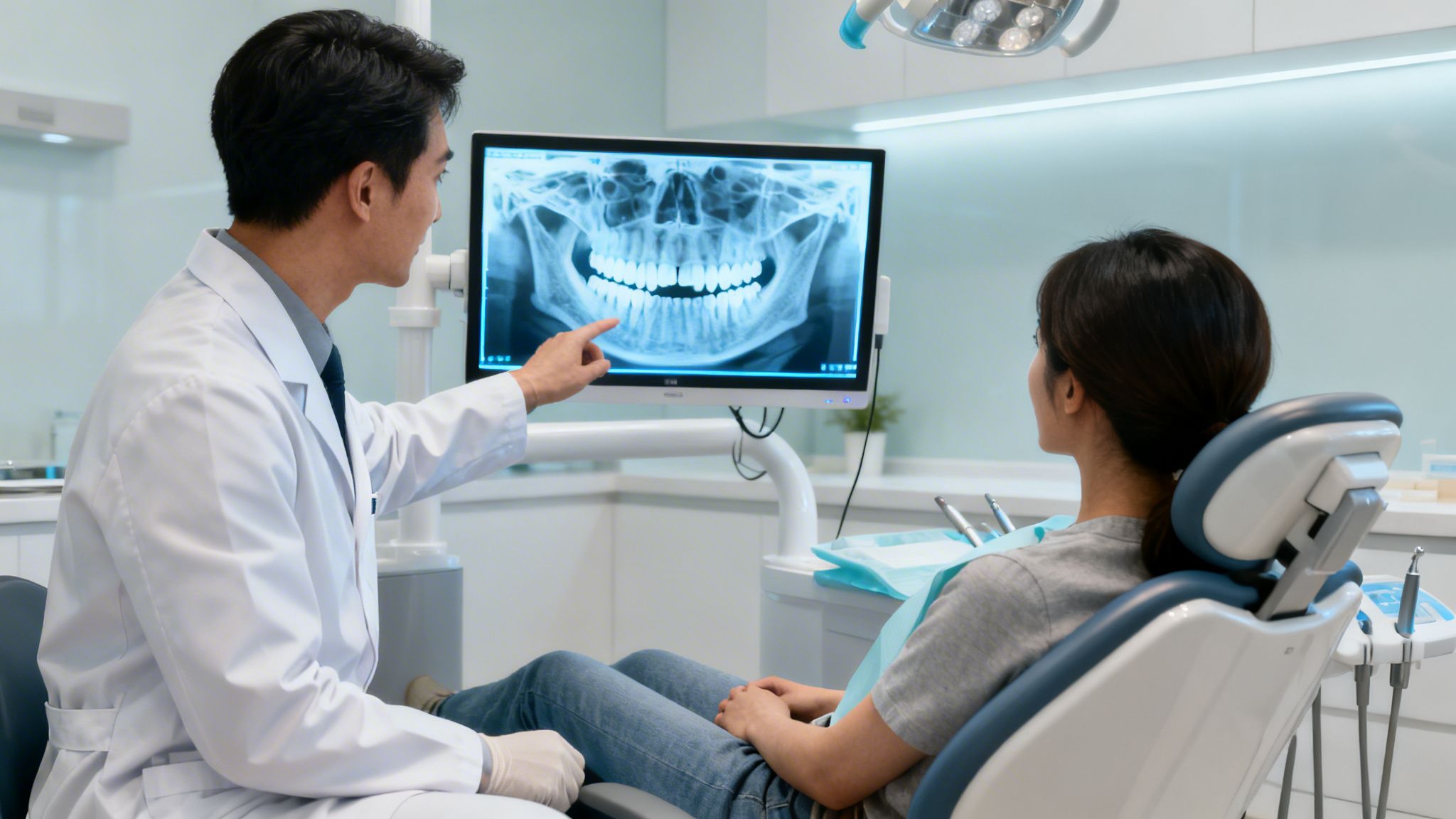
A lot of cavities are masters of disguise, hiding where the naked eye just can’t see. Their favorite hiding spots? Between your teeth and just below the gumline. This is where our advanced digital X-rays become absolutely essential, allowing us to spot decay that's otherwise completely hidden.
Our digital X-ray technology offers a few key benefits for our patients:
- Precision: They show us the exact location and size of the decay, so we can plan your treatment perfectly.
- Early Detection: We can catch cavities in their earliest stages, often before they cause any pain. This makes treatment simpler and way less invasive.
- Safety: Digital X-rays use a fraction of the radiation of old-school film X-rays, making them a much safer choice.
By combining a comprehensive visual and hands-on exam with the crystal-clear view from digital imaging, we make sure nothing gets missed. This two-pronged approach gives us the confidence to make an accurate diagnosis and recommend the most effective treatment for you.
This commitment to early and accurate detection is especially critical given what we know about dental health trends. For instance, some studies have shown a surprisingly high rate of cavities even in kids’ permanent teeth. One research paper revealed a caries rate of 91.4% in permanent teeth for children aged 6 to 12, which really highlights the need for proactive and personalized care. These findings underscore why our customized prevention strategies at William M. Schneider, DDS, are so vital for protecting the smiles of our Walnut Creek families. You can read the full research about these dental health findings to learn more.
Your Next Steps for Treating and Preventing Cavities
So, Dr. Schneider has confirmed you have a cavity. The next question is always, "What now?" The great news is that modern restorative dentistry gives us effective, comfortable ways to stop the decay in its tracks and bring your tooth back to full strength. The right treatment really just depends on how far the decay has managed to progress.
For a small, early-stage cavity, the fix is often a simple tooth-colored filling. We use a composite resin that’s matched to the exact shade of your natural tooth, which makes the repair practically invisible. By clearing out the decayed portion and filling the space, we restore the tooth’s function and seal it off from further damage. You can learn more about how a tooth-colored filling can be vital to your oral health right here on our blog.
Advanced Solutions for Deeper Decay
What if a cavity has grown larger and weakened a big chunk of the tooth? A filling might not be enough to provide the support it needs. In these cases, Dr. Schneider may recommend a custom-made dental crown. Think of a crown as a protective helmet that covers the entire tooth, restoring its original shape, size, and strength.
If the decay reaches the very core of the tooth—the pulp—it can trigger a painful infection. This is when an emergency dentist might perform a root canal. It's a procedure that sounds scarier than it is; we simply clean out the infected pulp to relieve your pain and, most importantly, save your natural tooth from needing a tooth extraction. If a tooth cannot be saved, we also offer solutions like dental implants near you to restore your smile.
The goal isn’t just to patch up the immediate problem. It’s to preserve your natural tooth for the long haul and head off more complex issues down the road. Catching and treating a cavity early is always the best-case scenario.
Your Long-Term Plan for Cavity Prevention
Fixing an existing cavity is just one piece of the puzzle. Our real goal as your dental partner in Walnut Creek is to help you stop them from ever forming in the first place. This all comes down to a combination of great at-home habits and consistent professional care.
Effective Prevention Strategies:
- Consistent Home Care: Brushing twice a day with fluoride toothpaste and flossing daily are non-negotiable. This simple routine is your best defense against the plaque that causes decay.
- Smart Dietary Choices: Cutting back on sugary and acidic foods and drinks is huge. It starves the harmful bacteria of the fuel they need to produce destructive acids.
- Regular Dental Cleanings and Exams: Professional cleanings get rid of hardened plaque (tartar) that you just can’t remove at home. And regular check-ups let us spot trouble long before it becomes painful or expensive.
For anyone looking to be proactive, it’s worth understanding how to reverse early tooth decay naturally. This involves remineralizing weak spots in your enamel before a true cavity forms—a process we can support with fluoride treatments and personalized advice. We’re committed to being your long-term partner in achieving and maintaining fantastic oral health.
Schedule Your Dental Exam with Dr. Schneider in Walnut Creek
Recognizing those subtle signs of a cavity is the first real step toward protecting your smile for the long haul. Whether it's a new twinge when you eat something sweet or just a dull, persistent ache you can’t quite place, these are your body’s signals that it’s time for a professional dental exam. Don't let a small concern turn into a major headache.
Taking action now often means the difference between a simple fix and a more involved procedure. Here in our Walnut Creek practice, we focus on catching these issues early to preserve as much of your natural tooth as possible. Our goal is always to provide solutions that avoid more complex treatments like root canals or a tooth extraction. Your long-term oral health is what matters most to us.
What to Expect at Our Walnut Creek Dental Practice
We get it—visiting the dentist isn't at the top of everyone's favorite-things-to-do list. That’s exactly why we’ve built a calm, reassuring, and patient-first environment where your comfort is our priority from the moment you walk in. Dr. Schneider and our friendly team are here to provide gentle, high-quality dental care you can feel good about.
When you visit our office, you can expect:
- A warm welcome from our friendly staff.
- A thorough and gentle examination from Dr. Schneider.
- A clear explanation of your oral health and any recommended treatments.
- A personalized care plan that fits your needs and goals.
We want every visit to be a positive and stress-free experience, so you can get the essential care you need without fear or discomfort. We always take the time to listen and walk you through every step.
Your peace of mind is just as important as your clinical outcome. We are dedicated to building a lasting partnership with our patients based on trust, compassion, and exceptional care.
Taking the Next Step Is Simple
For our neighbors in Walnut Creek, CA, and across the East Bay, getting expert dental care is just a call or click away. A professional diagnosis is the only way to know for sure if you have a cavity and figure out the best course of action. Ignoring symptoms only gives decay more time to progress, which can lead to more significant pain and damage.
Let us help you get your oral health back on track and return to a pain-free smile. Scheduling your new patient exam is straightforward and convenient. Our team is ready to welcome you and provide the personalized, gentle care that has made Dr. Schneider a trusted dentist in the community.
Take control of your dental health today. Contact William M. Schneider, DDS to schedule your comprehensive dental exam in Walnut Creek by calling our office or booking your appointment online.