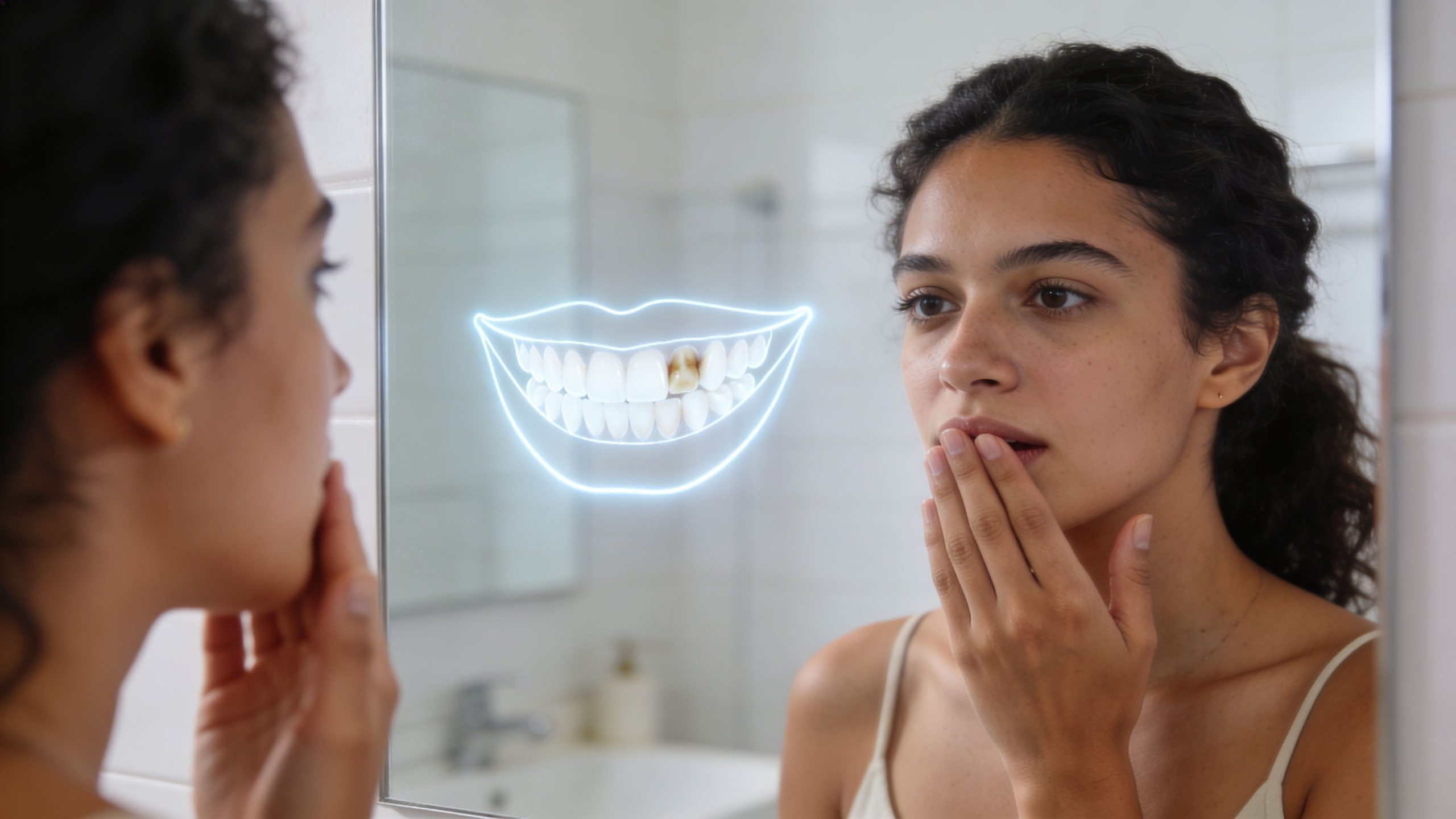
You may be looking at your smile a little more closely lately. Maybe it’s the tooth that always appears darker in photos, the small chip you notice when you get ready for work, or the uneven edge that makes the rest of your smile feel less polished than you’d like. Those who inquire about veneers aren’t trying to look like someone else. They want to look refreshed, healthy, and like themselves on a very good day.
That’s exactly where natural white veneers fit in. They’re designed to improve color, shape, and balance without creating an overly bright, flat, artificial result. In Walnut Creek, many adults want cosmetic dentistry that looks refined and believable, especially in professional settings and everyday family life. They want confidence, not a smile that draws attention for the wrong reason.
Comfort matters just as much as appearance. If you’ve been putting off treatment because of dental anxiety, uncertainty, or a bad past experience, that concern is valid. A veneer process should feel calm, clearly explained, and manageable from the first consultation forward.
Achieve Your Dream Smile with a Cosmetic Dentist in Walnut Creek
A common story goes like this. Someone has healthy teeth overall, keeps up with cleanings and exams, but still feels guarded when they smile. Whitening hasn’t fixed a deep stain. A chipped front tooth keeps catching the light. Small gaps or worn edges make the smile feel older than the person feels.
That frustration is one reason veneers continue to attract attention. The demand for cosmetic dentistry is growing, with about 600,000 Americans getting veneers annually, and 71% of veneer patients are women, while adults ages 40 to 51 make up the primary demographic seeking treatment, according to veneer statistics summarized here. That doesn’t mean veneers are only for one group. It means many adults have decided that improving their smile is a practical, worthwhile choice.
What patients usually want
In practice, those inquiring about natural white veneers aren’t asking for the brightest smile possible. They’re asking for a smile that looks healthy, balanced, and believable. They want teeth that fit their face, skin tone, age, and personality.
That’s why cosmetic dentistry works best when it combines planning with restraint. Good veneer treatment doesn’t erase character. It refines shape, softens distractions, and brings harmony back to the smile.
A beautiful result should look like your teeth could have always looked this good.
For patients searching for a veneers dentist near Walnut Creek, that distinction matters. A natural result depends on more than making teeth whiter. It depends on proportion, translucency, edge shape, gum symmetry, and careful shade selection.
Why Walnut Creek patients ask for natural results
Walnut Creek patients often want cosmetic improvements that work in real life, not just on social media. They want to feel confident at work, comfortable at dinner, and relaxed in family photos. That usually means avoiding a stark, opaque look.
Natural white veneers can address concerns such as:
- Stubborn discoloration that whitening can’t reliably correct
- Small chips or worn edges that make teeth look tired
- Minor gaps that interrupt symmetry
- Slight irregularities in shape that make one tooth stand out
- Teeth that appear short or uneven from wear
When veneers are planned thoughtfully, the result doesn’t announce itself. People may say you look rested or notice your smile looks great without knowing exactly why.
Understanding Natural White Veneers and How They Work
A veneer is a thin custom covering placed over the front surface of a tooth. It changes what you see when you smile. That can include color, shape, length, width, and the way light reflects from the tooth.
For many patients, the phrase natural white veneers is what matters most. They want white teeth, but they don’t want a chalky or overly bleached appearance. In cosmetic dentistry, that usually points to natural-looking porcelain shades rather than very opaque, ultra-bright tones.
What natural white actually means
The term natural white veneers refers to porcelain shades that mimic the lightest natural tooth colors, typically B1 and A1, with many cosmetic dentists favoring B1 for long-term viability, stain resistance, and natural translucency, as described in this shade guide overview.
That matters because natural teeth aren’t one flat color. They have depth. They reflect and transmit light differently from the gumline to the edge. A veneer that’s too uniform can look artificial even if it’s technically very white.
What veneers can fix well
Veneers are often a strong option when the issue is visible and limited to the front-facing appearance of the teeth. They can work well for:
- Deep internal stains that don’t respond well to whitening
- Small chips and edge wear
- Minor spacing
- Teeth that look slightly uneven or misshapen
- A smile that needs better symmetry
They are not a cure-all. If teeth are significantly misaligned, weakened by decay, or affected by active gum disease, those issues need attention first.
Why shade choice is more personal than patients expect
A1 and B1 sound simple on paper, but selecting between them isn’t just about choosing the lighter option. The right shade depends on your complexion, lip shape, age, adjacent teeth, and the finish you want. A single central incisor can need a different strategy than a full smile design.
Here’s the practical rule in the office. A shade that looks ideal on a sample tab can look too bright once it’s placed across multiple front teeth. The best result is usually the one that looks effortless in daylight, indoor lighting, and photos.
| Concern | How natural white veneers help |
|---|---|
| Dark stain on a front tooth | Cover discoloration with a more even, lifelike shade |
| Chipped edge | Restore shape and smoothness |
| Small gap | Create better visual balance |
| Uneven tooth size | Adjust width or length for symmetry |
| Worn enamel | Improve brightness and youthful contour |
Practical rule: The goal isn’t the whitest smile in the room. It’s the most believable smile on your face.
Porcelain vs Composite Veneers Which Is Right for You
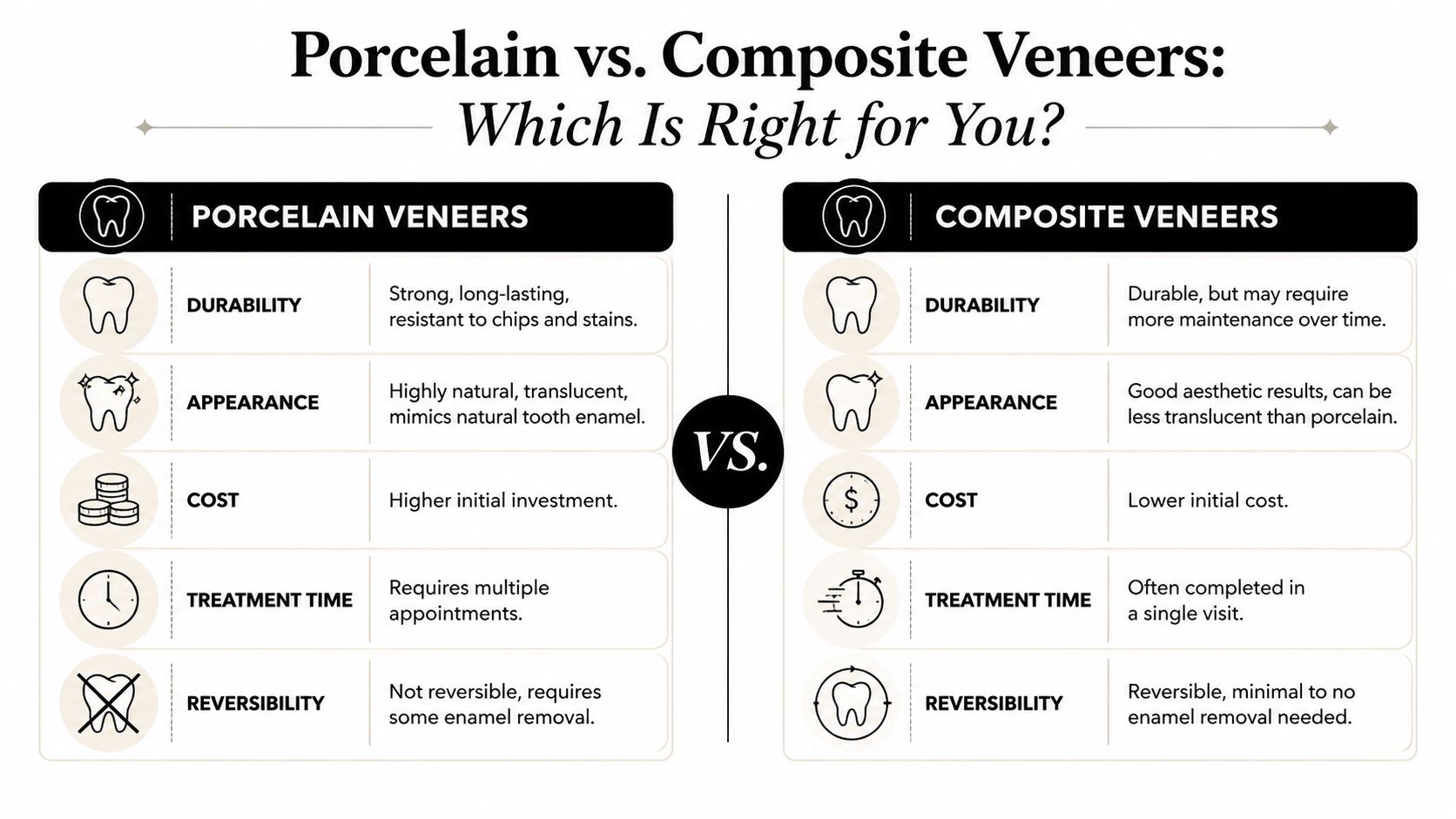
The material matters. Two patients can start with the same cosmetic concern and end up choosing different veneer types based on budget, timeline, maintenance preferences, and how much realism they want from the final result.
Porcelain and composite can both improve a smile. They do not perform the same way over time, and they don’t create the same visual effect in every case.
Where porcelain stands out
Porcelain remains the material often associated with a polished, natural-looking smile makeover. It reflects light in a way that’s closer to enamel, and it tends to hold its appearance better over the long run.
Clinical studies report a 95 to 96% survival rate for porcelain veneers at 10 years and 83% at 20 years, while composite veneers typically last 5 to 7 years, according to this durability and satisfaction review. For patients focused on natural white veneers, that difference matters because long-term color stability and surface quality are a major part of what keeps a smile looking real.
Where composite can make sense
Composite veneers can still be a reasonable choice in the right situation. They’re often useful when someone wants a more conservative starting point, a lower upfront cost, or a quicker cosmetic improvement. They can also help when a patient wants to test a new shape or look before committing to porcelain.
That said, composite doesn’t usually match porcelain for translucency, stain resistance, or long-term polish retention. Over time, those differences become more noticeable, especially on front teeth.
Side by side comparison
| Feature | Porcelain veneers | Composite veneers |
|---|---|---|
| Appearance | More enamel-like translucency | Good esthetics, usually less depth |
| Longevity | Reported long-term survival is strong | Usually shorter lifespan |
| Stain resistance | Better at holding color | More prone to picking up stains |
| Appointments | Usually requires multiple visits | Often faster to complete |
| Repairs | May require remake depending on damage | Can often be repaired more directly |
How I guide the decision
The best choice depends on what bothers you most and what you expect from treatment. If your priority is a highly natural finish, stronger stain resistance, and a result that tends to hold up better for years, porcelain is usually the better fit. If your priority is a shorter treatment process or a more conservative financial starting point, composite may be worth discussing.
Patients often decide more easily when they frame the question this way:
- Choose porcelain if your main goal is the most lifelike, durable cosmetic result.
- Choose composite if you want a simpler entry point and understand maintenance may be higher.
- Pause and reassess if the issue may be better solved by whitening, bonding, Invisalign, or a crown.
Porcelain is often the premium choice not because it’s fashionable, but because it usually gives the most convincing long-term result for visible front teeth.
What doesn’t work well
A common mistake is choosing based on initial appearance alone. Composite can look good at first. The real issue is whether it will still look polished and natural after daily coffee, brushing, minor wear, and regular life. Another mistake is trying to solve a structural problem with a cosmetic veneer when the tooth needs restorative treatment first.
That’s why the conversation shouldn’t start with material alone. It should start with your goals, your bite, your enamel, and how you want your smile to age.
Your Veneers Journey What to Expect at Our Walnut Creek Office
Most patients feel more comfortable once they know the sequence. Veneers aren’t a mystery procedure. They’re a careful process built around planning, preparation, and precise placement.
The experience should also feel calm from the first visit. If you’re anxious, you shouldn’t have to push through treatment with white knuckles. Clear explanations, gentle injections, and sedation options when appropriate can make a major difference.
The consultation and smile design
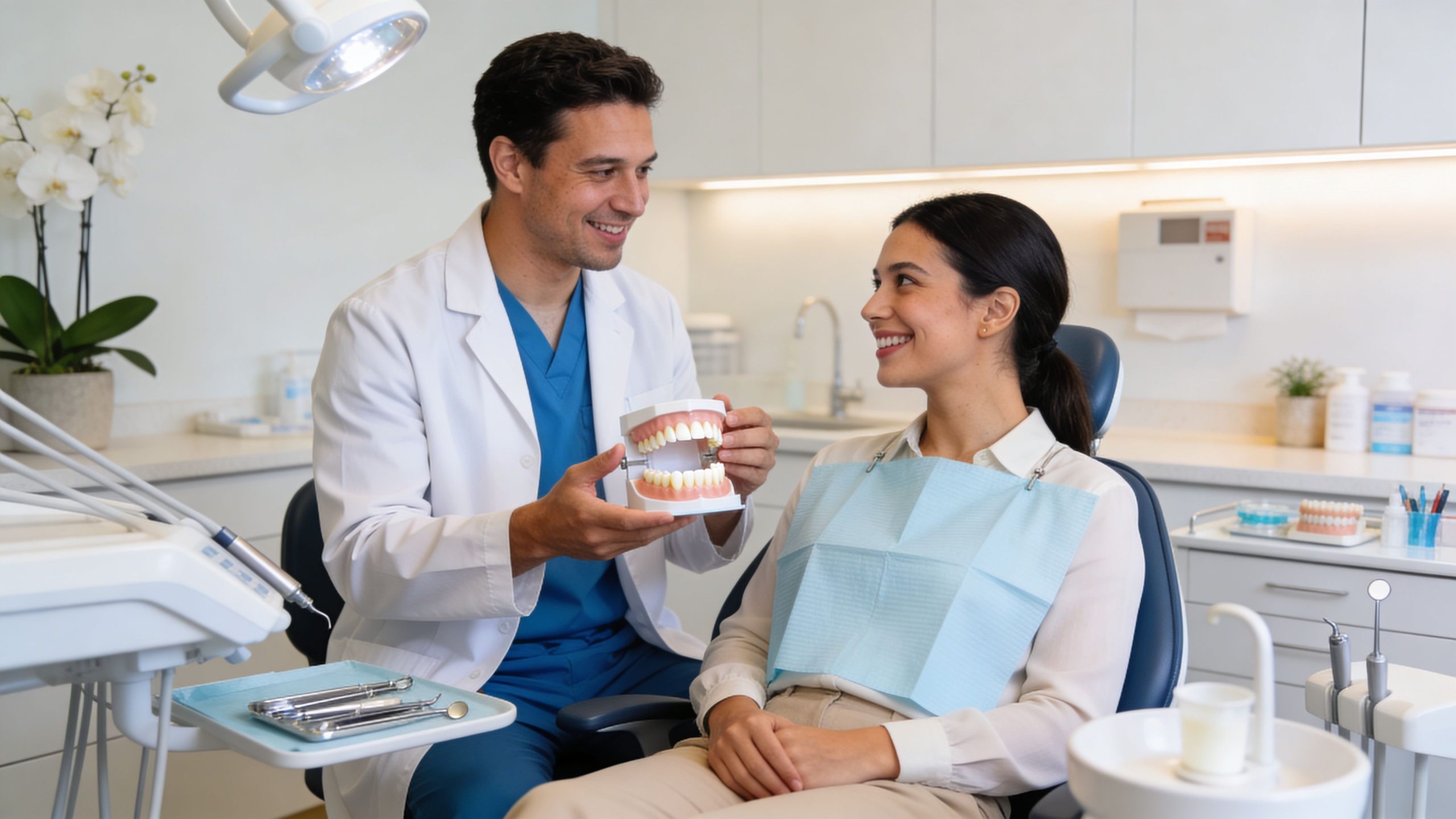
The first appointment is where cosmetic goals become specific. We look at your teeth, gums, bite, and existing restorations. We also talk about what you want to change and what you don’t want. That second part matters a lot because many people have a clear fear of looking fake.
Digital records and mockups help make the conversation concrete. They let you see shape, length, and general smile direction before anything is finalized. At this stage, the focus is on alignment between your expectations and what will look appropriate on your face.
Common topics during consultation include:
- Color goals, especially whether you prefer a softer A1-type look or a brighter natural result
- Tooth shape, such as rounded, softer edges versus a more defined outline
- How many teeth to treat, which affects balance and blending
- Bite habits, including clenching or grinding
- Comfort planning, including whether sedation may help you relax
Preparing the teeth
If porcelain veneers are the right option, the next step is preparing the teeth. This usually means removing a small amount of enamel so the veneers can sit naturally and not look bulky. Not every tooth requires the same amount of preparation.
That part worries many patients more than it should. In experienced hands, the process is controlled and deliberate. The aim is to preserve as much healthy tooth structure as possible while creating room for a strong, well-contoured result.
Patients usually feel better once they understand that veneer preparation is about fit and realism, not aggressive drilling.
Temporary veneers may be placed after preparation. These protect the teeth and give you a preview of the general direction of the final smile. They also let you comment on length, feel, and speech before the final veneers are bonded.
A short video can help make the process feel more familiar:
Final placement and bonding
When the custom veneers return from the lab, each one is evaluated for fit, shade, contour, and bite relationship. This appointment is exciting because patients can finally see the completed smile, but it’s also exacting. Tiny adjustments can matter.
The veneers are then bonded into place. Once bonded, they become a functional part of the tooth’s visible surface. The bite is checked carefully so edges don’t take unintended pressure.
How comfort is handled for anxious patients
The human side of treatment matters. Anxiety can come from fear of pain, fear of losing control, or even fear of being judged for waiting too long. A compassionate team changes that experience.
At our Walnut Creek office, comfort planning is part of treatment planning. That can include a slower pace, breaks during visits, painless injection techniques, and sedation options when appropriate. William M. Schneider, DDS also provides a range of cosmetic and restorative services in one setting, which can simplify care when veneers are part of a broader treatment plan.
Protecting Your Investment Aftercare Longevity and Costs
Veneers don’t end with placement. The long-term result depends on how you care for them, how your bite functions, and whether you stay consistent with routine dental care. That isn’t a burden. It’s how you protect a cosmetic result that you’ve chosen carefully.
The good news is that veneer maintenance is straightforward. In most cases, daily care looks a lot like caring for natural teeth.
What daily care should look like
Natural white veneers hold up best when home care stays steady and gentle. That means brushing thoroughly, flossing every day, and keeping recall visits for cleanings and exams. If you clench or grind, a night guard may also be part of the plan.
This matters even more with subtle shades and layered, natural-looking surfaces. According to this discussion of long-term maintenance for natural-looking veneers, softly shaded veneers may show wear differently over a 5 to 10 year period, so regular at-home care and professional cleanings are important for preserving their appearance.
A practical review of how to take care of veneers can help patients understand the habits that support long-term success.
Habits that help and habits that don’t
Some behaviors protect veneers well. Others shorten their life or affect how polished they continue to look.
Helpful habits
- Use a consistent hygiene routine with brushing and flossing every day
- Keep regular cleanings and exams so small issues are caught early
- Wear a night guard if recommended when grinding puts extra force on front teeth
- Use your teeth for eating, not tools to avoid avoidable chips
Unhelpful habits
- Chewing ice or hard objects
- Ignoring clenching or grinding
- Skipping routine visits
- Assuming veneers can’t stain or wear at all
How to think about cost
Cost is one of the first questions patients ask, and it should be discussed openly. Veneers are an investment in appearance, confidence, and in some cases the way a person feels every time they speak, laugh, or take a photo. The right way to evaluate cost isn’t just the initial fee. It’s the relationship between result, longevity, maintenance, and whether the treatment solves the problem you care about.
That’s also why lower upfront cost isn’t always lower total cost over time. A material or design that needs more maintenance, earlier replacement, or more frequent touch-ups may not feel like a bargain later.
What matters most: Choose the treatment that fits your goals, your habits, and your willingness to maintain it, not just the lowest starting number.
Financing discussions are part of making cosmetic treatment realistic for many patients. A consultation is the best place to review options, priorities, and whether veneers are the right first step or part of a phased plan.
Are You a Candidate for Dental Veneers
Not everyone should get veneers right away. A trustworthy cosmetic recommendation starts with oral health, not with the cosmetic wish list alone. If your teeth and gums aren’t stable, the right move is to address those issues first.
The strongest veneer candidates usually want to improve visible front-tooth concerns and still have enough healthy enamel to support the restoration.
Signs veneers may be a good fit
Veneers are often appropriate when the main problems are cosmetic and limited to what shows when you smile. You may be a good candidate if you have:
- Healthy gums
- Good overall oral health
- Enough enamel for bonding
- Teeth with discoloration, chips, spacing, or mild irregularity
- Realistic expectations about maintenance and longevity
Patients often do especially well when they know the look they want and can describe it clearly. “Natural but brighter” is a common and helpful starting point.
When another treatment may come first
Some situations call for a different plan. Veneers may not be the first choice if there’s active decay, untreated gum disease, heavy grinding, or significant bite problems. In those cases, placing veneers first can lead to frustration or unnecessary risk.
A few examples:
| Situation | More appropriate first step |
|---|---|
| Significant crowding or bite issues | Orthodontic treatment such as Invisalign |
| Large areas of structural tooth damage | Crowns or restorative treatment |
| Generalized yellowing without shape issues | Teeth whitening |
| Active gum inflammation | Periodontal care and hygiene stabilization |
The role of grinding and clenching
Bruxism deserves special attention. If you grind heavily, veneers can still be possible in some cases, but the treatment plan has to account for the force pattern. That may include bite adjustment, selective material choices, or a night guard. Ignoring grinding is one of the fastest ways to create trouble with any cosmetic work.
Why an ethical consultation matters
A good veneer consultation should sometimes end with “not yet” or “not this way.” That answer protects patients. It means the plan is being built around long-term function, not just short-term appearance.
If veneers aren’t ideal, cosmetic alternatives may still achieve the improvement you want. Depending on the situation, that could mean whitening, bonding, Invisalign, crowns, or a combination of treatments. The best smiles are built on healthy foundations.
Why Choose Dr William Schneider for Your Veneers in Walnut Creek
Natural white veneers ask a lot from a dentist. The work is technical, but it’s also artistic. Shade, edge shape, facial balance, and bite all have to work together. A smile that looks easy usually comes from careful decisions at every stage.
Dr. Schneider brings more than 25 years of experience to extensive dental care in Walnut Creek, along with advanced training in general dentistry and a strong focus on patient comfort. That matters because veneer treatment isn’t only about creating a brighter smile. It’s about creating a smile that fits the person wearing it.
What patients often value most
For many patients, trust grows from the small things:
- Clear explanations before treatment begins
- A gentle approach that respects dental anxiety
- Painless injections and comfort-focused care
- Sedation options when appropriate
- A practice that can also manage general and restorative needs
That combination is especially helpful when veneers are part of a larger plan involving cleanings and exams, whitening, restorative dentistry, or replacing older dental work.
Good cosmetic dentistry doesn’t pressure patients into a look. It helps them choose a look that will still feel right years from now.
For Walnut Creek and East Bay patients, that kind of consistency matters. You’re not just choosing a cosmetic procedure. You’re choosing the person and the team who will help you maintain the result.
Frequently Asked Questions About Natural White Veneers
Do veneers damage natural teeth
When veneers are planned appropriately and placed correctly, they should not “ruin” healthy teeth. Porcelain veneers usually require some enamel shaping so the final result fits naturally. The key is proper case selection, conservative preparation, and respecting the health of the underlying tooth.
Can one tooth be treated with a veneer
Yes, in some cases a single tooth can be treated. This is common when one front tooth is chipped, misshapen, or discolored. Single-tooth cases are often more demanding cosmetically because the veneer has to blend with neighboring teeth in shade, translucency, and shape.
Will my veneers look too white
They shouldn’t if the case is designed well. Natural white veneers are meant to look bright but believable. Shade selection is based on your features, your surrounding teeth, and the style of result you want.
What happens if a veneer chips or comes loose
That depends on the type and extent of the problem. Some situations can be repaired. Others require replacement. The most important step is to have it evaluated promptly so the tooth underneath stays protected and the bite is checked.
Are veneers painful to get
Most patients do well with the process, especially when treatment is explained clearly and comfort is prioritized. If you’re nervous, tell the team early. Anxiety support, a gentle pace, and sedation options when appropriate can change the experience significantly.
How do I know if veneers are better than whitening or Invisalign
That answer depends on the problem you’re trying to solve. Whitening improves color. Invisalign moves teeth. Veneers change the visible front surface of the teeth, which means they can address color, shape, and certain spacing concerns at the same time. A consultation is the best way to sort out which approach matches your goals.
If you’re ready to explore a more confident, natural-looking smile, schedule a consultation with William M. Schneider, DDS. Patients in Walnut Creek and the East Bay can get clear answers, a thoughtful cosmetic evaluation, and a treatment plan built around comfort, function, and results that look like you.