A lot of people start looking into teeth whitening treatment at dentist offices for the same reason. A wedding is coming up. Work photos are scheduled. You catch your reflection in bright daylight and notice your smile looks duller than you want. The goal usually isn't a fake white smile. It's to look healthier, fresher, and more confident without guessing your way through drugstore products.
In Walnut Creek, that decision often comes down to one practical question. Should you keep trying over-the-counter strips, or is it time to get professional guidance from a cosmetic dentist near you? For many adults, the appeal of professional whitening is simple: clearer expectations, stronger materials, and a treatment plan built around comfort instead of trial and error.
A professionally guided whitening visit also helps answer the questions patients usually have but don't always ask right away. Will this work on your kind of staining? Will it make your teeth sensitive? How fast can you see a change? If you're already looking for a dentist in Walnut Creek, CA for cosmetic dentistry, this is one of the most straightforward ways to improve your smile without changing the shape of your teeth.
Your Guide to a Brighter Smile in Walnut Creek
A whitening consultation often starts with a simple moment. You see your smile in bright restroom lighting before a meeting, a family photo, or a wedding, and your teeth look more tired or yellow than you expected. In most cases, the goal is not an artificially white smile. It is a cleaner, healthier look that still feels like you.
Professional whitening appeals to many adults in Walnut Creek because it can brighten natural teeth without changing their shape or placing restorations on healthy enamel. It is also more predictable than rotating through strips, pens, and whitening toothpastes on your own. The trade-off is that faster treatment can come with more temporary sensitivity, and not every type of discoloration responds the same way.
That balance matters.
The right whitening plan depends on three things. How quickly you want to see a change. How prone your teeth are to sensitivity. How much improvement is realistic for your enamel, existing dental work, and the type of stain involved. Some patients want the fastest possible result before an event. Others would rather whiten more gradually if it means a gentler experience.
For people in Walnut Creek seeking cosmetic dental care, whitening is often part of a broader evaluation rather than a stand-alone purchase. A cleaning may be the first step. In other cases, an older crown, bonding edge, or one darker tooth is what makes the smile look uneven. Whitening can still help, but only if the plan accounts for those details.
Why local evaluation matters
A dental exam helps determine whether whitening is likely to work well and whether it can be done comfortably. Surface stain, deeper discoloration, gum irritation, enamel wear, and untreated cavities all affect the decision. So does dental anxiety.
At Dr. Schneider's office, patient comfort is part of the treatment plan from the start. That means explaining what the whitening process feels like, pacing the appointment appropriately, and choosing an option that fits both your timeline and your tolerance for sensitivity. Good cosmetic care is not only about getting teeth lighter. It is about getting there in a way that feels manageable and safe.
Why Do Teeth Become Stained or Yellow
Teeth don't all discolor for the same reason. That's why one person responds nicely to whitening strips and another sees almost no change. If you understand the source of the color, the treatment choice makes a lot more sense.
Surface stains and deeper discoloration
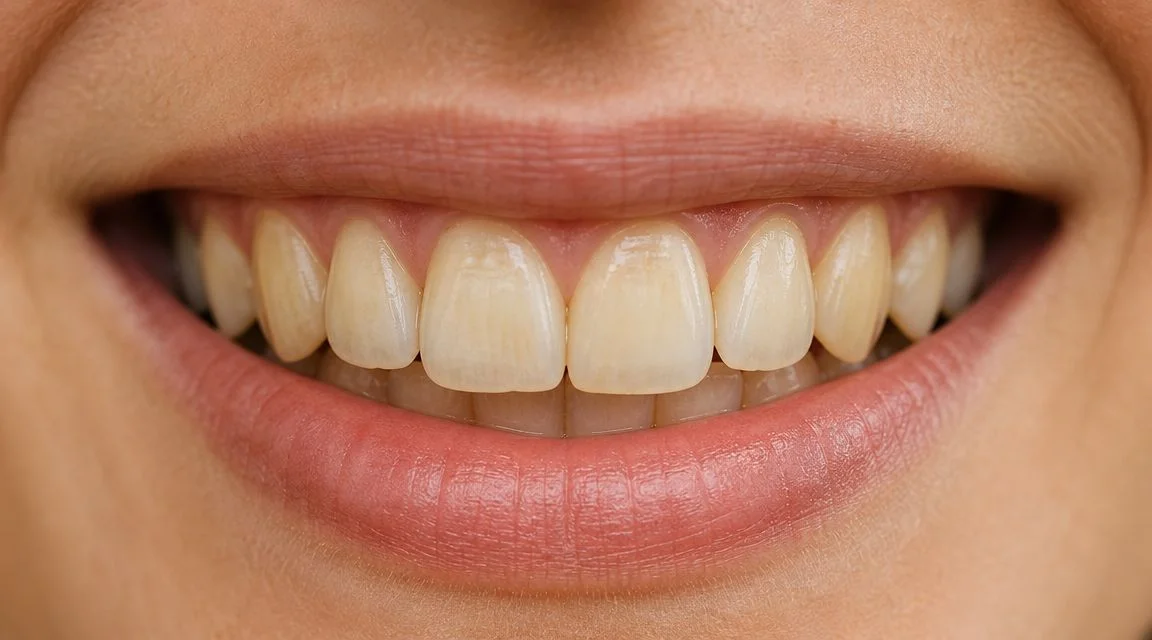
Some stains sit mostly on the outside of the tooth. These are often linked with coffee, tea, red wine, tobacco, and normal daily buildup. Think of these as color collecting on the surface over time. A professional cleaning may improve them somewhat, and whitening can often brighten them further.
Other discoloration is deeper. Age-related yellowing is a common example. As enamel changes over time, the tooth can look darker or more yellow even when it's clean. Some teeth also darken from trauma, medication-related discoloration, fluorosis, or enamel defects. These cases can be much less predictable.
Here's the key distinction:
- Extrinsic staining: Mostly surface-related and often more responsive to whitening
- Intrinsic discoloration: Deeper within the tooth and often harder to change
- Mixed cases: Very common in adults, especially when aging and lifestyle both play a role
Why professional whitening works differently
Whitening isn't just scrubbing stains off. The chemistry is different. As explained in this summary of the science behind teeth whitening, peroxide penetrates enamel, and hydrogen peroxide or carbamide peroxide breaks down into oxygen species that oxidize the pigmented chromogens responsible for yellow and brown discoloration. In plain language, it changes stain molecules rather than polishing only the surface.
That's why stronger professional systems can do more than whitening toothpaste or basic cleansers. It's also why technique matters. The same source notes that concentration and exposure time are key technical variables, and that aggressive bleaching can temporarily lower surface pH and contribute to enamel surface demineralization.
Whitening is a controlled chemical process, not a cosmetic shortcut. The goal is to use enough peroxide to create change, but not so much exposure that comfort and tooth structure are compromised.
Why store products sometimes disappoint
Over-the-counter products can help with mild surface staining, but they aren't designed around your exact enamel, tooth shape, gumline, or stain type. If one tooth is darker than the others, if your discoloration is deeper, or if you have existing dental work, a one-size-fits-all kit often leads to uneven or underwhelming results.
That's usually the moment patients start searching for a teeth whitening treatment at dentist office instead of another box from the store.
Professional Whitening In-Office vs Take-Home Kits
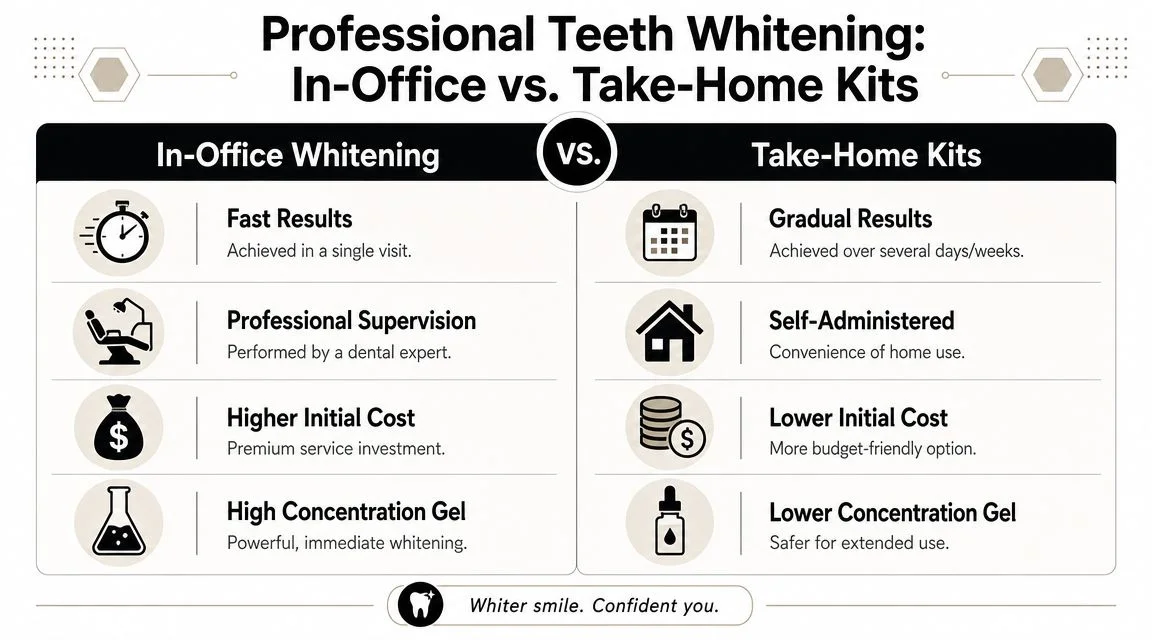
The actual choice usually isn't whitening versus no whitening. It's fast in-office whitening versus slower dentist-supervised home whitening. Both can work. The better fit depends on your schedule, sensitivity level, and expectations.
When in-office whitening makes sense
Chairside whitening is the option people usually imagine first. You come in, your soft tissues are protected, a strong peroxide gel is applied, and you leave with a brighter smile the same day. Johns Hopkins notes that dentist-supervised whitening includes custom take-home trays, while chairside bleaching usually requires one office visit.
This option works well if:
- You want speed: You have an event, interview, reunion, or photos coming up.
- You don't want guesswork: The process is monitored in real time.
- You want a stronger immediate change: Professional chairside systems are designed for quick visible lightening.
The trade-off is comfort. Faster systems usually rely on higher concentrations and shorter treatment windows. That can increase the chance of temporary sensitivity, especially if your teeth are already reactive.
When take-home trays are the better call
Dentist-provided take-home trays are different from generic store trays. They're designed to fit your teeth better and give you a more controlled application of whitening gel. This route is often better for patients who prefer a gradual change or who know they're prone to sensitivity.
Take-home whitening often makes sense when:
| Option | Best for | Main advantage | Main trade-off |
|---|---|---|---|
| In-office whitening | Busy adults who want fast cosmetic improvement | Same-day visible change | Greater chance of temporary sensitivity |
| Custom take-home trays | Patients who want flexibility and a gentler pace | More control over timing and comfort | Results take longer |
| Combination planning | Patients who want a boost plus maintenance | Fast start with easier upkeep | Requires a more tailored plan |
What doesn't work well
The least effective path is often bouncing between products without a diagnosis. Whitening toothpaste, strips, LED gadgets, and online kits may all promise something slightly different, but if the stain type is wrong for bleaching, none of them will solve the actual problem.
That's why a balanced conversation matters more than hype. In practice, the best cosmetic dentists don't just ask, “How white do you want to go?” They ask:
- What kind of stain are we treating?
- How quickly do you want the change?
- How important is minimizing sensitivity?
- Are there fillings, crowns, or veneers in the smile zone?
For patients in Walnut Creek comparing cosmetic dentistry options, William M. Schneider, DDS offers whitening as part of broader care that can also include cleaning and exams, restorative dentistry, and planning for visible dental work that won't change color with bleach.
The In-Office Whitening Procedure What to Expect
For many people, the hardest part of scheduling whitening isn't the treatment. It's not knowing what the appointment will feel like. A clear step-by-step picture usually lowers anxiety right away.
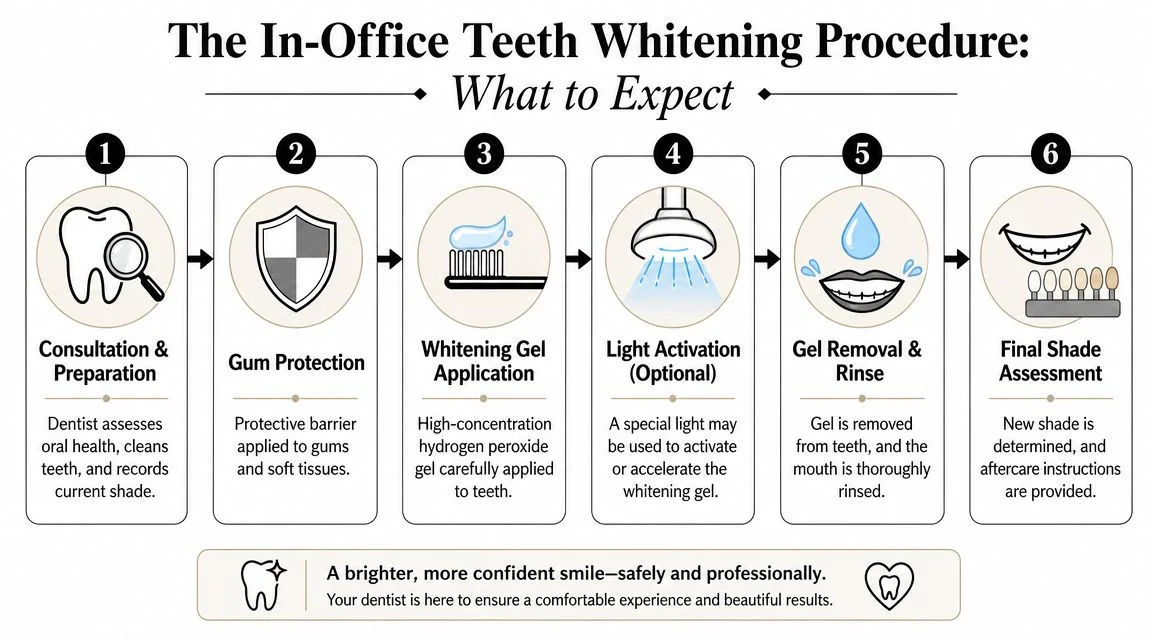
A standard in-office process is outlined well in the NHS guide to teeth whitening. It describes a workflow that includes an initial shade assessment, protection for the gums with a barrier, application of a high-concentration peroxide gel, and often activation with a light. The full visit typically takes about one to two hours in a single appointment.
A visual overview can help make that easier to picture.
What happens during the visit
Most appointments follow a sequence like this:
Evaluation and shade check
Teeth and gums are examined first. This helps confirm that whitening is appropriate and gives a baseline for comparison.Preparation
The teeth may be cleaned or polished so the whitening material contacts the enamel more evenly.Gum protection
A protective barrier is placed over the gums and other soft tissues. This is a key safety step because the gel is strong.Gel placement
The whitening gel is applied carefully to the visible tooth surfaces.Activation and timing
Some systems use a curing light, laser, or LED during treatment. The gel may be applied in timed cycles.Rinse and recheck
The gel is removed, the mouth is rinsed, and the new shade is reviewed.
If you want a better sense of the sensation itself, this page on what professional teeth whitening can feel like is useful because it speaks directly to the comfort side of the experience.
Later in the visit, some patients find it helpful to see the process in motion:
What the appointment feels like
Most patients describe whitening as straightforward rather than painful. The most common sensation is a temporary zing or heightened cold sensitivity during or after treatment. The key difference in a dental office is that the team can watch for that and adjust the process if needed.
A well-run whitening appointment should feel controlled. You shouldn't be left guessing whether irritation is normal or whether the gel is sitting where it shouldn't.
That's one reason patients who are already looking for a new patient exam, cosmetic dentist, or family dentist in Walnut Creek often prefer professional care over self-directed kits. The appointment is not just about getting whiter teeth. It's about doing it in a way that protects the gums, respects sensitivity, and gives you clear aftercare.
Are You a Good Candidate for Teeth Whitening
Whitening works best when the underlying situation is right. Healthy teeth and gums matter. So does the type of stain.
Good candidates usually have these traits
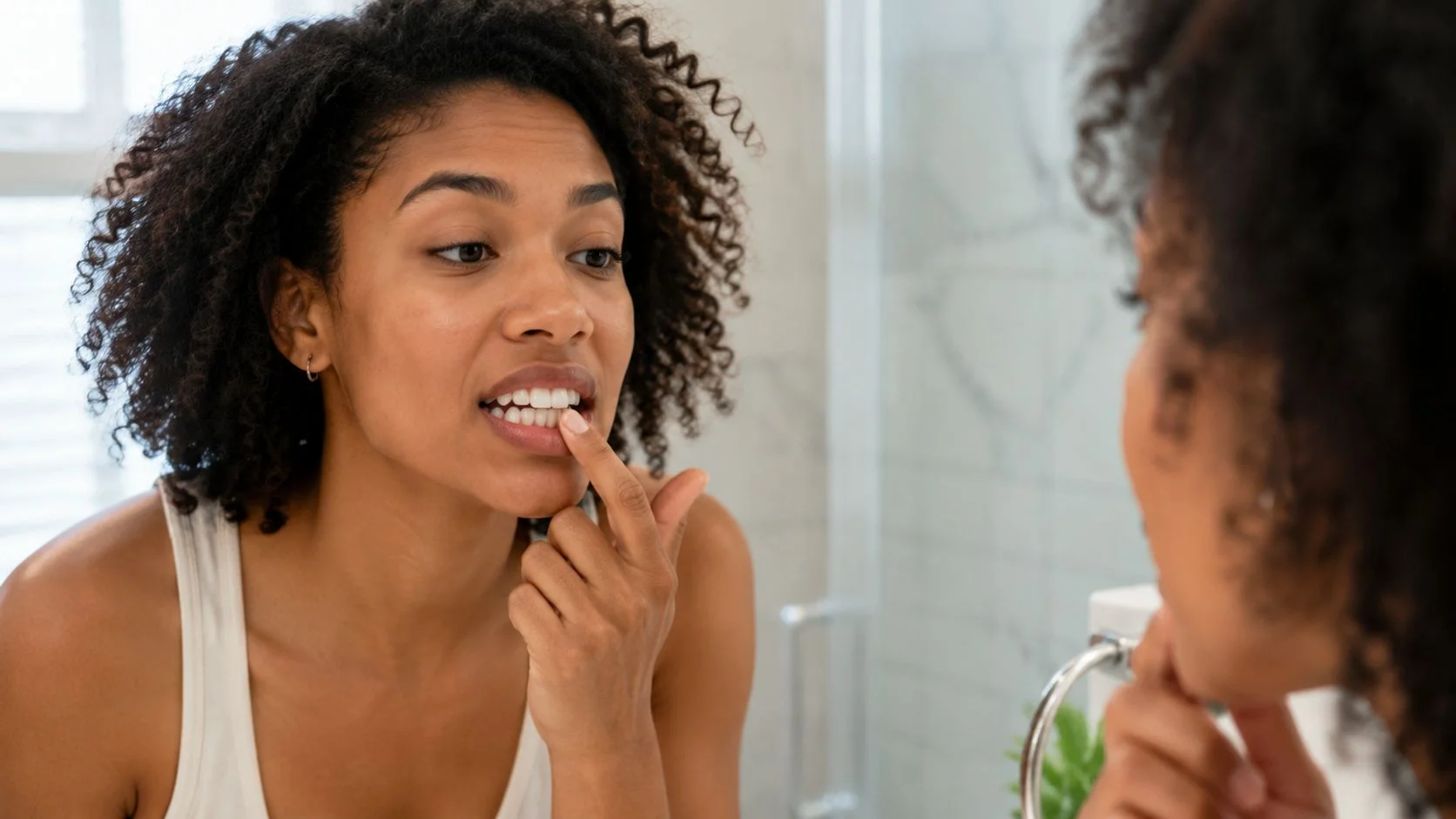
Patients often do well with whitening when they have:
- Healthy enamel and gums: Active dental problems should be addressed first.
- Yellow-toned discoloration: These stains often respond better than gray-toned changes.
- Realistic expectations: Whitening can brighten natural teeth, but it won't make every smile uniformly bright if different materials are present.
- A desire for cosmetic improvement without more invasive treatment: Whitening is conservative compared with veneers or bonding.
For the right case, whitening can produce a very noticeable change. The ADA information summarized at MouthHealthy's teeth whitening page notes that in-office whitening can make teeth “three to eight shades brighter,” often in a few 30- to 60-minute visits or a single 2-hour appointment.
Cases where whitening may disappoint
This is the part many articles skip, but it's where trust is built. Whitening does not work equally well for every kind of discoloration.
The same ADA-based source notes that whitening is not effective on all stains, including some caused by tetracycline and on restorations. That includes things like crowns, veneers, and fillings. Those materials won't bleach the way natural enamel does.
That matters if you have:
| Situation | What to expect |
|---|---|
| Tetracycline-related staining | May respond poorly or unevenly |
| Visible crowns, veneers, or fillings | These won't whiten with bleach |
| A single dark tooth | May need a different diagnosis before cosmetic treatment |
| Fluorosis or enamel defects | Results may be limited or uneven |
| Tooth discoloration after trauma | Whitening may not be the right first step |
If one front tooth is much darker than the others, don't assume whitening is the answer. A single discolored tooth often deserves a closer evaluation before any cosmetic treatment begins.
When another treatment makes more sense
Sometimes the right cosmetic plan isn't whitening alone. If a restoration is the wrong shade, replacing it may matter more than bleaching. If enamel is chipped or shape is the issue, bonding or veneers may create a better result. If a damaged tooth can't be saved, restorative options such as extraction and replacement may become part of the discussion.
That's why a consultation is valuable. It helps you avoid spending money on a treatment that isn't designed for your specific problem.
How to Maintain Your Whitening Results Long-Term
Whitening doesn't end when the appointment does. What you do afterward has a big effect on how long your smile stays bright.
Daily habits that help
The basics matter more than people think:
- Brush and floss consistently: Plaque holds on to stain, so cleaner teeth usually stay brighter.
- Rinse after dark beverages: Coffee, tea, and red wine are common culprits.
- Be mindful of pigmented foods: Berries, sauces, and similar foods can contribute to staining over time.
- Keep up with cleanings and exams: Routine preventive care helps remove buildup before it becomes more noticeable.
Maintenance is often part of the plan
Whitening isn't always a one-time event. Many patients maintain their shade with occasional touch-ups rather than repeating a full in-office treatment right away. That's one reason dentist-supervised take-home whitening remains useful even for people who start with chairside care.
If you want practical aftercare guidance, this page on how to maintain the results of teeth whitening gives a patient-friendly overview.
Think in terms of protection, not perfection
The best long-term mindset is simple. Protect the result you achieved instead of trying to chase an unnaturally bright shade. If your habits include frequent coffee or wine, that doesn't mean whitening was a mistake. It just means maintenance may need to be part of your cosmetic routine, the same way regular cleaning and exams are part of healthy dental care.
For many Walnut Creek patients, that practical approach feels easier and more realistic than trying to avoid every staining food forever.
Dr. Schneiders Approach to Comfortable Teeth Whitening
Sensitivity is real, and patients should be informed of this directly. A review summarized in this clinical discussion of whitening effectiveness and sensitivity reported that tooth sensitivity has been noted in 30% to over 78% of patients, with higher peroxide concentrations increasing the risk. Most cases are described as mild to moderate and usually resolve within days.
That matters because comfort isn't a side issue. It's part of choosing the right whitening method in the first place.
At Dr. Schneider's Walnut Creek practice, an anxiety-sensitive approach means treatment planning doesn't stop at “how white can we get your teeth?” It also looks at whether your teeth are already reactive, whether a slower approach would make more sense, and how to reduce unnecessary stress during the visit. Patients who are nervous about dental treatment often do better when the process is explained clearly, paced carefully, and adjusted to their tolerance rather than rushed.
Whitening should be personalized. If sensitivity risk is high, the solution may be changing the protocol, not pushing through discomfort.
That same patient-first mindset is valuable well beyond cosmetics. If you're looking for a long-term dental home in Walnut Creek for preventive care, restorative dentistry, emergency dentist needs, or even concerns that may eventually involve tooth extraction or dental implants near me searches, comfort and trust still matter just as much.
Frequently Asked Questions About Dental Whitening
How much does professional whitening usually cost
Cost depends on the method, the amount of staining, and whether treatment is done in the office or with custom take-home trays. In many practices, in-office whitening falls in the several-hundred-dollar range, and some cases cost more if they require a more individualized approach.
The more useful question is whether the faster result is worth it for your teeth. Patients with a history of sensitivity sometimes do better with a slower plan, even if that means trading same-day brightness for a more comfortable experience.
Does whitening hurt
Some patients feel no more than mild temperature sensitivity. Others notice short, sharp zings during treatment or for a day or two afterward.
That difference matters. Whitening is not one-size-fits-all, especially for anxious patients or people who already know their teeth react to cold air, sweet foods, or whitening strips. In a dental office, the process can be adjusted, paused, or changed if comfort becomes a problem. That level of control is one of the biggest advantages of professional care.
How is professional whitening different from strips from the store
The difference is not just stronger gel. Professional whitening starts with an exam to make sure the discoloration is likely to respond, and that your gums, enamel, and existing dental work are in good shape for treatment.
Store products can help with mild surface staining, but they use a generic fit and a generic plan. Professional treatment is chosen based on your stain pattern, your sensitivity risk, and how quickly you want results. For some Walnut Creek patients, that means an in-office visit. For others, custom trays used gradually at home are the better choice because they give more control with less irritation.
If you're considering treatment with William M. Schneider, DDS in Walnut Creek, CA, a consultation can answer the questions that matter most. Will whitening work on your type of staining? How likely is sensitivity in your case? Is a faster in-office result worth it, or would a gentler take-home approach be the better fit for your comfort level?