You may be reading this because you’ve postponed a cleaning, ignored a cracked tooth, or kept telling yourself you’ll call the dentist “next month.” For many people, the problem isn’t laziness. It’s fear. Fear of pain, fear of losing control, or fear of being judged for waiting too long.
That reaction is common, and it’s treatable. A walnut creek sedation dentist helps anxious patients get care in a calmer, more manageable way, but sedation is only one part of the experience. Comfort also comes from clear communication, gentle technique, modern technology, and a dental team that understands why someone might feel nervous walking through the door.
Your Guide to Comfortable Dentistry in Walnut Creek
You finally pick up the phone to schedule a visit, then your stomach tightens before anyone even answers. That reaction is familiar for many people in Walnut Creek. Anxiety often starts long before treatment begins, which is why real comfort has to start earlier too.
A comfortable dental experience is usually built in layers. Sedation is one layer. Clear explanations are another. Gentle injections, modern imaging, a calm room, and a dentist who knows how to pace treatment all work together to lower stress. It works a lot like turning down the volume from several directions instead of relying on one button.
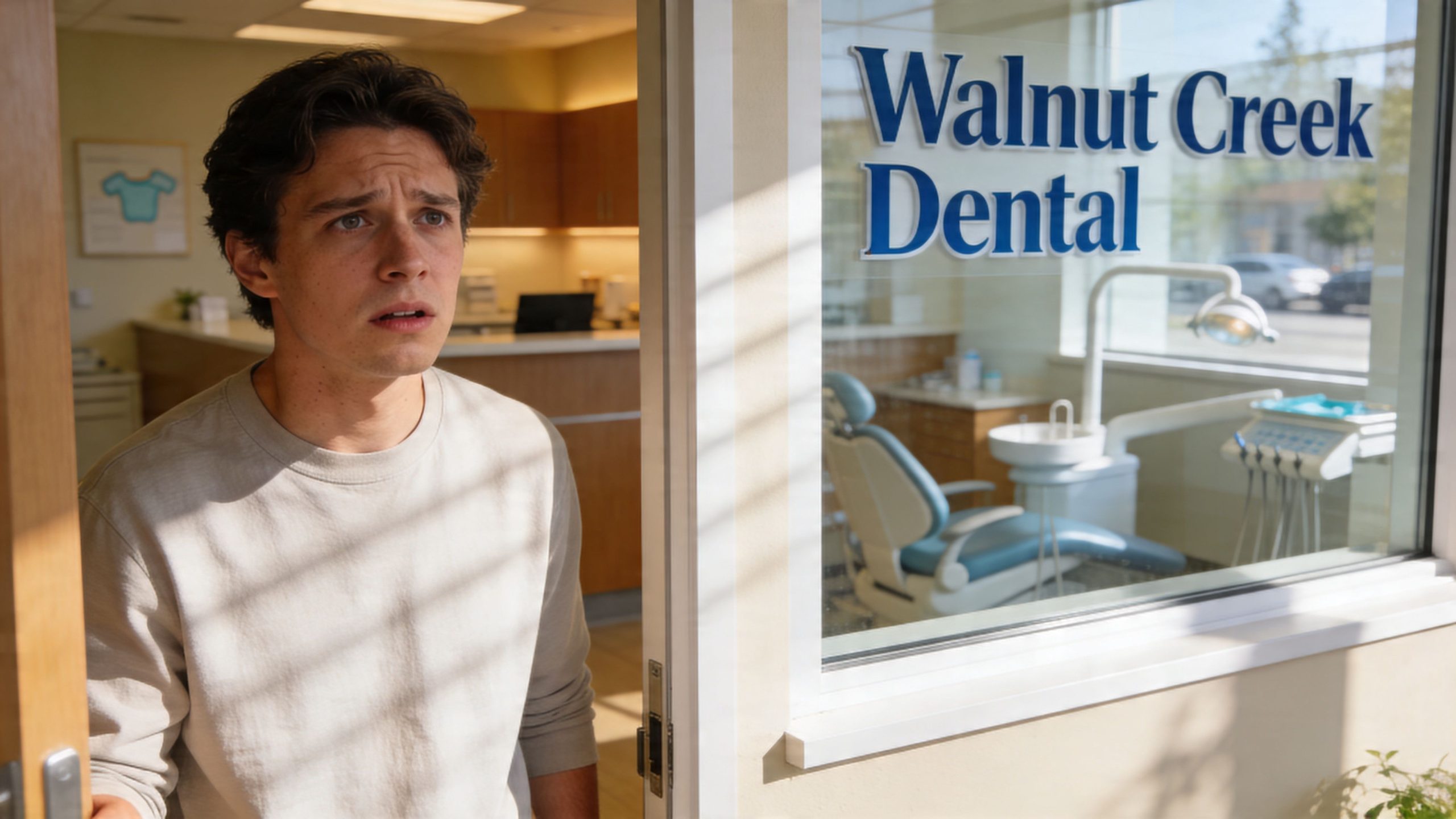
At William M. Schneider, DDS, that wider approach matters. Dr. Schneider brings more than 25 years of clinical experience, which helps him recognize the difference between a patient who needs extra time, a patient who needs more numbness, and a patient who will feel better with sedation added to the plan. That kind of judgment can make a visit feel more predictable and much less overwhelming.
Comfort means more than medication
Sedation can help you relax, but it is only one part of anxiety care. A patient coming in for a short filling may do well with a lighter option and steady reassurance. Someone facing a longer visit, such as crowns, root canal treatment, or dental implants, may need a different level of support. The goal is not merely to make treatment possible. The goal is to help you feel safe while it is happening.
That is why the best comfort plans are personal. They combine the right sedation option with the right setting, the right technology, and the right pace. For anxious patients, that often changes the whole experience. Dental care stops feeling like something to endure and starts feeling manageable again.
Who Is a Good Candidate for Sedation Dentistry
Some people hear “sedation dentistry” and assume it’s only for severe panic. That’s not the case. Sedation can also help patients who are physically uncomfortable in the dental chair, who need longer treatment, or who have had difficult experiences in the past.
Untreated anxiety can keep people from getting care. ADA estimates note that delayed dental care affects 10-20% of adults when anxiety goes untreated, which can allow minor issues to become more serious, as referenced by Coliseum Dental Walnut Creek.
Signs sedation may help
You may be a good candidate if any of these sound familiar:
- You avoid appointments because of fear: Even routine cleanings and exams feel overwhelming.
- Your gag reflex gets in the way: X-rays, impressions, or treatment near the back teeth are hard to tolerate.
- Local anesthetic hasn’t worked well for you before: Some patients stay tense enough that getting fully comfortable takes longer.
- You’ve had a bad dental experience: A painful visit or a moment when you felt unheard can shape your expectations for years.
- You need extensive treatment: Tooth extraction, multiple restorations, or dental implants may be easier to complete when you’re relaxed.
- You struggle to sit still for long visits: Jaw fatigue, restlessness, or general tension can make treatment feel harder than it needs to be.
It’s not only about fear
Sedation can be practical as well as emotional. A busy professional may want to complete more care in fewer appointments. A parent may want one carefully planned visit instead of several stressful ones. A new patient with overdue restorative dentistry may want the process to feel manageable.
Some patients don’t say, “I’m afraid of the dentist.” They say, “I can’t do another visit like my last one.” That’s often the same problem in different words.
The best way to know whether sedation fits your needs is a consultation. Your dentist reviews your health history, the type of treatment you need, your comfort level, and what kind of support will help you follow through with care.
Sedation Options at Our Walnut Creek Dental Office
You sit down in the chair, and your body says “no” before your mind can catch up. Your shoulders tighten. Sounds seem louder. Time feels slower. In moments like that, comfort usually comes from having a plan, not from trying to “tough it out.”
At our Walnut Creek dental office, sedation is one part of that plan. We combine it with clear communication, modern technology, a calmer setting, and the steady judgment that comes from Dr. Schneider’s 25+ years of clinical experience. The goal is simple. Help you feel safe enough to get the care you need without feeling overwhelmed by the process.
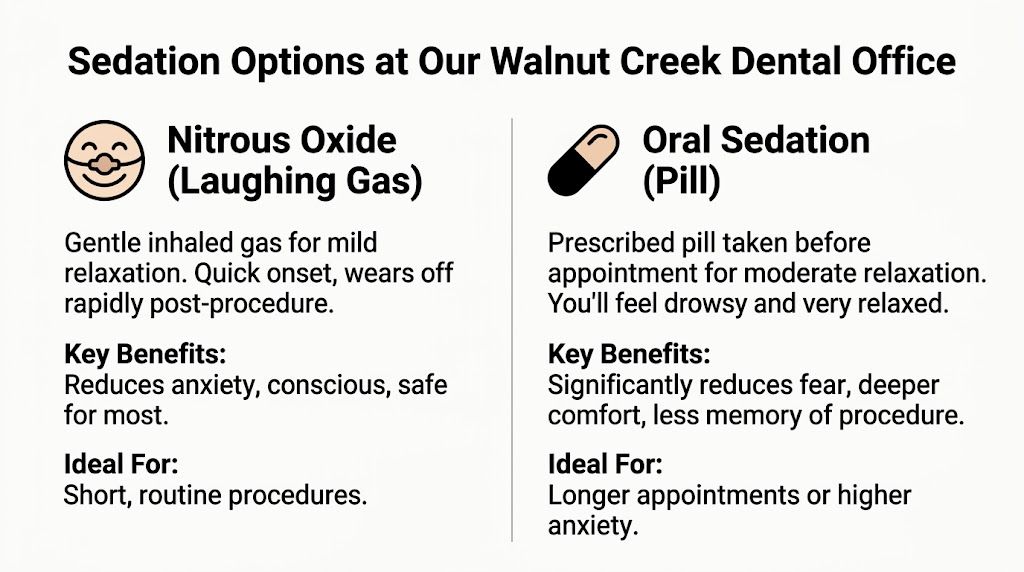
Nitrous oxide for light, adjustable relaxation
Nitrous oxide is breathed through a small nose mask during treatment. It works a bit like a dimmer switch for anxiety. You stay awake and able to respond, but the tension often drops enough that the visit feels much easier.
Many patients describe the feeling as lighter, warmer, or pleasantly detached from the parts of the appointment that usually bother them. Because it wears off quickly after treatment, nitrous oxide can be a good fit for shorter visits, restorative work, or patients who want support without a long recovery period.
Oral conscious sedation for stronger anxiety support
Oral conscious sedation usually means taking a prescribed pill before your appointment. This option creates deeper relaxation than nitrous oxide and is often helpful for patients who feel anxious before they even enter the office, or for visits expected to take more time.
You are still conscious. You can still respond to the dental team. What often changes is your sense of time, your level of physical tension, and how strongly you react to normal treatment sounds and sensations. Many patients remember less of the visit afterward, which can make returning for future care feel less intimidating.
Because the effects last longer, you will need a trusted adult to drive you to and from the appointment.
Comparing your sedation options
| Feature | Nitrous Oxide (“Laughing Gas”) | Oral Conscious Sedation |
|---|---|---|
| How it’s given | Inhaled through a small nasal mask | Prescribed pill taken before the visit |
| Best for | Mild to moderate anxiety, shorter procedures | Moderate anxiety, longer or more involved treatment |
| How it feels | Light relaxation, reduced tension | Deeper calm, drowsiness, less awareness of time |
| Are you awake? | Yes | Yes |
| Recovery | Wears off quickly after treatment | Takes longer to wear off |
| Need a driver? | Often not necessary | Yes, you should arrange a ride |
Choosing the option that fits you
The right choice depends on more than the procedure itself. It also depends on how your body reacts to stress, how long you can stay comfortable in the chair, and what kind of support helps you feel in control.
A patient with mild anxiety during a filling may do well with nitrous oxide. A patient who has postponed treatment for years, or who feels panicked during longer visits, may prefer oral conscious sedation. For some people, the best answer is not “more sedation.” It is the right level of sedation paired with a slower pace, gentler techniques, and an office that pays close attention to sensory comfort.
If you want a clearer picture of how sedation decisions are made, this safety guide to sedation dentistry explains the questions dentists review before recommending an option.
Some patients also ask about deeper forms of sedation used in other settings. This patient-friendly guide on What Is IV Sedation Dentistry And How Does It Work? can help you understand how IV sedation differs from the options commonly discussed in general practice.
Our Commitment to Your Safety and Comfort
The most common question anxious patients ask isn’t “Will sedation help?” It’s “Will sedation be safe for me?” That’s the right question.
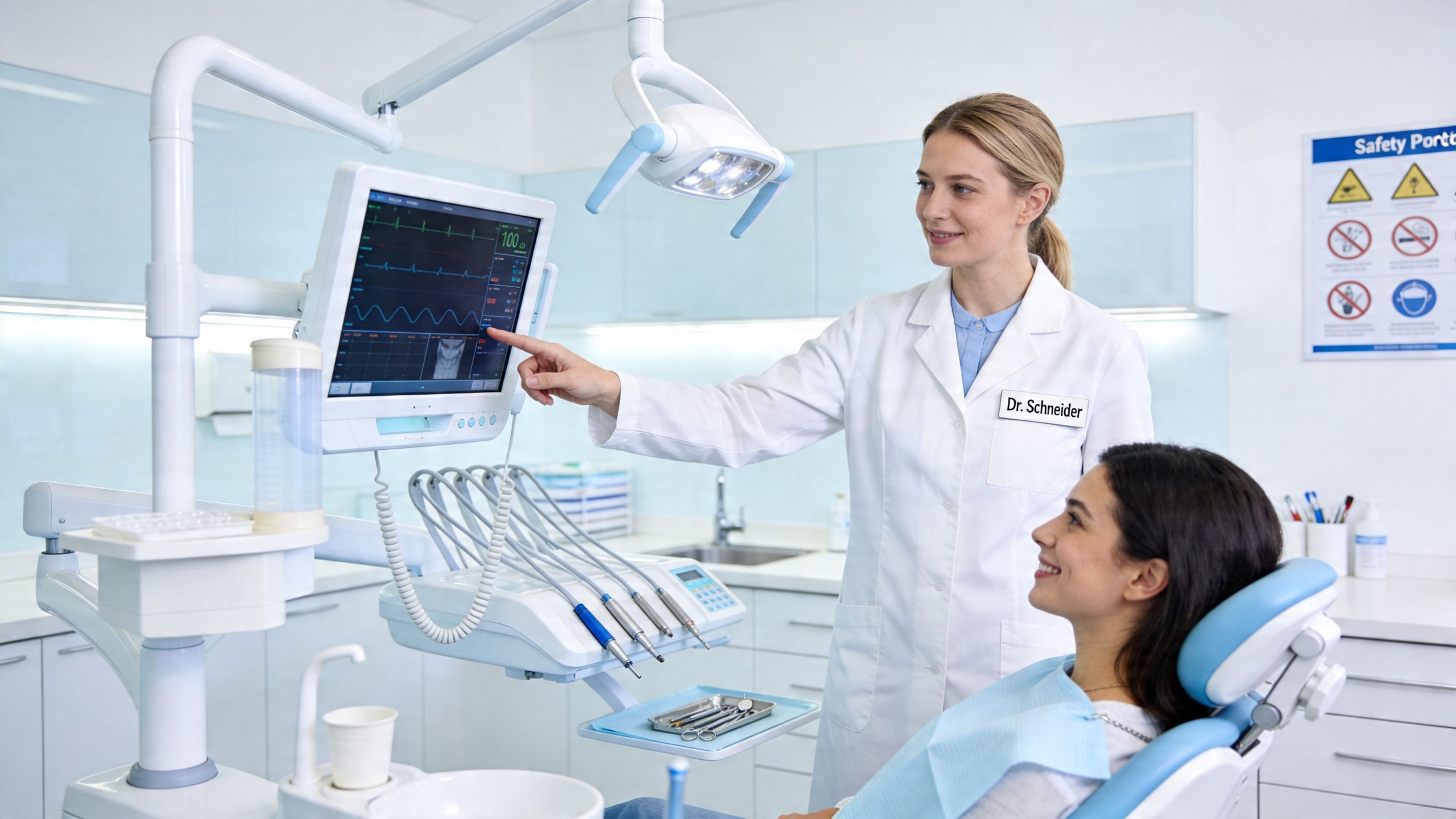
Sedation should never be casual. It should be planned carefully, matched to the patient, and monitored throughout the visit. That’s why experience matters. Dr. Schneider brings more than 25 years of experience to complete dental care in Walnut Creek, and that experience shapes how treatment is evaluated, explained, and delivered.
Safety starts before treatment begins
A safe sedation appointment begins with a health review. Your dentist needs to know about medications, medical conditions, previous reactions, and the kind of treatment planned. Some patients need only mild support. Others may benefit from a different pace, shorter visits, or another approach entirely.
The office also follows careful infection control and modern clinical protocols. That matters because patients who feel vulnerable need to know every part of the visit is being handled thoughtfully.
Monitoring and communication matter
During sedation-supported treatment, the team keeps a close watch on how you’re doing. Even when patients feel sleepy or detached, they are still being guided and observed throughout the procedure.
Avoiding dental care can come with real consequences. Periodontal disease is prevalent in 47.2% of U.S. adults over 30, and delaying care because of fear can raise the likelihood of more advanced oral health problems, as noted by Diablo Creek Dentistry.
Safety isn’t only about the sedative itself. It’s also about choosing the right patient, the right appointment length, and the right level of support.
If you’d like a closer look at how safety decisions are made, our sedation dentistry safety guide explains the process in more detail.
What to Expect During Your Sedation Dentistry Visit
Fear often grows in the blank spaces. Patients worry most when they don’t know what will happen first, what they’ll feel, or what’s expected of them. A predictable routine helps.

Before the appointment
The process starts with a consultation. Your dentist reviews your concerns, your health history, and the treatment you need. If sedation is appropriate, you’ll get clear instructions about eating, medications, arrival time, and whether you need a driver.
For patients considering oral sedation, advance planning matters. You won’t want to make decisions on the fly the day of treatment. If you’d like a second educational resource before your consultation, this overview of how sedation dentistry works gives a simple explanation of the general process.
On the day of treatment
When you arrive, the team helps you settle in and confirms the plan. If you’re using nitrous oxide, the nose mask is placed once you’re comfortable in the chair. If you’re using oral conscious sedation, the effects should already be beginning by the time treatment starts.
The environment matters here. Patients with anxiety usually do better when the pace is calm, instructions are simple, and they know they can signal if they need a break.
You should never feel like treatment is happening to you. You should feel guided through it.
This is also why sedation can pair well with broader services such as crowns, root canals, cosmetic dentistry, tooth extraction, and dental implants near me style searches patients often make when they want one office for both comfort and complete care.
A short video can make the sequence easier to picture:
After the visit
Recovery depends on the type of sedation used. With nitrous oxide, patients often feel back to normal quickly. With oral sedation, you’ll need more time to rest and should follow all post-appointment instructions closely.
Many anxious patients find that the first successful visit changes their expectations for future care. Once they’ve had one calm appointment, scheduling the next cleaning, exam, or restorative treatment often feels much easier. For a fuller walkthrough, our step-by-step guide to a sedation dentistry appointment outlines each stage in patient-friendly language.
Understanding the Cost of Sedation Dentistry
Cost matters, and patients deserve a straightforward answer. Sedation dentistry fees usually depend on the type of sedation used, the length of the appointment, and the complexity of the treatment being completed during that visit.
What affects the total cost
A shorter visit with nitrous oxide is different from a longer appointment using oral conscious sedation. The dental procedure itself also plays a role. A cleaning and exams visit won’t be priced the same way as restorative dentistry, tooth extraction, or a larger treatment plan that combines several procedures.
Insurance can also affect what you pay. Coverage varies by plan, and the details often depend on whether sedation is tied to a specific procedure or medical need.
Why some patients see sedation as a practical investment
For many anxious patients, sedation is less about adding an extra service and more about finally completing care that has been postponed. Delayed treatment often becomes more involved over time. A cavity that might have been simple to fix can grow into a much larger problem if fear keeps pushing the appointment back.
That’s why it helps to think in terms of total care, not just one line item. If sedation helps you complete needed treatment, reduce repeated starts and stops, and return for regular preventive care, it can support both comfort and long-term planning.
Ask for a written treatment plan. It’s the clearest way to understand what portion relates to the dental procedure, what portion relates to sedation, and what questions to ask your insurance provider.
If you’re looking for a dentist in Walnut Creek, CA who can explain your options in plain language, a consultation is the best place to start.
Frequently Asked Questions About Sedation Dentistry
Will I be completely unconscious
Usually, no. With nitrous oxide and oral conscious sedation, you remain conscious and able to respond. Most patients feel relaxed, sleepy, or less focused on the procedure, but they are not under general anesthesia.
Will I still feel what’s happening
You may notice pressure or movement, but sedation is designed to reduce anxiety and make treatment feel easier to tolerate. Local anesthetic is still used when needed to control pain in the treatment area.
How long do the effects last
That depends on the type of sedation. Nitrous oxide tends to wear off quickly after treatment. Oral conscious sedation lasts longer, so you’ll need time to recover at home and should not plan to drive yourself.
Can I combine multiple procedures into one visit
Often, yes. Sedation can make it easier to complete more treatment in a single appointment when that approach is clinically appropriate. Patients sometimes choose this for restorative dentistry, cosmetic dentist near me searches that lead to larger smile plans, or dental implants near me research when they want fewer visits overall.
Is sedation only for major procedures
No. Some patients use sedation for a routine visit because anxiety is the main barrier, not the size of the procedure. A cleaning, dental x-rays, or new patient exams can still feel difficult if fear has built up over time.
What if I’m embarrassed that it’s been years
That feeling is common, and it shouldn’t stop you from getting care. A good dental team focuses on what you need now, not on making you feel bad about the delay.
Schedule Your Comfortable Dental Visit in Walnut Creek
You don’t have to keep postponing care because the dental chair makes you tense. With the right plan, many patients find they can get through treatment far more comfortably than they expected.
If you’ve been searching for a walnut creek sedation dentist, an emergency dentist, or a dentist near me who understands dental anxiety, it may be time to talk through your options. Sedation can help, but so can a calm office, clear explanations, and a team that respects your pace.
Dr. Schneider and his team welcome patients who want a more comfortable approach to preventive, restorative, and cosmetic dental care in Walnut Creek and the East Bay. To schedule a consultation, call (925) 935-2700 or visit the office at 1855 San Miguel Dr., Suite 31, Walnut Creek, CA 94596.
If you’re ready for a calmer dental experience, contact William M. Schneider, DDS to request a consultation and talk through your comfort options, treatment needs, and next steps.