You look in the mirror before work, tilt your head slightly, and notice the same thing you’ve been noticing for months. Maybe it’s a chipped front tooth. Maybe it’s discoloration that whitening hasn’t changed. Maybe one tooth looks shorter, worn, or slightly out of place, and now it’s the first thing you see in every photo.
That’s usually when people start searching for what is the difference between a crown and veneer, especially if they’re trying to decide whether they need cosmetic dentistry, restorative dentistry, or both. In Walnut Creek, that question often comes up before a smile makeover, after a cracked tooth, or during a new patient exam when someone wants a clear answer without a sales pitch.
Both treatments can improve a smile. Both can restore confidence. But they are not interchangeable. The better choice depends on what’s happening with the tooth now, what you want it to look like later, and how much long-term maintenance you’re willing to accept. For patients looking for a cosmetic dentist near me or a dentist in Walnut Creek, CA, the most useful comparison isn’t just appearance. It’s function, durability, and what the decision means years from now.
Considering a Smile Makeover in Walnut Creek
A lot of smile decisions don’t start with a dramatic dental emergency. They often begin subtly.
Someone in Walnut Creek may come in bothered by a front tooth that looks darker than the one beside it. Another patient may have a small chip from years ago that has slowly become more noticeable. Others are dealing with worn edges, uneven teeth, or spacing that makes them hide their smile in family pictures and work meetings.
Those concerns are real, even when they don’t involve pain. Cosmetic concerns affect how people speak, laugh, and carry themselves. At the same time, the wrong treatment can create frustration later if the tooth needed strength more than beauty, or if the patient wanted a cosmetic fix but didn’t realize the long-term commitment involved.
A restoration should solve the actual problem, not just make the tooth look better for the moment.
That’s why the first conversation matters. A tooth with a minor cosmetic flaw is a very different situation from a tooth that’s cracked, heavily filled, or structurally weak. In one case, a conservative cosmetic approach may make sense. In another, the tooth may need full protection.
Patients who are also searching for a dentist near me often want more than a quick answer. They want someone to explain what works, what doesn’t, and why one treatment may be smarter over time. That same practical thinking applies across dentistry, whether someone is considering veneers, crowns, teeth whitening, dental implants near me, or even treatment after a tooth extraction or an urgent visit with an emergency dentist.
Defining Dental Crowns and Veneers
A crown and a veneer can both improve a tooth’s appearance, but they do very different jobs.
What a veneer does
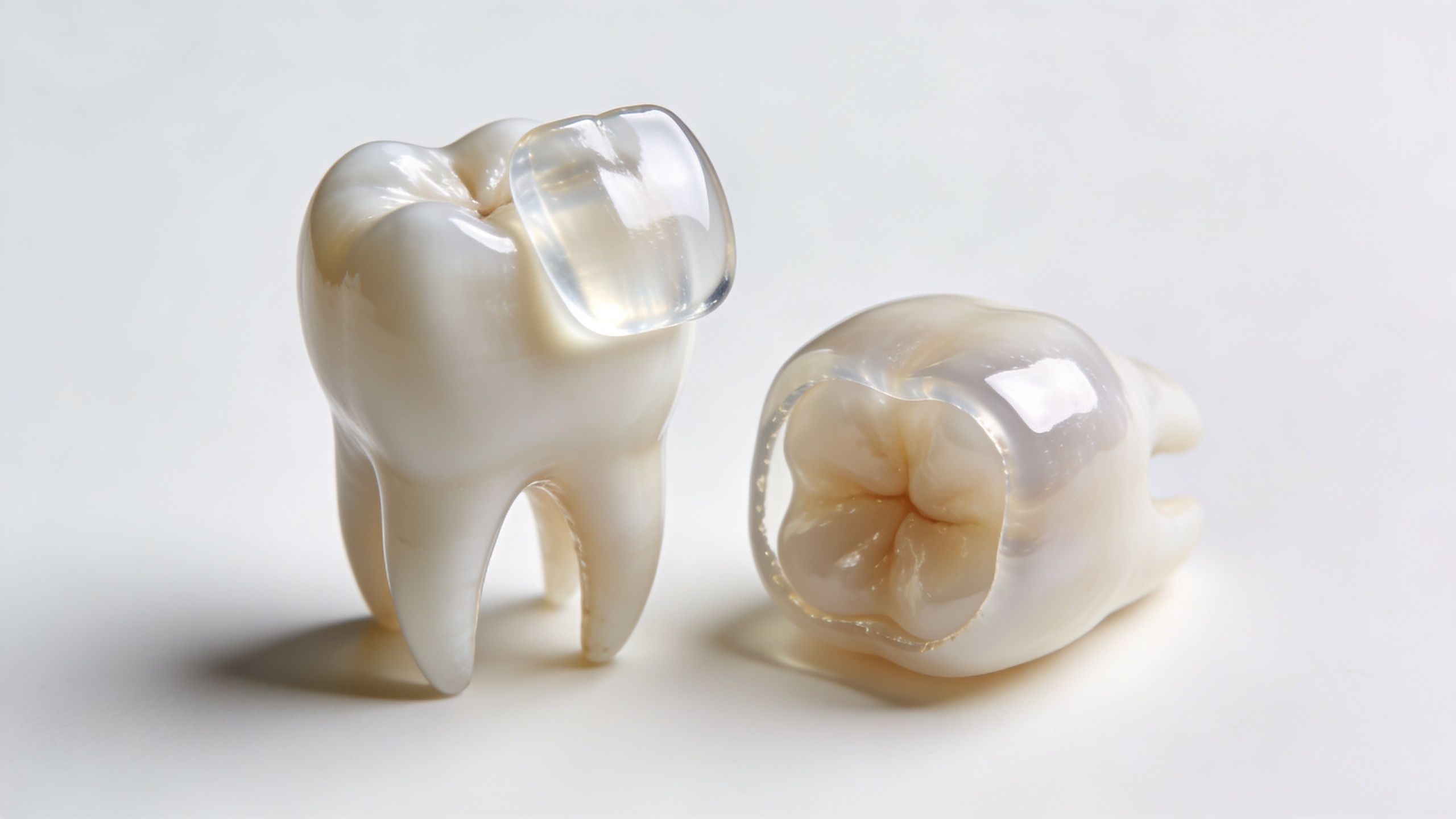
A veneer is a thin covering placed on the front surface of a tooth. It’s used mainly to improve appearance. If a tooth is healthy but has a cosmetic issue, such as discoloration, a small chip, or minor shape concerns, a veneer can change how that tooth looks without covering the entire tooth.
A simple way to think about a veneer is this. It’s like a custom shell on the visible front of the tooth. It changes color, shape, and surface appearance, but it is not designed to wrap around and reinforce the whole tooth the way a crown does.
What a crown does
A dental crown covers the entire visible portion of the tooth. It acts more like a protective cap. If a tooth has significant damage, decay, a large failing filling, or weakness after treatment, a crown is often the more appropriate option because it protects and supports the tooth from all sides.
Patients often hear crowns described as “caps,” and that’s accurate. A crown fits over the prepared tooth and is meant to restore strength, function, and appearance together.
The core difference in plain language
If a veneer is a cosmetic shell, a crown is a protective helmet.
That distinction matters because treatment planning should follow the condition of the tooth. A healthy tooth that needs cosmetic improvement is different from a tooth that needs structural reinforcement. Using a veneer where a crown is needed can leave a weak tooth underprotected. Using a crown where a veneer would do can remove more tooth structure than necessary.
Here’s the practical takeaway:
- Choose a veneer mindset when the tooth is generally healthy and the concern is mostly how it looks.
- Choose a crown mindset when the tooth needs coverage, support, or protection in addition to a better appearance.
- Pause before either option if the issue may be better treated first with orthodontics, gum care, or another restorative step.
For people comparing cosmetic dentistry and restorative dentistry, this is usually where the decision starts. Veneers lean cosmetic. Crowns often serve both cosmetic and restorative purposes.
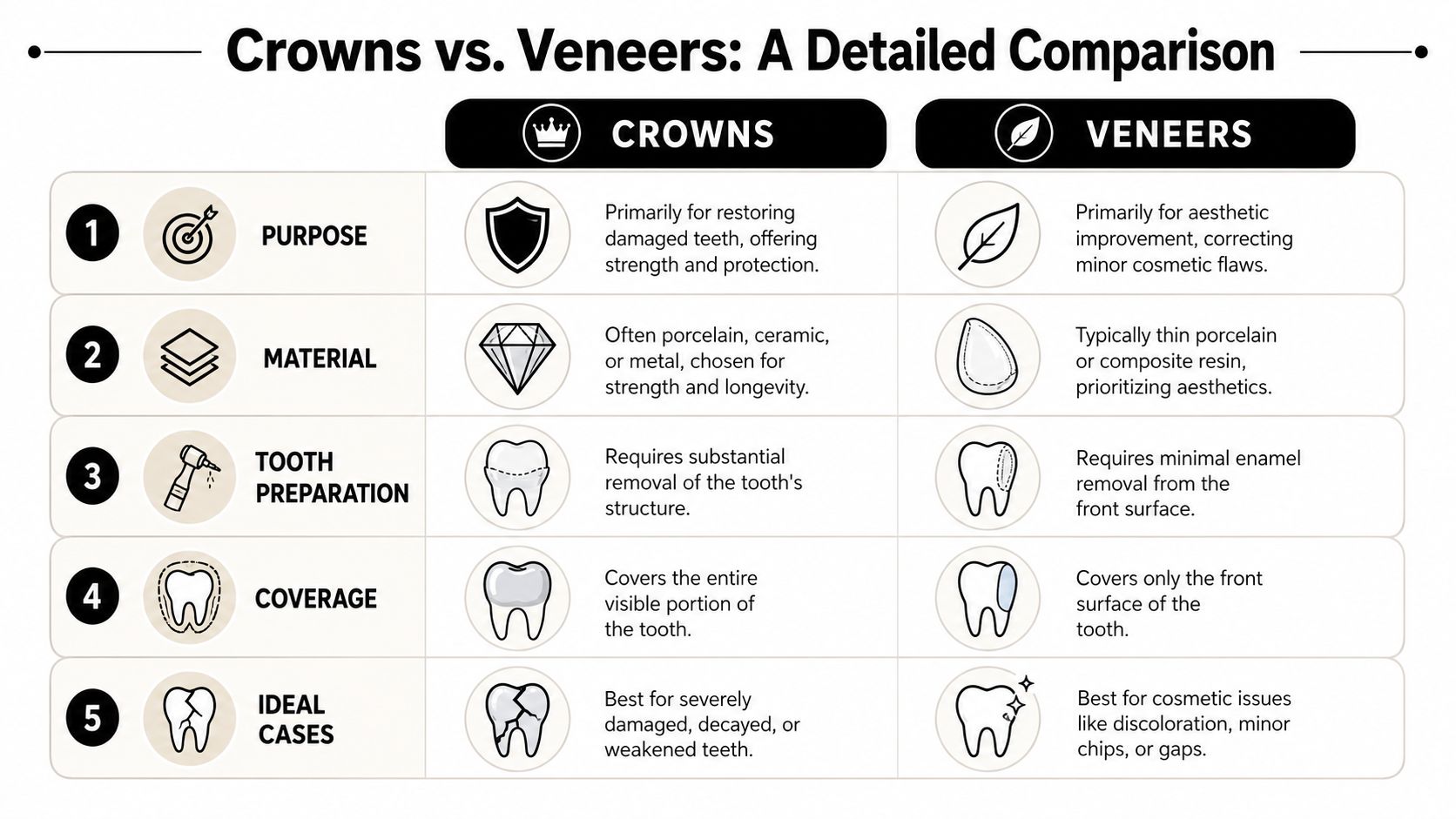
Crowns vs Veneers A Detailed Comparison
The biggest mistake patients make is comparing crowns and veneers as if they’re two versions of the same treatment. They’re not. They overlap in appearance, but they differ in coverage, preparation, and ideal use.
| Feature | Porcelain Veneers | Dental Crowns |
|---|---|---|
| Primary purpose | Cosmetic improvement for the front of the tooth | Protection and restoration for a damaged or weakened tooth |
| Tooth coverage | Front surface only | Entire visible tooth |
| Tooth preparation | Minimal front-surface reduction | Full reduction around the tooth |
| Best fit | Minor chips, shape issues, discoloration, small gaps | Broken, decayed, heavily restored, or structurally weak teeth |
| Long-term focus | Smile design and cosmetic refinement | Strength, protection, and function with cosmetic improvement |
The most important clinical difference
The amount of tooth preparation is not a small detail. It is the main difference.
According to this clinical comparison of veneers and crowns, veneers typically remove 0.3–0.7 millimeters from the front surface and preserve approximately 80% or more of the original tooth structure, while crowns require 1.5–2 millimeters of reduction around the tooth to allow full coverage.
That’s why veneers are considered more conservative when they’re used on the right tooth. They preserve more natural structure. Crowns remove more tooth structure because they need enough room to surround and protect the tooth on all sides.
When veneers make sense
Veneers work best when the tooth is structurally sound and the patient wants a cosmetic upgrade. That may include:
- Color correction when the tooth doesn’t respond well to whitening
- Minor shape changes if a tooth looks short, uneven, or slightly misshapen
- Small chips or front-edge wear that affect appearance more than strength
- Spacing concerns when minor gaps can be improved cosmetically
Veneers are not a good shortcut for a tooth that is weak, heavily damaged, or failing structurally.
When crowns make more sense
Crowns are usually the stronger choice when a tooth needs protection first and cosmetic improvement second.
A crown may be more appropriate when:
- The tooth has substantial decay or a large existing filling
- A crack or fracture has compromised the tooth
- The tooth is worn down and needs full coverage
- The goal is to restore function while also improving appearance
Clinical rule: If the tooth needs support to stay healthy and usable, a crown usually solves a different problem than a veneer.
Materials and appearance
Both crowns and veneers can be made to look natural. The difference is less about whether they can look good and more about what the tooth underneath requires. Veneers are often chosen for highly visible front teeth because they can create a refined cosmetic result. Crowns can also look natural, especially in smile-zone teeth, but they are selected when appearance alone isn’t enough.
For many patients searching for what is the difference between a crown and veneer, the answer comes down to this. A veneer changes the front of a healthy tooth. A crown rebuilds and protects a compromised one.
The Procedure What to Expect at Our Walnut Creek Office
A lot of anxiety comes from not knowing what will happen once you sit in the chair. The process is usually more straightforward than patients expect, especially when the treatment plan is explained clearly before any work begins.
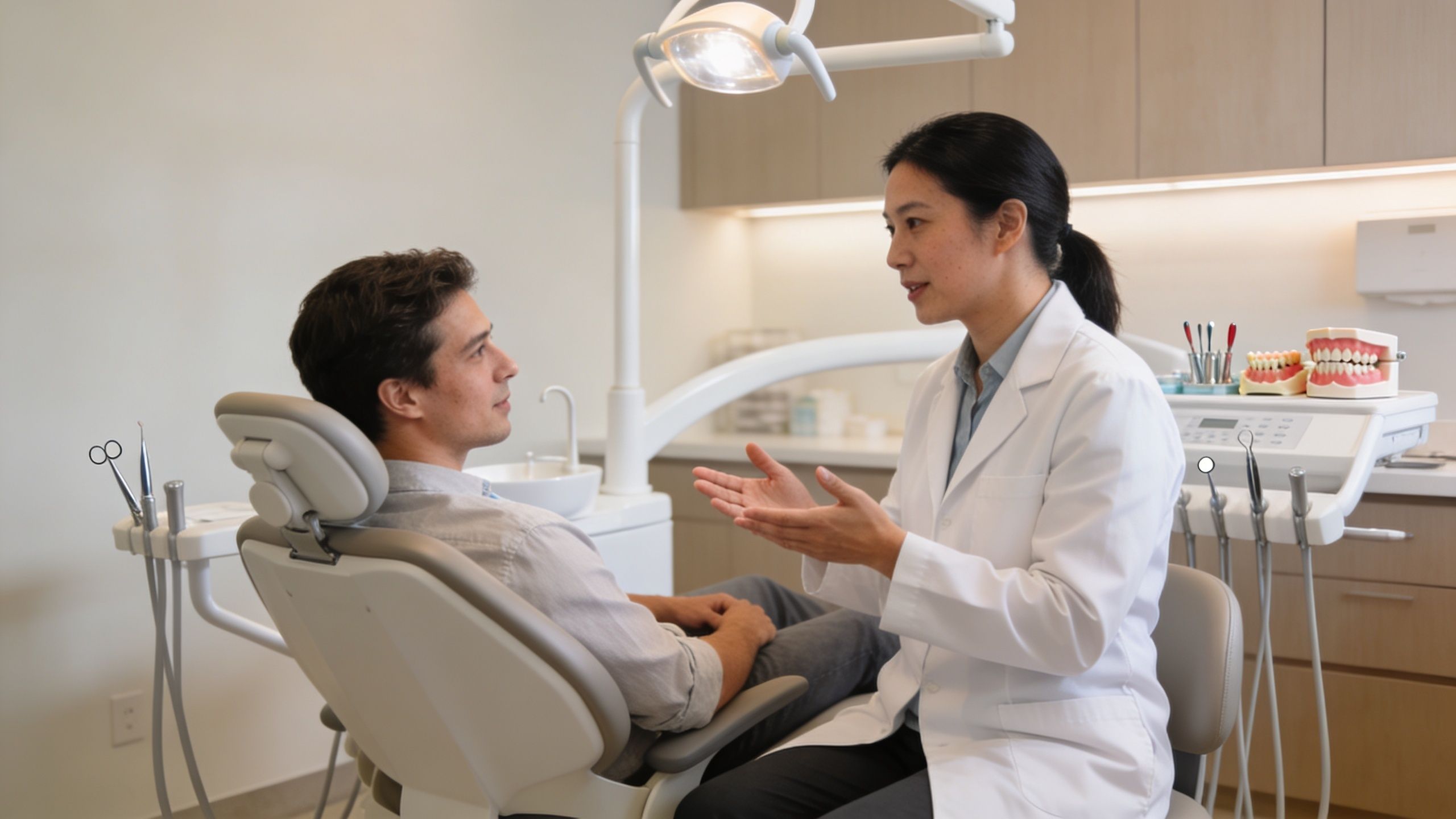
The consultation and planning visit
The first step is deciding whether the tooth is a veneer case, a crown case, or something else entirely. That evaluation may include an exam, digital imaging, and a conversation about what bothers you most. Some patients come in asking for veneers and learn the tooth needs more support. Others assume they need a crown when a more conservative cosmetic option may be possible.
This is also when we talk about bite pressure, grinding habits, surrounding tooth color, and whether the concern is isolated to one tooth or part of a broader smile plan. At William M. Schneider, DDS, that discussion is part of determining whether a crown procedure is the right restorative path.
Preparing the tooth
If a crown is the right choice, the tooth is shaped so the restoration can fit properly and protect it. If a veneer is selected, the preparation is more limited and focused on the front surface. In both cases, the goal is a restoration that looks natural, feels balanced in your bite, and fits comfortably.
Patients who are nervous often do best when the appointment is broken into simple steps and explained as it happens. That matters. Comfort isn’t only about numbing. It’s also about pacing, communication, and giving people enough clarity that they’re not bracing for surprises.
Here’s a short visual overview of the process:
Temporary and final placement
In many cases, there’s an initial visit for preparation and impressions, followed by a second visit to place the final restoration. A temporary may be worn in between so the tooth remains protected and you can function normally.
At the placement visit, the final crown or veneer is checked for fit, color, contour, and bite. Small adjustments may be made so it feels natural when you close, speak, and chew.
- For anxious patients sedation options may be discussed when appropriate.
- For busy adults and families clear instructions help make the process manageable.
- For patients focused on aesthetics shape and shade decisions are part of the planning, not an afterthought.
Most patients do well when they know what the appointment is for, what sensations to expect, and what decisions are being made along the way.
If you’re also due for cleaning and exams, dental x-rays, or a new patient exam, those can help identify whether the tooth problem is isolated or connected to a larger restorative issue.
Evaluating Cost Longevity and Lifetime Value
The first fee matters, but it shouldn’t be the only number guiding the decision. Patients often focus on the initial cost because that’s the most immediate concern. Long-term value is different. It includes how long the restoration may last, how often it may need to be redone, and what repeated treatment means for the tooth itself.
The replacement cycle many patients don’t consider
For cosmetic cases, veneers can seem like the lighter choice. In some situations, they are. But they also come with a longer-term commitment that patients should understand before moving forward.
According to this discussion of veneer and crown longevity, veneers may need full replacement every 7 to 15 years, and a patient in their 40s could face 2 to 3 replacement cycles by age 70. The same source notes that crowns often last 15 to 20+ years, which may reduce the total number of lifetime treatment events.
That doesn’t mean crowns are always the better financial decision. It means the right comparison isn’t veneer versus crown on day one. It’s the likely treatment path over decades.
Financial value is only part of the picture
A replacement cycle has more than one cost.
Each future veneer replacement means another procedure, another planning decision, and another period of living with a temporary or adjusting to a new restoration. Some patients handle that easily. Others would rather choose the option that is likely to require fewer interventions over time, even if the first appointment is more involved.
There’s also a structural issue. Repeated replacement over many years can gradually reduce what remains of the original enamel. That matters most in younger patients choosing veneers for relatively minor cosmetic concerns.
The smartest treatment isn’t always the one that looks most conservative today. It’s often the one that still makes sense years from now.
Questions worth asking before you decide
When patients compare lifetime value well, they usually ask better questions:
- How long do I expect to maintain this result if nothing else changes?
- How many times might this restoration need to be replaced over the years?
- Am I treating a cosmetic concern, or am I investing in protection for a compromised tooth?
- Will I be comfortable repeating this process later if needed?
For some people, veneers are absolutely the right choice because the teeth are healthy and appearance is the primary issue. For others, a crown is the more rational long-term investment because the tooth needs coverage and they want a solution built around durability.
How to Choose the Right Option for Your Smile
A good decision starts with honesty about the tooth and honesty about yourself.
If the tooth is healthy and the main issue is cosmetic, veneers may be the more appropriate path. If the tooth is cracked, heavily restored, weakened, or structurally unreliable, a crown is often the safer choice because it does more than improve appearance.
Choose based on the real problem
Veneers tend to fit patients who want to improve visible front teeth without full coverage. Crowns tend to fit patients who need the tooth rebuilt and protected. Problems arise when treatment is chosen for the wrong reason, such as using a veneer to avoid a crown when the tooth needs strength, or choosing a crown for a purely cosmetic issue that could have been treated more conservatively.
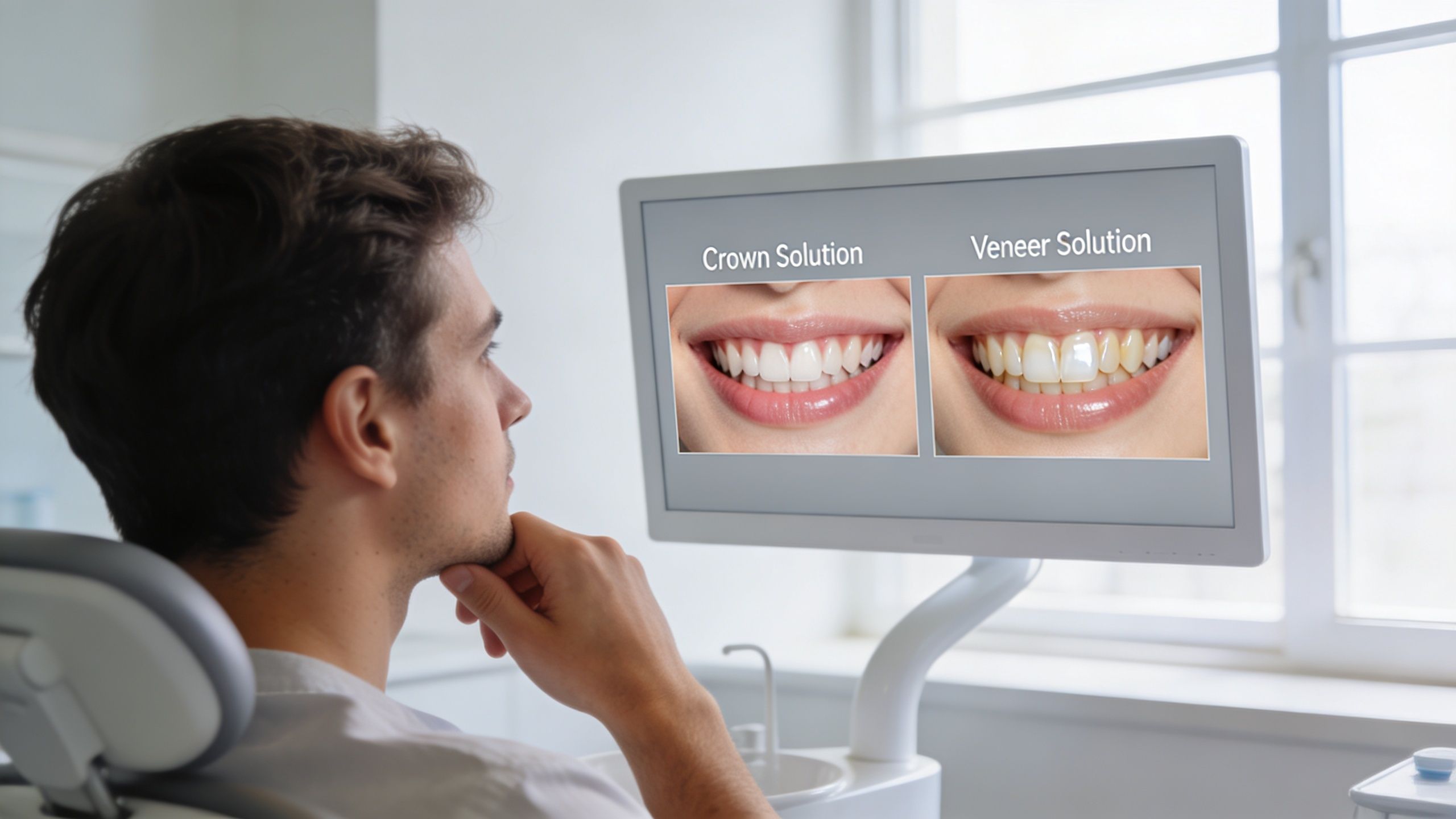
Don’t ignore the psychological side
The clinical side of this decision is important. The emotional side matters too.
As explained in this overview of veneers versus crowns, both procedures are clinically permanent because enamel does not regenerate. That permanence can carry a psychological weight, especially when veneers are chosen for minor cosmetic reasons and the patient later wants a different look as surrounding teeth age or preferences change.
That doesn’t mean patients regret treatment. It means the choice should be made with a long view. A smile design is not only a cosmetic decision for this year. It can shape future maintenance, future replacement, and how flexible your options feel later.
A practical way to decide
- You may lean toward veneers if your teeth are healthy, your concern is mainly cosmetic, and you understand the long-term commitment.
- You may lean toward crowns if the tooth needs full protection, function is part of the problem, or you want a solution centered on structural support.
- You should slow down if you feel rushed, uncertain, or you haven’t discussed future maintenance.
Patients considering cosmetic treatment can also review whether veneers may be an option for their smile before making a final decision.
Common Questions About Smile Restoration
Can crowns or veneers be whitened
No. Once the restoration is made, its color doesn’t change with whitening products. If you’re thinking about whitening nearby teeth, it’s usually better to discuss that before final shade selection.
Does dental insurance cover crowns or veneers
Coverage depends on the plan and the reason for treatment. In many cases, crowns are more likely to be considered when a tooth needs restoration or protection. Veneers are often viewed as cosmetic. Patients should verify benefits directly with their insurer before treatment.
What is recovery like
Most patients return to normal routines quickly, but the tooth may feel temporarily sensitive after preparation. Good home care, avoiding habits that stress the restoration, and keeping regular dental visits all help protect the result. If you grind your teeth, a nightguard may be part of long-term maintenance.
If you’re comparing crowns and veneers and want a clear recommendation based on your teeth, not a generic template, schedule a consultation with William M. Schneider, DDS. Patients in Walnut Creek, CA can get a practical evaluation of cosmetic and restorative options, including crowns, veneers, exams, and long-term treatment planning designed around oral health, comfort, and function.