That throbbing, persistent tooth pain can be completely debilitating. It's the kind of ache that leaves you wondering, when do you need a root canal? If you're experiencing severe tooth pain in Walnut Creek, CA, you're not alone, and our team at William M. Schneider, DDS is here to provide the relief you need. A root canal becomes the best solution when the living tissue inside your tooth, called the pulp, gets infected or badly inflamed. This usually happens because of a deep cavity, a crack in the tooth, or an injury, and the symptoms are often far more intense than a simple toothache.
Recognizing the Warning Signs You Need a Root Canal

If you're dealing with dental pain here in Walnut Creek, it’s natural to hope it will just go away on its own. But some symptoms are your body’s alarm bells, signaling a serious issue deep within the tooth that needs an emergency dentist’s attention. These aren’t just minor annoyances; they're clear signs of an infection that won't get better without professional dental care.
Trying to ignore these warnings can lead to much bigger problems, like a painful abscess or even losing the tooth entirely. As your dedicated dentist in Walnut Creek, CA, Dr. William M. Schneider is here to help you figure out what's going on and provide the gentle, effective treatment you need to finally get relief. We are a trusted local provider for patients seeking a dentist near them for urgent and restorative dentistry.
Key Symptoms to Watch For
If you're experiencing any of these symptoms, your tooth may be infected. Use this guide to understand the signs and see if it's time to call our Walnut Creek dental office for an evaluation.
| Symptom You Feel | What It Means for Your Tooth | Next Step to Take |
|---|---|---|
| Severe, throbbing tooth pain | This constant, disruptive pain suggests the nerve inside your tooth is severely inflamed or infected. | Don't wait. An evaluation is needed to diagnose the cause. |
| Lingering sensitivity to hot or cold | Pain that lasts long after a hot or cold drink is a classic sign of nerve damage. | Avoid temperature extremes and schedule a dental exam. |
| Swollen gums or a pimple-like bump | This indicates the infection is spreading from the tooth root and trying to drain. | This requires immediate attention to prevent it from worsening. |
| A darkened or discolored tooth | An infected tooth may turn gray or brown as the pulp tissue inside dies. | A cosmetic issue that signals a deeper health problem. |
| Pain when chewing or touching the tooth | If pressure hurts, the infection may have damaged the ligaments and bone around the tooth. | See your dentist to prevent further damage. |
While a comprehensive exam and dental X-rays are the only way to be certain, the signs above are strong clues that something is wrong. If you notice any of them, it's definitely time to get a professional opinion.
Recognizing these symptoms early is the most important step toward saving your tooth and ending your discomfort. A root canal isn't the cause of pain—it's the solution to it.
At our Walnut Creek dental office, we often see patients who have been suffering for far too long, worried about what their symptoms might mean. The truth is, getting a diagnosis is the first step toward feeling better. For a deeper dive, our guide covers the 7 unmistakable signs you need a root canal.
If any of this sounds familiar, please don't wait. Contact William M. Schneider, DDS, your trusted local emergency dentist, for an evaluation. We are here to provide immediate relief and do everything we can to preserve your natural smile.
What a Root Canal Really Is and Why It Saves Your Tooth
Let’s be honest—the words “root canal” can make anyone a little nervous. But that reputation comes from a time when dentistry was very different. The truth is, a root canal isn’t what causes your pain. It’s the treatment that finally ends it.
Here at our Walnut Creek dental practice, we find that when patients understand why a procedure is needed, it changes everything. Knowing how a root canal actually works can shift your perspective from anxiety to confidence. It’s a precise, careful treatment designed to save your natural tooth and get you back to feeling like yourself again.
The Anatomy of a Tooth Infection
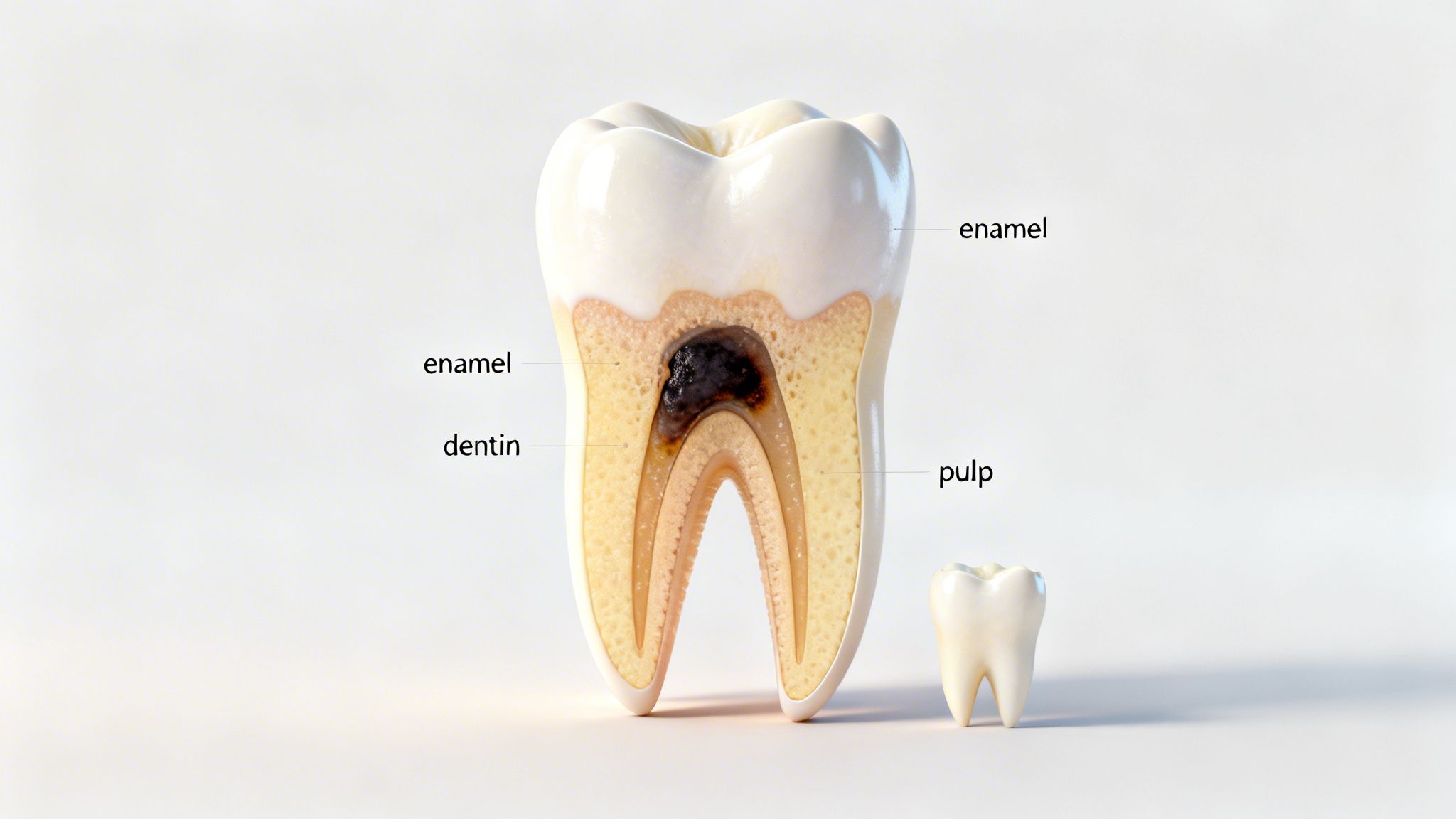
So, when do you need a root canal? To understand this, it helps to picture your tooth as a small, protected fortress. The tough outer layers, enamel and dentin, act as armor for the soft center, known as the pulp chamber. This chamber is where the tooth's nerve and blood supply live.
The pulp is basically the tooth’s lifeline and internal alarm system. But when deep decay, a bad crack, or a sudden injury breaks through the tooth’s defenses, bacteria can get inside. This sterile space becomes a breeding ground for infection, and that’s when the real trouble starts.
As the infection grows, it causes inflammation and swelling inside the tooth. Because the pulp is trapped within hard, unyielding walls, that swelling has nowhere to go. This creates intense pressure on the nerve, which is the source of that throbbing, relentless pain you might be feeling.
How Our Dental Care Cures the Pain
A root canal is a meticulous procedure designed to carefully remove the infected or damaged pulp from inside the tooth. By cleaning out the source of the infection, we’re not just stopping the pain—we’re saving your tooth from needing a tooth extraction. This restorative dentistry service is a cornerstone of how we help patients in Walnut Creek achieve a healthy, bright smile free from pain.
Think of it like getting a deep, infected splinter. You can’t just put a bandage on it and hope it gets better. You have to remove the splinter to let the area heal properly. A root canal does the exact same thing for your tooth by removing the source of the problem.
Dr. Schneider performs this treatment with precision and a total focus on your comfort. The goal is simple: get rid of the infection and keep your natural tooth right where it belongs. The benefits of this dental care are clear:
- Pain Relief: The biggest benefit is immediate and lasting relief from the severe pain caused by an infected nerve.
- Tooth Preservation: A root canal allows you to keep your natural tooth. This is always the best-case scenario for your bite, your jaw health, and the alignment of your other teeth.
- Stopping the Infection: The procedure contains the infection, preventing it from spreading into your jawbone, forming a painful abscess, or leading to more serious health issues.
After the infected tissue is gone, we thoroughly disinfect the inside of the tooth and seal it to protect it from any future problems. With modern anesthetics, the process itself is comfortable and usually feels no different than getting a routine filling. Our Walnut Creek patients often tell us they leave the office feeling immensely better than when they walked in, simply because the source of their agony is finally gone.
The Root Canal Process: What to Expect at Our Walnut Creek Office
The thought of a root canal can be intimidating, but a lot of that worry comes from not knowing what's involved. If you’ve been told you might need one, understanding the process is the best way to ease your mind. Here in our Walnut Creek practice, we make sure you feel comfortable and informed, walking you through every step so you know exactly what to expect when visiting our local dental practice.
Your journey with Dr. Schneider always starts with a careful and thorough evaluation. We never guess when it comes to your health. We use modern tools like digital dental X-rays during new patient exams to get a crystal-clear picture of what’s happening inside your tooth, confirming the infection and allowing us to map out your treatment with precision.
Our entire team is dedicated to making sure your visit is genuinely pain-free. We know that past experiences or dental anxiety can make any procedure feel stressful, so your comfort is our absolute top priority from the moment you arrive.
Your Comfort Is Our Priority
Dr. Schneider is well-known throughout Walnut Creek for his gentle touch with anesthetics, ensuring the area is completely numb before he even begins. For most of our patients, this is more than enough for a perfectly comfortable visit. However, if you feel you need a little extra help to relax, we also offer sedation dentistry options.
These safe and effective methods can help you feel deeply calm and at ease throughout your appointment. Our goal is to make your root canal feel no different than getting a routine filling. We want to remove any barrier that stands between you and the lasting relief you need.
The Three Stages of Treatment
We find it helps to break the procedure down into three simple stages. Each step is performed with meticulous care using advanced instruments that make the process both efficient and highly effective.
Numbing and Accessing the Tooth: First things first, we make sure the tooth and the surrounding gums are profoundly numb. Once you’re comfortable, Dr. Schneider creates a tiny opening in the top of the tooth to access the inner pulp chamber where the infected nerve is.
Cleaning and Shaping the Canals: This is the heart of the treatment. Using specialized, flexible tools, Dr. Schneider carefully cleans out the infected pulp from the root canals. He then disinfects the inside of the tooth and shapes the canals, preparing them for a perfect seal.
Sealing and Protecting the Tooth: After the canals are spotlessly clean, we fill them with a biocompatible, rubber-like material called gutta-percha. This seals the tooth from the inside out, preventing bacteria from ever getting back in. To finish, a temporary filling is placed to close the opening in your tooth.
This entire process is designed to be smooth and predictable. At our practice, which proudly serves the Walnut Creek and East Bay communities, we’ve seen firsthand how this treatment can provide immediate relief from agonizing pain.
A root canal is one of the most successful restorative procedures in dentistry, allowing us to save teeth that would otherwise require a tooth extraction. It’s a testament to how modern dental care can resolve serious problems while preserving your natural smile.
Modern root canal treatment has shown remarkable long-term effectiveness. In fact, clinical studies show success rates between 85% and 97%, making it a reliable gold standard for saving infected teeth. Better yet, 93% of treated teeth remain successful after 10 years, showing just how durable this solution is. By choosing a root canal, you’re investing in a proven solution that protects your oral health for years to come.
Protecting Your Tooth After Root Canal Treatment
Finishing your root canal is a huge relief, especially if you’ve been dealing with tooth pain. But the journey isn't quite over. Think of the root canal itself as step one: clearing out the infection. Step two is just as important for the long-term health of your tooth: protecting it so it can serve you for years to come.
Once a root canal is complete, the tooth no longer has a living pulp or blood supply. Over time, this can make the tooth more brittle and likely to fracture under the normal pressures of chewing. It’s why Dr. Schneider in Walnut Creek almost always recommends a permanent restoration to keep the tooth strong and stable.
Why a Dental Crown Is So Important
For back teeth like molars and premolars that handle most of the chewing force, a dental crown is the best way to protect them after a root canal. A crown is like a custom-fit helmet that covers the entire tooth. It restores its original strength, seals it from future problems, and makes it look and feel just like your other natural teeth. We consider crowns a key part of our cosmetic dentistry services, ensuring your restored tooth is both strong and beautiful.
Without that protective cover, the tooth is left incredibly vulnerable. A simple bite on something hard could cause a fracture so severe that the only option left is to pull the tooth—the very outcome we performed the root canal to prevent. Investing in a crown is the best insurance policy for your newly saved tooth.
The image below breaks down the key stages of the root canal procedure that come before this final protective step.
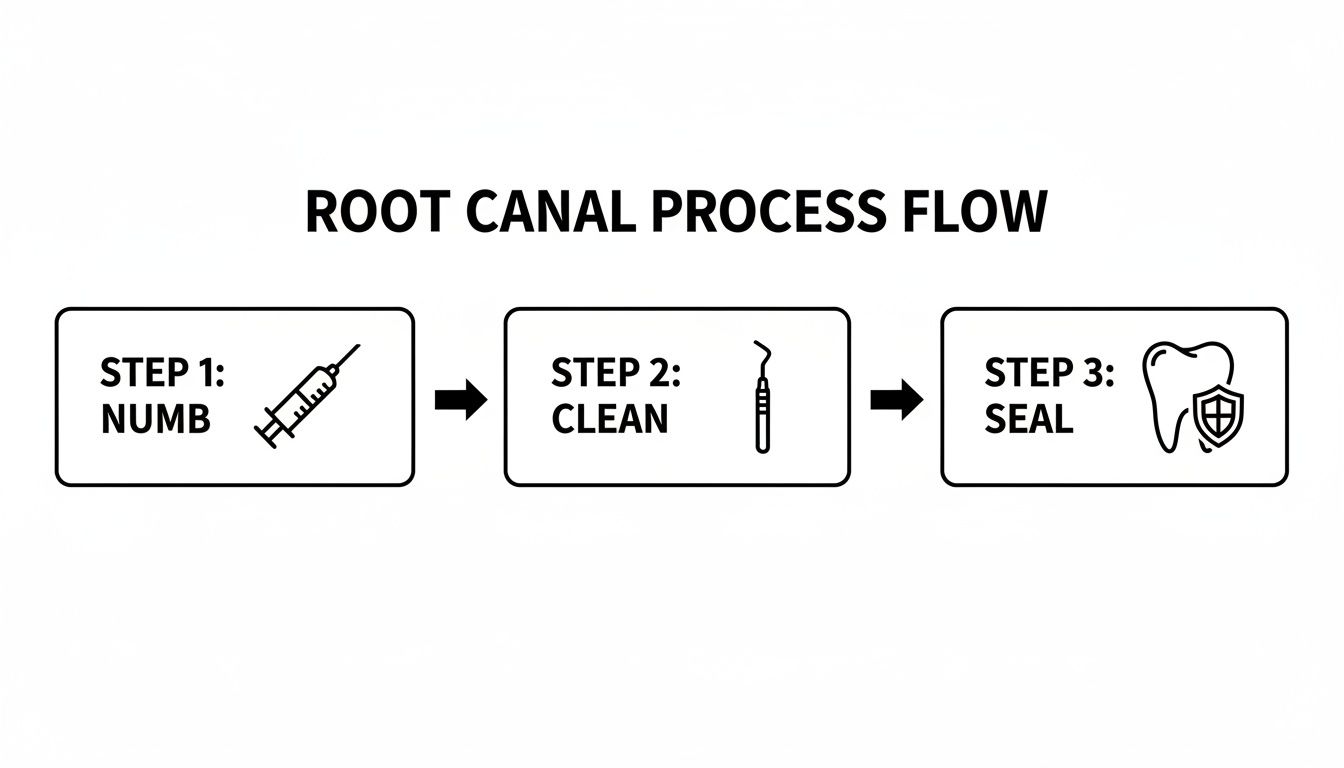
As you can see, the process boils down to three simple goals: numbing the area, cleaning out the infection, and sealing the tooth. This sets the stage perfectly for the final restoration.
Recovery and Aftercare Tips
It's completely normal to feel some mild tenderness or sensitivity in the area for a few days after your procedure. This is just part of the healing process and is usually very easy to manage.
To make sure your recovery is smooth and comfortable, here are a few simple tips:
- Manage Tenderness: Over-the-counter pain relievers are typically all that's needed to handle any post-procedure discomfort.
- Chew Carefully: Your tooth will have a temporary filling until the permanent crown is ready. Be sure to avoid chewing hard or sticky foods on that side, as the temporary filling isn't built for heavy biting forces.
- Keep It Clean: Continue to brush and floss gently around the area just as you normally would. Good oral hygiene is essential for proper healing.
Following these small steps will help protect the tooth while our Walnut Creek team crafts your final, custom-matched crown.
The Long-Term Value of a Complete Restoration
The decision to top off your root canal with a crown has a massive impact on how long that tooth will survive. The research is crystal clear on this.
Tooth Survival After Root Canal Based on Restoration
The data shows just how critical a permanent restoration is for keeping your tooth long-term. This is exactly why Dr. Schneider recommends it.
| Restoration Type After Root Canal | Median Tooth Survival Time |
|---|---|
| No Restoration | 6.5 years |
| Crown and Filling | 20 years |
The average survival time for a tooth after a root canal is about 11.1 years, but that number changes dramatically based on what happens next. A tooth that gets a proper crown can last for roughly 20 years. In stark contrast, teeth that get no restorative work only survive for about 6.5 years on average. For our Walnut Creek patients who want to keep their natural teeth, the data speaks for itself.
By completing your treatment with a permanent restoration, you aren’t just finishing a procedure—you are making a crucial investment in the long-term health and function of your smile.
At our practice, we use advanced materials to craft crowns that blend flawlessly with your natural teeth, restoring both strength and appearance. You can learn more about this final step in our guide on what to expect during a dental crown procedure. Finishing your treatment with Dr. Schneider ensures your tooth is fully protected, giving you the best possible chance of keeping it for a lifetime.
Alternatives to Root Canal Therapy
When you're facing a major dental decision, you deserve to know all your options, plain and simple. At our Walnut Creek practice, Dr. Schneider sees his role as your partner, here to give you honest advice so you can find the best path forward for your health and your smile.
The primary goal of a root canal is always to save your natural tooth. It’s an incredible procedure for that. However, there are times when a tooth is too damaged or an infection is just too severe, and we need to look at other solutions.
Understanding Tooth Extraction
While a root canal aims to preserve your tooth, sometimes the most realistic alternative is a tooth extraction. This involves completely removing the tooth from its socket to get rid of the infection and pain for good.
However, pulling the tooth is rarely the final step. It solves the immediate problem but creates a new set of challenges we need to plan for.
Removing a tooth can lead to:
- Shifting Teeth: The teeth next to the gap can start to drift into the empty space, which can mess up your bite and alignment.
- Chewing Difficulties: Losing even one molar can make it surprisingly difficult to chew your food properly and comfortably.
- Bone Loss: Without a tooth root to stimulate it, the jawbone underneath the empty space will gradually start to shrink.
Because of these downstream effects, simply performing tooth extractions and leaving a gap isn't a complete solution.
Replacing the Tooth After Extraction
If removing the tooth is our only choice, Dr. Schneider will immediately start the conversation about what comes next. Today, the gold standard for replacing a single missing tooth is a dental implant. If you are searching for "dental implants near me" in the Walnut Creek area, our practice offers this advanced restorative service.
This modern solution involves placing a small, biocompatible titanium post into your jawbone, where it acts just like a natural tooth root. A beautiful, custom-made crown is then attached, giving you a replacement that looks, feels, and chews just like the real thing. Dental implants are the best way to prevent bone loss and keep your other teeth exactly where they belong.
Deciding between a root canal and an extraction is a significant choice. The root canal is a conservative treatment designed to save what you already have, while an extraction followed by an implant is a more involved process to replace what was lost.
Even in cases where a first root canal doesn't fully resolve the problem, it’s worth noting that retreatment is often incredibly successful. Modern studies show that when a second root canal is performed, the success rate is around 93%. This statistic is so encouraging because it shows we have excellent tools for saving natural teeth, even in complex situations.
Ultimately, Dr. Schneider will perform a thorough new patient exam, including a series of dental x-rays, to get the full picture. Whether it’s saving your tooth with a root canal or replacing it with a state-of-the-art dental implant, you can trust that our Walnut Creek team is here to provide the expert, compassionate care you deserve.
Your Partner for Gentle Root Canal Care in Walnut Creek
If you’re dealing with a persistent toothache, you know it’s more than just a minor inconvenience—it’s a constant, nagging pain that can disrupt your entire life. Those symptoms are your body’s way of telling you it’s time to get help, and finding the right dentist is the first step toward finally getting some relief. For families throughout Walnut Creek and the East Bay, that trusted expert is Dr. William M. Schneider.
With over 25 years of experience, Dr. Schneider has seen it all. He understands that the phrase "root canal" can make anyone feel anxious, which is why he and his entire team are focused on one thing: making your experience as comfortable and reassuring as possible. We’re not just treating a tooth; we’re caring for a person.
Your Next Step Toward Relief
We believe great dental care should be straightforward and accessible. From your very first new patient exam and dental x-rays to the final touches on your restoration, we’ll walk you through everything, explaining your options clearly. Our goal is simple: to find the source of your pain, save your natural tooth, and get you back to smiling with confidence.
Don't let fear or uncertainty keep you in pain. A root canal is a safe, routine procedure that can put an end to your discomfort and protect your oral health for years to come.
Ignoring the warning signs of an infected tooth can unfortunately lead to bigger problems, like a painful abscess or even the loss of the tooth. It’s time to take control of your dental health. Call our friendly team at our office on San Miguel Dr. in Walnut Creek to schedule a consultation. Let Dr. Schneider and his team give you the compassionate care you need to feel better.
Frequently Asked Questions About Root Canals
Even with all the information out there, it’s completely normal for our Walnut Creek patients to have questions about root canals. We believe clear, honest answers are the best way to ease any concerns and help you feel confident about your dental care. Below, Dr. Schneider answers some of the most common questions we hear at our practice.
Is a Root Canal Really Painful?
This is the number one concern we hear, and the short answer is no. Thanks to modern local anesthetics and Dr. Schneider's gentle techniques, a root canal procedure should feel no different than getting a standard filling.
The entire purpose of the treatment is to relieve the severe pain caused by an infection, not create more. For our anxious patients in Walnut Creek, we also offer sedation options to ensure a completely calm and comfortable experience from start to finish.
Why Not Just Take Antibiotics for My Tooth Infection?
Antibiotics can sometimes reduce the swelling you see in the surrounding gum tissue, which can give you a false sense of improvement. However, they can’t solve the root of the problem. The infection is sealed deep inside your tooth where the blood supply—which is what carries the antibiotic—has been cut off by the inflammation.
Antibiotics simply can't reach the source of the infection inside the tooth. A root canal is necessary to physically clean out the infected tissue and bacteria, which is the only way to permanently resolve the issue and save the tooth.
How Much Does a Root Canal Cost in Walnut Creek?
The cost of a root canal depends on a few factors, mainly which tooth needs treatment. Back teeth, like molars, have more canals and are more complex to treat than front teeth, which affects the final cost. During your consultation at our Walnut Creek practice, we provide a detailed treatment plan and a clear cost breakdown.
We accept most major dental insurance plans and will work with you to maximize your benefits. We also offer payment options to ensure you can get the essential care you need without financial worry.
What Happens if I Don't Get a Needed Root Canal?
Ignoring the problem is the worst thing you can do for your tooth and your overall health. An infection will not heal on its own. It will continue to cause pain and can spread from the tooth's root into your jawbone, forming a painful abscess.
Delaying treatment almost always leads to the tooth being damaged beyond repair, making tooth extraction the only remaining option. A small hole in the tooth might even develop after a root canal if it isn't properly restored. Learn more in our article about what happens if you get a hole in a root canal tooth. Acting quickly saves your tooth, stops the pain, and protects your overall health.
Don't let questions or anxiety keep you from getting the relief you deserve. At William M. Schneider, DDS, we are dedicated to providing clear answers and gentle, expert care. If you are experiencing tooth pain, schedule your consultation today by visiting us at https://www.wcfamilydentist.com.