When looking for a dentist near me in Walnut Creek, CA, you're probably not just looking for someone to clean teeth. You're looking for a place where your child can feel safe, where your own questions are taken seriously, and where you won't feel rushed into treatment you don't understand.
That search gets harder when every dental website sounds the same. Most promise friendly care, modern technology, and beautiful smiles. What families usually want to know is simpler. Can one office care for everyone? Will the dentist explain things clearly? Will the visit feel calm if you've had a bad experience before?
Full-service family care matters because it gives you a steady dental home for routine cleanings, new patient exams, cosmetic dentistry, restorative dentistry, and unexpected problems like a broken tooth or tooth pain. In Walnut Creek, that kind of continuity can make dental care feel much more manageable.
Finding a Trusted Dentist for Your Family in Walnut Creek
A lot of new patients start with the same concern. They need a dentist who can help a child with a first exam, a parent with a worn crown, and maybe a grandparent who wants to ask about dental implants or a more comfortable denture fit. They don't want three different offices if one thoughtful practice can handle most of it.
That's where family dentistry makes practical sense. It isn't only about convenience. It creates a pattern of care where small concerns are caught early, habits improve over time, and treatment decisions are based on knowing the person behind the chart.
Why prevention matters more than many people realize
Oral health problems are common on a massive scale. The World Health Organization reports that oral diseases affect about 3.5 billion people globally, which is one reason regular family dental care matters so much for both children and adults according to the WHO summary referenced here.
That global number may sound distant, but the takeaway is local. Cavities, gum problems, tooth wear, and missed routine care don't stay small on their own. They usually become harder and more expensive to manage when people wait until something hurts.
Practical rule: The easiest dental problem to treat is the one found before it becomes painful.
A Walnut Creek family looking for long-term care usually benefits from an office that focuses on prevention first. That means regular exams, hygiene visits, screening for early changes, and honest conversations about what needs attention now versus what can be monitored.
What people often mean when they say they want a family dentist
Most patients aren't asking for anything fancy. They want a dentist who remembers them, notices changes over time, and explains options in plain English.
A strong family practice helps with things like:
- Routine care for all ages so children and adults can stay on a regular schedule
- Early diagnosis of cavities, gum irritation, bite problems, and worn teeth
- Practical planning when you need restorative or cosmetic treatment
- A calmer experience for people who feel nervous about dentistry
For many households in Walnut Creek, family dentistry feels less like shopping for isolated procedures and more like building a health relationship. That's a better fit for real life, because your dental needs change over time.
Why Choose a Private Family Practice for Your Dental Care

Not every dental office works the same way. Some patients do well in large group settings. Others prefer specialist offices for a specific issue. But if you want steady care over many years, a private family practice often offers something those models don't. Continuity.
One verified local market insight puts it plainly. Unlike corporate dental groups, a private family practice provides superior continuity of care. This allows for a long-term relationship where the dentist understands your full medical history, which is critical for making informed treatment decisions for every family member over many years as noted in this Walnut Creek comparison context.
What continuity of care actually looks like
Continuity isn't just a nice phrase. It affects daily decisions.
If your dentist has seen your bite change over time, they may spot grinding earlier. If they know you tend to get anxious during treatment, they can plan visits differently. If they remember a past root canal, crown, or gum issue, they can interpret new symptoms in context instead of starting from zero.
That kind of familiarity is especially helpful for:
- Children who need consistency and do better when they see the same team
- Adults with complex histories like previous dental work, jaw soreness, or recurring sensitivity
- Families juggling schedules who want one office for preventive, restorative, and cosmetic needs
Private practice, corporate group, or specialist
Here's a simple way to think about the difference:
| Office type | Often best for | Main tradeoff |
|---|---|---|
| Private family practice | Ongoing care, relationship-based treatment, broad general dentistry | May refer out for highly specialized procedures |
| Corporate dental group | Convenience-focused shopping, broad hours in some cases | Less continuity from provider to provider |
| Specialist office | Specific advanced needs in one area | Not designed to be your long-term general dental home |
A family dentist isn't just there for cleanings. They help you decide when to monitor, when to treat, and when a specialist referral makes the most sense.
For many people searching dentist in Walnut Creek, CA, that balanced approach is what they're really after. They want one trusted office that can manage most needs while keeping the big picture in view.
Our Comprehensive Dental Services for a Healthy Smile
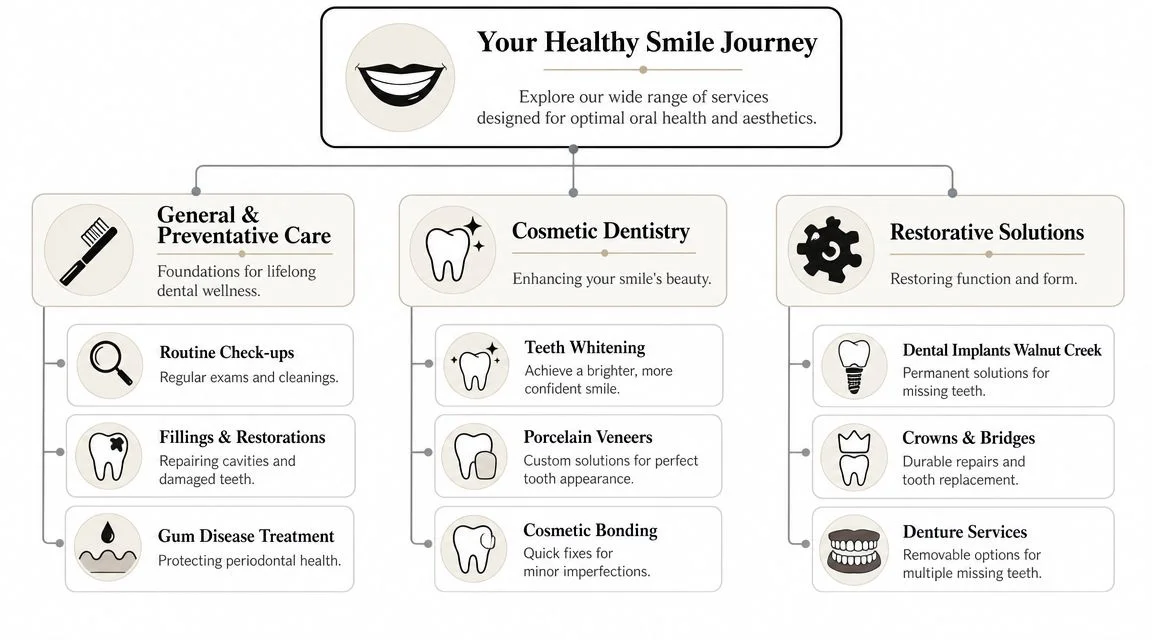
A modern family practice should do more than clean teeth and fill cavities. It should help you keep healthy teeth when possible, restore damaged teeth when needed, and improve function and appearance without losing sight of long-term health.
That full-picture model is reflected in a verified benchmark from a modern practice setting. A modern family practice's service mix, including preventive exams, implants, and clear aligners, reflects a risk-based approach. Early detection and intervention reduce the need for more complex work, while digital workflows for crowns can compress treatment into a single visit as described in this office overview.
Preventive care keeps small problems from turning into big ones
Preventive dentistry is the foundation of good family care. That includes cleaning and exams, dental X-rays when needed, gum evaluations, and watching for subtle changes before they become major treatment needs.
If you're exploring general dentistry services in Walnut Creek, the main goal is simple. Preserve healthy tooth structure and catch trouble early.
A preventive visit may help identify:
- Early cavities before they become large restorations
- Gum inflammation before it develops into more advanced periodontal problems
- Tooth wear or bite stress that can lead to cracks, sensitivity, or headaches
- Changes in old dental work such as fillings or crowns that may need attention
Restorative dentistry repairs damage and restores function
Restorative care matters when a tooth is broken, decayed, infected, or missing. Many patients then start searching terms like tooth extraction, emergency dentist, or dental implants near me.
The right treatment depends on the actual problem. A small cavity may only need a filling. A heavily damaged tooth may need a crown. A missing tooth may be restored with a bridge, denture option, or implant-based solution depending on health, goals, and anatomy.
Here are common restorative needs a family practice may help manage:
| Concern | Possible solution |
|---|---|
| Cavity or minor damage | Filling or bonded restoration |
| Large fracture or weak tooth | Crown |
| Missing tooth | Bridge, denture, or dental implant |
| Pain or infection inside a tooth | Root canal treatment when appropriate |
One practical advantage of modern restorative care is digital workflow. In suitable cases, crown treatment can sometimes be expedited, which many busy Walnut Creek patients appreciate because fewer appointments often means less disruption.
Cosmetic dentistry should still protect oral health
Cosmetic dentistry isn't only about appearance. It often overlaps with function, confidence, and maintenance. Teeth whitening, clear aligners, bonding, and veneers can all play a role, but the best cosmetic planning starts with healthy gums and stable teeth.
Good cosmetic care doesn't ignore the basics. It builds on them.
Patients often ask for a cosmetic dentist near me when they want straighter teeth, a brighter smile, or improvement in chipped or uneven teeth. In those cases, treatment should still respect bite balance, enamel health, and long-term durability.
A broad service mix is helpful because it gives your dentist more than one way to solve a problem. That allows care to be personalized instead of forcing every patient into the same treatment category.
Gentle Dentistry for an Anxiety-Free Patient Experience
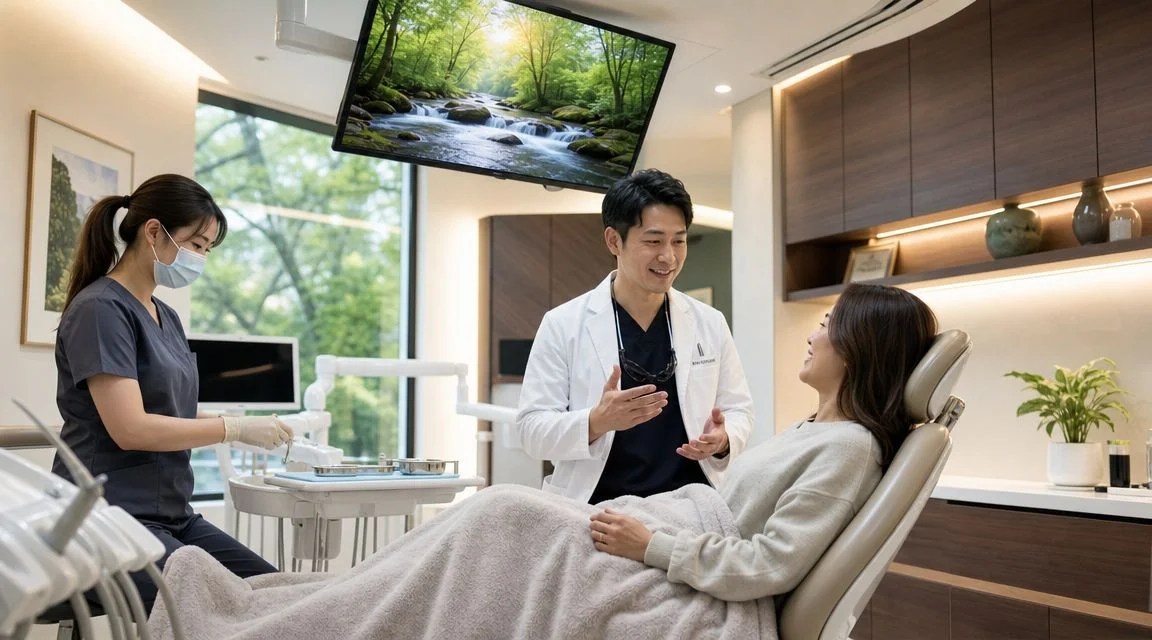
Many adults in Walnut Creek put off dental care for one reason above all others. They don't trust that it will be comfortable.
Sometimes that comes from a painful injection years ago. Sometimes it's embarrassment about how long it's been since the last cleaning. Sometimes it's the sound, the smell, or the fear of not feeling in control. Those concerns are real, and a good family practice shouldn't brush them aside.
A verified local care insight describes anxiety-friendly dentistry in practical terms. "Anxiety-friendly" dentistry involves practical solutions like painless injection techniques and clear explanations of sedation options. This approach helps patients understand how comfort is actively managed during treatment, building trust for those with dental phobia as reflected in this patient-focused resource.
What gentle dentistry actually means
Gentle care isn't just a friendly tone at the front desk. It usually includes concrete choices and habits during treatment.
Patients who want a more comfortable experience often look for:
- Painless injection techniques that reduce the sting and let tissue numb gradually
- Clear explanations before treatment so there are fewer surprises
- Check-ins during the appointment so you can signal when you need a break
- A slower pace when needed rather than feeling rushed through care
For people who've delayed treatment because of fear, even hearing the steps in advance can lower stress. That's one reason educational resources about how to overcome dental anxiety can be so helpful before the first visit.
Sedation questions patients usually ask
Sedation tends to be one of the most misunderstood parts of dentistry. People often hear the word and assume it means being fully asleep. That's not always the case.
Some patients only need reassurance, local anesthetic, and a slower pace. Others may be candidates for options such as nitrous oxide or other forms of sedation when appropriate. The right choice depends on your health history, the procedure, your anxiety level, and safety screening.
If you're nervous, say that early. Anxiety changes treatment planning, and a good dental team can adjust the experience when they know what you're dealing with.
A short overview can make this easier to picture:
| Comfort approach | Best fit for | What patients usually value |
|---|---|---|
| Local anesthetic with gentle technique | Mild anxiety or routine care | Numb treatment area, stay fully aware |
| Nitrous oxide or minimal sedation when appropriate | Moderate anxiety | Relaxation with a lighter recovery feel |
| Stronger sedation options when appropriate | More involved procedures or significant fear | Greater relaxation with closer screening and planning |
Here is a brief video that helps support that comfort-first mindset during care.
The most important point is this. Comfortable dentistry isn't vague. It comes from technique, communication, planning, and respect for how the patient feels in the chair.
What to Expect as a New Patient at Our Walnut Creek Office
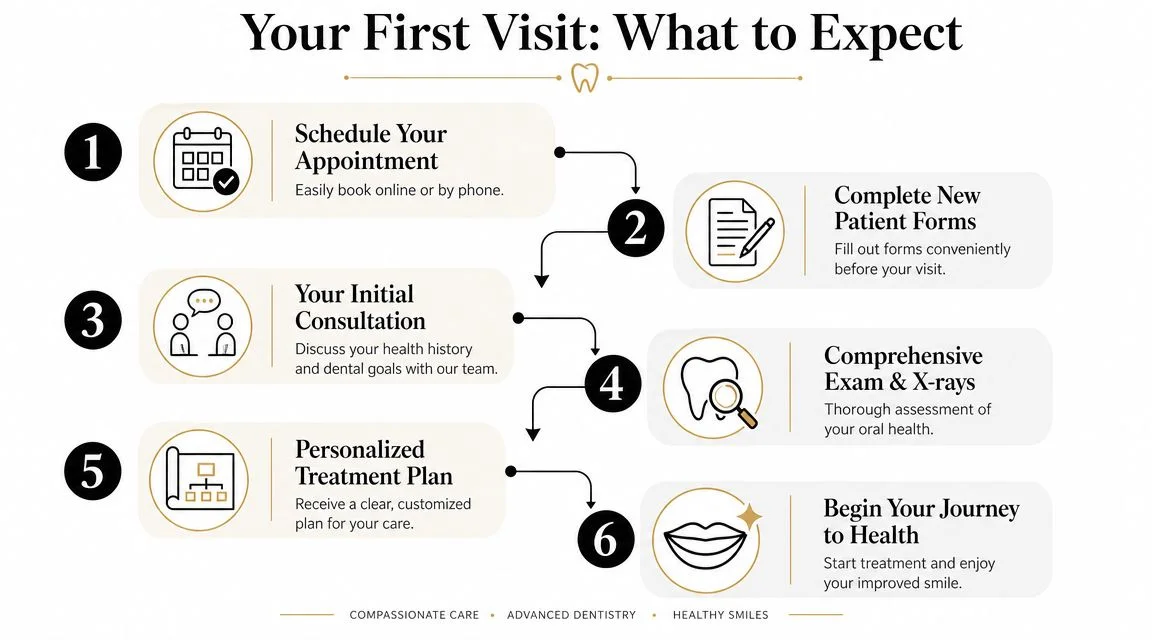
A first visit feels easier when you know what's going to happen. Most new patients don't want surprises. They want to know how long the appointment takes, whether X-rays are involved, and whether they'll have time to ask real questions.
For complete family care, the initial exam is meant to create a strong baseline. A detailed new-patient visit typically lasts 90 minutes and includes digital photography, radiography, a head-and-neck exam, bite assessment, and oral-cancer screening. This thorough baseline improves diagnostic accuracy for all future treatments based on this new-patient overview.
Before you come in
The easiest first visit starts with a little preparation. If forms are available online, completing them ahead of time can save time at check-in and help the team review your history carefully.
Bring the basics that help your appointment go smoothly:
- Your medical history including medications and health conditions
- Dental concerns such as pain, sensitivity, broken teeth, or cosmetic goals
- Insurance information if you're using dental benefits
- Questions you want answered so nothing gets forgotten
What happens during the appointment
A thorough new patient exam does more than confirm whether you have a cavity. It looks at the mouth as a whole and creates a starting point for future decisions.
You can generally expect a sequence like this:
Conversation first
You'll discuss your health history, dental history, concerns, and goals.Diagnostic records
Digital photographs and radiographs help document current conditions and reveal issues that aren't visible at a glance.Clinical examination
This may include a head-and-neck exam, bite assessment, and oral cancer screening, along with an evaluation of teeth and gums.Hygiene and home care discussion
If periodontal disease isn't present, a cleaning may be part of the visit. You'll also get guidance on daily care.Treatment planning
The dentist reviews findings, explains priorities, and helps you decide what should be addressed now and what can be watched.
A good first visit should leave you with clarity. You should understand what was found, why it matters, and what your options are.
That kind of structure is especially helpful if you're changing dentists, moving to Walnut Creek, or returning after time away from care. A careful first appointment doesn't pressure you. It gives you a roadmap.
Schedule Your Appointment with Dr. Schneider Today
A lot of families reach out at the same point. A child is due for a checkup, a parent has been ignoring a sensitive tooth, or someone in the house has avoided the dentist for years because the last experience was uncomfortable. Booking one visit can be the moment things start to feel more manageable.
If you have been searching for Walnut Creek family dentistry that feels personal and calm, scheduling an appointment is a practical next step. William M. Schneider, DDS serves patients at 1855 San Miguel Dr., Suite 31, Walnut Creek, CA, with care that covers routine prevention, repair, smile concerns, and support for patients who feel uneasy in the dental chair.
For many people, comfort is the deciding factor.
Comfortable, anxiety-free dentistry is not just a promise on a website. It means a private practice can slow the pace, explain what is happening before it happens, use gentle numbing techniques for injections, and discuss sedation options when extra help is needed. That kind of approach often matters just as much as the treatment itself, especially for patients who have postponed care because they were bracing for pain, embarrassment, or pressure.
People often decide to book when they want:
- One office for the whole family, from regular cleanings to more involved treatment
- A gentler visit, including careful communication and comfort-focused care
- Clear recommendations, so they understand what needs attention now and what can wait
- A long-term plan, not just a quick fix for the problem of the day
Some patients call because they are due for preventive care. Others have a chipped tooth, want to improve the look of their smile, or need a dentist who takes dental anxiety seriously and treats it with patience instead of rushing through the visit.
If you have been putting off care, that is common. Starting with a consultation or new patient exam can give you answers, a plan, and a better sense of what modern gentle dentistry feels like.
Frequently Asked Questions About Our Dental Practice
Are you accepting new patients
Yes, the practice welcomes new patients. If you're new to Walnut Creek, changing dental offices, or returning to care after time away, it's reasonable to call and ask about current appointment availability for a new patient exam.
What dental insurance plans do you accept
Insurance details can change, so the best approach is to contact the office directly with your plan information. The team can help you understand whether your benefits can be used and what paperwork or verification may be needed before treatment.
What if I need an emergency dentist
If you're dealing with tooth pain, swelling, a broken tooth, or another urgent issue, call the office as soon as you can. Explain what's happening and when it started. The team can guide you on the next step and let you know how urgent scheduling is handled.
Do you offer financing or payment plans
Payment arrangements vary by office and by treatment type. If you're considering restorative dentistry, cosmetic treatment, or a larger treatment plan, ask the office what payment options are available and whether phased treatment planning is possible.
What if I'm nervous about my first visit
Tell the team before your appointment starts. That matters. When a practice knows you're anxious, they can adjust how they explain treatment, pace the visit more carefully, and talk through comfort options that may help you feel more in control.
If you're ready to find a dental home in Walnut Creek, schedule a visit with William M. Schneider, DDS. Whether you need routine care, cosmetic dentistry, restorative treatment, or a more comfortable path back to the dentist, the office is available to help you take the next step.