If you've started wincing when cold water hits a tooth, or you've noticed your teeth look a little more yellow or less glossy than they used to, you're not overreacting. Those small changes are often the first signs that enamel is wearing down. Many people assume it's just aging, brushing too hard, or a temporary sensitivity issue. Sometimes it is. Often, it isn't.
Enamel erosion is common enough that it shouldn't be treated like a rare problem. Cleveland Clinic notes that tooth erosion affects up to 45% of permanent teeth across age groups, and roughly 46% of young adults already show signs of enamel erosion according to its overview of tooth erosion prevalence and symptoms. That matters because enamel doesn't grow back once it's gone.
For patients in Walnut Creek and the East Bay, this usually starts as a quiet concern. A person notices iced coffee suddenly feels sharp on one side. Someone else sees the edges of their front teeth looking thinner in the bathroom mirror. Another patient says, "I don't even drink much soda, so why is this happening?" That last question is an important one, because enamel erosion causes are often more complex than people expect.
Protecting Your Smile from Enamel Erosion in Walnut Creek
A lot of enamel erosion begins in ways that are easy to dismiss. The tooth isn't broken. Nothing is swollen. There may not even be pain every day. What patients usually notice first is a pattern. Cold drinks start to sting. Sweet foods feel sharper than before. Teeth may look smoother, flatter, or slightly darker because the layer underneath becomes easier to see.
That can feel frustrating, especially if you've been doing the basics. Many people searching for a dentist near me in Walnut Creek, CA are already brushing regularly and trying to make healthy choices. They want a clear answer, not blame. That's the right approach, because enamel erosion usually isn't caused by one bad habit alone.
Why early attention matters
When enamel thins, the tooth loses its best natural protection. That can lead to sensitivity, surface damage, and cosmetic changes that become harder to ignore over time. The earlier a dentist identifies the pattern, the more conservative the solution can be.
Practical rule: If sensitivity is new, recurring, or getting more noticeable, it's worth checking before the tooth needs more involved restorative work.
People in Walnut Creek often come in assuming they need teeth whitening, a filling, or an emergency dentist visit. Sometimes the answer is simpler. Sometimes the concern points to acid exposure, dry mouth, reflux, clenching, or a bite issue that needs a different kind of plan. Good care starts by identifying the cause, not just treating the symptom.
Understanding Dental Enamel and Its Role
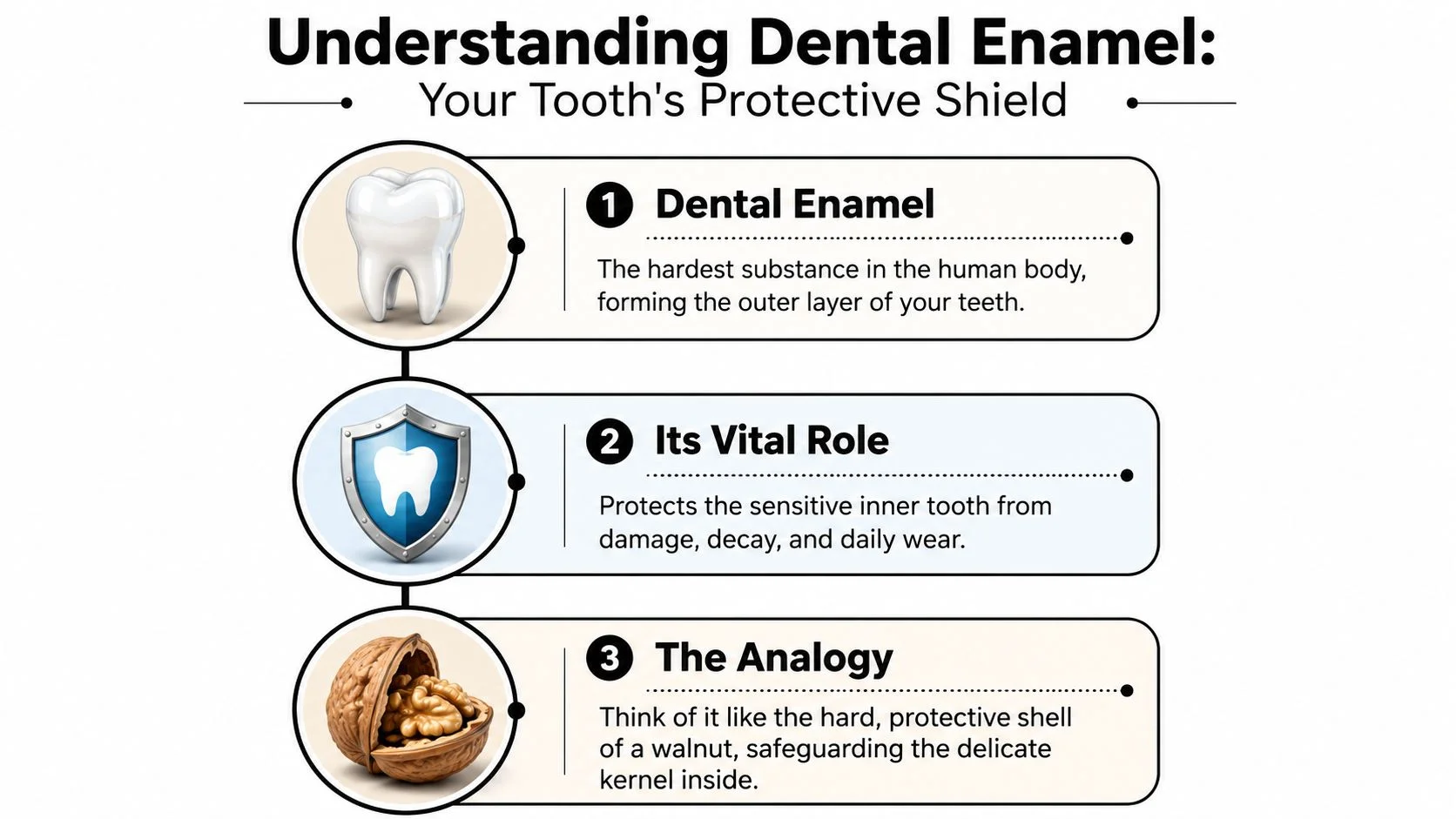
Enamel is the hard outer layer of the tooth. The easiest way to think about it is as a protective shell. Like the hard shell of a walnut, it shields the more delicate inner structure underneath from temperature, chemicals, and daily wear.
What enamel protects
Under enamel is dentin, which is more sensitive and softer. Deeper still is the pulp, where the tooth's nerve and blood supply live. When enamel is healthy, it acts like a barrier between those inner layers and everything you eat, drink, and grind through each day.
That barrier does several jobs at once:
- Temperature protection helps keep cold drinks and hot foods from triggering sensitivity.
- Chemical protection reduces the effect of acids that can soften and dissolve the tooth surface.
- Wear resistance helps the tooth handle chewing, minor friction, and ordinary function.
Why enamel loss matters
Enamel is strong, but it isn't self-repairing. Once a section of it is lost, your body doesn't rebuild it the way it heals skin or bone. That's why early enamel erosion deserves attention even when symptoms seem minor.
Healthy enamel gives you a margin of safety. Thinned enamel removes that margin and makes ordinary habits feel harsher on your teeth.
This is also why a cosmetic concern and a health concern often overlap. A tooth that looks dull, yellowed, or uneven may also be less protected. In a general or cosmetic dentist setting, that distinction matters. Whitening can improve color, but it doesn't solve structural loss. A proper exam has to determine whether the issue is stain, erosion, grinding, or a combination of all three.
The Hidden and Obvious Causes of Enamel Erosion
A patient in Walnut Creek will often sit down and say some version of the same thing: “I brush well, so why do my teeth suddenly feel sensitive?” That question gets to the heart of enamel erosion. It usually develops from a pattern, not a single mistake. The American Dental Association explains in its overview of dental erosion causes that both outside acids and acids coming from the body can wear enamel down over time.
Extrinsic causes from diet and daily habits
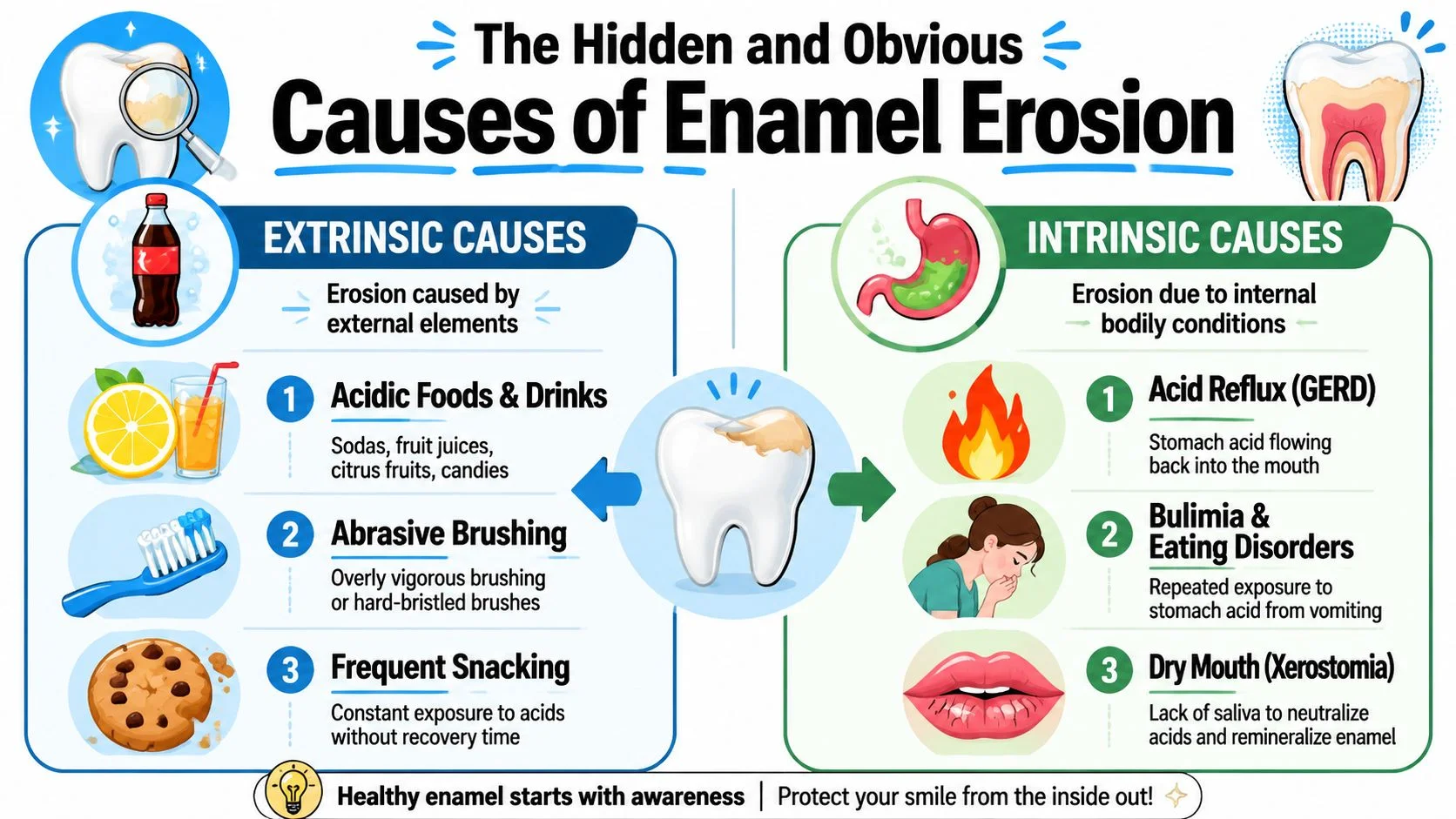
Extrinsic causes come from what teeth face every day. In practice, I see this most often with frequent sipping. A soda with lunch is different from nursing sparkling water, lemon water, or a sports drink for hours while working, driving, or exercising. The mouth needs recovery time between acid exposures.
Common outside contributors include:
- Acidic drinks such as soda, sports drinks, energy drinks, and fruit juice
- Frequent snacking that keeps the mouth from returning to a healthier pH
- Acidic foods such as citrus fruits and vinegar-heavy foods
- Brushing too soon after acids, when enamel is temporarily softened
- Grinding and clenching, which wear down enamel that has already been weakened
There are real trade-offs here. Some patients cut back on sugar and switch to flavored sparkling water or citrus-based drinks. That may be a better choice for calories or blood sugar, but it can still be hard on enamel. Good health decisions in one area sometimes need a small adjustment to protect the teeth too.
If cold drinks have started bothering your teeth, our guide on common reasons teeth hurt with cold foods and drinks can help you compare enamel erosion with other causes of sensitivity.
A short visual explanation can help clarify the pattern:
Intrinsic causes from the body itself
Intrinsic causes start inside the body. These cases can be frustrating because the habits patients usually blame are not always the main issue.
The most common examples are:
- Acid reflux or GERD, when stomach acid reaches the mouth
- Repeated vomiting, which exposes teeth to very strong acid
- Dry mouth, which leaves enamel with less protection from saliva
Dry mouth deserves more attention than it usually gets. Saliva helps rinse acids away and buffer the mouth after eating or drinking. When saliva flow drops because of medications, mouth breathing, stress, dehydration, or certain health conditions, enamel stays exposed longer.
The often-overlooked role of baseline enamel strength
Some patients are more vulnerable from the start. Their enamel may be thinner, less uniform, or affected by early developmental factors. In the office, this matters because two people can have similar diets and oral hygiene habits but show very different levels of wear.
That changes the conversation in a helpful way. Instead of assuming a patient caused all of the damage, we look at how diet, reflux, dry mouth, bite forces, and baseline enamel quality interact. For many people, that feels less like blame and more like a workable plan.
At Dr. Schneider's office in Walnut Creek, that distinction matters. A patient with mild acid exposure and naturally weaker enamel needs a different prevention strategy than someone whose main issue is frequent energy drinks or untreated reflux. The right answer starts with identifying the pattern behind the erosion, not guessing at one cause.
Recognizing the Signs and Getting a Diagnosis in Walnut Creek
Enamel erosion usually announces itself in small ways before it becomes obvious. The signs aren't always dramatic, but they tend to cluster together. If you've noticed more than one of these, it's worth having a dentist take a close look.
Signs patients commonly notice
- Sensitivity to cold, hot, or sweet foods
- Yellowing because the inner tooth structure shows through more
- Rounded or flattened edges that weren't there before
- Small cupped areas on chewing surfaces
- Chipping or roughness at the edges of front teeth
- A glassy or slightly transparent look near the tips of teeth
If cold drinks are the main trigger, this may help you compare what you're feeling with other common causes of discomfort in this guide on what causes tooth sensitivity to cold.
What a thorough diagnosis should include
A proper diagnosis does more than confirm enamel loss. It tries to identify why it's happening. That means looking at the teeth, your bite, your habits, and your health history together.
Because some patients are naturally more vulnerable, inherited factors matter. Conditions like enamel hypoplasia can leave a person with thinner or weaker enamel from the start, so a careful assessment shouldn't focus only on brushing or diet, as noted in this discussion of genetic factors in enamel erosion. When the pattern suggests it, family history and developmental enamel quality deserve attention.
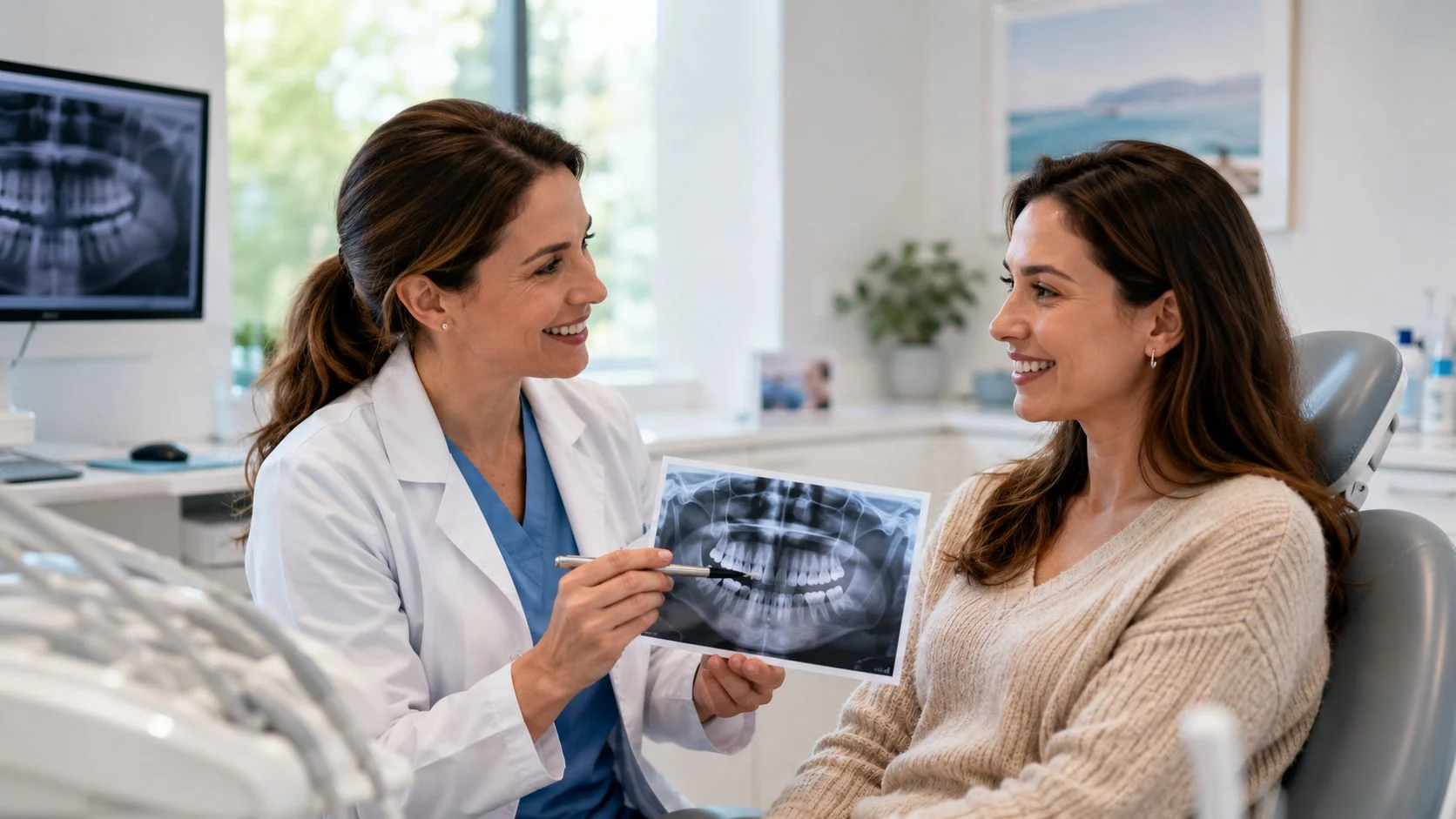
In a Walnut Creek dental exam, the process often includes a visual evaluation, a review of symptoms, and dental x-rays when needed to rule out decay, cracks, or other structural problems. New patient exams are especially useful because they establish a baseline. That makes it easier to spot whether the enamel loss is old, active, or getting worse.
A good exam answers two questions at the same time. Is enamel being lost, and if so, what is continuing to drive it?
How We Treat and Prevent Enamel Erosion
The right treatment depends on severity. Mild cases need protection and habit changes. Advanced cases may need restorative dentistry to rebuild shape, reduce sensitivity, and protect the tooth from further damage. The key is matching the solution to the cause instead of over-treating early wear or under-treating deeper loss.
Prevention that actually helps
Some advice works better than other advice. Telling patients to "avoid all acid" isn't realistic. Individuals require a plan they can follow consistently.
Here are the strategies that tend to be most useful:
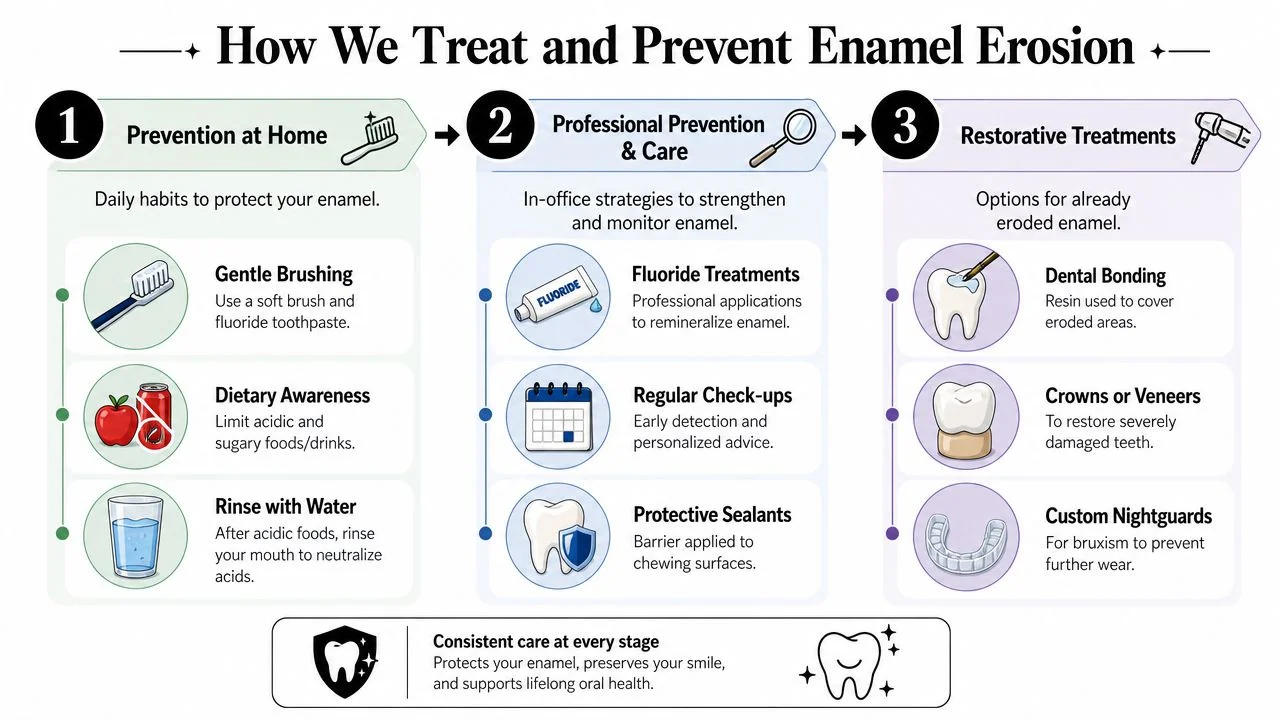
- Change timing, not just content by keeping acidic drinks with meals instead of sipping them throughout the day.
- Rinse with water after acids to help clear the mouth.
- Use a soft-bristled toothbrush and gentle pressure, especially if your teeth are already sensitive.
- Address dry mouth instead of ignoring it. If your mouth feels dry often, bring that up during your exam.
- Protect against grinding if enamel loss is happening along with clenching or bruxism.
For patients who want to improve daily habits, this article on how to strengthen tooth enamel naturally is a useful companion to in-office care.
When professional treatment makes sense
Not all erosion needs a crown, and not all sensitive teeth should be watched indefinitely. That's where clinical judgment matters.
This general comparison helps:
| Situation | What often helps |
|---|---|
| Mild sensitivity with early surface loss | Preventive care, monitoring, home-care changes |
| Localized worn areas affecting appearance | Dental bonding |
| Broader structural loss or weakened tooth shape | Crowns or veneers |
| Enamel loss worsened by grinding | Custom nightguard |
Bonding is often a good choice when erosion is visible but still limited. It can cover exposed areas, improve contour, and reduce sensitivity without removing much tooth structure.
Crowns or veneers may be the better option when the shape of the tooth has changed more significantly, or when cosmetic and functional goals both matter. In a restorative dentistry setting, the goal isn't just to make the tooth look nicer. It's to protect what's left and help the bite work comfortably again.
The best enamel erosion treatment plan is usually conservative at first and more protective when the tooth has already lost too much structure to manage with home care alone.
If a damaged tooth is beyond repair, tooth extraction and replacement options such as dental implants may enter the conversation. That isn't the first step. It's the backup plan when preservation is no longer predictable.
Your Compassionate Dental Care Experience in Walnut Creek
For many people, the hardest part isn't deciding they need help. It's worrying about what the visit will feel like. Patients often delay care because they're concerned they'll be judged, rushed, or pushed into treatment they don't understand.
Good dental care should feel calmer than that. A quality visit starts with listening. If you're dealing with sensitivity, bite discomfort, cosmetic changes, or uncertainty about whether you need a general dentist, cosmetic dentist near me search result, or even an emergency dentist, the first step should be a clear conversation and a careful exam.
In Walnut Creek, patients usually want three things from a dental office. They want comfort, honest guidance, and a plan that fits real life. That means clear explanations, painless injections when possible, and treatment options that account for budget, goals, and anxiety level. For some patients, sedation support also makes a major difference in getting needed care done without dread.
Whether your enamel concerns lead to cleaning and exams, dental x-rays, cosmetic dentistry, restorative dentistry, crowns, or longer-term monitoring, the experience should feel steady and respectful. The right dental home doesn't just repair damage. It helps you understand what's happening and how to prevent the next problem.
If you're noticing sensitivity, thinning enamel, or changes in your smile, schedule a consultation with William M. Schneider, DDS. Patients in Walnut Creek, CA and the surrounding East Bay can get a personalized evaluation, clear answers about enamel erosion causes, and a practical treatment plan that protects both comfort and appearance.