You've finally decided to straighten your teeth. Then, somewhere between your consultation and your first set of records, you hear the words that make many adults pause: you might need a tooth extraction before braces or clear aligner treatment.
That moment can bring up a lot at once. Will it hurt? Will it change your face? Is this really necessary, or is there a better option? Those questions are especially common among adults in Walnut Creek and across the East Bay who want a healthier smile but don't want to make an irreversible decision without understanding the trade-offs.
That's why a careful diagnosis matters. Modern dentistry usually tries to preserve natural teeth whenever possible, and extraction is no longer treated as a routine step for every crowded smile. In the right case, removing teeth can make alignment healthier, more stable, and more attractive. In the wrong case, it can solve one problem while creating another. The difference comes down to facial structure, bite relationship, crowding severity, and how much space is needed.
If you've been searching for a dentist near me, a dentist in Walnut Creek, CA, or even a cosmetic dentist near me because you're weighing braces, Invisalign, or other dental care options, it helps to understand what “before and after” really means. It's not just about straighter teeth. It's about comfort, function, profile balance, and making a choice you'll feel good about years from now.
Your Guide to Braces and Tooth Extraction in Walnut Creek
A common East Bay scenario goes like this. An adult patient has lived with crowding for years, maybe a front tooth overlaps, maybe the bite never felt quite right, and now they're ready to do something about it. They expect to hear about braces, Invisalign, maybe cosmetic dentistry. They don't expect to hear that one or more teeth might need to come out.
That recommendation can feel bigger than it sounds. People often picture a drastic change, or they worry that extraction means their case must be unusually severe. Others jump straight to facial appearance and wonder if their cheeks or lips will look different after treatment. Those concerns are reasonable.
What helps most is separating fear from diagnosis. Extraction isn't a default move in modern orthodontic planning. Over a 32-year period, the frequency of orthodontic cases requiring extraction dropped by about 20%, reflecting a broad shift toward non-extraction treatment whenever possible, according to a multi-decade orthodontic analysis. That trend matters because it shows where treatment philosophy has moved. Dentists and orthodontic providers now use more conservative planning, better appliances, and more nuanced space management than they did in earlier decades.
Why patients often feel unsure
Most patients aren't afraid of straightening their teeth. They're afraid of making the wrong decision. They want to know whether extraction is being suggested because it's necessary, or because it's just one way to make the case easier to treat.
A thoughtful exam looks beyond the front teeth. It considers:
- Crowding severity. Mild overlap and major space shortages are not the same problem.
- Lip support and profile. Some faces benefit from retraction, others don't.
- Bite mechanics. The goal isn't just straight teeth. It's a healthy bite.
- Alternatives first. Expansion, reshaping, or aligner-based strategies may work well in many cases.
A good treatment plan should answer two questions at the same time: will this improve the bite, and will this preserve facial balance?
Why local patients ask different questions
Adults in Walnut Creek often come in with a more cosmetic lens than teens do. They're thinking about work, photos, confidence, and subtle facial changes. They may also be comparing options beyond braces, including new patient exams, dental x-rays, Invisalign, teeth whitening, or broader restorative dentistry if worn or damaged teeth are part of the picture.
That's why the right conversation isn't just “Do I need a tooth pulled?” It's “What will this do for my smile, my bite, and my face, and is there a less invasive way to get there?”
When is Tooth Extraction Necessary for a Perfect Smile
An adult patient in Walnut Creek may sit down in my chair with the same concern I hear every week. "I want straighter teeth, but I do not want my face to look sunken afterward." That concern is reasonable. The right answer depends on how much crowding is present, how the bite fits together, and what tooth movement will do to the lips and profile.
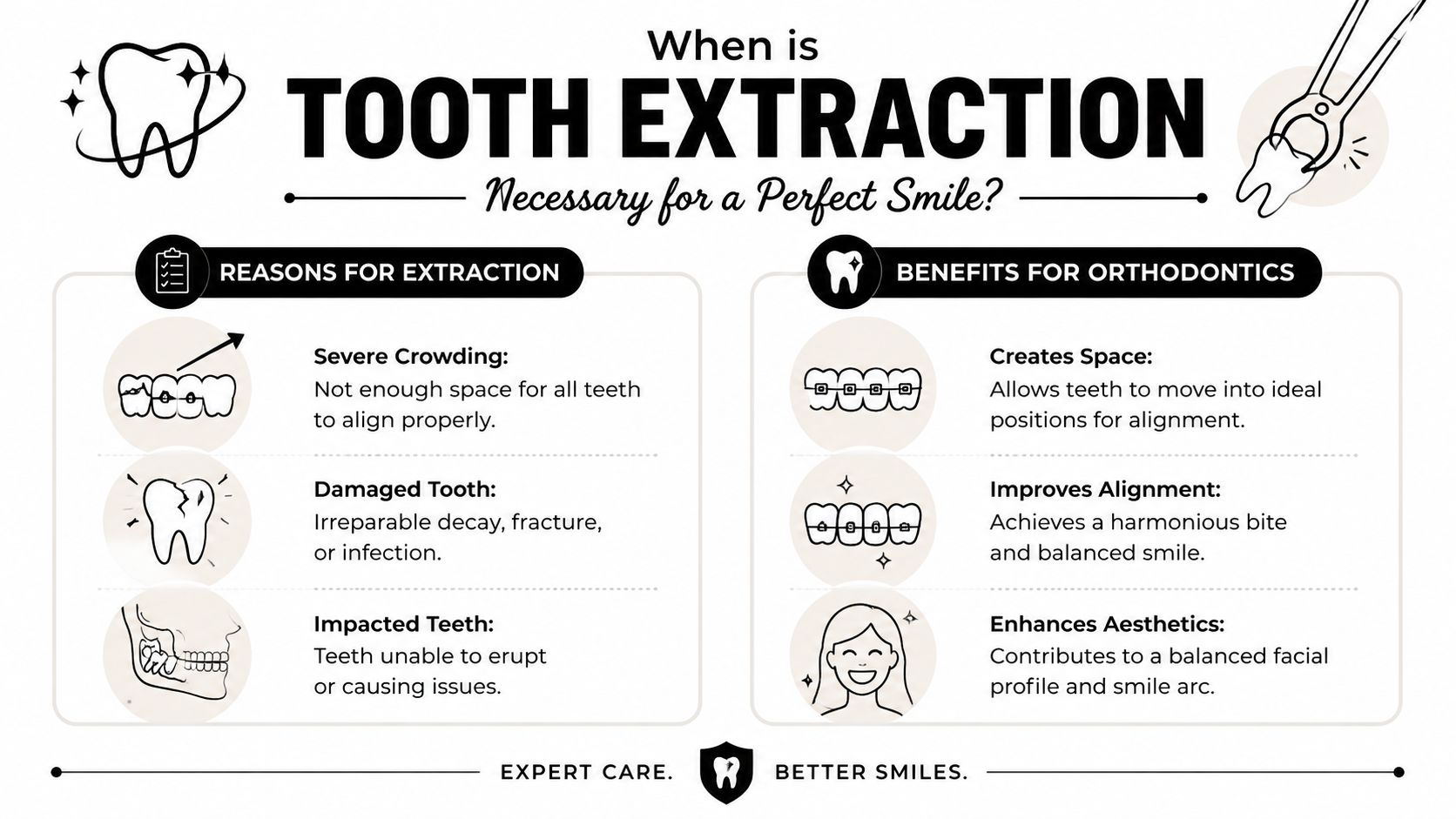
Extraction becomes part of the conversation when there is just not enough room to place the teeth in healthy, stable positions without pushing them too far forward or compromising the bite. It is not a routine first step. In many cases, space can be managed without removing teeth. In other cases, especially with severe crowding or pronounced protrusion, removing selected teeth gives a cleaner, healthier result. A clinical overview from Oviedo Dentists on why tooth extraction may be needed for braces explains that extraction is generally reserved for more difficult cases rather than minor alignment problems.
The cases where extraction makes sense
I look for a few clear patterns before recommending extraction:
- Severe crowding. The arches do not have enough room for all teeth to line up without unhealthy flaring or overlap.
- Significant protrusion. Front teeth and lips sit forward enough that bringing them back can improve both bite function and facial balance.
- Bite problems that need space to correct. Some orthodontic movements are more stable and more predictable when room is created first.
- A tooth with a poor long-term outlook. If a tooth is already badly damaged, decayed, or compromised, its removal may fit naturally into the orthodontic plan.
For certain adults in the East Bay, this is also a facial profile decision. If the lips are strained at rest and the front teeth project too far, carefully planned extractions can soften that prominence and improve facial harmony. Those are often the before-and-after cases where extraction helps both the smile and the side profile.
When I advise caution
Extraction is not the default answer for mild crowding, and it is not the best plan for every adult who wants a straighter smile. If someone already has a flatter profile, removing teeth and retracting the front teeth too much can reduce lip support in a way they may not like.
That is why adults often benefit from a more conservative discussion first. In many cases, non-extraction treatment with braces or Invisalign, selective reshaping, or arch development can create enough room while preserving facial fullness. Generic articles often miss that point. In real treatment planning, profile changes matter just as much as straight teeth.
A good extraction decision should solve a space problem without creating a facial profile problem.
What usually gets removed
When extraction is needed for orthodontic treatment, the teeth most often selected are the first premolars. They sit in a position that can create useful space while allowing the front teeth and bite to be corrected in a controlled way.
The choice is never random. The goal is to place space where it helps the orthodontic plan most, while protecting function and appearance.
What patients should take from this
A successful extraction case has a specific reason behind it. Severe crowding, protrusion, bite correction, or a compromised tooth can justify it. Mild overlap alone usually calls for a closer look at non-extraction options first.
The best plan is the one that fits your anatomy, your goals, and your face. For some Walnut Creek adults, extraction improves both comfort and aesthetics. For others, avoiding extraction is exactly how we protect a natural-looking result.
The Tooth Extraction Process at Our Walnut Creek Office
An adult patient in Walnut Creek will often ask the same question before we start. “Will this be painful, and will it change how my face looks?” Both concerns are reasonable. By the time we schedule an orthodontic extraction, the planning work is already doing the heavy lifting. We know which tooth creates the space we need, how that space fits the braces plan, and whether the goal is to reduce severe protrusion or to relieve crowding without over-retracting the front teeth.
A typical visit begins with a review of your records, updated dental x-rays, and a final check that the extraction pattern still matches your orthodontic goals. In adults, I pay close attention to timing and facial support. Space can help us improve a prominent profile in the right case, but if preserving lip support is the priority, the mechanics after extraction have to be controlled carefully.
What the appointment usually feels like
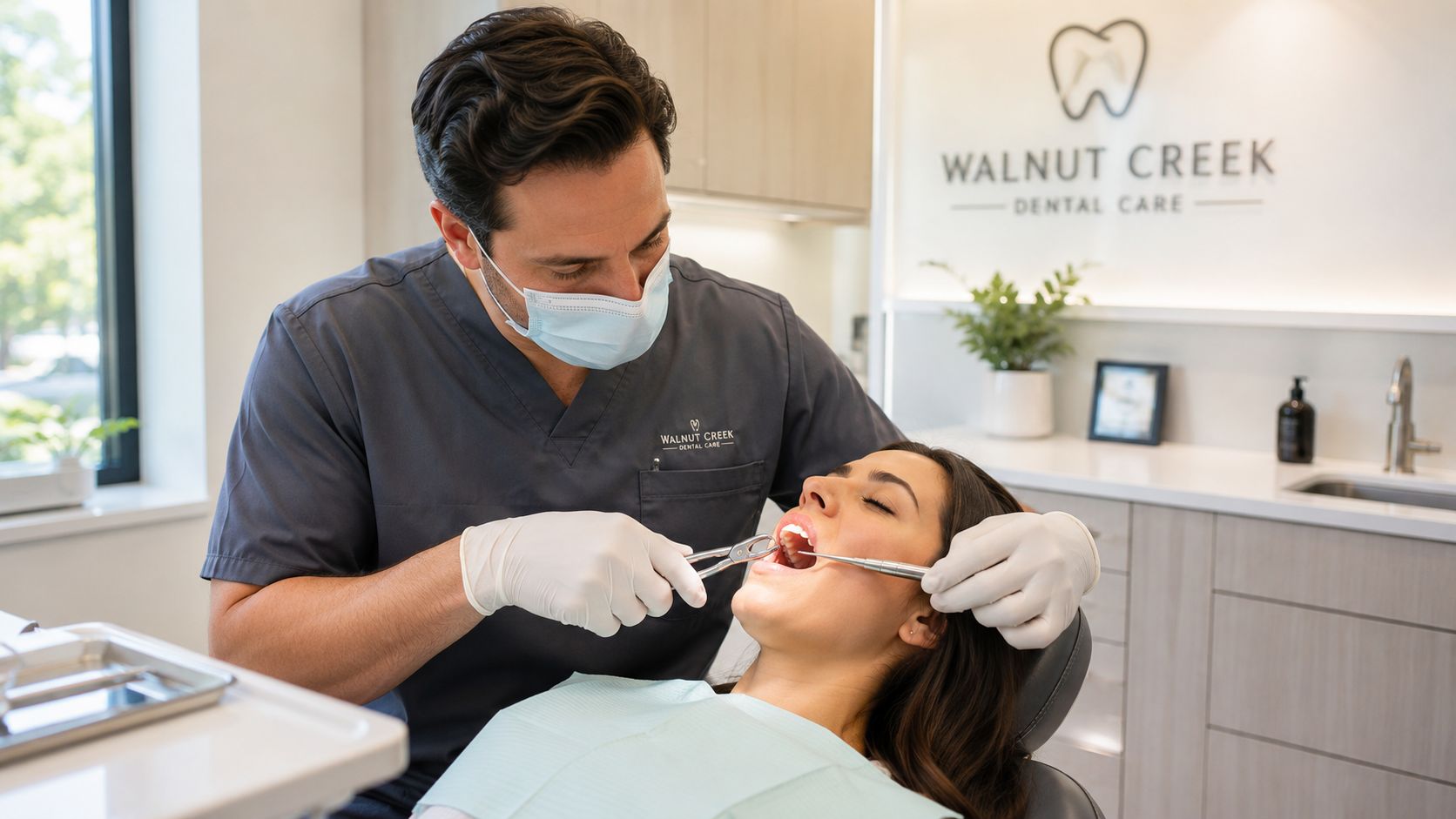
The procedure itself is usually calmer than patients expect. The area is numbed thoroughly first, and we do not begin until you are comfortable. You will feel pressure and movement more often than pain.
Once the tooth is loosened, it is removed in a controlled way. Some teeth come out quickly. Others take more time because of root shape, bone density, or access. Premolars removed for braces are commonly straightforward, but no responsible dentist should promise that every case feels identical.
Comfort matters more than trying to be stoic
Patients who do best during extractions usually tell us what worries them before we start. If injections make you nervous, if you have had a difficult dental visit before, or if you are worried about hearing or pressure, say it early so we can adjust the pace.
Common ways we keep the visit comfortable include:
- Local anesthesia to keep the area numb
- Step-by-step explanation so there are no surprises
- Short pauses during the procedure if you need a break
- Sedation when appropriate for stronger anxiety control
- A ride home arranged ahead of time if sedation is used
A calm appointment is not about toughness. It is about good communication and good planning.
Timing after the extraction
After the tooth is removed, the site needs time to settle before orthodontic space closure is fully underway. The exact schedule depends on your bite, the extraction site, and how your orthodontist wants to move the teeth. In some cases, braces are already on and early movement begins soon after the gums start to heal. In others, we allow a longer settling period first.
I explain this carefully to adults because timing affects more than convenience. It affects control. If the treatment goal is to reduce dental protrusion and improve profile balance, the tooth movement has to be deliberate. If the goal is to avoid flattening the face, that matters just as much. Generic articles often skip that point, but it matters in real East Bay treatment planning.
What patients can expect in the office
A well-run extraction visit should feel organized and predictable. You should know what is happening, how long the visit may take, what to do once you get home, and who to call if something feels off later.
Before you leave, we review aftercare in plain language and make sure you have written instructions. If you want a more detailed overview of healing at home, our guide to recovering after a tooth extraction covers the basics patients ask about most often.
Good extraction care supports good orthodontic results. The procedure is only one step, but it is an important one.
Your Tooth Extraction Recovery and Aftercare Guide
Once the numbness wears off, recovery becomes the focus. Most patients do well when they keep the first few days simple and avoid doing too much too soon.
The early goal is protecting the blood clot and letting the gum tissue settle. If the extraction is part of a braces plan, your comfort now affects how smoothly the next stage goes. The transition from tooth extraction for braces before and after is not just about appearance. It depends on good healing.

The first few days
Keep your routine light. Rest, hydrate, and avoid anything that could disturb the area.
- Bite on the gauze as directed to help control bleeding.
- Use soft foods such as yogurt, soup, eggs, smoothies, or mashed foods while the site is tender.
- Avoid straws and forceful rinsing because suction can interfere with clot stability.
- Use cold packs on the cheek if swelling starts to build.
- Take medications exactly as instructed if they were prescribed or recommended.
Keeping the area clean
Good oral hygiene still matters. It just needs to be gentle around the extraction site.
Brush the nearby teeth carefully and keep the rest of your mouth clean. Don't jab the area with the toothbrush. If you've had cleaning and exams regularly, you already know that healing is easier in a cleaner mouth.
Most recovery problems come from irritation, not from normal healing.
When braces or aligners start moving teeth again
The timing varies by case. Orthodontists may recommend waiting one to two weeks before placing braces to allow initial healing, though in some cases appliances are placed before the extractions so movement can begin shortly afterward, as noted in this discussion of braces timing after extraction.
If you want a deeper look at home care after a removal, this guide on how to recover from tooth extraction is a helpful next read.
Call the office if something feels off
Normal soreness and mild swelling are expected. Worsening pain, bleeding that doesn't ease, or a site that suddenly feels much worse deserves a call. A straightforward extraction should improve gradually, not move in the other direction.
Tooth Extraction for Braces Before and After Transformations
The phrase tooth extraction for braces before and after usually makes people think about straight teeth. Adults in the East Bay tend to ask a more specific question: what happens to my face?
That's the right question. A smile doesn't sit in isolation. Teeth support lips, influence profile balance, and affect how the lower face looks at rest. A treatment plan that ignores that can produce a technically straight result that still feels cosmetically wrong.
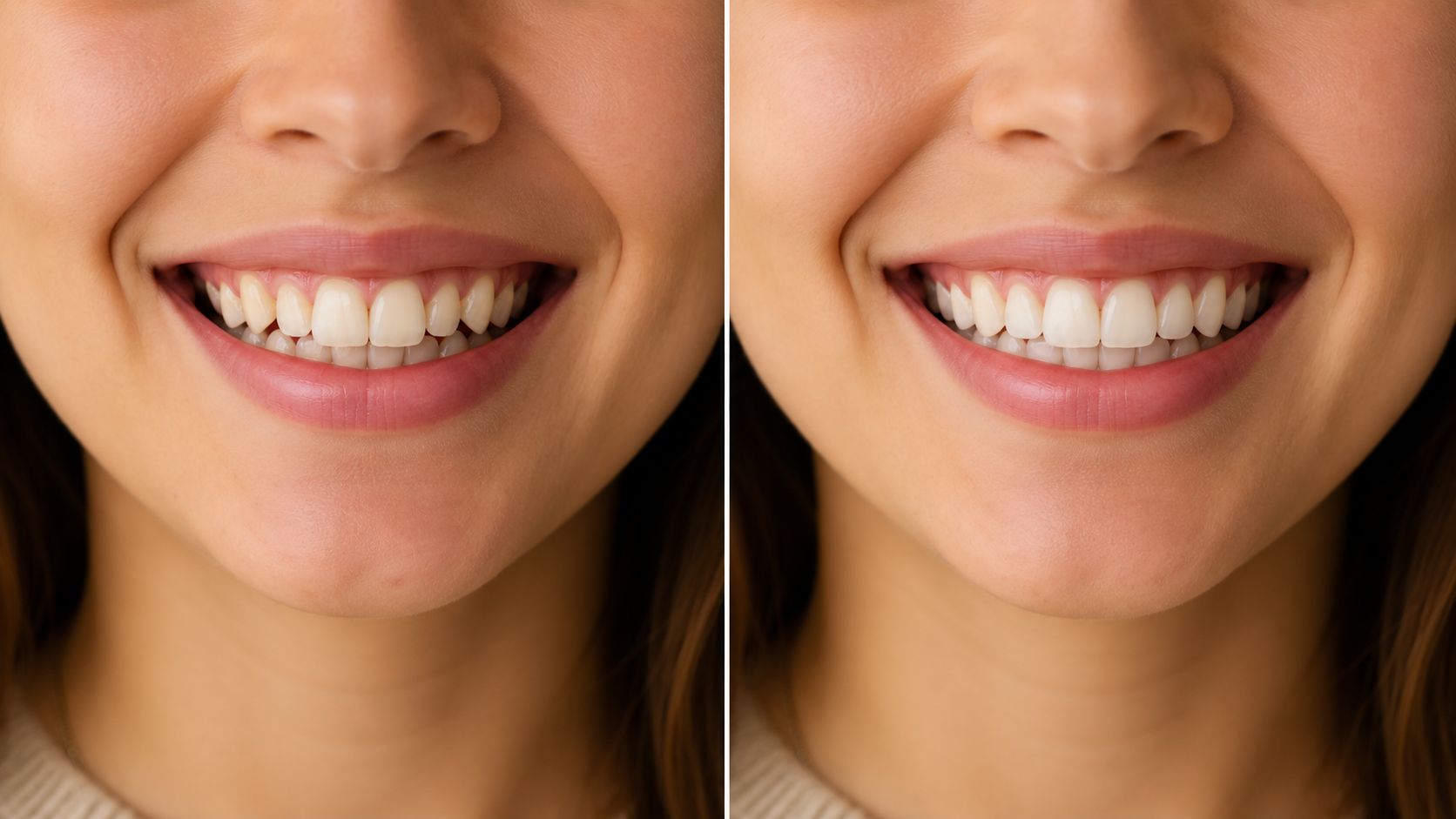
A key point often missed in generic articles is this. The impact of premolar extraction on facial profile depends heavily on the starting diagnosis. As described in this discussion of extraction and facial profile concerns, the nuance lies in distinguishing severe protrusion cases, where extraction may improve aesthetics, from mild crowding cases, where it may contribute to flattening.
When extraction can improve facial harmony
If the front teeth and lips are significantly prominent, extraction can create useful room to bring them into a more balanced position. In those cases, the “after” often looks calmer and more proportionate.
Common signs include:
- Lips that don't rest comfortably
- Front teeth that project forward noticeably
- A bite relationship that leaves the smile looking strained
- Crowding paired with protrusion, not just crowding alone
In that situation, closing extraction spaces can improve both function and appearance. The profile may look more relaxed, and the teeth may fit the face better rather than fitting the arch alone.
When extraction can be the wrong move
Mild crowding is where caution matters most. If the lips already have good support and the profile is balanced, removing premolars just to gain space can take too much support away. That's when patients worry about a “flattened” appearance, and in some cases that concern is valid.
This is why adults need a customized plan rather than a template. A provider has to decide whether the face needs retraction, can tolerate it, or should avoid it entirely.
Here's a visual explanation many patients find useful before they decide.
Three realistic before and after patterns
| Starting point | Best direction | Likely goal |
|---|---|---|
| Severe protrusion with crowding | Extraction may help | Better lip posture and improved bite |
| Mild crowding with balanced profile | Non-extraction preferred | Alignment without flattening the face |
| Narrow arches or spacing limitations | Expansion or reshaping may help | Create room while preserving support |
What patients should judge in the after result
Don't look only at whether the teeth are straight. Look at whether the smile still fits the face.
A strong result usually includes:
- Cleaner alignment
- A healthier bite
- Stable lip support
- A natural profile at rest
- Better overall symmetry
The best orthodontic result doesn't look “done.” It looks like your features came into balance.
For adults considering cosmetic dentistry, Invisalign, or full treatment planning in Walnut Creek, this is often the most important distinction. The goal isn't to avoid extraction at all costs. The goal is to use it only when the face and bite benefit from it.
Exploring Your Alternatives to Orthodontic Extraction
Conservative treatment starts with one principle. Keep healthy teeth when you can.
That's one reason extraction has become far less routine, especially in younger patients. According to AlignBar's discussion of modern extraction standards, preserving natural teeth is the priority whenever possible, and extraction has become nearly extinct in children and teens except in cases such as extremely narrow arches or severe crowding.
The main non-extraction options
Different tools solve different problems. The best choice depends on how much space is needed and what the face can support.
- Invisalign with controlled movement can handle many crowding cases without removing teeth. If you're comparing options, this page on Invisalign for crowded teeth gives a practical overview.
- Interproximal reduction (IPR) creates small amounts of room by carefully reshaping enamel between selected teeth.
- Palatal expanders widen the arch in cases where the issue is narrowness rather than excess tooth size.
Where premolar extraction still fits
When extractions are done for orthodontics, they often involve four premolars, two upper and two lower, to create the needed space. At the same time, some clinicians prefer alternatives such as palatal expanders rather than using premolar removal broadly, as described in this overview of what happens when teeth are removed for braces.
That contrast matters. It shows why second opinions can be helpful when the case is borderline. One patient may need extraction. Another may do well with expansion, IPR, or aligners and keep a fuller facial profile.
Which option tends to work best
For mild to moderate crowding, non-extraction options often make the most cosmetic sense. For severe crowding or strong protrusion, extraction may still be the cleanest route to a stable result.
The important part is not choosing the most aggressive plan first. It's choosing the least invasive plan that can still deliver a healthy bite and a balanced smile.
Begin Your Journey to a Straighter Smile in Walnut Creek
If you're trying to decide whether extraction belongs in your treatment plan, don't rely on generic advice or worst-case stories online. A useful answer has to come from your own x-rays, bite, facial profile, crowding pattern, and long-term goals.
That's especially true if you've been searching for a dentist in Walnut Creek, CA, an emergency dentist, Dental implants near me, or a cosmetic dentist near me and you're sorting through several dental concerns at once. Orthodontic planning often connects with the rest of your care. A damaged tooth may affect the plan. So can restorative dentistry, past dental work, or cosmetic priorities.
A strong first visit should feel clear and personal. Expect a review of your concerns, imaging, a bite evaluation, and a direct conversation about what's necessary. You should leave knowing whether your case points toward braces, Invisalign, extraction, or a conservative alternative. You should also know why.
A healthy smile isn't built by guessing. It starts with a diagnosis that respects both function and appearance, then follows through with treatment that fits your face, not just your teeth.
If you're ready for clear answers about braces, Invisalign, tooth extraction, cosmetic dentistry, or long-term dental care, schedule a consultation with William M. Schneider, DDS. Patients in Walnut Creek and the East Bay can expect a thorough exam, thoughtful guidance, and a treatment plan built around comfort, function, and a confident smile.