Dental Implants vs. Bridges: Which Tooth Replacement Option Is Best?
Losing a tooth can affect much more than the appearance of your smile. A missing tooth may make it harder to chew, change the way you speak, and place additional pressure on the teeth around the open space. Over time, neighboring teeth may also begin to shift, which can affect your bite and make certain areas more difficult to clean.
Fortunately, modern dentistry offers reliable ways to replace missing teeth. Two of the most common options are dental implants and dental bridges. Both can restore function and improve the appearance of your smile, but they work in different ways.
At WC Family Dentist, we believe the best tooth replacement option is the one that fits your oral health, long-term goals, comfort level, and individual needs. Dr. William M. Schneider takes the time to evaluate each patient carefully, explain the differences between available treatments, and help them make an informed decision.
If you are comparing dental implants and bridges, understanding how each option works can help you feel more confident about the next step.
Why Replacing a Missing Tooth Matters
Some people assume that replacing a missing tooth is mostly a cosmetic decision. While appearance is certainly important, the benefits go much further.
Every tooth plays a role in the balance of your bite. When one tooth is missing, the teeth beside it may gradually move into the open space. The tooth directly above or below the gap may also begin to shift because it no longer has an opposing tooth to meet when you bite.
These changes can affect chewing, create uneven pressure, and make oral hygiene more challenging.
A missing tooth can also affect confidence. Some patients avoid smiling, laughing, or speaking freely because they feel self-conscious about the gap.
At our Walnut Creek office, we encourage patients to consider tooth replacement not only as a way to improve their smile, but also as an important part of protecting long-term oral function.
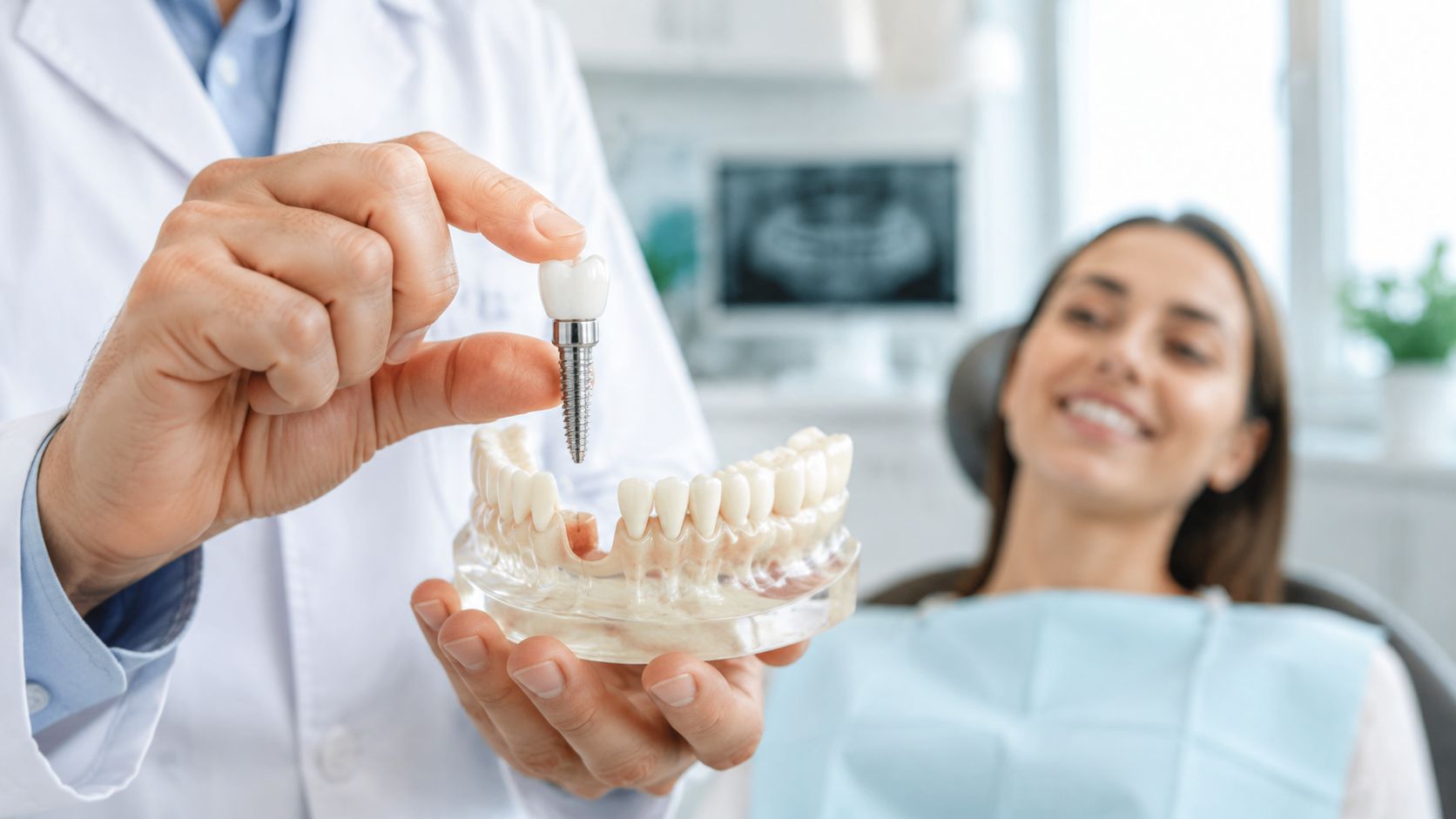
Dental Implant Service Provider
What Is a Dental Implant?
A dental implant is designed to replace a missing tooth from the root upward.
The implant itself is a small post placed into the jawbone in the area where the natural tooth root once was. After the area has healed and the implant has become stable, it can support a custom dental restoration that looks and functions like a natural tooth.
One of the biggest differences between an implant and a bridge is that an implant does not rely on the neighboring teeth for support.
Because the implant is anchored in the jaw, it can provide strong, independent support for the replacement tooth. This allows the surrounding teeth to remain largely untouched.
Dental implants may be used to replace a single missing tooth or, in some cases, support more extensive tooth replacement. Whether someone is a good candidate depends on factors such as bone support, gum health, overall health, and the location of the missing tooth.
At WC Family Dentist, we evaluate the complete picture before recommending an implant. The goal is to make sure the treatment is appropriate, predictable, and aligned with the patient’s long-term oral health.
What Is a Dental Bridge?
A dental bridge replaces a missing tooth by filling the open space with an artificial tooth supported by the teeth on either side.
In a traditional bridge, the neighboring teeth are prepared for crowns. Those crowns help hold the replacement tooth securely in place.
A bridge can restore the appearance of the smile, improve chewing, and help prevent surrounding teeth from shifting into the gap.
Unlike a removable appliance, a dental bridge is fixed in place. Patients do not remove it for cleaning or sleeping.
Bridges have been used successfully for many years and can be an excellent option for the right patient. They may be particularly appropriate when the neighboring teeth already need crowns or have large restorations.
At our office, Dr. Schneider considers the condition of the surrounding teeth before recommending a bridge. If those teeth are healthy and untouched, preserving their natural structure may influence the conversation. If they already require significant restoration, a bridge may provide a practical way to address several concerns at once.
Dental Implants Protect the Neighboring Teeth
One of the main advantages of a dental implant is that it stands independently.
Because it does not require support from the teeth beside the gap, those teeth generally do not need to be reshaped to hold the restoration.
This can be an important consideration when the neighboring teeth are healthy.
Preserving natural tooth structure is always valuable. When possible, we prefer treatment that protects healthy teeth while restoring the missing area effectively.
A bridge, on the other hand, depends on the adjacent teeth. Those teeth must be strong enough to support the restoration, and they usually need to be prepared for crowns.
That does not make bridges a poor choice. It simply means the condition of the neighboring teeth is an important part of deciding between the two options.
Implants May Help Preserve Jawbone
Natural tooth roots stimulate the jawbone during biting and chewing. When a tooth is lost, that stimulation disappears, and the bone in the area may gradually begin to change.
A dental implant acts more like a natural tooth root because it is positioned within the jawbone. This can help maintain support in the area where the tooth was lost.
A bridge replaces the visible part of the tooth but does not replace the root. Because of that, it does not provide the same type of stimulation within the jawbone.
For some patients, this makes an implant especially appealing as a long-term replacement option.
However, not everyone has enough bone support for an implant without additional treatment. Bone volume can change after tooth loss, especially when the space has been open for a long time.
A careful evaluation is necessary to determine whether an implant is appropriate.
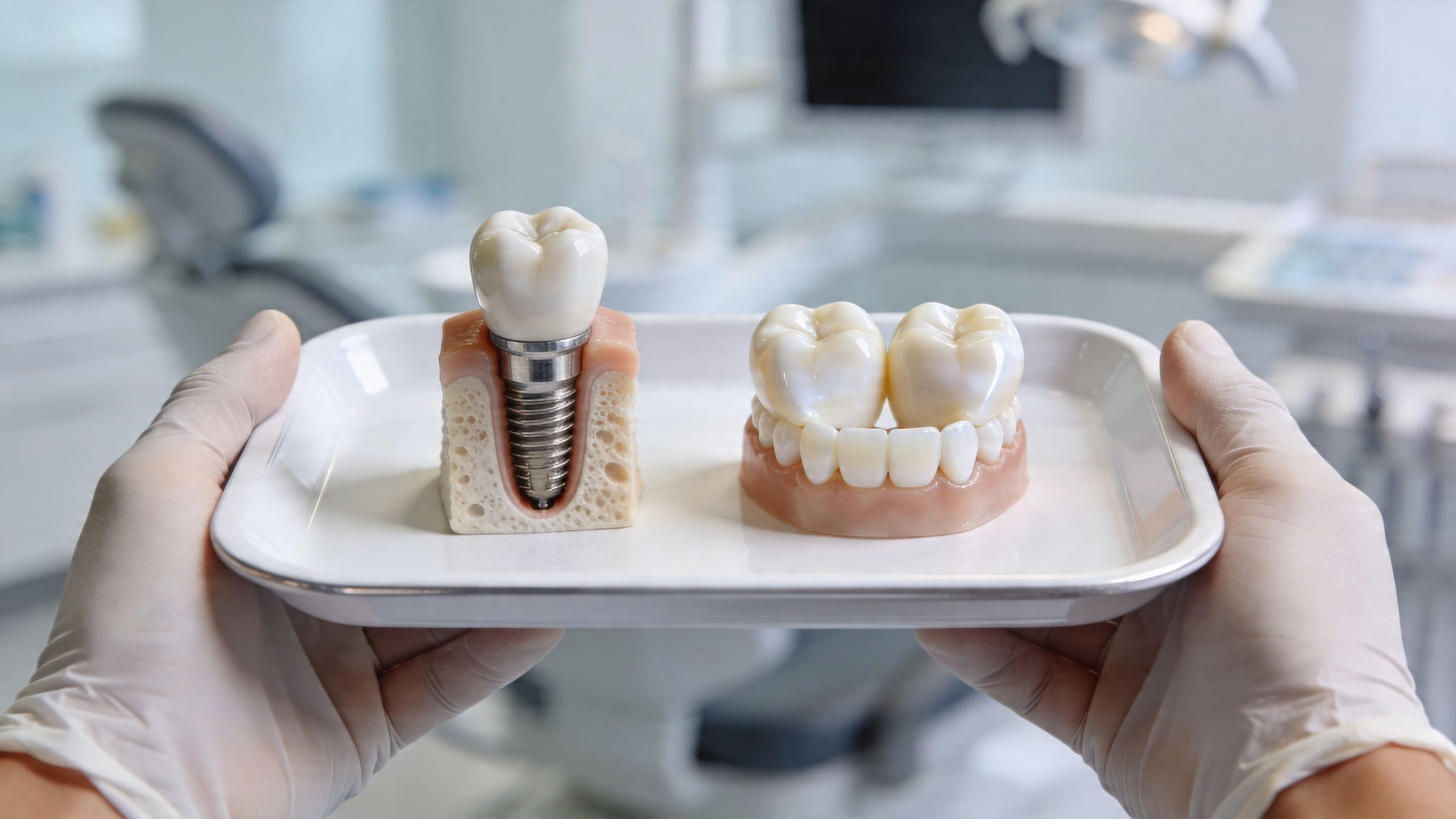
Dental Implant vs Bridge
Bridges Often Require a Shorter Treatment Process
The dental implant process usually takes more time than a bridge because the implant must heal and become stable before the final restoration is completed.
The exact timeline varies depending on the patient, the condition of the area, and the treatment plan.
A dental bridge can often be completed more quickly because it does not require the same healing period within the jawbone.
For patients who want a fixed tooth replacement within a shorter timeframe, a bridge may be an attractive option.
At WC Family Dentist, we believe timing should be discussed honestly. Some patients are comfortable with a longer treatment process if it allows them to receive an independent replacement tooth. Others place a higher priority on restoring the space sooner.
Neither preference is wrong. The right recommendation depends on your health and priorities.
Comparing Comfort and Recovery
Patients often ask whether implants or bridges are more comfortable.
Both options are designed to restore comfortable function once treatment is complete. The main difference is what happens during the process.
Dental implant treatment involves placing the implant into the jawbone, followed by a healing period. Some temporary soreness or tenderness may occur after the procedure.
A bridge does not involve implant placement, but the supporting teeth must be prepared. Patients may experience temporary sensitivity while the teeth adjust and the final restoration is completed.
Dr. Schneider explains what to expect before treatment begins so patients understand the process and feel prepared.
For anyone who experiences dental anxiety, our office also offers sedation dentistry when appropriate. We want patients to feel supported and comfortable while receiving the care they need.
How Long Do Implants and Bridges Last?
Both dental implants and bridges can provide many years of function when they are properly planned, placed, and maintained.
The lifespan of either option depends on several factors, including oral hygiene, gum health, bite forces, daily habits, and regular professional care.
Dental implants are often chosen for their long-term potential. Because they are not dependent on neighboring teeth, they can remain stable as long as the implant area stays healthy.
The crown attached to the implant may eventually need maintenance or replacement, just as a natural tooth restoration might.
A bridge can also last for many years. Its long-term success depends partly on the health of the supporting teeth. If one of those teeth develops decay or another problem, the entire bridge may be affected.
This is why cleaning around a bridge is so important.
At our office, we help patients understand how to care for their restoration and how regular cleanings and exams support long-term success.
Cleaning Around Implants and Bridges
A single-tooth dental implant can usually be brushed and flossed in a way that is similar to a natural tooth.
Good oral hygiene remains essential because the gums and bone around the implant must stay healthy.
A bridge requires a slightly different cleaning routine because the replacement tooth is connected to the crowns on either side. The area beneath the artificial tooth must be cleaned carefully to prevent plaque and food from collecting.
Our team can show you the proper techniques and recommend tools that make cleaning around a bridge easier.
Neither option eliminates the need for routine dental care.
Professional cleanings and exams allow us to monitor the condition of your implant, bridge, gums, and neighboring teeth. Early attention to small concerns can help protect your investment and reduce the risk of more complicated problems later.
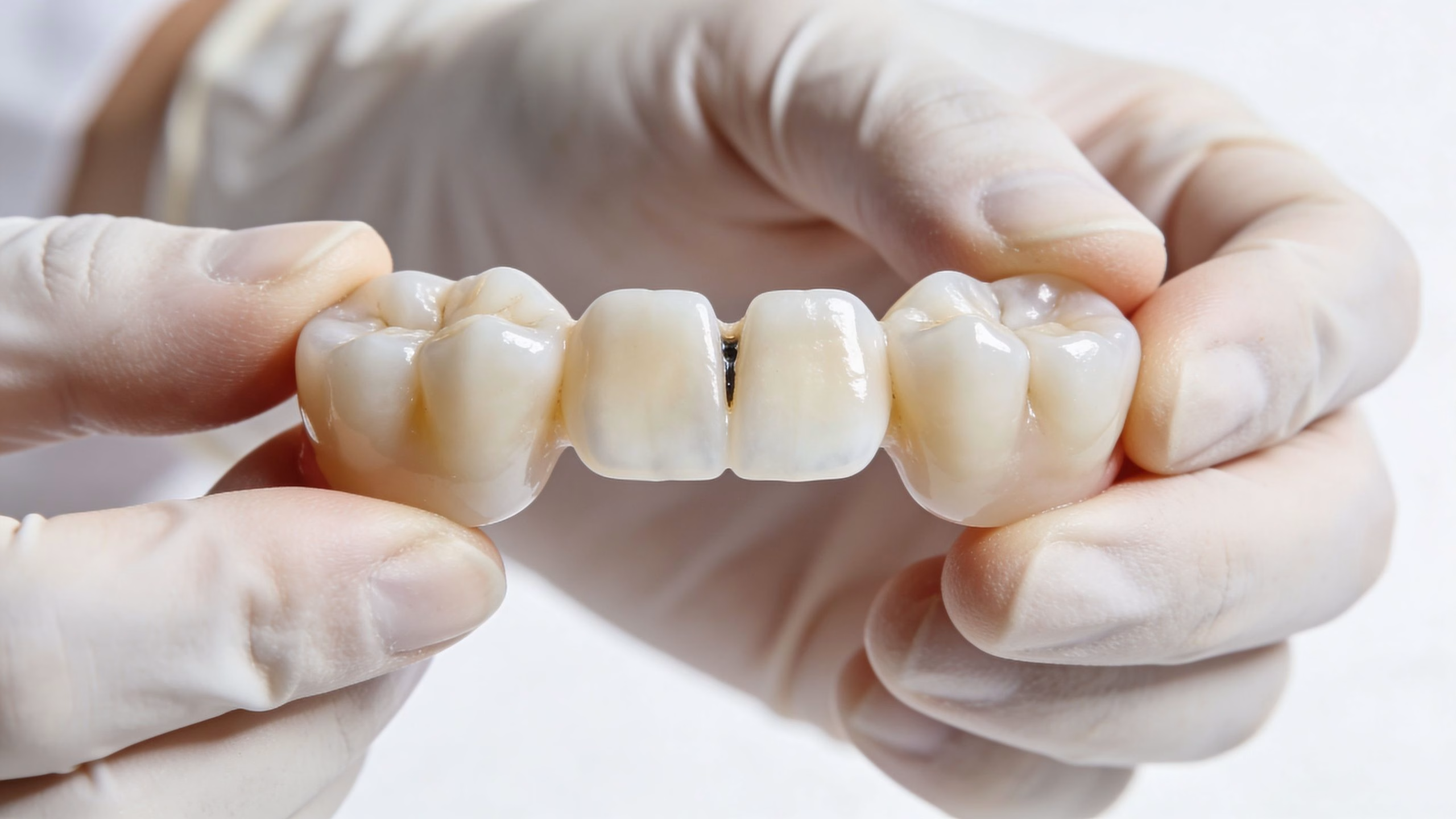
Dental Bridge
Which Option Looks More Natural?
Both dental implants and bridges can be designed to look natural.
The final restoration is shaped and selected to blend with the surrounding teeth. The goal is to restore your smile without making the replacement tooth look obvious or out of place.
Because an implant emerges from the gum area independently, it can closely resemble the structure of a natural tooth.
A well-designed bridge can also create an attractive result, especially when the supporting crowns are carefully matched to the rest of the smile.
The appearance of either option depends on the location of the missing tooth, the condition of the gums, the surrounding teeth, and the details of the treatment plan.
At WC Family Dentist, we consider both function and appearance when discussing tooth replacement. A restoration should help you chew comfortably while also giving you confidence in your smile.
Cost Is Only One Part of the Decision
Cost is an important factor for many patients, but it should not be the only factor considered.
A bridge may have a lower initial cost in some situations, while an implant may offer advantages that make it appealing as a long-term investment.
The total cost depends on the number of missing teeth, the condition of the surrounding teeth, whether additional procedures are needed, and the type of restoration selected.
Rather than choosing based only on the initial price, it is helpful to consider the long-term health of the area.
Will the neighboring teeth need treatment? Is there enough bone for an implant? How important is it to avoid preparing healthy teeth? What maintenance may be needed over time?
These questions help create a more complete comparison.
How Do You Know Which Option Is Best for You?
There is no single answer that applies to every patient.
A dental implant may be a strong choice if you have adequate bone support, healthy gums, and want a replacement that does not rely on the surrounding teeth.
A bridge may be more appropriate if the neighboring teeth already need crowns, if implant treatment is not recommended, or if you prefer a shorter treatment timeline.
Your overall health, oral hygiene, bite, comfort, and personal goals all matter.
At WC Family Dentist, we do not believe in recommending the same solution to everyone. Dr. Schneider will carefully evaluate the missing tooth area, review the health of the neighboring teeth, and explain the advantages and limitations of each option.
The goal is to help you choose a treatment that feels right for your health, lifestyle, and smile.
Restore Your Smile With Personalized Care
Living with a missing tooth can affect your comfort, confidence, and long-term oral health, but you do not have to make a treatment decision without guidance.
At WC Family Dentist, we provide dental implants and dental bridges for patients in Walnut Creek and the surrounding communities. Our office is committed to clear communication, individualized treatment, and helping patients understand every step of their care.
Dr. William M. Schneider brings more than 25 years of experience to each treatment plan. Whether a dental implant, bridge, or another solution is most appropriate, our team will help you compare your options and move forward with confidence.
Contact WC Family Dentist to schedule a consultation and learn which tooth replacement option may be best for your smile.
WC Family Dentist
https://goo.gl/maps/d3H8ow2vWAC4qgZ26
1855 San Miguel Dr STE 31, Walnut Creek, CA 94596, United States
(925) 935-2700
www.wcfamilydentist.com