Yes, gum disease can be treated, and early gingivitis can be fully reversed with professional cleanings and improved home care. More advanced periodontitis is highly manageable with a stepwise clinical plan, although it usually requires ongoing professional maintenance rather than a single appointment.
So, can gum disease be treated without masking the symptoms for a few weeks? That's the more useful question for anyone searching for a dentist near me in Walnut Creek, CA. Bleeding gums, persistent bad breath, gum tenderness, recession, or tooth sensitivity deserve an examination because gum disease often progresses.
At William M. Schneider, DDS, patients in Walnut Creek and the broader East Bay receive care based on disease severity, gum measurements, bone support, medical history, and comfort needs. Dr. Schneider has more than 25 years of experience in dental care, and new patients are welcome whether they need a routine cleaning and exam, periodontal treatment, or a second opinion about symptoms that haven't resolved.
Yes, Gum Disease Can Be Treated at Every Stage
The answer is yes, but treatment and cure aren't always the same thing. The Centers for Disease Control and Prevention explains that gingivitis can be controlled with good oral hygiene and regular professional cleaning. In its earliest form, inflammation can return to a healthy state when plaque is removed consistently and the gums have time to heal.
Periodontitis is different. Infection and inflammation can damage the bone and connective tissues that hold teeth in place, so the objective becomes controlling the disease, reducing inflammation, stabilizing the supporting structures, and preventing further breakdown. The same CDC guidance confirms that periodontitis can be treated with deep cleaning, medication, and sometimes surgery.
What the numbers tell us
Gum disease is common enough that delaying an evaluation is rarely a good strategy. The CDC reports that 47.2% of adults age 30 and older in the United States have some form of periodontal disease, while 70.1% of adults age 65 and older are affected (CDC periodontal disease data). Globally, the World Health Organization lists severe periodontal disease among major oral conditions and estimates that it affects more than 1 billion people.
Those figures don't mean every patient needs aggressive treatment. They do show why symptoms such as bleeding during brushing, gum swelling, or loose teeth should be assessed rather than dismissed.
Practical rule: A little bleeding isn't a reason to stop brushing. It's a reason to schedule an examination and improve plaque control with professional guidance.
A Walnut Creek dentist can create a staged plan that may begin with home-care coaching and a regular cleaning, progress to scaling and root planing, or include periodontal surgery when the anatomy and disease severity require it. Patients with dental anxiety can also discuss sedation and comfort options before treatment begins.
Understanding Gingivitis and Periodontitis
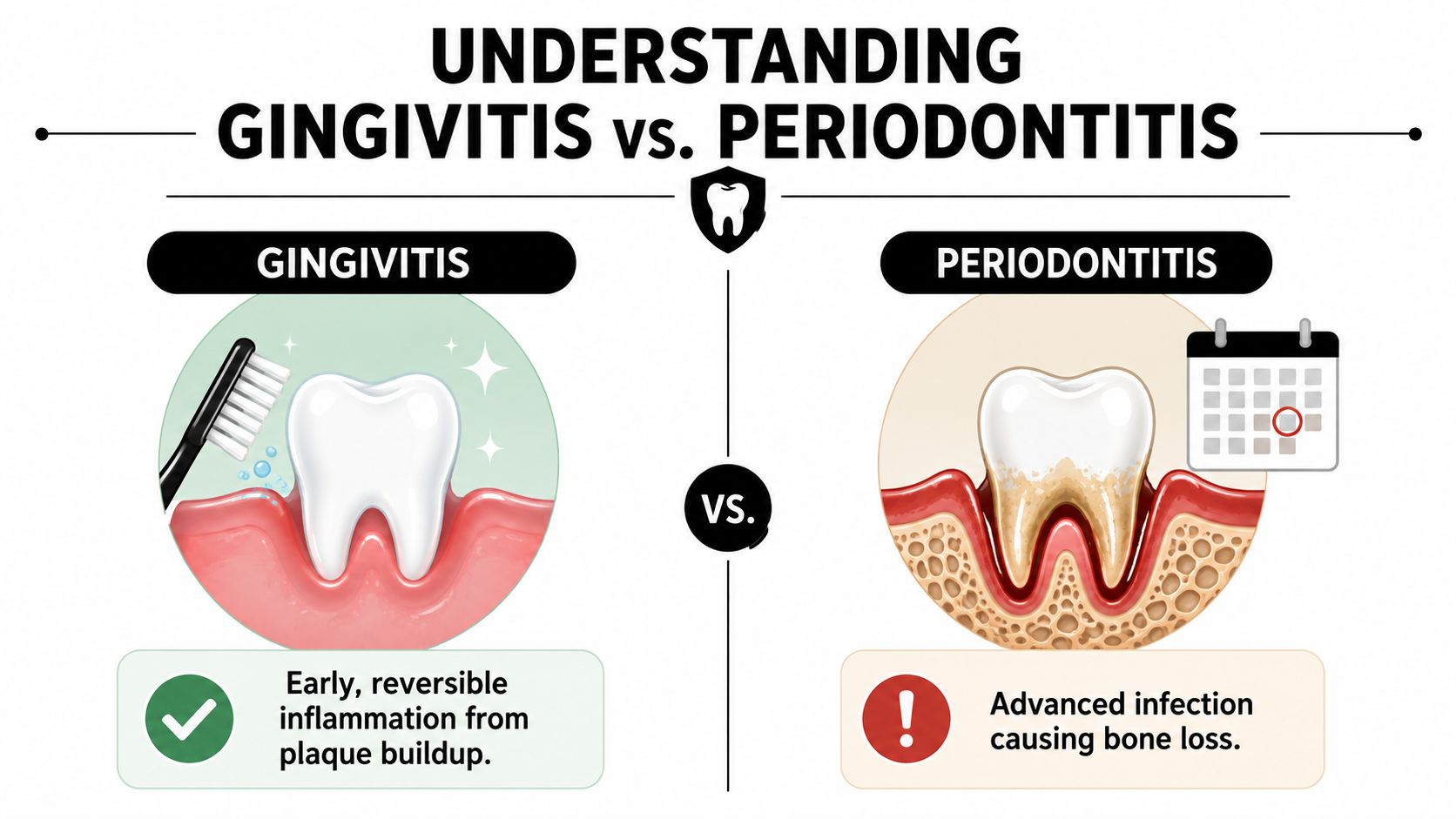
Gingivitis is the earlier stage. Plaque accumulates along the gumline, the tissue becomes inflamed, and the gums may bleed when you brush or floss. Gingivitis doesn't necessarily involve the bone loss seen in periodontitis, which is why timely professional cleaning and better daily plaque removal can reverse it.
Periodontitis reaches deeper. The gum tissue can pull away from the tooth, creating spaces called periodontal pockets. Bacteria and hardened tartar become more difficult to remove, and the infection can affect the bone and connective tissue supporting the teeth.
How pocket measurements guide treatment
Healthy periodontal pockets are usually 1 to 3 mm deep, according to Mayo Clinic's periodontitis diagnosis and treatment information. Pockets deeper than 4 mm may indicate periodontitis, and pockets deeper than 5 mm generally can't be cleaned effectively with routine home care (Mayo Clinic).
During a new patient exam, the dentist measures around the teeth with a periodontal probe. The clinician also looks for bleeding, recession, tooth mobility, plaque, tartar, and changes in the gumline. Dental x-rays help show whether bone levels have been affected, while a visual examination adds information that pocket measurements alone can't provide.
Symptoms patients commonly notice
Some people notice obvious changes, while others have little discomfort. Contact a dentist if you have:
- Bleeding gums: Especially bleeding that occurs repeatedly during brushing or flossing.
- Persistent bad breath: Odor that returns despite brushing and mouthwash can signal bacterial buildup.
- Receding gums: Teeth may appear longer, and exposed roots can become sensitive.
- Tender or swollen tissue: Inflamed gums may feel sore or look darker than usual.
- Loose or shifting teeth: This can indicate compromised supporting structures and needs prompt evaluation.
A pocket measurement doesn't determine the entire treatment plan by itself. The dentist considers the pattern of disease, bone support, bleeding, risk factors, and how well you can maintain the area at home.
Evidence-Based Treatment Options by Disease Stage
Treatment works best when each step addresses the problem that the previous step cannot solve. A patient with gingivitis may need a different plan from someone with deep pockets, bone loss, or an acute periodontal infection.
Early inflammation
For gingivitis, treatment commonly focuses on removing plaque and tartar professionally, then improving daily brushing and interdental cleaning. A soft-bristle toothbrush, careful attention to the gumline, and a technique suited to your mouth can make home care more effective. Your dentist or hygienist may also recommend an antimicrobial rinse when it fits your needs.
Periodontitis without surgery
When pockets are deeper and tartar has formed below the gumline, the usual next step is scaling and root planing. This deep cleaning removes plaque and tartar from root surfaces and smooths rough areas so bacteria have fewer places to attach. The American Dental Association describes scaling and root planing and the follow-up measurements used to evaluate healing.
You can learn more about the procedure through gum health, scaling, and root planing care. The dentist may divide treatment into areas of the mouth, use local anesthetic, and reassess pocket depths after healing.
Advanced procedures
Medication may be placed under the gums or prescribed in selected situations. If deep pockets remain, periodontal surgery can provide access to root surfaces that non-surgical treatment can't adequately reach. Evidence syntheses report that flap surgery can eliminate 10% to 15% more pockets deeper than 4 mm than mechanical therapy alone (CDC treatment overview).
Some bone defects are suitable for regenerative treatment. Guided tissue regeneration or enamel matrix derivative can produce more than 4 mm of attachment gain twice as often as flap surgery alone in appropriate defects (CDC treatment overview). That doesn't mean regeneration is appropriate for every patient. Defect shape, infection control, tissue quality, and maintenance all influence the decision.
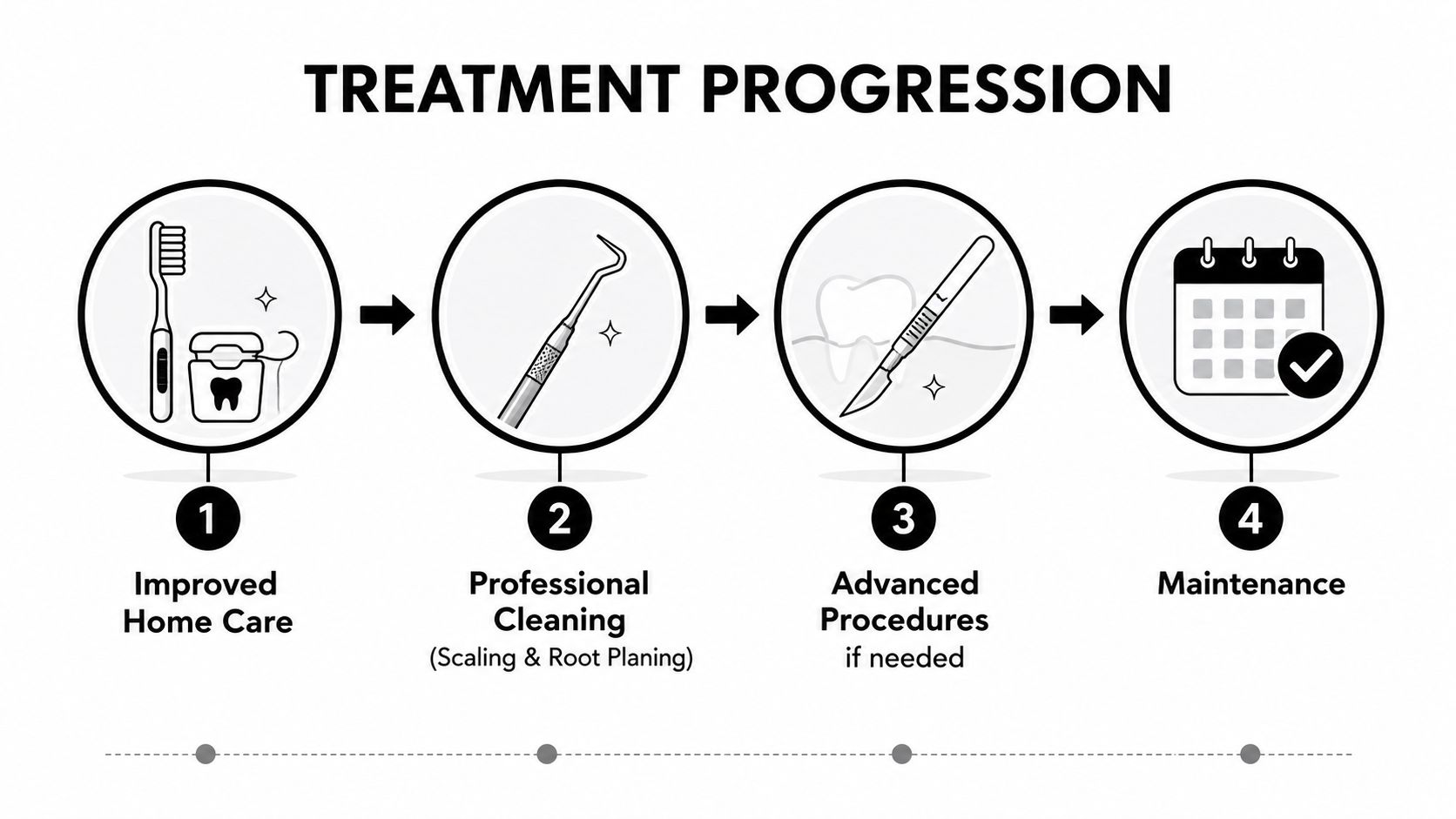
The following video offers a visual explanation of how periodontal care can progress from initial treatment to ongoing support.
The Truth About Antibiotics and Gum Disease
Many patients ask whether an antibiotic can clear gum disease by itself. Usually, it can't. Periodontal disease is driven by plaque and tartar communities attached to teeth and root surfaces, so mechanical infection control remains the foundation of treatment.
Recent guideline summaries identify scaling and root planing as the strongly recommended initial treatment for chronic periodontitis, while routine systemic antibiotics aren't recommended for standard care (clinical practice guideline summary). Removing the deposits that support bacteria addresses the local cause more directly than taking medication without cleaning the affected surfaces.
When medication may have a role
A dentist may consider local or systemic medication when the clinical situation supports it. Examples include disease that doesn't respond as expected, an acute infection with systemic signs, an immunocompromised patient, or selected severe periodontitis cases. The decision depends on examination findings, medical history, allergies, previous treatment, and the risk of side effects.
Local antimicrobials, such as medication placed directly into a periodontal pocket, may be useful in selected sites. Patients who want to understand one example can review information about Arestin and periodontal treatment, but medication doesn't replace professional debridement or maintenance.
Why restraint matters
Antibiotic resistance is an important concern in dentistry. A recent systematic review of antimicrobial resistance in dentistry reports significant resistance associated with commonly used agents including amoxicillin and metronidazole, while also describing limited or low-quality evidence for routine systemic antibiotics in non-surgical periodontal care.
Antibiotics can be appropriate, but they're an adjunct for selected patients, not a substitute for removing plaque and tartar.
Why Long-Term Maintenance Determines Success
Initial treatment reduces the active burden of disease. Maintenance protects that improvement. Periodontitis can be controlled, but the factors that caused or worsen it, including plaque accumulation, smoking, diabetes, and inconsistent follow-up, may continue to influence the mouth after active treatment ends.
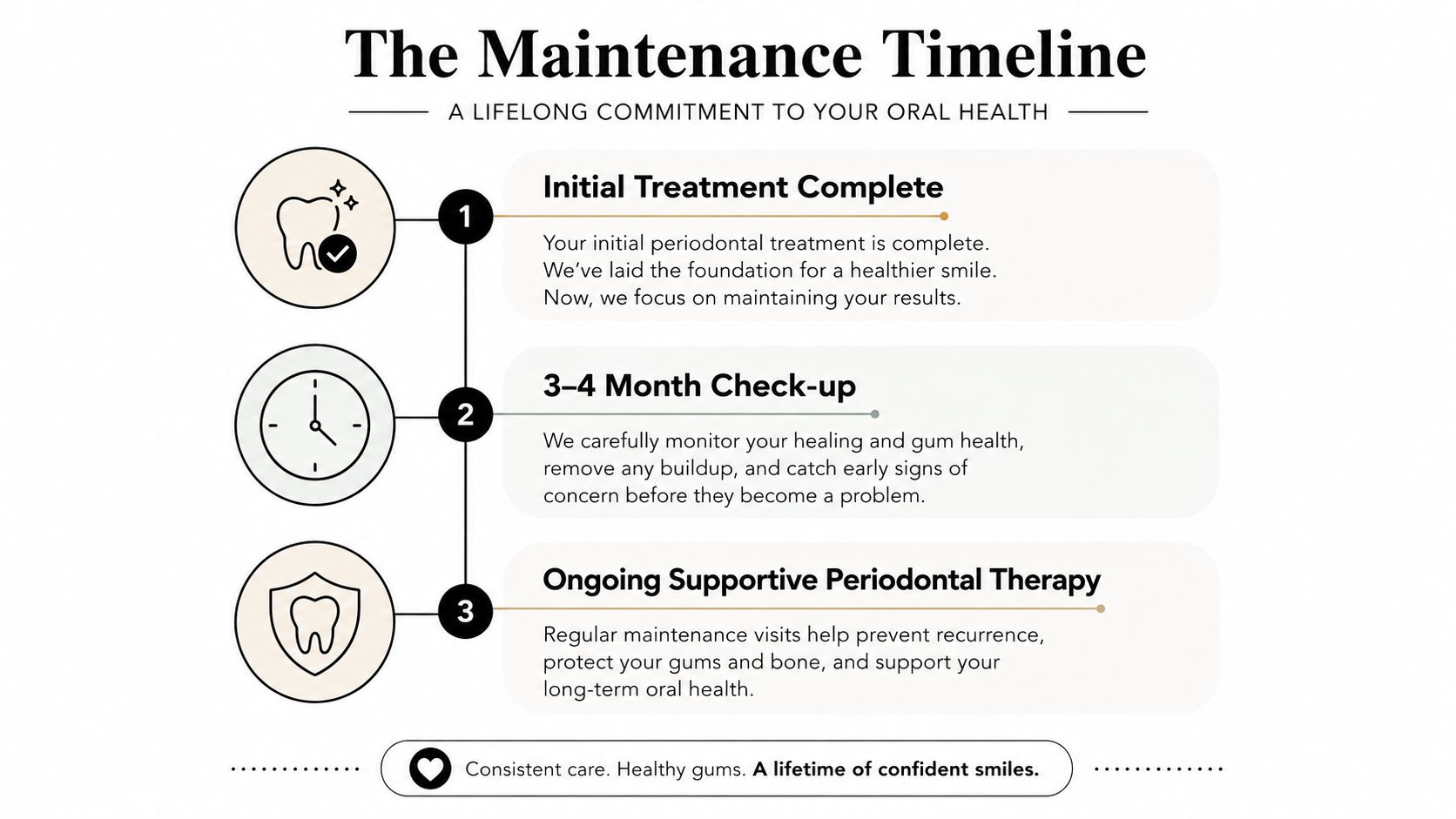
A systematic review and meta-analysis found that supportive periodontal therapy using 3 to 4 month recall intervals and professional mechanical plaque removal with ultrasonic and hand instruments can maintain stable clinical attachment levels in patients with unstable periodontitis (supportive periodontal therapy evidence). The appropriate interval is individualized. Some patients may need visits more often, while others may be scheduled differently as their condition stabilizes.
What maintenance visits accomplish
A periodontal maintenance appointment isn't just a cosmetic polish. The dental team reviews gum measurements, checks for bleeding and inflammation, removes deposits that home care missed, and looks for changes in tooth stability or recession. These visits also create regular opportunities to adjust your brushing and interdental cleaning technique.
Newer adjuncts, including laser-assisted periodontal therapy, may help selected patients, but the overall benefits are usually small in the short term. The periodontal therapy meta-analysis found the most consistent adjunctive effect with Er:YAG lasers, while evidence for diode, Nd:YAG, and antimicrobial photodynamic approaches remained less certain.
The practical trade-off is clear. Novel devices may have a role, but they don't remove the need for thorough debridement, appropriate treatment selection, and consistent recall. A dependable local dental home makes those appointments easier to keep and allows the team to notice changes before they become urgent.
What to Expect at Our Walnut Creek Dental Office
At 1855 San Miguel Dr., Suite 31, Walnut Creek, a first visit begins with listening. You'll discuss bleeding, sensitivity, bad breath, loose teeth, previous dental experiences, medical conditions, medications, and any anxiety that could affect your care.
A new patient exam may include a dental examination, cleaning when clinically appropriate, periodontal charting, and dental x-rays. These findings help determine whether you need routine preventive care, a deeper cleaning, periodontal treatment, or referral for a more advanced procedure. Clear explanations matter because you should understand why a treatment is recommended before deciding how to proceed.
Comfort is part of the plan
Patients who feel nervous about dental care can discuss sedation options, pacing, breaks, and other comfort measures before treatment. The practice provides painless injection techniques and a calm, compassionate environment designed to reduce stress for anxious East Bay patients.
Modern technology supports diagnosis and treatment planning, while meticulous infection control and accessibility accommodations help make visits more predictable. The team can also coordinate care for patients who need restorative dentistry, crowns, bridges, root canals, or tooth extraction when a tooth can't be predictably saved.
Care that follows your goals
Gum health often connects with other treatment decisions. If advanced disease has contributed to tooth loss, dental implants near me may become part of a restorative conversation. Patients also may ask about cosmetic dentistry, teeth whitening, Invisalign, or smile-focused treatment after inflammation is controlled.
William M. Schneider, DDS offers preventive, periodontal, restorative, cosmetic, and implant services, allowing patients to discuss these needs within a coordinated treatment plan. The priority remains preserving healthy function and making care understandable from the first appointment.
Prevention Strategies and Your Next Steps
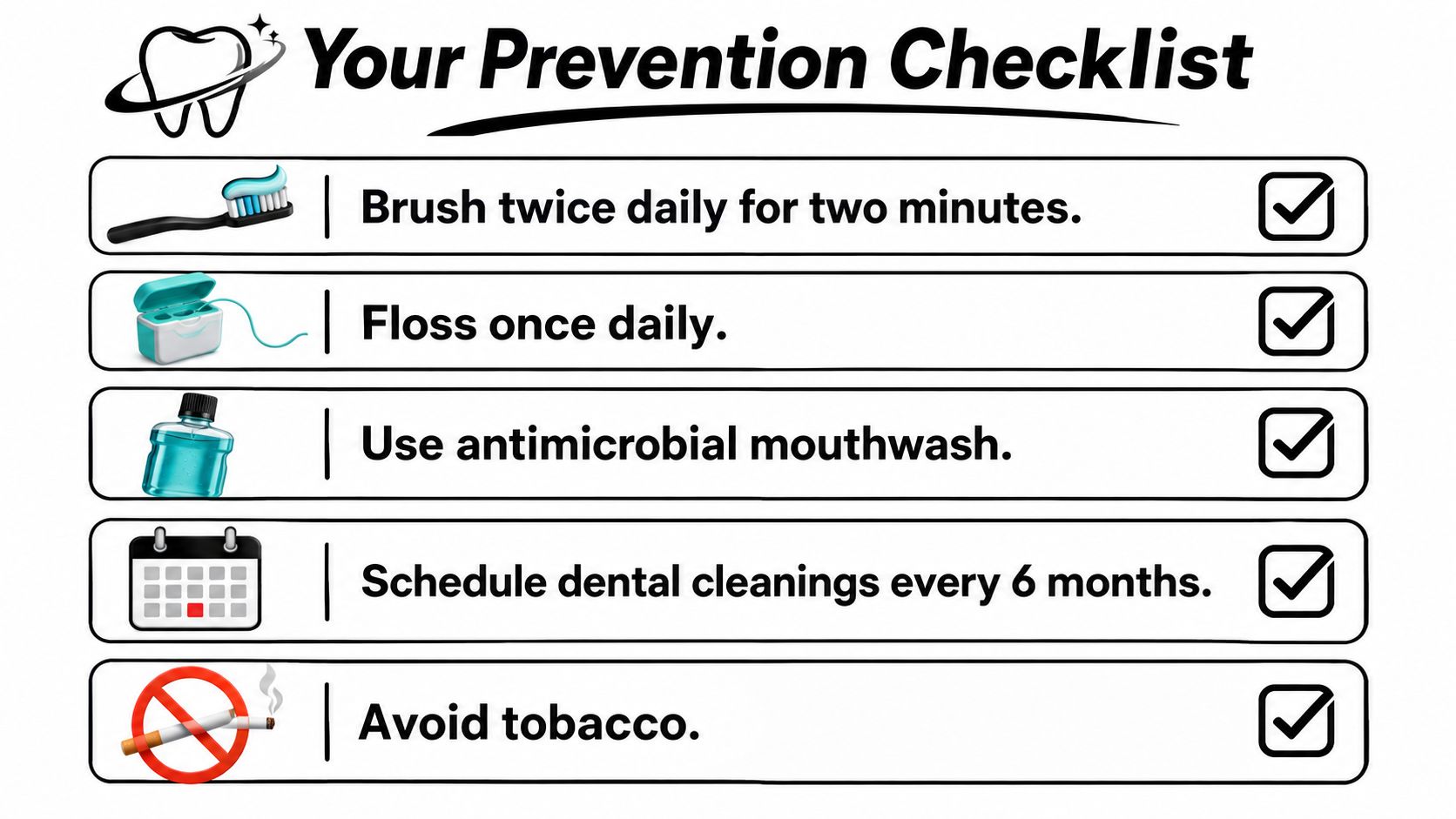
You can lower your risk by making plaque control consistent, not aggressive. Brush the gumline carefully, clean between the teeth each day with floss or another recommended interdental tool, and attend professional cleanings and exams on the schedule your dentist sets. Patients at lower risk are commonly advised to have routine professional cleanings every six months, while periodontal patients may need a more personalized recall plan.
Smoking is a major modifiable risk factor. NIDCR data show total periodontitis affects 62.4% of current smokers and 59.9% of people with diabetes, compared with the overall adult estimate of 42.2% (NIDCR periodontal disease data). These figures support a practical conversation about tobacco cessation and blood sugar management as part of periodontal care.
Don't wait for pain. Gum disease can progress with limited symptoms, and early diagnosis usually gives you more conservative treatment options. If you're searching for a dentist in Walnut Creek, CA, an emergency dentist for swelling or severe pain, or a long-term practice for periodontal maintenance, schedule an evaluation with Dr. Schneider. William M. Schneider, DDS offers periodontal examinations, deep cleaning, restorative care, dental implants, cosmetic dentistry, and sedation-supported treatment when appropriate. Visit William M. Schneider, DDS to request an appointment or consultation and take the next step toward stable gum health.