Nitrous oxide usually wears off in about 15 to 30 minutes, while oral and IV sedation can affect patients for several hours and sometimes require recovery planning for a full day. The right answer to “how long does dental sedation last” depends on which medication you receive and when you're considered safe to drive, work, and make decisions.
You might be sitting in a Walnut Creek waiting room with your phone in hand, searching for answers before a tooth extraction, dental implant procedure, or long restorative appointment. You may be wondering whether you'll feel sleepy after treatment, whether someone needs to drive you home, or whether sedation will interfere with work or childcare.
Those are practical questions, not signs that you're overthinking the visit. Dental anxiety often becomes easier to manage when the schedule is clear. The important distinction is that the time needed for the medication to leave your body isn't always the same as the time needed for full mental and physical recovery.
What Patients Really Want to Know About Dental Sedation Duration
If you are sitting in a Walnut Creek dental chair before an extraction, implant, or lengthy restorative visit, the appointment length may not be your only concern. You may also want to know whether you will feel sleepy afterward, who can drive you home, and when you can safely return to work or childcare.
A useful timeline answers three questions:
- Which sedation option will be used?
- How long will recovery take after the appointment?
- When can normal activities safely resume?
Nitrous oxide usually has the shortest recovery period. Cleveland Clinic reports that patients typically recover within 15 to 30 minutes after the gas is stopped. Many can resume normal activities the same day, including driving once the dental team confirms they are ready (Cleveland Clinic's sedation dentistry guidance).
Oral and IV sedation require more planning. Oral sedation may remain noticeable for several hours, and grogginess can continue after the main relaxing effect fades. Mild oral sedation may last 2 to 4 hours, while moderate oral sedation may last 4 to 6 hours. Residual grogginess can continue for up to 12 hours, according to dental guidance on oral sedation duration (oral sedation duration information).
Drug clearance versus real recovery
“Worn off” does not always mean fully recovered. A sedative may no longer seem obvious during a chairside check, while you still feel foggy, slow, forgetful, or unsteady. Those effects matter if you plan to drive, supervise a child, work, sign documents, or make financial decisions.
Practical rule: Plan around the longer recovery window your dentist gives you, not the earliest moment you feel alert.
With nitrous oxide, oxygen and observation can extend recovery beyond the few minutes needed for the gas to clear. Oral or IV sedation may require a responsible adult and a full-day recovery plan, even when the dental procedure itself is brief.
The Three Main Types of Dental Sedation Explained
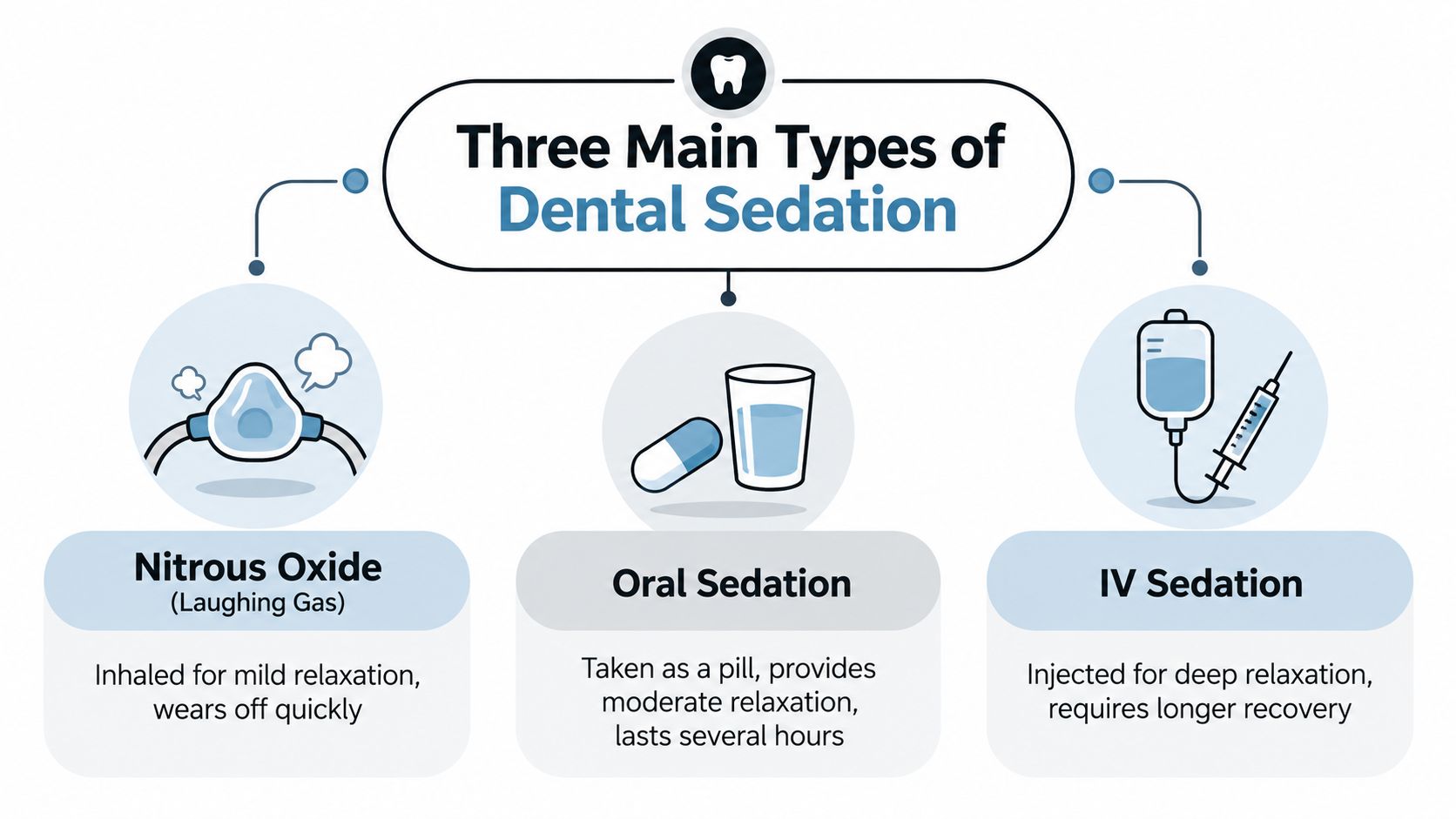
Dental sedation is easier to understand when you view it as a range of relaxation levels rather than one single treatment. The three commonly discussed options are nitrous oxide, oral sedation, and IV sedation.
Nitrous oxide
Nitrous oxide, often called laughing gas, is inhaled through a small nose mask. You remain conscious and can generally communicate with the dental team, but many patients feel calmer and less focused on the sounds, pressure, or length of treatment.
Because it's inhaled and stopped at the end of care, nitrous oxide is often considered for dental cleanings, exams, fillings, injections, and other appointments where mild relaxation is helpful. It may also support patients who feel nervous about dental x-rays or routine preventive care.
Oral sedation
Oral sedation uses a prescribed tablet taken before treatment. The medication can create moderate relaxation and sleepiness, and some patients remember little about the appointment. Because the pill continues working after the procedure, patients need transportation and shouldn't plan to drive themselves.
Dentists may consider oral sedation for significant dental anxiety, multiple fillings, crowns, tooth extraction, or appointments involving several stages of restorative dentistry. The specific medication and dose depend on your health history and treatment plan.
IV sedation
IV sedation delivers medication through a vein, allowing the dental team to adjust the level of sedation during treatment. It can provide deeper relaxation than nitrous oxide and is often considered for longer or more involved procedures, including complex restorative care or dental implants.
IV sedation isn't the same as general anesthesia. General anesthesia produces complete unconsciousness and is typically provided in a hospital or specialized surgical setting. Sedation dentistry generally keeps the patient responsive to some degree, although the depth of relaxation varies.
How Long Each Type of Dental Sedation Actually Lasts
A patient may leave the chair feeling awake while still needing time before it is safe to drive. Sedation has three separate milestones: when it starts, how long the main effect lasts, and when judgment and coordination have returned. The medication can clear before the last milestone.
Nitrous oxide timeline
Nitrous oxide usually begins working within 2 to 5 minutes. The dental sedation duration review describes this rapid onset. Relaxation continues while you breathe the gas and starts to fade when the dental team stops it.
After treatment, the team commonly gives 100% oxygen for 3 to 5 minutes. Nitrous oxide itself may leave the body within 3 to 5 minutes, yet oxygen and brief observation still help confirm that you are ready to leave. Many patients feel recovered within 15 to 30 minutes. That does not guarantee the same timeline for every person, especially if another sedative or a longer procedure is involved.
Oral sedation timeline
Oral sedation begins before treatment, not at the moment you sit in the chair. You swallow a prescribed tablet, then wait while its effect develops. The medication can remain active after the dental work is finished, so the appointment may end before you feel fully normal.
Reported timelines describe mild effects lasting 2 to 4 hours, moderate effects lasting 4 to 6 hours, and residual grogginess lasting up to 12 hours (detailed oral sedation timeline). The sedation recovery guidance advises oral or IV sedation patients to allow recovery within 24 hours and avoid driving during that period. Plan around recovery, not only the length of the procedure.
IV sedation timeline
IV medication reaches the bloodstream directly, so the first effect can appear quickly. Midazolam, a medication commonly used for dental IV sedation, may begin working within 2 to 3 minutes, with sedation lasting 1 to 2 hours (pharmacology and dental sedation duration reference).
That estimate covers the sedative effect, not complete recovery. Drowsiness, slower thinking, or impaired judgment may continue after you feel awake. For that reason, oral and IV sedation commonly require an escort and restrictions for the rest of the day.
Comparing Dental Sedation Options Side by Side
A Walnut Creek patient planning around work, school, or a ride home needs two timelines: how long the sedative feels active and how long judgment may remain affected. The ranges below are typical, not promises. Your dentist sets the plan using your health history, procedure, dose, and response.
| Sedation Type | Onset | Wear-Off | Drive Same Day? | Best For |
|---|---|---|---|---|
| Nitrous oxide | Usually within 2 to 5 minutes | Often within 15 to 30 minutes after the gas stops | Often possible once the dental team confirms recovery | Mild anxiety, cleanings, exams, fillings |
| Oral sedation | Gradual onset before treatment | Commonly several hours, with possible grogginess up to 12 hours | No. Arrange an escort and follow discharge instructions | Moderate anxiety, tooth extraction, restorative care |
| IV sedation | Rapid onset after medication is given | Sedation may last 1 to 2 hours, while coordination and judgment can take longer to return | No. Do not drive after discharge | Deeper relaxation, longer or complex treatment |
Nitrous oxide usually has the shortest recovery and may fit routine care. Oral sedation can outlast the appointment by several hours. IV sedation starts quickly, yet the short drug effect does not mean you are immediately ready to drive.
The key comparison is recovery, not the time spent in the dental chair. Feeling awake is only one checkpoint. You also need steady balance, clear thinking, and an approved ride when required.
Review this guide to IV sedation versus oral sedation before your consultation, then ask which option fits your planned treatment and anxiety level.
What Changes How Long Dental Sedation Lasts for You
Published timelines are useful planning tools, not guarantees. Your recovery can be shorter or longer depending on the medication, dose, procedure, and how your body processes sedatives.
Consider a representative patient. A 70-year-old taking blood pressure medication may feel groggier for longer after oral sedation than a younger patient with no regular medications. That doesn't automatically rule out sedation, but it gives the dentist important information when selecting the medication and planning observation.
Personal factors your dentist reviews
- Age and metabolism: The body may process medication more slowly as health needs change.
- Current medications: Prescription drugs, over-the-counter products, and other sedatives can affect the response.
- Alcohol use: Alcohol can intensify drowsiness and should be avoided around sedation.
- Health history: Liver, kidney, breathing, and other medical concerns may change the safety plan.
- Anxiety level: Severe anxiety can affect how much medication is needed and how a patient experiences recovery.
- Procedure length: A longer appointment may require more medication, which can extend the recovery period.
- Dose delivered: The dental team chooses the amount based on the planned level of relaxation and ongoing monitoring.
Your weight and overall physical condition can also influence medication handling. The most helpful preparation is an accurate health history, including supplements and medications that may seem unrelated to dentistry.
Bring the complete list, not just the medications you think affect your teeth. The dental team needs the full picture to plan sedation responsibly.
A consultation for a tooth extraction, dental implants, or extensive restorative dentistry should include time to discuss your previous reactions to medication, sleep patterns, allergies, and anxiety triggers. Those details help your dentist create a recovery plan that fits your actual life in Walnut Creek and the East Bay.
Aftercare and Recovery for the First 24 Hours
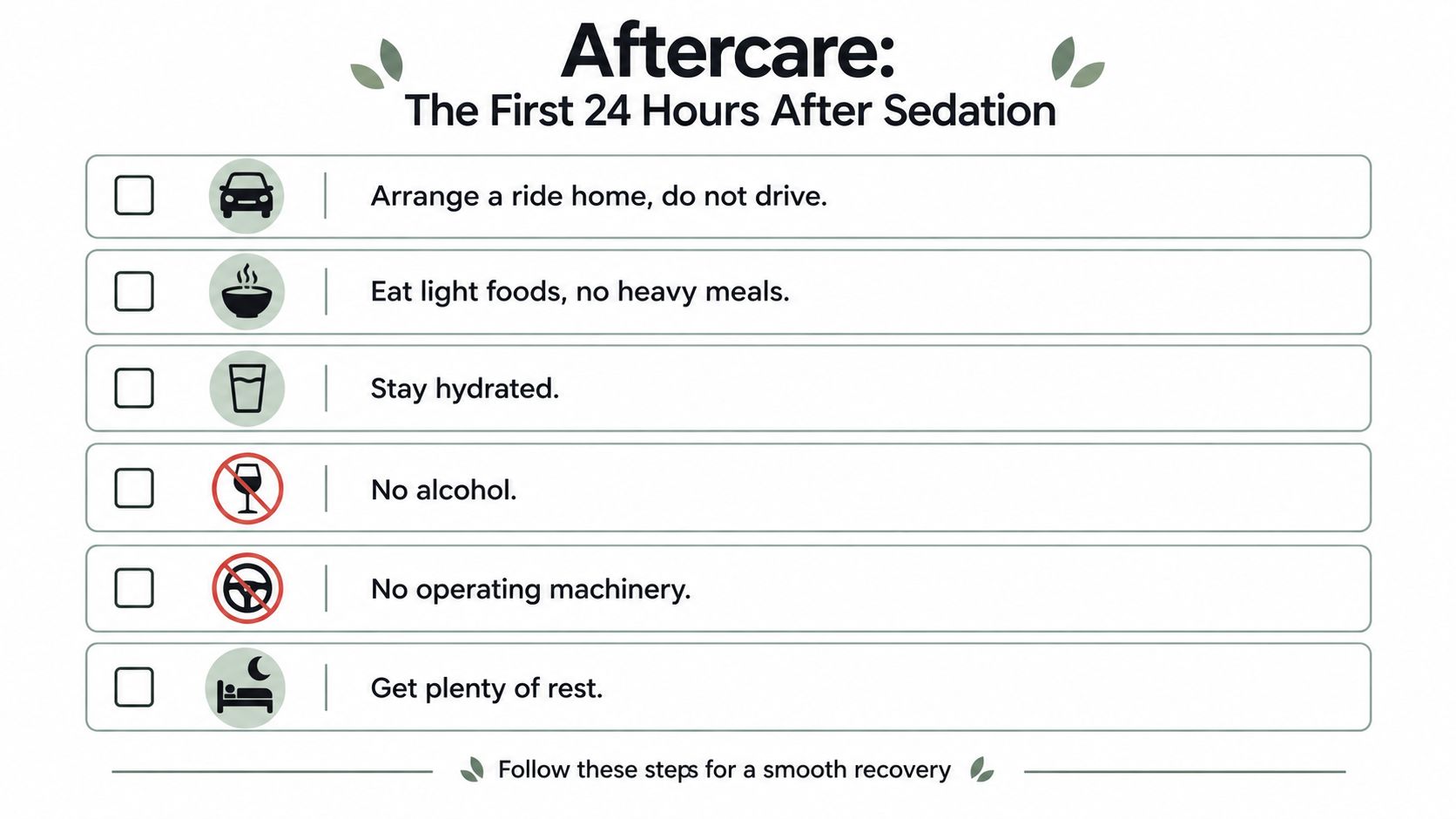
For oral or IV sedation, treat the first day as recovery time even if you feel more awake soon after leaving the office. A written plan helps the person driving you home know what to watch for and prevents you from making last-minute decisions while still drowsy.
Give your escort clear responsibilities
Arrange a responsible adult to drive you home and stay available during the initial recovery period. You shouldn't drive, operate machinery, drink alcohol, or take additional sedating substances unless your dental or medical team specifically tells you to do so.
Keep the evening simple. Rest, drink water, and follow the food instructions given for your procedure. After dental surgery, the treatment site may require soft or light foods, and your dentist's instructions take priority over general advice.
- Transportation: Have your ride confirmed before sedation begins.
- Food: Start with light foods when you're alert and able to tolerate them.
- Hydration: Sip water unless your dental team gives different instructions.
- Activities: Skip machinery, strenuous tasks, and important decisions.
- Observation: Ask your escort to watch for unusual or worsening drowsiness.
- Communication: Keep the Walnut Creek office's contact number available.
The American Dental Association's guidelines emphasize formal recovery oversight for deeper sedation. A qualified dentist providing deep sedation or general anesthesia must remain in the operatory and continuously monitor the patient until recovery criteria are met (ADA sedation and anesthesia guidelines).
Cleared by the Dentist Is Not the Same as Safe to Drive
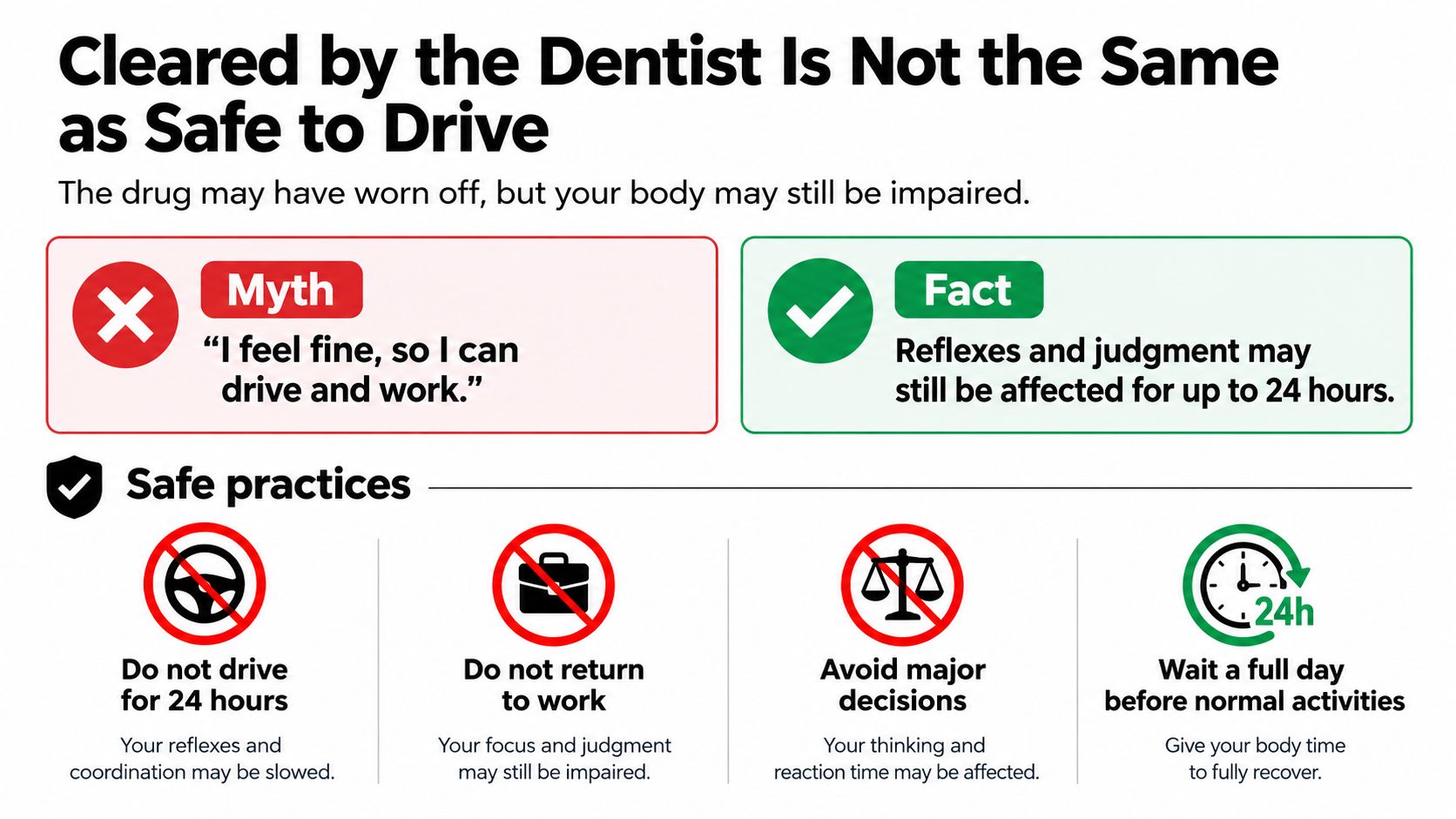
Suppose you leave a Walnut Creek dental office awake and talking clearly. You may still need a ride home because being cleared for discharge means you are stable enough to leave, not that your reaction time and judgment have fully returned.
Oral and IV sedation can affect short-term memory, coordination, and decision-making after the obvious drowsiness fades. Driving through traffic, returning to a demanding job, supervising children alone, or making major decisions requires more reliable function than a brief conversation can show.
A useful way to understand the timeline is to separate two milestones: the medication may be largely cleared from your system, while your brain and reflexes are still recovering. The appointment can feel finished before that recovery is complete. Guidance for oral and IV sedation recommends avoiding driving for 24 hours (medical recovery and driving guidance).
Why self-assessment isn't reliable
Sedation can lower your ability to recognize your own impairment. You might feel normal yet forget discharge instructions, respond slowly, or misjudge an unexpected road situation. Confidence does not confirm that your reflexes are ready.
Plan the recovery period before treatment:
- Arrange transportation before sedation begins.
- Do not drive or operate machinery after oral or IV sedation.
- Postpone work that demands concentration, balance, or quick judgment.
- Follow the written instructions from your dental team.
- Contact the office if drowsiness seems unusual, worsens, or lasts beyond the expected plan.
Accepting help is routine sedation aftercare. It does not reflect your strength or say anything negative about dental anxiety. Treat the 24-hour driving restriction as a safety buffer, not a test you can pass by feeling alert.
What to Expect at a Walnut Creek Sedation Visit
A sedation appointment begins before you sit in the treatment chair. During the consultation, the dental team reviews your medical history, current medications, allergies, prior sedation experiences, and the situations that trigger anxiety. The planned procedure, expected level of relaxation, transportation requirements, and recovery instructions should all be clear before treatment day.
You'll typically arrive with your escort and complete the normal intake process. The team checks your vital signs, reviews the sedation plan again, and confirms that a responsible adult is available to take you home when sedation is used beyond nitrous oxide.
Chairside administration
The delivery method depends on the selected option:
- Nitrous oxide: A small mask rests over your nose while you breathe the gas.
- Oral sedation: You take the prescribed medication according to the dentist's instructions.
- IV sedation: A trained provider places an IV line and adjusts medication while monitoring your response.
Throughout treatment, the dental team observes your comfort and vital signs. The American Dental Association requires continued monitoring until appropriate recovery criteria are met for deeper levels of sedation, as discussed earlier.
After treatment, you rest under observation rather than walking straight from the chair to your car. The team confirms that you meet discharge requirements and explains what your escort should do at home. You can review additional details about how dental sedation works before your consultation.
For local planning, ask the Walnut Creek office about parking, where your escort can wait nearby, and whether same-day evaluation is available for urgent dental problems. The practice can also help coordinate sedation questions around tooth extraction, dental implants, crowns, root canals, cosmetic dentistry, or emergency dental services.
William M. Schneider, DDS offers nitrous oxide, oral sedation, and IV sedation when appropriate for the planned treatment and patient's health history. Visit William M. Schneider, DDS to request a consultation in Walnut Creek, CA and discuss a comfortable recovery plan before your appointment.