Invisalign for Adults: Straightening Teeth Discreetly and Comfortably
For many adults, the idea of straightening their teeth conjures up memories of middle school hallways—awkward metal brackets, colorful rubber bands, and the self-consciousness that came with traditional braces. It’s a common misconception that orthodontics is a rite of passage reserved strictly for adolescence. However, as professional demands increase and the desire for a confident smile grows, more adults are seeking solutions to correct misalignment.
The hesitation often isn’t about the result—a straight, healthy smile is universally desired—but the journey to get there. The prospect of wearing visible metal hardware in a boardroom, during a client presentation, or at a social gathering is a significant barrier for many professionals.
Enter Invisalign. This modern orthodontic treatment has revolutionized how adults approach teeth straightening. By using a series of clear, removable aligners, Invisalign offers a way to achieve the smile you’ve always wanted without the aesthetic drawbacks of traditional braces. It is a solution designed for the modern lifestyle: discreet, comfortable, and effective.
In this comprehensive guide, we will explore why Invisalign has become the premier choice for adult orthodontics, how the process works, and why practices like William Schneider DDS Inc. are championing this technology for personalized dental care.
Why Adults Are Choosing Clear Aligners
The shift toward clear aligners isn’t just a trend; it represents a fundamental change in orthodontic priorities. Adults have different needs than teenagers. While teens might choose neon-green bands for their braces, adults typically prioritize aesthetics, time management, and comfort.

Invisalign Dentist
The Professional Advantage
In the professional world, appearance can influence confidence. Whether you are leading a team, interviewing for a new position, or managing client relationships, you want to focus on your expertise, not your dental appliances. Invisalign aligners are virtually invisible. Most people won’t even notice you are wearing them unless you point it out. This “stealth” mode allows you to improve your smile without feeling self-conscious in professional settings.
Dietary Freedom
One of the biggest complaints about metal braces is the laundry list of forbidden foods. Popcorn, nuts, sticky candies, and even biting into a whole apple become risky activities that could snap a wire or dislodge a bracket. Because Invisalign aligners are removable, there are zero dietary restrictions. You simply take them out to eat, enjoy whatever food you like, brush your teeth, and pop them back in. This flexibility is a game-changer for adults who enjoy dining out or have specific dietary habits.
Hygiene and Oral Health
Maintaining oral hygiene with traditional braces requires threading floss through wires and careful brushing around brackets—a time-consuming process that, if neglected, can lead to plaque buildup and staining. With Invisalign, you remove the aligners to brush and floss normally. This makes it significantly easier to maintain optimal gum health and fresh breath throughout your treatment duration.
The William Schneider DDS Inc. Approach
Choosing the right provider is just as important as choosing the right treatment. At William Schneider DDS Inc., the philosophy centers on personalized care that recognizes the unique dental history and goals of every patient.
The team understands that adult patients often have complex dental histories, which may include crowns, fillings, or previous orthodontic work. A generic, mail-order aligner service cannot account for these nuances. William Schneider DDS Inc. combines advanced imaging technology with clinical expertise to ensure that your Invisalign plan is safe, effective, and tailored specifically to your facial structure.
When you choose a professional dental practice over DIY solutions, you gain the safety net of regular monitoring. The team at William Schneider DDS Inc. tracks your progress at every step, making necessary adjustments to ensure the teeth are moving correctly and that the bite remains healthy. This level of oversight prevents complications that can arise from unsupervised tooth movement.
Your Journey: The Step-by-Step Invisalign Process
Understanding the roadmap to your new smile can alleviate anxiety about starting treatment. Here is what you can expect when you begin your Invisalign journey.
The Consultation
Everything begins with a conversation. During your initial visit to William Schneider DDS Inc., the dentist will examine your teeth to determine if you are a good candidate for Invisalign. While most mild to moderate alignment issues can be treated, complex bite problems might require different interventions. This is also the time to discuss your goals—whether you want to close a gap, fix overcrowding, or correct an overbite.
Digital Scanning and Planning
Gone are the days of goopy, uncomfortable physical impressions that make you gag. Using an iTero or similar digital scanner, the dentist creates a precise 3D digital image of your teeth.
This data is used to map out a precise treatment plan. You will actually be able to see a digital representation of how your teeth will move stage by stage and visualize the projected final result before you even commit to the treatment. This technology takes the guesswork out of the process.
Receiving Your Aligners
Once your custom aligners are fabricated, you will return to the office to pick up your first few sets. Your dentist will ensure they fit correctly and may place small, tooth-colored composite attachments on specific teeth. These “buttons” act as handles for the aligners to grip, helping to exert the necessary pressure to rotate or move stubborn teeth. They are subtle and usually unnoticeable.
Wearing Your Aligners
This is where your discipline comes in. For the treatment to work, you must wear your aligners for 20 to 22 hours a day. You will switch to a new set of aligners approximately every one to two weeks, as directed by your dentist. Each new set is slightly different, gradually shifting your teeth into the desired position.
Regular Check-ups
You will visit William Schneider DDS Inc. roughly every six to eight weeks. These appointments are generally short—just a quick check to ensure tracking is on schedule and to pick up your next batch of aligners.
Refinement and Retention
Once you have finished your series of aligners, your dentist will assess the final position. sometimes, a few “refinement” aligners are needed to perfect the tiniest details. After treatment is complete, you will transition to retainers. Wearing a retainer at night is crucial to prevent teeth from shifting back to their original positions.
Comparing Comfort: Invisalign vs. Traditional Braces
While the end goal of braces and Invisalign is the same, the daily experience is vastly different.
Pain and Discomfort
Traditional braces work by tightening wires, which can cause significant soreness for days after an adjustment. The metal brackets can also irritate the soft tissues of the cheeks and lips, often requiring orthodontic wax for relief.
Invisalign moves teeth using constant, gentle pressure. While it is normal to feel some pressure or minor sensitivity for the first day or two of a new tray, it is generally described as much milder than the pain associated with tightening braces. Furthermore, the aligners are made of smooth, medical-grade plastic (SmartTrack material), eliminating the risk of cuts or abrasion on the inside of the mouth.
Emergencies
With metal braces, a broken wire or a loose bracket constitutes an orthodontic emergency that requires an immediate office visit to fix. With Invisalign, there are no wires to poke you and no brackets to break off. If you lose an aligner, you simply call your dentist, who may instruct you to move to the next tray or wear the previous one until a replacement arrives.
Visibility
We have touched on this, but it bears repeating. Traditional braces are a prominent facial feature. Ceramic braces offer a less visible alternative, but they are still noticeable and can stain. Invisalign offers near-invisibility, allowing your natural smile to show through even during treatment.
Maintenance Tips for Crystal Clear Aligners
To keep your aligners invisible and odorless, you need to take care of them. Neglecting aligner hygiene can lead to cloudy plastic and trapped bacteria, which is bad for your teeth and your breath.
- Rinse Every Time: Whenever you take your aligners out, rinse them with cool water. This prevents dried saliva and plaque from creating a breeding ground for bacteria.
- Avoid Hot Water: The plastic used for aligners is heat-sensitive. Never rinse them in hot water or drink hot beverages like tea or coffee while wearing them, as this can warp the plastic and ruin the fit.
- Soak Daily: Use Invisalign cleaning crystals or a denture cleaner to soak your trays once a day. This keeps them looking clear and smelling fresh.
- Brush Before You Wear: Always brush and floss your teeth after eating and before putting your aligners back in. If you don’t, you are essentially sealing food particles and sugar directly against your tooth enamel, which creates a perfect environment for cavities.
- Keep Them Safe: When the aligners are not in your mouth, they should be in their case. Wrapping them in a napkin during lunch is the number one way aligners get accidentally thrown in the trash!
Addressing Common Concerns
If you are considering Invisalign, you likely have a few practical questions. Let’s address the most common concerns adults have.
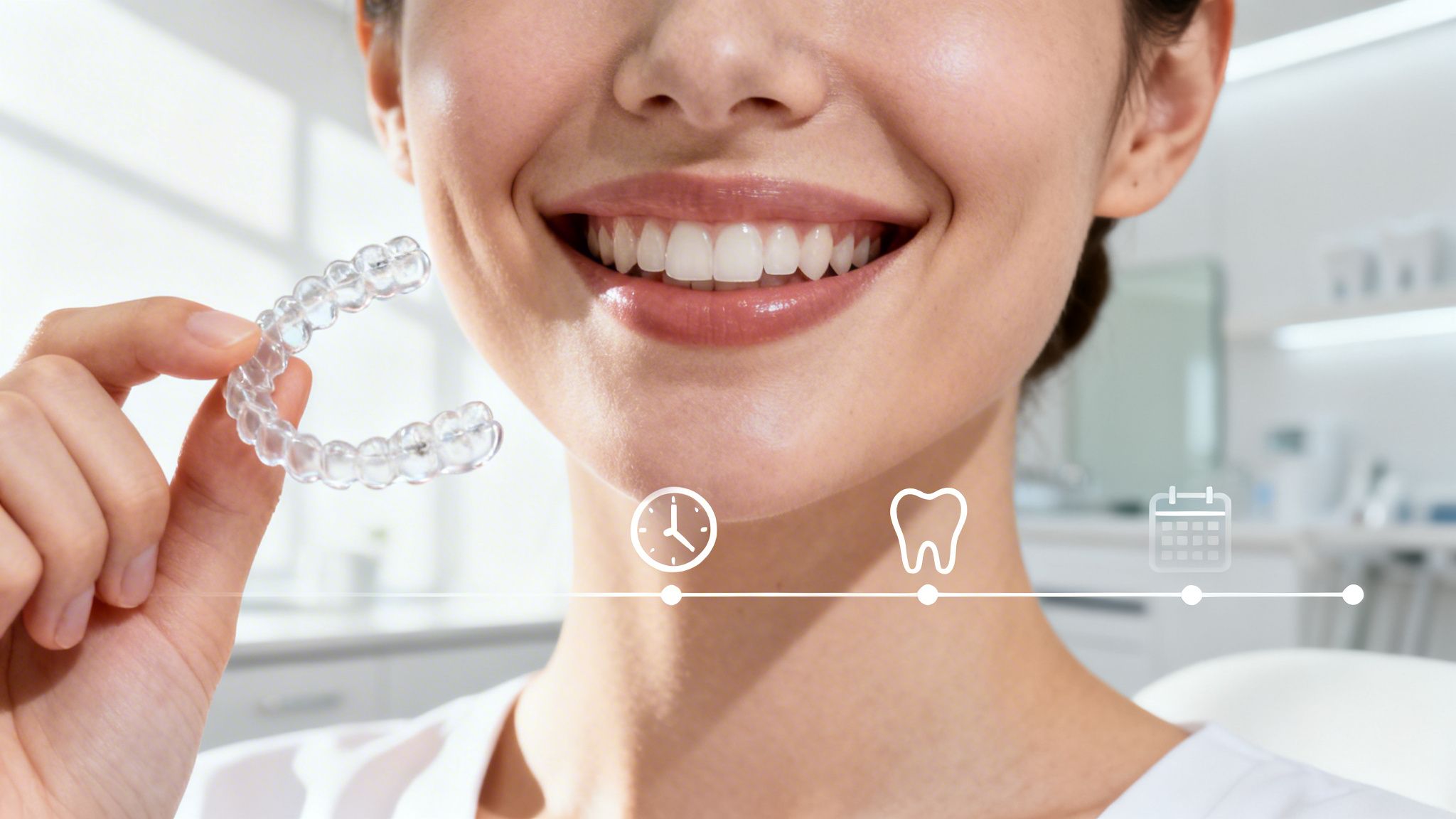
Invisalign
Is it more expensive than braces?
Historically, Invisalign was significantly more expensive than traditional braces. However, as the technology has matured, the cost gap has narrowed. In many cases, the cost is comparable to clear (ceramic) braces. The exact price depends on the complexity of your case and the duration of treatment. Many dental insurance plans now cover a portion of Invisalign treatment just as they would for traditional orthodontics, and William Schneider DDS Inc. can help you navigate financing options.
How long does it take?
The average treatment time for adults is between 12 and 18 months, though some minor corrections can be completed in as little as six months. Because Invisalign often moves teeth more efficiently than braces for certain types of movements, treatment times can sometimes be shorter than traditional methods.
Will it affect my speech?
When you first put in a new aligner, you might notice a slight lisp for a day or two as your tongue adjusts to the plastic. This is temporary. Most patients adapt very quickly, and their speech returns to normal within a few days.
Can I drink coffee or wine?
You can, but not with the aligners in. Dark liquids like coffee, red wine, and tea can stain the plastic, making your “invisible” aligners look yellow or dingy. Additionally, sugary drinks can seep inside the aligners and cause decay. The rule of thumb is: if it’s not water, take the aligners out.
Investing in Yourself
Straightening your teeth as an adult is an investment in your health and self-esteem. Not only does correcting your bite help prevent long-term issues like periodontal disease and enamel wear, but it also boosts your confidence in social and professional settings.
Invisalign offers a discreet and efficient way to achieve a smile you love without the hassle of traditional metal braces. Experienced providers like William Schneider DDS Inc. combine cutting-edge technology with a patient-centered approach to make the process as comfortable as possible.
If you’ve been putting off fixing your teeth, now is the time to act. Contact William Schneider DDS Inc. today to book your consultation and take the first step toward the confident smile you deserve.
William M. Schneider, D.D.S.
https://goo.gl/maps/d3H8ow2vWAC4qgZ26
1855 San Miguel Dr STE 31, Walnut Creek, CA 94596, United States
(925) 935-2700
www.wcfamilydentist.com