If you're looking for a "dentist near me" because you're worried about sensitive teeth or a dulling smile, you might be dealing with weakened tooth enamel. Here in Walnut Creek, CA, we help patients understand that strengthening your enamel is a two-part process. It's about reducing the acid exposure your teeth face and actively helping them remineralize with the right care and habits. Making smart food choices, improving your brushing routine, and partnering with a trusted local dentist can give your smile the protection it deserves.
What Is Tooth Enamel and Why It Weakens
Think of your tooth enamel as your smile's personal bodyguard. It’s the incredibly hard, semi-translucent outer layer of your teeth—in fact, it's the hardest substance in the entire human body. Its main job is to shield the sensitive inner parts of your teeth from daily wear, hot and cold temperatures, and damaging acids.
When you visit us for a new patient exam here at our Walnut Creek office, we often explain that enamel isn't invincible. It’s a mineral-based shield, and many of our patients are surprised to learn how common, everyday habits can slowly wear it down in a process called enamel erosion. This is a common concern we address for patients seeking cosmetic dentistry or restorative dentistry solutions.
The Science Behind a Strong Smile
Your enamel gets its strength from a dense, crystalline mineral structure. This structure is always in a state of flux, constantly undergoing two natural processes:
- Demineralization: This is when minerals are stripped away from the enamel. It happens every time acids attack your teeth—whether they come directly from acidic foods and drinks (like soda, wine, or citrus) or from bacteria feasting on sugars and starches in your mouth.
- Remineralization: This is the natural repair process. Your own saliva is the hero here, delivering essential minerals like calcium and phosphate back to your teeth. Fluoride from sources like toothpaste and tap water also plays a crucial role in rebuilding and strengthening the enamel.
Problems arise when demineralization happens faster than your body can keep up with remineralization. Over time, this imbalance weakens your enamel, leading to sensitivity, a yellowish appearance, and a much higher risk for cavities and even the need for a tooth extraction. Since your body can't grow new enamel once it's gone for good, protecting what you have is everything.
Enamel is made of about 97% hydroxyapatite, a crystal-like mineral that gives teeth their amazing durability. But even this tough shield is vulnerable to acid, which can cause permanent damage and decay.
Exciting new research is exploring powerful alternatives for enamel repair. One significant study found that toothpaste containing synthetic hydroxyapatite—an artificial version of enamel's own mineral—was even more effective at remineralizing teeth than some fluoride products. This is especially promising for people with developmental enamel defects.
To learn more about these modern dental advancements, you can explore the findings of this research on synthetic hydroxyapatite. Staying current on these developments is something we are passionate about, allowing our team to provide the very best dental care for our patients here in Walnut Creek.
How Your Diet Impacts Enamel Health
It’s easy to hear “avoid sugar” and tune out, but what you eat and drink every single day has a massive impact on your enamel’s strength. Thinking about your diet isn't just about preventing cavities; it's about actively building a stronger, more resilient smile. This is a core part of the dental care philosophy we share with our patients here in Walnut Creek, CA.
Every time you sip a soda, enjoy a glass of wine, or even eat citrus fruits, your teeth face what we call an "acid attack." This acid temporarily softens your tooth enamel, leaving it vulnerable to wear and tear from brushing or chewing.
Foods That Fight Back Enamel Erosion
The good news is that your diet can also be your enamel’s best friend. Certain foods can actively help your enamel remineralize, which is just a fancy way of saying they help it rebuild and get stronger. Think of these foods as your enamel's personal support system.
To give your enamel the minerals it needs to stay strong, try to include more of these in your diet:
- Dairy Products: Milk, cheese, and yogurt are loaded with calcium and phosphorus—the literal building blocks of your enamel.
- Leafy Greens: Spinach and kale are fantastic sources of calcium, helping to fortify your teeth and bones.
- Lean Proteins: Foods like chicken, fish, and eggs provide the phosphorus your enamel needs to stay healthy and hard.
- Crunchy Vegetables: Celery and carrots are great because all that chewing stimulates saliva, your body’s natural rinse cycle that neutralizes damaging acids.
This infographic breaks down why your enamel is so incredible and worth protecting.
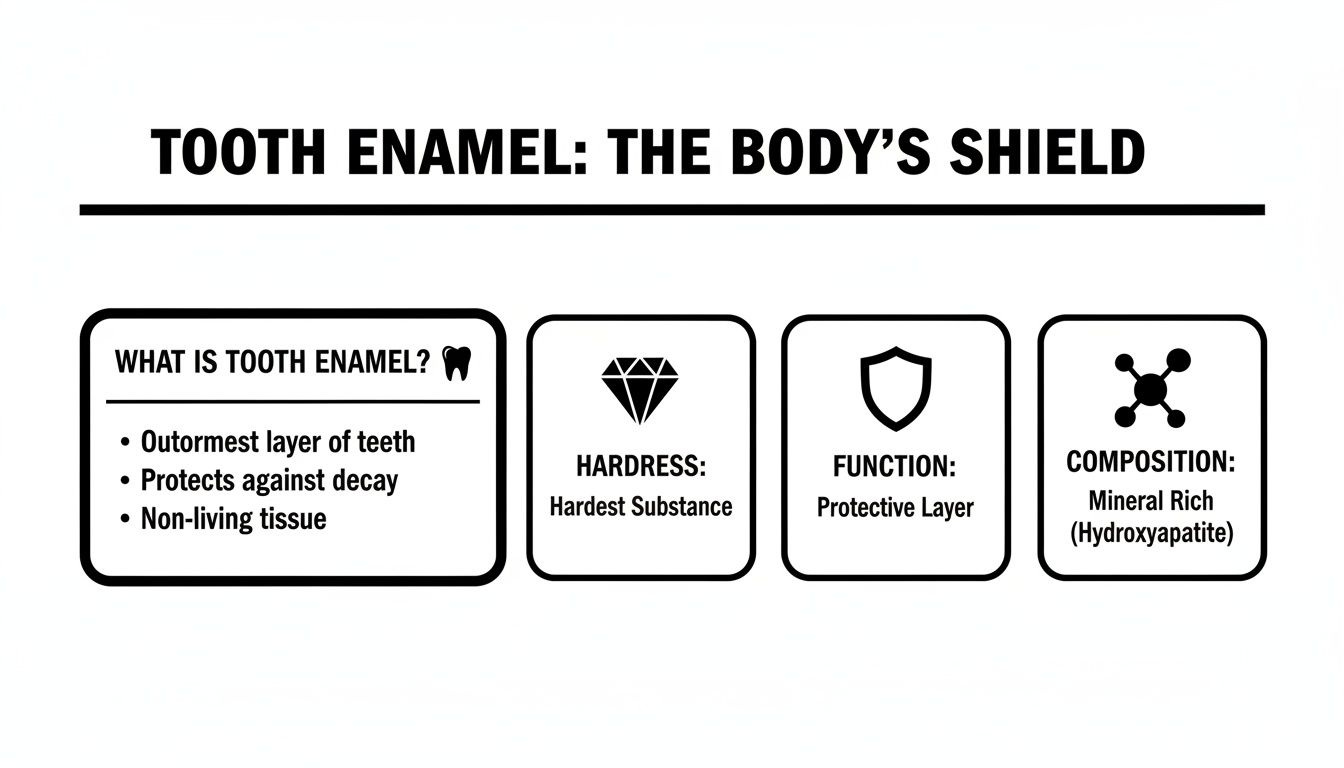
As the image shows, your enamel isn't just a shell; it's the hardest substance in your body and a mineral-rich shield for your teeth. That’s why a diet packed with minerals is so crucial.
A Quick Guide to Enamel-Friendly Eating
Making smart food swaps is one of the easiest ways to protect your teeth. Here’s a simple comparison to help guide your choices at the grocery store and in the kitchen.
| Choose These (Enamel-Strengthening) | Limit These (Enamel-Damaging) |
|---|---|
| Water, Milk, Unsweetened Green Tea | Soda, Sports Drinks, Fruit Juice |
| Cheese, Plain Yogurt, Nuts | Candy, Cookies, Sugary Cereals |
| Leafy Greens (Spinach, Kale) | Citrus Fruits (in excess) |
| Lean Meats, Fish, Eggs | Starchy Foods (Chips, White Bread) |
| Crunchy Veggies (Carrots, Celery) | Sticky Sweets, Dried Fruit |
By focusing more on the foods in the left column, you’re actively giving your teeth the nutrients they need to defend against the occasional treats from the right column.
Smart Strategies for Daily Protection
Just eating the right foods isn’t the whole story—timing and technique are just as important. For instance, when you need a quick bite on the go, seeking out healthy options like snack bars without added sugar can make a huge difference compared to grabbing a sugary pastry.
Here are a few practical tips we give our Walnut Creek patients that you can start using today:
- Rinse After Acid: Finished your morning orange juice or coffee? Swish your mouth with plain water right after. This simple step helps neutralize acid and washes it away before it can do much harm.
- Wait to Brush: This one feels counterintuitive, but it's critical. Brushing on acid-softened enamel can actually scrub it away. Always wait at least 30 to 60 minutes after an acidic meal or drink before brushing.
- Use a Straw: When you do indulge in a sugary or acidic drink, a straw is your best friend. It helps the liquid bypass your front teeth, minimizing direct contact and protecting your smile.
Remember, your saliva is your best natural defense. It contains the exact minerals—calcium and phosphate—that your enamel needs to repair itself after an acid attack. Chewing sugar-free gum can boost saliva production and aid this natural process.
Making these small adjustments can dramatically reduce the daily wear and tear on your enamel. By pairing a supportive diet with smart habits, you empower your body’s natural ability to maintain a strong, healthy smile. For even more tips on building a proactive defense, check out our guide on how to prevent tooth decay naturally.
Upgrade Your Oral Hygiene Routine to Defend Your Enamel
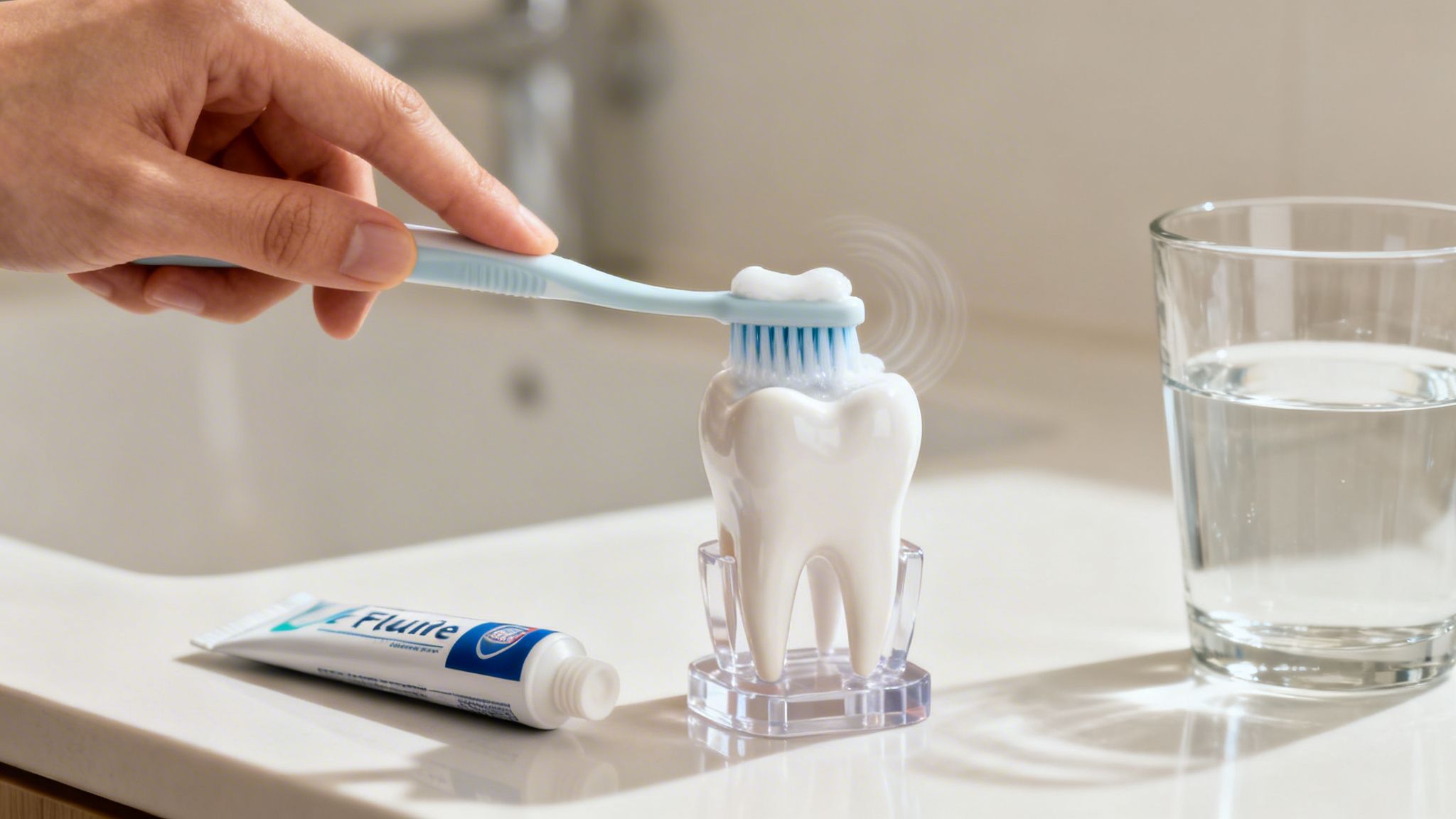
We all know brushing and flossing are important, but how you do it matters just as much as if you do it. Many well-intentioned patients come into our Walnut Creek practice unknowingly weakening their own enamel with a few common mistakes. Our dental team provides the gentle, expert dental care you need to protect your smile.
Brushing too aggressively or at the wrong time can cause real, lasting damage. For instance, after you enjoy something acidic—like citrus fruit or soda—your enamel temporarily softens. Brushing right away is like scrubbing a wet painting; you can literally wear away the very surface you're trying to protect.
The Right Technique for Stronger Teeth
Effective brushing isn't about force. It’s all about a gentle technique and smart timing to remove plaque without abrading your enamel. Here are the core principles our hygienists teach every day during our cleaning and exams:
Switch to a Soft-Bristled Brush: This is non-negotiable for enamel health. Hard or even medium bristles can scratch and erode your enamel over time, especially if you have any gum recession.
Wait Before You Brush: After eating or drinking anything acidic, give your mouth at least 30 to 60 minutes before you reach for your toothbrush. This gives your saliva a chance to neutralize the acids and begin hardening your enamel again.
Brush Gently: You're massaging your teeth and gums, not scrubbing a floor. Use small, gentle, circular motions. Aggressive back-and-forth sawing is a fast track to enamel wear and receding gums.
Getting these simple rules down is a huge step in preventing unnecessary wear and learning how to strengthen your tooth enamel naturally.
The Critical Role of Fluoride
Beyond your technique, the ingredients in your toothpaste are incredibly important. Fluoride is a natural mineral that’s been scientifically proven time and again to fortify teeth against acid attacks. It actually integrates into your enamel, making the entire structure stronger and more resistant to decay.
While daily fluoride toothpaste is essential, professional fluoride treatments are a cornerstone of modern enamel protection. These in-office applications use a concentrated dose to actively rebuild microscopic weak spots caused by daily acid exposure—a process called remineralization. The treatments we provide are significantly more powerful than anything you can buy over the counter, offering superior protection for those at higher risk.
At our dental practice, we see effective home care as a partnership. We provide the guidance and expertise, and you put it into practice. Mastering your daily routine is one of the most impactful things you can do for your long-term oral health.
Combining these gentle techniques with the right products creates a powerful defense against enamel erosion. To dive deeper into building a rock-solid daily regimen, check out our guide on oral hygiene best practices.
Lifestyle Habits That Affect Your Smile
Learning how to strengthen tooth enamel goes beyond your diet and brushing routine. Certain lifestyle factors and health conditions can silently wear down your teeth, and getting a handle on them is a critical part of protecting your smile.
For many of our patients here in Walnut Creek, these connections aren't always obvious. Issues like chronic acid reflux or teeth grinding often fly under the radar until the damage is done. This is why it’s so important to bring any concerns to our attention during your visit, whether it's for a routine cleaning or an emergency dentist appointment.
The Hidden Impact of Acid Reflux
Chronic acid reflux, or GERD, can be particularly destructive to tooth enamel. When stomach acid makes its way into your mouth—especially while you’re sleeping—it’s like giving your teeth a continuous, highly corrosive acid bath. This can strip away enamel fast, often without you even realizing what's happening.
If you struggle with GERD, the first and most important step is to work with your doctor to manage the condition. A few simple lifestyle tweaks can also provide a line of defense for your teeth:
- Elevate Your Head: Sleeping with your head propped up can help gravity keep stomach acid where it belongs.
- Time Your Meals: Try to avoid large meals or anything highly acidic within three hours of going to bed. This helps reduce the chances of nighttime reflux.
- Rinse in the Morning: Gently swishing with water first thing in the morning is a great way to neutralize any acid that may have crept up overnight.
The Damaging Effects of Teeth Grinding
Bruxism is the clinical term for teeth grinding or clenching, and it puts an incredible amount of force on your teeth. This constant pressure can lead to tiny fractures and chips, weakening the enamel and leaving your teeth vulnerable to decay and sensitivity. Often, it's a subconscious response to stress or even a sign of a sleep disorder.
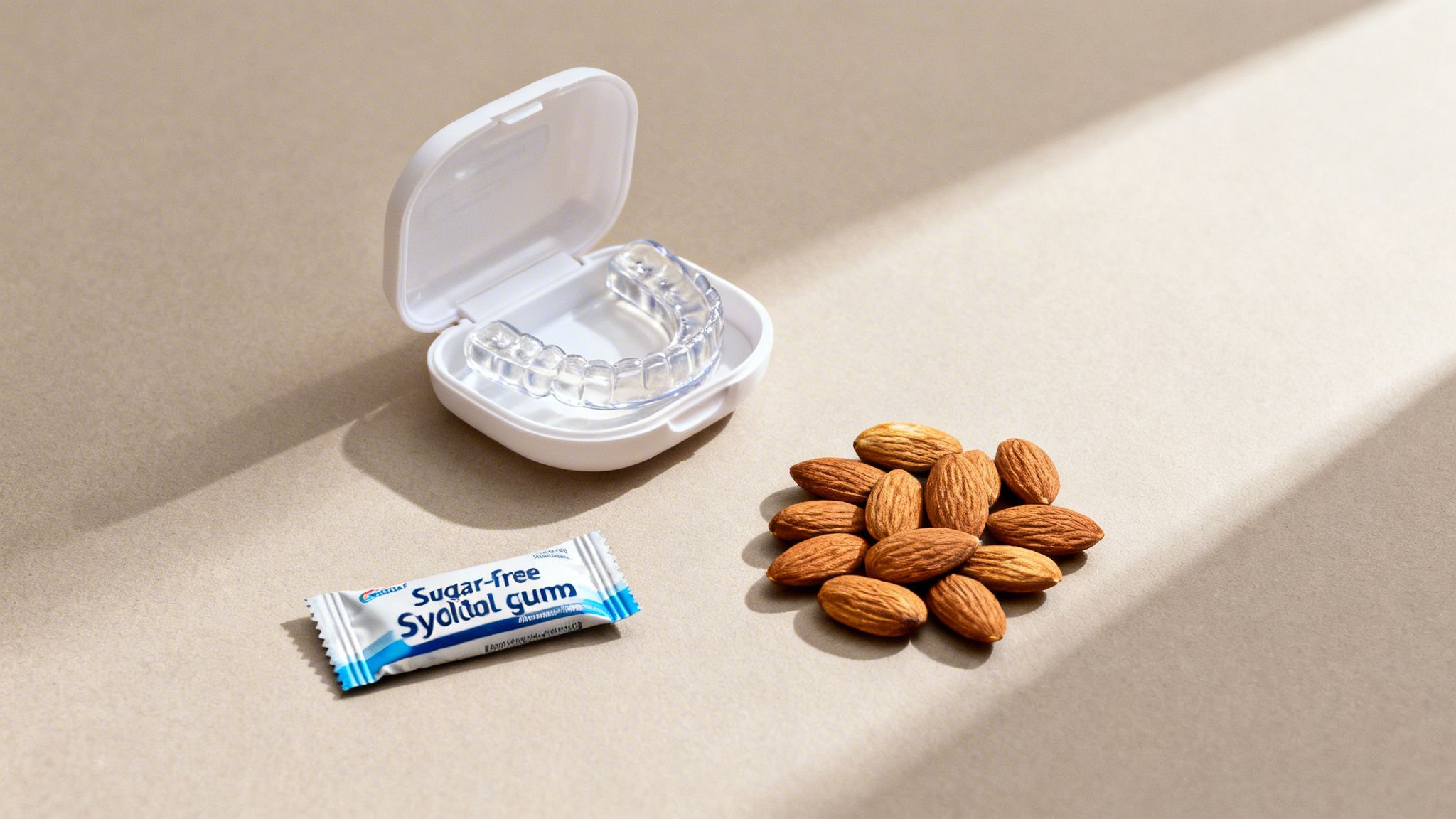
While stress-management techniques like meditation or exercise are helpful, the most effective way to shield your teeth is with a professional-grade nightguard. Unlike the one-size-fits-all options from a drugstore, a custom-fit nightguard from our Walnut Creek dental office is designed to perfectly cushion your teeth, absorbing those grinding forces and preventing further wear. It’s a common restorative dentistry solution we recommend for our patients dealing with bruxism.
Your saliva is one of the most powerful, natural tools you have for enamel defense. It constantly works to neutralize acid and deliver strengthening minerals back to your teeth.
You can actually give this natural process a boost. Chewing sugar-free gum containing xylitol right after a meal is a fantastic habit to get into. The chewing motion stimulates saliva, helping to wash away food debris and kickstart that all-important remineralization process. It's such a simple trick, but it makes a real difference in keeping your smile strong.
When to Seek Professional Dental Care in Walnut Creek
While the natural strategies we’ve covered are your best first line of defense, their power lies in prevention and strengthening enamel that’s still there. But there comes a point where erosion is just too advanced for home care alone. This is where partnering with a professional dentist isn't just a good idea—it's essential for your long-term health.
It’s important to face a hard truth about tooth enamel: once it’s completely gone, your body can’t grow it back. The goal of at-home methods is to halt erosion and remineralize weakened spots, not to rebuild what has been totally lost. If you're starting to notice any clear warning signs, it’s time to let us help.
Signs It's Time for a Dental Visit
If you’re experiencing any of the following, please don’t wait for your next scheduled cleaning. These symptoms often mean enamel damage is progressing and needs a professional eye at our Walnut Creek office.
- Persistent Sensitivity: Does sipping hot coffee or eating ice cream cause a sharp, lingering pain? That’s a major clue your enamel might be too thin to protect the sensitive dentin layer underneath.
- Visible Discoloration: As enamel wears away, the naturally yellowish dentin layer beneath becomes more obvious, which can make your teeth look yellow no matter how much you brush.
- Translucent Edges: You might notice the biting edges of your front teeth look almost clear or see-through. This is a classic sign of significant enamel loss.
- Chips and Cracks: Weakened enamel is far more likely to get damaged. If you’re seeing small chips, tiny fractures, or rough edges on your teeth, it’s a sign they've lost their original strength.
Catching these signs early gives us the best opportunity to step in and protect your teeth from any further damage. This is where our dental team becomes your most important partner in your oral health journey.
What to Expect at Our Walnut Creek Dental Practice
When you visit our practice with concerns about your enamel, your new patient exam will be much more than a standard check-up. We perform a thorough enamel evaluation, often using dental X-rays, to figure out the extent of the damage and pinpoint its root cause—whether it’s from your diet, acid reflux, or a teeth-grinding habit you might not even know you have.
Our dentists will sit down with you to go over their findings in clear, easy-to-understand language. We truly believe in working together, so we’ll explain exactly what we see, answer all your questions, and map out a personalized plan with you.
For teeth with significant enamel loss, restorative dental care isn't just about looks—it’s about protecting the tooth’s structure and preventing more serious problems like decay, fractures, or the need for a tooth extraction or dental implants.
Depending on your unique situation, we may discuss restorative solutions. For many of our Walnut Creek patients, treatments like dental bonding or porcelain veneers are fantastic options. These cosmetic dentistry services don’t just restore the beautiful look of your smile; they provide a brand-new, durable outer surface to shield the compromised tooth. For more severe cases, dental implants near you may be the best long-term solution.
As your local restorative and cosmetic dentist in Walnut Creek, CA, our goal is to find the perfect solution to bring back both the function and the confidence in your smile.
Your Questions About Strengthening Enamel Answered
Here in Walnut Creek, we love when our patients ask thoughtful questions about their oral health. You’re invested in keeping your smile strong, and we're here to give you the clear, honest answers you deserve. Let’s go over a few of the most common questions that come up during new patient exams and check-ups.
Can You Really Regrow Lost Tooth Enamel?
This is one of the most important questions we get asked. The honest answer is that once tooth enamel is completely gone, the body can’t grow it back. Unlike skin or bone, enamel has no living cells, so it doesn't have the ability to regenerate.
But there’s good news. If we catch the problem in its earliest stage—a process called demineralization—we can absolutely step in to remineralize and fortify the enamel that’s still there. This is where your at-home habits and our professional guidance work together beautifully. With the right diet, hygiene techniques using fluoride or hydroxyapatite toothpaste, and in-office support, we can stop the damage in its tracks and rebuild those weakened mineral bonds.
That’s exactly why your regular cleaning and exams at our Walnut Creek office are so crucial. They give us the chance to spot those early warning signs before any damage becomes irreversible.
Are Natural Whitening Toothpastes Safe for Enamel?
Many "natural" whitening toothpastes get their brightening effect from abrasive ingredients, like activated charcoal, baking soda, or certain types of clay. They essentially scrub off surface stains, which might make your teeth look whiter for a little while, but it can come at a real cost to your enamel.
Think of it like this: using a highly abrasive toothpaste is like taking sandpaper to a beautiful wooden table. You might remove a stain, but you’ll also wear down and scratch the protective finish.
Over time, these harsh particles can create tiny scratches on your enamel’s surface. This makes the tooth rougher and more porous, which ironically can make it stain more easily and even lead to tooth sensitivity.
For teeth whitening that is both safe for your enamel and genuinely effective, a professional consultation with your cosmetic dentist is always your best bet. Our team can evaluate the health of your enamel and recommend a solution that delivers a brighter smile without sacrificing its strength.
How Often Should I Get a Professional Fluoride Treatment?
The right frequency for a professional fluoride treatment really depends on your individual risk for cavities and enamel wear. For most adults who have great oral health, the fluoride application we do during their biannual cleaning is plenty to keep their enamel strong.
However, some factors can put you in a higher-risk category. If you deal with issues like chronic dry mouth, have acid reflux (GERD), a diet high in acidic foods, or a history of cavities, our dentists might suggest more frequent treatments. During your visit to our Walnut Creek dental practice, we'll look at your specific situation to create a preventive plan that gives your teeth the exact support they need.
Is Chewing Gum Really Good for My Teeth?
Yes, it can be—but with one non-negotiable rule: the gum must be sugar-free. In fact, chewing sugar-free gum, especially brands containing the natural sweetener xylitol, is an excellent habit for your enamel.
The simple act of chewing gets your saliva flowing, and saliva is your body's own natural defense system for your teeth. It helps neutralize damaging acids, washes away food particles, and is packed with the calcium and phosphates your enamel needs to remineralize. Popping in a piece after a meal when you can't get to a toothbrush is a great way to protect your teeth on the go.
At our Walnut Creek, CA, dental practice, our team is dedicated to being your partner in achieving and maintaining a strong, healthy smile for life. If you are looking for a dentist in Walnut Creek or the surrounding areas, we invite you to schedule a visit. Contact our Walnut Creek, CA, office today to book your new patient exam or consultation.