A throbbing tooth can make a normal day feel impossible. You may be trying to work through meetings, get the kids where they need to go, or sleep through the night, and all you can think about is the pressure in your jaw and whether someone is going to tell you that you need a root canal.
That worry is common. So is the question people type into search when the pain starts to feel urgent: dentist near me, emergency dentist, or dentist in Walnut Creek, CA. Most patients aren’t looking for a lecture at that moment. They want clear answers, pain relief, and a dentist who won’t make the experience harder than it needs to be.
If that’s where you are, it helps to know that root canal treatment is designed to relieve pain, not create it. Knowing how to prepare for a root canal can lower your stress, make the appointment smoother, and improve the odds of a strong long-term result.
Understanding Tooth Pain and Your Next Steps in Walnut Creek
A lot of people arrive at this point the same way. A tooth starts out sensitive to cold. Then it hurts when you bite. Then one morning the pain is sharp enough that coffee, air, or even talking feels unpleasant.

Sometimes the problem is deep decay. Sometimes it’s a crack. Sometimes a tooth that looked fine from the outside has inflammation deep inside it. The part that causes the trouble is the pulp, the soft tissue in the center of the tooth that contains nerves and blood vessels. When that tissue becomes infected or badly inflamed, the pain can be intense.
Signs the tooth may need prompt care
Not every toothache means root canal treatment, but some symptoms deserve a quick evaluation:
- Lingering pain: If hot or cold triggers pain that stays after the temperature is gone, the nerve may be irritated.
- Pain with pressure: Biting discomfort can point to inflammation inside the tooth or around the root.
- Swelling or gum tenderness: This can suggest the infection is spreading beyond the tooth.
- A darkened tooth: A tooth that changes color sometimes reflects internal damage.
- Pain that wakes you up: Night pain is one of the clearest signs that you shouldn’t wait.
If you’re trying to sort out whether your symptoms fit, this guide on how to know if you need a root canal can help you understand what dentists look for during an exam.
What to do before your appointment
If your tooth is actively hurting, keep your next steps simple.
| What helps | What doesn't help |
|---|---|
| Gentle brushing and flossing | Chewing on the painful side |
| Drinking water | Testing the tooth over and over |
| Calling for an exam quickly | Waiting to see if severe pain “just passes” |
| Eating softer foods | Crunchy, sticky, or very hard foods |
Severe tooth pain usually means the tooth needs treatment, not more time.
For families and professionals in Walnut Creek, this often becomes a timing problem as much as a dental one. People try to squeeze care in between school pickups, work deadlines, and travel. The problem is that an infected tooth usually doesn’t respect your calendar.
That’s why early evaluation matters. A dentist can use an exam and dental X-rays to find out whether the issue is a cavity, a crack, gum irritation, or a tooth that needs restorative dentistry such as a filling, crown, or root canal. In some cases, a tooth extraction is the better answer. In many others, saving the tooth is the most conservative and predictable choice.
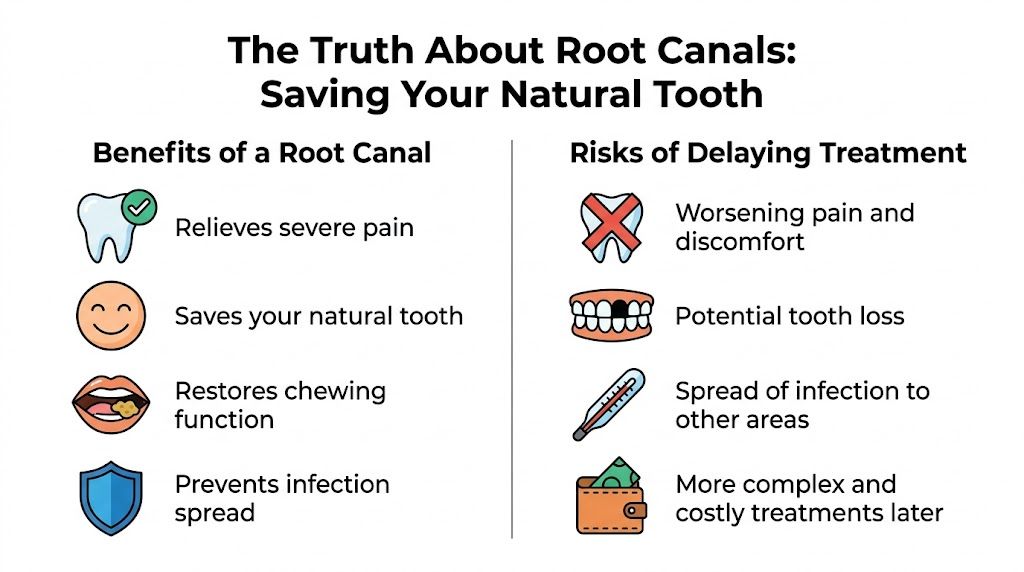
The Truth About Root Canals Saving Your Natural Tooth
Root canals have a reputation they don’t deserve. Most of that fear comes from old stories, not modern treatment.
A root canal is a way to remove infected or damaged tissue from inside a tooth, clean the space, seal it, and keep the tooth in place. The goal is straightforward. Stop the infection, relieve pain, and save your natural tooth.
Why saving the tooth usually makes sense
Your natural tooth does a better job than any replacement at maintaining normal bite function and feel. When the tooth can be restored predictably, keeping it is usually the most conservative path.
That matters because extraction often creates a second decision. Do you leave the space alone, place a bridge, or consider dental implants near me if you’re searching for replacement options? Each of those treatments can be valuable, but they add time, cost, and planning that may be avoidable if the tooth can be saved.
Root canal versus extraction
Here’s the practical comparison most patients need:
- Root canal treatment: Keeps the natural tooth, removes the source of infection, and is usually followed by a crown to protect the tooth.
- Tooth extraction: Removes the tooth entirely, which may solve the infection but leaves a gap that can affect chewing and future treatment planning.
- Replacement after extraction: May involve a bridge or implant as part of restorative dentistry.
Practical rule: If a tooth can be predictably saved, preserving it is often easier on your bite and your long-term dental plan than removing it.
What modern root canal treatment is actually like
The biggest misconception is that the procedure itself is the painful part. In reality, the painful part is often the inflamed tooth before treatment. The procedure is what removes the source of that pain.
Modern local anesthetic techniques, careful isolation, digital imaging, and improved instruments have changed the experience. Root canal treatment today feels much closer to having a deep filling and crown work than to the horror stories people repeat from decades ago.
It’s also a very common procedure. Approximately 25 million root canals are performed annually in the United States, and success rates exceed 95% when performed by skilled practitioners, with up to 97% tooth retention at 10 years reported in many studies, according to Cascade Endo’s summary of root canal facts and statistics.
The real risk is delaying care
When people postpone treatment, the tooth doesn’t get a chance to “settle down” if the pulp is already infected. More often, the pain worsens, the surrounding bone and gum tissue become involved, or the tooth structure weakens further.
That’s when treatment becomes more complicated. A tooth that might have been saved with root canal therapy and a crown can move closer to fracture, swelling, or eventual extraction.
For patients comparing an emergency dentist visit with waiting another week, this is the useful frame: a root canal is not a punishment for having a bad tooth. It’s one of the main ways dentistry protects a tooth that would otherwise be lost.
Your Pre-Appointment Checklist for a Smooth Procedure
Preparation doesn’t need to be complicated. It needs to be intentional. The more clearly you communicate before the visit, the easier it is to tailor the appointment to your medical needs, anxiety level, and schedule.
A well-prepared patient usually feels calmer because there are fewer unknowns. That matters. Root canal success rates reach 85-97% in global studies, and preparation supports that outcome. Discussing medications, maintaining oral hygiene, and arranging sedation when needed all matter. Poor post-treatment hygiene alone can drop success by 10-15%, as summarized by Utica Dental’s review of root canal success rates.
Start with a complete consultation
A root canal appointment should never feel rushed from the patient’s side. Before treatment, your dentist needs a clear picture of the tooth and of you.
Bring up these details during your exam:
- Your symptoms: Say whether the tooth hurts with biting, hot, cold, or spontaneously.
- Your timeline: Mention when the pain started and whether it’s getting worse.
- Past dental experiences: If you’ve had trouble getting numb before, say so early.
- Health conditions: Diabetes, heart conditions, immune concerns, and pregnancy can affect planning.
- Upcoming obligations: If you have travel, a presentation, or family responsibilities, your dentist can help you plan around recovery.
If you tend to freeze up in medical appointments, it can help to jot down what you want to say before you arrive. Some patients find it useful to review general communication tips like this guide on how to talk to your doctor, especially if anxiety makes it hard to explain symptoms clearly.
Give a full medication list
This step is more important than many people realize. Your dentist needs to know about prescriptions, supplements, over-the-counter pain relievers, and allergies.
That includes:
- Blood thinners
- Antibiotics you’re already taking
- Pain medications
- Supplements and herbal products
- Any past reaction to anesthetic or sedation
Don’t assume a medication is too minor to mention. The safest appointment is the one planned with complete information.
Get your mouth as clean as possible
You don’t need a special routine. You do need a clean starting point.
Brush thoroughly. Floss. Be gentle around the sore area, but don’t skip it unless your dentist has told you to. A cleaner mouth supports treatment and recovery better than one with plaque and food debris sitting around an already irritated tooth.
Prepare for anxiety before the day of treatment
For many patients, the hardest part of a root canal is the buildup beforehand. The mind fills in gaps with old memories, stories from other people, or fear of losing control in the chair.
That’s why practical anxiety planning works better than vague advice to “just relax.”
Consider this checklist:
- Choose a signal: Ask for a pause signal before treatment starts, usually raising a hand.
- Discuss sedation early: Don’t wait until the last minute if you think you may need it.
- Schedule smart: If mornings are easier for you, book early so you’re not dreading the appointment all day.
- Bring support: If sedation is planned, arrange transportation in advance.
- Ask for a walkthrough: Many anxious patients feel better when they know the order of events.
If you want to understand comfort options ahead of time, this page on how does dental sedation work is a helpful place to start.
The most useful sentence an anxious patient can say is, “I’ve had a hard time with dental treatment before, and I want a plan for comfort before we begin.”
The day before and the day of treatment
The final stretch is mostly about reducing small avoidable problems.
The day before
- Eat normal meals: Unless your dentist gives other instructions, stick to regular, balanced meals.
- Hydrate well: A dry mouth and an empty day of stress don’t help.
- Avoid chewing on the problem tooth: Protect it from further irritation.
- Charge your phone and clear your schedule: Give yourself a calmer afternoon afterward if possible.
The day of your appointment
For many routine root canals under local anesthetic, patients can eat beforehand unless they’ve been told otherwise. If sedation is planned, follow the specific fasting instructions from your dental team.
Wear comfortable clothing. Arrive a little early. Bring your medication list if it’s not already in your chart.
Here’s a quick video overview many patients like to watch before treatment:
A simple preparation snapshot
| Before treatment | Why it matters |
|---|---|
| Share symptoms clearly | Helps confirm the right tooth and the right treatment |
| Review medications and allergies | Improves safety and anesthetic planning |
| Brush and floss | Reduces debris and supports a cleaner field |
| Arrange sedation if needed | Makes the visit more manageable for anxious patients |
| Plan a lighter schedule afterward | Gives you room to recover comfortably |
When patients ask how to prepare for a root canal, this is the answer in plain terms. Come informed, come honest, and don’t hide your anxiety. Good planning turns a stressful unknown into a straightforward appointment.
Your Root Canal Procedure at Our Walnut Creek Office
The day of treatment usually feels easier than patients expect. The fear often peaks before the appointment, not during it.
When you arrive, the first priority is getting you settled. If you’re nervous, say so right away. This is exactly the kind of information that changes how a dentist paces the visit, explains the steps, and supports your comfort.
First, we make sure you’re comfortable
A root canal doesn’t begin with drilling. It begins with confirming the plan, checking that the correct tooth is identified, reviewing symptoms, and making sure you’re ready.
Then the area is numbed carefully. If you’ve ever felt like local anesthetic “didn’t work” well for you in the past, mention that before treatment starts. About 20-30% of patients report prior anesthesia ineffectiveness due to anxiety, and discussing sedation plus agreeing on a pause signal can improve comfort and perceived pain, according to Savannah River Endodontics’ discussion of preparation for anxious root canal patients.
What you’ll notice during the procedure
Most patients don’t feel sharp pain during treatment. What they notice more often is pressure, vibration, water, and time passing more slowly than they’d like.
A typical experience looks like this:
- The tooth is isolated. This keeps the area clean and dry.
- A small opening is made. This gives access to the inside of the tooth.
- The inflamed or infected tissue is removed. The inside of the roots is cleaned and shaped.
- The canals are sealed. This helps protect the tooth from reinfection.
- A temporary filling is placed if needed. The tooth is then prepared for final restoration.
None of those steps should be mysterious while they’re happening. If you like more explanation, ask for it. If too much detail makes you tense, say that too.
If you need a break, ask for one. Good dental care isn’t a test of endurance.
What helps the appointment go smoothly
Patients usually do best when they focus on a few practical habits instead of trying to force themselves to “be brave.”
- Breathe slowly through your nose: It keeps your jaw and shoulders from tightening.
- Use the pause signal when needed: A short reset is better than pushing through panic.
- Keep your expectations realistic: Numbness, pressure, and fatigue are normal.
- Don’t judge yourself for being nervous: Anxiety is common in dental care.
Some people return to work afterward, especially if the visit was routine and local anesthetic was the only comfort measure used. Others do better with a quieter rest of the day. There isn’t one right answer. The better choice is the one that matches your stress level, the complexity of the tooth, and whether sedation was involved.
Before you leave the office
You should leave with clear instructions, not guesses.
That usually includes guidance on eating, brushing, chewing, soreness, and the next step for restoring the tooth. If a crown is recommended, that follow-through matters. The root canal solves the infection inside the tooth. The final restoration protects the tooth above the gumline so you can use it comfortably again.
For patients searching for a dentist in Walnut Creek, CA because they want a calm experience, this part matters as much as the technical treatment. Good root canal care is not just about cleaning canals well. It’s about helping the patient feel informed, heard, and steady from check-in to the ride home.
Post-Procedure Care for Fast Recovery and Lasting Results
Once the numbness wears off, most patients feel some soreness or tenderness rather than severe pain. The area around the tooth has been treated, and it’s normal for that tissue to need a little time to settle.
What happens next matters more than many people realize. The root canal itself removes infection from inside the tooth. Recovery and restoration are what help the tooth stay comfortable and functional over time.

The first day after treatment
Keep the first several hours simple. Don’t chew on the treated side while you’re numb. You don’t want to bite your cheek or put force on a tooth that still needs its final protection.
Soft foods usually work best at first. Think eggs, yogurt, soup that isn’t too hot, rice, pasta, mashed vegetables, or smoothies eaten carefully.
Helpful first-day habits
- Take medications as directed: Follow the instructions your dentist gave you.
- Choose easy foods: Avoid very hard, crunchy, or sticky foods.
- Brush and floss carefully: Keep the area clean without being rough.
- Rest your jaw if it feels tired: A long dental visit can leave the muscles feeling tight.
If you’re deciding between common over-the-counter options, a general comparison like Advil vs Tylenol for pain relief can help you understand the differences, but follow your own dentist’s instructions first because your medical history matters.
Don’t put off the crown
This is the part patients are most likely to underestimate.
A tooth that has had a root canal often needs a permanent crown, especially if it’s a back tooth that handles heavier chewing forces. Without that protection, the tooth can crack even if the infection inside has been treated successfully.
Systematic reviews show root canal success at 10-20 years in the 86-93% range, but delaying the permanent crown increases risk significantly. Teeth with crown placement delayed more than 90 days show a 6x higher fracture rate, according to Loud Family Dentistry’s review of root canal success and tooth preservation data.
The root canal saves the inside of the tooth. The crown protects the outside of the tooth. Both parts matter.
What not to do after a root canal
This list is short, but important.
| Avoid | Why |
|---|---|
| Chewing ice or hard foods on the treated tooth | The tooth may be weaker before final restoration |
| Ignoring follow-up | You need the tooth sealed and protected long term |
| Skipping brushing because the area feels tender | Plaque control still matters |
| Assuming pain should rise each day | Healing should move in the other direction |
When to call the office
Most recovery is straightforward, but some symptoms deserve a call.
Contact your dentist if you notice:
- Pain that feels worse instead of better
- Swelling that increases
- A temporary filling that comes out
- A bite that feels very uneven
- Fever or a general sense that something isn’t right
Patients sometimes hesitate because they don’t want to “bother” the office. Don’t think that way. Early questions are easier to solve than late complications.
Long-term care after the tooth is restored
Once the final crown or restoration is in place, treat the tooth the way you’d treat the rest of your smile. Brush well, floss daily, keep up with cleaning and exams, and don’t ignore changes in your bite or comfort.
Restorative dentistry connects with preventive care. A root canal can save a tooth. Regular maintenance helps you keep it.
For Walnut Creek patients balancing busy schedules, the simplest recovery plan is the one that works. Protect the tooth, keep the follow-up appointment, and don’t delay the final restoration just because the pain is gone. Feeling better is good. Finishing treatment is better.
Why Walnut Creek Families Trust Dr. William Schneider
People looking for a new dentist usually want the same things. They want treatment that makes sense, communication that’s easy to understand, and a dental office that doesn’t make anxiety worse.
That’s especially true when the need is urgent. If you’re searching for an emergency dentist, a dentist near me, or a long-term dental home in Walnut Creek, you’re not just choosing someone to fix one tooth. You’re choosing the person and team you’ll trust with future cleanings and exams, cosmetic dentistry, restorative dentistry, crowns, tooth extraction decisions, and possibly dental implants.
Experience matters, but so does manner
Technical skill is only part of what patients remember. They also remember whether the dentist explained the problem clearly, whether injections were gentle, and whether anyone paid attention when they said they were nervous.
That balance matters in real life. A patient may come in for root canal pain and stay because they want one office that can also handle new patient exams, teeth whitening, Invisalign, crowns, bridges, and ongoing family dental care.
Comprehensive care makes decisions easier
A root canal isn’t always the right answer. Sometimes the better plan is a crown. Sometimes it’s a filling. Sometimes the tooth can’t be saved and extraction or replacement planning becomes part of the conversation.
That’s where a full-service practice helps. It’s easier for patients when preventive care, cosmetic services, restorative options, and long-term planning all connect under one roof.
Modern dentistry keeps changing
Good care also means staying current. That includes comfort approaches, imaging, restorative materials, and evolving protocols for medically complex patients.
For example, 2025-2026 studies on targeted antibiotic use for high-risk patients reflect how dental protocols continue to adapt, especially for people with conditions such as diabetes or gum disease. Mills River Dental’s review of root canal preparation trends highlights why staying current on these protocols matters for long-term oral health.
A good dental office doesn’t just perform procedures well. It adjusts the plan to the patient sitting in the chair.
Why that matters for local patients
Walnut Creek families and professionals need care that is efficient without feeling rushed. They need appointment systems that fit real schedules. They need a team that can move from urgent pain relief to durable long-term treatment.
That’s what builds trust over time. Not one dramatic promise. Consistent, thoughtful care.
If you need help with tooth pain, a possible root canal, a second opinion, or a full plan for your smile, William M. Schneider, DDS offers extensive, compassionate dental care in Walnut Creek with more than 25 years of experience. Schedule a consultation to get clear answers, comfortable treatment, and a practical path forward for your oral health.