Your search history may look familiar right now. Dentist near me. Emergency dentist. Tooth extraction. Dentist for anxious patients near me. Maybe you have a sore tooth, a broken filling, or a cleaning you've postponed far too long. Maybe the appointment itself isn't the problem. Maybe it's the tight chest, the sweaty hands, the sound of instruments, or the worry that once you're in the chair, you won't feel in control.
That fear is common, and it deserves to be taken seriously. In Walnut Creek, CA, many patients looking for a new dentist aren't just looking for someone who can clean teeth or place crowns. They're looking for someone who understands why walking through the door feels hard in the first place.
Finding a Walnut Creek Dentist Who Understands Your Fear
A lot of anxious patients follow the same pattern. They mean to call. They even choose a day. Then the night before, their heart starts racing and they convince themselves the tooth can wait a little longer.
That reaction isn't unusual. Approximately 41% of adults in the United States have admitted to skipping dental appointments specifically due to anxiety, and studies indicate that 30% to 80% of adults experience some level of dental anxiety, according to Dentistry IQ reporting on ADA survey findings and related dental anxiety statistics.
What anxious patients usually want
Anxious patients searching for a dentist in Walnut Creek, CA for anxiety aren't asking for anything extravagant. They want a dentist who will slow down, explain what's happening, and avoid turning a routine visit into an endurance test.
They also want practical answers:
- Can I ask for breaks if I start to feel overwhelmed?
- Will the injection hurt?
- Can you help with a cleaning and exam if I've been away for years?
- If I need treatment, can that include tooth extraction, restorative dentistry, or even dental implants near me without making the experience harder than it has to be?
Those are reasonable questions. A calm dental visit usually starts before any treatment begins.
A good anxiety-friendly appointment doesn't start with a drill. It starts with listening.
Why local familiarity matters
When you're nervous, convenience matters more than people realize. Choosing a local dentist near me in Walnut Creek means less time building dread in the car, easier follow-up visits, and a better chance you'll keep your cleaning and exams, new patient exams, dental x-rays, or emergency dental appointments.
For many East Bay patients, the right office isn't merely the one offering the longest service list. It's the one that understands that comfort is part of the treatment. That matters whether you're coming in for preventive care, cosmetic dentistry, teeth whitening, restorative dentistry, or a more urgent problem that can't wait.
A dentist who understands anxiety doesn't dismiss it as embarrassment or overreacting. They treat it like the clinical and emotional barrier it is. That mindset changes everything about the visit.
What Is Dental Anxiety and What Causes It
Dental anxiety can be mild or severe. For some people, it shows up as uneasiness before a routine cleaning. For others, it becomes a pattern of avoidance that leads to pain, infection, or the need for more complex care later.

Anxiety versus phobia
There's a difference between being nervous and feeling unable to come in at all. Some patients feel tense but can still make the appointment. Others experience a stronger fear response that keeps them from seeking care until they have swelling, broken teeth, or an emergency dentist situation.
Clinical reports summarized by ADA News coverage of JADA findings on dental fear note that nearly 73% of adults in the US report being afraid of going to the dentist. That kind of fear doesn't always look dramatic. Sometimes it looks like repeated rescheduling, difficulty sleeping before an appointment, or canceling at the last minute.
If you're not sure whether your symptoms fit, this overview of common dental anxiety symptoms can help you put words to what you're feeling.
Common triggers patients describe
Dental anxiety usually has a trigger. Sometimes it's obvious. Sometimes it's a stack of smaller experiences that built up over time.
Common triggers include:
- Fear of pain from treatment or numbing
- A bad past experience with a hurried or rough appointment
- Loss of control while lying back in the chair
- Sensory overload from sounds, smells, or vibration
- Embarrassment about how long it's been since the last visit
Those triggers can produce real physical symptoms. Patients often notice a racing pulse, shallow breathing, tense shoulders, nausea, or the urge to leave.
Many anxious patients don't need to be persuaded that dentistry matters. They need a setting that makes follow-through possible.
Why understanding the cause helps
When a dentist understands the source of the fear, the appointment can be built around it. A patient bothered by noise may do well with a quieter room and clear pause signals. A patient worried about shame may need a judgment-free exam first, with no pressure to commit to treatment that day. A patient afraid of local anesthetic needs a different conversation entirely.
That last group is larger than many people think, and it's often the missing piece in generic sedation articles.
The First Hurdle Overcoming the Fear of the Needle
For many anxious patients, the procedure isn't the biggest problem. The hardest moment is the moment before the procedure starts, when they expect the local anesthetic shot.
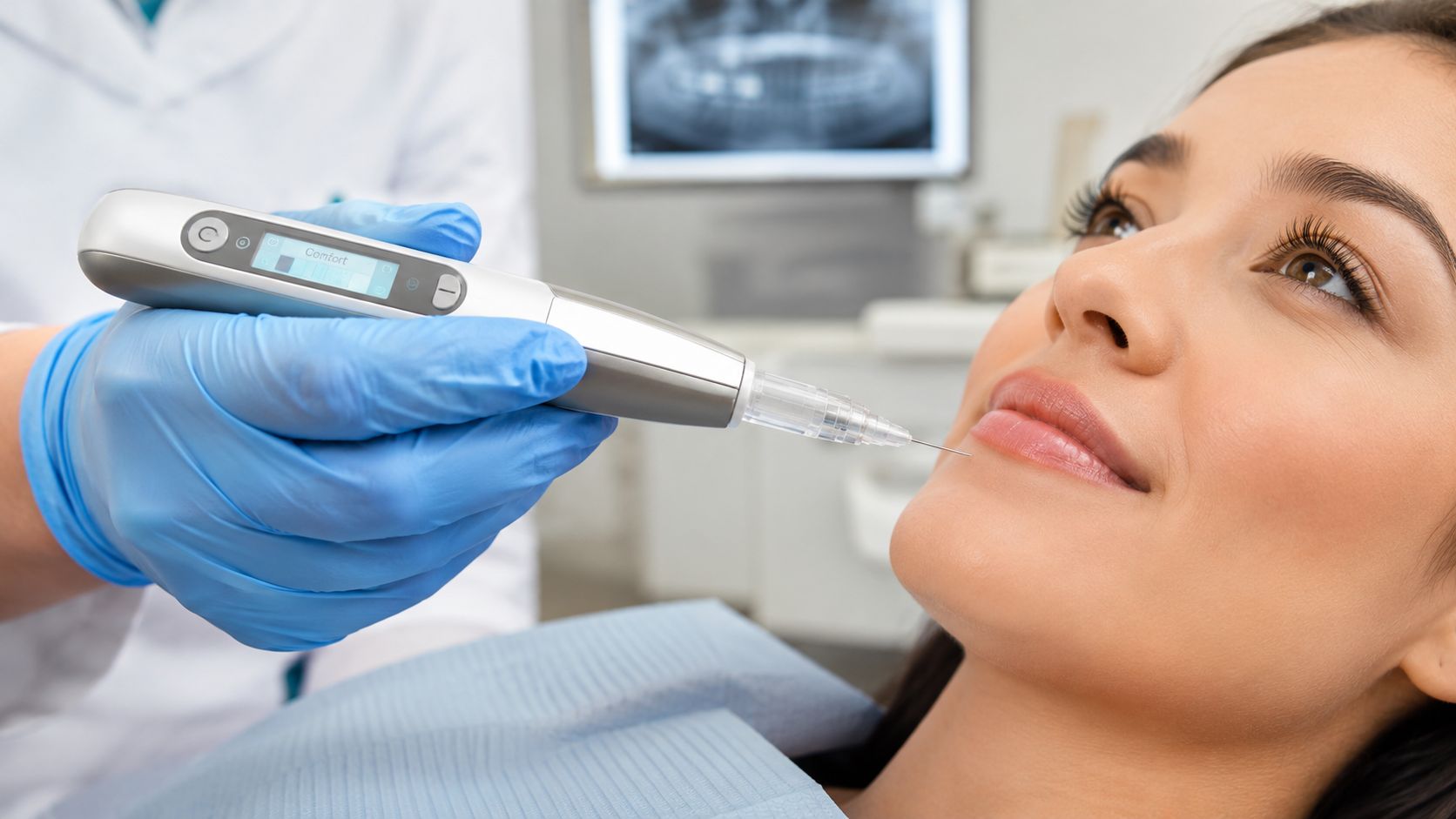
A research review found that 33% of anxious patients fear pain or discomfort, and 14% specifically experience dental phobia linked to the anticipation of anesthetic shots, as discussed in this review on dental fear and anticipation of local anesthetic. That's an important distinction. A patient may say they're scared of the dentist when what they really mean is, "I'm scared of the injection."
Why sedation alone doesn't solve this
Many patients feel misled by marketing. They read about sedation for anxious patients and assume that solves everything. Sometimes it does help significantly, but sedation isn't a substitute for gentle injection technique.
Oral sedation may relax you before treatment, but it doesn't automatically remove awareness of the numbing process. Nitrous oxide can take the edge off, but the injection still matters. If the dentist doesn't address the shot itself, the most feared part of the visit may still be waiting at the beginning.
That is why the first comfort measure should be specific and concrete.
What makes an injection feel easier
A careful dentist can reduce injection discomfort with technique, not just medication. Patients should ask about details such as:
- Topical numbing gel placed long enough to work before the injection starts
- Ultra-fine needles chosen for comfort
- Slow delivery of anesthetic instead of rushing
- Steady communication so you know what to expect
- Vibratory anesthetic devices or computerized delivery systems when appropriate
These details sound small. They aren't. For a patient with needle fear, they can determine whether treatment feels manageable or impossible.
This short video helps show how anxiety and comfort options can be discussed in a practical way before treatment begins.
Practical rule: If the office can't explain how they make the anesthetic shot gentler, keep asking questions before you book.
Why this matters for real treatment
Needle fear doesn't just affect fillings. It affects whether patients move forward with tooth extraction, root canal treatment, restorative dentistry, cosmetic dentistry, and even long-term planning for missing teeth. A patient who avoids one numbing injection can end up needing more involved care later, including replacement options such as dental implants near me.
A dentist who handles the first hurdle well often changes the entire appointment. Once the injection is calm, the rest of the procedure usually feels much more manageable.
Sedation and Comfort Options for a Relaxing Visit
After the injection concern is addressed properly, sedation can be an excellent next layer of support. The key is choosing the right level for the right patient and the right procedure.
Some people need help for a routine cleaning and exam because their anxiety spikes before any treatment begins. Others do well with standard care for cleanings but want more support for a tooth extraction, dental implant placement, or longer restorative visit. Sedation should fit the situation, not override it.
How the main options compare
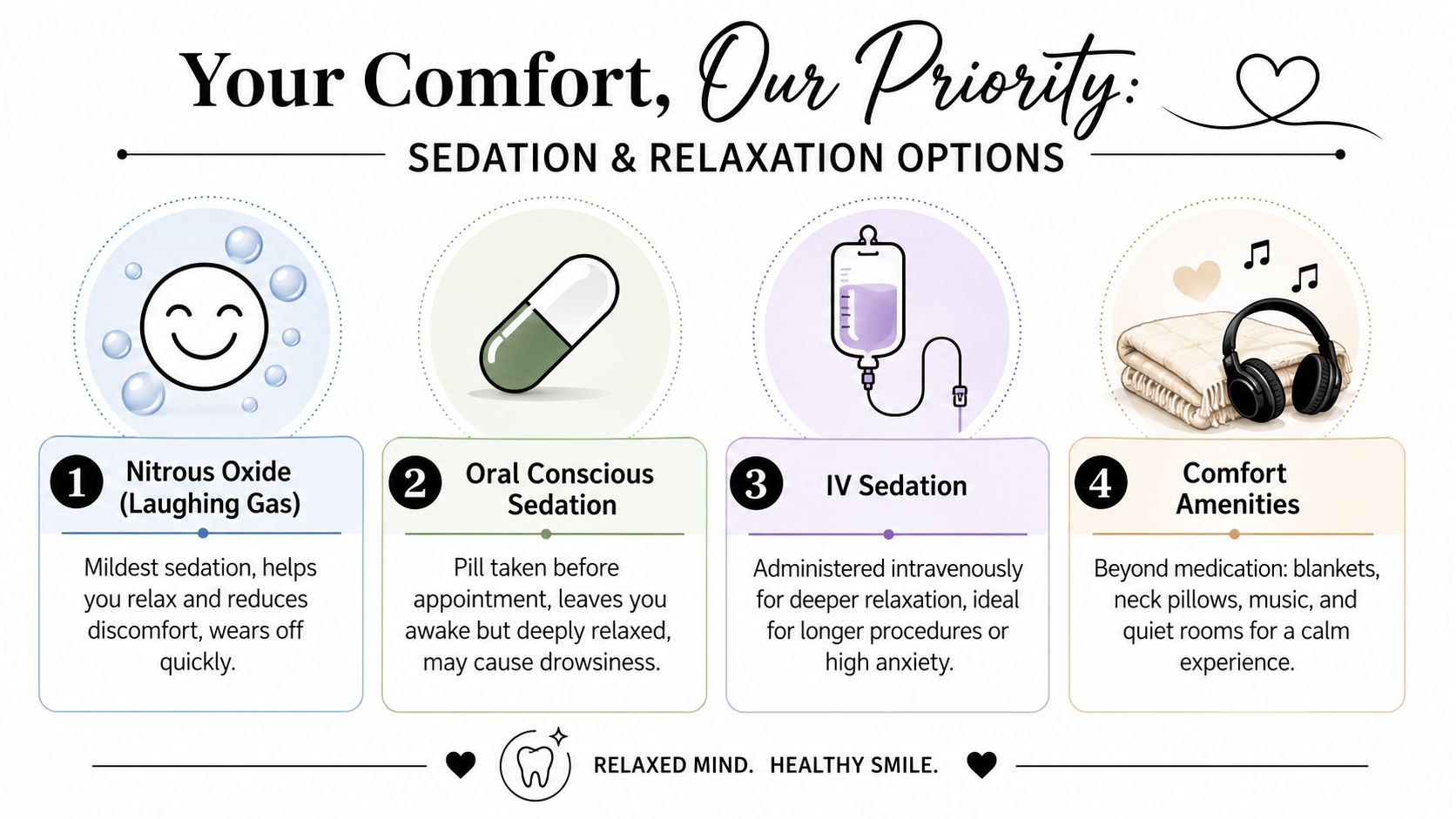
A helpful way to think about sedation is to picture a dimmer switch, not an on-off button. Some options lightly soften the edges of the visit. Others create much deeper relaxation.
| Option | What it feels like | Best fit |
|---|---|---|
| Nitrous oxide | Light relaxation during treatment, with quick recovery afterward | Mild to moderate anxiety, shorter visits, cleaning and exams, dental x-rays |
| Oral conscious sedation | Medication taken before the visit that leaves you awake but deeply relaxed | Patients who feel anxious before arriving or who need help settling into treatment |
| IV sedation | Deeper relaxation with rapid effect and close monitoring | High anxiety, longer procedures, more involved treatment such as some extractions or implant-related care |
| Comfort amenities | Non-medication support such as blankets, music, pillows, calm pacing, and reduced stimulation | Patients who prefer a gentler environment even without sedation |
For patients considering medication support, this page on how dental sedation works gives a clear overview of what the process can involve.
What the evidence says about IV sedation
Among adult sedation methods studied for dental anxiety, IV sedation is the most clinically effective, with a mean Visual Anxiety Scale reduction of 7.8 ± 1.1. Patients in that research also reported the fastest onset and the highest satisfaction, with 92% describing the experience as very satisfied, according to this clinical review of sedation protocols for anxious dental patients.
That doesn't mean IV sedation is automatically the right choice for everyone. Deeper sedation can be very helpful, especially for severe anxiety or long appointments, but it also involves more planning and isn't necessary for every patient.
The trade-offs matter
The best option depends on what you're afraid of and what treatment you need.
- Nitrous oxide works well when fear is present but manageable. It can be a strong choice for a patient who wants to remain fully cooperative and return to normal activity more quickly.
- Oral conscious sedation can help if anxiety starts hours before the appointment. According to this explanation of oral conscious sedation, it involves a prescribed medication taken before the visit so patients feel relaxed by the time treatment begins.
- IV sedation may be the better fit if your anxiety is intense, if you need extensive treatment, or if being completely relaxed is what makes care possible.
Sedation works best when it is matched to your trigger. A patient afraid of noise needs something different from a patient afraid of the shot, and different again from someone needing a long restorative appointment.
Comfort isn't only about medication
The most reassuring visits usually combine several small supports rather than relying on one big promise. A thoughtful office may pair sedation options with clear explanations, unhurried pacing, breaks on request, and a team that doesn't act surprised when you say you're nervous.
That approach matters whether you're searching for a cosmetic dentist near me for teeth whitening or veneers, a dentist near me for a crown, or an emergency dentist for pain that can no longer wait.
How to Choose the Right Dentist for Dental Anxiety
If you're comparing offices in Walnut Creek, it helps to screen them the same way you would screen any professional who needs your trust. Anxiety-friendly dentistry isn't just a service label. It shows up in the office's language, systems, and everyday habits.
What to look for before you call
Start with the website. If the office talks about painless injections, comfort options, or anxiety support in plain language, that's a good sign. If every page focuses only on procedures and before-and-after results, you may need to ask more direct questions.
Look for clues such as:
- A clear comfort philosophy that mentions anxious patients directly
- Details about new patient exams so you know the first visit won't be rushed
- Service depth for preventive, cosmetic, restorative, and emergency dental care
- Practical transparency about sedation, dental x-rays, or treatment planning
An office that handles routine care well should also be able to guide patients through restorative dentistry, tooth extraction, or planning for replacement options if a tooth can't be saved.
Questions worth asking on the phone
The first phone call tells you a lot. You don't need a perfect script. You only need a few direct questions.
What do you do for patients who are very anxious?
You're listening for specifics, not general reassurance.How do you make the anesthetic injection more comfortable?
This question often reveals how experienced the team is with real fear.Can I come in for a consultation before treatment?
For some patients, a conversation-only first visit is what makes care possible.Do you offer breaks and hand signals during treatment?
Control reduces panic.What sedation or relaxation options are available if I need more support?
The answer should fit both simple and complex care.
Why behavior matters as much as sedation
Medication isn't the only tool that works. Behavioral interventions are a critical first-line approach for managing dental anxiety. Cognitive Behavioral Therapy helps patients identify catastrophic thinking, and techniques such as cue-controlled relaxation and lavender aromatherapy can reduce anxiety scores, as described in this discussion of behavioral approaches to dental anxiety.
That matters when choosing a dentist. If the team understands calming methods, pacing, and communication, even routine cleanings and exams can feel very different from the appointments you've had in the past.
The right dentist for anxiety doesn't tell you to "just relax." They give you a reason to.
What to Expect During Your Visit in Walnut Creek
The first visit often feels easier when you know what the sequence looks like. Uncertainty feeds anxiety. Predictability lowers it.
When you arrive at the Walnut Creek office on San Miguel Drive, the pace should feel calm from the front desk onward. A good new patient experience doesn't start with immediate treatment. It starts with orientation. You check in, settle, and get a sense of the room before anyone asks you to make fast decisions.
The first conversation
Many anxious patients do best when the first few minutes are conversational, not procedural. That means discussing your history, what you're feeling, and what has made past appointments difficult. Some patients are afraid of pain. Others are embarrassed they've delayed care. Others are worried they may need a crown, a root canal, or a tooth extraction.
That conversation should shape the visit. If you need time before dental x-rays or the exam, the team should be able to pace things accordingly.
What the clinical part usually includes
Once you're ready, a first appointment may include several pieces of information gathering so the dentist can recommend the right care.
- An exam of the teeth and gums to identify active concerns
- Dental x-rays when needed to check for hidden decay, infection, bone loss, or impacted problems
- Discussion of priorities so urgent pain is handled before elective treatment
- A written treatment plan that outlines choices, timing, and next steps
This is especially helpful if you're looking for one office that can manage both immediate needs and longer-term goals such as cosmetic dentistry, teeth whitening, crowns, bridges, or dental implants near me after tooth loss.
How control is built into the visit
A well-run anxiety-friendly appointment usually includes a few simple agreements. You can raise a hand for a break. The dentist explains before starting something new. If you're not ready for treatment that day, the next step can be planning rather than pressure.
For patients with pain, this matters a lot. If you've been searching for an emergency dentist in Walnut Creek, you want relief, but you also want the process to feel manageable. A thoughtful office can balance both.
A first visit should leave you feeling informed, not cornered. That's the difference between a stressful dental experience and the beginning of a long-term dental home.
Take the First Step Toward Stress-Free Dental Care
Dental anxiety is real. It can keep good people from getting routine dental care, delay treatment until a small problem becomes a painful one, and make even a simple cleaning feel overwhelming. The good news is that modern dentistry has better ways to help than many patients realize.
The most important detail is often the one patients rarely hear enough about. The anesthetic shot itself can be made gentler with careful technique, thoughtful pacing, and clear communication. After that, sedation and comfort options can be selected based on your actual trigger, your health history, and the kind of treatment you need.
If you've been looking for a dentist for anxious patients near me, a dentist in Walnut Creek, CA, a cosmetic dentist near me, or an emergency dentist, the standard should be simple. You deserve care that protects your oral health and respects your nervous system at the same time.
Delaying care usually increases stress. Taking one small step usually reduces it. That first step might be a conversation, a new patient exam, or a focused visit for a painful tooth. What matters is choosing an office that understands why this feels difficult and knows how to make it easier.
If you're ready to take that step, William M. Schneider, DDS offers compassionate dental care in Walnut Creek with attention to patient comfort, clear explanations, and support for anxious patients. Whether you need a routine exam, help with pain, restorative treatment, or want to discuss sedation and gentle injection techniques, you can contact the office to schedule a consultation and start at a pace that feels manageable.