If you're unhappy with your smile due to chips, gaps, or discoloration, you've likely considered cosmetic dentistry. When it comes to transforming your smile with veneers, the first big question is always: porcelain or composite? Both are excellent options offered by your local cosmetic dentist in Walnut Creek, CA, but they offer very different paths to the same goal. Think of porcelain veneers as the ultimate in smile design—thin, handcrafted ceramic shells that are bonded to your teeth for a durable and incredibly natural-looking result. On the other hand, composite veneers involve sculpting a tooth-colored resin directly onto your teeth, making them a fantastic single-visit solution for smaller fixes.
The right choice really boils down to what you’re looking for. Are you aiming for a long-term, picture-perfect smile, or do you need a more immediate and conservative touch-up? Understanding the difference is the first step toward achieving the smile you've always wanted.
Your Guide to Veneers in Walnut Creek, CA
Making a decision about your smile can feel like a huge step, especially when weighing options like porcelain and composite veneers. At the office of William M. Schneider, DDS, we created this guide for our neighbors here in Walnut Creek who are looking for clear, straightforward answers to feel confident in their choice. We believe that the best decisions are made when you have all the facts, and our goal is to be your trusted local resource for dental care.
With over 25 years of experience serving patients in Walnut Creek and the surrounding East Bay communities, Dr. Schneider has helped countless individuals find the smile they’ve always wanted. We know you aren’t just looking for a dental procedure; you’re looking for a result that makes you feel great. Whether you’re dreaming of a complete smile makeover with cosmetic dentistry or just want to fix a minor chip, we’re here to walk you through it with reassuring, patient-focused care.
Porcelain vs Composite Veneers: A Quick Comparison
To make things simple, we’ve put together a quick comparison to highlight the key differences at a glance. This table is a great starting point for our patients in Walnut Creek to think about what might work best for their goals, lifestyle, and budget when considering cosmetic dental care.
| Key Factor | Porcelain Veneers | Composite Veneers |
|---|---|---|
| Material | High-strength, non-porous ceramic | Tooth-colored biocompatible resin |
| Best For | Complete smile makeovers, severe discoloration, and maximum durability | Minor cosmetic fixes, small chips, and budget-conscious patients |
| Durability | Extremely durable, lasting 10-15 years or more with proper care | Good durability, lasting approximately 5-7 years before needing replacement |
| Appearance | Superior translucency that perfectly mimics natural tooth enamel | Good aesthetics, but can be less natural-looking and more prone to staining |
| Procedure | Requires at least two visits for preparation, fabrication, and bonding | Typically completed in a single appointment at our Walnut Creek office |
| Stain Resistance | Highly resistant to stains from coffee, tea, and red wine | More susceptible to staining over time and may require regular polishing |
| Cost | Higher initial investment due to lab fabrication and materials | More affordable upfront, making it an accessible entry to cosmetic dentistry |
After reviewing the details, it becomes clear that each option has its own distinct advantages. The one you choose is a completely personal decision, and we are here to help guide you.
A key takeaway for our patients is that porcelain veneers are a long-term investment in a flawless, low-maintenance smile, while composite veneers offer an excellent, immediate solution for more targeted cosmetic improvements. The right choice is deeply personal and depends entirely on your goals. We can explore this together during your new patient exam.
Comparing The Look and Feel of Each Veneer
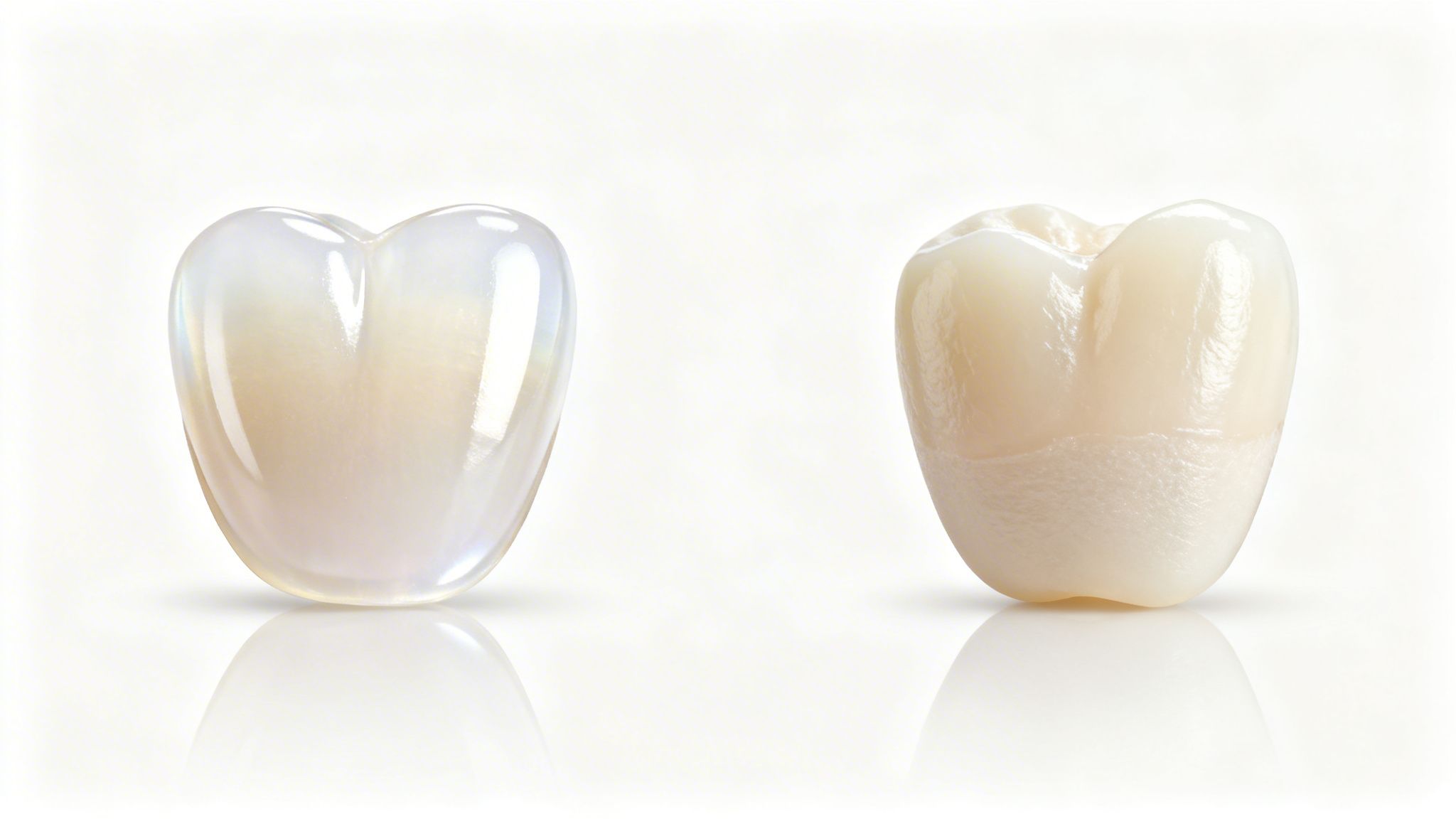
When our patients in Walnut Creek come to us for cosmetic dentistry, the goal is always the same: a beautiful smile that looks and feels completely natural. Deciding between porcelain and composite veneers is a huge part of that conversation, as both can give you a stunning smile but get there in very different ways. Choosing the right cosmetic dentist near you is vital for achieving the best aesthetic outcome.
Porcelain veneers are really the gold standard for that flawless, uniform, and radiant look. They’re crafted from a high-grade dental ceramic with a unique, semi-translucent quality that perfectly mimics how natural tooth enamel reflects light. This gives them a depth and life that’s almost impossible to tell apart from real teeth.
It’s this lifelike appearance that makes porcelain the top choice for a full smile makeover—what some people call a “Hollywood smile.” If your goal is to transform several front teeth for a bright, consistent, and polished result, porcelain delivers an aesthetic that’s second to none.
The Artistry Behind Porcelain Veneers
Creating porcelain veneers is a beautiful blend of dental science and pure artistry. Here at our Walnut Creek office, Dr. Schneider takes incredibly precise impressions of your teeth. We then send these to a specialized dental lab where master technicians meticulously layer the ceramic material, creating veneers with natural color gradients and textures. This is a hallmark of high-quality restorative dentistry.
This detailed, off-site fabrication process allows for a level of customization that’s simply unmatched.
- Color Matching: We can choose the exact shade of white that complements your skin tone for a look that’s bright but never artificial.
- Translucency Control: The lab technicians can adjust the translucency to perfectly imitate the look of your own enamel.
- Surface Texture: Tiny, microscopic details can be etched onto the surface to break up light just like a natural tooth.
This meticulous process ensures your new smile isn’t just white—it’s vibrant and full of life. It’s the perfect solution for anyone in the Walnut Creek, CA area looking to correct significant discoloration, fix multiple cosmetic issues, or simply achieve a high-end, durable transformation.
The Direct Approach of Composite Veneers
Composite veneers, on the other hand, offer a different kind of artistry—one that happens right here in the dental chair. These veneers are made from a biocompatible composite resin, the very same material we use for modern tooth-colored fillings. Dr. Schneider sculpts them directly onto your teeth, usually in a single visit, making them a wonderfully convenient option for our busy Walnut Creek patients.
While composite resin doesn’t quite have the same light-reflecting magic as ceramic, a skilled cosmetic dentist like Dr. Schneider can still achieve beautiful, natural-looking results. He carefully applies the resin in thin layers, shaping and polishing it until it blends seamlessly with your other teeth. If you'd like to dive deeper into what makes porcelain so special, you can read our article on why more patients are choosing porcelain veneers.
The key difference in how they feel is that porcelain veneers are incredibly smooth and non-porous, almost like glass. This not only feels natural to your tongue but also makes them exceptionally resistant to stains. Composite veneers, while polished to a smooth finish, are more porous and can feel a bit different over time.
This direct bonding approach makes composite an excellent choice for more targeted fixes. If you have a single chipped tooth, a small gap, or minor discoloration on just one or two teeth, composite veneers offer a quick, effective, and conservative solution. You’ll walk out of our office with a repaired tooth that looks and feels strong, ready to smile with renewed confidence.
Understanding Veneer Durability and Lifespan
When you decide to enhance your smile, you're making an investment in your confidence for years to come. Here in our Walnut Creek office, one of the first questions patients ask is, "How long will they last?" This is where we see the biggest difference between porcelain and composite veneers and why choosing a trusted local dentist is so important.
Porcelain veneers are the gold standard for strength and longevity. They’re crafted from an advanced, non-porous ceramic that is incredibly resilient against the daily forces of biting and chewing. Think of it as a beautiful, tough shield for your teeth. This durability is a key benefit of this type of restorative dentistry.
Composite veneers, on the other hand, are made from a dental resin. While this material is quite strong and delivers a fantastic immediate result, it's simply not as tough as ceramic. It’s more likely to chip or show wear over time, particularly for patients who have a heavy bite or grind their teeth.
Lifespan: A Closer Look
The lifespan is where the numbers really tell the story. Clinical data gathered over decades shows a stark contrast. Porcelain veneers, made from high-strength ceramics, can handle compressive forces up to 400 MPa. This is why they reliably last 10-15 years or even longer—some of our patients have kept them for 20 years with great care.
In comparison, composite veneers, which are made from a nano-hybrid resin, have a strength of about 150 MPa. This translates to a typical lifespan of 5-7 years. One landmark 10-year study highlighted this difference perfectly: porcelain veneers had a 100% survival rate, while composite veneers came in at 75%.
It’s natural to wonder how long veneers last and what you can do to protect them. The material choice is clearly the biggest factor.
Resistance to Staining and Daily Wear
Another key aspect of durability is how well the veneers resist staining. This is a huge concern for our Walnut Creek patients who can’t imagine giving up their morning coffee, tea, or occasional glass of red wine.
This is where porcelain truly shines.
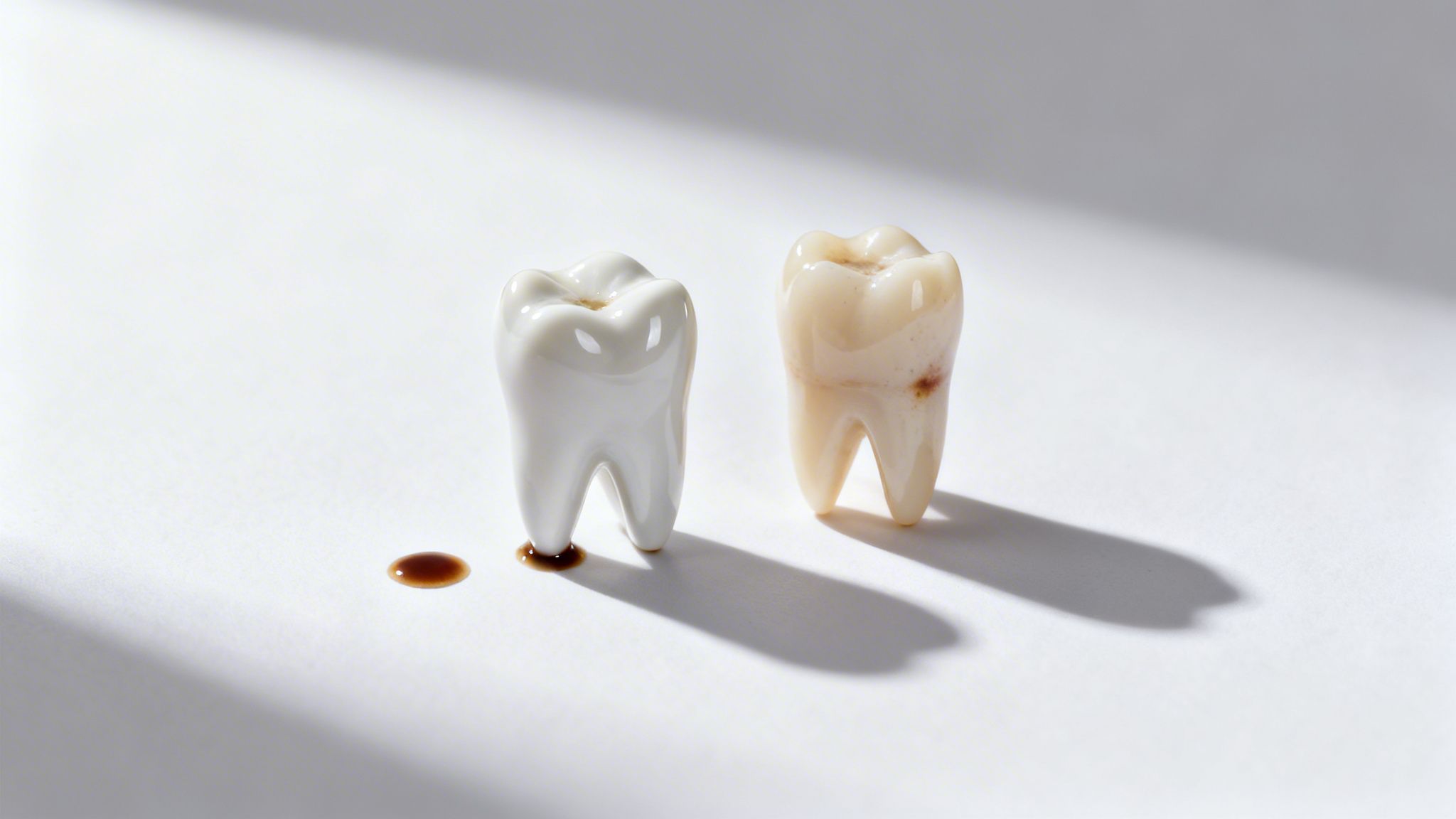
The ceramic used for porcelain veneers is non-porous, almost like glazed pottery. It simply won't absorb pigments from what you eat and drink, keeping your smile bright and the color stable for its entire lifespan. You can go about your life without worrying about your smile dulling over time.
Composite resin, however, is a more porous material. Over time, it will gradually soak up stains, which can lead to a yellowish or discolored appearance. While regular polishing at our office during your dental cleaning and exams can help, composites just can't maintain their day-one color like porcelain can.
Porcelain veneers offer a "set it and forget it" advantage regarding color stability. Their resistance to staining ensures your smile looks as brilliant in year ten as it did on day one, making them a low-maintenance choice for a lasting, radiant smile.
Of course, proper at-home care and regular dental cleanings are essential for getting the most out of any veneer. To help you protect your investment, we put together a guide on how to take care of veneers. Following these simple steps will keep your smile looking its best for years.
What to Expect During Your Veneer Procedure
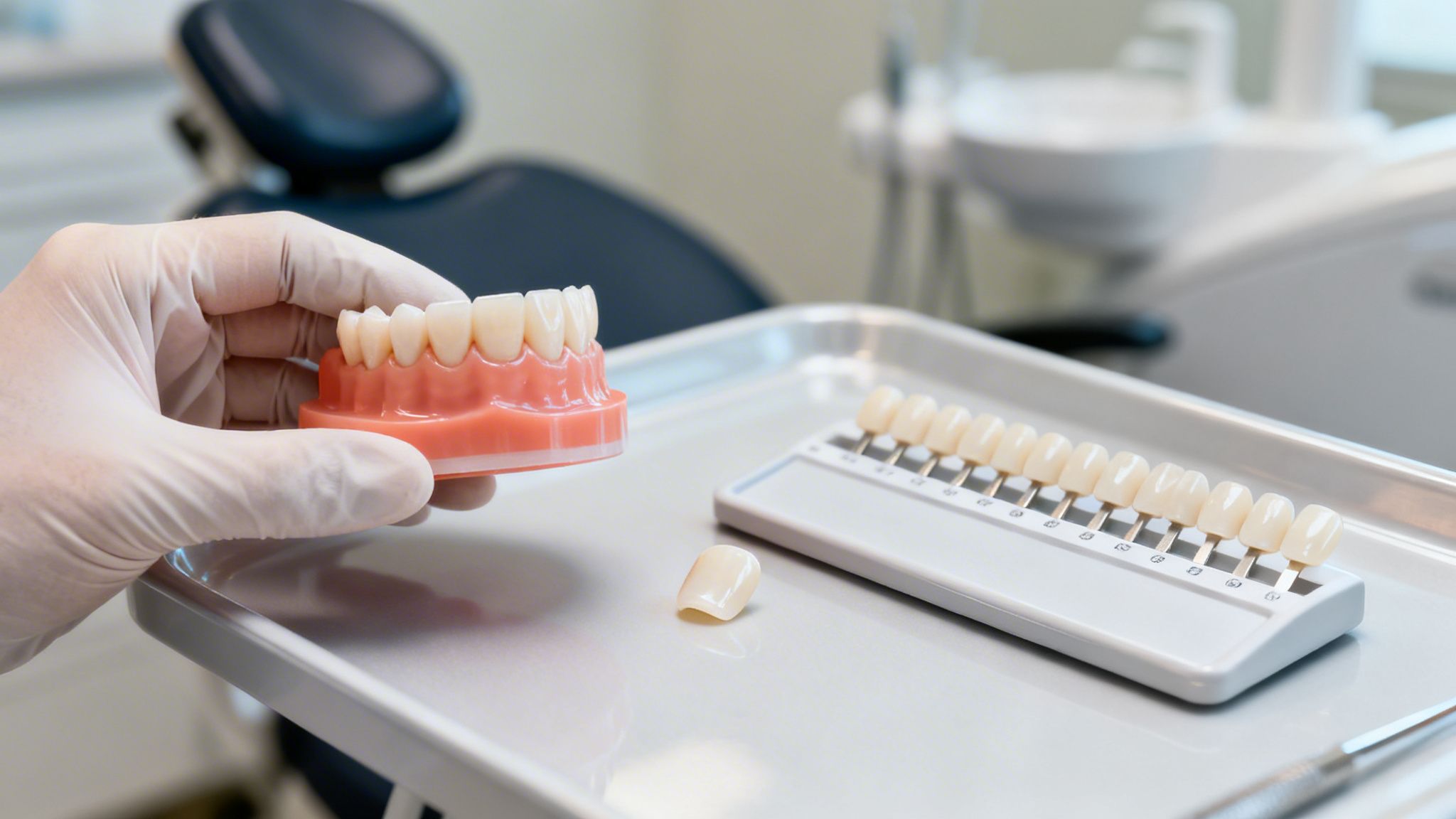
Knowing what’s ahead can make any dental visit feel more comfortable and stress-free. At the office of William M. Schneider, DDS, we believe in clear communication and gentle care, so you always feel confident in your treatment. As your dentist in Walnut Creek, we want you to feel at ease from start to finish.
The path to getting porcelain and composite veneers is quite different. The choice you make affects your time in the chair and how many visits you'll make to our Walnut Creek office. Understanding these two journeys is the first step in picking the perfect cosmetic solution for your smile.
The Composite Veneer Procedure a Single-Visit Smile Enhancement
Composite veneers deliver a fast and stunning transformation, often in just one appointment. This makes them a fantastic choice if you’re looking for immediate results for minor issues like small chips, gaps, or stubborn discoloration.
The entire process is a form of direct bonding, where Dr. Schneider applies his artistic touch right at your chairside. Here’s a quick look at what patients can expect during their visit:
- Preparation and Shade Selection: First, we’ll pick the perfect resin shade to blend seamlessly with your natural teeth. The tooth surface is then gently cleaned and prepped to create a strong, lasting bond.
- Application and Sculpting: Dr. Schneider skillfully applies the putty-like composite resin in layers. He meticulously sculpts and shapes the material to build your ideal tooth shape and size.
- Curing: A special curing light hardens the resin in seconds, bonding it securely to your tooth.
- Final Shaping and Polishing: Once the veneer is hardened, it’s refined even further. The final step is a detailed polish that gives it a smooth, natural-looking luster.
You’ll leave our Walnut Creek office that very same day with a beautifully renewed smile. It’s a minimally invasive procedure that often requires little to no removal of your natural tooth enamel.
Composite bonding is an ideal solution for patients seeking a quick and conservative cosmetic fix. Because the procedure is completed in-house in a single visit, it’s a time-efficient way to achieve significant aesthetic improvements.
The Porcelain Veneer Procedure a Multi-Step Journey to Perfection
Getting porcelain veneers is a more involved process that requires at least two visits to our practice. This multi-step journey ensures your final veneers are custom-crafted for a flawless fit and a durable finish that can last for 10-15 years or more.
Your First Appointment
The first visit is all about preparation and planning. Dr. Schneider will gently reshape the front of your teeth, removing a very thin layer of enamel—typically about 0.5 millimeters. This step is vital for making sure the veneer sits flush with your other teeth and doesn't look bulky.
Once the teeth are prepped, we take precise digital impressions and dental X-rays. These are then sent to a master dental laboratory where skilled technicians handcraft your veneers from high-quality ceramic. Before you go, we’ll place temporary veneers to protect your teeth and keep your smile looking great while you wait.
Your Final Bonding Appointment
In about two weeks, your custom porcelain veneers will arrive from the lab. You’ll return to our Walnut Creek office for the big reveal and final placement.
- Dr. Schneider will remove the temporary veneers and thoroughly clean your teeth.
- He will carefully place each porcelain veneer, checking the fit, shape, and color before permanently bonding it.
- Finally, a strong dental adhesive and a special light are used to secure the veneers to your teeth for good.
This final appointment is always the most exciting part, as you get to see your brand-new, transformed smile for the very first time. We take every measure to ensure your comfort from start to finish.
A Practical Look at Veneer Costs and Value
Talking about the financial side of your new smile is a crucial step in the process. We believe in being completely transparent, helping our Walnut Creek patients see the whole picture—not just the initial price, but the real, long-term value of their investment. The difference in cost between porcelain and composite veneers really comes down to the materials, time, and artistry involved in each.
Composite veneers are a more accessible starting point for cosmetic smile enhancements. Because we sculpt them directly onto your teeth in a single visit, there are no separate lab fees. This makes them a more budget-friendly option upfront, which many of our patients appreciate.
Porcelain veneers, on the other hand, do have a higher initial cost. This is because each veneer is custom-made by a highly skilled technician in a specialized dental lab. That process, along with the premium ceramic materials we use, means a more significant initial investment.
A Deeper Dive Into Long-Term Value
While the upfront cost is definitely a factor, the true value of your veneers becomes clear when you look at their lifespan and maintenance needs. A smile transformation is an investment in your confidence and well-being, and it helps to think about the cost over several years. Thanks to its incredible durability, porcelain often ends up being the more economical choice in the long run.
The cost difference between the two can be pretty significant, which makes composites an appealing option for many. In major US markets like California, composite veneers can cost between $400 and $1,500 per tooth. That’s often about half the $900 to $2,500 price tag for porcelain, a difference driven by the single-visit application and lack of lab fees.
But the story changes when you factor in how long they last. Let's break it down: a set of 10 composite veneers at $800 each ($8,000 total) that needs replacing every 5-7 years can cost you between $1,143 and $1,600 annually. In contrast, a set of 10 porcelain veneers at $1,500 each ($15,000 total) that lasts 15 years or more averages out to just $1,000 per year, often making it the better financial choice over time. You can explore more on this topic to get a full financial breakdown.
Porcelain veneers are a perfect example of "you get what you pay for." While the initial cost is higher, their exceptional durability and stain resistance mean fewer replacement costs and touch-ups, often resulting in a lower total cost of ownership over 15+ years.
Financing Your New Smile in Walnut Creek
We get it—cosmetic dental work is an important personal and financial decision. Most dental insurance plans don’t cover treatments that are primarily for cosmetic reasons, but we are committed to making your dream smile an achievable reality.
Here at our Walnut Creek dental office, we want to help remove any financial hurdles so you can focus on the excitement of your smile transformation. We proudly offer flexible financing options to help manage the cost of your treatment. Our friendly team is always here to walk you through the choices and help you find a plan that fits comfortably within your budget.
Your journey to a confident smile is our top priority. We're here to support you every step of the way, from answering your questions about the difference between porcelain and composite veneers to discussing payment solutions that work for you.
Making the Right Choice for Your Smile
So, you’re weighing your options for veneers. Which one is the right fit for your smile? The honest answer is that the best choice comes down to your personal goals, your budget, and your lifestyle. Here in our Walnut Creek dental office, we help patients navigate this decision every day to find a solution they’ll be happy with for years to come.
Think of it this way: composite veneers are often the perfect answer for a quick, targeted, and budget-friendly fix. If you’ve got a minor chip, a small gap between teeth, or one discolored tooth you’d like to correct in a single visit, direct composite bonding is an excellent and conservative approach.
On the other hand, porcelain veneers are the gold standard for a total, long-lasting smile transformation. If your goal is a complete smile makeover, correcting significant discoloration, or achieving a remarkably natural look that lasts, porcelain delivers incredible beauty and durability.
Finding Your Path to a Better Smile
To help you see how your goals line up with each option, this decision tree can point you in the right direction.
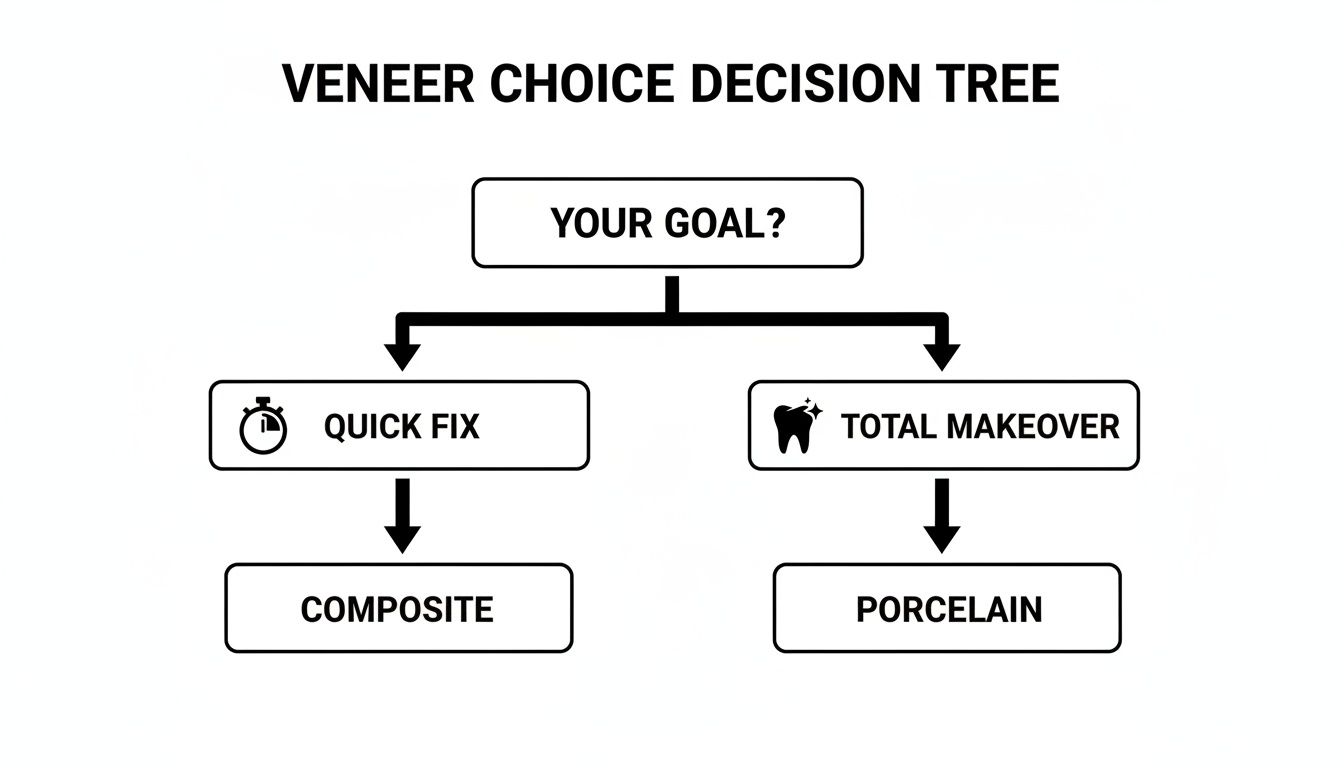
As you can see, your primary objective—whether it’s a fast repair or a comprehensive makeover—is the biggest factor. This is exactly how we approach cosmetic dentistry in our practice, starting with what matters most to you.
The most important step you can take is to schedule a personal consultation. This is where we go beyond general advice about the difference between porcelain and composite veneers and focus completely on you and your smile. If you've been searching for a "dentist near me" who will truly listen, you've come to the right place.
Your smile is one-of-a-kind, and your treatment plan should be, too. A one-on-one consultation allows Dr. Schneider to evaluate your dental health, listen to your vision, and answer all your questions. This ensures the final recommendation is truly in your best interest.
We warmly invite our neighbors in Walnut Creek and the greater East Bay to schedule a visit with Dr. Schneider. He’ll listen to what you want to achieve, perform a thorough exam, and work with you to create a treatment plan that feels right. Whether you need a simple tooth extraction or a full cosmetic dentistry makeover, our goal is to help you achieve a healthy, bright smile you’re proud to share. Your journey starts with a simple conversation. Contact us today to schedule your new patient appointment.
Frequently Asked Questions About Veneers
When you're exploring options like porcelain and composite veneers, it's natural to have a lot of questions. Here in our Walnut Creek office, we've heard them all, and we believe in giving you clear, straightforward answers so you feel completely confident in your decisions.
Here are a few of the most common questions we get from patients just like you.
Can I Whiten My Veneers Later On?
This is a fantastic question, and the short answer is no. Once they’re placed, neither porcelain nor composite veneers can be whitened with traditional bleaching treatments. The materials simply don’t react to whitening agents the way natural tooth enamel does.
Porcelain is amazing when it comes to resisting stains, so its color stays incredibly stable over the years. Composite material, on the other hand, can pick up stains over time, but it can't be lightened with bleach. If a composite veneer discolors, it would need to be polished or replaced to change its shade.
Because of this, Dr. Schneider almost always recommends that patients complete any teeth whitening they want before their veneer procedure. This lets us perfectly match your new veneers to your brighter, refreshed smile for a seamless, natural look.
How Much Tooth Is Removed For Veneers?
The amount of tooth preparation really depends on the type of veneer and what we're trying to achieve with your smile. Composite veneers, for example, are known for being a very conservative treatment. Often, they require little to no removal of your natural tooth structure, which is why you might hear them called "no-prep" veneers.
For porcelain veneers, Dr. Schneider prepares the tooth by removing a tiny layer of enamel—typically just 0.5 millimeters. That's about the thickness of a contact lens. This minimal step is crucial for making sure the veneer fits flush against your tooth without looking bulky, and it preserves the maximum amount of healthy tooth structure for a bond that's both strong and long-lasting.
When considering your options for smile enhancement, it's crucial to evaluate whether you need veneers, whitening, or a more comprehensive smile makeover. For a detailed discussion on this, you can refer to an article that explores How Do I Know If I Need Veneers, Whitening, or a Full Smile Makeover?
The key takeaway is that both procedures are designed to be as conservative as possible. Our goal is always to enhance your smile while protecting the integrity of your natural teeth.
Are Veneers A Permanent Dental Treatment?
Veneers are definitely a long-term cosmetic solution, but they aren’t technically permanent because they will need to be replaced eventually. With the right care, you can expect porcelain veneers to last 15 years or more. Composite veneers generally have a shorter lifespan of about 5 to 7 years.
Because a thin layer of enamel is removed to place porcelain veneers, the procedure is considered irreversible. Once prepared, the tooth will always need to be covered by a veneer or another type of restoration, like a crown, to keep it protected.
This is a long-term commitment, and it's something Dr. Schneider will discuss with you in detail during your consultation right here in our Walnut Creek office. We are dedicated to providing the best dental care in the area and ensuring you have all the information you need.