If you're reading this, you may be doing what many people in Walnut Creek do between busy workdays, school pickups, and errands. You're trying to stay ahead of dental problems before they turn into toothaches, repairs, or emergency visits. That instinct is the right one.
A healthy smile usually isn't the result of one big treatment. It's built through small, consistent preventive steps. One of the simplest of those steps is a professional fluoride treatment, which can help protect both children's teeth and adult teeth from the daily wear caused by acids, sugars, and plaque.
For patients searching for a dentist near me or a dentist in Walnut Creek, CA, fluoride treatment often comes up during a routine visit, usually alongside cleaning and exams, dental x-rays, or new patient exams. Even though it's common, many people still aren't fully sure what fluoride does, who needs it, or what to expect in the chair. Let's make it clear.
Your Dentist in Walnut Creek for Stronger Healthier Smiles
Most families want the same thing from dental care. They want fewer problems, less discomfort, and a smile that stays strong for years. That applies whether you're bringing in a child for a checkup, keeping up with your own preventive care, or trying to avoid future treatment like a tooth extraction, restorative dentistry, or an unexpected visit to an emergency dentist.
In Walnut Creek, preventive care matters because life gets busy fast. It's easy to brush off mild sensitivity, a chalky spot on a tooth, or the feeling that your teeth just don't seem as strong as they used to. But small issues often develop unnoticed. Fluoride treatment is one of the easiest ways your dentist can help protect enamel before those early changes become bigger concerns.

Why prevention matters so much
Think of preventive dentistry as maintenance, not repair. You don't wait for a major breakdown before paying attention to your car. Teeth work the same way. They face pressure every day from meals, drinks, dry mouth, grinding, and the bacteria that naturally live in the mouth.
Professional fluoride fits into this preventive approach because it supports enamel, the outer layer of the tooth. Strong enamel helps lower the chance that weak spots turn into decay. That matters for children with developing smiles, adults with old fillings, and older adults who may notice sensitivity near the gumline.
Practical rule: The best dental visit is often the one that helps you avoid needing more involved treatment later.
Where fluoride fits into complete dental care
Fluoride doesn't replace brushing, flossing, or regular visits. It works alongside them. During a routine appointment, your dentist may recommend fluoride after an exam if your teeth could use extra support.
This is also why preventive care connects to other services people often search for, including cosmetic dentist near me, teeth whitening, and cosmetic dentistry. A brighter smile looks better when it's built on healthy enamel. And if someone eventually needs restorative dentistry, crowns, or even dental implants near me, keeping the remaining natural teeth healthy is still a major part of long-term care.
How Daily Acids and Sugars Weaken Tooth Enamel
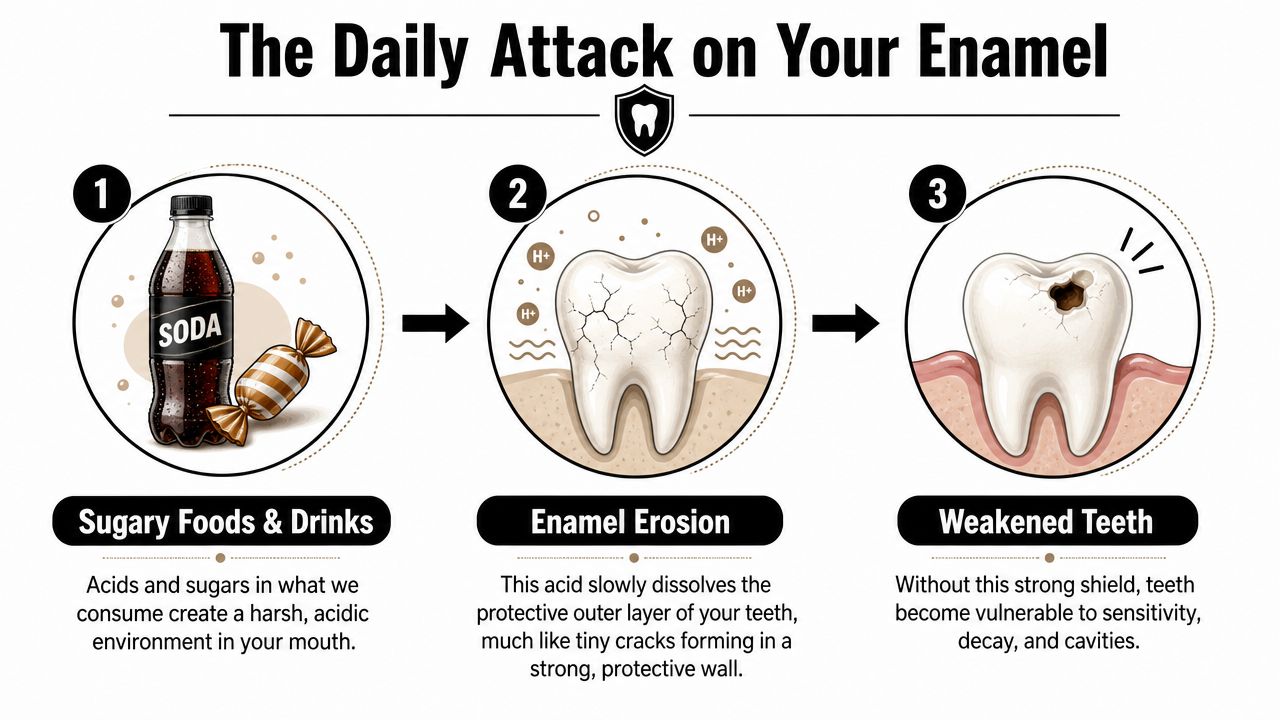
Enamel is the tooth's outer covering. It's hard, but it isn't indestructible. Every day, your teeth go through a cycle of stress and recovery. Acidic drinks, sweet snacks, and the bacteria in plaque all contribute to an environment that can slowly wear enamel down.
A simple way to think about enamel is as a shield. That shield doesn't crack all at once. It weakens little by little. Each acid exposure softens the surface, and over time the tooth can lose minerals that help it stay strong.
The daily cycle that confuses many patients
Many people assume cavities happen only if they eat a lot of candy. That's too simple. The primary issue is repeated acid exposure over time. Soda can do it. Sports drinks can do it. Frequent snacking can do it. Even sipping coffee with sweetener throughout the morning keeps teeth in a more acidic environment.
This process is often called enamel weakening or mineral loss. If you'd like a closer look at what causes this kind of damage, this page on enamel erosion causes explains the pattern in patient-friendly language.
What weakening enamel can feel like
Not everyone notices the change right away. Some people first feel it as sensitivity to cold water. Others see white spots, rough areas, or small changes near the edges of the teeth. In some cases, there are no obvious symptoms until a cavity has already formed.
Here are common signs that enamel may be under stress:
- Cold sensitivity: Teeth may react when you drink something chilled.
- Tender spots near the gums: Exposed areas can feel more sensitive during brushing.
- Surface changes: Teeth may look duller, less smooth, or slightly uneven.
- Early decay risk: Weakened enamel gives bacteria an easier place to start causing damage.
Your teeth don't have to hurt for them to need more protection.
That point matters because prevention works best early. Once enamel has lost some of its resilience, the goal is to help the tooth recover and become more resistant to future attacks.
Strengthen Your Smile with Professional Fluoride Application
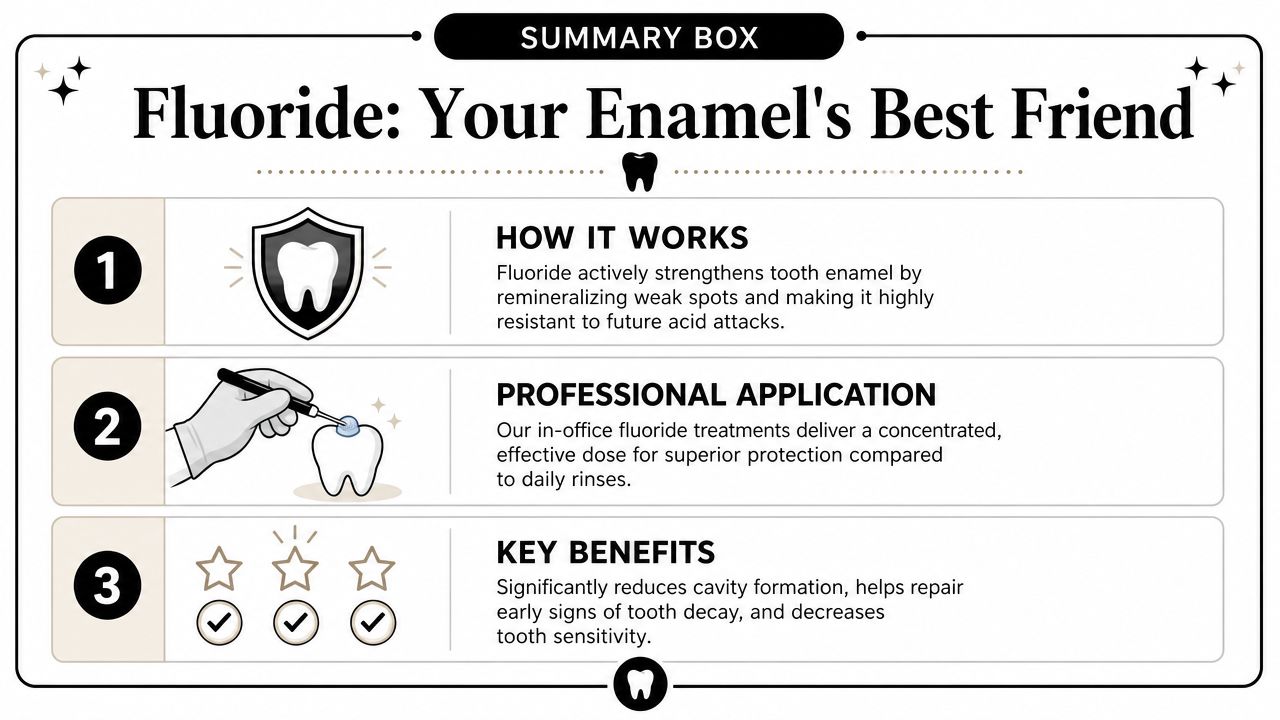
The main fluoride treatment benefits are readily understood. Fluoride helps teeth take up minerals again in weak areas. In plain language, it helps reinforce the enamel shield where it has started to soften.
That doesn't mean fluoride fills a large cavity or replaces restorative care. If decay has advanced, a filling or another treatment may still be needed. But when a tooth has early weak spots, fluoride can support the surface and make it harder for acids to keep causing damage.
How professional fluoride helps
At-home toothpaste with fluoride is important, but professional fluoride treatment gives teeth a stronger, more targeted application during a dental visit. That extra support can be especially helpful when someone has a history of cavities, dry mouth, gum recession, braces, or sensitivity.
A useful way to think about it is this:
| Situation | How fluoride helps |
|---|---|
| Early weak spots in enamel | Supports remineralization of vulnerable areas |
| Frequent sensitivity | Helps calm exposed or stressed surfaces |
| Old dental work | Offers added protection around margins of fillings or crowns |
| Developing teeth in children | Supports strong enamel as adult teeth come in |
Why children and adults both benefit
Parents often associate fluoride with pediatric dentistry, but adults benefit too. Children need protection while their teeth are growing in and learning to withstand daily eating and brushing habits. Adults may need fluoride because of worn enamel, exposed root surfaces, dry mouth, or previous dental work that creates spots where decay can begin more easily.
For many families, fluoride is one of the easiest preventive services to add to routine care because it doesn't require a separate major procedure. It can be part of the same visit as your exam and cleaning.
Clinical perspective: A healthy smile is the foundation for everything else, from comfort when chewing to cosmetic dentistry results that last well.
That last point often gets missed. Patients who are interested in teeth whitening, veneers, or other appearance-focused care still need strong enamel and stable oral health first. Preventive treatment supports the smile you have now and helps prepare you for future choices, whether that's maintenance, restorative dentistry, or cosmetic improvements.
Varnish Gel or Foam Which Fluoride Is Right for You
Most patients are surprised by how simple fluoride treatment is. The bigger question usually isn't whether it hurts. It doesn't. The more common question is which type is being used and why.
Dentists typically choose the form of fluoride based on age, comfort, cavity risk, and how practical the application will be that day. The three forms patients hear about most often are varnish, gel, and foam.
A side by side look
| Type | What it feels like | Why a dentist may choose it |
|---|---|---|
| Varnish | Painted onto the teeth quickly. It sets fast. | Often preferred because it's simple, controlled, and easy for many patients |
| Gel | Usually placed with trays or applied directly | Useful when broader coverage is needed |
| Foam | Light, airy texture, often tray-based | Another option for in-office protection depending on the situation |
What most patients receive today
Varnish is common because it's quick and straightforward. The dentist or hygienist dries the teeth and brushes the material onto the surfaces. It doesn't involve drilling, injections, or complicated equipment. Patients usually tolerate it very well, including young children and adults who feel nervous in the dental chair.
Gel and foam are also professional options. These may be placed in trays that sit over the teeth briefly. Some patients remember this style from earlier dental visits. The exact method depends on your needs, your age, and your dentist's clinical judgment.
A few things stay the same no matter which type is used:
- The treatment is fast: It usually adds only a short step to a regular appointment.
- There's no recovery time: You can return to your normal day with only simple aftercare instructions.
- It's personalized: Your dentist chooses the type that best fits your smile, not a one-size-fits-all routine.
For patients in Walnut Creek and the East Bay, that individualized approach matters. A child with newly erupted teeth, an adult with gum recession, and a patient managing sensitivity may all benefit from fluoride, but not in exactly the same way.
What to Expect During Your Visit in Walnut Creek
When patients hear the word treatment, they sometimes expect something complicated. Professional fluoride is one of the easiest parts of a dental appointment. It's often done during a preventive visit after your teeth have been cleaned and examined.
Step by step in the dental chair
A typical visit begins with the basics. If you're a new patient, that may include new patient exams, a review of your dental history, and any needed dental x-rays. If you're returning, your visit may focus on your routine cleaning and exams and any current concerns such as sensitivity, dry mouth, or areas that tend to trap food.
If your dentist recommends fluoride, the process is simple:
- Teeth are cleaned and checked. Clean tooth surfaces allow the fluoride to contact enamel effectively.
- The teeth are dried as needed. This helps the material stay where it should.
- The fluoride is applied. It may be brushed on as varnish or delivered in another professional form.
- You get aftercare instructions. These may include guidance about eating, drinking, or brushing for a short period.
Why professional application matters
Professional fluoride isn't the same as using toothpaste at home. Both are useful, but in-office treatment is selected and applied by a dental team that has already examined your mouth and identified where extra protection may help most. That's especially valuable if you have recurring cavities, gum recession, old fillings, or a higher chance of enamel wear.
Patients who are searching for a dentist in Walnut Creek, CA often want this kind of guidance. They don't just want a product. They want a dental team to explain what fits their situation and why.
Here's a short look at the kind of patient education that helps make preventive care feel more familiar:
Comfort safety and next steps
Fluoride treatment is widely used in preventive dentistry because it's easy to tolerate and quick to apply. If you're someone who feels anxious during dental visits, this is often one of the least stressful services you'll receive. There's no drilling, no numbing, and no downtime in the usual sense.
This kind of preventive care also fits into the bigger picture of long-term oral health. Stronger enamel may help you avoid future problems that can lead to more involved care, such as fillings, crowns, tooth extraction, or urgent visits to an emergency dentist. It also supports other goals, whether you're maintaining a healthy smile or considering future work in cosmetic dentistry or even replacement options like dental implants near me.
Patient Questions About Fluoride Treatments Answered
Patients usually have a few practical questions before saying yes to fluoride. That's normal. Clear answers help you make a decision with confidence.
Do I still need fluoride if I brush with fluoride toothpaste
Maybe, yes. Toothpaste gives you daily exposure, which is helpful. A professional fluoride treatment is different because your dentist applies it directly in the office, based on your cavity risk, enamel condition, and any signs of sensitivity or early weakening.
Is fluoride only for children
No. Children often benefit because their teeth are still developing, but adults can benefit just as much. This is especially true if you have dry mouth, gum recession, sensitive teeth, a history of decay, or existing dental work that needs extra protection.
Some of the best fluoride candidates are adults who thought fluoride was only a kids' treatment.
Will it help if my teeth are sensitive
It can. Sensitivity has different causes, so fluoride isn't the answer to every case. But if the discomfort is related to weakened enamel or exposed areas, fluoride may help reduce that irritated feeling and make teeth more comfortable.
Can I eat or drink afterward
Your dental team will give specific instructions based on the type used. In many cases, you'll be asked to wait a short time before eating, drinking, or brushing. Following those instructions helps the fluoride stay in contact with the teeth long enough to do its job.
What else should I do to prevent decay
Fluoride works best as part of a full prevention plan. That usually includes regular checkups, daily brushing and flossing, paying attention to snacking habits, and treating dry mouth or grinding if those are part of the problem. For more home-care guidance, this article on how to prevent tooth decay naturally gives practical prevention ideas.
Is fluoride treatment safe
When it's recommended and applied by a dental professional, fluoride treatment is a routine part of preventive care for many patients. If you have questions about your age, medical history, or your child's needs, ask during your visit. Your dentist should explain the reasoning clearly and tailor recommendations to you.
If you're looking for a trusted local partner for preventive dental care, William M. Schneider, DDS welcomes patients in Walnut Creek and the East Bay with compassionate, experienced care. Whether you need a routine checkup, help with sensitivity, a new patient exam, or guidance on keeping your family's smiles strong, schedule an appointment to get personalized recommendations and long-term support for a healthier smile.