Some people search for a gentle dentist near me late at night, with a hand over a sore tooth and a long list of reasons they've been putting care off. Others aren't in pain at all. They're just tired of white-knuckling routine cleanings, dreading injections, or worrying that they'll feel rushed once they're in the chair.
If that sounds familiar, your concern is valid. Dental fear is common, and it changes how people choose care. In the United States, approximately 36% of adults report some form of dental fear, with around 12% suffering severe dental phobia, a pattern tied to growing demand for comfort-focused treatment and sedation options, according to this overview of gentle dental care trends.
For families and professionals looking for a dentist in Walnut Creek, CA, the real question isn't just who's nearby. It's who will listen, explain, and treat you at a pace that feels manageable. A gentle approach should help with everyday dental care, cleaning and exams, dental X-rays, new patient exams, and more involved treatment such as tooth extraction, dental implants near me, cosmetic dentistry, or an emergency dentist visit when you need help quickly.
Your Search for a Gentle Dentist Ends Here
A lot of patients start this search after one bad experience. It might have been years ago. A painful injection, a procedure that felt rushed, or a visit where no one explained what was happening can stay with you longer than the dental issue itself.
That's why the phrase Gentle dentist near me means more than convenience. It usually means you want care that feels calmer from the first phone call onward. In Walnut Creek, that often includes people looking for a new family dentist after moving, busy adults trying to catch up on overdue treatment, and parents who want a dental office that won't make their child fearful of future visits.

Why this search matters
Dental anxiety often delays treatment until a small problem becomes harder to ignore. A cavity that might have needed a simple filling can progress. A cracked tooth can turn into pain. Inflamed gums can worsen if cleanings and exams keep getting postponed.
Practical rule: The gentlest dental visit usually starts before treatment begins. It starts when the office takes your fear seriously.
For patients in Walnut Creek and nearby East Bay neighborhoods, a local dental office should make it easier to get preventive care consistently, respond to urgent concerns, and plan treatment in steps that fit your comfort level.
What patients are usually hoping to find
Patients aren't looking for luxury. They're looking for relief.
They want a dentist who explains what's necessary, what can wait, and what their options are. They want a team that understands that a routine exam can feel difficult when you've had a tough dental history. They want a place where comfort matters whether you're coming in for teeth whitening, restorative dentistry, a broken tooth, or an emergency dental visit.
That's the standard a gentle dental practice should meet in Walnut Creek, CA.
What Gentle Dentistry Really Means
Gentle dentistry isn't a decorating style. It isn't a TV on the ceiling or a blanket by itself. Those touches can help, but they don't define whether care feels safe.
A gentle approach is behavioral, clinical, and practical. It shapes how the team communicates, how treatment is paced, how anesthesia is delivered, and how much control the patient keeps during the visit.
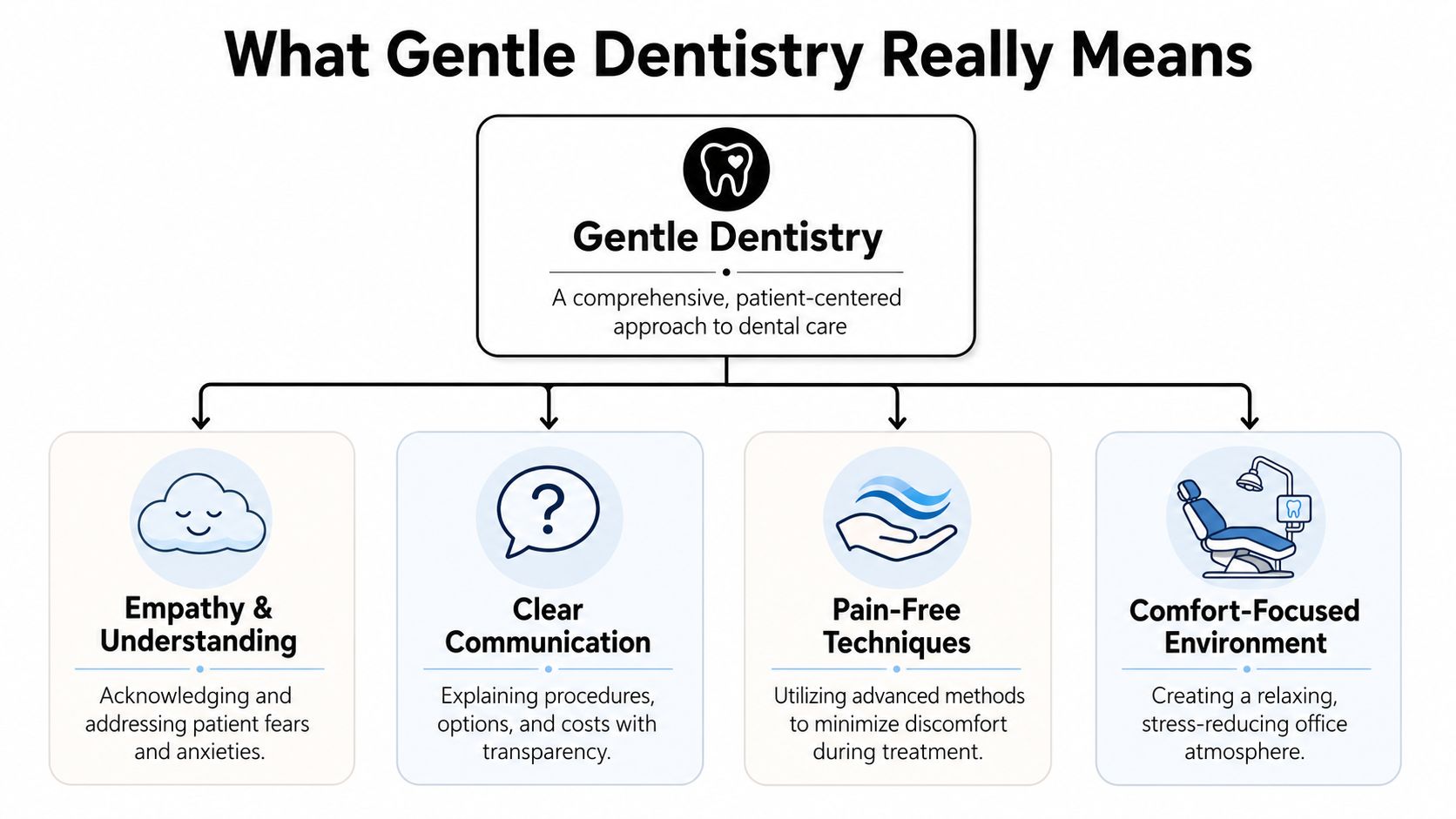
The four parts that matter most
- Empathy and attention: A gentle office notices hesitation, asks about past experiences, and adjusts care instead of treating anxiety like an inconvenience.
- Clear communication: Patients should know what's happening, why it matters, and what they may feel during each step.
- Pain-reduction methods: Comfort depends on technique, not just intention. That includes how injections are given and how procedures are sequenced.
- A calm environment: Noise, pacing, and staff tone all affect whether a patient feels settled or on edge.
A 2023 review in the Journal of Dental Education found that communication clarity, control over pacing, and procedural transparency, rather than physical amenities, were the strongest predictors of patients reporting a visit as “gentle” or “low stress”, as summarized by this patient-experience discussion.
What works and what doesn't
Some practices say they're gentle because they have a modern office. That's not enough.
What works is a process patients can feel:
| What helps | What falls short |
|---|---|
| Explaining each step before it happens | Talking only after the procedure starts |
| Agreeing on a stop signal | Asking patients to “just relax” |
| Offering pauses during longer visits | Treating speed as the top priority |
| Discussing comfort options in advance | Waiting until the patient is already distressed |
A gentle dentist gives you information and control. That combination lowers stress better than office décor ever will.
The patient's role matters too
Patients sometimes worry they'll seem difficult if they ask for breaks, want more explanation, or need treatment divided into shorter appointments. They won't.
Good dental care works better when expectations are clear. If you're looking for a dentist near me in Walnut Creek because you've had anxiety, say so early. That allows the team to plan around your triggers, whether that's injections, sounds, gag reflex, or fear of not being able to pause.
Anxiety-Reducing Practices and Technology We Use
The biggest fear for many adults isn't the diagnosis. It's the feeling that treatment will hurt, or that once it starts they won't be able to stop. That's where practical comfort measures matter.
Gentle care is most believable when it's tied to specific methods. Vague promises don't calm people. Consistent systems do.
Making injections easier
Numbing is one of the first things anxious patients ask about, and for good reason. A rushed injection can make the whole appointment harder than it needs to be.
Modern local anesthetic delivery systems, including computer-controlled intraoral devices, can reduce injection discomfort. Studies show that when dentists use these slow-flow techniques, patient-reported pain scores during injections can drop by roughly 30 to 50%, according to this overview of dental technology and anesthetic delivery.
That matters because a more comfortable start often changes how the rest of the visit feels. Slow delivery, careful topical numbing, and a steady pace usually work better than trying to “get it over with” quickly.
Sedation options for anxious patients
Not every patient needs sedation. Some do better with a slower exam, clear communication, and painless injections alone. Others benefit from additional support.
For patients who want to understand their options, sedation dentistry in Walnut Creek can include approaches such as nitrous oxide or oral sedation when appropriate. The right choice depends on medical history, the procedure involved, and how anxiety tends to show up for that individual patient.
A few trade-offs are worth knowing:
- Nitrous oxide: Often appeals to patients who want something light and adjustable during the visit.
- Oral sedation: May be useful for stronger anxiety, but it requires more planning and clear instructions.
- No sedation: Sometimes the best fit for shorter appointments when the patient mainly needs predictability and a slower pace.
Comfort is also procedural
A low-stress appointment depends on more than equipment. The sequence of care matters.
For example, many anxious patients do better when the first visit focuses on conversation, X-rays, and planning rather than jumping straight into treatment. Others prefer shorter appointments for restorative dentistry, tooth extraction, or a new patient exam so they can build trust gradually.
One practical option in Walnut Creek is William M. Schneider, DDS, a practice that offers preventive, cosmetic, and restorative care with attention to painless injections, clear explanations, and sedation support when appropriate. That combination is often what patients mean when they search for a gentle dentist near me.
Better technology helps. Better pacing helps just as much.
When both are in place, patients are more likely to come in for regular cleaning and exams instead of waiting until discomfort becomes an emergency.
Comprehensive Services for Your Healthy Smile
Comfort isn't a separate service. It should be built into the full range of dental care. Patients shouldn't have to choose between a calm experience and complete treatment.
In practical terms, that means a gentle dental office should be able to help whether you need prevention, cosmetic improvements, restorative treatment, or urgent care in Walnut Creek, CA.
Preventive care that doesn't feel overwhelming
Routine care is where many anxious patients rebuild confidence. Cleanings, dental X-rays, and new patient exams should feel organized and unhurried, especially if it's been a while since your last visit.
When preventive care feels manageable, it's easier to catch early decay, monitor gum health, and avoid the kind of pain that leads people to search for an emergency dentist at the last minute. For families, this also helps children and teens form a better association with dental visits from the start.
Cosmetic and restorative treatment with comfort in mind
Patients looking for a cosmetic dentist near me often assume elective care will feel more stressful. It doesn't have to. Treatments such as teeth whitening or Invisalign planning should include the same clear communication and pacing as any other appointment.
Restorative services require the same approach. Crowns, bridges, root canal treatment, and dental implants near me conversations usually go better when patients understand the timeline, know what each visit involves, and have options for comfort support if they're nervous.
Here's where gentle care makes a real difference:
- For damaged teeth: Restorative dentistry can protect function and relieve pain before the problem grows.
- For missing teeth: Dental implants and other replacement options can restore chewing ability and smile confidence.
- For advanced problems: Tooth extraction may be necessary, but the experience should still be calm, explained clearly, and carefully numbed.
Why comprehensive care matters
When one office can handle preventive, cosmetic, restorative, and emergency dental needs, patients don't have to keep starting over with new teams and new routines. That continuity matters for anxious adults.
It also means your care plan can be sequenced intelligently. If finances, scheduling, or comfort level require treatment in stages, a full-service practice can prioritize what needs attention first and build from there.
How to Find a Truly Gentle Dentist in the East Bay
Many websites use words like calming, comfortable, or stress-free. Those descriptions aren't useless, but they don't tell you enough. If you're comparing a dentist near me or a dentist in Walnut Creek, CA, you'll get better answers by checking the office's process, not just its branding.
The easiest way to vet a practice is to ask questions that reveal how the team behaves when a patient is nervous.
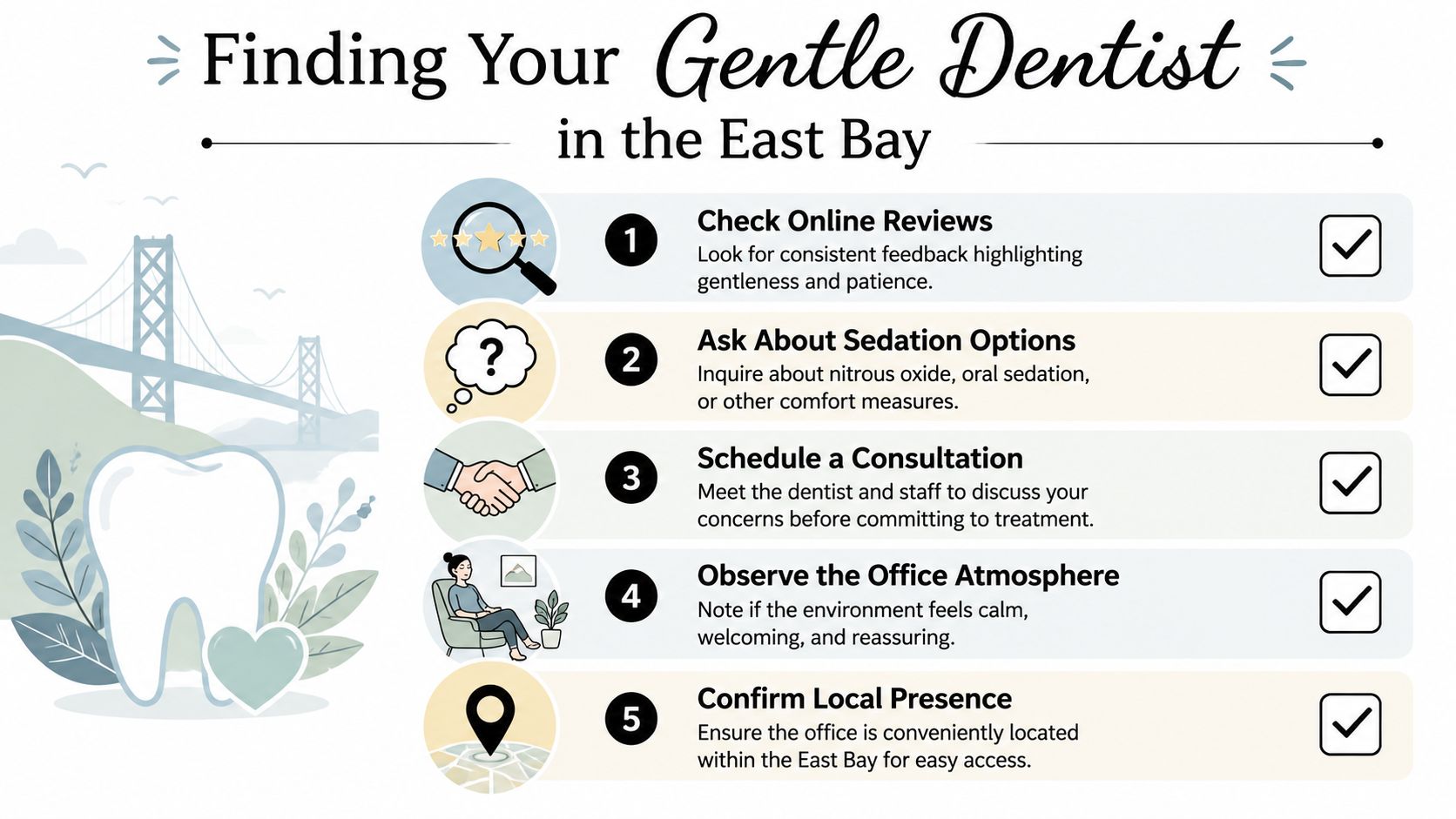
Questions worth asking before you book
A short phone call can tell you a lot. Listen for direct, practical answers.
- How do you help anxious patients during exams and treatment? Good offices can describe their process clearly.
- Can I request pauses during treatment? You want a clear yes, not a vague reassurance.
- Do you discuss comfort options before the procedure starts? That should happen early, not mid-appointment.
- What does a first visit look like for someone with dental fear? The answer should sound patient-centered, not rushed.
- How do you explain costs and treatment choices? Stress often rises when people feel financially uncertain.
Green flags and warning signs
Look for consistency between the website, the reviews, and the phone conversation.
| Green flags | Warning signs |
|---|---|
| Reviews mention patience and clear explanations | Reviews focus only on décor or speed |
| Staff answers anxiety questions calmly | Staff sounds dismissive or hurried |
| The office explains sedation or comfort options plainly | The office gives unclear answers about comfort support |
| New patient visits allow time for discussion | Everything sounds built around turnover |
If a practice can't explain how it handles anxious patients, it probably doesn't have a reliable system.
What to prioritize over appearance
A peaceful waiting room is nice. It just isn't the best predictor of whether the care will feel gentle.
The stronger signals are communication, pacing, and transparency. Those are the factors patients consistently connect with low-stress visits, as noted earlier in the article. In the East Bay, that means your best choice may not be the office with the flashiest branding. It's the one that respects your pace, explains treatment well, and has a plan for comfort before you sit down.
If you're evaluating a local office for cleaning and exams, cosmetic dentistry, restorative dentistry, or emergency dental care, that checklist will tell you far more than a slogan will.
Your First Visit at Our Walnut Creek Dental Office
The first visit should lower stress, not add to it. If you've been avoiding care, the best opening appointment is usually straightforward, conversational, and focused on understanding your needs before treatment begins.
At our Walnut Creek office, the process starts with simple scheduling and clear expectations.
What happens before you arrive
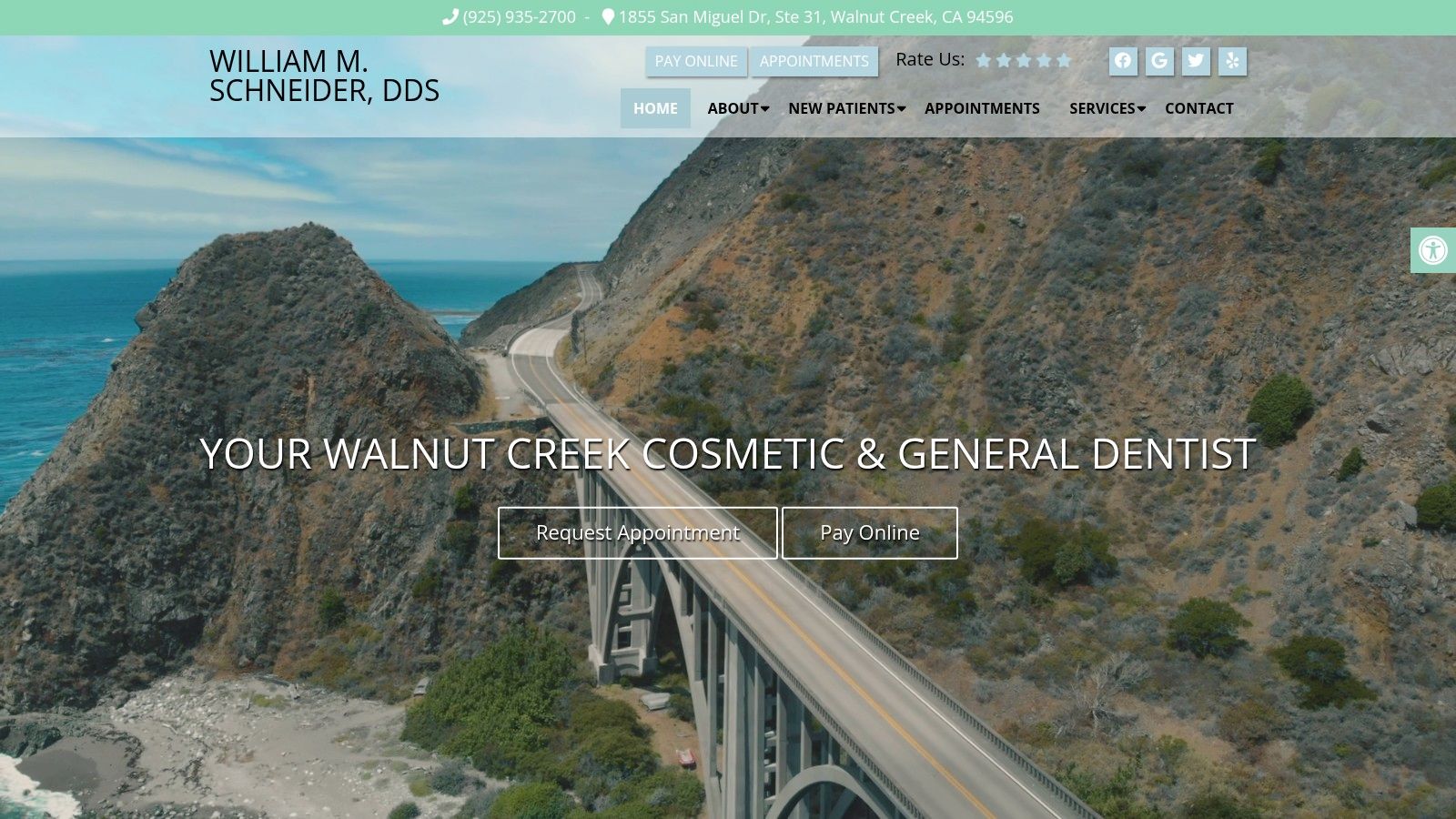
Our office is located at 1855 San Miguel Dr., Suite 31, Walnut Creek, CA. New patients can contact the office to request an appointment, ask questions about services, and discuss concerns before coming in.
That matters because anxiety often overlaps with practical barriers. Leading practices reduce stress by offering flexible scheduling, clear explanations of insurance and payment options, and easy communication before the appointment, as described in this discussion of access and patient support.
If dental fear has been part of the delay, our guide on how to overcome dental anxiety may help you prepare for the visit in a more manageable way.
What your appointment usually includes
A new patient visit often begins with conversation. We review your history, your current concerns, and what you want from your dental care. That might be relief from pain, catching up on overdue preventive work, improving your smile, or getting a second look at a treatment recommendation.
From there, the visit may include:
- Dental X-rays and exam: To evaluate teeth, gums, existing dental work, and any areas causing discomfort.
- Discussion of findings: You should understand what needs attention now, what can be monitored, and what your options are.
- Treatment planning: If you need cleaning and exams, cosmetic dentistry, restorative dentistry, tooth extraction, or emergency dental care, the next steps are outlined clearly.
A good first visit doesn't pressure you. It gives you a plan you can understand.
What patients can expect from us
You can expect straightforward explanations, respectful pacing, and a practical conversation about comfort. If you're anxious, say so. That helps us tailor the visit around what you need, not around a one-size-fits-all routine.
Frequently Asked Questions About Gentle Dentistry
Is gentle dentistry only for people with severe dental fear
No. It helps people with severe fear, but it also helps anyone who wants clearer explanations, more comfortable injections, a calmer pace, or better support during routine care.
Can I still get complex treatment from a gentle dentist
Yes. A gentle approach should carry through preventive care, cosmetic dentistry, restorative dentistry, dental implants, and tooth extraction when needed. Comfort and thorough treatment should work together.
What if I need urgent help from an emergency dentist
If you have significant pain, swelling, or a damaged tooth, call as soon as possible. Emergency dental care should still include clear communication, careful numbness, and practical next steps that don't make a stressful situation worse.
What if I've avoided the dentist for years
You're not the only one. Start with a conversation-focused appointment. The right office won't shame you for the gap in care. It will focus on what's happening now and what will help you move forward safely.
If you've been searching for a gentle dentist near me, a dentist in Walnut Creek, CA, or a local office for preventive, cosmetic, restorative, or emergency dental care, William M. Schneider, DDS offers a straightforward next step. Contact the office to schedule a visit, ask questions about your concerns, and talk through the kind of care that will feel comfortable for you.