Getting a dental implant is a relief for many patients. You can chew comfortably again, smile without thinking about the gap, and stop worrying about a tooth that couldn’t be saved. Then the next question comes quickly: how to care for dental implants so they stay healthy for the long term.
That question matters. An implant is designed to function like a natural tooth, but it still needs the right cleaning routine, the right follow-up care, and the right daily habits. If you’ve recently had implant surgery after a tooth extraction, or you’re searching for a dentist in Walnut Creek, CA who can help you protect an existing implant, the good news is that the routine is manageable once you know what to do.
Patients looking for dental implants near me, a dentist near me, or even an emergency dentist often assume implants are “set it and forget it.” They aren’t. They’re strong, predictable, and highly successful when cared for well. The maintenance is not difficult, but it does need to be consistent.
Protecting Your Investment in a Healthy Smile
You leave the office with a new implant, your bite feels more balanced, and the missing-tooth problem is finally behind you. The next step is simpler than many patients expect. Protect the area during healing, clean it well once your tissues are ready, and keep it checked over time.
A dental implant restores more than appearance. It helps you chew more evenly, supports the way your teeth meet, and keeps your smile from feeling incomplete. I also want patients to understand one practical truth from the start. Good implant results come from the procedure and the care that follows.
At our Walnut Creek practice, we frame implant care in phases because that is how patients live with them. The first phase is protecting healing tissues. The second is building a daily routine that keeps plaque from collecting around the gumline. The third is long-term maintenance, where regular exams help us catch inflammation, bite stress, or wear before they become larger problems. If you want a fuller overview of longevity, how long dental implants last is a helpful next read.
Why implant care is different
An implant crown can look very much like a natural tooth. The attachment around it is different, and that difference matters in daily care. Plaque can gather at the margin where the crown meets the gum. If inflammation stays there, the bone supporting the implant can begin to recede.
That is the trade-off. You do not worry about decay inside the implant crown the way you would with a natural tooth, but you do need to protect the surrounding gum and bone with steady home care and follow-up visits.
Practical rule: Treat your implant like a natural tooth that deserves extra attention at the gumline.
What helps protect an implant long term
The habits that make the biggest difference are straightforward:
- Gentle, consistent cleaning: Use a soft brush and clean the gumline carefully so plaque does not sit undisturbed.
- Regular professional maintenance: Home care matters every day, but it cannot replace exams, cleanings, and dental x-rays when they are needed.
- Early attention to changes: Bleeding, tenderness, swelling, or a new bad taste around an implant should be checked promptly.
A few habits create avoidable problems:
- Scrubbing hard: Brushing with force can irritate tissue without improving cleaning.
- Skipping follow-ups because everything feels normal: Early implant issues are often easier to manage before they become painful.
- Using teeth as tools: Chewing ice, biting pens, or opening packages adds stress to the crown and the components underneath.
Patients usually do best when implant care feels manageable, not complicated. A clear timeline helps. Protect healing first. Build a solid routine next. Keep the implant monitored for the long run.
Immediate Care in the First Weeks After Your Implant Procedure
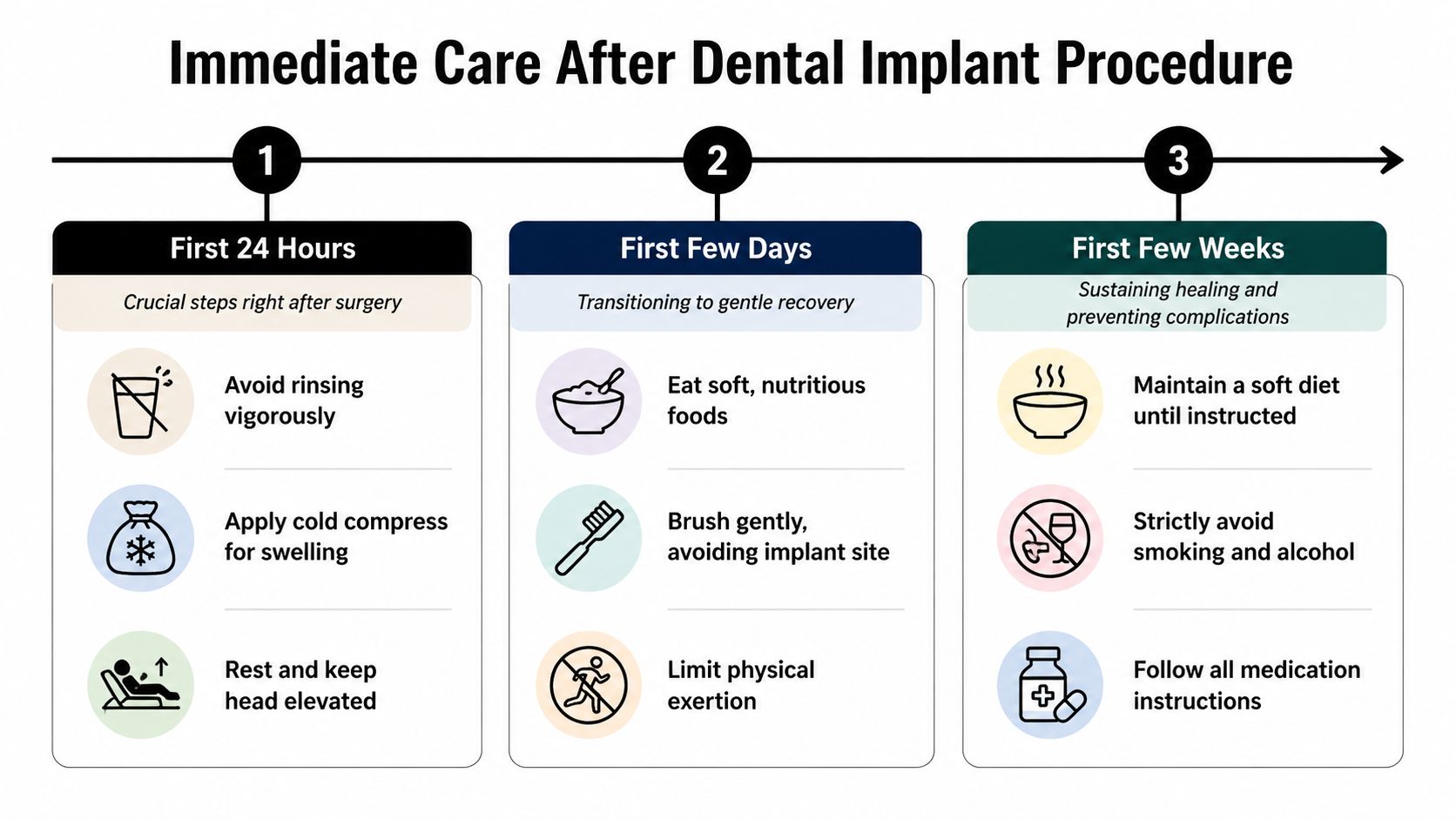
You get home after implant surgery, the numbness starts to wear off, and the area may feel surprisingly normal for a few hours. That is often when people do too much. In our Walnut Creek office, I tell patients to treat the first few weeks as a staged recovery. Protect the site first, add gentle cleaning next, and only then return to a more routine pattern as the tissue settles.
Early healing gives the implant and surrounding tissue the quiet conditions they need for osseointegration, the process of bonding with bone. According to Mayo Clinic guidance on dental implant surgery, the healing phase takes months, which is why small habits in the first days matter more than many patients expect.
The first day
Keep the area quiet.
For the first 24 hours, avoid brushing or rinsing in a way that could disturb the surgical site. If I have given a patient specific cleaning instructions because part of the area is visible, I usually recommend very gentle cleaning with a cotton applicator instead of trying to brush directly over fresh tissue. Ice packs in short intervals can help limit swelling. Resting with your head raised also helps.
Choose soft, cooler foods and give the area a break from chewing pressure. Hot foods, crunchy foods, and repeated checking with your tongue can all irritate tissue that is trying to close and stabilize.
Days two and three
This is usually the point where discomfort starts to improve, but the implant site is still vulnerable. At our office, we commonly have patients begin gentle warm salt water rinses on day 2, often using ½ teaspoon of salt in 8 ounces of water after meals, unless we have given a different rinse or a different schedule for that case.
A safe routine during this phase usually includes:
- Rinsing gently after meals without forceful swishing.
- Brushing the nearby teeth carefully with a soft toothbrush while staying off the incision unless you were told otherwise.
- Waiting on floss around the surgical area until your instructions say it is time.
- Staying with softer foods that do not require heavy chewing.
Do not test the area with your fingers or tongue. Repeated poking is a common reason healing gets irritated.
The first several weeks
After the first few days, care becomes a little more active, but it still needs restraint. The goal shifts from protecting the clot to keeping plaque away from the healing gum tissue without placing stress on the implant.
At William M. Schneider, DDS, we usually frame this period in simple phases so patients know what matters most at each step:
| Time period | Main goal | What helps |
|---|---|---|
| Day 1 | Protect the site | Rest, ice, no vigorous rinsing |
| Day 2 to Day 3 | Begin gentle cleaning | Salt water rinses, careful brushing away from the incision |
| Day 4 through healing | Support healthy tissue | Soft brushing, prescribed rinse if advised, soft diet, follow-up visits |
That timeline matters because healing is rarely all-or-nothing. A patient may feel good enough to eat normally before the tissue is ready for it. I see this most often with crunchy foods, chewing on the implant side too soon, or returning to smoking during the first weeks. Each one increases irritation and can slow healing.
What patients often get wrong
The usual problem is not a lack of effort. It is enthusiasm at the wrong time.
- Brushing hard near the incision
- Going back to chips, nuts, or crusty bread too early
- Skipping medications or rinse instructions
- Assuming mild bleeding means the area needs more scrubbing
If your implant was placed right after an extraction, or if grafting was part of the procedure, your instructions may be more specific than standard aftercare. Follow the written plan you were given. In the first weeks, careful timing protects the result.
Your Daily Hygiene Routine for Lasting Implant Health
A few weeks after surgery, many patients in Walnut Creek tell me the same thing. The implant feels fine, so they assume daily care can go back to autopilot. That is usually the point where small mistakes start.
Once I clear you for regular brushing and cleaning, the goal changes. You are no longer protecting a fresh surgical site. You are keeping the gumline around the implant quiet and stable month after month, year after year. At William M. Schneider, DDS, we usually teach this as a long-term maintenance routine, because implant care works best when it is simple enough to repeat every day.
Start with the right tools
The right tools make daily care easier on the tissue and more effective at the gumline.
For many patients, a practical home kit includes:
- Soft toothbrush: A gentle manual brush is often the easiest to control around the gum margin.
- Non-abrasive toothpaste: Avoid gritty whitening pastes that can roughen surfaces and irritate tissue.
- Implant floss or floss threaders: Useful for wrapping around the sides of the restoration.
- Interdental brushes: These often clean under contours and between wider spaces better than floss alone.
- Water irrigator: Helpful around bridges or areas that trap food, though it should support brushing and flossing rather than replace them.
In our office, we often keep the recommendation very plain. If a tool feels complicated, patients stop using it. A soft brush, one between-tooth aid that fits your anatomy, and a routine you can keep matters more than buying every product on the shelf.
How to brush an implant correctly
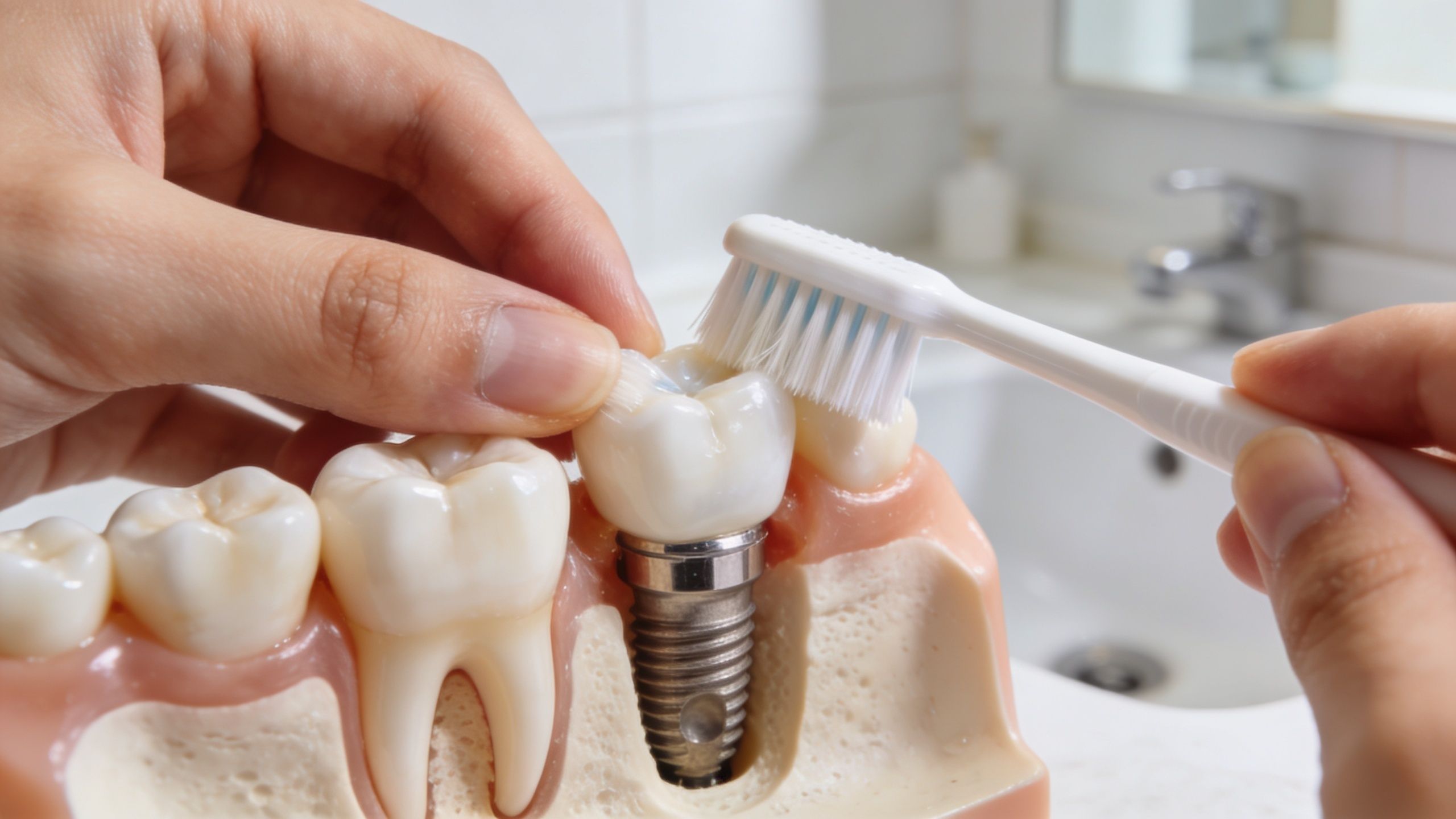
Brush twice a day with light pressure. Aim the bristles at the gumline where the crown meets the tissue, then use small circular motions. Scrubbing harder does not clean better. It usually just irritates the gum.
This is the area patients miss most often. They polish the visible crown but skip the edge where plaque tends to collect first.
I tell patients to slow down for a few extra seconds on that margin. If you are cleaning an implant crown in ten rushed strokes, you are probably cleaning the easiest surface and missing the one that matters.
Home care insight: If the implant looks clean but the gumline stays puffy, the technique usually needs work more than the effort does.
Flossing and between-tooth cleaning
Cleaning between implants and neighboring teeth depends on the shape of the restoration. A single implant crown usually allows for floss or a small interdental brush. An implant bridge often needs threaders, super floss, or a water irrigator to reach underneath.
The technique matters. Slide the floss gently under the contact, curve it around the side of the restoration, and wipe the surface instead of snapping the floss straight down and back up. The goal is to clean the sides and the gumline without traumatizing the tissue.
Use the aid that matches the space:
- Single implant crown: Floss or a small interdental brush is often enough.
- Bridge supported by implants: Threaders, super floss, or a water irrigator are usually more practical.
- Wider spaces: Interdental brushes often remove plaque more efficiently than floss.
Here’s a short visual guide before you try the routine at home:
What daily care should feel like
A healthy implant should feel quiet. The tissue should look pink and settled. Brushing should not cause regular bleeding, and you should not notice a persistent bad taste, odor, or tenderness around that spot.
If an implant always feels difficult to clean, do not assume that is normal. Sometimes the issue is brushing technique. Sometimes the contour of the crown makes one area harder to reach. Sometimes a different brush or interdental aid solves the problem quickly. In our Walnut Creek practice, we often adjust the home care plan after seeing exactly where plaque is collecting, rather than giving every patient the same instructions.
The best routine is one you will keep. Daily implant care does not need to be complicated. It needs to be consistent, gentle, and matched to the way your implant was restored.
Professional Maintenance and Recognizing Signs of Trouble
A patient will sometimes tell me, "My implant doesn’t hurt, so I assumed it was fine." That is exactly why regular maintenance matters. Early implant problems are often quiet. By the time an implant feels clearly loose, swollen, or painful, treatment is usually more involved than it would have been a few months earlier.
In our Walnut Creek office, we follow implant patients on a timeline, not a one-size-fits-all recall. The first phase is closer observation after treatment and restoration. The next phase focuses on whether the tissue stays stable as normal chewing returns. Long term, the goal is to confirm that the bone, bite, and gum seal around the implant remain healthy year after year.
Why follow-up visits matter more than many patients expect
Natural teeth and implants do not respond to inflammation in exactly the same way. An implant cannot get a cavity, but the gum and bone around it can still break down if plaque, excess bite pressure, or a hard-to-clean design starts causing irritation.
That is why a generic cleaning interval is not always enough.
Some patients do well with routine preventive visits. Others need implant checks more often, especially in the first year or if they have a history of gum disease, smoking, clenching, or repeated plaque buildup around one area. At William M. Schneider, DDS, we set that schedule based on what we see around your implant, not just the calendar.
What happens during implant maintenance
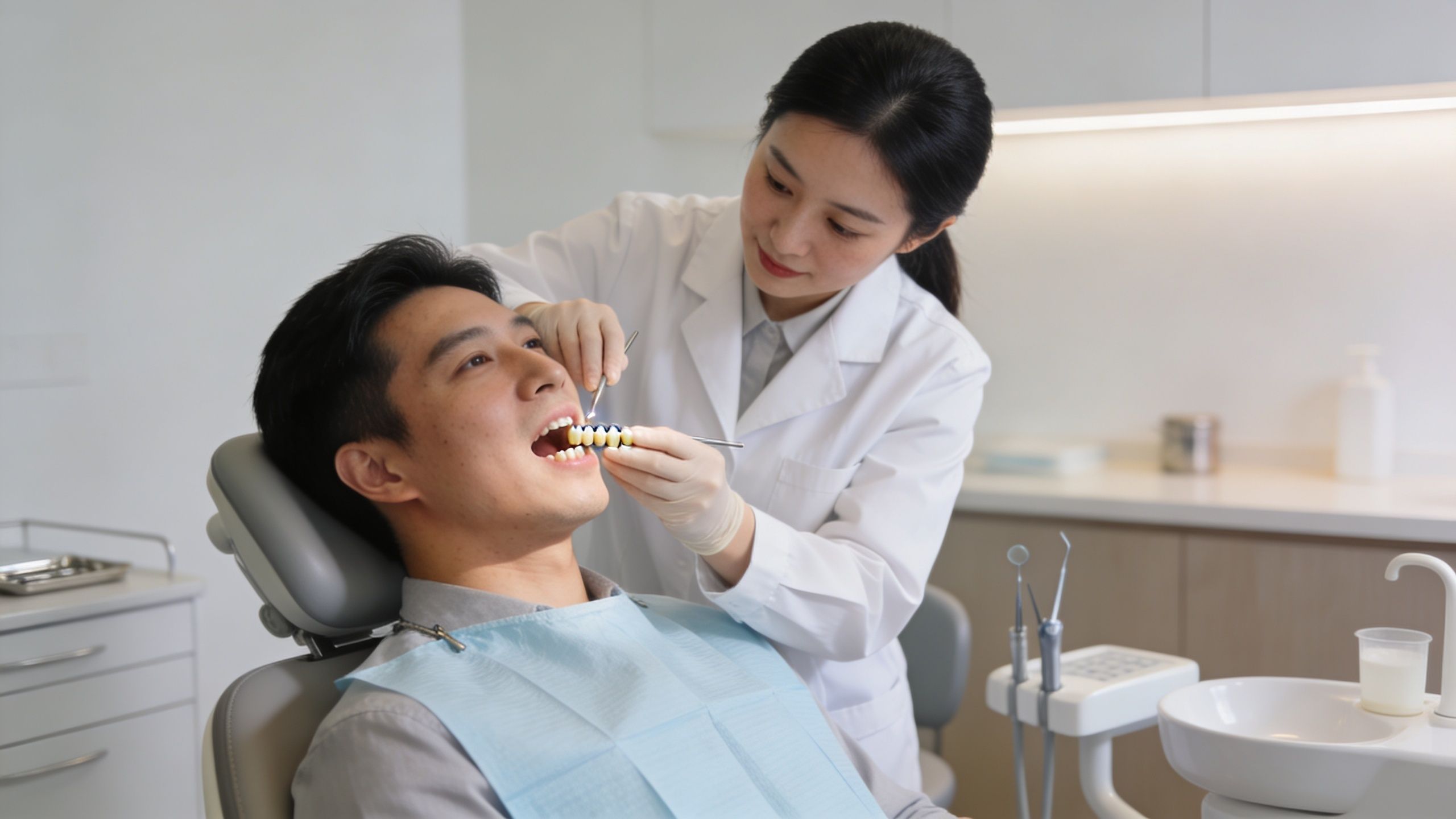
A good maintenance visit includes more than polishing around the crown. We look at how the tissue is responding, whether the bite is balanced, and whether there are any changes from prior visits. If something looks different, we compare it against earlier photos, charting, or x-rays and decide whether simple home-care changes are enough or whether treatment should start right away.
That visit may include:
- Checking the gum tissue: We look for bleeding, redness, swelling, and deeper pocketing.
- Dental x-rays when indicated: These help us monitor the bone supporting the implant.
- Bite evaluation: We check whether one implant is taking more force than it should.
- Implant-safe cleaning: We use instruments and polishing methods chosen to protect the implant surface and surrounding tissues.
- Specific home-care coaching: If one spot is collecting plaque repeatedly, we adjust the routine to fit that area better.
For some patients, broader wellness habits also affect long-term tissue and bone health. If you are interested in nutrition that supports that discussion, science-backed K2 insights for wellness can be a useful general resource.
Early warning signs patients should never ignore
Most implant problems do not begin with severe pain. They usually start with a small change that keeps showing up.
Call if you notice:
- Bleeding when cleaning around the implant
- Tenderness, swelling, or redness at the gumline
- A persistent bad taste or odor around one implant
- The bite feeling different on that crown or bridge
- Any movement or looseness
If an implant suddenly feels off, schedule an exam. Waiting to "see if it settles down" can turn a minor tissue problem into bone loss around the implant.
High-risk situations need a tighter plan
Not every patient stays on the same maintenance interval forever. A stable implant with healthy tissue and strong home care can often stay on a regular professional schedule. A patient with gum disease history, heavier plaque buildup, dry mouth, smoking, or grinding may need shorter intervals and closer periodontal-style monitoring.
Here is the practical difference:
| Situation | Maintenance approach |
|---|---|
| Stable implant and strong home care | Regular professional monitoring with a schedule customized by the dental team |
| History of gum issues or difficult plaque control | More frequent periodontal-style maintenance |
| Signs of inflammation or changing bite | Immediate evaluation rather than waiting for the next routine visit |
Patients sometimes search for dental implants near me when what they really need is maintenance for an implant they already have. That distinction matters. In many cases, catching inflammation early is what protects the implant, the restoration, and the time and money already invested in your smile.
Lifestyle and Diet Choices to Support Your Dental Implants
Implant care doesn’t end with brushing and appointments. Everyday choices affect the gums, the bone, and the amount of plaque that builds around the restoration. The long-term goal is simple: reduce irritation, reduce buildup, and avoid forces that the implant doesn’t need to absorb.
Foods that support the result
A balanced diet helps support gum and bone health. In everyday terms, that means choosing meals that are easier on your mouth and less likely to feed constant plaque buildup. Crunchy vegetables, lean proteins, dairy or dairy alternatives, and foods that don’t linger as sticky residue are generally easier on implants than frequent sugary snacks.
For patients interested in nutrition that supports overall bone health, this overview of science-backed K2 insights for wellness is a helpful general resource. It isn’t an implant care plan by itself, but it can be part of a broader conversation about oral and systemic health.
Foods and habits to be careful with
Some things are technically possible to chew, but still unwise to make a habit.
- Very hard foods: Ice, hard candy, and similar items can overload the crown or restoration.
- Sticky foods: These tend to cling around margins and are harder to clean away fully.
- Frequent sugary snacking: The implant itself can’t get a cavity, but the surrounding tissues still suffer when plaque stays active.
- Using teeth as tools: Opening packaging or cracking shells puts unnecessary stress on the restoration.
Smoking and inconsistent habits
Smoking is one of the clearest examples of a daily habit working against implant health. It interferes with healing and makes inflammation harder to control. Even after the implant has integrated, smoking continues to raise risk around the tissues that support it.
The same goes for inconsistent routines. Patients sometimes do very well Monday through Thursday and then let the routine slide during travel, long workdays, or weekends. Implants respond better to steady habits than to occasional “deep cleaning” efforts after buildup has already formed.
The best implant diet isn’t restrictive. It’s simply lower in constant sugar exposure, lower in unnecessary chewing stress, and easier to pair with good hygiene.
If you’ve invested in an implant as part of cosmetic dentistry or restorative dentistry, daily choices should help preserve that result, not slowly work against it.
Your Partner for Dental Implant Care in Walnut Creek CA
A patient will often tell me the implant feels so natural that they forget it is there. That is usually a good sign. Stable function, healthy tissue, and comfort between visits are what we want. Those results depend on more than the implant itself. They come from a clear care plan, steady follow-up, and a team that knows what to check at each stage.
At William M. Schneider, DDS, we approach implant care in phases so you are never guessing what matters right now. Early visits focus on healing and tissue response. Short-term follow-up checks how the bite is settling, how you are cleaning around the implant, and whether any area is trapping plaque. Long-term care shifts to preserving bone support, monitoring the restoration, and catching small changes before they become harder to correct.
A good maintenance visit should answer practical questions. Are the gums staying firm and calm around the implant? Is the crown or restoration taking pressure evenly when you chew? Do updated dental x-rays make sense at this point, or is a clinical exam enough today? If one spot is collecting buildup, you should leave with a specific tool or technique to fix it at home.
That kind of continuity matters, especially if you want one office to follow the full picture instead of treating the implant as an isolated procedure.
For implant patients in Walnut Creek, strong ongoing care usually includes:
- Clear explanations: You should know what looks healthy, what needs attention, and why.
- Gentle, methodical hygiene care: Implant tissues respond better when cleanings are thorough and controlled.
- Bite and restoration checks: A small pressure issue can create soreness or wear if it is ignored.
- Recommendations that fit your habits: Some patients do best with an interdental brush. Others clean more effectively with a floss threader or water irrigator.
- Records that stay connected: Your exam findings, x-rays, restoration history, and hygiene notes should all inform the next visit.
If you are looking for ongoing support, dental implants in Walnut Creek, CA should be part of a broader plan for prevention, function, and long-term comfort, not a one-time fix.
I also encourage patients to call sooner if something changes. Bleeding when you clean around the implant, tenderness, a new odor or taste, food packing, or a bite that feels off all deserve a closer look. Sometimes the solution is simple, such as improving access for home care or adjusting the bite. Sometimes we need imaging or a closer exam of the crown and surrounding tissue. Earlier evaluation usually means easier treatment.
Whether your implant was placed recently or has served you well for years, partnership matters. At William M. Schneider, DDS, the goal is straightforward. Protect healing early, refine home care in the months that follow, and keep the implant healthy for the long run with organized maintenance and timely follow-up.