Are you noticing your gums pulling back from your teeth? It’s a common concern we hear from patients here in Walnut Creek, CA. While gum tissue doesn't grow back on its own, the good news is that with the right professional dental care, you can absolutely stop the recession, protect your teeth, and restore the health and beauty of your smile.
Finding a dentist you trust is the first step. At our local Walnut Creek practice, we are dedicated to helping our neighbors understand their dental health and find lasting solutions. If you’ve been searching for a "dentist near me" to address gum recession, you’ve come to the right place.
Your Guide to Fixing Receding Gums in Walnut Creek

It can be unsettling when you first notice the signs. Maybe a tooth suddenly looks longer than the others, or that first sip of a hot or cold drink sends a jolt of sensitivity through your mouth. This is gum recession—a process where your gum tissue gradually pulls away, leaving the delicate roots of your teeth exposed.
The most important step is seeking answers, and you're already doing that. Understanding what's causing your gums to recede is crucial for stopping it. As a trusted dentist serving Walnut Creek and the surrounding East Bay communities, our team is here to provide clear answers and effective treatments. We are committed to helping you regain your confidence and protect your oral health.
Understanding Gum Recession at a Glance
Gum recession can seem complex, but understanding the basics is the first step toward taking control. This table breaks down the essential aspects to help you quickly grasp what's happening and why it's so important to see a dentist.
| Key Aspect | What It Means for You |
|---|---|
| The Condition | Your gum tissue is pulling away from your teeth, exposing the roots. This process is usually slow and can be hard to notice at first. |
| Common Signs | A tooth appearing longer, new sensitivity to temperatures, a visible notch at the gumline, or the root looking more yellow than the rest of the tooth. |
| The Underlying Cause | Recession is a symptom, not the root problem. It could be caused by gum disease, brushing too hard, genetics, or even misaligned teeth. |
| The Urgency | It's more than a cosmetic issue. Exposed roots are at high risk for decay and can eventually threaten the stability of your tooth. |
| The Solution | While gums won't regrow, professional treatment can halt the progression, address the cause, and restore your gumline. This requires a visit to your dentist for a proper diagnosis. |
Seeing these signs is your cue to act. The sooner you get a professional opinion from a dentist in Walnut Creek, CA, the simpler the solution will be.
What Is Gum Recession?
Simply put, gum recession happens when the edge of your gum tissue wears away or pulls back, exposing more of the tooth or, more critically, the tooth's root. Because it’s often gradual, many people don’t know it’s happening until the signs become too obvious to ignore.
Key things to look for include:
- A tooth that looks visibly longer than its neighbors. This is often the first thing people notice.
- New or worsening tooth sensitivity. Exposed roots lack the tough enamel that covers the crown, making them sensitive to hot, cold, or sweet things.
- A small notch you can feel at the gumline. Running your tongue or finger over the area might reveal an indentation where the gum has receded.
- A change in tooth color. The root surface is typically a darker, more yellow shade than the bright white enamel of the tooth's crown.
This isn’t just about looks. Those exposed roots are much softer and more vulnerable to decay. If left untreated, severe recession can compromise the bone and tissues that hold your teeth firmly in place, potentially leading to tooth loss.
Gum recession isn't a single condition; it's a symptom. Think of it as a warning light from your body, signaling that something is impacting your oral health—whether it's gum disease, aggressive brushing, or even just your genetic blueprint.
Your Local Partner in Gum Health
Finding a local dentist in Walnut Creek you trust is everything. Here, Dr. Schneider and our team provide a clear path back to a healthy smile. Whether you just need a new patient exam to get a clear diagnosis or are looking into advanced cosmetic dentistry options to restore your gumline, we're here to help.
We believe that understanding your care is just as important as the treatment itself. We'll take the time to walk you through the causes and your personalized solutions, making sure you feel comfortable, informed, and confident at every step.
Why Gums Recede and What It Means for Your Health
Figuring out the "why" behind your receding gums is the most important first step toward a real solution. It can be unnerving to see your gums pulling away from your teeth, but this isn't a random event. Think of it as your body sending up a flare, signaling that an underlying issue needs professional attention from a dentist you trust in the Walnut Creek area.
The most frequent culprit we see is periodontal (gum) disease. This is a bacterial infection that silently damages the soft tissue and bone that hold your teeth in place. It often starts with subtle signs, like gums that bleed when you brush. We dive deeper into that specific topic in our guide on what to do when your gums bleed. If you don't address it, the infection can progress and cause significant gum recession.
But gum disease isn’t the only potential cause. A handful of other factors can start or worsen gum recession, and identifying them is crucial for finding a treatment that actually works.
Common Causes Beyond Gum Disease
Your gum health is a delicate balance. A variety of habits and pressures can throw that balance off, leading to the gradual erosion of gum tissue.
One surprisingly common cause is simply aggressive brushing. It sounds counterintuitive, but scrubbing your teeth with a hard-bristled brush or too much force can physically wear down your gums. It's much better to think of brushing as gently massaging your teeth and gums, not scouring them.
Other factors we often see in our Walnut Creek dental practice include:
- Genetics: Some of us are just born with thinner or more delicate gum tissue, making us more susceptible to recession no matter how well we take care of our teeth.
- Hormonal Fluctuations: Major life changes like puberty, pregnancy, or menopause can make your gums extra sensitive and more vulnerable to the inflammation that leads to recession.
- Tobacco Use: Smoking or using other tobacco products is a major problem for gums. It restricts blood flow, making it harder for them to heal and fight off infection, putting you at a much higher risk for recession.
- Teeth Grinding (Bruxism): If you clench or grind your teeth, especially in your sleep, you're putting a tremendous amount of force on them. Over time, this constant pressure can cause the surrounding gum tissue to recede.
- Misaligned Teeth: When your teeth aren't straight, your bite force isn't distributed evenly. Some teeth take on too much pressure, which strains the gum and bone around them.
Your gum recession tells a unique story. A professional diagnosis from a dentist is the only way to read that story correctly, pinpoint the exact cause—or combination of causes—and build a treatment plan that gets to the root of the problem, not just the symptom.
The Impact on Your Overall Health
Gum recession is about so much more than how your smile looks. When your gums pull back, they leave the root surface exposed—and that surface doesn't have the hard, protective enamel that the crown of your tooth does.
This exposure quickly leads to a few common problems. Many of our patients first come to us complaining of sharp, painful tooth sensitivity to hot and cold, which can make it tough to enjoy your favorite foods and drinks. The exposed roots are also much softer and more prone to decay, which raises your risk of getting cavities in spots that are difficult to treat.
In advanced cases, severe recession can weaken the bone that supports the tooth. This leads to instability and can ultimately cause tooth loss. This is exactly why getting an evaluation at our Walnut Creek dental office is so critical. By catching the problem early on, we can stop these more serious consequences and help you protect your smile for years to come. If you're experiencing severe pain, you may need an emergency dentist to assess the situation immediately.
At-Home Care and Prevention Strategies
While you can’t make receded gum tissue grow back, you have the power to protect your smile. Your daily habits are the first line of defense, creating a healthy foundation that can stop further recession. Taking control of your at-home routine is an essential part of any plan to fix receding gums for good.
Think of it as a partnership. The care you practice at home supports the professional treatments we provide right here in our Walnut Creek dental office. When you master these strategies, you create an environment where your gums can heal and thrive, ensuring the success of any dental care we recommend.
Refine Your Brushing and Flossing Technique
It might surprise you, but one of the most common causes of gum recession is brushing too hard. Many people think aggressive scrubbing is the only way to get teeth truly clean, but over time, it physically wears down your delicate gum tissue. The real goal is to be effective, not forceful.
Let's start with two simple changes that make a huge impact:
- Switch to a Soft-Bristled Brush: This is non-negotiable. A soft-bristled toothbrush is flexible enough to clean along the gumline without causing irritation or abrasion. Hard or even medium bristles are just too harsh for your gums.
- Adopt a Gentle, Angled Motion: Instead of scrubbing back and forth, hold your brush at a 45-degree angle to your gums. Use short, gentle, circular motions. This technique lets the bristles sweep away plaque from the tooth surface and just beneath the gumline, all while massaging the tissue.
And of course, there's flossing. Your toothbrush simply can't get into the tight spaces between your teeth and under the gumline where plaque loves to hide. This hidden plaque is a primary cause of the bacterial infection that leads to gum disease and recession. Making flossing a daily habit is one of the most effective things you can do to protect your gums.
Lifestyle Choices That Support Gum Health
Your overall health is directly connected to your oral health. A few key lifestyle adjustments can dramatically improve your body’s ability to fight off the inflammation and infection that cause gum recession.
A balanced diet is crucial. Foods rich in Vitamin C, like citrus fruits and leafy greens, are vital for producing collagen—the protein that keeps your gum tissue strong and resilient. At the same time, cutting back on sugary foods and drinks helps starve the harmful bacteria that cause destructive plaque.
Your daily choices are the bedrock of lasting gum health. Quitting tobacco, managing stress, and eating a nutrient-rich diet aren't just good for your body—they are active steps you can take to stop gum recession from getting worse and support the professional care you receive from your dentist.
If you use tobacco, quitting is the most important step you can take for your gums. Smoking and chewing tobacco restrict blood flow, which cripples your gums’ ability to heal and makes them far more vulnerable to infection. For a more in-depth look at managing this condition at home, check out this practical guide on how to fix receding gums at home.
By embracing these strategies, you become a key player in your own dental wellness. These habits not only prevent future damage but also give any professional treatments you receive from your dentist in Walnut Creek the best possible chance for lasting success.
Professional Treatments for Receding Gums
When you’ve done everything you can at home and your gums are still receding, it’s time for professional dental care. At our Walnut Creek office, Dr. Schneider moves beyond temporary fixes to address the root cause of your gum issues, creating a personalized plan to restore your oral health.
The right treatment depends entirely on your unique situation. We always start with a careful dental examination and cleaning to see exactly what’s going on—how far the recession has progressed and the health of the bone underneath. This allows us to map out a treatment plan that’s not only effective but also comfortable for you.
Scaling and Root Planing: A Deep Cleaning for Your Gums
If your recession is linked to early- or moderate-stage gum disease, our first move is often a non-surgical deep cleaning known as scaling and root planing. Think of it as a reset for your gum health. It’s far more intensive than a standard cleaning because it’s designed to get below the gumline where harmful bacteria are causing trouble.
The procedure has two main parts:
- Scaling: Dr. Schneider or one of our skilled hygienists will gently remove all the built-up plaque and hardened tartar from your teeth, both above and below the gumline.
- Root Planing: Once the surfaces are clean, we’ll carefully smooth the tooth roots. This is a crucial step because it removes rough spots where bacteria hide, helping your gums reattach firmly to your teeth.
This deep cleaning is one of the most powerful tools we have for halting gum disease in its tracks. By removing the source of the infection, we give your gums a clean slate to start healing. You can get a more detailed look at this and other approaches in our overview of periodontal disease treatment.
This flowchart shows how daily habits work together with professional dental care.
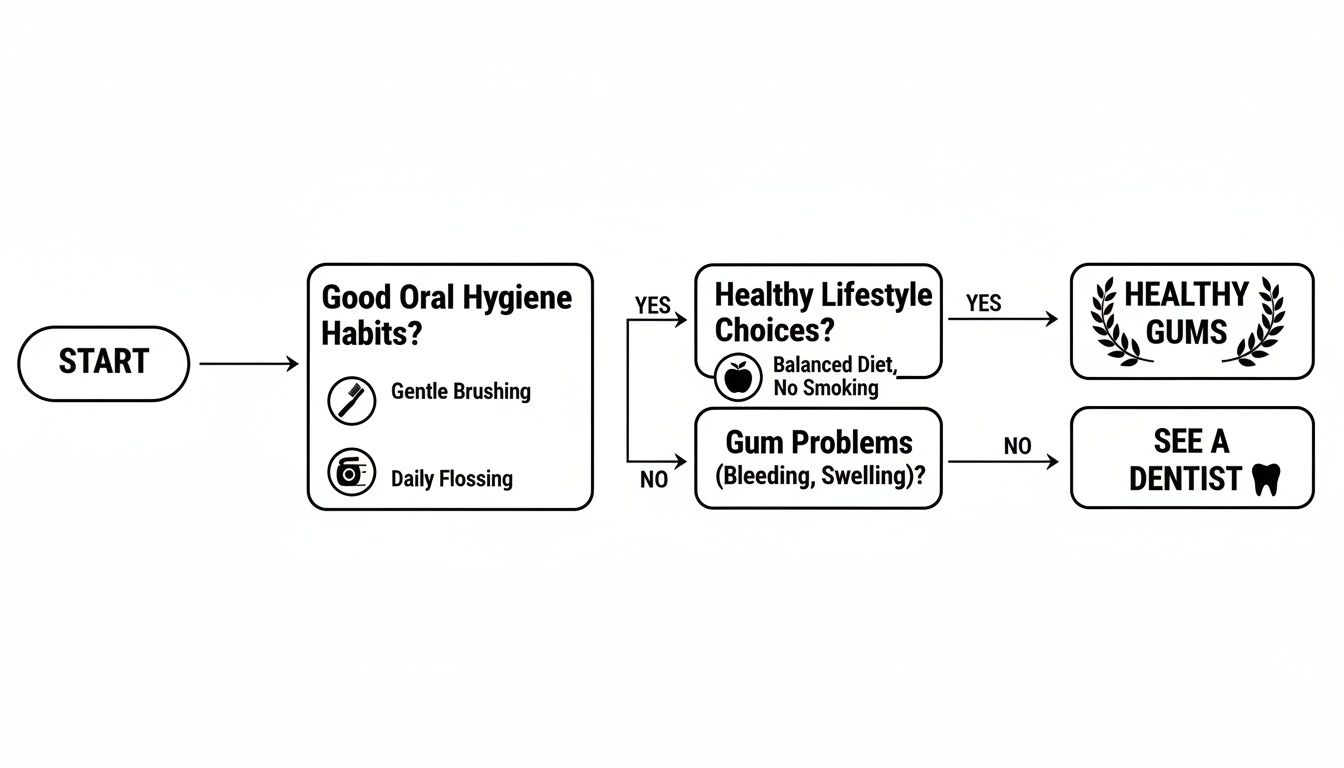
These actions create the healthy foundation needed for treatments like scaling and root planing to deliver long-term success.
Gum Grafting for Advanced Recession
In cases where gum recession is more severe and a significant amount of tissue has been lost, a gum graft surgery might be the best path forward. This restorative dentistry procedure is designed to cover the exposed tooth roots, which helps reduce sensitivity and protects them from future decay. It might sound intimidating, but it's a routine and highly successful procedure we perform with your comfort as our top priority.
During a gum graft, we use a small piece of tissue—either from the roof of your mouth or a sterile donor source—to cover the receded area. Dr. Schneider meticulously places the graft to create a new, healthy, and natural-looking gumline.
Dr. Schneider is known throughout Walnut Creek, CA for his gentle approach, using painless injection techniques to ensure you’re completely comfortable. If you’re feeling anxious, we also offer sedation options to help you feel calm and relaxed during your dental care.
Other Restorative and Orthodontic Options
Sometimes, fixing receding gums means looking at the bigger picture. If misaligned teeth are causing excessive force on certain areas, for example, then orthodontic treatment like Invisalign could be a key part of the solution. Straightening your bite helps distribute pressure evenly, protecting your gums from unnecessary strain.
In situations where a tooth has been lost due to severe recession and bone loss, a dental implant provides a stable, permanent replacement. Searching for "dental implants near me" is the first step toward restoring a missing tooth. An implant functions just like a new tooth root, stimulating the jawbone and creating a strong foundation for a crown. As a skilled cosmetic dentist, Dr. Schneider can restore both the function and the appearance of your smile. Whether you need restorative dentistry or a tooth extraction to prepare for an implant, our team is here to manage your care with precision and compassion.
Your First Gum Care Visit in Walnut Creek
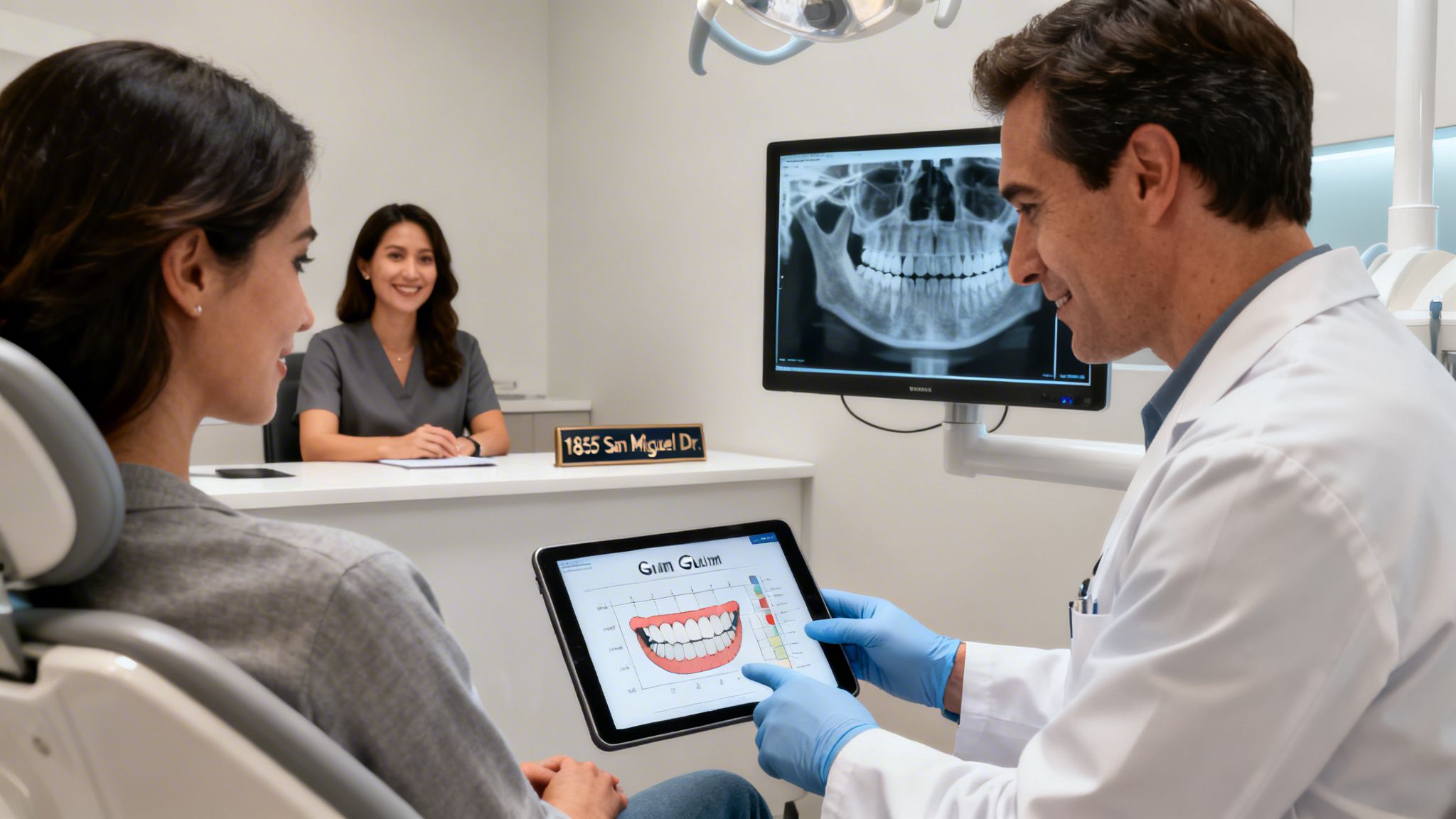
Taking that first step to address concerns about your gums can feel daunting, but knowing what to expect makes all the difference. If you've been searching for a "dentist near me in Walnut Creek, CA" because you're worried about recession, your first visit with us is all about getting clear answers and creating a solid plan together. We understand that seeing a dentist for a specific problem can be stressful, which is why our team is committed to making you feel welcome and reassured from the moment you arrive.
When you walk into our 1855 San Miguel Dr. office in Walnut Creek, our friendly team will greet you and help you get settled. We believe a calm, unhurried start sets the tone for a positive visit. Your appointment will begin not with treatment, but with a conversation about your concerns.
What to Expect: Your Comprehensive Gum Health Evaluation
Think of this initial visit as a fact-finding mission. To figure out the best way to fix your receding gums, we first need a complete picture of your oral health. The entire process is thorough, yet designed to be gentle and comfortable.
Our new patient exam includes:
- Gentle Digital X-rays: We use modern, low-radiation dental x-rays to see the bone structure that supports your teeth. This is a critical step for checking on any bone loss that might be happening alongside the gum recession.
- A Thorough Gum Assessment: Dr. Schneider will personally and carefully evaluate your gums. This involves measuring the "pockets" around your teeth—the small spaces between the tooth and gum—and mapping out the extent of the recession.
- Visual Examination: We’ll also check for any signs of inflammation, bleeding, or other red flags for gum disease, which is often the root cause of gum recession.
This detailed exam gives us the precise information needed to pinpoint what’s causing your gum issues and recommend the most effective path forward.
Creating Your Personalized Treatment Plan Together
Once the exam is done, the most important part of your visit begins: a collaborative discussion with Dr. Schneider. We are firm believers in patient-focused care, which means you’re an active partner in every decision.
Dr. Schneider will sit down with you to go over his findings in clear, easy-to-understand language. He'll show you the X-rays, explain what the gum measurements mean, and patiently answer all of your questions. You will never feel rushed or pressured.
Gum recession is far more common than most people think. A comprehensive 2022 review revealed that gingival recession affects a staggering 84.92% of the global population when even minor recession (≥1 mm) is considered. Learn more about these global findings. You are not alone in this, and a clear diagnosis is the first step toward a solution.
Together, we’ll talk through all of your treatment options. For some, this might mean simple preventive strategies and an improved daily care routine. For others, it could involve restorative solutions like scaling and root planing or even a gum graft. If tooth loss is a concern, we can explore options like dental implants.
Our main goal is to create a personalized treatment plan that you feel confident and comfortable with. From your very first new patient exam to your final results, our team in Walnut Creek, CA, is here to guide you toward a healthier, more confident smile.
Common Questions About Fixing Receding Gums
It's natural to have questions when you first notice your gums are receding. Getting clear, honest answers is the first step toward making the right decision for your health. Here in Walnut Creek, we want to address the most common concerns we hear from patients just like you.
Can Receding Gums Grow Back on Their Own?
This is easily the first question most people ask. The straightforward answer is no—once gum tissue has been lost, it doesn’t grow back by itself. Unlike some other tissues in your body, your gums don't have that regenerative ability.
But don't let that discourage you. The real focus of modern dental care is to stop the recession from getting any worse and to protect the healthy gum tissue you still have. Professional procedures are all about covering those exposed roots and reinforcing your existing gumline, not regrowing what was lost.
Is Treatment for Receding Gums Painful?
We know the idea of a dental procedure, especially something like a gum graft, can be a source of anxiety. Your comfort is our absolute highest priority. Dr. Schneider is known throughout the Walnut Creek area for his gentle touch, including painless injection techniques that make sure the area is completely numb before any work begins.
For less invasive treatments like scaling and root planing, you might feel some pressure, but you shouldn't feel pain. For more involved procedures, we also offer sedation dentistry to help you feel totally relaxed and calm. We're dedicated to making your visit a stress-free experience.
"A patient's comfort is non-negotiable. Modern techniques and a patient-first approach mean that even procedures like gum grafting can be managed with minimal to no discomfort. The focus is always on gentle, precise care that alleviates anxiety and achieves excellent results." – Dr. William M. Schneider
How Much Does It Cost to Fix Receding Gums?
There’s no one-size-fits-all price for treating gum recession, because every patient's situation is unique. The final cost depends entirely on a personalized treatment plan designed just for you.
Several factors come into play:
- The Cause and Severity: Addressing mild recession from brushing too hard is very different from treating advanced recession caused by severe gum disease.
- The Type of Treatment: A non-surgical deep cleaning (scaling and root planing) will have a different cost than a surgical procedure like a gum graft.
- The Number of Teeth Affected: Naturally, treating one tooth is less complex and costly than addressing recession across your entire smile.
- Your Dental Insurance: How much your specific plan covers will play a big role in your out-of-pocket costs.
During your new patient exam, we’ll give you a completely transparent breakdown of all costs and walk you through your insurance benefits. We want you to have a crystal-clear financial picture before you commit to any treatment.
What Is the Recovery Like After Gum Grafting?
Most of our patients are pleasantly surprised by how smooth recovery from a gum graft is. You’ll be able to head home the same day with detailed post-operative instructions to guide you through a comfortable healing process.
Here’s a general idea of what to expect:
- First 24-48 Hours: Plan to rest and take it easy. Some minor swelling or discomfort is normal, and it’s easily managed with over-the-counter pain relievers.
- The First Week: You’ll need to stick to soft foods to protect the graft site. Think yogurt, smoothies, mashed potatoes, and soups.
- Follow-Up Visit: We'll have you come back in about one to two weeks to check on your healing and remove any stitches.
Most people are back to their usual routines within just a few days, though you will need to be gentle with the area for a few more weeks. Our team is always just a phone call away if you have any questions during your recovery.
How Can I Prevent My Gums from Receding Again?
This is a fantastic question because it shows you're thinking about long-term success. The truth is, the best professional treatment depends on excellent at-home care and regular maintenance to last.
To keep recession from coming back, it all comes down to a few key habits:
- Master Gentle Brushing: Always use a soft-bristled toothbrush and hold it at a 45-degree angle to gently clean where your teeth and gums meet.
- Floss Daily: This is non-negotiable. It’s the only way to remove plaque from between your teeth and just under the gumline.
- Attend Regular Cleanings: Sticking to your schedule for professional cleanings and exams is crucial. It allows us to monitor your gums and catch any tiny issues before they become big problems.
- Address Underlying Issues: If you grind your teeth, a custom nightguard is a must. If misaligned teeth are contributing to the problem, we might recommend looking into orthodontic options.
When you partner with our team and take an active role in your oral health, you can protect your investment and enjoy a stable, healthy gumline for years to come.
Ready to get clear answers and a personalized plan for your gum health? The team at William M. Schneider, DDS is here to help residents of Walnut Creek and the East Bay area. Schedule your consultation today and take the first step toward a healthier, more confident smile.