A freshly whitened smile creates a specific kind of worry. You catch your reflection, like what you see, and then immediately think, “How do I keep it this way?”
That question is smart. Teeth whitening can brighten your smile beautifully, but the result doesn’t stay at its best on autopilot. The first couple of days matter. Your daily habits matter. Your cleaning schedule matters. And if you want whitening to last, generic advice like “brush more” usually isn’t enough.
Patients in Walnut Creek often want practical answers, not a vague list of dos and don’ts. They want to know what protects their investment, what habits help, and what common routines gradually undo the result. They also want guidance from a local dentist they can trust when they search for a cosmetic dentist near me or a dentist in Walnut Creek, CA.
Your Bright New Smile and How to Protect It in Walnut Creek
Whitening teeth is rarely a source of regret. What they regret is assuming the job is finished the moment the appointment ends.
A bright smile still has to live through coffee runs, work lunches, red sauces, social events, travel, and rushed evenings when flossing feels easy to skip. That’s why the best answer to how to keep teeth white after whitening isn’t one trick. It’s a plan that fits real life.
What patients usually notice first
The first thing many people notice after whitening is how much more visible small stains seem once the teeth are brighter. A little tea, a little plaque buildup, or a little tartar can stand out more against a whiter shade than it did before.
That doesn’t mean whitening failed. It means maintenance becomes more important once you’ve raised the standard.
Practical rule: Whitening gives you a cleaner canvas. The habits that follow decide how long that cleaner look stays visible.
Why one-size-fits-all advice falls short
A patient who drinks coffee all morning needs different guidance than someone who rarely has staining beverages. A person who used in-office whitening may need a different maintenance rhythm than someone using trays at home. Someone with sensitivity may need a gentler product strategy than someone who tolerates whitening easily.
That’s where many online articles miss the mark. They give broad tips, but they don’t explain the science behind the most important window after treatment or how to adjust care based on your routine.
If you’re looking for a dentist near me or a cosmetic dentist near me in Walnut Creek, CA, that kind of individualized guidance matters. Whitening lasts longer when aftercare is practical enough to follow and specific enough to work.
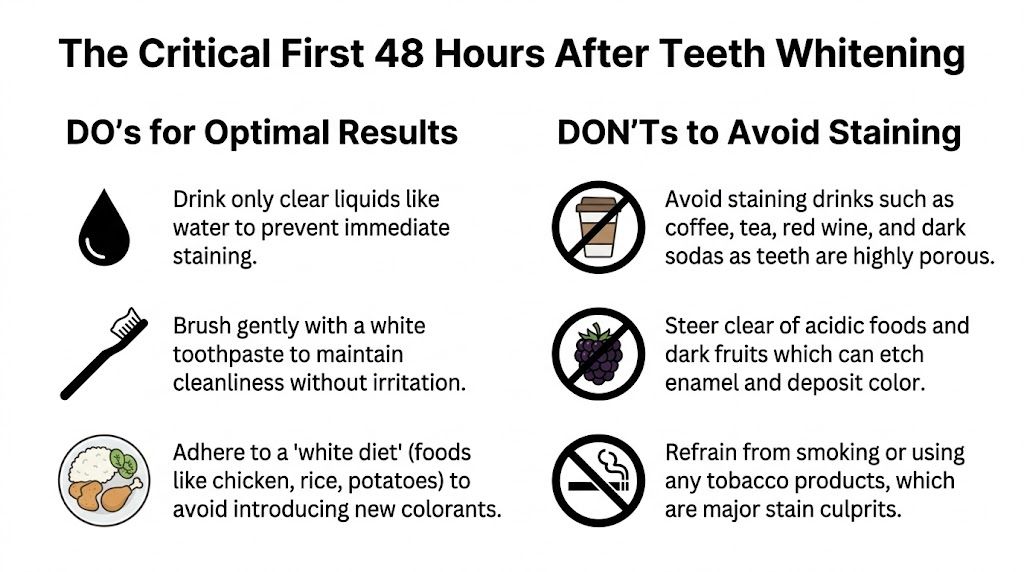
The Critical First 48 Hours After Teeth Whitening
The most important part of aftercare starts right away. For the first 24 to 48 hours, bleaching agents remain active in the tooth structure, and enamel is more porous and more likely to absorb new stains, as explained in this review of post-whitening enamel permeability and the 48-hour stain risk.
This is the reason dental teams tell patients to be careful. It isn’t a random rule. During this short window, pigmented foods and drinks can settle into teeth more easily and reduce how long the whitening result looks fresh.
What to avoid during this window
Think in simple terms. If it would leave color on a white napkin, it’s not a great choice right after whitening.
- Dark drinks like coffee, tea, red wine, and dark soda are best avoided completely during this period.
- Pigmented foods such as tomato sauces and dark berries can leave new stains behind.
- Tobacco is one of the fastest ways to dull a newly whitened smile and is especially unhelpful right after treatment.
Some patients also do better avoiding meals and drinks that are both acidic and strongly colored. When enamel is temporarily more permeable, that combination can work against the result you just paid for.
What to choose instead
This is when a “white diet” makes sense. It doesn’t have to be complicated.
A safer short-term menu often includes lighter-colored foods and clear drinks. Water is the easiest choice. Mild, pale foods are usually easier on a freshly whitened smile than heavily pigmented meals.
A few practical ideas:
- Choose plain proteins like chicken, turkey, fish, or tofu.
- Keep sides simple with rice, potatoes, pasta, or similar light-colored foods.
- Stick with clear hydration instead of sports drinks, cola, coffee, or tea.
The first 48 hours aren’t forever. They’re the small window that protects the bigger result.
Timing and comfort matter too
If you’re dealing with tenderness after whitening, don’t scrub harder. Gentle brushing and careful food choices are better than trying to “polish” your way through sensitivity. If you want a more detailed breakdown of comfort strategies, this guide on reducing tooth sensitivity after whitening is a helpful next read.
A simple way to plan around this period is to avoid whitening right before a weekend full of coffee dates, wine tastings, or big restaurant meals. Scheduling matters. If you know a social event is coming, it’s often wiser to whiten when you can protect the result.
Building Your Daily Hygiene Routine for a Lasting White Smile
Once the early stain-risk window passes, your smile depends on what you do repeatedly. The goal isn’t aggressive cleaning. The goal is consistent, low-abrasion maintenance.
That means better technique, better tools, and a routine you’ll still follow on a busy Tuesday morning.
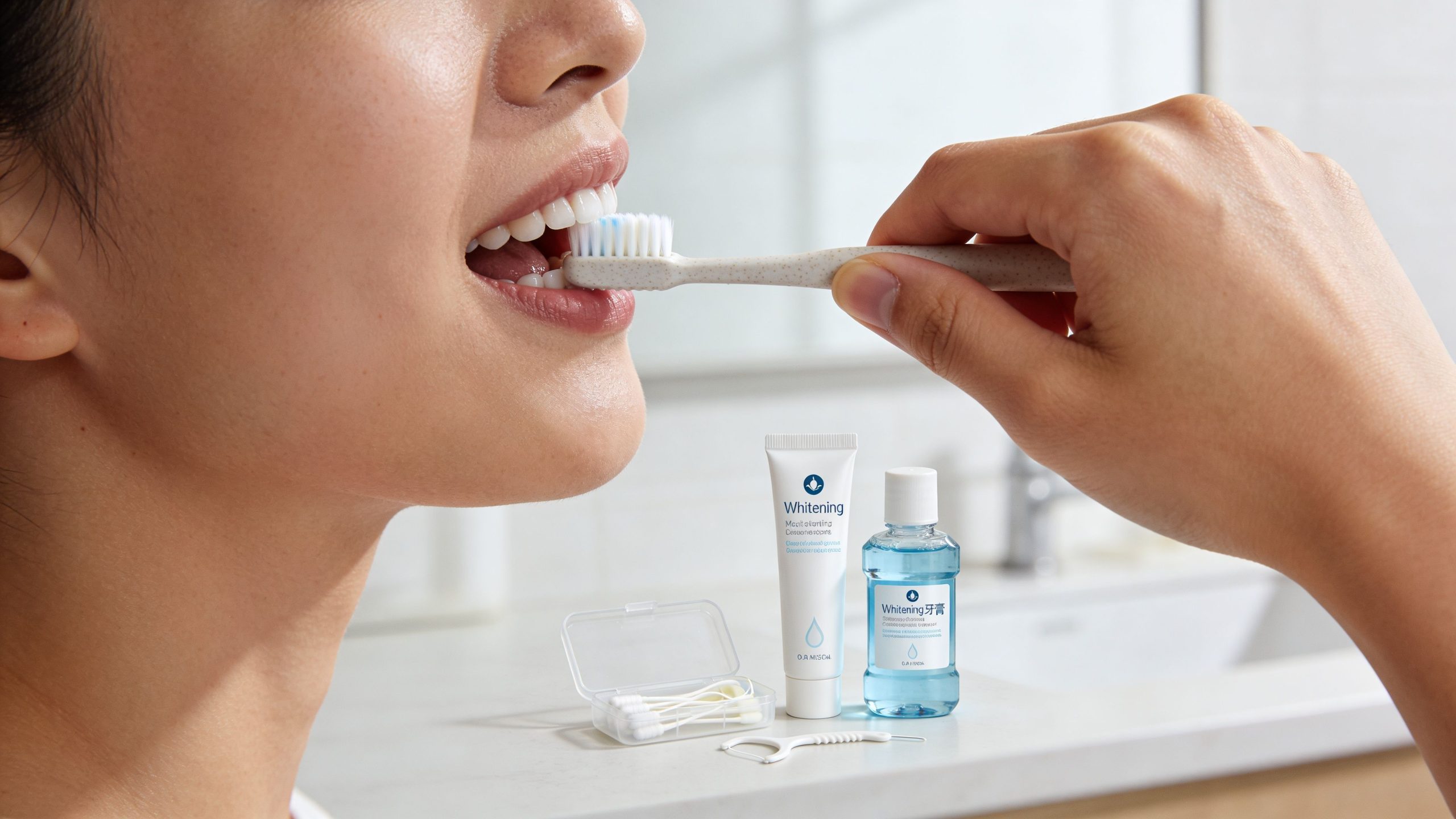
Build the routine around plaque control
Plaque is one of the main reasons bright teeth lose their clean appearance. It holds onto stain and can give teeth a dull, yellowish cast over time.
A strong home routine usually includes:
- Brush twice daily for 2 minutes.
- Floss once daily.
- Stay gentle rather than abrasive.
Routine matters more than intensity. Scrubbing hard doesn’t keep teeth whiter. It just increases the chance of irritation.
Choose tools that protect enamel
Using a soft-bristled electric toothbrush can remove 21% more plaque and surface stains than manual brushing, and pairing it with a low-RDA whitening toothpaste used 2 to 3 times per week can help lift stains with less risk of sensitivity or enamel abrasion, according to this guidance on electric toothbrush use and low-RDA whitening toothpaste aftercare.
That detail matters because many people overdo whitening toothpaste. They assume daily use equals better maintenance. Often, it just means more sensitivity and unnecessary wear.
Here’s a simple comparison:
| Approach | What tends to work better |
|---|---|
| Brushing harder | Brushing gently for a full 2 minutes |
| Manual brush with rushed technique | Soft electric brush with steady coverage |
| Daily abrasive whitening paste | Low-abrasion whitening toothpaste a few times weekly |
| Skipping between-teeth care | Daily flossing or a water flosser |
A realistic protocol that holds up
If you want a sustainable whitening-maintenance routine, keep it basic and repeatable.
- After whitening, wait before brushing if your teeth feel tender, rather than brushing immediately with pressure.
- Use a soft electric brush morning and night.
- Floss daily because stain and plaque don’t only collect on the front surfaces.
- Use whitening toothpaste selectively, not like an all-day polishing compound.
- Rinse with water after meals when brushing isn’t practical.
Good whitening maintenance should feel boring. That’s a good sign. The routine that preserves your smile is usually the one you can follow without thinking too hard about it.
Patients searching for a dentist near me or a provider for routine cleaning and exams often focus on treatment first. In reality, the tools you use every day have a major effect on how long cosmetic results stay attractive.
Smart Dietary and Lifestyle Choices for Stain Prevention
A great brushing routine can’t fully protect teeth from habits that constantly reintroduce stain. What you sip, how long you sip it, and what you do afterward all shape how long whitening lasts.
Small choices add up fast.
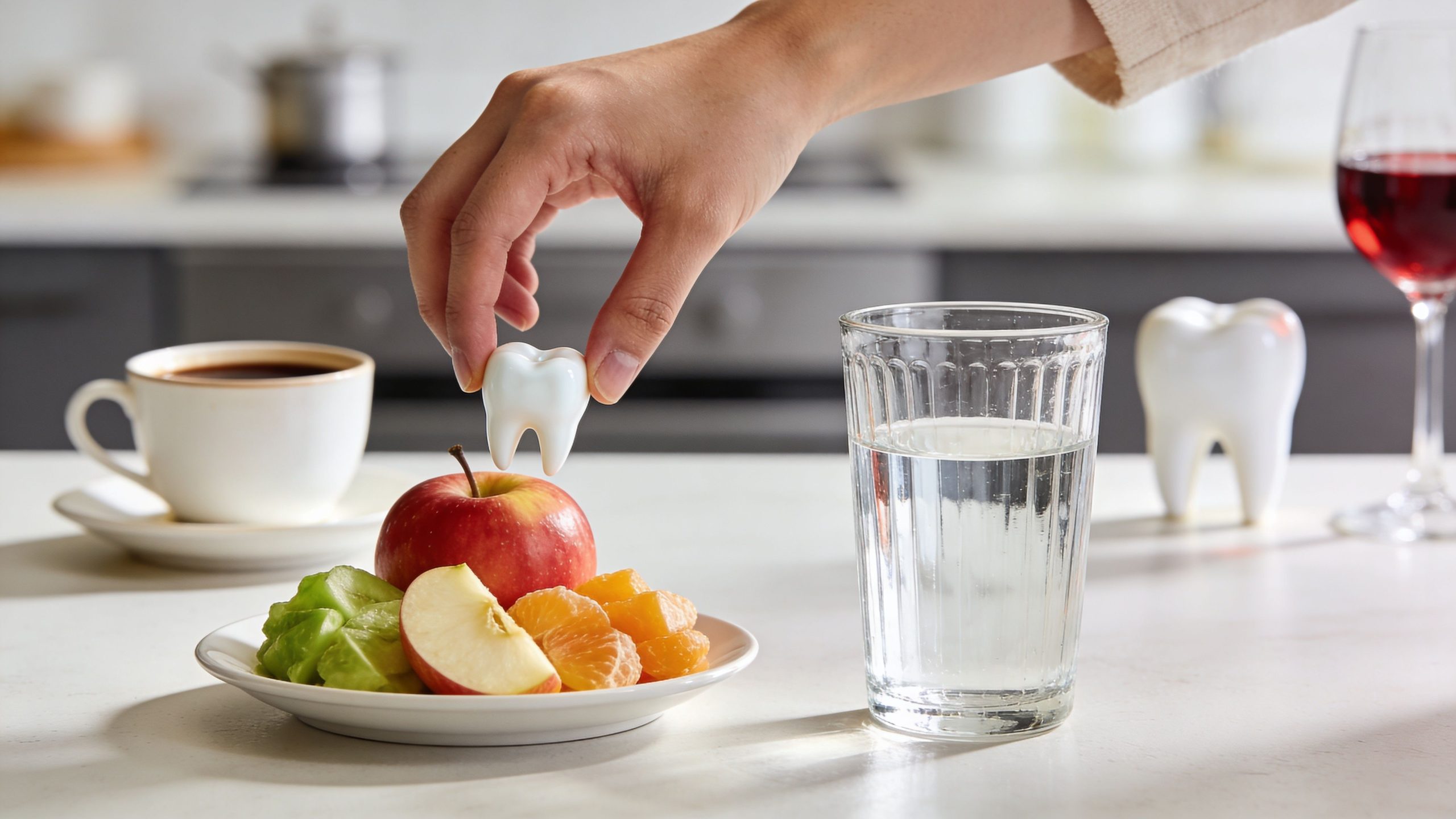
The coffee problem isn’t always coffee alone
For many adults, coffee itself isn’t the whole issue. The pattern is the issue. Nursing one dark drink over hours gives pigments repeated contact with enamel.
The same goes for iced tea, cola, and red wine. Frequency and duration often matter as much as the beverage itself.
Using a straw for staining beverages can reduce pigment contact with the front teeth by 60% to 80%, and rinsing with water for 30 seconds after drinking can dislodge up to 70% of residues before they penetrate enamel, according to this review of straw use and water-rinse stain prevention strategies.
Habits that help more than people expect
Some prevention strategies are easy to underestimate because they sound simple.
- Use a straw when it makes sense for iced coffee, iced tea, or similar drinks that otherwise wash over the front teeth.
- Rinse right away with water if you’ve had a dark beverage or heavily pigmented meal.
- Drink water consistently through the day so your mouth doesn’t stay dry and sticky after meals.
- Avoid tobacco if keeping teeth white matters to you. Whitening and tobacco work against each other.
A lot of patients want a way to keep their favorite drinks without ruining their result. This is usually the most honest answer: you may not have to give them up, but you do have to change how you consume them.
Foods that are friendlier to a white smile
Not every useful food choice is about avoidance. Some foods can be easier on the teeth and fit nicely into a maintenance routine.
A few practical examples from everyday life:
- Cheese and yogurt can fit well into a smile-conscious routine.
- Apples and celery give you more texture and chewing than soft, sticky snacks.
- Water-rich choices are generally easier on teeth than sugary, heavily dyed foods.
That doesn’t mean you need a rigid “perfect” diet. It means your everyday defaults should help your whitening, not sabotage it.
If you have one staining drink each day, finish it, rinse, and move on. Constant sipping is usually harder on your smile than having it once and being done.
Lifestyle matters as much as the whitening method
Personalized advice becomes particularly useful. A healthcare worker on long shifts, a teacher who sips coffee all morning, and a restaurant professional surrounded by staining foods may all need different stain-prevention strategies.
The same is true for patients with dry mouth, acid exposure, or habits that keep the mouth from clearing pigments efficiently. Generic online lists don’t always account for that. In real practice, the most effective plan is the one that matches the person, not just the product.
For people exploring cosmetic dentistry, teeth whitening, or even Invisalign in Walnut Creek, those daily patterns matter because a bright smile isn’t maintained in the dental chair alone. It’s maintained at work, in the car, at restaurants, and at home.
Professional Maintenance for Your Brightest Smile
Whitening lasts longer when home care and professional care support each other. Even excellent brushing can’t remove everything that builds up over time, especially tartar and stubborn surface stain.
That’s why whitening maintenance isn’t only a bathroom-counter habit. It’s also a dental office habit.
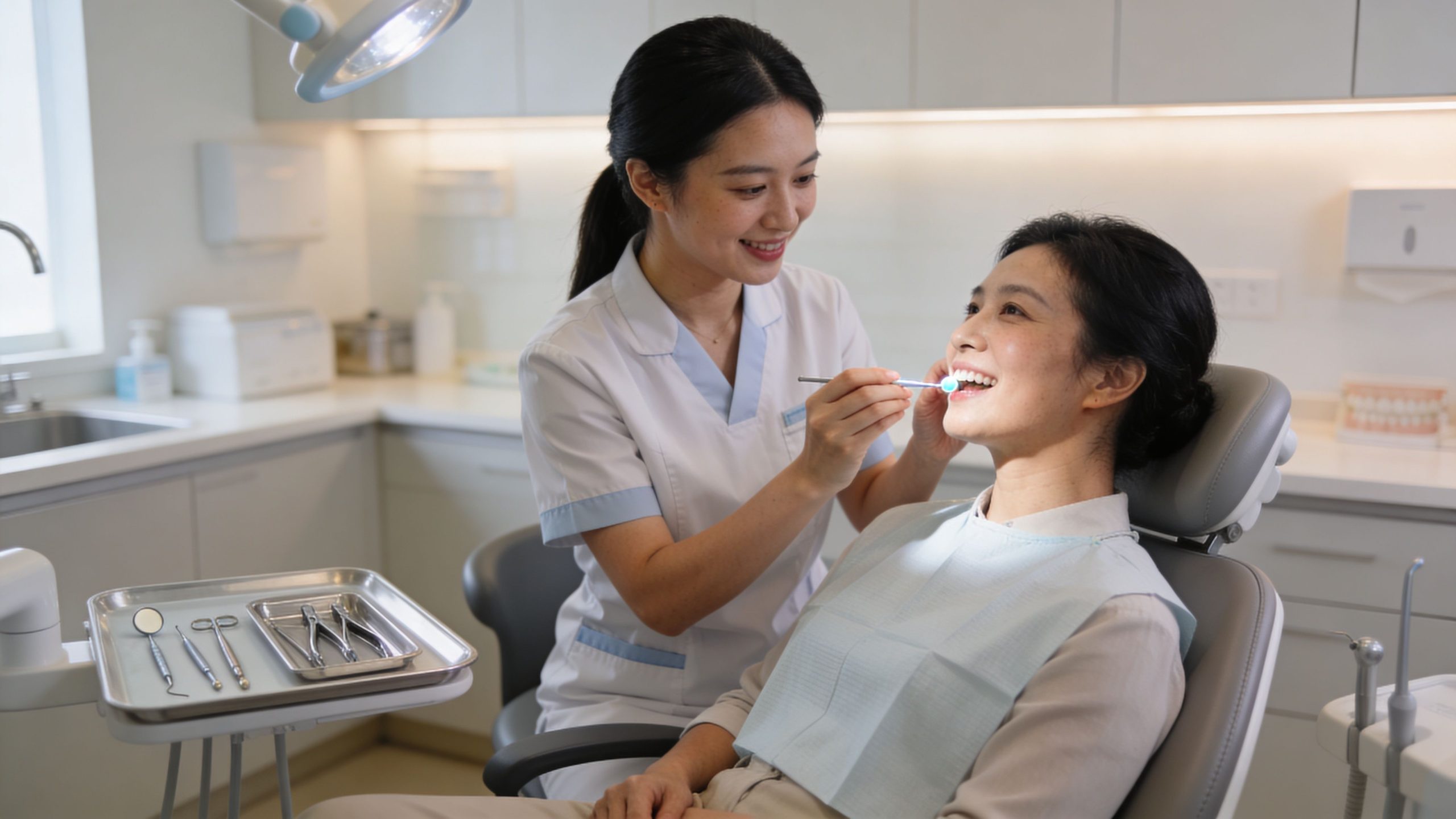
Why cleanings matter for cosmetic results
When teeth look less bright months after whitening, the cause isn’t always that the whitening “wore off” completely. Often, the smile just picked up enough stain and tartar to look less crisp.
Professional cleanings remove buildup that home brushing can’t fully handle. They also give your dentist and hygienist a chance to tell the difference between surface discoloration, dehydration changes, and a smile that’s ready for a touch-up.
A clinical study found that a maintenance plan combining in-office whitening with monthly at-home bleaching for 3 months produced greater color stability over 6 months than in-office treatment alone, which supports the value of ongoing professional follow-up and touch-ups, as summarized in this overview of combined in-office and home whitening maintenance.
Touch-ups work best when they’re personalized
Not every patient needs the same schedule. That’s one of the biggest mistakes in aftercare.
A patient with minimal stain exposure may go quite a while before needing to refresh the shade. Someone with coffee, tea, red wine, or tobacco exposure may need closer monitoring. Patients who use trays at home need instructions that fit their sensitivity level and enamel condition.
A practical maintenance discussion usually includes:
- What type of whitening you had
- How quickly your teeth picked up stain in the past
- Whether sensitivity limits how often you can use bleaching products
- Whether a cleaning alone may restore brightness before stronger whitening is considered
What works better than over-whitening
When people notice dullness, many reach for more whitening product immediately. That isn’t always the right answer.
Sometimes the better sequence is:
- get a professional cleaning,
- reevaluate the shade,
- then decide whether a touch-up is needed.
That approach tends to be safer and more precise than repeating whitening too soon. If you’re considering professional refresh treatment, learning how Zoom whitening is used in-office can help you understand what a dentist-guided option looks like.
A good maintenance plan doesn’t chase the brightest possible shade at all times. It protects enamel, manages sensitivity, and keeps the smile looking clean and natural over time.
Professional maintenance also matters because whitening is part of a larger dental picture. If a patient also needs restorative dentistry, dental implants near me, crowns, or treatment for worn enamel, those conditions can affect how cosmetic results look and how long they stay attractive.
Partner with Your Cosmetic Dentist in Walnut Creek CA
The best whitening aftercare is specific, not generic. It should account for your daily routine, your sensitivity level, your diet, and the type of whitening you used.
That’s one reason ongoing dental care matters so much. Routine professional cleanings every 6 months help maintain whiteness by removing surface stains and tartar that home care misses, and plaque affects 80% of adults, contributing to yellowish-brown discoloration, as noted in this summary of professional cleanings, plaque control, and whitening maintenance.
What patients should expect from a long-term dental home
If you’re looking for a dentist in Walnut Creek, CA, a good whitening conversation shouldn’t happen in isolation. It should fit into a complete care plan that may also include:
- Cleaning and exams to control tartar and monitor stain buildup
- Dental x-rays and new patient exams when needed to evaluate overall oral health
- Cosmetic dentistry for whitening, smile refinement, or alignment planning
- Restorative dentistry if worn, chipped, or damaged teeth are affecting the final look
- Emergency dentist care or even tooth extraction planning when urgent problems interrupt routine care
Comfort matters too
Some patients avoid follow-up care because they’re anxious, sensitive, or worried the visit will feel uncomfortable. That’s understandable. But whitening maintenance is much easier when you have a dental office that communicates clearly, moves at a reasonable pace, and offers comfort-focused care when appropriate.
For many East Bay families and professionals, that’s the difference between getting cosmetic results once and maintaining them.
Frequently Asked Questions About Whitening Aftercare
Do whitening toothpastes help maintain results
They can help with surface stain control, but they aren’t the same as professional whitening. The biggest mistake is using a harsh product too often. A maintenance toothpaste should support your routine, not become a substitute for it.
Should touch-ups follow the same schedule for everyone
No. The longevity of whitening varies by method and lifestyle, and customized maintenance plans are often overlooked. Factors such as enamel thickness, diet, and occupation can change how often touch-ups make sense, as discussed in this overview of personalized whitening maintenance variables.
A person with frequent stain exposure may need a different plan than someone with very little. That’s why copy-and-paste advice often falls short.
What if my teeth feel sensitive after whitening
Sensitivity usually calls for a gentler approach, not more aggressive cleaning. Use soft brushing pressure, be selective with whitening products, and avoid treating discomfort as a sign that you need to scrub harder.
If sensitivity keeps returning, it’s worth asking your dentist whether your maintenance products or touch-up timing should change.
Can a cleaning make my teeth look whiter even without another whitening session
Often, yes. Surface stain and tartar can make teeth look darker than they really are. A professional cleaning may improve brightness enough that a touch-up can wait.
Does the whitening method affect aftercare
Yes. In-office treatment, take-home trays, and over-the-counter products don’t all behave the same way. Some methods call for closer supervision, and some patients need more personalized timing depending on stain exposure, enamel health, and day-to-day habits.
If you want personalized guidance on how to keep teeth white after whitening, William M. Schneider, DDS provides a full range of dental care for Walnut Creek and the East Bay, including preventive cleanings, cosmetic dentistry, whitening support, restorative treatment, and comfortable care for anxious patients. If you’re looking for a trusted dentist near me, cosmetic dentist near me, or dentist in Walnut Creek, CA, schedule an appointment to build a maintenance plan that protects your smile for the long term.