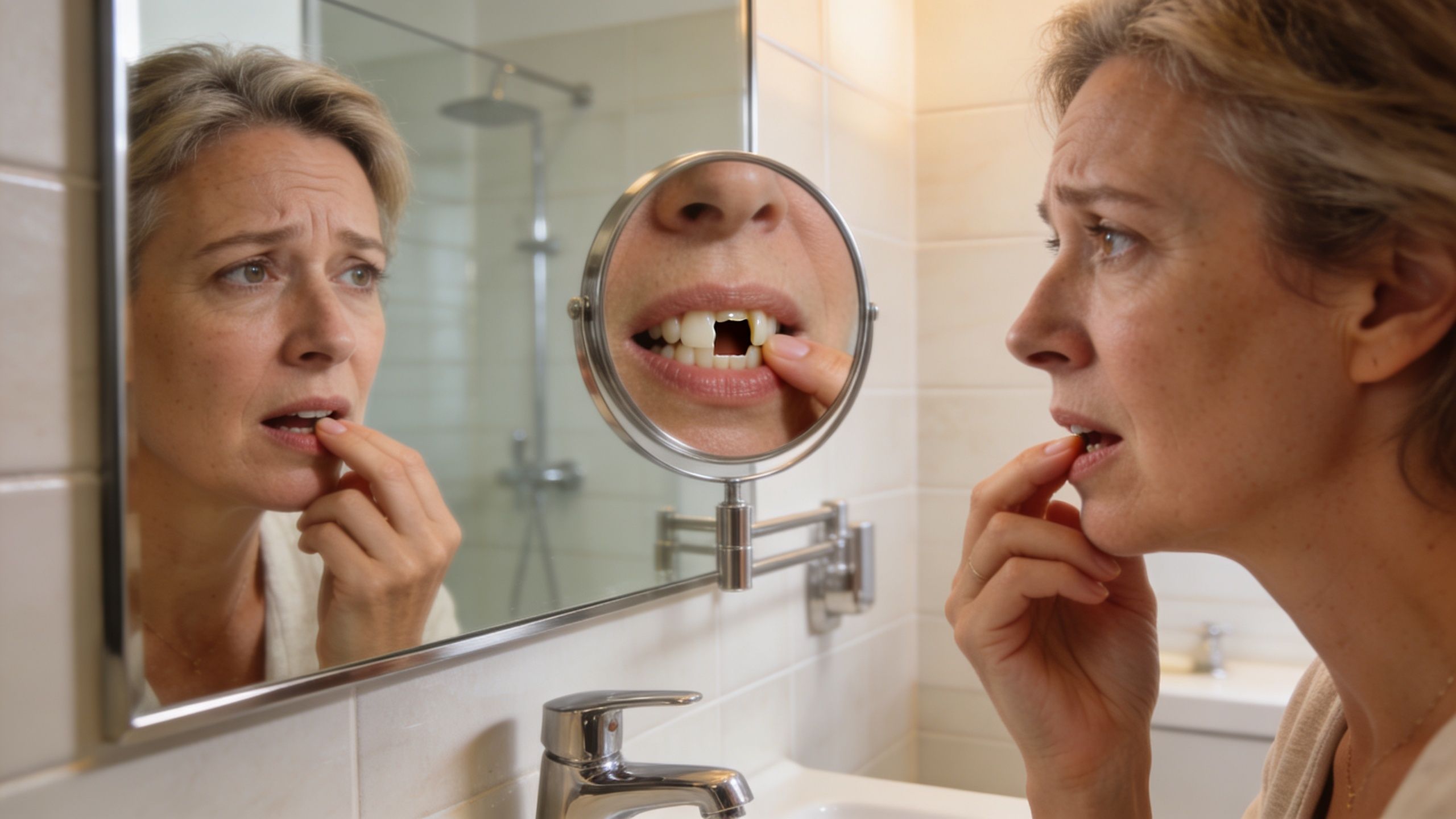
Losing several teeth at once can feel overwhelming. Patients aren't just thinking about the extraction itself. They're worried about walking out with visible gaps, struggling to speak clearly, or feeling self-conscious at work, at dinner, or around family.
That’s why the immediate dentures process matters so much. It gives the right patient a way to have teeth removed and leave with a complete smile the same day, instead of waiting through a long healing period without teeth. For many adults in Walnut Creek and the East Bay, that changes the experience from something they dread into something they can handle with confidence.
If you’ve been searching for a dentist near me, an emergency dentist, or help with tooth extraction and replacement in Walnut Creek, CA, understanding how this process works can make the decision much less intimidating.
Restore Your Smile Immediately in Walnut Creek
If you're facing multiple extractions, the hardest part is often the time before treatment. You may already be adapting how you smile, choosing softer foods, or avoiding photos because you know change is coming. Many patients also worry about whether they'll look like themselves after treatment.
Immediate dentures solve a very specific problem. They help you avoid the period of being without teeth while your mouth heals. Instead of extracting teeth first and making a denture later, the denture is planned in advance and placed right after the teeth are removed.
Why patients choose this option
For the right candidate, immediate dentures offer practical benefits that matter on day one:
- Appearance right away You don’t have to spend weeks or months with visible gaps in your smile.
- Function during healing You can begin adapting to speaking and eating with teeth in place.
- Emotional relief Many patients feel calmer knowing there’s a clear plan for the same day as extractions.
- A smoother transition This approach can serve as a bridge to a final denture or, in some cases, future dental implants near me options.
Practical rule: The best immediate denture cases start with planning, not rushing. Comfort on extraction day depends on what happens before it.
In a community like Walnut Creek, where many patients need treatment that fits a busy professional and family schedule, immediate dentures often make more sense than waiting through a toothless healing period. They can also be part of a broader restorative plan that may later include bridges, implant support, or other forms of restorative dentistry.
The biggest advantage isn't cosmetic alone. It's continuity. You keep your facial support, maintain confidence in public, and move through a difficult dental transition with more dignity and predictability.
What Are Immediate Dentures and Are You a Candidate
An immediate denture is a denture that's made before the teeth are removed and inserted right after the extraction appointment. A conventional denture is different. That one is made after the gums have healed more fully.
The easiest way to think about it is this: an immediate denture is your same-day transition prosthesis. It lets you keep a complete smile while your mouth changes during healing.
How they differ from conventional dentures
The key distinction is timing.
| Option | When it's made | Main advantage | Main trade-off |
|---|---|---|---|
| Immediate denture | Before extractions | You don't go without teeth | It will need adjustments as healing changes the fit |
| Conventional denture | After healing | Made on a more stable foundation | You spend healing time without a denture unless another temporary option is used |
That trade-off matters. Immediate dentures give you continuity, but they also demand patience. Your gums and bone won't stay the same shape after extractions, so the fit changes as healing progresses.
Who tends to be a good candidate
Immediate dentures are often considered for people who:
- Need several teeth removed because of decay, advanced wear, gum disease, or trauma
- Want to avoid visible gaps in the front of the mouth
- Need full-arch replacement and want a faster cosmetic transition
- Prefer a staged plan that may later lead to a final denture or implant-supported restoration
They're also helpful for patients who want to preserve normal daily life as much as possible. If you work with the public, attend meetings, or prefer not to explain missing teeth during healing, this option can be especially appealing.
A good candidate doesn't just need extractions. A good candidate also understands that the first denture is part of a process, not the final chapter.
When another option may fit better
Not every patient should choose immediate dentures. Sometimes a bridge, a phased restorative plan, or implant treatment makes more sense depending on the number of teeth involved, bone condition, bite, and long-term goals.
If you're comparing options such as dentures, bridges, or dental implants near me, the decision should take into account more than appearance. Chewing demands, speech, long-term maintenance, and healing expectations all matter. Patients who are also interested in cosmetic dentistry often want to know how the teeth will look in relation to lip support and facial shape, and that should be discussed early.
A proper exam, dental x-rays, and a realistic conversation about goals will tell you whether the immediate dentures process is the right fit.
The Immediate Denture Process Step-by-Step
The process starts before any extraction is scheduled. Immediate dentures only work well when the details are gathered carefully in advance. That includes your oral exam, medical history, bite relationship, and the records needed to design the denture you'll wear on surgery day.
At a modern office, this planning phase is often more efficient than patients expect.
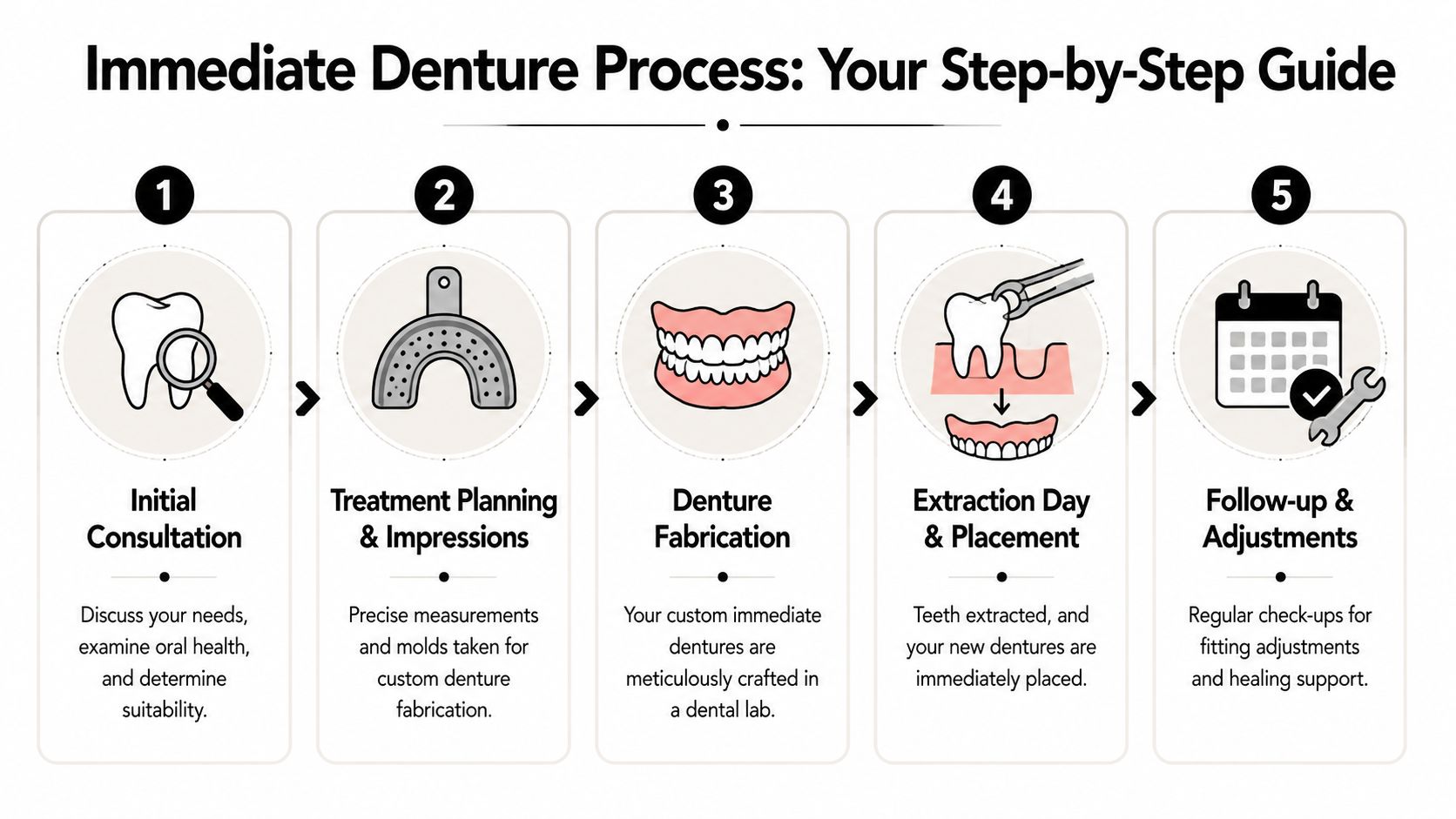
Step one through step three
The first phase usually includes:
Consultation and exam
Your dentist evaluates which teeth can and can't be saved, reviews symptoms, takes imaging, and discusses whether immediate dentures fit your long-term goals.Records and smile planning
Impressions or digital scans are taken. Bite records, gum contours, tooth position, and esthetic preferences are reviewed before the denture is designed.Lab fabrication
The denture is created before your extraction visit, so it’s ready for same-day insertion.
Digital workflow versus older methods
Older methods are more labor intensive. According to Dandy’s overview of immediate dentures, traditional workflows require a minimum of four patient visits, while modern digital workflows can reduce that to just two visits. The same source notes that intraoral scanners create precise 3D models that can be electronically designed and 3D-printed, which helps reduce chair time and minimize errors from manual processing.
That matters in real life. Fewer appointments usually mean less disruption to work and family responsibilities. Digital records can also make communication between the office and lab more consistent, especially when matching bite relationships and tissue contours.
What happens before the lab finishes the denture
This part often determines how smooth the insertion day feels. Before the case goes to final fabrication, your dentist has to make judgment calls about:
- Tooth display How much tooth should show when you smile or speak.
- Lip support Whether the denture will restore facial fullness naturally.
- Bite balance How the upper and lower arches should meet.
- Future plan Whether this denture is transitional or likely to become the base for later refinement.
A rushed case tends to create more adjustment issues later. A carefully planned case gives you a better starting point.
Step four and step five
After planning and fabrication, the final steps are straightforward:
| Step | What happens |
|---|---|
| Extraction day and placement | Teeth are removed and the immediate denture is placed right away |
| Follow-up and refinement | Pressure areas are adjusted and the fit is monitored as healing changes the gums |
For patients looking for a dentist in Walnut Creek, CA who offers modern dental care, this planning phase is where quality really shows. Same-day teeth are possible, but predictable same-day teeth depend on precision.
What to Expect on Your Tooth Extraction Day
By the time extraction day arrives, most of the important planning has already been done. That’s reassuring for patients because the denture has been prepared in advance, and the visit has a clear sequence. You’re not starting from scratch. You’re completing a plan.

Before the extractions begin
The appointment typically starts with a review of the treatment plan, comfort measures, and post-op instructions. For anxious patients, this conversation matters. If you've been putting off care because of fear, this is also the time to discuss whether sedation support is appropriate.
Then the mouth is numbed and the extractions begin. Some cases are simple. Others involve more surgical shaping so the denture has a stable seat.
Why the denture goes in right away
Once the teeth are removed, the immediate denture is inserted the same day. According to this clinical discussion of insertion-day protocol, the immediate denture acts as a bandage for the tissue, helping reduce bleeding and promote a stable alveolar ridge. The same source notes that precise alveoloplasty, or smoothing and trimming the jawbone, has been shown to reduce post-op soreness by 25% and lower the need for early adjustments.
That bandage effect is one of the reasons immediate dentures can feel protective even though the day itself is a major transition. The denture covers the extraction areas and supports the early shape of healing tissues.
A stable fit on day one rarely happens by accident. Bone contour, gum shape, and denture seating all have to work together.
The role of alveoloplasty
Alveoloplasty sounds technical, but the idea is simple. After extractions, the ridge sometimes needs smoothing so the denture doesn't rock on uneven bone or press sharply into healing tissue. If this step is skipped when it’s needed, patients often feel more soreness and more movement.
This is meticulous work, not cosmetic extra work. It improves how the denture seats and how the mouth adapts in the first days after surgery.
A short visual overview can help if you're trying to picture how the visit flows from extraction to insertion.
What you'll likely notice before you go home
Most patients notice a few things right away:
- Pressure more than looseness The denture often feels snug at first because of swelling.
- A different way of speaking Your tongue and lips need time to adapt.
- A strong emotional reaction Relief is common. So is fatigue.
- The need for guidance You should leave with clear instructions for eating, cleaning, and follow-up.
If you're also searching for an emergency dentist because you're already dealing with pain, swelling, or teeth that can't be saved, immediate dentures can be part of a broader urgent care plan that restores function quickly while still respecting long-term goals.
Immediate Denture Recovery and Aftercare Guide
The first few days are where good guidance makes the biggest difference. Patients often assume discomfort means something went wrong. Usually, it means your mouth is healing and adjusting. The goal is to control irritation early so small issues don't turn into major sore spots.

The first days at home
According to EuroDenture’s review of immediate denture healing, about 62% of patients report moderate pain in the first week, and a soft reline within 72 hours can reduce pain scores by 45%. That’s why early follow-up matters so much. A timely adjustment can change the whole recovery experience.
During this stage, keep your routine simple and consistent:
- Choose soft foods Soup, yogurt, eggs, smoothies, and other gentle foods are easier while the gums are tender.
- Rest your bite Don’t test the denture with tough, chewy, or crunchy foods too soon.
- Clean gently Your denture and mouth still need careful hygiene even while the tissues are healing.
- Pay attention to pressure points Sharp sore spots usually need an adjustment, not more “getting used to it.”
Comfort insight: A sore immediate denture shouldn't be treated like a willpower problem. If one area keeps rubbing, it usually needs professional adjustment.
What helps and what doesn't
Some things support healing. Some only make patients more frustrated.
| Helps | Usually doesn't help |
|---|---|
| Soft diet and hydration | Forcing yourself to chew normally too soon |
| Scheduled follow-up | Waiting too long with a painful sore spot |
| Gentle cleaning habits | Scrubbing irritated tissues aggressively |
| Prompt soft reline when needed | Assuming every fit problem will resolve on its own |
If you want a deeper overview of extraction healing itself, this guide on how to recover from tooth extraction is a useful companion to denture-specific instructions.
When to call the office
Call if the denture feels dramatically uneven, if one area is becoming increasingly painful, or if you’re unsure whether what you’re feeling is normal. Patients do best when they ask early rather than trying to tolerate a bad fit for several days.
Speech and chewing usually improve with practice, but irritation from a pressure spot often worsens until it's adjusted. That's why the immediate dentures process isn't just about making the denture. It's also about supporting you through the adaptation period with practical aftercare.
Adjustments, Relines, and Your Permanent Restoration
One of the biggest misconceptions about immediate dentures is that once they're placed, the hard part is over. However, insertion actually marks the beginning of a healing phase where the fit keeps changing because your tissues are changing.
That isn't a complication. It's biology.
Why the fit changes
According to this review in the National Library of Medicine, the immediate denture process requires follow-up for 8 to 12 months due to predictable bone resorption. The same review notes measurable changes during healing, including a decrease in vertical dimension as the ridge remodels.
That’s why a denture that fits reasonably well at insertion can start to feel loose later. The gums shrink, the ridge reshapes, and spaces appear where tissue used to be. Without planned adjustments, the denture can lose comfort and stability.
What relines are for
Relines fill the changing space between the denture base and your healing tissues. In practical terms, they help the denture keep up with your mouth.
You may hear about:
- Soft relines Used during the transitional period when tissues are still changing and tenderness is common.
- Hard relines Considered later, when healing is more stable.
- New final denture fabrication Sometimes the best long-term answer after the immediate phase is complete.
The need for a reline doesn't mean the treatment failed. It usually means the treatment is progressing as expected.
Long-term choices after healing
Once the mouth stabilizes, the next step depends on your goals, bite, and anatomy. Some patients continue with a refined denture. Others want more retention and chewing confidence and decide to explore implant support.
If you're weighing final restorative options, this comparison of the difference between dental implants and bridges can help frame the discussion. For some patients, implants become the long-term solution after the immediate denture phase has served its purpose.
A well-managed immediate case sets up that future decision. It protects appearance now while preserving flexibility later.
Schedule Your Immediate Denture Consultation in Walnut Creek
If you're dealing with failing teeth, planning for multiple extractions, or trying to avoid the experience of being without teeth, immediate dentures can be a smart, practical solution. The key is choosing a process that emphasizes planning, comfort, and close follow-up.
Patients in Walnut Creek often want more than a technically correct denture. They want clear explanations, modern imaging, calm support, and a dentist who understands that this is both a functional and emotional transition. That’s especially true for adults who are also looking for ongoing dental care, cleaning and exams, new patient exams, restorative dentistry, or future options such as teeth whitening, implants, or other smile improvements once health is restored.
A consultation gives you answers to the questions that matter most:
- Am I a candidate for immediate dentures?
- Will I need full or partial replacement?
- What will extraction day feel like?
- How will the fit change during healing?
- Should I consider implants later on?
If cost or insurance is part of your decision, ask directly. A good dental team should help you understand the treatment sequence and what to expect financially before you commit.
For anyone searching for a dentist in Walnut Creek, CA, a dentist near me, or guidance after severe tooth breakdown, this is the kind of treatment that benefits from a careful local evaluation rather than guesswork online.
If you're ready to talk through the immediate dentures process with a compassionate, experienced team, schedule a consultation with William M. Schneider, DDS. The practice serves Walnut Creek and the East Bay with personalized treatment planning, gentle care, and modern restorative options designed to help you move forward with confidence.