Invisalign Braces vs. Traditional Braces: Which Is Better for You?
When it comes to straightening your teeth, you have more options than ever. For a long time, traditional metal braces were the go-to solution. Now, Invisalign offers a more discreet alternative with its clear aligners. At William Schneider DDS Inc., we know choosing between these two effective treatments can be tough. Both can fix everything from simple gaps to complex bite issues, but they work very differently. Your decision will depend on your lifestyle, budget, and specific dental needs.
This guide breaks down the pros and cons of traditional braces and Invisalign to help you decide which is right for you. We’ll cover how they work, what to expect during treatment, and which option best fits your goals for a confident new smile.
The Enduring Reliability of Traditional Metal Braces
Traditional metal braces have been the gold standard in orthodontics for a reason: they work. While they might conjure images of bulky headgear from decades past, modern braces are smaller, lighter, and more comfortable than their predecessors.
How They Work
Traditional braces consist of high-grade stainless steel brackets that are cemented to the front of each tooth. A flexible metal archwire is threaded through these brackets, applying continuous, gentle pressure to move teeth into their correct positions over time. The wire is held in place by small elastic bands (ligatures), which can come in a variety of colors—a feature often popular with younger patients who want to customize their look.
The Advantages of Metal Braces
The primary benefit of traditional braces is their sheer power and versatility. Because they are fixed to the teeth, they allow the orthodontist significantly more control over tooth movement. This makes them the superior choice for treating severe overcrowding, significant gaps, and complex bite issues (malocclusions) that might be too difficult for aligners to correct.
Another significant advantage is compliance. Since the braces are non-removable, patients don’t have to worry about forgetting to put them back in or losing them. The treatment works 24/7 without the patient needing to do anything other than maintain good hygiene and attend adjustment appointments. This “set it and forget it” aspect can be particularly appealing for parents concerned that their children might not wear removable aligners for the required 22 hours a day.
The Drawbacks to Consider
The most obvious drawback is aesthetics. Even with smaller brackets, metal braces are visible. For many adults and self-conscious teens, this visibility is a major deterrent.
Comfort can also be an issue, especially in the beginning. The metal brackets and wires can irritate the cheeks and gums, leading to mouth sores until the tissue toughens up. Furthermore, braces come with dietary restrictions. Sticky foods like caramel, hard foods like nuts or popcorn, and chewy foods like bagels can damage wires or pop brackets off teeth, leading to emergency visits and prolonged treatment times.
Oral hygiene requires more effort with braces. Brushing and flossing demand patience and special tools (like floss threaders or water flossers) to navigate around the wires and brackets where food particles easily get trapped. Failure to clean properly can lead to decalcification (white spots) on the teeth or gum disease.
The Modern Appeal of Invisalign Clear Aligners
Invisalign revolutionized orthodontics when it was introduced, offering a completely different approach to straightening teeth. Instead of fixed hardware, Invisalign uses a series of custom-made, clear plastic trays worn over the teeth.
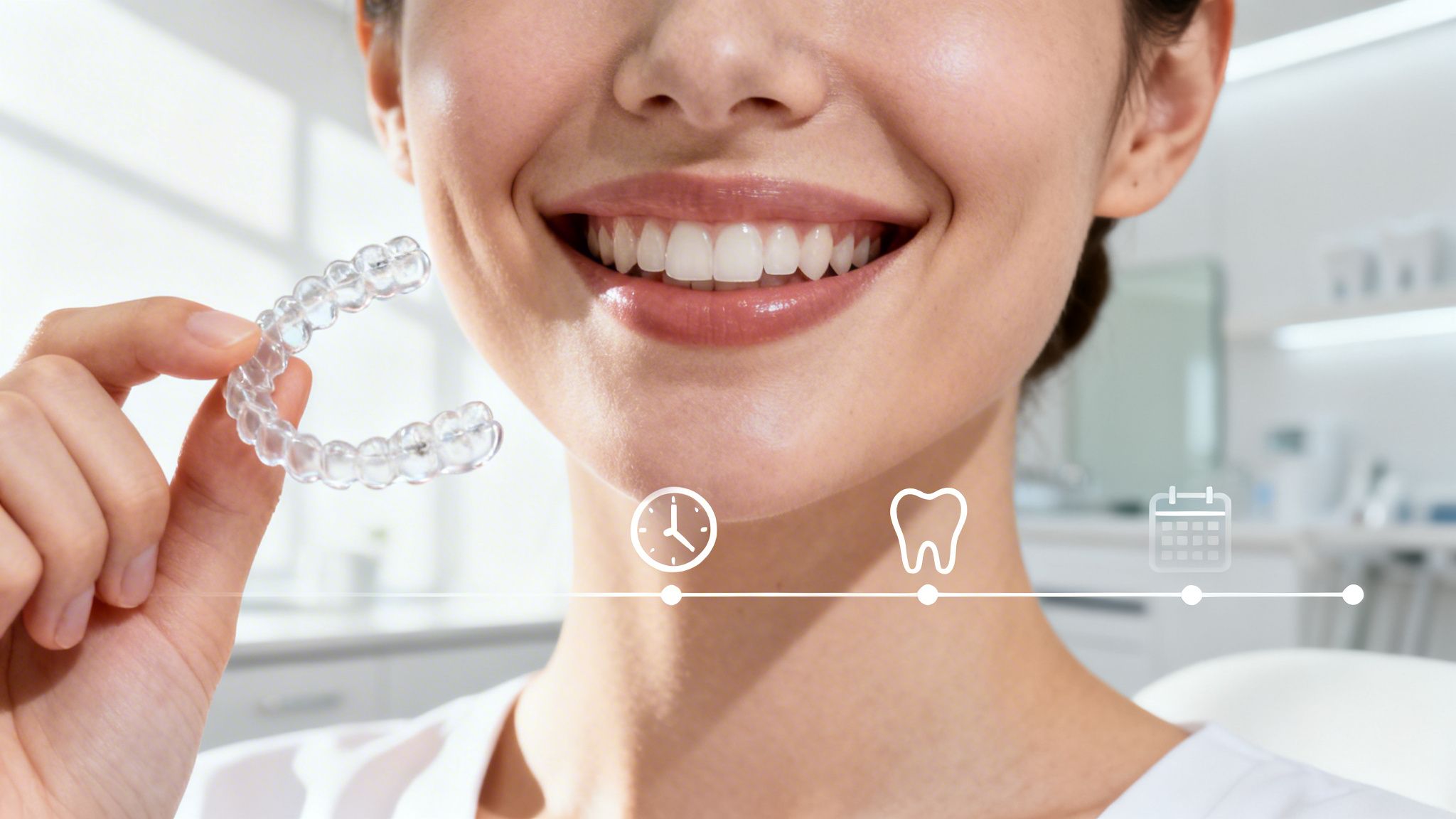
Invisalign
The Technology Behind the Trays
The process begins with a 3D scan of your mouth. Using advanced software, your dentist plans the exact movement of your teeth from start to finish. A series of aligners is then fabricated based on this plan. You wear each set of aligners for about one to two weeks before switching to the next set in the series. Each tray is slightly different, gradually shifting your teeth into place.
Why Patients Choose Invisalign
The biggest selling point is invisibility. The aligners are made of a clear, medical-grade thermoplastic that is virtually undetectable when worn. This allows patients to undergo orthodontic treatment without drawing attention to their teeth, making it a favorite among adults in professional settings.
Convenience is another major factor. Invisalign aligners are removable. This means you can take them out to eat and drink, so there are absolutely no dietary restrictions. You can continue to enjoy corn on the cob, apples, and sticky treats without fear of breaking an appliance.
This removability extends to hygiene as well. You simply remove the trays to brush and floss your teeth normally. There are no wires to thread floss under, making it much easier to maintain optimal oral health throughout your treatment.
Comfort is generally higher with Invisalign. There are no sharp metal brackets to rub against the inside of your mouth. While patients do experience some pressure or soreness for a day or two after switching to a new tray, it is typically less intense than the pain associated with tightening braces wires.
Potential Downsides
The freedom of removable aligners is a double-edged sword. Success with Invisalign relies entirely on patient discipline. The trays must be worn for 20 to 22 hours a day to be effective. If you constantly take them out for long coffee breaks or forget to put them back in after meals, your treatment will stall, and your teeth may even shift back.
Invisalign also requires a lifestyle adjustment regarding snacking. You cannot eat or drink anything other than water while wearing the aligners, as sugar and acid can get trapped against the teeth and cause cavities, while hot liquids can warp the plastic. Consequently, you must brush your teeth after every meal or snack before reinserting the trays. For frequent snackers or coffee sippers, this routine can become tedious.
Comparing the Experience: Comfort, Duration, and Maintenance
To truly weigh your options, it helps to look at the day-to-day realities of living with each system.
Comfort Levels
In the battle of comfort, Invisalign usually wins. The smooth plastic is less abrasive to soft tissues than metal brackets. However, some Invisalign patients require “attachments”—small, tooth-colored bumps bonded to specific teeth to help the aligners grip and move them. These can sometimes cause minor irritation, but generally less than metal hooks.
Traditional braces often cause discomfort after adjustments (tightening), which occur every 4-8 weeks. Invisalign causes mild soreness with every tray change (every 1-2 weeks), meaning the discomfort is more frequent but typically much milder and shorter-lived.
Treatment Duration
Treatment speed varies wildly depending on the complexity of the case, but averages are often comparable. Traditional braces generally require treatment times ranging from 18 months to 3 years. Invisalign treatment can be faster for simpler cases, often ranging from 6 to 18 months.
However, complex movements (like rotating cylindrical teeth or adjusting vertical height) are mechanically easier for braces. In complex cases, Invisalign might actually take longer than braces to achieve the same result, or might not be able to achieve the “perfect” result without the aid of some auxiliary attachments or a brief period of braces.
Maintenance and Visits
With traditional braces, you will visit William Schneider DDS Inc. roughly every 4 to 8 weeks for adjustments. These appointments are essential to change bands, tighten wires, and monitor progress. If a bracket breaks, you’ll need an extra emergency visit.
Invisalign requires visits every 6 to 10 weeks, primarily to check progress and pick up your next few sets of aligners. Because there are no wires to tighten, these appointments are often shorter. Maintenance at home involves cleaning your aligners daily with a toothbrush and water or specialized cleaning crystals to prevent them from becoming cloudy or smelly.
Determining the Right Fit for Your Life
Choosing between braces and Invisalign isn’t just about teeth—it’s about lifestyle.
Who is Invisalign Best For?
- The Professional: Adults who speak in meetings or present frequently often prefer the discretion of clear aligners.
- The Athlete: Contact sports pose a risk for braces wearers (lip cuts from brackets). Aligners can be removed or worn with a mouthguard more comfortably.
- The Diligent Patient: If you are organized and committed to the 22-hour rule, you are a great candidate.
- Mild to Moderate Cases: Invisalign is excellent for closing gaps, relieving mild crowding, and correcting straightforward bite issues.
Who is Best Suited for Traditional Braces?
- The Forgetful Patient: If you know you’ll lose the trays or forget to wear them, fixed braces are the safer bet.
- Complex Dental Issues: For severe crossbites, large rotations, or vertical skeletal issues, the mechanical force of braces is often necessary.
- The Snacker: If you prefer grazing on food throughout the day without constant brushing, braces might be less annoying than removing trays ten times a day.
- Budget-Conscious Patients: While the gap is closing, traditional braces can sometimes be slightly more affordable than Invisalign, depending on insurance coverage and specific treatment length.
Financial Considerations
Cost is almost always a deciding factor. Historically, Invisalign was significantly more expensive than braces. Today, the cost difference has narrowed.
Traditional braces typically range from $3,000 to $7,000. Invisalign generally costs between $4,000 and $7,400. Many dental insurance plans that cover orthodontics will cover a portion of the fee for either treatment (often up to a lifetime maximum, such as $1,500 or $2,000).
At William Schneider DDS Inc., we believe finances shouldn’t stand in the way of health. We offer various payment plans and financing options to make both treatments accessible. It is crucial to check your specific insurance benefits, as some plans cover braces for adults but categorize aligners as “cosmetic,” though this distinction is becoming less common.

Invisalign Implant
Making Your Decision
Ultimately, there is no single “better” option—only the option that is better for you. If you value aesthetics and flexibility above all else and are disciplined enough to follow the rules, Invisalign is likely your winner. It offers a modern, low-impact way to improve your smile without disrupting your professional image or your diet.
If you have complex dental needs, want the most predictable outcome for severe misalignment, or simply don’t want the responsibility of keeping track of aligners, traditional braces remain the champion of reliability. The technology behind both methods has advanced remarkably. Braces are smaller and more efficient; Invisalign is capable of treating far more complex cases than it could ten years ago. The gap between them is smaller than ever.
Take the Next Step Toward Your Dream Smile
Reading about the differences is a great start, but nothing replaces a professional assessment. Your mouth is unique, and what worked for your friend or colleague might not be the right clinical approach for you.
At William Schneider DDS Inc., we specialize in creating personalized treatment plans that respect your goals, your time, and your budget. We can show you exactly what each treatment would look like for your specific smile and help you weigh the tradeoffs in real-time.
Don’t let indecision keep you from the confidence of a straight, healthy smile. Whether you choose the precision of steel or the clarity of plastic, the result will be a smile you are proud to share with the world.
William M. Schneider, D.D.S.
https://goo.gl/maps/d3H8ow2vWAC4qgZ26
1855 San Miguel Dr STE 31, Walnut Creek, CA 94596, United States
(925) 935-2700
www.wcfamilydentist.com