If you're searching for an invisalign dentist near me, there's a good chance you've already lived with the same small frustration for years. You smile with your lips closed in photos. You notice one tooth that turns in just enough to catch your eye on video calls. Or maybe you've wanted straighter teeth, but metal braces never felt like the right fit for your work, your schedule, or your comfort.
That hesitation is common, especially for adults and busy families in Walnut Creek and across the East Bay. They're not just asking whether Invisalign works. They're asking what the process feels like, whether it will fit their daily routine, and whether they're choosing a dentist who will guide them carefully from the first consultation to the final result.
At our Walnut Creek office, that part matters. Invisalign should feel clear, manageable, and personalized. It should also fit into the bigger picture of your oral health, whether you're also thinking about cosmetic dentistry, routine cleaning and exams, teeth whitening, restorative dentistry, or long-term planning for crowns or dental implants.
Your Path to a Confident Smile in Walnut Creek
A lot of Invisalign consultations start the same way. A patient sits down, smiles a little carefully, and says, "I have been meaning to fix this for years." It may be one front tooth that overlaps, a space that draws the eye, or bite pressure that makes chewing less comfortable than it should be.
What they want is usually simple. They want to feel relaxed when they smile, speak, and see themselves in photos.

Clear aligners have become a well-established orthodontic option for adults and teens who want a less noticeable alternative to braces. Align Technology reports that more than 18 million patients have started Invisalign treatment worldwide, which helps explain why so many East Bay patients ask about it first when they begin looking at orthodontic care. If you want a closer look at the mechanics, our page on how Invisalign works step by step explains the process in plain language.
Local care still makes a big difference.
A clear aligner case needs more than a scan and a box of trays. Teeth do not always move on a perfect schedule, and treatment sometimes calls for small adjustments, extra attachments, or a change in timing. Having that follow-up handled in person at Dr. Schneider's Walnut Creek office gives patients a clearer path from consultation to final result, especially if they value calm appointments and direct answers.
That patient experience matters as much as the aligners themselves. The first visit is a chance to examine the bite, review goals, and talk openly about daily habits. Someone who travels often, clenches at night, or knows they will struggle to wear trays consistently may need a different plan or more structure. Good Invisalign care should account for real life, not an ideal schedule.
Patients searching for an invisalign dentist near me are usually looking for a few practical things:
- A discreet treatment option that fits work, school, and social life
- An honest evaluation of whether their teeth and bite are a good match for Invisalign
- A comfortable office experience where questions are welcomed and anxiety is taken seriously
- A treatment plan that supports oral health and appearance together
That is the path to a confident smile. It starts with clarity, steady follow-up, and a dentist who explains each step so the process feels manageable from day one.
How Invisalign Creates Straighter Teeth Without Wires
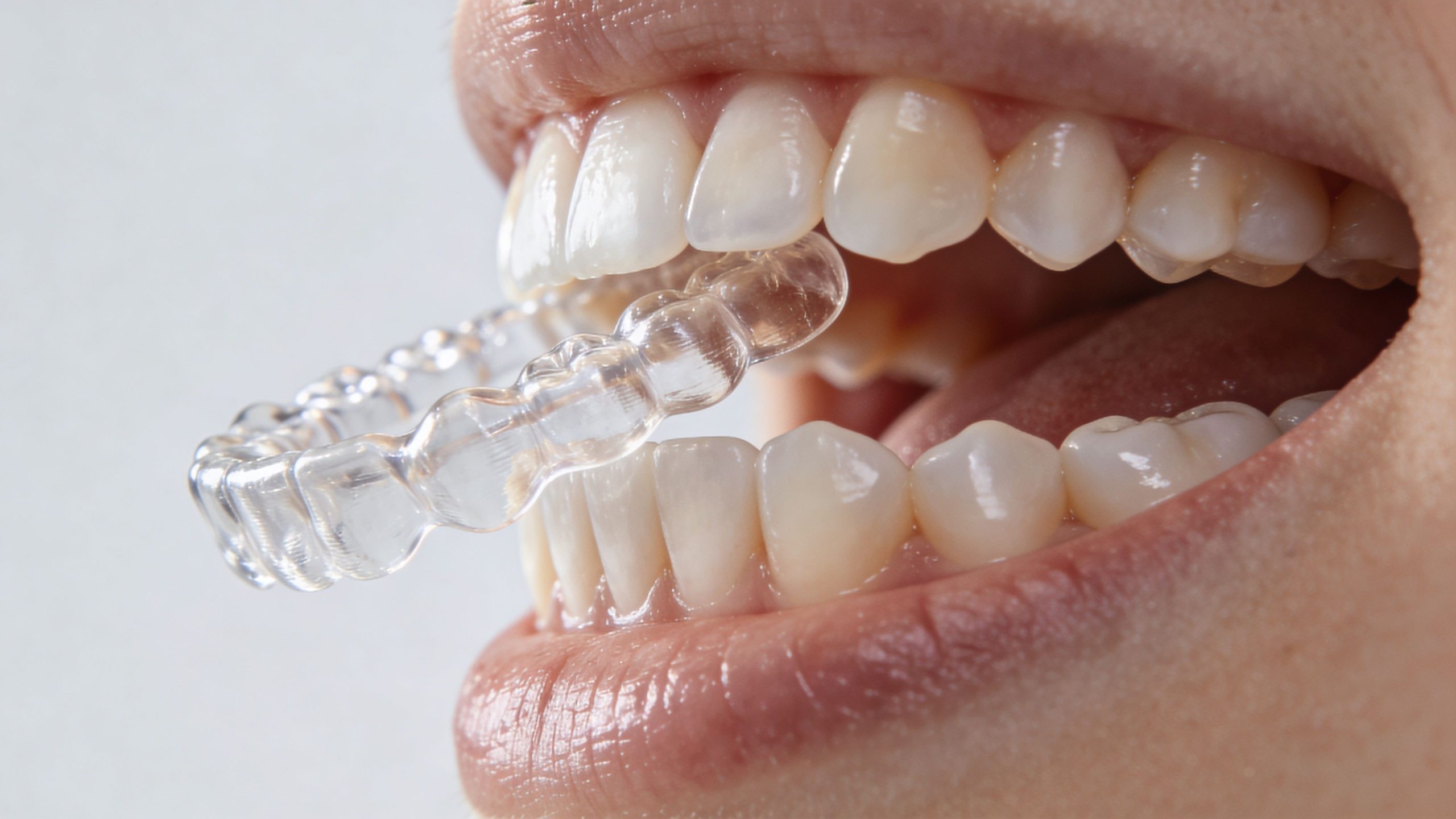
Invisalign looks simple from the outside, but the science behind it is precise. Each aligner is part of a planned sequence. The process is similar to a flipbook. One page alone doesn't show much movement, but page after page, the image changes smoothly. Invisalign works the same way. Each tray makes a small, controlled adjustment, and those small changes add up.
What actually moves the teeth
Invisalign aligners are made from SmartTrack®, a proprietary plastic designed to deliver gentle, steady pressure. According to this explanation of Invisalign treatment and SmartTrack material, that material can achieve tooth movement up to 50 percent faster than traditional metal braces, with many cases finishing in as little as 12 months.
That doesn't mean every case is fast or easy. It means the material is built to move teeth in a controlled, predictable way when the plan is sound and the aligners are worn as directed.
Why trays are switched in sequence
Each set of trays is custom-made from a digital treatment plan. When you switch to the next aligner, you're moving to the next stage of that plan. The aligners aren't interchangeable, and wearing them out of order doesn't help. It usually creates delays.
A few practical points matter here:
- Wear time matters: Aligners need to stay in long enough each day to keep the teeth moving on schedule.
- Consistency beats intensity: Wearing them perfectly for a few days and then forgetting them won't produce reliable movement.
- Fit tells a story: A tray that stops seating properly can signal that the previous stage wasn't fully completed.
Clear aligners aren't magic. They're a series of planned micro-movements that work only when the patient and dentist stay in sync.
Why patients often find them easier to live with
Traditional braces use brackets and wires to create force. Invisalign uses smooth removable trays. That difference affects everyday comfort, brushing, flossing, and how noticeable treatment feels.
If you'd like a closer look at the mechanics, our page on how Invisalign works breaks down the process in more detail. For many patients, understanding the technology lowers anxiety. Once you know what each aligner is doing and why, the process feels much less mysterious.
Could Invisalign Be the Right Choice for You
The best Invisalign candidate isn't just someone who wants straighter teeth. It's someone whose dental concerns match what aligners do well, and whose daily routine can support the treatment.
Some people are obvious candidates. Others need a closer look because the issue they notice in the mirror isn't always the whole story. A small gap may be tied to a bite problem. Mild crowding may also involve wear, clenching, or gum concerns that should shape the plan.
Problems Invisalign commonly helps address
Invisalign is often a strong option for patients dealing with:
- Crowded teeth, when overlapping makes cleaning harder or leaves the smile looking uneven
- Gaps between teeth, especially when spacing affects appearance or food tends to trap easily
- Overbite concerns, where the upper teeth sit too far forward over the lowers
- Underbite patterns, in selected cases where aligner therapy can improve function and appearance
- Crossbite or minor bite imbalance, which can contribute to uneven wear
- Relapse after past braces, when teeth have shifted back over time
The key is diagnosis. Teeth can look only slightly misaligned and still need a careful plan. The reverse is also true. A smile that seems complex at first glance may still be a good fit for clear aligners.
The lifestyle part is just as important
Invisalign is not a direct-to-consumer product. It requires an in-person consultation and professional monitoring by a certified dentist, and it is clinically used for patients from age 6 through adulthood, as explained by this overview of Invisalign treatment requirements.
That matters because the trays only work when they're worn consistently. If you know you tend to misplace removable appliances, snack all day without structure, or resist routines, that's worth discussing candidly. A good consultation should not pressure you into treatment. It should tell you whether your habits support success.
Good fit versus poor fit
A strong Invisalign candidate usually says some version of the following:
- "I want a discreet option."
- "I can stick to a daily routine."
- "I want to remove aligners to eat and brush."
A weaker candidate often runs into the same obstacles:
- Frequent forgetfulness: trays stay out too long
- Low tolerance for structure: the routine feels annoying within days
- Unclear goals: the patient wants change, but isn't sure what result matters most
The right question isn't "Can Invisalign work?" It's "Will this treatment work well for your specific teeth and your actual day-to-day habits?"
A Clear Comparison Invisalign vs Traditional Braces
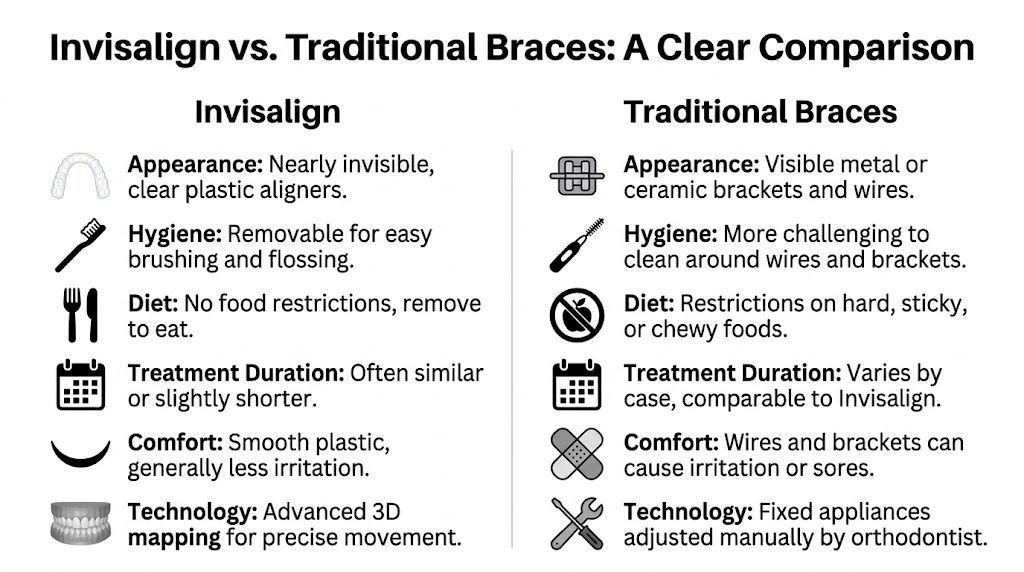
When patients compare Invisalign and braces, they often focus on appearance first. That's reasonable, but it's only one part of the decision. Comfort, hygiene, eating habits, and follow-up care usually matter just as much once treatment begins.
What feels different in daily life
Invisalign fits many adults and teens because the aligners are removable and far less visible. That can make professional conversations, social events, and school life feel more comfortable. Traditional braces are fixed in place, which means less responsibility on the patient side, but also more visibility and more adjustment to food and cleaning.
Hygiene is where many patients notice the biggest lifestyle difference. With braces, you brush and floss around brackets and wires. With Invisalign, you remove the trays, clean your teeth normally, and place them back in. That simplicity matters for people who already work hard to avoid staining, plaque buildup, or gum irritation.
Invisalign versus braces at a glance
| Feature | Invisalign Clear Aligners | Traditional Metal Braces |
|---|---|---|
| Appearance | Nearly invisible clear trays | Visible brackets and wires |
| Hygiene | Removed for brushing and flossing | Cleaning takes more effort around hardware |
| Eating | Remove aligners before meals | Food restrictions are common |
| Comfort | Smooth plastic with no wires | Brackets and wires may rub cheeks and lips |
| Responsibility | Requires consistent wear and good habits | Fixed in place, less day-to-day choice |
| Office experience | Monitoring and tray progression | Wire adjustments and bracket checks |
Where braces may still make more sense
A balanced comparison matters. Braces can still be the better choice for some patients, especially when compliance is likely to be an issue or when tooth movement calls for a different mechanics approach. Fixed treatment removes the temptation to leave the appliance out.
Invisalign tends to work best for patients who value flexibility and will use that flexibility responsibly. Braces tend to work better for patients who need the appliance doing its job all day without relying on memory or discipline.
The trade-off most people don't think about
Removable treatment gives you freedom. It also gives you responsibility.
This is the primary trade-off. If you want to take aligners out for meals, coffee breaks, photos, and brushing, Invisalign can feel far more convenient. But if they stay out too long too often, treatment slows down and frustration follows.
Some patients do better with a removable system because they like control. Others do better with a fixed system because they don't want to think about it.
For adults in Walnut Creek looking for cosmetic dentistry that fits work and family life, Invisalign often checks the right boxes. For others, braces remain a practical and effective option. The better choice is the one you'll successfully complete.
The Invisalign Patient Experience at Our Walnut Creek Office
The first visit is usually simpler than patients expect. Patients often come in wanting answers to practical questions. Can this fix the crowding they notice? Will it hurt? How long will they be wearing trays? Just as important, they want to know whether the office feels comfortable and whether they can trust the process.
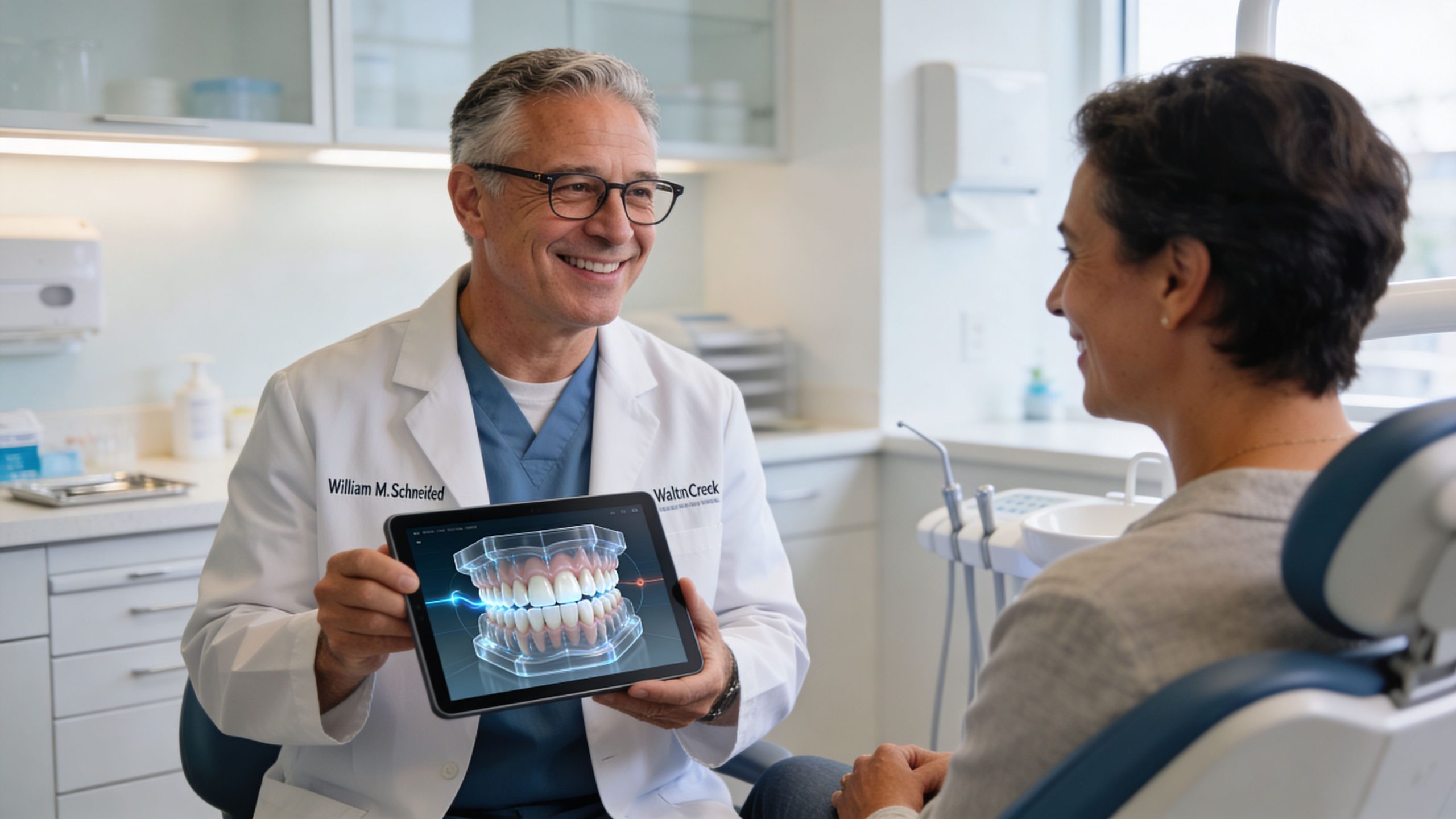
At that first consultation, the conversation doesn't start with pressure. It starts with listening. We look at what bothers you, what you're hoping to change, and whether there are any underlying dental concerns that should be handled first. If you're also considering whitening, restorations, or future dental implants, those goals should be part of the discussion because smile planning works best when it is coordinated.
The consultation and digital planning phase
A modern Invisalign visit is much more comfortable than people expect. Instead of messy traditional impressions, digital scanning allows us to capture detailed images of the teeth and bite. That gives us a precise foundation for planning movement and reviewing whether aligners are the right approach.
Patients often feel more confident once they can see the process visually. A digital treatment simulation helps make the plan concrete. Teeth won't move by guesswork. They move according to a staged sequence that is reviewed and monitored.
William M. Schneider, DDS provides Invisalign treatment as part of a broader general, cosmetic, and restorative care model in Walnut Creek. For patients, that means aligner treatment can be considered alongside cleanings and exams, restorative work, and longer-term oral health planning in one practice setting.
What the first trays usually feel like
When the first aligners go in, most patients notice pressure before they notice anything else. That's normal. Pressure is a sign the tray is active. Pain should not feel sharp, constant, or alarming, but some tightness is expected when a new stage begins.
A useful visual overview of the process can help if you prefer to see the basics in action:
Once treatment begins, success comes from a rhythm that is easy to understand:
- Wear the aligners consistently throughout the day and night, removing them for meals and oral hygiene.
- Switch to the next tray as directed so the teeth keep progressing through the planned stages.
- Attend check-ins so movement can be evaluated and refinements can be made if needed.
What follow-up visits are for
Check-ins are not just routine appointments placed on a calendar. They are where we confirm that the trays fit properly, the teeth are tracking as expected, and the next phase still makes sense. If a patient has been highly compliant but one tooth is lagging, that needs a response. If attachments need adjustment, we address it.
This is one reason in-person Invisalign care matters so much. The treatment may look simple at home, but the outcome depends on professional oversight. For patients with dental anxiety, that structure also helps. Predictable visits, clear explanations, and a calm environment make the process feel much more manageable.
Navigating the Cost of Invisalign in the East Bay
A patient will often sit down at the consultation, like what they see in the scan, and then ask the question that decides whether they move ahead. What is this going to cost me?
That is the right question to ask. Invisalign fees in the East Bay can vary quite a bit, and the lowest quote is not always the best value. The total depends on how much tooth movement is needed, how long treatment is expected to take, and whether the plan includes refinement trays, retainers, or other dental work that should be coordinated along the way.
A general pricing reference from Montavilla Dental Arts' page on Invisalign teeth straightening places many mild to moderate cases in the $3,500 to $8,000 range. That is only a starting point, not a universal fee. A relapse case that needs minor alignment is different from a bite problem that requires closer monitoring and more stages.
Insurance can reduce the out-of-pocket cost more than many patients expect. In our office, one of the first practical steps is checking orthodontic benefits before treatment starts. Some plans treat Invisalign similarly to braces, while others have age limits, lifetime maximums, or no orthodontic benefit at all. That is why an estimate based on your actual plan matters more than a guess based on a friend's experience.
Financing also changes the conversation for many families. Monthly payment options can make treatment easier to fit into a real household budget, especially if you are balancing dental care with other expenses. Dr. Schneider's team reviews those choices clearly, so patients understand the full fee, what insurance may cover, and what the remaining balance looks like before making a decision.
Several things tend to change the final fee:
- Case complexity: Small spacing or crowding usually costs less than correcting a bite issue
- Treatment length: More stages usually mean more aligners and more supervision
- Refinements: Some cases need extra trays at the end to improve the final result
- Related dental needs: Whitening, bonding, or restorative work may be timed around the orthodontic plan
If you want a closer look at what is included, our page on the cost of Invisalign treatment explains the pricing factors in plain language.
One point I encourage patients to keep in mind is simple. Compare what the fee includes, not just the fee itself. A slightly higher treatment quote may include more follow-up care, refinement aligners, retainers, or better coordination if other dental issues need attention.
The most useful cost discussion happens after the exam and digital scan. At that point, the plan is specific to your teeth, your goals, and your timeline. That makes it much easier to give a clear number and explain the trade-offs.
Common Questions About Invisalign Treatment
Patients usually ask the most useful questions after they understand the basics. Those questions are less about marketing and more about daily life.
Does Invisalign hurt
Most patients describe new aligners as creating pressure, tightness, or mild soreness for a short period after switching trays. That's different from a sharp problem. If an aligner edge feels rough or a tray doesn't seem to fit, that should be checked.
How do I clean the aligners
Rinse them when you remove them. Brush them gently with a soft toothbrush and lukewarm water. Avoid hot water because heat can distort the plastic. Keep them in their case when they aren't in your mouth.
Can I drink coffee with Invisalign
It's better to remove the aligners before coffee, tea, or anything other than plain water. Dark or hot drinks can stain the trays and create hygiene issues if liquid sits underneath them against the teeth.
What if I forget to wear them
One missed stretch doesn't ruin treatment, but repeated inconsistency does. If aligners stay out too long, the next tray may feel unusually tight or may not seat fully. That is one of the most common ways treatment gets delayed.
Will I need retainers afterward
Yes. Teeth can shift after active treatment, even when the result looks excellent. Retainers help maintain the final position. Finishing Invisalign without wearing retainers is one of the fastest ways to lose the result you worked for.
Schedule Your Invisalign Consultation with Dr Schneider Today
If you've been putting off treatment because you weren't sure where to start, a consultation is the most useful first step. It gives you a clear answer about whether Invisalign fits your teeth, your schedule, and your goals. It also gives you a chance to ask about comfort, cost, and timing without committing blindly.
For many patients, convenience matters almost as much as clinical care. If you're comparing ways to streamline booking and follow-up, this overview of appointment scheduling software offers helpful context on what modern scheduling tools can do for busy practices and patients.
The next step is simple. Schedule a visit, get a personalized evaluation, and find out whether clear aligners are the right path for your smile.
Ready to talk through your options with William M. Schneider, DDS? Contact our Walnut Creek office at (925) 934-2600 or request a visit online to schedule your Invisalign consultation. If you're looking for a dentist in Walnut Creek, CA for Invisalign, cosmetic dentistry, cleaning and exams, restorative care, or long-term oral health support, we're here to help you move forward with clarity and comfort.