You've booked a first appointment with a dentist in Walnut Creek, CA, and a link to several forms has just arrived in your inbox. Between work, family responsibilities, and perhaps a painful tooth or long-delayed cleaning, it's tempting to tap through the paperwork quickly or leave it for the waiting room. A few careful minutes at home, however, can help your dental team understand your health, concerns, and goals before you sit in the chair.
At William M. Schneider, DDS, new patients can prepare for care that may include cleaning and exams, dental x-rays, restorative dentistry, cosmetic dentistry, dental implants, tooth extraction, or emergency dental services. Accurate forms give the team useful context from the beginning, whether you're searching for a dentist near me, a cosmetic dentist near me, or an emergency dentist who can respond to pain with a clear plan.
Why New Patient Dental Forms Matter for Your First Visit
You may arrive in Walnut Creek expecting a routine new patient exam, only to realize that the dentist needs to know about a medication you take occasionally, a reaction to anesthetic, or a previous experience that made dental treatment difficult. Those details can change how the team approaches your appointment. Forms aren't merely front-desk paperwork. They create the first organized picture of your health and dental history.
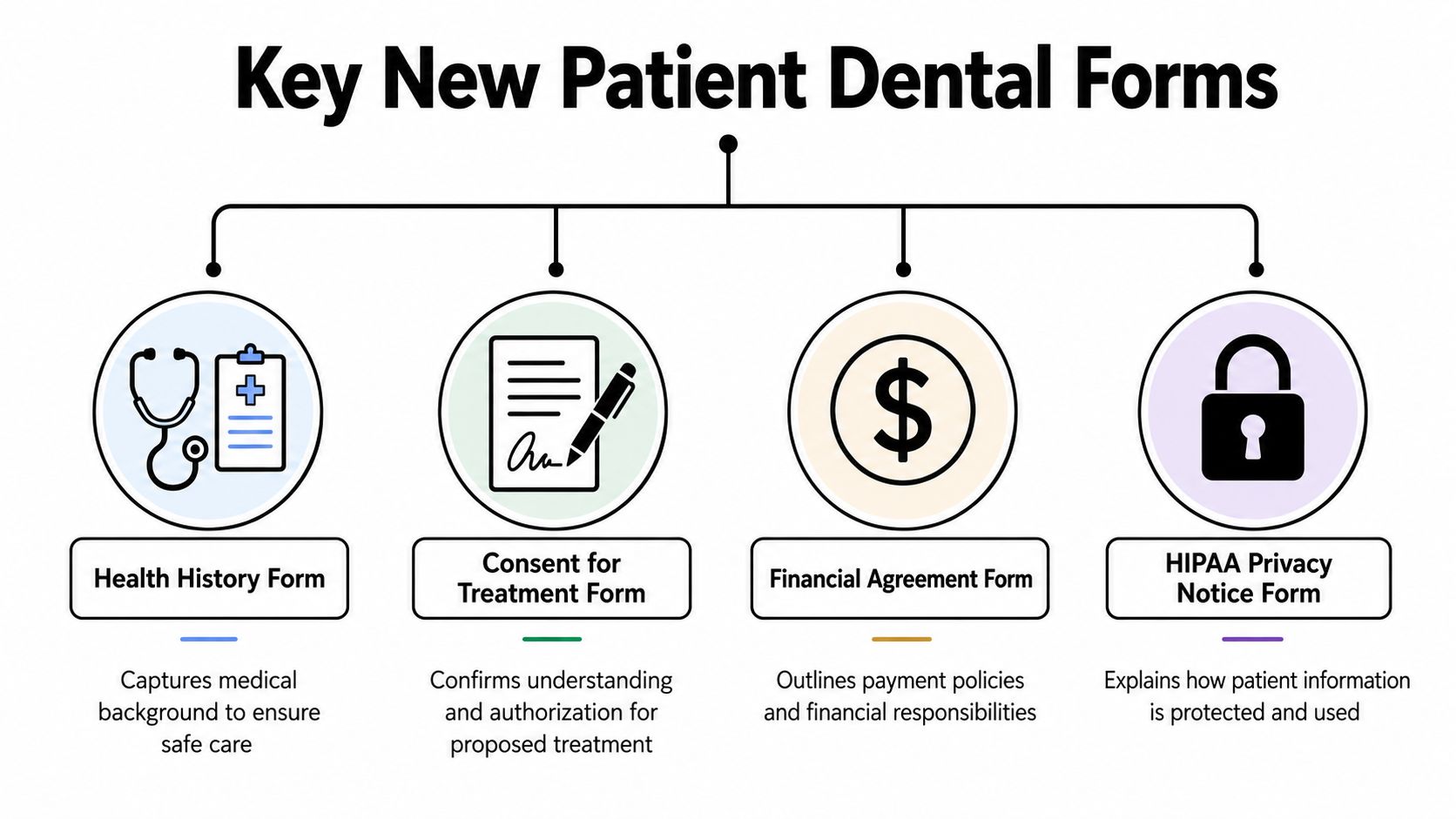
The American Dental Association's guidance on patient registration and forms explains that new patients are generally asked to complete health-history, payment-policy, and HIPAA documents, including in paperless offices. The same guidance says active patients should review and update their history at every visit, while all patients should complete a new health history form every two years.

The information protects your care
A complete medication list helps the dentist consider treatment risks and anesthetic choices. Allergy information can alert the team to concerns involving medications, materials, latex, or local anesthetic. Medical conditions, past surgeries, and pregnancy-related information can also affect the timing and design of treatment.
Your answers may influence whether the dentist recommends a standard cleaning and exam, additional diagnostic imaging, restorative care, or a consultation before a procedure. If you're asking about dental implants near me, tooth extraction, or cosmetic treatment, the dentist needs a reliable health background before discussing appropriate options.
Forms also give your concerns a place
A form can capture what you might forget to mention during a busy conversation. You can describe sensitivity, jaw discomfort, bleeding gums, a broken tooth, or the reason you're seeking care. It can also provide space to explain what you want from treatment, such as a brighter smile, improved chewing, or relief from an urgent dental problem.
Practical rule: If a medication, allergy, diagnosis, prior procedure, or concern has changed, include it even if it seems unrelated to your teeth.
The practice can then use your responses to prepare a more personalized visit. For a patient who feels anxious, clear information about previous experiences and preferred communication can be just as important as a list of symptoms.
Understanding Each Required Form and Its Purpose
Each form answers a different question. Reading the title and purpose before entering information makes the process less confusing and reduces the chance that an important field gets skipped.
Health history form
This is the clinical foundation. List current and past medical conditions, surgeries, hospitalizations, medications, supplements, allergies, and the names of relevant healthcare providers. Include medications taken occasionally, not just those taken daily, because the dental team needs an accurate current picture.
If you're unsure about a diagnosis or medication name, don't guess. Write what you know, add a note that you need to confirm the detail, and contact the office if the information could affect immediate treatment.
Dental history and concerns
This portion focuses on your mouth and previous dental experiences. You may be asked about past fillings, crowns, root canals, extractions, gum treatment, orthodontics, dental x-rays, or complications with numbness and sedation. The ADA's sample intake materials include questions about whether prior x-rays are available and the date of the last radiographs, as reflected in this new patient forms example.
Use the concern field to state what brought you in. “Tooth hurts when I chew,” “I want to discuss Invisalign,” and “I'm interested in teeth whitening” are more useful than a vague statement such as “checkup.”
HIPAA privacy notice
HIPAA paperwork explains how protected health information may be used and disclosed for treatment, payment, and healthcare operations. The HIPAA form guidance also supports a practical right many patients don't realize they have: you can request that copies of your records be sent to another person you designate, provided the request is in writing, signed, and specific about the recipient and destination.
Patient-facing consent language may also explain that you can revoke consent in writing. Revocation doesn't undo disclosures already made in reliance on earlier consent, so read the authorization carefully and ask questions before signing.
Consent and financial forms
A consent form may authorize diagnostic aids such as x-rays, study models, photographs, and other tools needed for diagnosis. A financial agreement generally addresses insurance information, payment expectations, estimates, and responsibility for balances. It isn't a guarantee of insurance coverage, so ask the team to clarify anything you don't understand before treatment begins.
How to Complete Your Forms Accurately and Efficiently
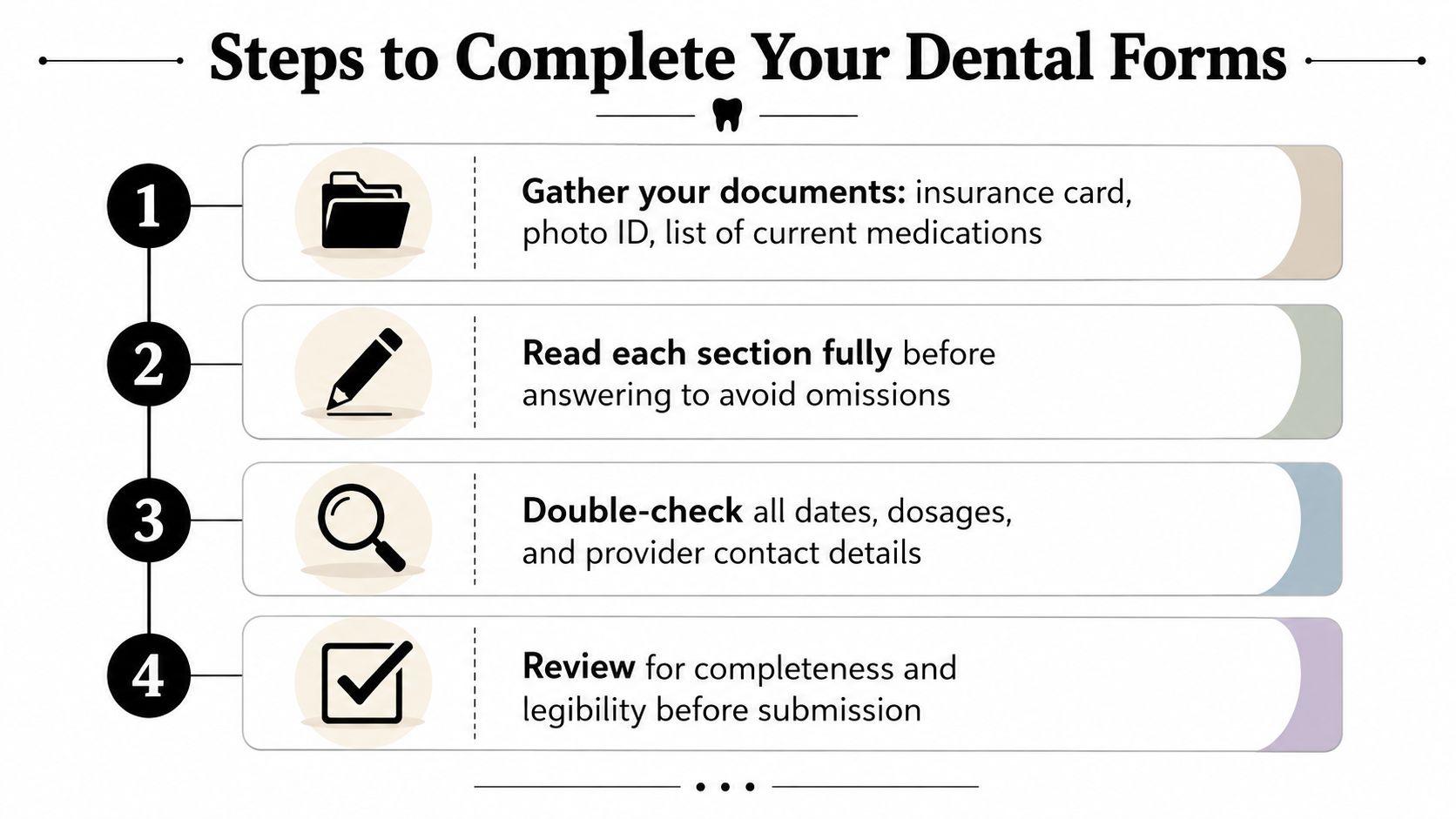
Digital forms are easiest when you gather the information first. Keep your insurance card, photo identification, medication list, emergency contact details, and previous dentist's contact information nearby. If you know when you last had dental x-rays, record that date or note where the images may be available.
Start with the medical section
Read the full question before answering. Include prescriptions, over-the-counter products, vitamins, and medications used only as needed. If a medication has a dosage listed, copy it carefully rather than estimating.
Allergies deserve specific attention. Record reactions to medications, latex, foods, or dental materials if you know them. “Allergy” and “side effect” aren't always the same, so describe what happened when possible. If you had trouble getting numb in the past, needed additional anesthetic, or experienced a reaction to sedation, write that clearly in the dental history.
Describe anxiety in plain language
A yes-or-no question about nervousness doesn't tell the team what support you need. Explain whether your concern involves needles, drilling sounds, loss of control, previous pain, difficulty getting numb, or a bad experience at another office. Mention whether you prefer step-by-step explanations, pauses during treatment, or a discussion before instruments are used.
This information helps the team plan a calmer appointment instead of discovering the issue only after treatment starts.
Before submitting: Check names, dates, medication dosages, provider contact details, and emergency contact information one more time.
State your treatment goals
Be direct about what you want to improve. You might be considering teeth whitening, cosmetic dentistry, Invisalign, a replacement for a missing tooth, or treatment for pain. Clear goals help the dentist connect your expectations with clinically appropriate options.
For help understanding insurance verification before an appointment, review the insurance verification process. If a field doesn't apply, use the form's available “not applicable” option rather than leaving a clinically important question ambiguous.
Submitting Forms Online and Managing Your Digital Records
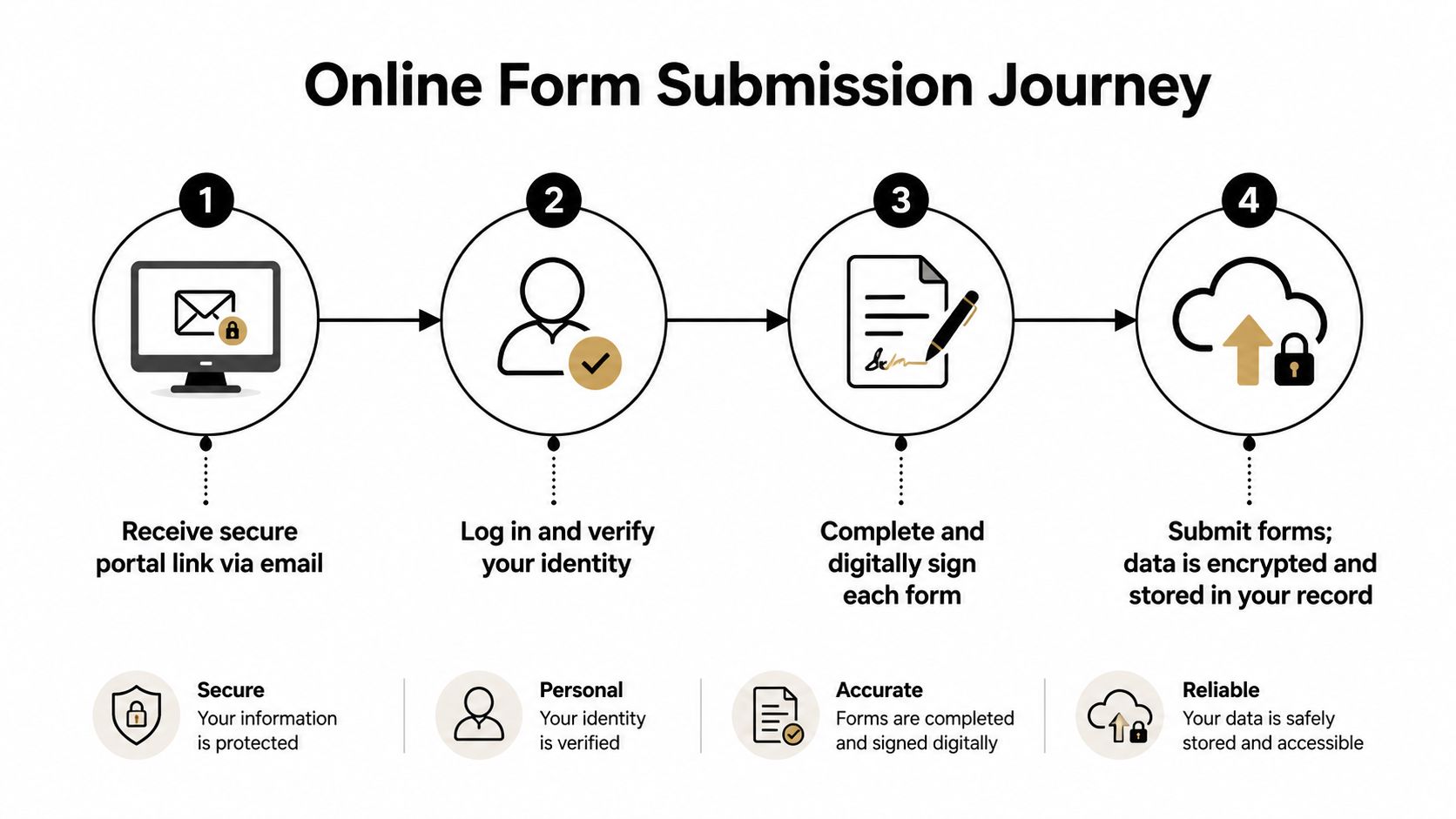
A secure online intake process typically begins with a portal link sent by the practice. You open the link, verify your identity, complete each form, sign where required, and submit the packet through the designated system. A mobile-friendly experience matters because many patients complete paperwork from a phone rather than a desktop computer.
Digital intake works best as a timed workflow, not as a static PDF sent without follow-up. One industry benchmark reports 78% completion when forms are sent at appointment confirmation, compared with 52% when they're sent at scheduling, and reports 78% to 84% pre-visit completion with three touches, email at confirmation, an SMS reminder at 48 hours, and another SMS on the morning of the visit. These figures are from the dental patient intake automation benchmark.
Why completion timing changes the visit
Sending forms immediately after scheduling gives you time to find medication bottles, contact a previous office, or ask a family member for missing information. Reminders close to the appointment help patients who intended to complete the packet but forgot. Sending forms too early, relying only on email, or creating a long multi-field packet can make completion less likely.
A separate benchmark recommends a mobile-first process, a completion time under 10 minutes, and operational targets that include 70% or higher pre-arrival completion. It also identifies 5 to 10 minutes of front-desk time saved per patient as a useful target for practices measuring check-in improvement. See the digital intake completion benchmark for those operational recommendations.
Privacy and accessibility deserve clear answers
Before submitting, look for the practice's explanation of who can access your information, how records are stored, and how privacy requests are handled. If you're concerned about language, disability, screen access, or completing forms on a phone, contact the Walnut Creek office before your appointment and request an accommodation.
If the portal won't load, a signature won't save, or you can't complete the forms digitally, don't abandon the appointment. Call the office, explain the problem, and ask whether paper forms, an in-office tablet, or staff assistance is available.
Special Form Requirements for Sedation and Cosmetic Consultations
Specialized consultations require more than a general statement that you feel nervous or want a better smile. The form should help the dentist understand your health, your previous experiences, and what you expect from treatment.
For sedation discussions, be specific about breathing concerns, sleep apnea, respiratory conditions, reactions to anesthetics or sedatives, and previous difficulty becoming numb. Anxiety questions should also invite details about triggers and communication preferences. Most new patient dental forms still emphasize clinical history and symptoms while giving less attention to anxiety, past unpleasant care, and communication needs, according to this example of a current dental intake form.
Implant consultations
If you're searching for dental implants near me, include information that could affect healing or surgical planning. Mention medical conditions, medications, autoimmune concerns, previous extractions, and any history that your dentist or physician has discussed regarding bone health. The form won't determine implant candidacy by itself, but it gives the dentist a safer starting point for examination and diagnosis.
Cosmetic consultations
Patients considering Invisalign, teeth whitening, veneers, or other cosmetic services should describe both the desired change and the reason behind it. Tell the team about previous cosmetic work, sensitivity, uneven teeth, discoloration, or concerns about how natural the result should look.
A clear goal helps the dentist distinguish between a cosmetic request and an underlying restorative or gum-health problem. A patient who wants whitening may first need an evaluation for sensitivity or untreated disease, while someone asking about alignment may benefit from a broader discussion of function and long-term maintenance.
Read about sedation dentistry for adults if anxiety is making you postpone care. The right approach may involve communication adjustments, pacing, local anesthetic planning, or sedation when clinically appropriate.
Common Questions About Dental Forms and First Visits
When should I complete new patient dental forms?
Complete them after scheduling, while you have time to gather accurate information. Submitting before arrival gives the team an opportunity to review your answers and reduces check-in tasks.
Can I update a form after submitting it?
Yes. Contact the office if you remember a medication, allergy, diagnosis, or dental concern that wasn't included. Bring changes to the team's attention when you arrive.
What happens if I can't complete the forms online?
Call the Walnut Creek office. Ask about paper forms, an in-office tablet, staff assistance, or accessibility support rather than arriving without explaining the issue.
How often should my health history be renewed?
The California Dental Association says each new patient or legal guardian should complete the health history form, review it at every appointment, note changes, and sign again. The ADA recommends completing a new health history form every two years, as documented in the CDA patient management and forms library.
What should I bring besides the paperwork?
Bring identification, insurance information, a current medication list, and any available dental records or x-ray details. If you have pain, swelling, a broken tooth, or another urgent concern, tell the team when scheduling so the visit can be planned appropriately.
William M. Schneider, DDS provides complete dental care in Walnut Creek, including cleaning and exams, emergency evaluations, tooth extraction, restorative treatment, dental implants, Invisalign, teeth whitening, and anxiety-conscious care. Complete your new patient dental forms, then visit William M. Schneider, DDS to schedule an appointment or contact the office with questions about your first visit.