You're looking for a dentist near me because your teeth feel overdue for attention, your gums bleed when you floss, or the thought of sitting in a dental chair has kept you away. Maybe you've recently moved and need a dentist in Walnut Creek, CA who'll explain each step instead of rushing through it. A professional teeth cleaning can be a comfortable starting point, especially when the team understands that prevention and anxiety management belong in the same conversation.
At William M. Schneider, DDS, patients receive general, cosmetic, and restorative dental care in a calm Walnut Creek setting. A cleaning and exam can help establish your current gum health, identify areas that need attention, and create a practical plan for maintaining your smile. It can also be the first appointment in a long-term relationship with a local dentist who listens to your concerns.
Finding Trusted Dental Care in Walnut Creek
A new patient may spend an evening comparing searches such as “dentist near me,” “cosmetic dentist near me,” and “emergency dentist.” The search often starts with a specific concern, such as bad breath, tartar, tooth sensitivity, or a chipped tooth, but the deeper need is usually reassurance. Patients want to know who'll respect their time, explain the treatment, and notice when they're uncomfortable.
That's why the first visit should feel like a conversation, not a test. A careful dentist asks about your dental history, home-care routine, medications, previous experiences, and goals. If you're nervous, you should be able to say so before instruments are placed in your mouth. Clear communication gives you a sense of control, which can make routine care feel much more manageable.
A useful standard: You shouldn't have to guess what your dentist is doing or why it matters.
William M. Schneider, DDS brings more than 25 years of experience to patients in Walnut Creek and the broader East Bay community. Dr. Schneider studied at the University of Minnesota and completed advanced training in General Dentistry in San Francisco. The practice provides preventive cleanings and exams alongside Invisalign clear aligners, teeth whitening, dental implants, crowns, bridges, root canals, gum disease care, and sleep apnea solutions.
Choosing a dental office involves more than looking for the closest map result. Consider how the practice handles explanations, comfort, accessibility, infection control, scheduling, and follow-up. This guide to choosing a dentist can help you evaluate those details before booking.
For many Walnut Creek patients, professional teeth cleaning is the sensible first appointment. It gives the dental team an opportunity to assess your mouth while giving you a chance to decide whether the office feels like the right fit.
What Happens During a Professional Teeth Cleaning
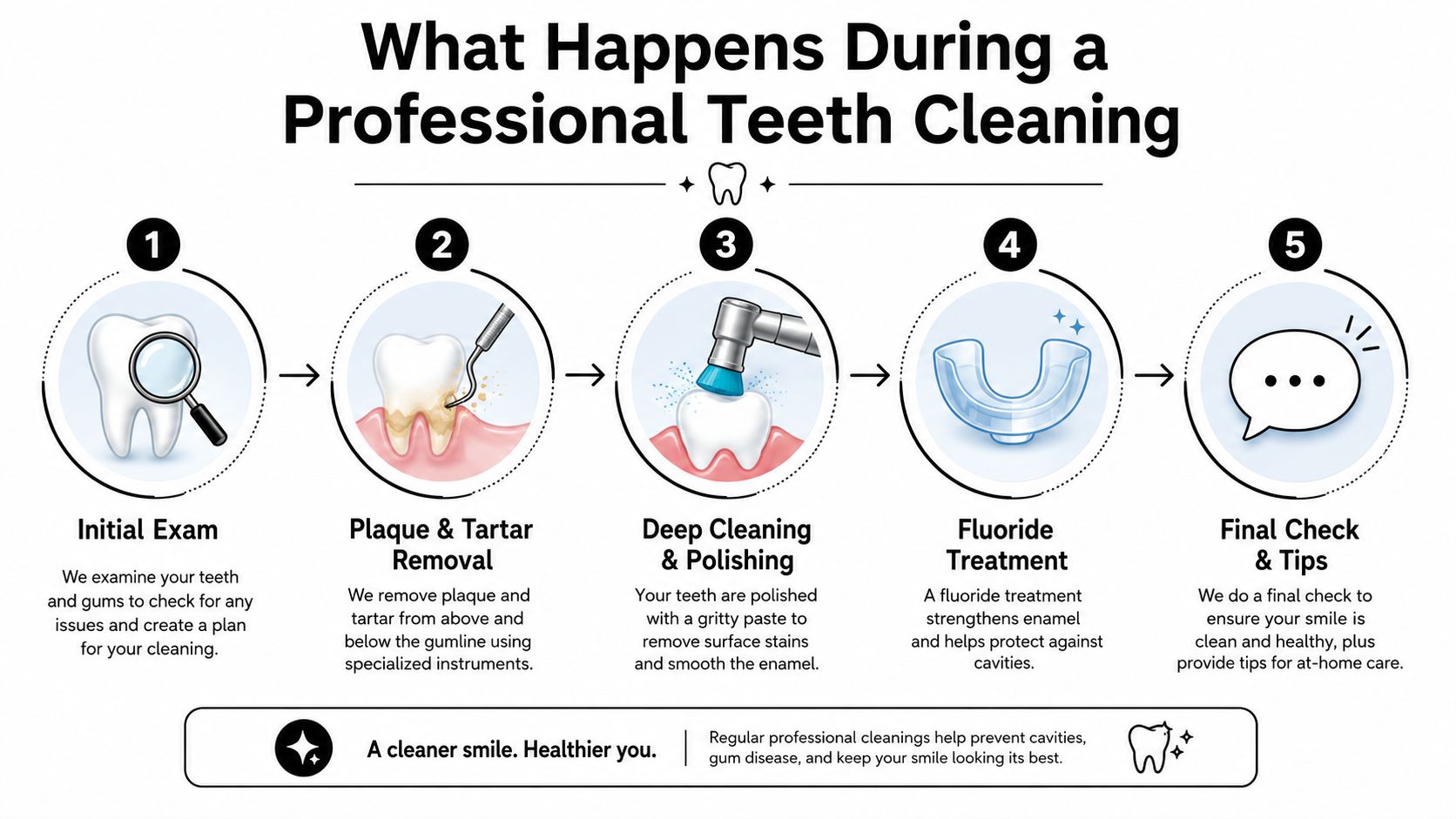
Uncertainty makes dental anxiety worse, so knowing the sequence can help. A typical appointment combines an assessment, removal of deposits, polishing, and individualized guidance. The exact approach depends on what the dentist or hygienist sees, including whether buildup is limited to the tooth surfaces or extends below the gumline.
Step one begins with an assessment
The visit usually starts with a review of your health history and a visual examination of the teeth and gums. The dental professional checks for plaque, tartar, redness, swelling, bleeding, recession, worn enamel, and areas that may need closer evaluation. Dental X-rays may be recommended when the team needs information that isn't visible during the examination.
You'll feel the small dental mirror and measuring instruments moving around the mouth. This shouldn't feel sharp or forceful. If a spot is sensitive, tell the clinician immediately so the pressure, pace, or technique can be adjusted.
Scaling removes what brushing can't
A scaler is used to lift hardened tartar from the tooth surface. Some offices use ultrasonic equipment, which creates vibration, water spray, and a humming sound. Others use hand instruments that create a feeling of light pressure and scraping.
Neither sensation should be confused with drilling. You may feel pressure near the gumline, particularly where deposits have accumulated, but a gentle clinician will pause when needed. For chronic periodontitis, scaling and root planing can reach below the gumline and improve probing pocket depth and clinical attachment more effectively than supragingival plaque control alone, according to a comparative review of periodontal treatments.
Polishing smooths the surfaces
After scaling, a rotating polishing tool applies gritty toothpaste to the teeth. You'll hear a soft whirring sound and feel mild vibration. Polishing removes some surface staining and leaves the teeth feeling smooth, although it doesn't replace professional whitening and won't change the natural underlying shade of enamel.
The final step may include fluoride, depending on your needs and the office's clinical recommendation. Fluoride supports enamel protection and can be especially useful for patients who experience sensitivity or have an increased risk of decay.
Before you leave, the team reviews findings and home-care recommendations. You can ask about brushing angles, flossing around crowns, water flossers, sensitivity, or whether you need a follow-up for gum treatment. If deeper pockets require more involved care, moderate pockets often respond well to non-surgical treatment, while very deep pockets may require discussion of additional options. Evidence comparing full-mouth debridement with quadrant scaling and root planing found no significant difference in clinical outcomes when the quality of debridement is comparable, so logistics and comfort can help guide the plan. The periodontal evidence review provides context for that decision.
The Health and Aesthetic Benefits of Regular Cleanings
A professional cleaning does more than make your teeth feel polished. It gives the dental team a chance to remove deposits that home care can't reach and to observe changes before they become disruptive. Plaque can be managed with brushing and interdental cleaning, but hardened tartar requires professional instruments.
Gum health comes first
Tartar near the gumline can contribute to inflammation. A cleaning helps the clinician identify bleeding, swelling, recession, and pocketing, then determine whether routine maintenance is appropriate or whether periodontal treatment is needed. If inflammation has already affected the supporting tissues, the appointment may become part of a more structured gum-care plan rather than a simple scale-and-polish visit.
Professional cleaning also supports early detection. A dentist may notice a suspicious area, a cavity, a fractured filling, tooth wear, or another change during the examination. Oral cancer screening is part of responsible dental assessment, but a cleaning doesn't guarantee that every condition will be prevented. Its value is that it brings a trained professional close enough to evaluate the mouth regularly.
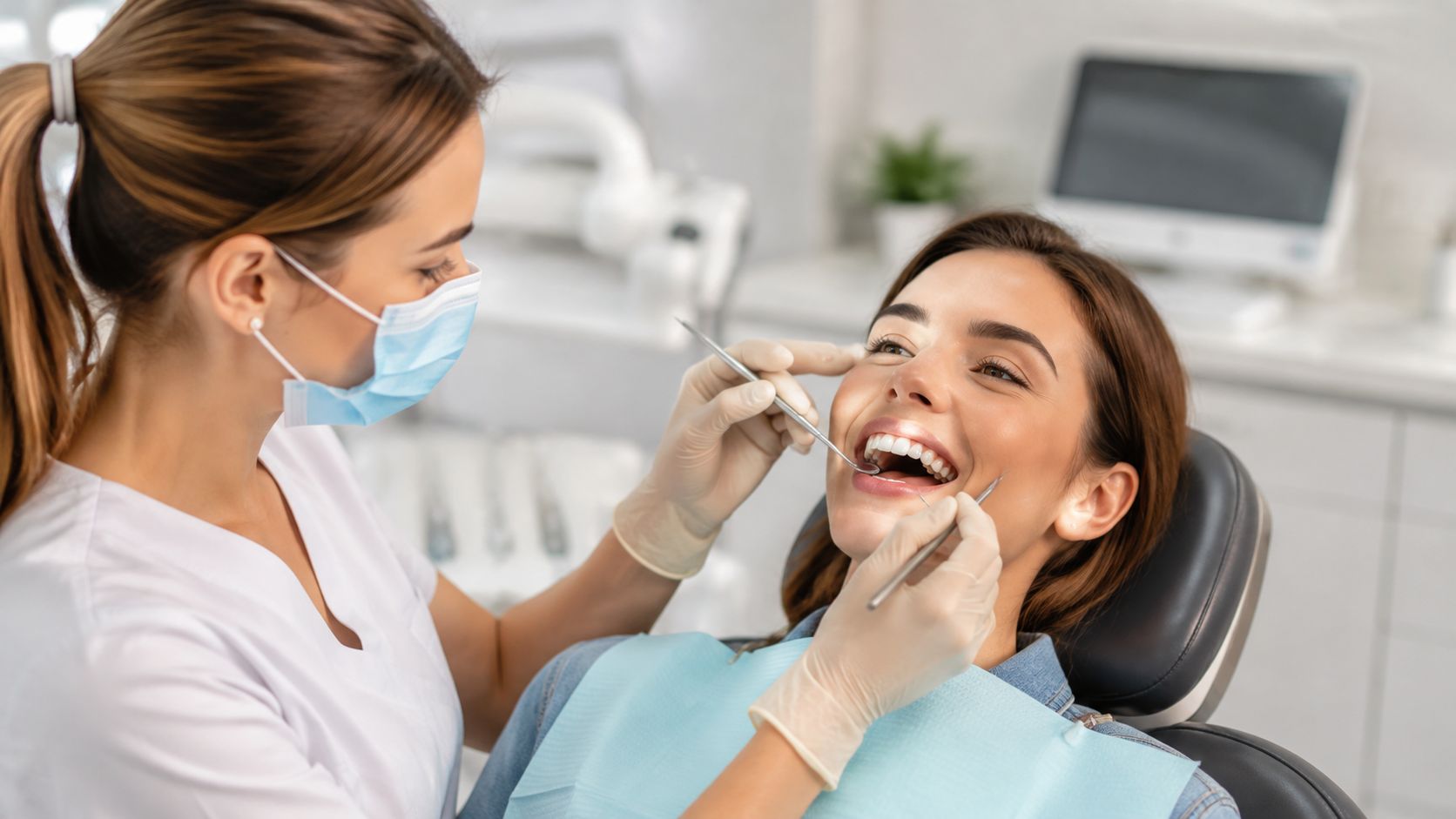
A brighter smile is a secondary benefit
Polishing can reduce surface stains left by coffee, tea, tobacco, and strongly colored foods. It won't whiten fillings, crowns, or natural enamel beyond the removal of external discoloration. Patients seeking a more noticeable shade change may discuss professional teeth whitening or other cosmetic dentistry options after the dentist confirms that the teeth and gums are healthy enough for treatment.
The cleaning can also reveal restorative needs. A damaged tooth may require a crown, a missing tooth may lead to a conversation about dental implants near me, and a painful or non-restorable tooth may require a tooth extraction. These services aren't automatic outcomes of a cleaning. They're separate options considered when examination findings support them.
Oral health is connected to general wellness, but it's important to state the relationship carefully. Gum disease involves inflammation and can matter more for people managing broader health conditions. A cleaning isn't a treatment for heart disease or another systemic illness, yet consistent oral care remains a sensible part of maintaining overall health.
In the United States, routine dental exams and cleanings are already part of regular care for many adults. The CDC's 2023 dental statistics report that 65.5% of adults age 18 and older had a dental exam or cleaning during the prior year. The practical takeaway isn't that every person needs the same appointment. It's that preventive dental care is a familiar foundation for protecting function, comfort, and appearance.
How Often You Really Need a Dental Cleaning
The familiar advice is to schedule a cleaning every six months. The American Dental Association is widely cited as recommending professional cleaning at least twice a year, with more frequent visits for people who have gum disease or higher-risk conditions, as summarized in this overview of cleaning guidance. That schedule can be a useful starting point, but it isn't a universal prescription.
Your ideal interval depends on factors such as gum-pocket measurements, tartar buildup, bleeding, previous periodontal disease, smoking, diabetes, medications, dry mouth, orthodontic appliances, and how effectively you can clean between teeth. Someone with stable gums and consistent home care may not need the same recall plan as someone whose periodontitis requires ongoing maintenance.
What the evidence says about routine visits
High-certainty Cochrane evidence found that, for adults without severe periodontitis, regular planned scale-and-polish visits made little or no difference to gingivitis, probing depths, plaque, or oral-health-related quality of life over two to three years compared with no scheduled cleanings. A 2024 rapid review on routine scale and polish reached a similar conclusion for adults with no or early periodontal disease who already attend dental care regularly.
That finding doesn't mean cleaning is pointless. It means the appointment should match the patient. People with periodontitis or higher-risk profiles may benefit from customized intervals and more focused periodontal care. People who develop deposits quickly may also need a different maintenance plan than those who don't.
The right question isn't “Do I always need six months?” It's “What interval protects my gums based on their current condition?”
At a Walnut Creek dental visit, the plan should follow clinical findings rather than habit alone. Your dentist can review your gum health, explain the reason for the recommended interval, and revise it as your condition changes.
Gentle Care for Patients with Dental Anxiety
Dental anxiety often begins before the appointment. A patient may worry about pain, embarrassment, unfamiliar sounds, gagging, or losing control in the chair. Avoiding care can make those worries harder to manage because a small concern may have more time to develop.

A compassionate appointment starts with disclosure. Tell the team that you're nervous when you schedule, and repeat it when you arrive. Ask for a stop signal, request explanations before each instrument is used, and agree on breaks. You can also ask whether numbing gel, local anesthetic, or sedation is appropriate for the treatment planned.
At 1855 San Miguel Dr., Suite 31, the Walnut Creek office focuses on clear explanations, painless injections, a relaxing environment, and comfort-sensitive care. Sedation options are available when appropriate. They aren't needed for every professional teeth cleaning, but discussing them early can help patients who have avoided dental care or who need more support during treatment.
For more practical preparation ideas, read this guide on how to overcome dental anxiety. You can also watch the consultation video below to become familiar with the communication style and patient experience before visiting.
A few simple choices can make the appointment easier:
- Book thoughtfully: Choose a time when you won't need to rush from work or another obligation.
- Share your history: Mention past difficult experiences, sensitivity, gag reflex concerns, medications, and any fear of needles.
- Agree on control signals: Raising a hand can mean “pause,” giving you a clear way to communicate without speaking.
- Start with a conversation: If you're not ready for treatment, ask whether an initial exam and discussion can come first.
You don't have to feel completely relaxed before seeking care. You only need a team willing to listen and adapt.
Aftercare and Maintaining Your Results at Home
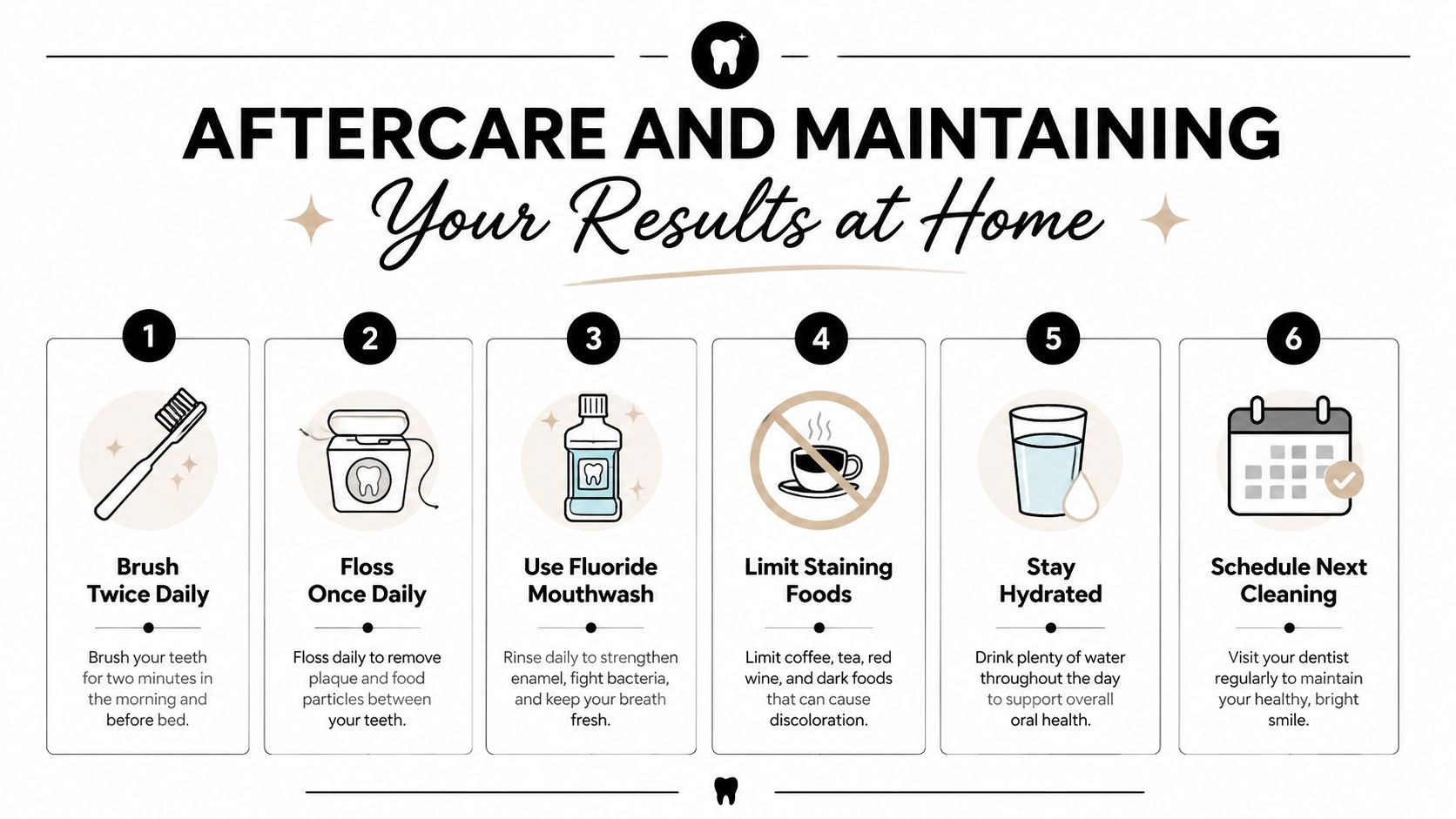
Your home routine determines how long the clean feeling lasts. Professional instruments remove deposits, but daily habits control the plaque that forms afterward. Brush with a soft-bristled toothbrush and fluoride toothpaste, using gentle movements along the gumline rather than pressing hard.
Clean between the teeth once daily with floss, interdental brushes, or another method recommended for your mouth. A water flosser may be useful around bridges, implants, braces, or areas that are difficult to reach with string floss. The best method is one you can use consistently and correctly.
Small choices protect the result
Drink water regularly, especially if your mouth feels dry. Limit frequent sugary or sticky snacks, and remember that coffee, tea, and tobacco can contribute to surface staining. Mouthwash can support a routine, but it shouldn't replace brushing or cleaning between teeth.
Mild sensitivity can occur after more extensive cleaning, especially when deposits have been removed from exposed or inflamed areas. Use the toothpaste recommended by your dental team, avoid extreme temperatures for a short period, and contact the office if discomfort is severe, worsening, or persistent.
Keep your follow-up appointment based on the interval your dentist recommends. A maintenance visit may be routine, or it may include monitoring of gum pockets, a filling, a crown, an implant, or another concern. Consistent follow-up gives you a chance to address changes while they're still manageable.
Schedule Your Visit with a Walnut Creek Dentist
A professional teeth cleaning is a practical way to begin care with a new dentist in Walnut Creek, CA. It can address plaque and tartar, assess gum health, identify concerns early, and help you understand which daily habits will make the greatest difference. For patients who are anxious, the appointment also offers an opportunity to establish communication preferences before more involved treatment is needed.
William M. Schneider, DDS provides preventive cleanings and exams as part of preventive care for Walnut Creek and the East Bay community. If your needs extend beyond prevention, the practice also offers restorative dentistry, cosmetic dentistry, teeth whitening, Invisalign, dental implants, crowns, bridges, root canals, gum disease care, and emergency dental services.
New patients can review expectations, use convenient online scheduling and payments, and discuss a personalized plan at the office. Whether you're searching for a cosmetic dentist near me, dental implants near me, or an emergency dentist, beginning with a clear evaluation helps direct you toward the appropriate service.
William M. Schneider, DDS offers gentle professional teeth cleaning, preventive exams, and personalized dental care for patients in Walnut Creek and the East Bay. Visit William M. Schneider, DDS to request an appointment online or contact the office to discuss a comfortable cleaning, new patient exam, or consultation for your next dental need.