If you're searching for a san francisco sedation dentist, there's a good chance the primary issue isn't just finding a dental office. It's finding a place where you can finally get care without feeling tense the moment you walk through the door.
Many adults put off treatment for months or years because they're worried about pain, loss of control, gagging, bad past experiences, or sitting in the chair too long. By the time they start looking for sedation dentistry, they're often balancing fear with urgency. A tooth hurts. A crown has failed. An implant consultation can't wait any longer. You want relief, but you also want to feel safe.
For many East Bay patients, that search leads beyond city lines to a practice in Walnut Creek where careful planning, calm communication, and personalized sedation options make treatment feel manageable again.
Overcoming Dental Anxiety in the Bay Area
A common story sounds like this. Someone means to book a cleaning and exam, then cancels twice. A cracked tooth starts to ache, but they keep saying they'll deal with it next month. They search late at night for a san francisco sedation dentist because they know they need care, but fear has been running the schedule for too long.
That experience is far from rare. Published statistics summarized in this review of dental anxiety and sedation dentistry note that 30–80% of adults experience some level of dental anxiety, 3–16% live with severe dental phobia, and 5–15% avoid dental visits entirely because of fear.

For patients in Walnut Creek and across the East Bay, that matters because untreated fear often turns small problems into bigger ones. A simple filling becomes a root canal. A tooth that might have been restored ends up needing extraction. Even cosmetic concerns like worn edges or discoloration can stay unaddressed because the appointment itself feels harder than the dentistry.
Fear doesn't always look dramatic
Some patients know they have strong dental anxiety. Others describe it differently.
- They delay routine care: Cleanings, new patient exams, and dental x-rays keep getting postponed.
- They struggle once treatment starts: A low tolerance for noise, pressure, or time in the chair can make even straightforward restorative dentistry feel overwhelming.
- They only come in when something hurts: Emergency dentist visits become the pattern because prevention never feels emotionally easy.
Many anxious patients aren't avoiding dentistry because they don't care. They're avoiding the feeling they expect to have in the chair.
That's where a thoughtful sedation plan changes the experience. Instead of asking patients to “push through,” the right office helps them receive tooth extractions, dental implants, cosmetic dentistry, or routine care in a way that respects both comfort and safety. In the East Bay, patients often want exactly that balance. Gentle care, clear explanations, and a treatment approach that doesn't ignore the emotional side of dentistry.
Are You a Candidate for Sedation Dentistry
Sedation dentistry isn't only for patients with extreme phobia. It can also help people who want treatment to feel calmer, smoother, and more tolerable from start to finish. The key is a patient-specific assessment, because sedation isn't one-size-fits-all. As noted in this discussion of sedation safety considerations, an important question is whether you're a safe candidate given conditions such as sleep apnea, obesity, or cardiovascular disease.
Common reasons patients consider sedation
You may be a good candidate if any of these sound familiar:
- Dental fear keeps delaying care: You know you need treatment, but anxiety makes it hard to book or keep appointments.
- You have a strong gag reflex: Some patients do well with standard care until impressions, x-rays, or posterior treatment trigger gagging.
- You have trouble staying comfortable for long visits: This comes up with larger restorative cases, multiple crowns, implant treatment, or extensive work in one sitting.
- You've had difficult dental experiences before: Past discomfort, feeling rushed, or struggling to get numb can shape future visits.
- You want fewer appointments when possible: Sedation can help some patients complete more treatment comfortably in a single visit.
- You're pursuing more involved care: Procedures related to tooth extraction, restorative dentistry, or dental implants near me searches often lead patients to ask about sedation support.
For a fuller patient-focused overview, this guide on who qualifies for sedation dentistry is a practical place to start.
The health review matters
The most important part of candidacy isn't choosing the “strongest” option. It's reviewing your health history carefully enough to choose the right one.
A proper review should include current medications, past reactions to sedatives, alcohol use, sleep habits, airway concerns, and existing medical conditions. That's especially important if you take antidepressants, benzodiazepines, blood pressure medications, or have a diagnosis that could change how your body responds during sedation.
Practical rule: If a practice talks about comfort but skips the medical screening conversation, that's not a reassuring sign.
Some patients are ideal candidates for nitrous oxide because they want light relaxation and a fast recovery. Others need a deeper level of support for lengthy or technically involved treatment. Some may need treatment modifications rather than sedation at all. Good care starts with honesty, not assumptions.
Sedation should fit the procedure and the person
A patient coming in for cosmetic dentist near me concerns such as veneers or whitening touch-ups may need something very different from a patient planning extractions, implant placement, or full-mouth restorative work. The procedure matters, but so does the person sitting in the chair.
That's why the consultation is so valuable. It gives your dentist a chance to match anxiety level, treatment complexity, medical history, and recovery expectations before any medication is chosen.
Understanding Your Sedation Options
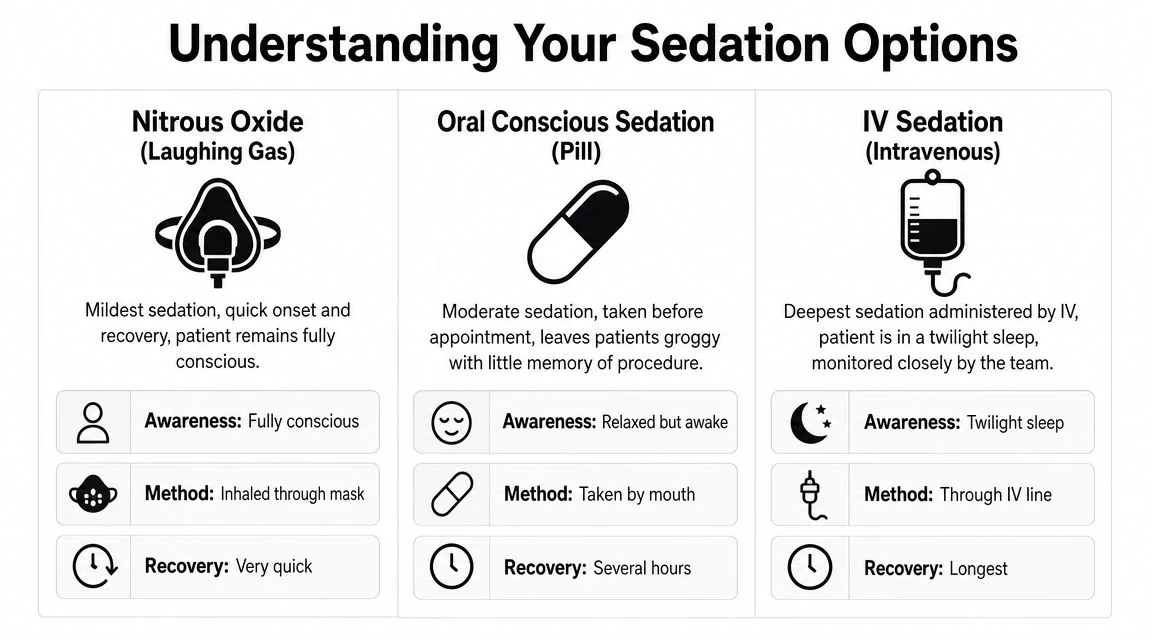
Most dental offices that provide sedation organize their options into nitrous oxide, oral conscious sedation, and IV sedation. According to Cleveland Clinic's overview of sedation dentistry, the choice is typically driven by procedure duration, anxiety severity, and the need for a titratable depth of relaxation.
Nitrous oxide
Nitrous oxide, often called laughing gas, is the lightest option in the sedation spectrum. You breathe it through a nosepiece or mask, and the effect begins quickly. It's commonly used for mild to moderate anxiety, shorter visits, and patients who want to remain relaxed but alert.
One practical advantage is recovery. The same Cleveland Clinic overview notes that recovery is usually within 15–30 minutes, which is why nitrous oxide is often the best fit for patients who want a calmer appointment without planning the rest of the day around sedation.
Nitrous oxide often works well for:
- Routine but stressful visits: Cleanings, exams, fillings, and smaller restorative appointments.
- Mild dental anxiety: Enough nervousness to interfere with care, but not enough to require deeper sedation.
- Patients who want a faster return to normal activities: Especially helpful for busy professionals and parents.
Oral conscious sedation
Oral sedation is taken before the appointment as prescribed. It usually creates a deeper sense of relaxation than nitrous oxide and can be a good choice for patients who feel anxious before they even arrive.
The trade-off is control. Because the medication is swallowed in advance, the onset and depth depend on absorption and metabolism. That makes oral sedation less titratable than IV sedation. For some patients, that's perfectly appropriate. For others, especially in long or complex visits, that variability may be less ideal.
A few practical points stand out:
| Option | How it's given | What patients often like | Main trade-off |
|---|---|---|---|
| Nitrous oxide | Inhaled during treatment | Quick onset and quick recovery | Lighter effect |
| Oral sedation | Taken before the visit | Helpful for pre-appointment anxiety | Less adjustable once taken |
| IV sedation | Given through a vein | Real-time control and closer titration | More involved planning and recovery |
IV sedation
IV sedation is the most controllable option commonly used in dental practice. Medication is delivered directly into the bloodstream and can be adjusted during treatment. That gives the clinical team more real-time control over the depth of relaxation.
For longer procedures, higher anxiety levels, or cases where predictability matters, IV sedation often becomes the benchmark because it is more controllable during the appointment.
If a procedure is lengthy or complex, the ability to adjust sedation in real time can matter more than the sedative name itself.
IV sedation is often considered when patients are having multiple procedures, extensive restorative care, implant treatment, or surgical dentistry. It also tends to appeal to patients who've had trouble with lighter sedation methods in the past.
Why the menu matters less than the match
Patients sometimes focus on the label. Nitrous, pill, or IV. The more useful question is whether the option fits your health profile, anxiety level, and procedure.
That's why a good consultation doesn't sound like ordering from a menu. It sounds like a discussion about what you need, what you're having done, how your body may respond, and what recovery will realistically look like afterward.
The Safety of Sedation Dentistry with Dr Schneider
Patient comfort only matters if it's built on sound clinical judgment. Sedation should never be treated like a convenience add-on. It needs clear screening, active monitoring, and a team that understands the difference between helping a patient relax and keeping that patient medically safe.
One point patients often find reassuring is that sedation dentistry does not replace local anesthesia. As explained in this guide to conscious sedation dentistry, sedation primarily reduces stress and awareness, while the treatment area is still numbed because sedation itself doesn't block pain pathways.
What that means in real treatment
A well-run sedation appointment uses two comfort tools at the same time. The sedative helps lower anxiety, soften awareness, and make the visit easier to tolerate. Local anesthetic makes the treatment area numb.
That combination is important for procedures such as tooth extraction, crown preparation, root canal treatment, implant dentistry, and other restorative visits where anxiety and physical sensation need to be managed separately.
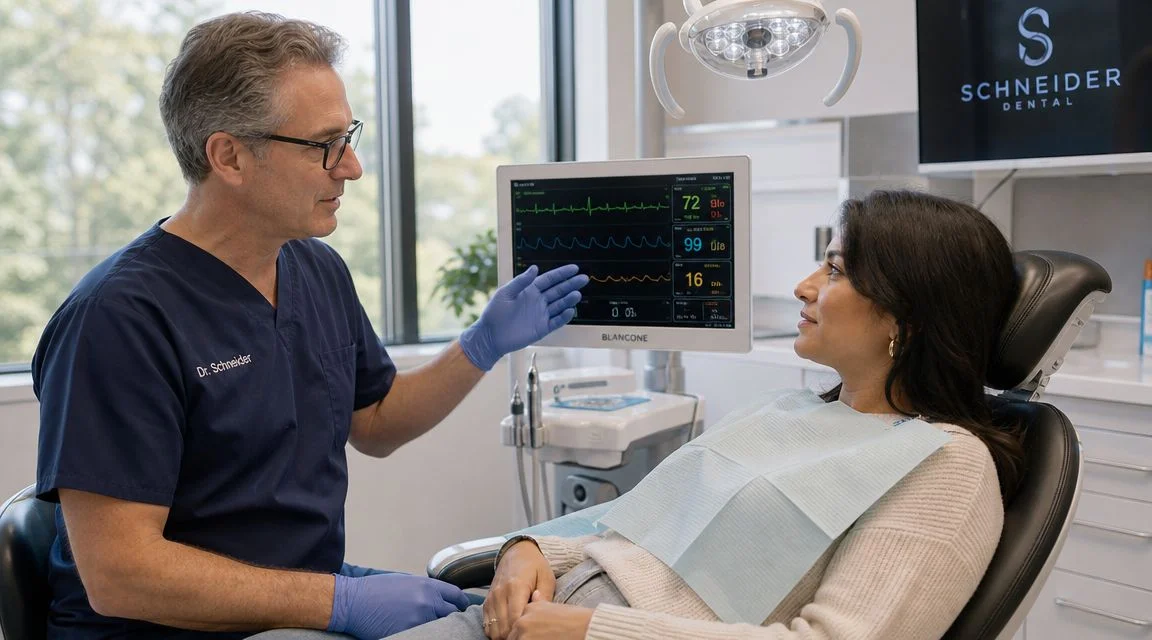
Patients also deserve to know that monitoring is part of the safety picture, not a minor detail. The same source notes continuous observation of heart rate, blood pressure, and oxygen saturation, especially under IV sedation. That's one reason a proper sedation appointment feels more structured than a standard visit.
For additional patient guidance, this sedation dentistry safety guide outlines the questions and precautions worth reviewing before treatment.
Recovery planning is part of safety
Oral sedation and IV sedation can have lingering effects. The same guide explains that those effects may last for up to 24 hours, which is why patients are commonly told to avoid driving and to arrange an escort home after treatment.
That detail can feel inconvenient, but it's a sign of responsible planning. A careful office doesn't downplay recovery instructions just to make scheduling easier.
Here's a short video overview that can help make the process feel more familiar before your consultation.
Safety questions that should always be welcome
When patients ask hard questions about sedation, that's a good thing. You should feel comfortable asking:
- How will my vitals be monitored during treatment
- What type of medical history review do you perform before recommending sedation
- What happens if the level of sedation goes deeper than intended
- What are my driving and escort restrictions afterward
Safe sedation dentistry is personal. It depends on the patient's health, the procedure being done, and the team's preparation before the appointment even begins.
How to Choose a Qualified Sedation Dentist
You may find two offices that both say they offer sedation. The difference is how they decide whether sedation is appropriate, which method fits your health history, and what safeguards are in place before treatment begins.
A qualified sedation dentist should be able to explain more than availability. The office should explain why one option fits your procedure, your anxiety level, and your medical background better than another. This overview of modern sedation dentistry gives a useful summary of how nitrous oxide, oral sedation, and IV sedation are used for different situations.
Questions worth asking before you book
A good consultation should answer practical questions in plain language.
What sedation options do you provide for my type of treatment
The answer should match the work being done. A short visit for a cleaning is different from a long restorative appointment or a surgical procedure.How do you decide which patients are good candidates
Look for an office that reviews medical conditions, current medications, airway concerns, and past experiences with dental treatment before making a recommendation.Who is adjusting or supervising the sedation plan
Sedation should follow a clear clinical plan, not a one-size-fits-all routine. That matters even more for patients with heart disease, breathing issues, sleep apnea, or a history of difficult reactions to medication.What should I expect after the appointment
Recovery instructions should be specific. You should know whether you need an escort, when you can return to work, and what restrictions apply for the rest of the day.
Look for judgment, not just a menu of services
Sedation is not a comfort upgrade in the simple sense. It is part of treatment planning.
Nitrous oxide may make sense for a patient who wants anxiety relief with a quicker return to normal activity. Oral sedation may fit someone whose anxiety starts well before the appointment. IV sedation can be appropriate for longer procedures or for patients who need a more controlled level of relaxation. Each option has trade-offs, and a careful dentist will discuss them directly.
That conversation should feel clinical and personal, not scripted.
A good sedation consultation should feel like careful assessment, clear education, and thoughtful planning around your health.
Transparency matters
If you're comparing East Bay offices, including William M. Schneider, DDS, pay attention to how each practice handles questions about candidacy, medical history, and limitations. A trustworthy office does not rush past those details. It treats them as part of keeping you safe and comfortable.
That is often a true sign of quality. Clear answers. Realistic expectations. A sedation plan built around the patient, not just the procedure.
Your Sedation Dentistry Visit in Walnut Creek
For many patients, the hardest part is not the treatment itself. It's the uncertainty before the visit. Knowing what the day looks like can take away a lot of that tension.
Before the appointment
The process usually starts with a conversation, not medication. You'll talk through your dental concerns, whether that's a neglected cleaning and exam, a broken tooth, a tooth extraction, dental implants, or broader restorative dentistry. The office will review your health history, current medications, and what has or hasn't worked for you during past dental visits.
If sedation is appropriate, you'll get specific instructions in advance. Those may include what to eat or avoid, when to arrive, and whether you need a ride home.

When you arrive
A calm visit feels organized. You shouldn't have to guess what happens next.
Many anxious patients relax once the team starts narrating the process in plain language. You'll know what sedation plan is being used, what sensations to expect, and how the team will communicate during treatment. That matters whether you're there for cosmetic dentist near me goals like smile improvements or restorative work that has been overdue.
A comfortable sedation visit often includes:
- A slower start: Time to settle in, ask questions, and avoid feeling rushed.
- Clear check-ins: Staff members confirming how you're feeling before anything begins.
- A defined plan for aftercare: Especially if the procedure affects eating, driving, or same-day activity.
During treatment
Once the sedation takes effect, most patients describe the appointment as easier to tolerate and less emotionally draining than they expected. The clinical team can focus on the dentistry while you remain more relaxed and less preoccupied with every sound and sensation.
That can be especially helpful during:
- Long restorative appointments
- Surgical visits such as tooth extraction
- Dental implant procedures
- Complex treatment plans that combine multiple steps
Afterward
Recovery depends on the type of sedation used and the procedure itself. Some patients feel ready to resume a normal routine quickly. Others need the rest of the day to rest, hydrate, and take it easy.
You'll receive post-op instructions that match your visit. Those instructions matter just as much as the treatment itself. Good follow-up helps prevent confusion once you get home and makes future appointments feel less intimidating because you know what to expect.
Cost Insurance and Booking Your Consultation
Sedation dentistry costs vary based on the type of sedation used, the length of the appointment, and the complexity of the procedure. A shorter visit with nitrous oxide is a different level of service from a longer appointment involving deeper sedation, active monitoring, and more detailed recovery planning.
Insurance questions are common, and the answer depends on your plan and the treatment being performed. In many cases, the underlying dental procedure and the sedation component are reviewed separately. That's why clear pre-treatment estimates matter. Patients should know what is covered, what is not, and what their payment options look like before the appointment date arrives.
When you call to schedule, it helps to mention a few things right away:
- The procedure you think you need: Cleaning, emergency care, extraction, implant consultation, cosmetic work, or restorative treatment.
- Your anxiety level: If fear has delayed care, say so early. That information shapes scheduling and consultation planning.
- Any relevant medical conditions or medications: Those details help the office decide how to structure the visit safely.
If you've been searching for a san francisco sedation dentist because you want gentler care, the next step isn't to guess which sedative you need. It's to schedule a consultation where your comfort, medical history, and treatment goals can be reviewed together.
If you're ready to stop postponing care and want a calmer, more personalized dental experience, contact William M. Schneider, DDS to schedule a consultation in Walnut Creek. The office can review your needs, discuss whether sedation is appropriate, and help you plan treatment that supports both comfort and safety.