If you're in Walnut Creek and you've recently noticed bleeding when you brush, a sour taste in your mouth, persistent bad breath, or you've been told you need a “deep cleaning,” it's normal to feel uneasy. Many patients hear the phrase scaling and root planing procedure and immediately wonder if it will hurt, how long it takes, and whether it really matters.
I'm Dr. Schneider, and I want you to know that gum treatment shouldn't feel mysterious or intimidating. When gum disease is caught and treated early, we can often stop it from getting worse and help you protect your teeth, your comfort, and your long-term oral health. This guide is meant to give you clear answers in plain language, with no surprises.
Your Trusted Dentist for Gum Health in Walnut Creek
A patient from Walnut Creek recently came in after putting off care for months. She wasn't in dramatic pain, which is part of why she waited. What bothered her was that her gums bled every time she flossed, and her breath never felt fresh for long. She worried that she had done something wrong, or that she was heading straight toward tooth loss.
That kind of worry is common, especially when someone has been told they need more than a routine cleaning and exam. Gum disease often starts subtly. People stay busy with work, family, and daily life in the East Bay, and the symptoms can seem minor until they don't.
When “just a little bleeding” isn't something to ignore
Bleeding gums, tenderness, and buildup under the gumline usually mean your mouth needs more than a standard cleaning. In many cases, the right next step is a scaling and root planing procedure. This treatment is non-surgical, focused, and designed to remove the infection-causing buildup that regular brushing can't reach.
If you've been searching for a dentist near me or a dentist in Walnut Creek, CA because something doesn't feel right, you're not overreacting. You're paying attention to an early warning sign.
Healthy gums usually don't bleed during normal brushing and flossing.
A calm place to get straight answers
At our Walnut Creek office, the goal is simple. Help you understand what's happening, explain your options clearly, and make treatment as comfortable as possible. If you'd like to learn more about how gum infection is diagnosed and treated, our page on periodontal disease treatment offers a helpful starting point.
Many people who come in for gum care are also looking for a long-term dental home for cleaning and exams, dental x-rays, new patient exams, cosmetic dentistry, or even urgent care from an emergency dentist. Gum health is often where the conversation starts, but it connects to your whole smile.
Understanding Gum Disease and Why It Matters
Gum disease doesn't usually arrive all at once. It begins when plaque and tartar sit along the gumline long enough to irritate the tissue. In the early stage, called gingivitis, your gums may look puffy or bleed easily. If the irritation continues, the infection can move deeper below the gums and affect the structures that hold teeth in place.
A simple way to think about it is this. Your teeth are like a house, and the bone and gum tissue around them are the foundation. When bacteria collect under the gums, they act like weeds growing into cracks. You may not notice the damage right away, but over time the support around the tooth gets weaker.
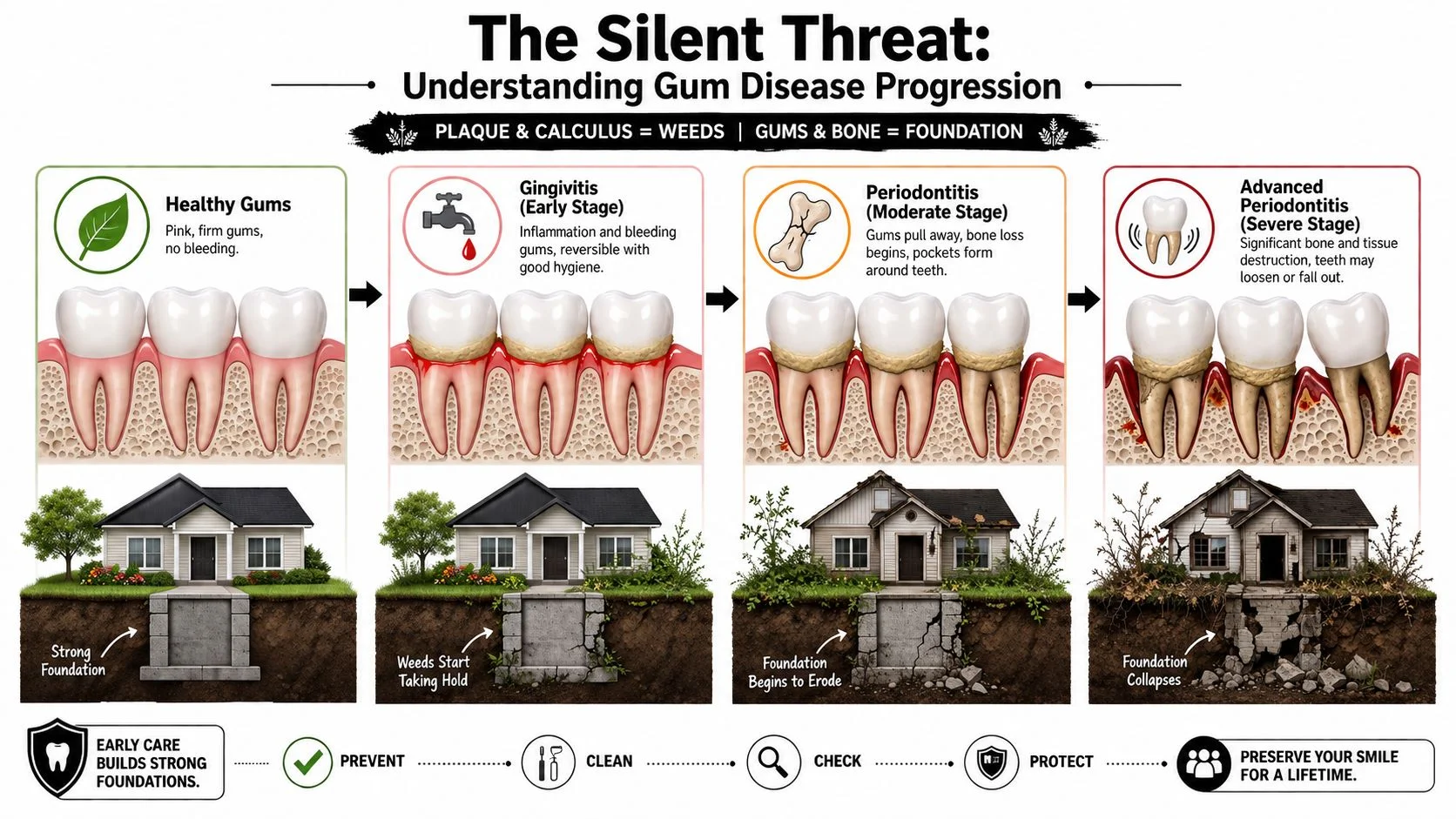
Gingivitis vs periodontitis
Gingivitis is the earlier, more reversible stage. The gums are inflamed, but the deeper support around the teeth hasn't been damaged in the same way.
Periodontitis is more advanced. The gums begin to pull away from the teeth, pockets form, and the supporting bone can be affected. This is the main condition treated with scaling and root planing.
According to Dimensions of Dental Hygiene's discussion of American Dental Association data, chronic periodontitis affects 47.2% of adults over 30 years of age in the United States. If you've been diagnosed with it, you're far from alone.
Signs patients often notice
Some symptoms are subtle, and some are easier to recognize:
- Bleeding when brushing or flossing often shows that the gums are inflamed.
- Bad breath that keeps returning can happen when bacteria stay trapped below the gumline.
- Tender or swollen gums may make eating or brushing uncomfortable.
- Gums that seem to be pulling back can make teeth look longer.
- A “deep cleaning” recommendation usually means your dentist found buildup under the gums that a regular cleaning won't address.
If you're unsure whether your symptoms point to gum disease, our guide to signs of gum disease can help you recognize what to watch for.
Why treatment matters beyond your mouth
Untreated gum disease isn't just about bleeding gums or bad breath. The infection and inflammation can affect the tissues that support your teeth, which is why patients can eventually face loose teeth or tooth loss if the condition keeps progressing.
It also matters for overall health. Gum infection creates ongoing inflammation, and that isn't something to ignore. Addressing it is an important part of protecting your mouth and reducing strain on the rest of the body.
The earlier we interrupt gum disease, the more support around the teeth we can preserve.
What Is a Scaling and Root Planing Procedure
A lot of patients arrive expecting something dramatic when they hear the phrase "deep cleaning." What they usually need is a careful, targeted treatment that cleans below the gumline where gum disease does its damage. A scaling and root planing procedure is a two-step, non-surgical treatment that removes plaque and tartar from the teeth and roots, then smooths the root surfaces so the gums have a cleaner area to heal against, as described by Arizona Smile Design.
I often explain it this way to patients. A regular cleaning handles what sits on the visible parts of the teeth. Scaling and root planing goes deeper, into the small spaces between the teeth and gums where a toothbrush and floss cannot fully reach once buildup hardens.
The purpose is simple. Reduce the bacterial load, calm the infection, and protect the support system that holds each tooth in place. That matters for your mouth, but it also matters for your overall health because ongoing gum inflammation does not stay neatly contained to one small area.
A visual overview can make the process easier to follow:
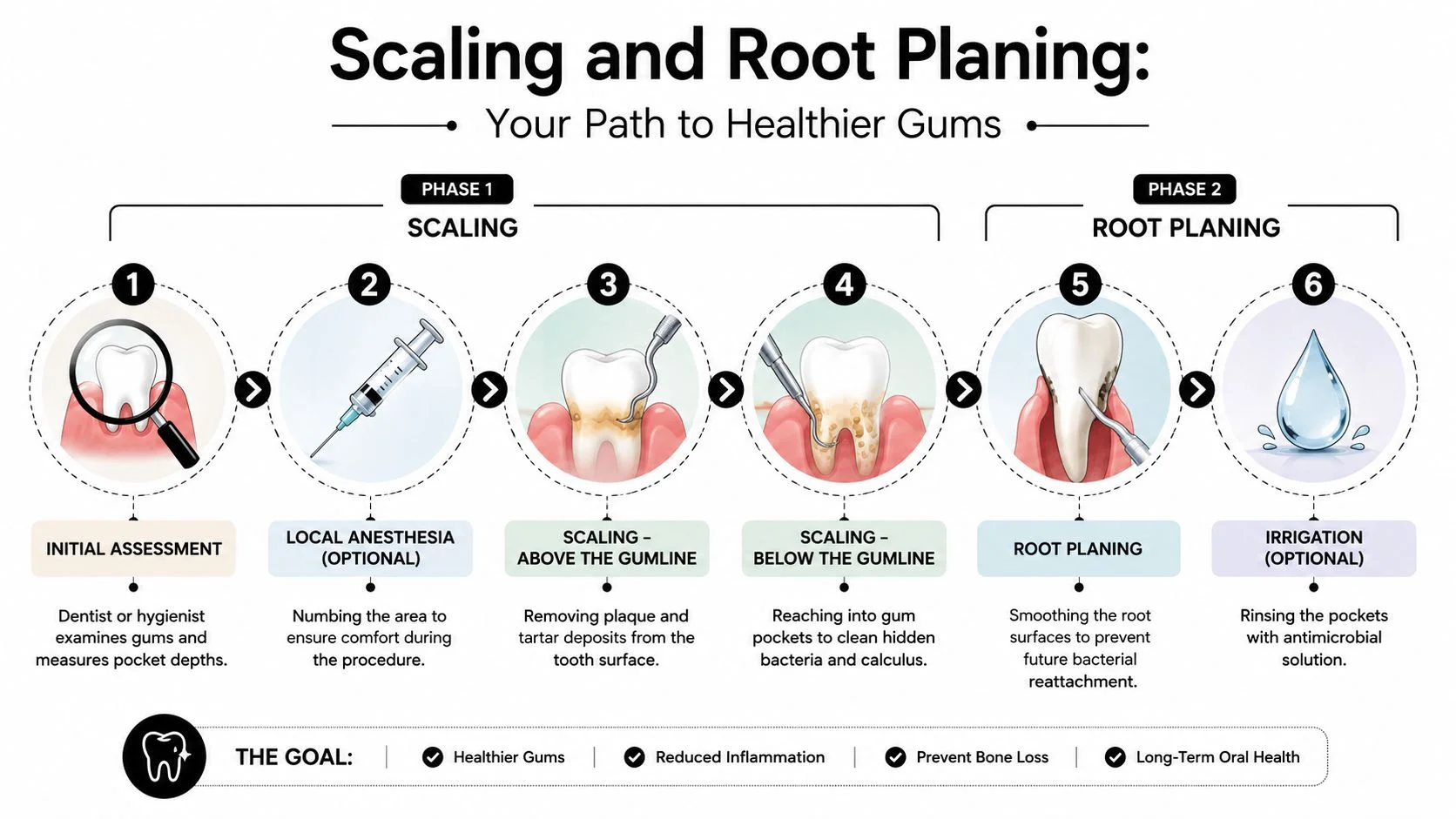
Step one: scaling
Scaling is the part where we remove plaque, tartar, and bacterial deposits from the tooth surface, including the portion hidden below the gumline.
That hidden buildup is the reason a routine cleaning is not enough for active periodontal disease. If the deposits sit down inside periodontal pockets, the gums stay irritated and infected. Cleaning those areas gives the tissue a chance to settle instead of remaining in a constant state of inflammation.
Step two: root planing
Root planing focuses on the root surface after the buildup has been removed. We smooth rough areas so bacteria have fewer places to attach and multiply.
The root works a bit like the foundation around a house. If that surface is coated with debris and feels uneven, the surrounding structure has a harder time staying healthy. When the root is cleaned and smoothed, the gum tissue has a better surface to rest against as it heals.
In some cases, the treated pockets may also be rinsed or medicated to reduce lingering bacteria.
For a quick visual explanation, this short video helps show what the treatment involves:
How long it usually takes
This treatment is often completed over two 60-minute visits, with two quadrants treated at each appointment for comfort. Some patients need a different schedule based on how much buildup is present, how sensitive the area is, and how much numbing is needed.
That timing can sound intimidating at first. In practice, breaking treatment into smaller areas usually makes the experience easier and more manageable. It also lets us treat the infection thoroughly instead of rushing through it.
For many patients, this is the first meaningful step toward controlling gum disease, avoiding more invasive treatment later, and lowering a source of chronic inflammation that can affect more than just their teeth.
Your Appointment at Our Walnut Creek Dental Office
Understanding the visit's details can bring comfort. The appointment usually starts with a close look at your gums, your x-rays if needed, and a conversation about what you've been noticing at home. If you've been searching for a dentist in Walnut Creek, CA because your gums bleed or your mouth feels off, this is the point where we slow things down and answer your questions clearly.
Some patients come in worried that they'll be judged for waiting. That doesn't help anyone. Our job is to understand where things stand now and help you move forward comfortably.
What you'll feel during treatment
Before we begin, we numb the area with local anesthesia so the treatment is much easier to tolerate. Patients often tell us that the anticipation was worse than the procedure itself. You may feel pressure, movement, or vibration, but you shouldn't feel sharp pain.
The treatment itself uses manual scalers and ultrasonic instruments, and a follow-up visit within 4 to 6 weeks is standard to measure pocket depth and assess the success of gum reattachment, as noted by Aspen Dental's scaling and root planing overview.
This is what those tools usually feel like in plain terms:
- Ultrasonic instruments create a gentle vibration and water flow to loosen stubborn deposits.
- Hand instruments allow careful cleaning in areas that need more precise attention.
- Local anesthesia helps keep the area comfortable while we work deeper below the gumline.
How we help anxious patients
Dental anxiety is real, and gum treatment can sound intimidating if you haven't had it before. That's why we explain each step before we start and check in throughout the visit. A calm pace matters.
William M. Schneider, DDS provides non-surgical periodontal therapy, including scaling and root planing, as part of overall dental care in Walnut Creek. Patients who also need broader care often combine gum treatment planning with new patient exams, restorative dentistry, or long-term maintenance scheduling.
If you're nervous, say so early. That gives your dental team the chance to adjust the pace, explain more, and make the visit easier.
What happens after the cleaning part is done
Once the area has been thoroughly treated, we'll review what to expect over the next several days. You may leave with specific home care instructions, recommendations for gentle cleaning, and in some cases medication placed directly into the pockets or prescribed to support healing.
Your follow-up matters just as much as the procedure itself. At that recheck visit, we evaluate how the gums responded and what kind of periodontal maintenance schedule makes sense for you. If other dental concerns are present, such as damaged teeth, missing teeth, or cosmetic concerns, we can also talk through related services like tooth extraction, dental implants near me, teeth whitening, or a cosmetic dentist near me search that brought you to the office in the first place.
Healing and Aftercare Instructions
Recovery after a scaling and root planing procedure is usually very manageable, but it helps to know what's normal. According to the American Dental Association's MouthHealthy guidance on scaling and root planing, patients may experience pain for 1–2 days and tooth sensitivity for up to 7 days, with gums that feel swollen or tender. Dentists may also prescribe rinses or place medication into cleaned pockets to support healing.
That doesn't mean something is wrong. It usually means your gums are recovering from a treatment that removed infection and buildup from areas that had been inflamed.
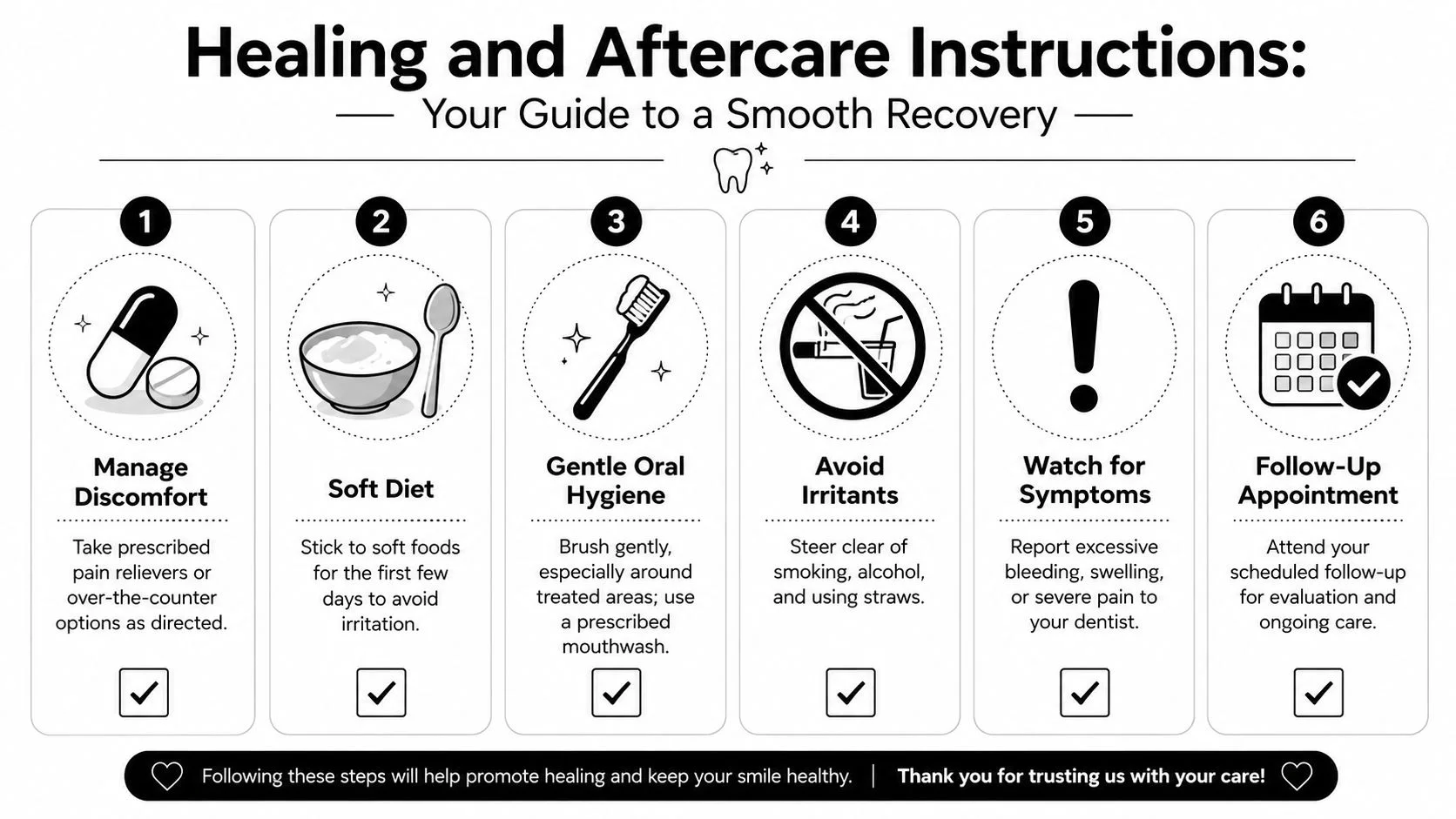
What to do in the first several days
A few simple habits can make healing smoother:
- Use over-the-counter pain relief if needed and only as directed by your dentist or the product label.
- Choose softer foods while your gums are tender.
- Brush gently around the treated areas instead of scrubbing.
- Follow rinse instructions carefully if your dentist recommends or prescribes one.
What's normal and what deserves a call
Some tenderness, mild swelling, and sensitivity to cold are common right after treatment. You may also notice a little bleeding during the early healing period.
Call your dental office if the discomfort feels out of proportion, if bleeding seems excessive, or if you have concerns about how you're healing. Patients do best when they ask early instead of trying to guess.
Healing gums often feel a little sore before they feel dramatically better.
How aftercare protects your result
The procedure removes the bacterial buildup, but the healing phase is what helps the gums tighten and settle. Good home care matters because it helps keep the treated areas clean while the tissue recovers.
Long-term control of gum disease also depends on maintenance. Once your gums begin improving, the next step is keeping them stable with regular professional care and a consistent routine at home.
Benefits Risks and Treatment Alternatives
If a scaling and root planing procedure has been recommended for you, the central question is usually whether it's worth doing. In most cases, yes. The reason is simple. Untreated periodontal infection doesn't stay still.
This treatment is often the most conservative way to interrupt the disease process before surgery becomes part of the conversation.
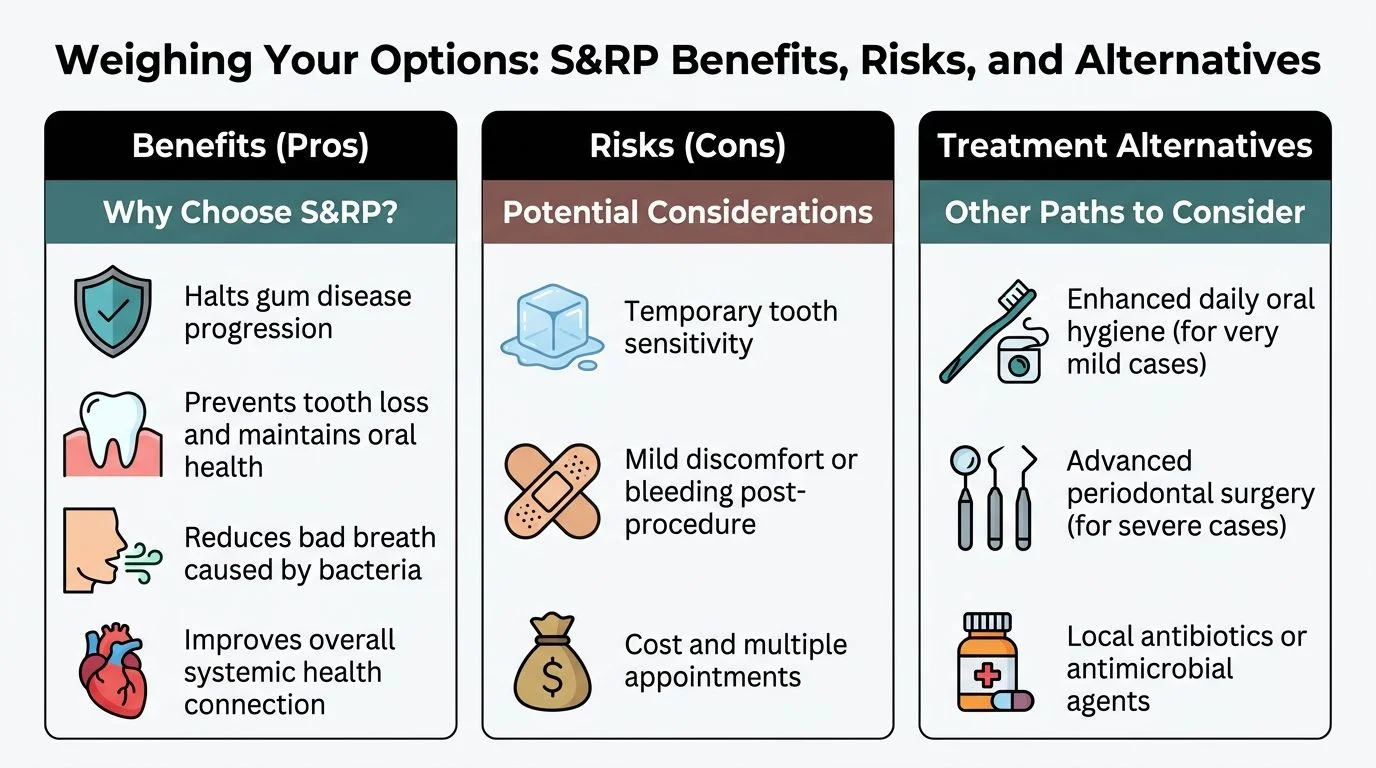
What this treatment can do
According to North Texas Periodontal Associates' patient guide on scaling and root planing, scaling and root planing can halt the progression of gum disease and reduce inflammation, and it may also reduce systemic risk by preventing oral bacteria from traveling through the bloodstream to other organs.
In practical terms, patients often pursue this treatment because it can help:
- Stabilize gum disease before deeper destruction occurs
- Lower inflammation that causes tenderness and bleeding
- Preserve teeth longer by protecting their support
- Improve breath and comfort by reducing bacterial buildup
What it cannot do
This is the part many websites skip, and patients deserve honesty. The same source notes that scaling and root planing cannot reverse advanced gum damage or regenerate lost gum tissue.
That doesn't make the procedure less important. It means the treatment is designed to stop active disease and help you keep what support remains. If significant tissue or bone has already been lost, additional periodontal therapies may sometimes be considered later.
How it compares with the alternatives
Not every patient needs the same level of care.
| Option | When it may fit | What to know |
|---|---|---|
| Routine cleaning | Healthier gums or very mild concerns | Good for prevention, not enough for deeper periodontal pockets |
| Scaling and root planing | Mild to moderate periodontitis | Non-surgical treatment focused below the gumline |
| Periodontal surgery | More advanced cases | Considered when non-surgical treatment isn't enough |
| Local antimicrobial therapy | Used along with cleaning in some cases | Supports treatment, but doesn't replace mechanical cleaning |
A few risks do come with SRP, but they're usually short-term and manageable. Sensitivity, tenderness, and mild bleeding are common examples. Compared with the risk of leaving periodontal infection untreated, those temporary effects are usually the easier path.
Cost Insurance and Scheduling Your Consultation
A common moment in the office goes like this. A patient hears "deep cleaning," pauses, and then asks the question that is usually sitting at the top of their mind: "What will this cost me, and will my insurance help?" That question matters, and you deserve a straight answer.
One useful general reference comes from the CareCredit overview of scaling and root planing costs. It states that the national average cost is $242 per quadrant, with a range from $185 to $444 per quadrant. The same source notes that dental insurance typically covers approximately 50% of the total cost because the procedure is commonly treated as medically necessary care for gum disease.
Your final estimate may be lower or higher than that benchmark. The reason is simple. Treatment is usually planned by quadrant, and not every mouth has the same pattern of infection. Some patients need care in one or two areas. Others need treatment in most or all of the mouth.
Insurance adds another layer. Two plans can both say they cover periodontal treatment and still leave patients with different out-of-pocket costs because of deductibles, annual maximums, waiting periods, or plan limits.
I like to explain it this way. Scaling and root planing works like foundation repair for a house. You may not see the benefit as quickly as you would with a cosmetic treatment, but strong support protects everything built on top of it. Treating gum disease early may help you avoid more involved care later, including crowns, bridges, tooth extraction, or implants.
There is a bigger health picture here too. Gum treatment is about keeping teeth, but it is also about lowering the bacterial burden and inflammation your body has to deal with every day. For many patients, that broader benefit makes the decision feel less like "paying for a cleaning" and more like addressing an active health problem before it grows.
When you contact our office, our approach is to explain things plainly and not rush you through the process. We examine your gums, review whether scaling and root planing is the right fit, and go over the proposed treatment before anything starts. If insurance applies, we help you review what your benefits appear to cover so you can make a decision with fewer surprises.
William M. Schneider, DDS provides dental care for patients in Walnut Creek, CA and the East Bay, including periodontal treatment, routine care, and long-term treatment planning. If your gums bleed, feel tender, or you have been told you need a deep cleaning, scheduling a consultation is the best way to get clear answers about the procedure, the expected cost, and what comes next.