You may be dealing with this right now. You sleep for what should be a full night, but you wake up tired, dry-mouthed, and foggy. Your partner complains about loud snoring or pauses in your breathing. By mid-afternoon, your energy crashes again.
That pattern isn't just frustrating. It can point to obstructive sleep apnea, and treatment can make a meaningful difference in how you feel each day and in your long-term health. For many people in Walnut Creek, CA, one of the most practical paths forward starts at a dental office that understands both the airway and the bite.
Your Dentist in Walnut Creek for Better Sleep and Health
Sleep apnea often hides in plain sight. People blame stress, aging, a busy schedule, or poor sleep habits when the underlying issue is repeated airway blockage during the night. The result is a cycle of interrupted rest, heavy snoring, morning headaches, and daytime fatigue that doesn't improve even when you spend enough time in bed.
In Walnut Creek, that can affect every part of daily life. You may struggle through meetings, feel less patient with family, or worry about drifting off during a commute. Many people also put off getting help because they assume the only answer is a bulky machine they won't tolerate.
Care close to home matters
When treatment is local, follow-through tends to be easier. You can ask questions, return for adjustments, and get help when something doesn't feel right. That's important because sleep apnea treatment works best when it's used consistently and comfortably.
A dentist who treats sleep apnea can help evaluate whether an oral appliance may fit your needs, especially if you want an option that's quieter and easier to travel with than CPAP. That doesn't replace medical diagnosis. It does give you another practical route for treatment once sleep apnea has been identified.
A useful starting point: If snoring, unrefreshing sleep, and daytime exhaustion keep showing up together, it's worth getting evaluated instead of waiting for the problem to go away on its own.
Why patients often start with a dental consultation
Many people looking for a dentist near me or a dentist in Walnut Creek, CA are surprised to learn that dentistry can play a real role in sleep apnea care. The jaw, tongue position, and airway are closely connected. A custom oral appliance can be designed to support a more open airway while you sleep.
That kind of care also fits naturally into a practice that already helps patients with preventive visits, restorative dentistry, and comfort-focused treatment. If you're already looking for cleaning and exams, new patient exams, cosmetic dentistry, or restorative dentistry in Walnut Creek, it makes sense to choose a dental home that can also address sleep-related breathing issues.
What Is Sleep Apnea and How Does It Affect You
Obstructive sleep apnea, often called OSA, happens when the upper airway repeatedly narrows or closes during sleep. A simple way to think about it is a soft tunnel that keeps collapsing. Air tries to move through, but the passage gets blocked, so breathing becomes shallow or stops briefly until the body startles itself awake enough to reopen the airway.
Those interruptions may happen over and over through the night. You might not remember them in the morning, but your body does.
It's more than snoring
Snoring is common with sleep apnea, but snoring alone isn't the full problem. The bigger issue is what repeated obstruction does to oxygen levels and sleep quality. Your brain and body keep getting pulled out of deeper, restorative sleep stages.
That means you can spend plenty of hours in bed and still wake up exhausted. Some people also notice:
- Morning headaches that ease as the day goes on
- Dry mouth or sore throat after waking
- Daytime sleepiness during work, reading, or driving
- Poor concentration and slower thinking
- Irritability or low mood
- Restless sleep that leaves both you and your partner worn out
Why the whole body feels it
Treating sleep apnea isn't only about quieter nights. The main clinical value includes risk reduction because improved sleep quality and more stable breathing are associated with better blood pressure control, lower risk of heart disease and stroke, and improved metabolic control. This happens because fewer oxygen drops and fewer arousals reduce sympathetic activation and sleep fragmentation, as explained by Cleveland Clinic's overview of CPAP and sleep apnea treatment.
When breathing is repeatedly disrupted, the body doesn't get the steady overnight recovery it needs. That's why untreated sleep apnea can show up as low energy, poor focus, and strain that reaches far beyond the throat.
Sleep apnea is a medical condition with whole-body effects. It isn't just a noise problem.
Why evaluation matters
Some patients assume they just need to lose weight, sleep on their side, or go to bed earlier. Those steps can help some people, but they don't replace an actual diagnosis and treatment plan. If OSA is present, the goal is to keep the airway open consistently enough to reduce both symptoms and health risk.
That's where individualized care matters. The right treatment depends on severity, anatomy, comfort, and whether you'll realistically use it night after night.
The Life-Changing Benefits of Treating Sleep Apnea
You fall asleep tired, wake up tired, and push through the day wondering why a full night in bed never feels like enough. For many patients in Walnut Creek, that cycle starts to change once sleep apnea is treated in a way they can live with.
Better survival and heart protection
Treating obstructive sleep apnea can affect far more than snoring. A major 2024 global study reported that people with OSA who used CPAP had a 37% lower risk of dying from any cause and a 55% lower risk of cardiovascular death than OSA patients who did not use CPAP, according to the 2024 global CPAP survival findings.
A separate U.S. Medicare-based observational study published in JAMA Network Open analyzed claims data from nearly 900,000 people with OSA and found that starting CPAP was associated with about half the risk of dying over the next five years compared with never starting CPAP. In that same study, CPAP use was associated with a 10% lower risk of a major cardiovascular event over five years in patients without a prior event, and the strongest single cardiovascular effect was a 16% reduction in myocardial infarction risk, as summarized by the University of Kansas Medical Center report on the JAMA study.
Those findings matter because untreated sleep apnea places stress on the heart and blood vessels night after night. Treatment can reduce that burden.
Changes patients often notice first
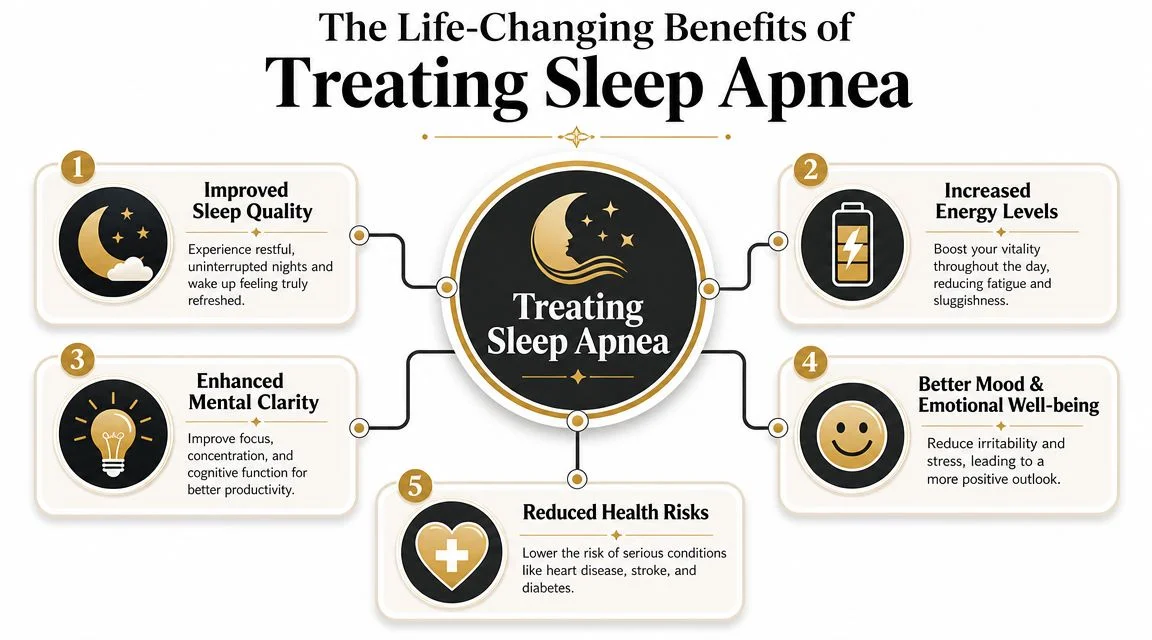
Patients usually notice the daily benefits before they think about long-term health outcomes. Mornings feel clearer. Energy improves. Work takes less effort. Driving home feels safer. Partners often sleep better too.
Common improvements include:
- More restful sleep with fewer abrupt awakenings
- Better daytime alertness and less unplanned dozing
- Improved focus and memory from less fragmented sleep
- Less irritability and a more stable mood
- Quieter nights at home with less snoring and fewer disruptions for a bed partner
I often tell patients that good treatment should help both health and quality of life. If therapy works on paper but feels miserable every night, many people stop using it. That is one reason oral appliance therapy matters. For the right patient, it can be a comfortable, practical option provided here in Walnut Creek.
Treatment changes the direction of the problem
Sleep apnea tends to worsen strain on the body over time if it goes untreated. If you have been reading about the health risks linked to untreated sleep apnea, the goal of treatment is to interrupt that pattern before it affects more of your life.
Consistency still matters. The right option is one you can tolerate, use regularly, and fit into real life. That is why I discuss trade-offs openly with patients. Some need the strongest airway support possible. Others need a treatment they will consistently wear every night. In many cases, especially for patients who want an alternative to CPAP, a custom oral appliance offers a realistic path to better sleep and better health.
Comparing Your Sleep Apnea Treatment Options
There isn't one universal answer for every patient. CPAP remains the standard option many physicians start with, especially for more significant OSA, but comfort, convenience, anatomy, and lifestyle all affect what works in real life.
Some people do very well with CPAP. Others struggle with the mask, airflow sensation, skin irritation, or the effort of using it every night. That's why alternatives matter.
What different treatments tend to offer
Higher-level reviews note an important trade-off. Adherence limits efficacy, and cardiovascular benefits are less well established than symptom relief in some groups, especially in asymptomatic mild OSA, as discussed in this review on treatment outcomes and limits of benefit.
Alternatives beyond CPAP deserve a clear discussion. Neutral clinical sources note that oral appliances can reduce daytime sleepiness and high blood pressure, myofunctional therapy can reduce AHI by about 50%, and upper-airway stimulation can improve sleepiness, productivity, and memory function, as outlined in Cleveland Clinic's comparison of CPAP and other OSA treatments.
Sleep Apnea Treatment Comparison
| Treatment | Best For | Pros | Cons |
|---|---|---|---|
| CPAP | Many patients with moderate to severe OSA | Strong evidence base, keeps airway open with continuous pressure, can improve symptoms and long-term risk when used consistently | Some patients find the mask or airflow hard to tolerate, less convenient for travel, adherence can be difficult |
| Oral appliance therapy | Many patients with mild to moderate OSA, and some who can't tolerate CPAP | Quiet, compact, easy to travel with, no hose or mask, often easier to use nightly | Not right for every anatomy or severity level, requires custom fitting and follow-up dental monitoring |
| Myofunctional therapy | Selected patients as part of a broader plan | Non-device approach, focuses on airway-related muscle function | Usually not a stand-alone answer for everyone |
| Upper-airway stimulation | Patients who meet specific medical criteria | Can improve sleepiness and some daily function measures, no mask | Requires specialty evaluation and a procedure |
| Lifestyle and positional strategies | Patients whose symptoms are affected by sleep position or broader health factors | Low-tech, supportive, helpful as part of a larger plan | Often not enough by themselves when OSA is established |
| Surgery | Selected patients with anatomy that fits a surgical approach | Can target physical obstruction | Invasive, recovery required, results vary by anatomy and procedure |
How to choose realistically
The right choice usually comes down to a few practical questions:
- Can you use it every night
- Does it fit your anatomy and diagnosis
- Will it travel well and fit your routine
- Can it be adjusted if comfort changes
- Does it match your treatment goals
If you're weighing convenience, follow-up needs, and budget, our page on sleep apnea treatment cost can help frame the discussion before your visit.
How Oral Appliance Therapy from Your Dentist Can Help
You may already know what happens at night. You fall asleep tired, wake up tired, and the idea of wearing a mask every time you sleep feels like one more barrier between you and real treatment. For many adults in Walnut Creek, a custom oral appliance offers a more practical path.
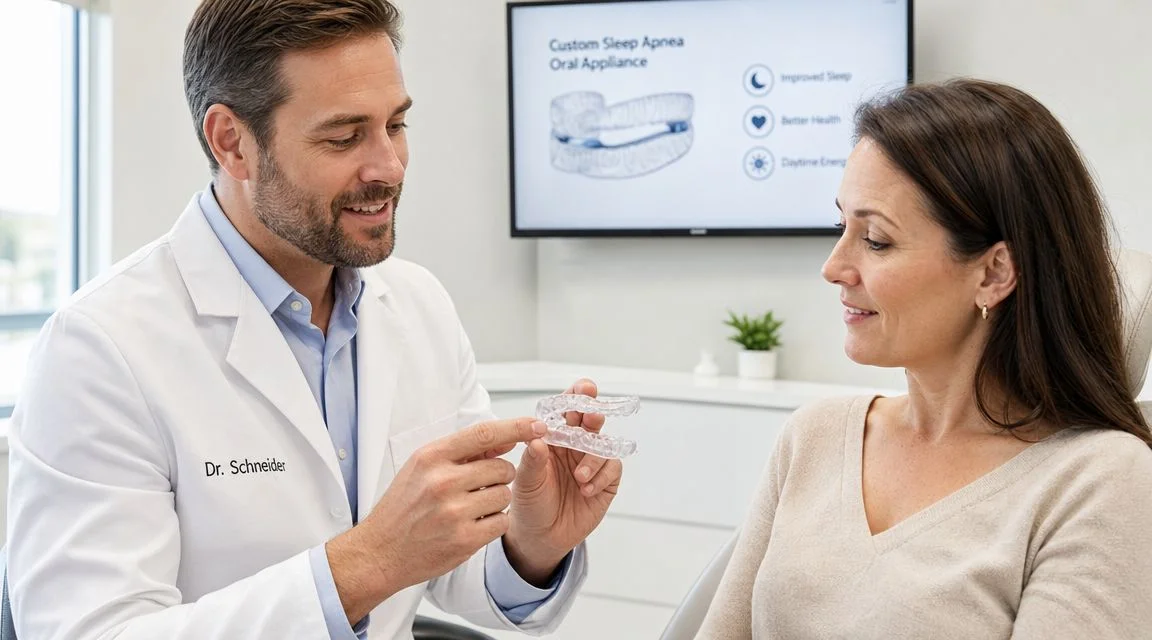
An oral appliance is worn in the mouth during sleep and is designed to hold the jaw in a position that helps keep the airway more open. For the right patient, that can make treatment feel manageable instead of frustrating.
Why many patients prefer it
Patients often ask for something they can live with long term. Oral appliances are quiet, compact, and easy to travel with. There is no mask on the face, no tubing, and no machine taking up space beside the bed.
Comfort matters, but so does case selection. Oral appliance therapy is often a strong option for patients with mild to moderate obstructive sleep apnea, and it can also help some patients with more severe disease who cannot tolerate CPAP. The key is making sure the treatment matches your diagnosis, anatomy, and goals.
What a dentist evaluates
A proper evaluation goes well beyond handing you a night guard. I look at your teeth, gums, bite, jaw joints, and how much healthy tooth support is available for a custom device. If your jaw is already sore, if teeth are loose, or if untreated dental problems are present, those details affect whether an appliance will be comfortable and safe.
That broader dental view matters. Sleep apnea treatment sits on top of your oral health. If gum disease, damaged teeth, or bite instability need attention first, those issues should be addressed so the appliance has a stable foundation.
William M. Schneider, DDS provides custom oral appliance therapy for sleep apnea in Walnut Creek as part of broader general and restorative dental care.
Comfort and fit drive results
The best appliance is the one you can wear night after night. A custom device should fit securely, allow for careful adjustment, and improve breathing without putting too much strain on the jaw. Over-the-counter snore devices rarely offer that level of precision.
Follow-up is part of good treatment, not an extra. Small adjustments can make a meaningful difference in comfort, jaw position, and nightly use. That is one of the advantages of working with a local dentist who can monitor how the appliance is fitting over time and respond if anything changes.
If you'd like to see how oral appliance therapy is discussed in patient-friendly terms, this short video gives a helpful overview.
For patients looking for a local dentist in Walnut Creek who can address sleep apnea along with long-term dental health, oral appliance therapy offers a practical option that is personal, custom fitted, and easier for many people to use consistently.
Your Consultation at Our Walnut Creek Dental Office
You may already know something is wrong with your sleep, but still feel unsure about what treatment would fit your life. The consultation is where we sort that out carefully. At our Walnut Creek dental office, the goal is to understand your diagnosis, answer your questions clearly, and determine whether oral appliance therapy is a realistic, comfortable option for you.
What happens during the appointment
The visit starts with a practical conversation. We review your symptoms, your sleep study or prior diagnosis, what your nights are like now, and what you have already tried. If CPAP felt uncomfortable or unrealistic for you, that is useful information. If you are newly diagnosed and want an alternative that feels more manageable, that matters too.
Then comes the dental side of the evaluation. I look at your teeth, gums, bite, jaw joints, and the shape of the oral structures that affect appliance design. Some patients are good candidates right away. Others need a little dental treatment first so the appliance has the support it needs to fit well and work predictably.
That first appointment should leave you with clarity.
Why follow-up is part of the process
A custom oral appliance is not a one-time handoff. It often needs careful adjustment as you get used to it and as we refine the position for comfort and symptom improvement. That is one reason local care matters. If something feels off, if your jaw is sore, or if the fit changes, you can come back and have it addressed by a team that already knows your case.
I tell patients this often. The right treatment is the one you can use consistently in real life. A therapy that looks good on paper but sits on the nightstand does not help you sleep better.
A comfortable dental experience matters too
Many patients appreciate being able to address sleep apnea treatment in the same office where they already receive general dental care. If you're also looking for a dentist in the Walnut Creek area for cleanings, exams, restorative work, or urgent care, having one familiar office can make the process feel simpler and less stressful.
For someone who has been exhausted, frustrated, or unsure where to start, that convenience matters. A consultation gives you a clear next step and a chance to find out whether a custom oral appliance from a trusted local dentist is the right fit for your health and your routine.
Frequently Asked Questions About Sleep Apnea Treatment
Can a dentist treat sleep apnea
A dentist can play an important role in treating obstructive sleep apnea with a custom oral appliance after the condition has been properly evaluated and diagnosed. Dental treatment is often part of a larger care pathway that may also involve a physician and a sleep study.
Is an oral appliance as effective as CPAP
It depends on the patient. CPAP is often considered the primary option, especially in more significant cases, because it uses continuous pressure to hold the airway open. Oral appliances can still be a strong choice for many people, especially if comfort and nightly use are more realistic with that option.
Will an oral appliance feel bulky
A properly made custom appliance is much smaller and simpler than typically expected. It should feel secure and manageable, not like a sports mouthguard. If it's too bulky or uncomfortable, it may need refinement.
Do I need healthy teeth to wear one
You need enough dental support and gum health for the appliance to fit properly. If you have untreated decay, loose teeth, or active gum problems, those issues may need attention first.
Is this only for people who snore
No. Snoring may be one sign, but the bigger issue is airway obstruction during sleep. Some people seek help because of fatigue, poor concentration, or a bed partner noticing breathing pauses.
Can I still come here if I need other dental work too
Yes. Many patients looking for a long-term dental office also want help with preventive care, cosmetic dentistry, restorative treatment, or questions about dental implants near me. It often helps to work with one office that can look at your oral health and sleep appliance needs together.
If you're tired of waking up exhausted, struggling with snoring, or wondering whether a comfortable alternative to CPAP could work for you, schedule a consultation with William M. Schneider, DDS. Our Walnut Creek office can help you understand your options, evaluate whether oral appliance therapy is a fit, and create a practical next step toward better sleep and better health.