If you're looking in the mirror before a work event, family photo, or first date and noticing that your teeth don't look as bright as they used to, you're not alone. Many adults in Walnut Creek feel good about their oral health but still wish their smile looked cleaner, fresher, and less stained. Coffee, tea, red wine, and simple aging can all leave teeth looking darker over time, even when you brush consistently.
That's usually when patients start searching for teeth whitening in Walnut Creek, CA, or even a cosmetic dentist near me, hoping for something that works without wasting money on products that overpromise. It's also when questions start coming up fast. Will whitening work on my teeth? Will it hurt? What if I already have crowns or fillings? Is professional treatment really different from store-bought strips?
Those are the right questions to ask. Whitening can be a great option, but it isn't one-size-fits-all care. The right choice depends on the kind of discoloration you have, how quickly you want results, whether you've had restorative dental work, and how sensitive your teeth already are. For many patients in Walnut Creek and nearby East Bay communities, the safest path starts with understanding those trade-offs before choosing any treatment.
Brighten Your Smile with a Trusted Walnut Creek Dentist
A familiar moment brings many people in for whitening. They catch their smile in a photo before a wedding, a work presentation, or dinner with friends and realize their teeth look duller than they expected. Their mouth may feel healthy, but the color no longer matches how they want to look.
Professional whitening is often a sensible first option because it can improve smile color without changing the shape of the teeth or committing you to more involved cosmetic work. It also gives you a chance to start with a conservative treatment before considering bonding, veneers, or replacement of older restorations.
The decision is not only about getting teeth whiter. It is also about choosing a method that fits your comfort level, timeline, and dental history. Patients with anxiety often want a straightforward plan with no surprises. Patients with crowns, veneers, or tooth-colored fillings on front teeth need to know that whitening changes natural tooth structure, but it does not lighten existing dental work. That difference affects whether whitening alone will give you an even result.
Practical rule: Whitening is a good starting point when you want a visible cosmetic improvement and your natural teeth are the main reason your smile looks darker.
In our Walnut Creek office, the first step is screening, not selling. Dr. Schneider looks at the type of staining, checks for cavities or gum irritation, reviews any visible restorations, and asks about sensitivity before recommending treatment. That approach helps patients avoid spending money on whitening that may leave a crown looking darker by comparison or trigger discomfort that could have been reduced with a different plan.
What patients usually want is simple:
- A natural improvement that still looks like their smile.
- A comfortable experience if dental visits already make them uneasy.
- Clear advice up front about whether whitening will match existing crowns, veneers, or fillings.
For many people, whitening is enough. For others, the better decision is a staged plan that starts with whitening and then adjusts visible restorations if color mismatch becomes more noticeable. Good cosmetic care starts with that kind of honest conversation.
Understanding Tooth Discoloration and Stains
Tooth discoloration isn't all the same. Two people can both say, “My teeth look yellow,” while needing completely different solutions. The simplest way to think about it is surface stains versus deeper color changes.
Surface stains and deeper discoloration
Extrinsic stains sit on the outside of the teeth. These are the stains commonly associated with coffee, tea, red wine, dark sauces, and tobacco. They tend to build gradually and often become more noticeable as enamel picks up pigments over time.
Intrinsic discoloration happens deeper within the tooth structure. This type of color change may be related to aging, natural tooth anatomy, or other internal factors. It usually doesn't respond the same way as a simple surface polish.
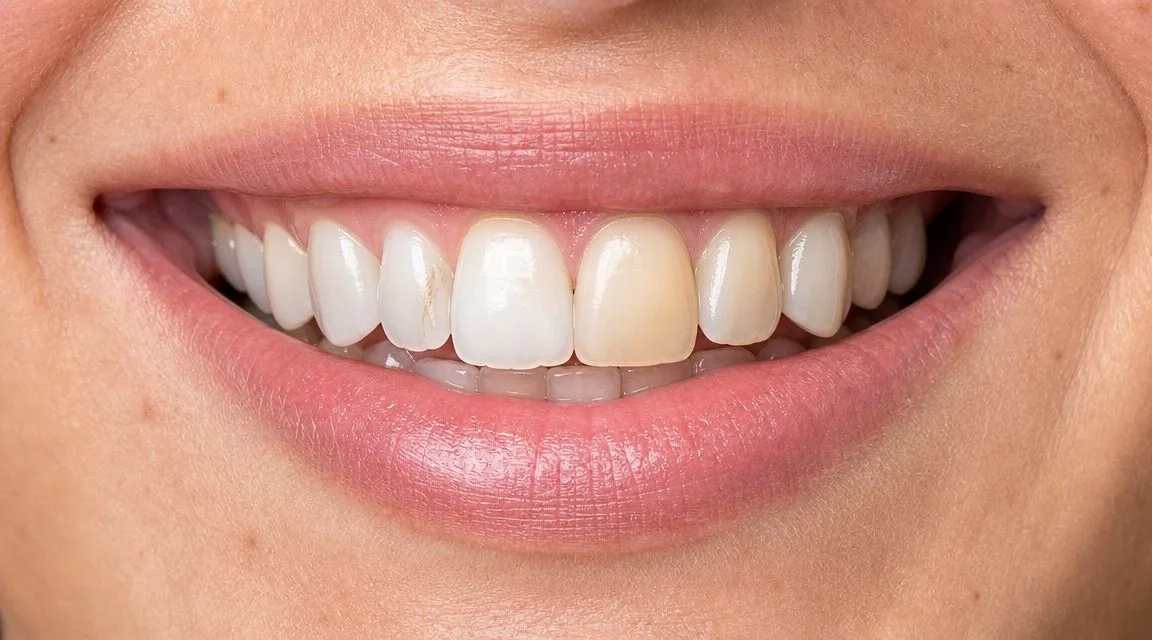
A useful analogy is this. Surface stains are like color sitting on a countertop. Deeper discoloration is more like color that has soaked into the material. Both may improve, but not with the same method or the same speed.
Why that distinction matters
Professional whitening works through peroxide chemistry, usually hydrogen peroxide or carbamide peroxide, which oxidizes stain molecules within enamel and dentin instead of scraping them off. That's why whitening isn't the same as aggressive abrasion, and it's also why the type of stain matters, as explained by Diablo Creek Dentistry's teeth whitening page.
Some smiles don't need “stronger whitening.” They need a better diagnosis first.
That's also where many over-the-counter products fall short. They're bought without an exam, so the person using them may not know whether the issue is surface staining, intrinsic discoloration, dehydration after whitening, or old restorative material that won't change color.
Discoloration doesn't always come from neglect
This is important for anxious patients to hear. Darker teeth do not automatically mean poor hygiene. Many people with excellent brushing and flossing habits still develop discoloration with age or from daily habits. Whitening is often about shade improvement, not fixing a failure.
Comparing Your Whitening Options in Walnut Creek
You have a big event coming up, you want whiter teeth, and you also want to avoid making a sensitive tooth or old crown more noticeable. That is usually the key decision. The question is not just which whitening product is strongest. It is which option fits your teeth, your timeline, and your comfort level.
Patients considering teeth whitening in Walnut Creek, CA usually choose from three paths. In-office whitening, dentist-supervised take-home trays, or over-the-counter products. All three can lighten certain stains, but they differ quite a bit in speed, comfort, and predictability.
In-office whitening
In-office whitening is the quickest professional option. The gums and soft tissues are protected first, then a professional whitening gel is applied and monitored during the visit. That supervision matters, especially for patients who are nervous about sensitivity or want a team member checking progress instead of guessing at home.
For patients with a deadline, this approach often makes the most sense. Interviews, weddings, reunions, and family photos are common reasons people choose it. If you want to see how a chairside professional system works, Zoom whitening in office is one example of that format.
The trade-off is cost and intensity. In-office treatment is usually more expensive than take-home whitening, and some patients do feel temporary sensitivity afterward. For the right candidate, that trade-off is worth it. For others, a slower approach is more comfortable.
Dentist-supervised take-home trays
Custom take-home trays give you more control. The trays are made to fit your teeth, and the whitening gel is selected with your goals and sensitivity history in mind.
This option works well for patients who prefer to whiten gradually, want to space out applications, or feel more comfortable whitening in a familiar environment. It is also a practical choice when someone has dental anxiety and wants a less intense experience than a longer cosmetic appointment. In my experience, trays can be a very good middle ground for patients who want professional guidance without the pressure of getting all their whitening done in one visit.
They do require consistency. Results are slower, and the outcome depends on using the trays as directed.
Over-the-counter products
Store-bought strips, tray kits, and whitening toothpastes are easy to buy and can help with mild surface staining. Convenience is their main advantage.
Their weakness is fit and planning. These products are not designed around your enamel, gumline, bite, or existing dental work. If you have bonding, veneers, crowns, or visible fillings, the natural teeth may lighten while the restorations stay the same color. That can make shade differences stand out more clearly.
Patients often tell me they chose over-the-counter whitening because it felt simpler. Sometimes it is. Sometimes it delays the better solution, especially when the underlying issue is uneven color, sensitivity, or restorations on the front teeth.
Professional whitening is not just stronger. It is tailored to the mouth you actually have.
Teeth Whitening Options at a Glance
| Method | Best For | Time Commitment | Typical Results |
|---|---|---|---|
| In-office professional whitening | Patients who want fast visible change and close supervision | Single office visit | Rapid brightening in one appointment for many patients |
| Custom take-home trays | Patients who want gradual, supervised whitening | Repeated use at home over time | Gradual improvement with better control over fit and application |
| Over-the-counter products | Mild surface stains and lower-commitment use | Varies by product | Less predictable because treatment is not customized |
Determining Your Candidacy for Teeth Whitening
Not everyone is a good candidate for immediate whitening, and saying that clearly is part of ethical cosmetic care. The right answer sometimes starts with “not yet” or “not by itself.”
When whitening is likely to make sense
Whitening tends to work best when the teeth are healthy, the gums are stable, and the main concern is discoloration of natural enamel rather than visible dental work. Patients with realistic expectations also tend to be happier with the result. Whitening can make teeth look brighter, but it doesn't reshape teeth, close spaces, or repair worn edges.
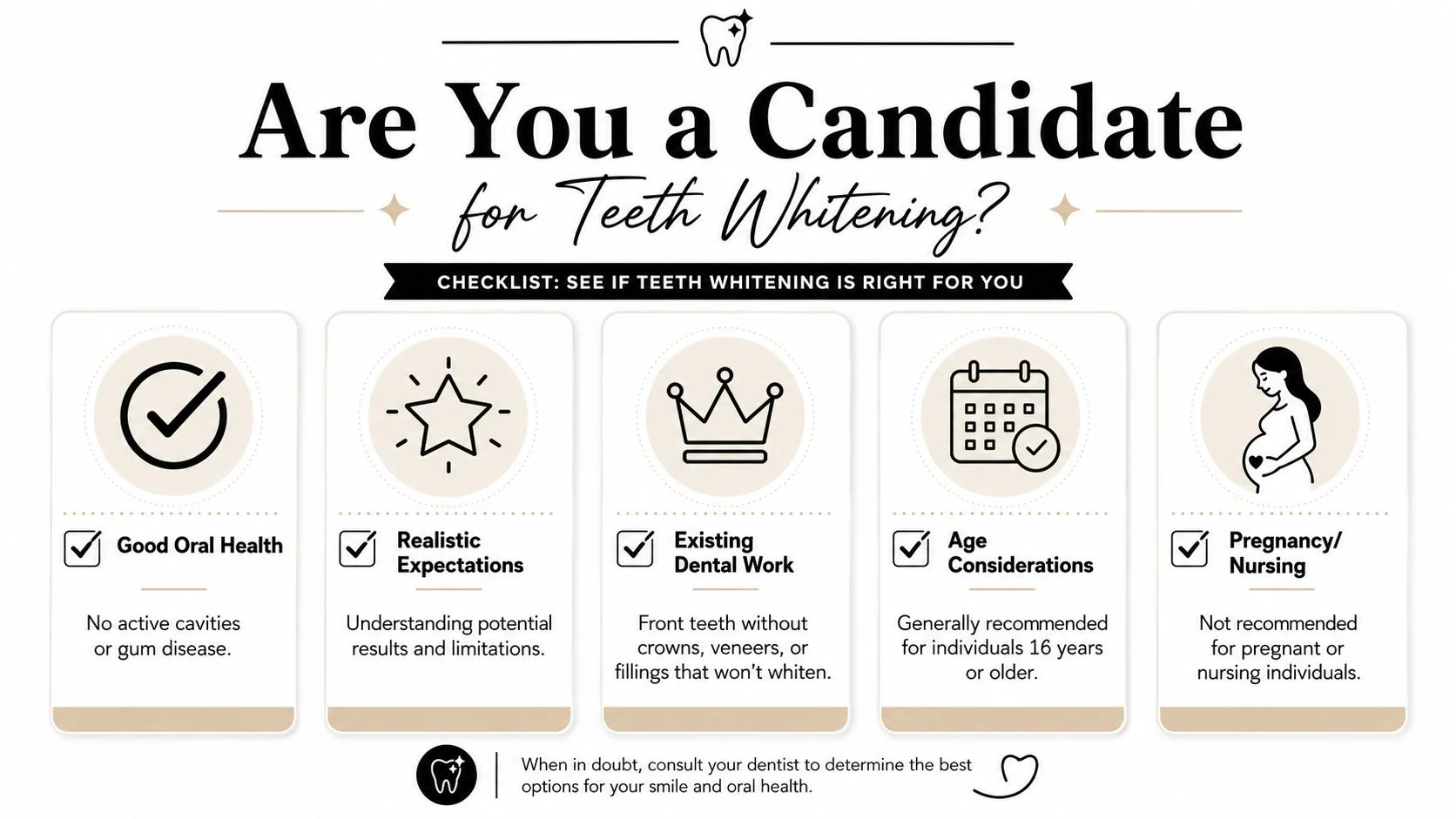
A consultation is especially important if you're also considering other cosmetic or restorative treatment. Someone searching for a cosmetic dentist near me may need sequencing. Whitening first, then shade-matched bonding or crowns, for example.
When caution matters
Peroxide-based whitening can cause temporary tooth sensitivity and gum irritation, and crowns, veneers, and fillings generally do not whiten the way natural teeth do, as noted by Horizons Dental's whitening guidance. That single fact changes treatment decisions for many adults.
If your front teeth include older fillings, a crown, veneer, or bonding, whitening your natural teeth may leave those restorations looking darker by comparison. The whitening didn't fail. The materials did not change.
Consider asking these questions before you book whitening:
- Do I have visible restorations on the teeth that show when I smile?
- Are my teeth already sensitive to cold drinks, air, or brushing?
- Have I had a recent exam to rule out decay or gum inflammation?
- Am I trying to solve color alone, or am I also bothered by shape, wear, spacing, or uneven edges?
Anxiety should be part of the plan
Patients with dental anxiety often assume cosmetic treatment is optional and therefore not worth the stress. In reality, comfort planning matters here too. A thoughtful dentist screens for sensitivity risk, explains what you may feel during and after treatment, and adjusts the approach if your mouth tends to react strongly.
For some people, a slower plan is the smarter plan.
The Whitening Process at Our Walnut Creek Office
The most reassuring whitening appointment is the one that feels predictable. Patients usually do better when they know what happens first, what sensations are normal, and what the dentist is watching for during treatment.
To make that easier, here's the overall flow many patients can expect during a professionally planned whitening visit.
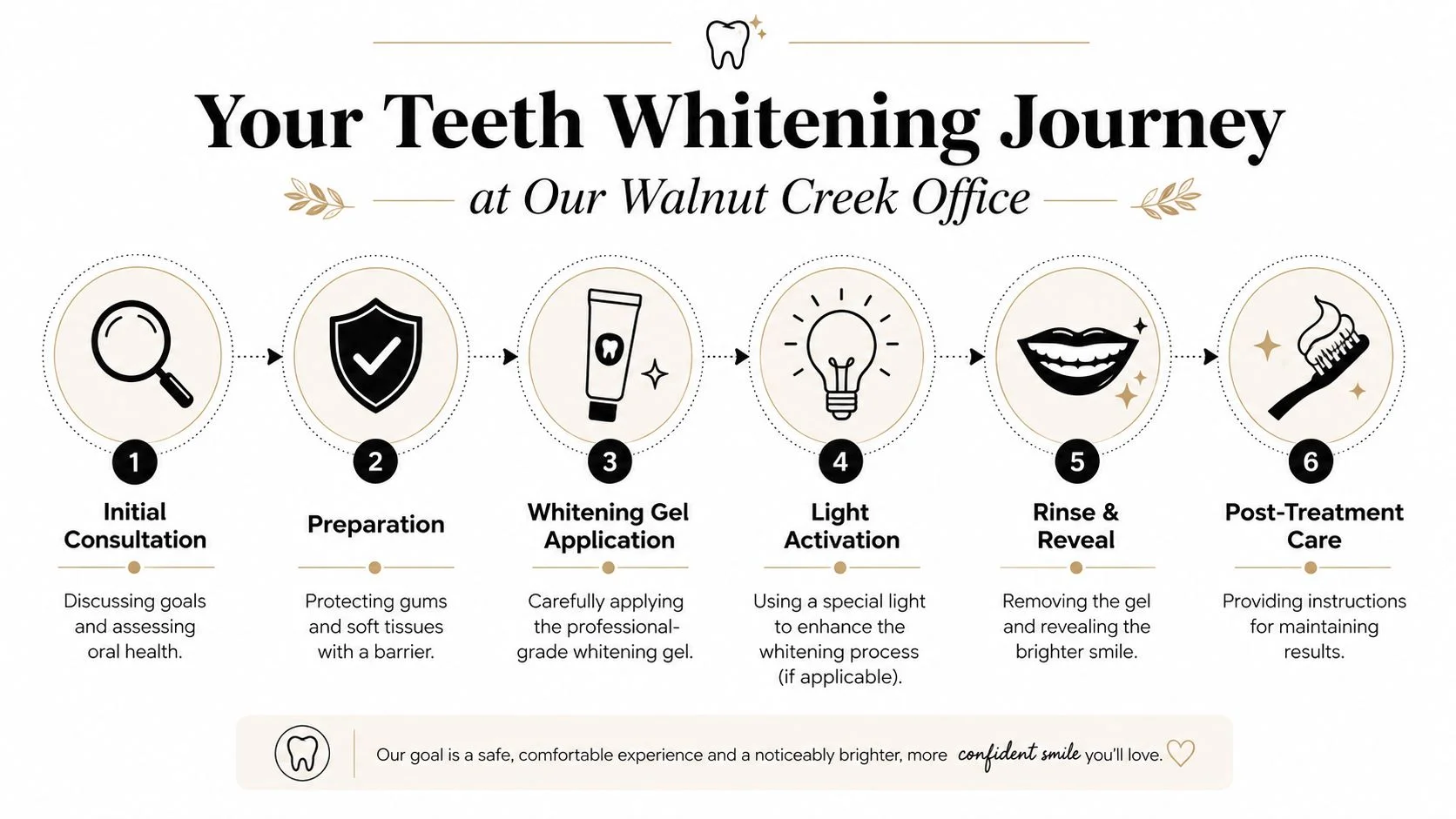
Step one is the exam, not the gel
The first appointment or first part of the visit focuses on candidacy. The teeth and gums are checked, visible restorations are identified, and your goals are discussed. If you're also due for routine dental care, cleaning and exams, or dental X-rays, those may be part of the larger planning process so whitening is done on a healthy foundation.
At this point, the dentist also helps you choose between in-office whitening and custom trays. A patient who wants immediate change may choose chairside treatment. Someone with a history of sensitivity may do better with a slower, supervised home plan.
What happens during in-office whitening
During in-office treatment, the soft tissues are protected first. Then the whitening gel is applied carefully to the teeth being treated. Some systems use a light as part of the process.
Here is a visual walkthrough of a typical whitening visit:
Most patients describe the appointment as straightforward. The main thing to know in advance is that temporary sensitivity can happen afterward, especially with stronger chairside systems.
What happens with take-home trays
For take-home whitening, the office creates custom-fitted trays designed to hold the whitening material more precisely than generic retail trays. You'll get instructions on how much gel to use, how often to wear the trays, and what signs mean you should pause and call the office.
William M. Schneider, DDS provides teeth whitening as part of a broader general and cosmetic dental practice in Walnut Creek, which matters because whitening decisions often overlap with maintenance care, restorative work, and anxiety support.
A comfortable whitening experience usually starts before treatment. It starts with choosing the right method for the right patient.
One practical point many patients appreciate is that whitening is maintenance, not permanence. In-office power bleaching is commonly reported to last about 1 to 3 years, while dentist-supervised take-home tray systems may last about a year or longer with touch-ups, and many patients need retreatment every 6 to 12 months, according to Mark Wong DDS's whitening guide.
How to Maintain Your Teeth Whitening Results
Fresh whitening looks great on day one, but the habits that follow matter just as much. If you want the result to last, think less about perfection and more about reducing the things that pull the shade backward.
The daily habits that help most
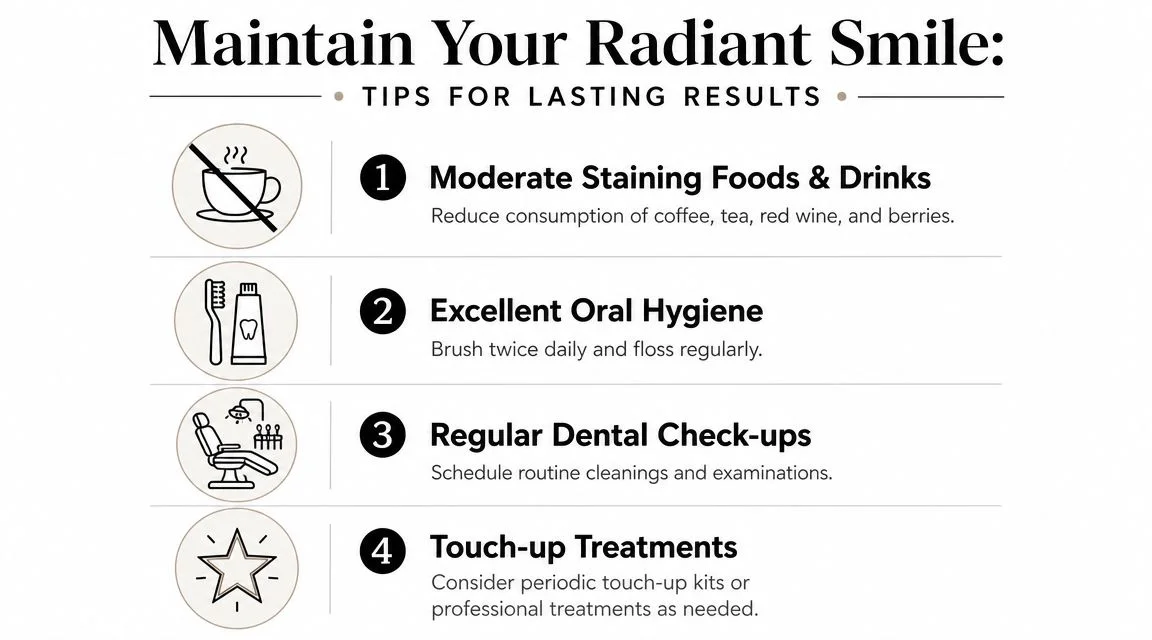
The biggest maintenance issue for most adults is repeat exposure to stain-causing foods and drinks. Coffee, tea, and red wine are common examples. You don't have to give them up completely, but regular exposure tends to bring color back faster.
A good maintenance routine usually includes:
- Consistent brushing and flossing so plaque doesn't hold onto surface stain.
- Regular cleanings and exams to remove buildup and catch issues early.
- Moderation with dark beverages and foods when possible.
- Periodic touch-ups if your dentist recommends them.
For patients who want more specific upkeep guidance after treatment, how to maintain the results of teeth whitening offers a useful next step.
Plan for maintenance, not a one-time event
Whitening holds up best when patients treat it like ongoing smile care. Properly maintained results can last from several months to a few years, depending on the method used, with in-office power bleaching often lasting about 1 to 3 years and many patients only needing touch-ups every 6 to 12 months, according to Panoramic Dental's whitening information.
That doesn't mean everyone follows the same schedule. It means upkeep should match your habits, your enamel, and your cosmetic goals.
Frequently Asked Questions About Teeth Whitening
A common moment in the consultation goes like this. Someone wants a brighter smile for photos, work, or an upcoming event, but they are worried about sensitivity, nervous about the appointment, or unsure whether old dental work will stand out more after whitening. Those are reasonable concerns, and they should be answered before treatment starts.
Does teeth whitening hurt
Teeth whitening is usually well tolerated, but temporary sensitivity can happen, especially in teeth that already react to cold air, cold drinks, or sweets. In practice, comfort often comes down to planning. Patients with dental anxiety, gum recession, enamel wear, or a history of sensitivity may do better with a gentler approach instead of the strongest option available.
Will whitening damage my enamel
Professional whitening does not scrub or file enamel away. It works by using peroxide to break apart stain compounds inside the tooth structure. The bigger risk is not the whitening process itself. It is using the wrong product, whitening too often, or treating teeth that already need dental care. An exam helps identify cavities, leaking fillings, cracks, or gum irritation first so whitening is done more safely.
How much does professional whitening cost in Walnut Creek
Professional whitening costs vary by method, treatment time, and whether custom trays or in-office treatment make more sense for your goals. In-office whitening generally costs more than take-home systems because it includes supervised treatment and stronger materials. If you have visible bonding, fillings, crowns, or uneven color, the central question is not just price. It is whether whitening alone will give you a result you will like.
Will my crowns or fillings whiten too
No. Crowns, veneers, fillings, and bonding keep their current shade while natural teeth can lighten. That matters if those restorations show when you smile. Sometimes whitening first is still the right step. Other times, it makes more sense to plan whitening around future replacement of visible restorations so the final color looks even and natural.
If you're considering a brighter smile and want guidance that takes your comfort, sensitivity, and existing dental work seriously, schedule a consultation with William M. Schneider, DDS. The office welcomes patients in Walnut Creek, CA, and nearby East Bay communities who want clear answers, thoughtful cosmetic planning, and dental care that feels calm and personalized from the start.