Wanting a brighter smile is easy. Living with the fear of zings, stinging gums, or that sharp post-whitening ache is what makes many people pause, especially if they've heard whitening always has to hurt. At William M. Schneider, DDS in Walnut Creek, the goal is to keep the results visible and the experience calm, so you can look into cosmetic dentistry with confidence instead of dread.
Professional teeth whitening using peroxide solutions most commonly causes two specific side effects, gum irritation and increased tooth sensitivity, which are the main pain factors patients try to avoid during bleaching procedures. Johns Hopkins Medicine on whitening side effects
Get a Brighter Smile in Walnut Creek Without the Worry
A lot of patients describe the same moment. They want a cleaner, more polished smile for work, family photos, or to feel better when they laugh, but they've also heard that whitening can make teeth feel raw. That hesitation is completely reasonable, and it's one of the reasons a local dentist in Walnut Creek, CA should talk through the process before anyone opens a whitening kit.
At William M. Schneider, DDS, the conversation starts with comfort. Some people only need a modest cosmetic boost, while others are also considering cleaning and exams, dental x-rays, or even restorative dentistry before whitening makes sense. A careful approach matters because whitening is cosmetic, but your mouth still has to be healthy enough to tolerate it.
Practical rule: If whitening sounds appealing but you already feel sensitivity, it's smarter to get a dental opinion first than to guess and hope for the best.
That's the difference between a rushed purchase and a real treatment plan. When whitening is matched to the right teeth, the right gel, and the right pace, patients can get a noticeably brighter smile without feeling like they've signed up for punishment. If you've been searching for a cosmetic dentist near me, the right visit should leave you informed, not pressured.
The office's role is to help you understand what's normal, what isn't, and which options fit your mouth. That may mean in-office cosmetic dentistry, a take-home whitening plan, or a recommendation to address another problem first. For some patients, the better first step is not whitening at all, but a tooth extraction, emergency dentist visit, or restorative treatment if pain points to something more serious.
Why Some Teeth Whitening Treatments Cause Pain
Tooth sensitivity during whitening usually starts with how bleaching agents move through the tooth. Think of the outer enamel as a protective shell. When peroxide reaches the layers below, it can temporarily make the tiny channels inside the tooth more reactive, so hot, cold, or even air can trigger that sharp, brief “zing” people complain about.
What mild sensitivity usually feels like
Not every twinge means something is wrong. Tooth sensitivity during whitening affects between 30% and over 78% of patients depending on the treatment protocol, and the discomfort is usually mild to moderate and tends to resolve within days after treatment. Clinical sensitivity data
That matters because many people hear the word “sensitivity” and assume any discomfort is a sign to stop. In reality, a short-lived reaction can be part of the whitening process, especially when the treatment is properly supervised. The goal isn't zero sensation at all costs, it's staying in the range where the discomfort is temporary and manageable.
Why some reactions feel sharper than others
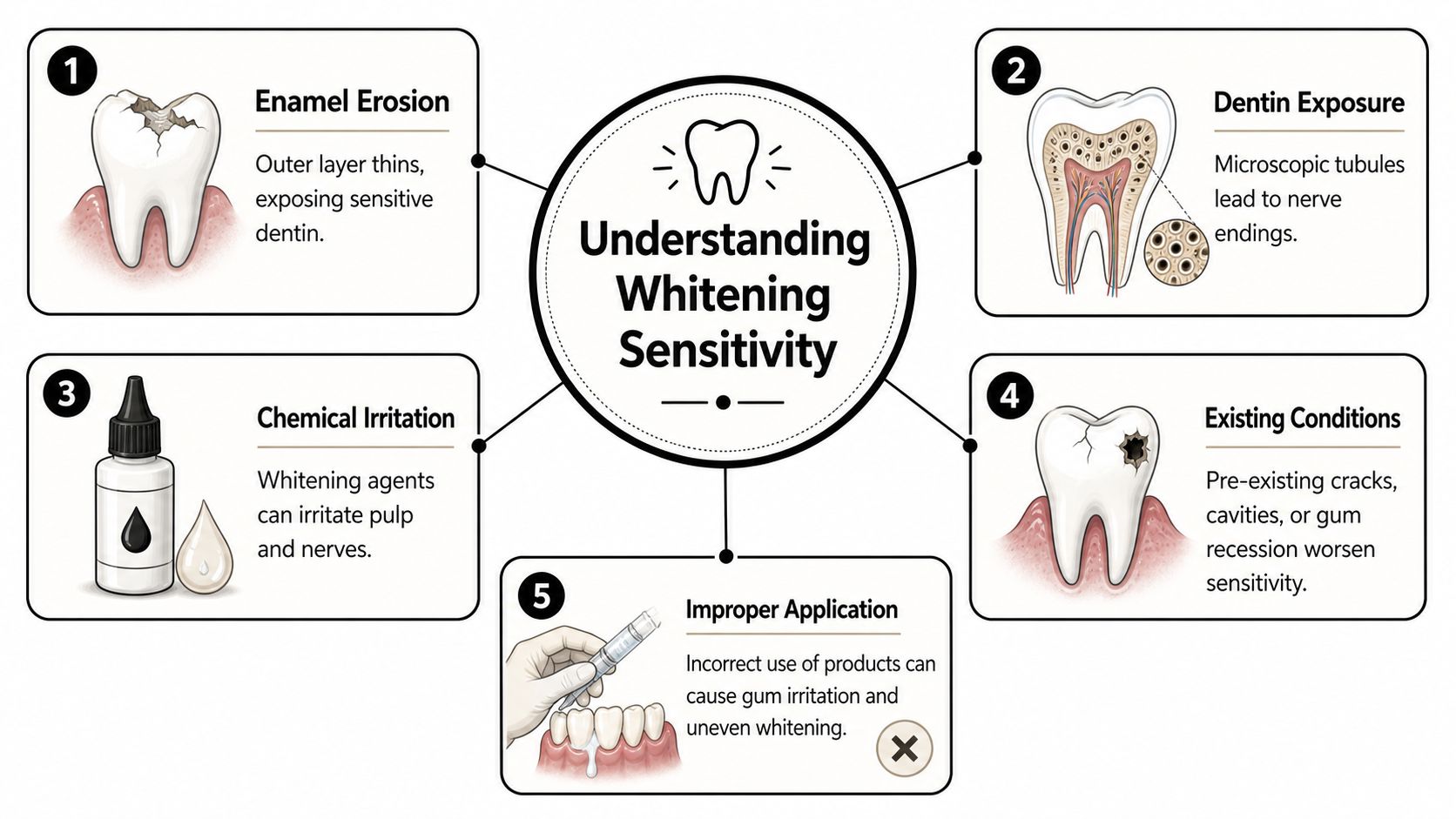
Pain gets worse when whitening is applied to teeth that already have thin enamel, exposed roots, cavities, or old restorations. That's also why a thorough exam matters before cosmetic care. If the surface is already compromised, peroxide has less protection to work with and can irritate the tooth more quickly.
The image below shows the five common contributors to whitening discomfort, including existing dental problems and improper application. Those are the pieces patients often overlook when they only compare product labels.
How Our Cosmetic Dentists Ensure Comfortable Whitening
A comfortable whitening plan starts with the right product and the right fit. Custom-fabricated trays can keep gel where it belongs and reduce the chance that it seeps onto gum tissue, which is a common reason patients report irritation with over-the-counter options. A dentist can also choose a gel strength that fits your sensitivity level instead of handing everyone the same one-size-fits-all tray.
There's also the matter of preparation. Patients should switch to a sensitive-teeth toothpaste with potassium nitrate at least one to two weeks before whitening, because that ingredient helps block pain signals by calming nerve activity in the teeth. Potassium nitrate preparation guidance If you want a practical benchmark for what in-office whitening feels like, this patient guide can help frame the conversation before your visit.
Why supervision changes the experience
Dentist-supervised whitening isn't just about cosmetic output. It's about managing the variables that often drive pain, including fit, exposure time, and whether your gums need extra protection. That's especially relevant if you already have dental work, since crowns and fillings can react differently than natural tooth structure.
A whitening plan should fit the mouth you actually have, not the mouth advertised on the box.
For some patients, that means choosing an in-office option. For others, it means a custom at-home approach that moves more slowly. William M. Schneider, DDS also offers professional whitening care that's designed to keep sensitivity lower while still improving brightness, which is a better fit for patients who want cosmetic care without unnecessary discomfort.
What the dentist is watching for
A careful exam looks for things that can make whitening harder to tolerate. That includes worn enamel, gum recession, cracked teeth, and untreated decay. If those issues are present, whitening can wait until the underlying problem is managed, which protects comfort and keeps the treatment plan realistic.
Your Guide to a Pain-Free Whitening Experience
Comfort improves when patients have a plan before the first whitening session. One evidence-based step is potassium nitrate toothpaste for 14 days before treatment, which helps block ion pathways from the tooth surface to the nerve and can prevent sensitivity before it starts. Pre-treatment desensitization guidance Shorter or less frequent whitening sessions can also help, since skipping every other day lowers cumulative peroxide exposure while still preserving visible results.
A smart routine often includes a few simple habits:
- Start early with sensitivity toothpaste. Don't wait until the first twinge to buy it.
- Follow the tray instructions closely. Better fit means less gel drifting onto the gums.
- Give your teeth recovery time. Shorter or intermittent sessions can be easier to tolerate.
- Avoid extremes right after whitening. Very hot or very cold foods can feel sharper when teeth are already reactive.
If you're trying to understand what a normal day-by-day experience feels like after whitening, the most useful thing is to remember that mild sensitivity should fade, not build. That's the line between a temporary side effect and a plan that needs adjustment.
The most important part is being honest with yourself about how your teeth feel. Whitening should make your smile brighter, not make you regret every sip of cold water.
When Sensitivity Is More Than Just a Side Effect
A lot of whitening advice tells people to push through discomfort. That approach can miss the underlying issue. Sensitivity may be a routine response, but it can also point to a problem that whitening will make worse, especially when cavities, gum recession, or enamel damage are already present. Some guides note that 30% to 40% of reported whitening pain comes from those pre-existing issues, which means the gel may be exposing a problem instead of creating one. Why whitening pain sometimes signals a larger issue
What should make you pause
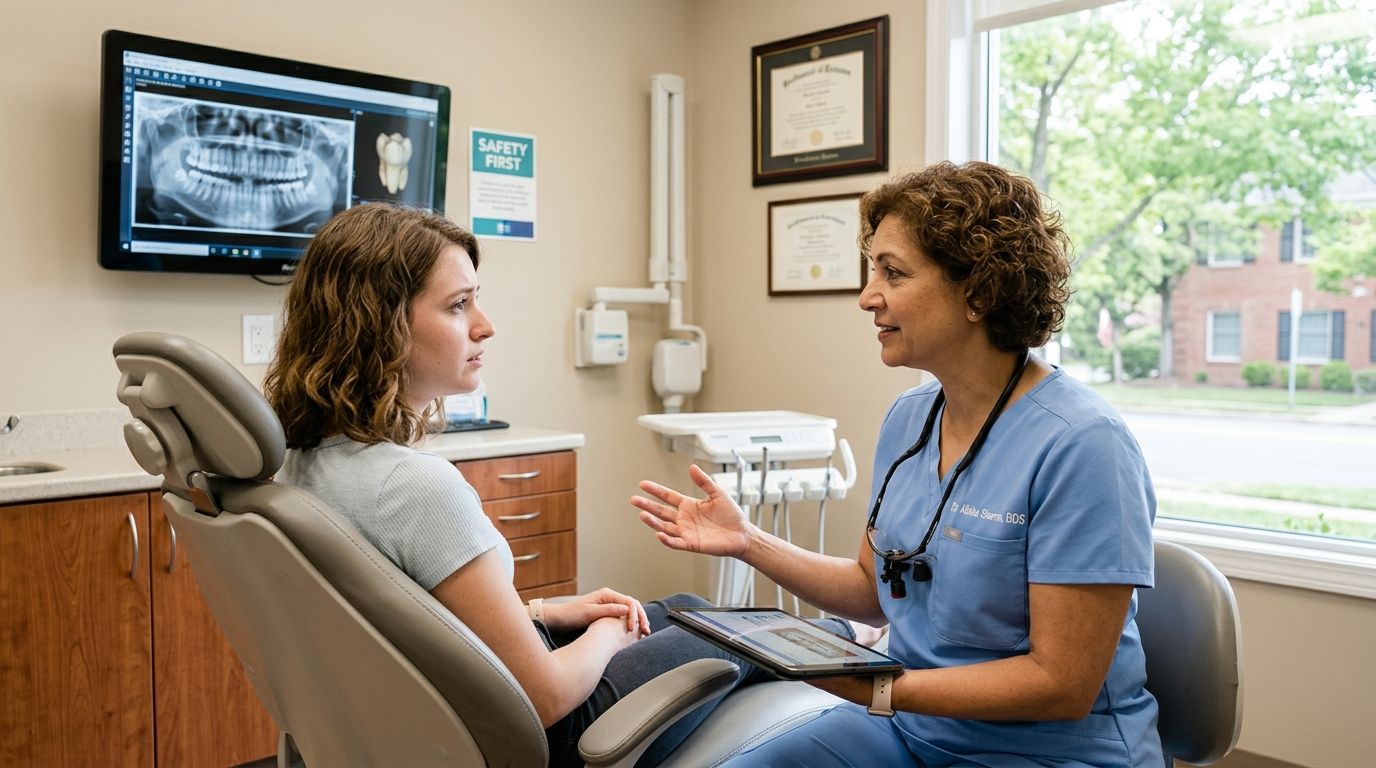
Persistent pain is different from brief sensitivity. If discomfort lingers well after a session, feels sharp instead of mild, or keeps returning despite desensitizing toothpaste, that is a reason to stop and get checked. Whitening should not cover up what your mouth is trying to signal.
A thorough new patient exam matters before cosmetic treatment. A dentist can look for decay, exposed dentin, recession, or old dental work that may need a different plan. If symptoms continue, how to reduce tooth sensitivity after whitening can help, but ongoing pain still deserves a closer look from a professional.
Why the checkup comes first
Whitening is safest when it is part of broader dental care, not a stand-alone gamble. A good exam can shift the plan toward something more appropriate, whether that is cosmetic dentistry, restorative dentistry, or a completely different service if pain is the underlying problem. If you are already thinking about emergency dentist care, tooth extraction, or dental implants near me, the whitening conversation should wait until the painful condition is understood.
The takeaway is simple. Mild, short-lived sensitivity can be expected. Ongoing pain deserves attention.
What to Expect at William M. Schneider DDS
The first visit should feel calm, not rushed. At William M. Schneider DDS in Walnut Creek, patients are welcomed into a conversation about what they want to change, what worries them about sensitivity, and what their current oral health allows. A whitening plan should always start with a real assessment, not a quick sale.

The visit usually moves from examination to options. That can include discussing whitening as part of a new patient exam, reviewing whether other dental care is needed first, and selecting a comfortable path based on your goals and sensitivity history. If whitening isn't the right first step, the office can still help map out the next one, whether that means cleaning, cosmetic work, restorative treatment, or another service entirely.
For many Walnut Creek patients, that kind of visit removes the guesswork. It's easier to commit to whitening when you know someone has checked for problems first and built the plan around comfort. If you've been avoiding treatment because you're worried about pain, the next step is a straightforward consultation and a plan that respects both your smile goals and your teeth.
A CTA for William M. Schneider, DDS.