You've been putting off the cleaning, the implant consult, or the tooth that keeps flaring up because the idea of being in the chair feels harder than the procedure itself. That's a common pattern for anxious patients in Walnut Creek, especially when work, family, and transportation make a dental visit feel like a major production. Sedation dentistry gives your dentist a way to match comfort to the appointment, so you can get care without feeling overwhelmed.
What It Feels Like to Need Sedation at the Dentist
The moment usually starts the same way. A patient sits in a Walnut Creek dental chair, ready to ask about a cleaning, a crown, or a tooth extraction, then hesitates because the drill, the sounds, or the memory of a bad past visit starts running the show. That hesitation is real, and it often turns a manageable problem into a bigger one.
Sedation helps break that loop. It is not one single drug or one fixed experience, it is a stepped set of tools a dentist can adjust based on anxiety level, procedure length, and medical history. In plain terms, sedation dentistry is a menu, not a commitment.
Why people wait too long
Many people do not avoid dental care because they do not care about their teeth. They avoid it because they want to stay in control, stay aware, and still feel safe. If you have been searching for a dentist near me or a dentist in Walnut Creek, CA because you know you need help but feel tense before the visit even starts, that tension is exactly what sedation is designed to manage.
Practical rule: the lightest option that gets the job done is usually the right place to start.
A good local practice will talk through the procedure first, then choose the mildest level that allows the work to happen comfortably. That might mean simple inhaled relaxation for a short visit, or something deeper for a longer restorative appointment. The goal is not to knock you out. The goal is to keep you calm enough that you can finally get the care you have been postponing.
The Sedation Ladder Dentists Use to Choose a Level
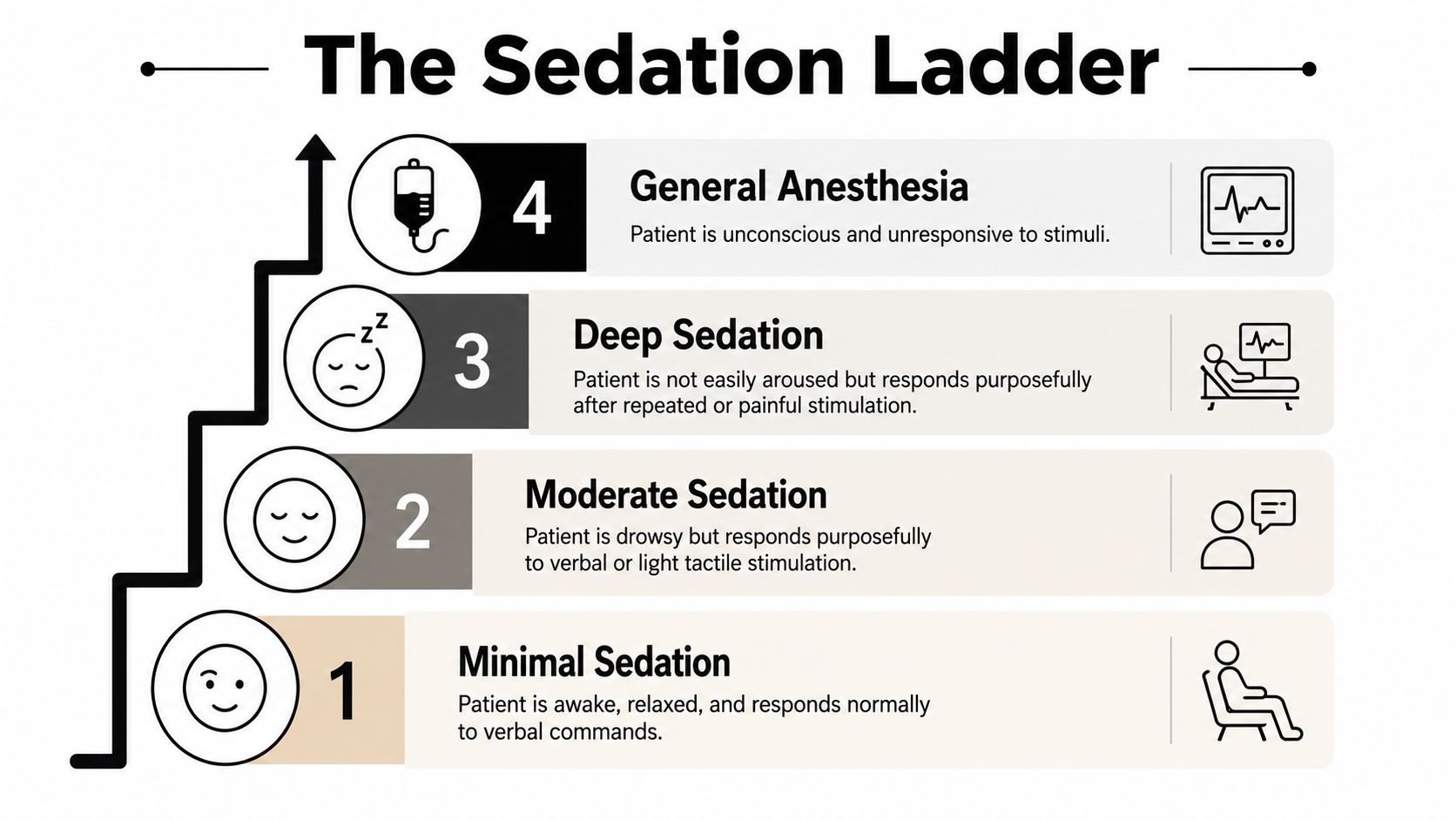
A patient can walk into the office saying only that they are nervous, then leave with a sedation plan that feels customized instead of guessed. Dentists use a four-step ladder to choose that plan, moving from minimal sedation to moderate sedation, then deep sedation, and finally general anesthesia. Each step changes awareness, memory, and the amount of monitoring the team must provide.
How the ladder works
At the lightest end, minimal sedation keeps you calm and responsive. You stay awake, you can answer questions, and many people recognize this level as the relaxed feeling associated with laughing gas. Moderate sedation goes a step farther, leaving you drowsy and less tuned in to the sights and sounds of treatment, so the visit feels shorter and less detailed.
Deep sedation brings you close to unconsciousness, and general anesthesia takes you fully asleep. Dentists reserve those deeper levels for more complex treatment plans, for patients who cannot comfortably stay awake through care, or for situations where cooperation would be too difficult at lighter levels.
The choice is never based on fear alone. The dentist looks at the procedure itself, how long it will take, how much stillness and cooperation the work requires, your medical history, and whether you need to leave the office the same day and return to normal activities. A person scheduling Dental implants near me may need a very different level than someone coming in for a quick filling or a routine exam.
The recovery question matters just as much as the chair time. A lighter option may let you get back to work sooner, while deeper sedation usually means arranging a ride home, clearing your calendar, and giving yourself more time before driving, meetings, or childcare duties. For a busy Walnut Creek parent or professional, that practical side often helps decide which rung on the ladder makes sense.
The right level gets you through treatment safely without using more medicine than you need.
That first conversation is what makes the plan feel predictable. A careful evaluation turns sedation from an uncertain idea into a step-by-step choice the team can explain before anything begins.
Nitrous Oxide, Oral Pills, IV Sedation, and General Anesthesia
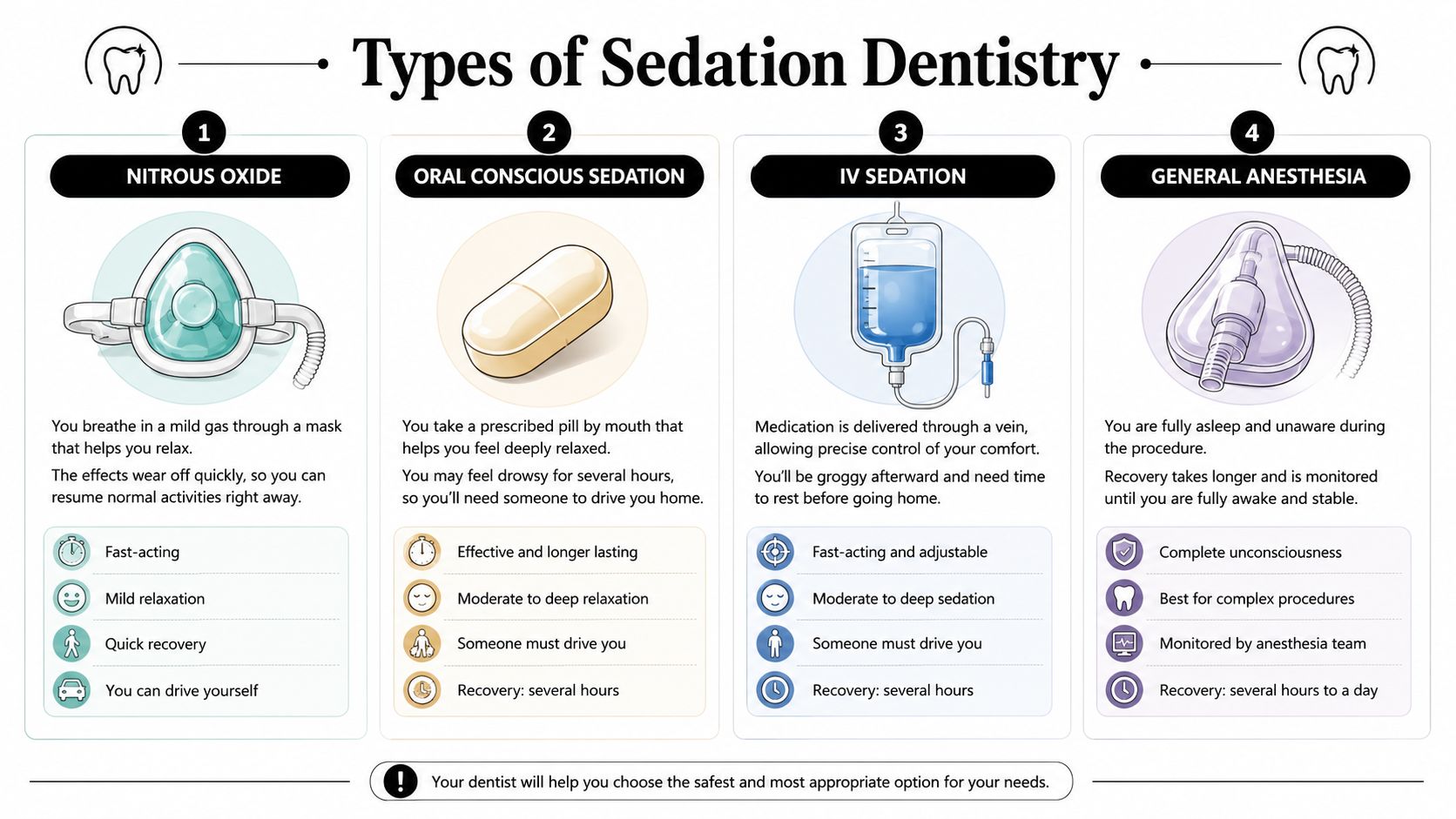
A nervous patient often wants a simple question answered before anything else, how calm will I feel, and how much of the day will this take. The main types of sedation dentistry answer that question in different ways. They all aim to reduce fear and improve comfort, but they differ in how quickly they start, how they affect awareness, and how much recovery time you need after the appointment.
Nitrous oxide
Nitrous oxide/oxygen inhalation is the lightest and most adjustable option used in everyday dental care. A clinical review describes how it is started after a brief period of oxygen, then adjusted to the level that keeps the patient comfortable, with the dentist able to fine-tune the effect during the visit (StatPearls review). That matters for anxious patients because it keeps them awake, responsive, and able to follow instructions while softening the edge of the appointment.
It is given through a mask over the nose, which makes it easy to start and easy to stop. Cleveland Clinic notes that it usually wears off within a short time after the mask is removed, and patients can drive afterward (Cleveland Clinic sedation dentistry). For a short cleaning, a filling, or a routine visit that still makes your stomach tighten, that quick recovery can fit neatly into a workday or a parent's schedule.
Oral sedation
Oral sedation uses a pill, often a benzodiazepine such as diazepam or midazolam. Dental literature describes these medicines as a practical way to reduce anxiety, but they come with slower onset, longer recovery, and more variable absorption than nitrous oxide, and once you swallow the pill, the dentist cannot adjust the dose in real time (oral and IV sedation review). The usual effect is a relaxed, sleepy feeling, with less attention to sounds, sensations, and the passage of time.
That trade-off can make sense for a patient who needs stronger calming than nitrous oxide provides, but does not need full IV management. Oral sedation often suits longer appointments and people whose anxiety builds early, before the procedure even begins. The recovery math is different, though. You generally need a ride home and a calmer rest of the day, so it is not the best fit if you need to return straight to work, school pickup, or meetings.
IV sedation
IV sedation gives the medicine directly into a vein, which lets the dentist control the level of relaxation more precisely. The same review explains that IV sedation works quickly, can be adjusted during treatment, and often leaves patients with little memory of the procedure afterward (oral and IV sedation review). In plain terms, it is like having a dial the team can turn up or down as the appointment changes.
A separate review notes that midazolam is the most commonly used sedative drug in dental procedures and is generally considered very safe (StatPearls review). That makes IV sedation a strong choice for longer restorative work, more involved treatment, or situations where staying relaxed from start to finish is more important than getting back to normal quickly. The recovery side still matters. You should expect to arrange a ride, set aside the rest of the day, and avoid planning anything that depends on sharp focus.
General anesthesia
General anesthesia is the deepest option. It makes the patient fully unconscious, so it is used for oral surgery, hospital settings, or treatment plans that are too extensive or too difficult to complete comfortably with lighter sedation. Among the types of sedation dentistry, it requires the most monitoring and the most planning, because the team has to manage the airway, the medications, and the recovery very closely.
That is why it is usually reserved for cases where being unaware is the safest and most workable path. For many busy adults, the key question is not only how much treatment gets done, but how much of the next day is lost to recovery. General anesthesia usually means the largest time commitment, the firmest transportation plan, and the least flexibility afterward.
Simple distinction: nitrous oxide keeps you relaxed and aware, while general anesthesia removes awareness entirely.
Comparing the Types of Sedation Dentistry Side by Side
A busy Walnut Creek patient usually wants one answer first, can I get the care done and still get back to my life. A side-by-side comparison helps because the strongest option is not always the smartest one. For a short cleaning, nitrous oxide often makes the most sense. For a longer implant or surgical appointment, deeper sedation can be worth the recovery tradeoff.
Sedation Dentistry Options at a Glance
| Option | Typical Depth | Onset / Recovery | Can You Drive After? |
|---|---|---|---|
| Nitrous oxide | Minimal sedation | Starts quickly, wears off in about 15 to 30 minutes | Yes |
| Oral sedation | Moderate sedation | Slower onset and longer recovery than nitrous oxide | No |
| IV sedation | Moderate to deep sedation | Rapid onset and longer amnestic effect | No |
| General anesthesia | Full unconsciousness | Requires the most structured recovery and monitoring | No |
The practical difference is downtime. Nitrous oxide is the easiest to fit into a lunch-hour appointment, while oral sedation and IV sedation usually mean you plan the rest of the day around the visit. Oral medication and IV medication also tend to leave you less ready for normal tasks after the appointment, so driving is off the table and your schedule needs room to slow down.
That matters for working adults, parents juggling school pickup, and anyone who cannot afford a full day of being off the clock. If you are comparing options for cosmetic dentist near me searches, restorative care, or an emergency dental visit, the best choice is often the one that protects both comfort and your schedule.
Who Is a Good Candidate for Each Type of Sedation
Sedation works best when it fits the person, not just the procedure. Mild anxiety, a strong gag reflex, trouble getting numb, or a lot of small restorative work can all point the dentist toward one level or another. The right choice is about comfort, safety, and how much cooperation the visit will require.
Matching the option to the patient
A patient with mild nervousness and a short appointment often does well with nitrous oxide. Someone who has had a stressful dental experience before, or who needs several procedures in one visit, may do better with oral sedation or IV sedation. If the case involves major oral surgery, very limited cooperation, or special healthcare needs, deep sedation or general anesthesia may be appropriate.
Patients also need a medical review before any decision is made. A responsible Walnut Creek practice will check medications, health conditions, pregnancy status, and respiratory or cardiac concerns before recommending a sedative.
Practical rule: the more complex the treatment and the harder it is for you to stay comfortable, the more likely the dentist is to move up the ladder.
Not every patient is a candidate for every option. The answer can change if you are pregnant in the first trimester, take medicines that interact with sedatives, or have a condition that affects breathing or heart function. That is why a consultation matters before treatment is booked, especially if you are seeking Emergency dentist care or planning a larger restorative case.
How to Prepare for and Recover from a Sedation Visit
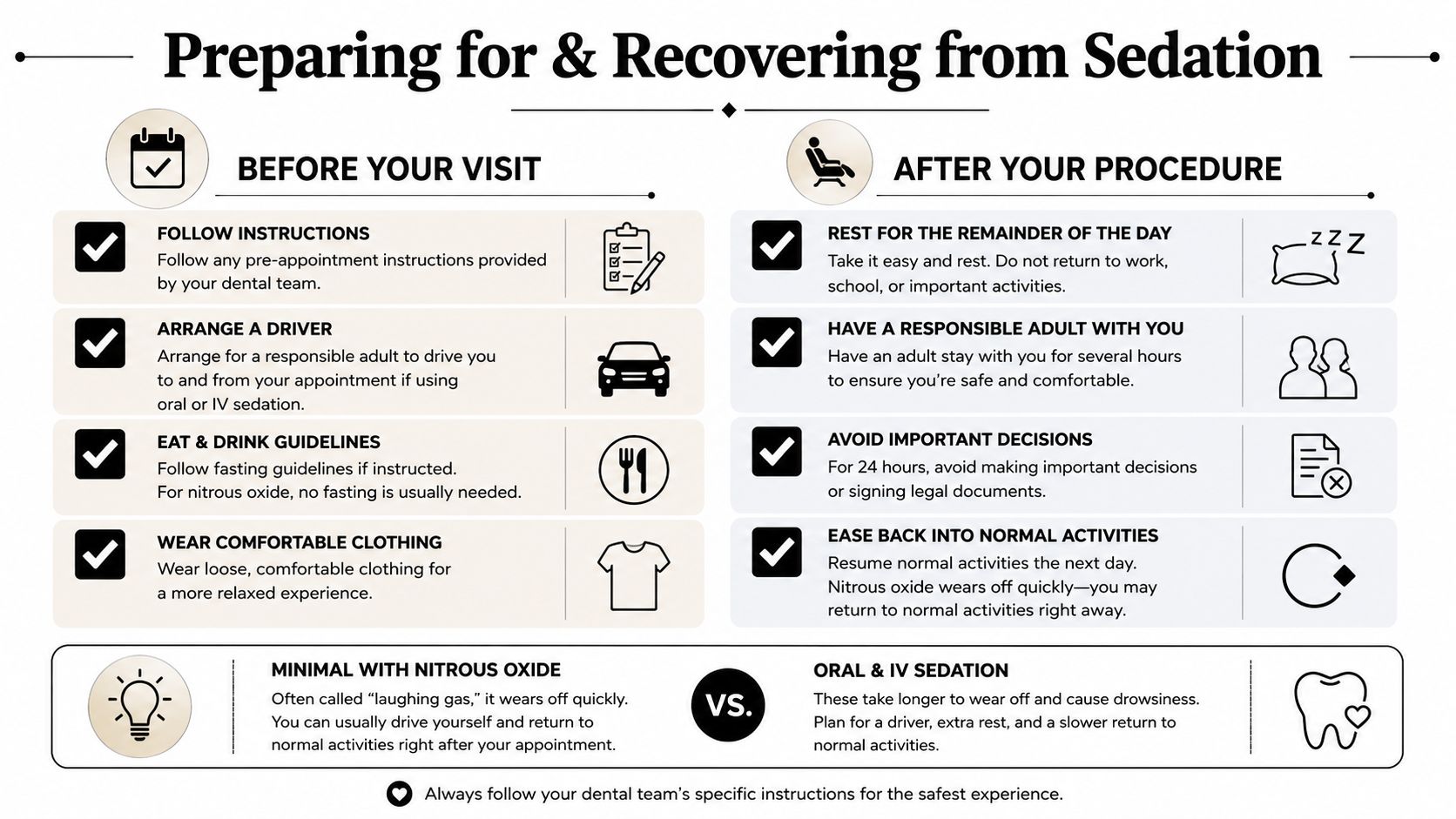
The best way to lower anxiety is to know what the day will look like. For nitrous oxide, prep is usually simple. You come in, the team places the mask, and the calming effect fades quickly after the visit ends.
Oral sedation and IV sedation take more planning. Patients are commonly asked to fast for several hours, wear loose clothing, and arrange an escort because they should not drive afterward. A helpful walk-through of the appointment day is available in this step-by-step sedation dentistry appointment guide.
What the day feels like
During the visit, the team typically monitors your comfort and vital signs, and you may notice the relaxation come on in a gradual wave. Some patients feel groggy, mildly nauseated, or fuzzy about the details afterward, especially with oral or IV sedation. That short-term memory gap is one reason these options help people get through procedures they have dreaded for years.
Afterward, plan on resting for the remainder of the day if you had oral or IV sedation. Do not schedule major decisions, alcohol, or complex errands right after the appointment. The question for many busy adults is not just, “Will I be okay?” It is, “Will I still be able to function for work, childcare, and the rest of my calendar?”
Nitrous oxide is usually the least disruptive choice when you need minimal downtime. Oral and IV sedation are better when the procedure is larger and the extra recovery time is worth the deeper comfort.
How a Walnut Creek Practice Approaches Sedation Safely
A safe sedation visit starts before you sit down. At a Walnut Creek office such as William M. Schneider, DDS, the process begins with a review of your health history and medications, then moves into a treatment plan matched to the procedure and your comfort needs. The point is to lower anxiety without guessing.
During treatment, the team uses monitoring to keep an eye on how you are doing, and the plan can be adjusted around the level of sedation chosen for the visit. The office also integrates sedation with general, cosmetic, and restorative care, so a patient who has delayed cleanings, crowns, implants, or root canals can often address more than one concern in a familiar setting.
William M. Schneider, DDS safety guide is a useful place to see how a structured sedation visit is organized around patient screening and comfort.
What patients usually notice
- Clear explanations before treatment: You know what kind of sedation is planned and why.
- A calm clinical setup: The room is arranged to support relaxation rather than rush the visit.
- Procedure-specific planning: A quick cleaning, a crown, or a longer restorative appointment does not get the same approach.
- Comfort-focused technique: Many anxious patients care as much about the injection experience as the sedative itself.
If you have been delaying dental care, cleaning and exams, dental x-rays, or a more involved restorative visit because you are worried about discomfort, a local practice that already offers sedation can make the first step much easier. That is especially true for patients comparing options for tooth extraction, dental implants, or a more cosmetic plan that still has to fit into real life.
Sedation Dentistry Questions Walnut Creek Patients Ask Most
Does insurance cover sedation dentistry in California? Coverage varies by plan and by why the sedation is being used. The office can help you review benefits before treatment, but the safest answer is that you should confirm coverage for your specific plan.
Can children be sedated at a general dental office? Sometimes, yes, but it depends on the child's age, health, and the type of sedation needed. The dentist will decide whether the case belongs in a general practice setting or needs a higher level of supervision.
What should I eat before oral or IV sedation? Follow the fasting instructions you receive from the office, because eating too close to treatment can be unsafe. A simple, clear meal plan before the appointment is better than guessing.
How do I know if my anxiety is bad enough for more than nitrous oxide? If fear keeps you from booking, causes gagging, or makes longer visits feel impossible, that is worth discussing. The right sedation plan should match both your anxiety level and the procedure itself.
If you've been searching for a dentist in Walnut Creek, CA who can help you get care without the panic, William M. Schneider, DDS offers sedation dentistry alongside preventive, cosmetic, and restorative treatment. Visit William M. Schneider, DDS to talk through your options and schedule a visit that fits your comfort level and your calendar.