Walnut Creek does not have a true 24-hour urgent care clinic, and no clinic in Contra Costa County offers real 24-hour urgent care service as of 2026, so when help is needed in the middle of the night, the practical choice is usually an emergency hospital or a dental office equipped for urgent tooth problems. If your pain is coming from a tooth, filling, crown, gum infection, or a knocked-out tooth, emergency dental care is often the better fit because it focuses on treatment an ER usually can't complete.
If you're awake with a throbbing toothache, facial swelling, or a broken tooth that happened during dinner, you probably aren't comparing care options calmly. You're typing something like 24 hour urgent care Walnut Creek CA and hoping the nearest place can fix the problem fast.
The hard part is that many urgent dental problems aren't really urgent care problems. They're dental problems. That distinction matters when you're in pain, because the wrong stop can cost you time, leave the source untreated, and send you somewhere else anyway. For Walnut Creek patients, the most useful first question isn't "Where is the nearest urgent care?" It's "Is this a medical emergency, or is this a dental emergency?"
Searching for 24 Hour Care in Walnut Creek
A lot of people assume there's a walk-in clinic open all night for anything painful that isn't severe enough for an ambulance. In Walnut Creek, that isn't how local care is set up. According to John Muir Health urgent care information for Walnut Creek, Walnut Creek does not have a 24-hour urgent care clinic that operates continuously, and residents needing after-hours care are generally choosing between an emergency hospital and a dentist who handles dental-specific emergencies.
Why that matters for tooth pain
A toothache can feel like a general health problem because it affects your whole head. You may have trouble sleeping, chewing, swallowing, or focusing at work the next morning. But the source is often highly specific. An exposed nerve, a cracked tooth, an abscess, or a failed restoration usually needs a dental exam, dental X-rays, and treatment inside the tooth or around the gumline.
An emergency hospital can help when the situation is broader than dentistry. If you're having trouble breathing, uncontrolled bleeding, major facial trauma, or signs that an infection is spreading in a dangerous way, medical evaluation comes first. But if the problem is centered in the mouth, the hospital usually isn't the place that rebuilds the tooth, replaces a filling, re-cements a crown, or starts definitive dental treatment.
Practical rule: If the problem is life-threatening, go to the ER. If the problem is tooth-related and urgent, a dentist is usually the place that can actually fix it.
The local reality after hours
This is the part that frustrates patients. You may search for an urgent care clinic expecting a simple walk-in solution, only to find limited daytime and evening medical hours in town. That gap is exactly why understanding the difference between medical urgent care and emergency dental care saves time.
For anyone looking for a dentist near me, an emergency dentist, or a dentist in Walnut Creek, CA, the right decision starts with the body part involved. Flu symptoms, minor sprains, and non-dental medical issues belong in medical settings. Broken teeth, lost crowns, sudden swelling near a tooth, and severe dental pain usually need a dental office, not a general urgent care desk.
Urgent Care vs ER vs Emergency Dentist
At 10 p.m., a bad toothache can make every open door look like the right one. I understand that impulse. In Walnut Creek, though, the fastest place to enter is not always the place that can treat the problem.
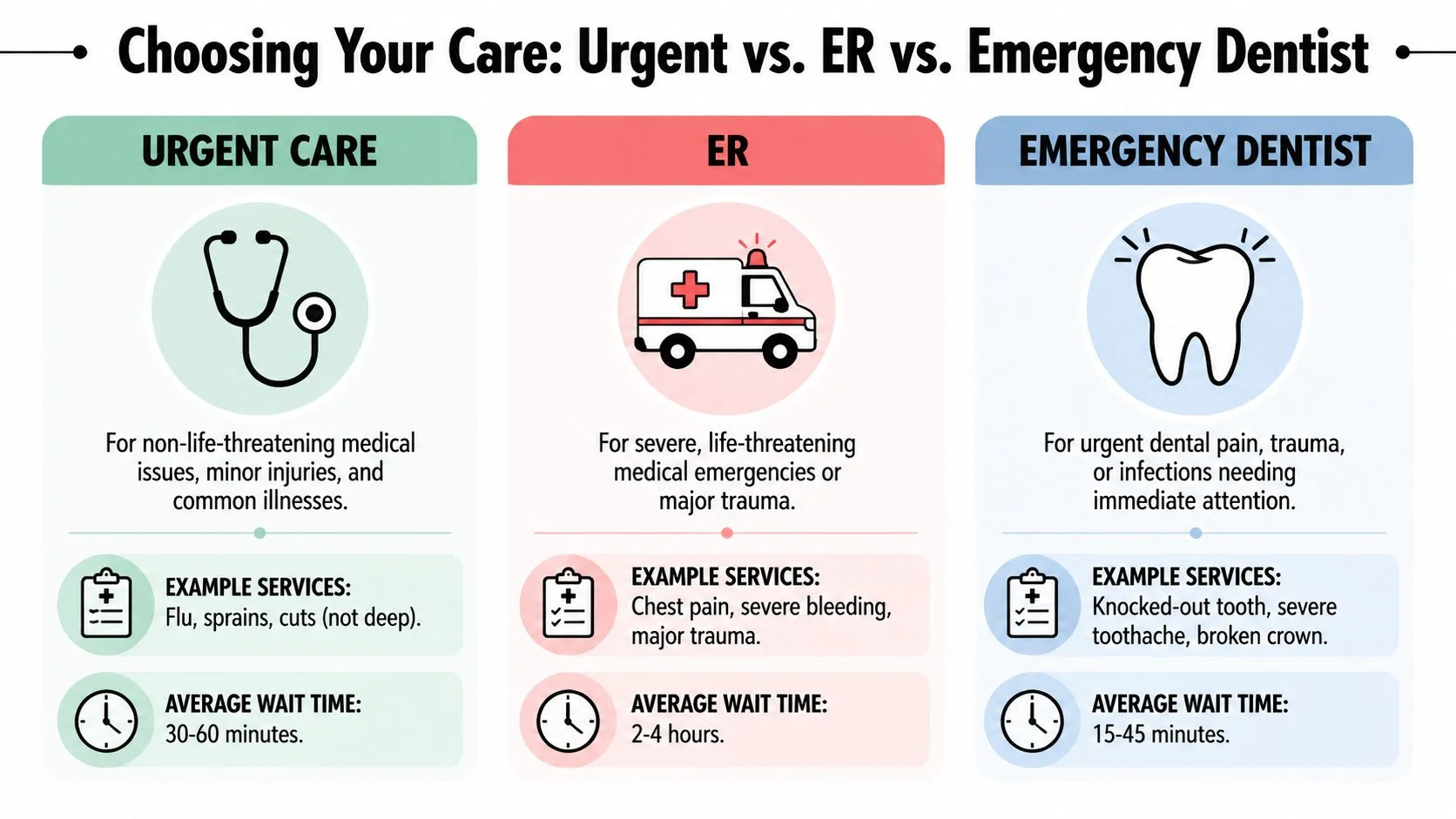
Where each setting helps
Urgent care clinics treat general medical problems. They are a reasonable choice for fever, sore throat, minor cuts, rashes, and sprains. They usually do not have dental X-rays, dental materials, or the equipment needed to numb a tooth, repair a fracture, re-cement a crown, or treat an abscess at its source.
The ER handles threats to your overall health and safety. Go there for trouble breathing, heavy bleeding, major facial trauma, high fever with serious swelling, or an infection that seems to be spreading beyond the mouth. Hospital teams can stabilize you, control severe symptoms, and rule out dangerous complications. In many dental cases, however, they still cannot provide the actual tooth treatment.
An emergency dentist focuses on the mouth, teeth, gums, bite, and dental restorations. That matters because dental pain usually needs a dental diagnosis, not just short-term relief. If you have a cracked tooth, severe toothache, lost filling, broken crown, swelling near a tooth, or a knocked-out tooth, emergency dentist services in Walnut Creek are usually the most direct path to fixing the cause.
Where to Go for Your Emergency in Walnut Creek
| Facility Type | Best For | Can They Fix a Tooth? | Best for Dental Pain? |
|---|---|---|---|
| Urgent Care | Minor medical illnesses and injuries | Usually no | Usually no |
| ER | Life-threatening issues, major trauma, dangerous swelling | Usually no | Only when the dental problem has become a broader medical emergency |
| Emergency Dentist | Tooth pain, broken teeth, abscesses, lost restorations, oral injuries | Yes, often | Yes |
A common mistake
Patients often search for "24 hour urgent care walnut creek ca" hoping for round-the-clock help for a dental emergency. The problem is that medical urgent care and dental emergency care are different services. Even if a medical clinic is open, it usually cannot perform the treatment that stops dental pain for good.
I tell patients to use a simple standard. If the problem could affect breathing, swallowing, bleeding control, or overall medical stability, go to the ER first. If the problem is centered on a tooth, gum, crown, bridge, or denture, call an emergency dentist first.
Going to the ER for a cracked tooth may help with evaluation and temporary pain control, but it usually does not repair the tooth.
That distinction saves time, money, and frustration. The right setting depends on what needs to be treated, and dental emergencies usually need a dentist.
What Is a Dental Emergency
Not every dental problem has to be treated the same day, but some should never be brushed off. The best way to think about a dental emergency is simple. If the issue involves significant pain, swelling, infection, trauma, or damage that can get worse quickly, it deserves prompt attention.
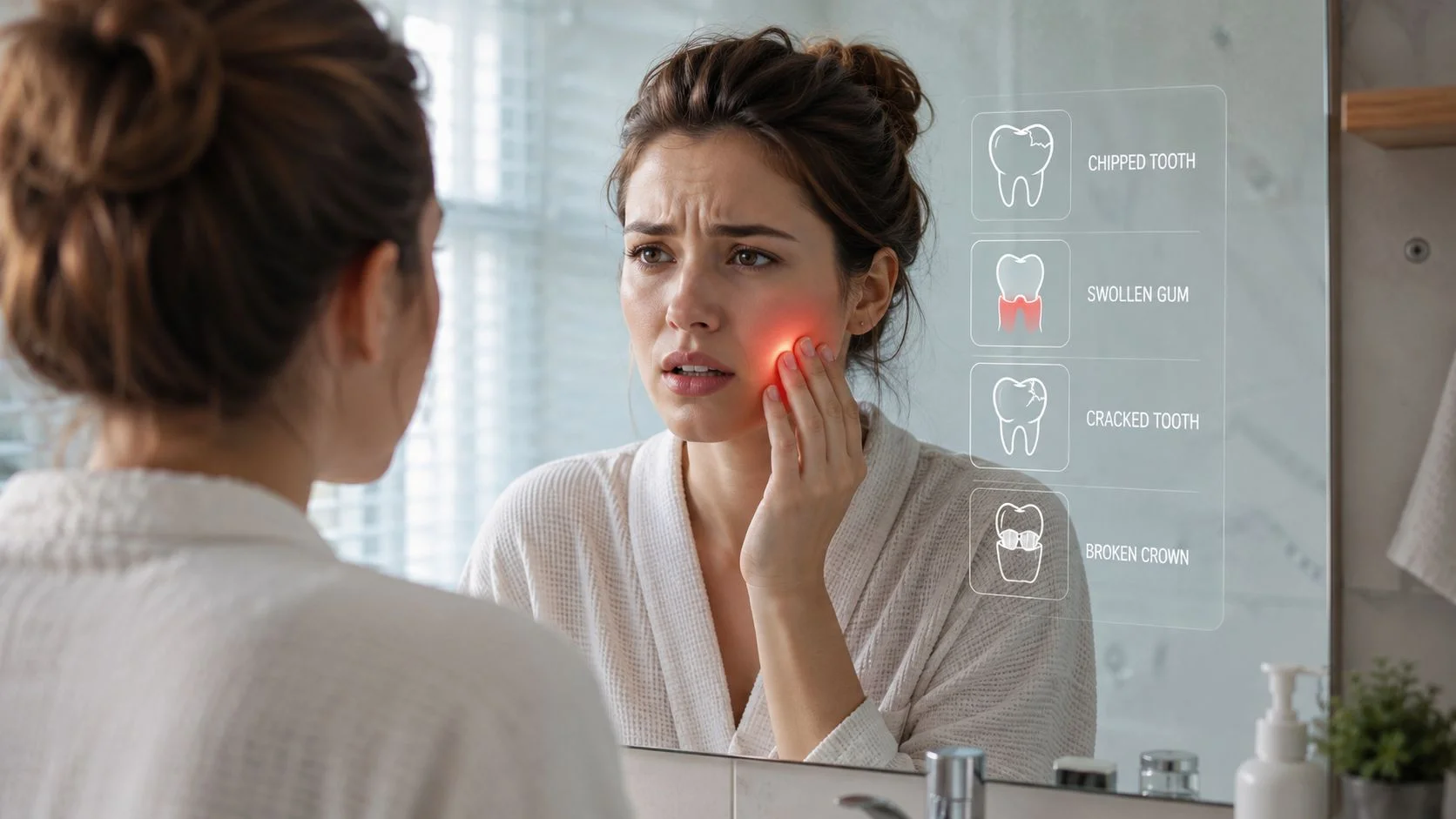
Problems that shouldn't wait
A severe toothache is one of the clearest examples. Constant throbbing, sharp pain when you bite, or pain that wakes you up often points to infection, nerve irritation, or a crack. If you're dealing with that kind of discomfort, it's smart to review when tooth pain means it's time to see a dentist.
A dental abscess is another urgent issue. Patients often notice swelling in the gum, tenderness, pressure, a bad taste, or pain that spreads into the jaw. Abscesses can worsen quickly, and they don't resolve just because the pain fades temporarily.
Injuries and damaged dental work
A knocked-out tooth needs immediate care because timing affects whether the tooth can be saved. A chipped or broken tooth also matters more than many people realize. Even when the break looks small in the mirror, the inner layers may be exposed, sharp edges can injure soft tissue, and chewing forces can deepen the damage.
Lost crowns and fillings are urgent when the tooth underneath becomes sensitive, painful, or vulnerable to fracture. The same goes for a loose bridge, broken denture, or a restoration that suddenly shifts and changes your bite.
If you can't chew normally, can't sleep because of the pain, or notice swelling, don't assume it will settle down on its own.
When cosmetic damage becomes urgent
Not every chipped front tooth is an emergency in the medical sense, but it can still need prompt dental care. A visible fracture affects comfort, speech, and confidence. That's one reason people often search for a cosmetic dentist near me after trauma. In many cases, the same visit that addresses urgent damage also starts restorative or cosmetic planning for a healthy, bright smile.
First Aid for Your Dental Emergency
It is 10 p.m., your face is throbbing, and the first search result says "urgent care." For a dental problem, the right first step is usually simple home care to protect the tooth, followed by a call to an emergency dentist. If you have trouble breathing, trouble swallowing, heavy bleeding that will not stop, or swelling that is spreading into the face or neck, go to the ER.
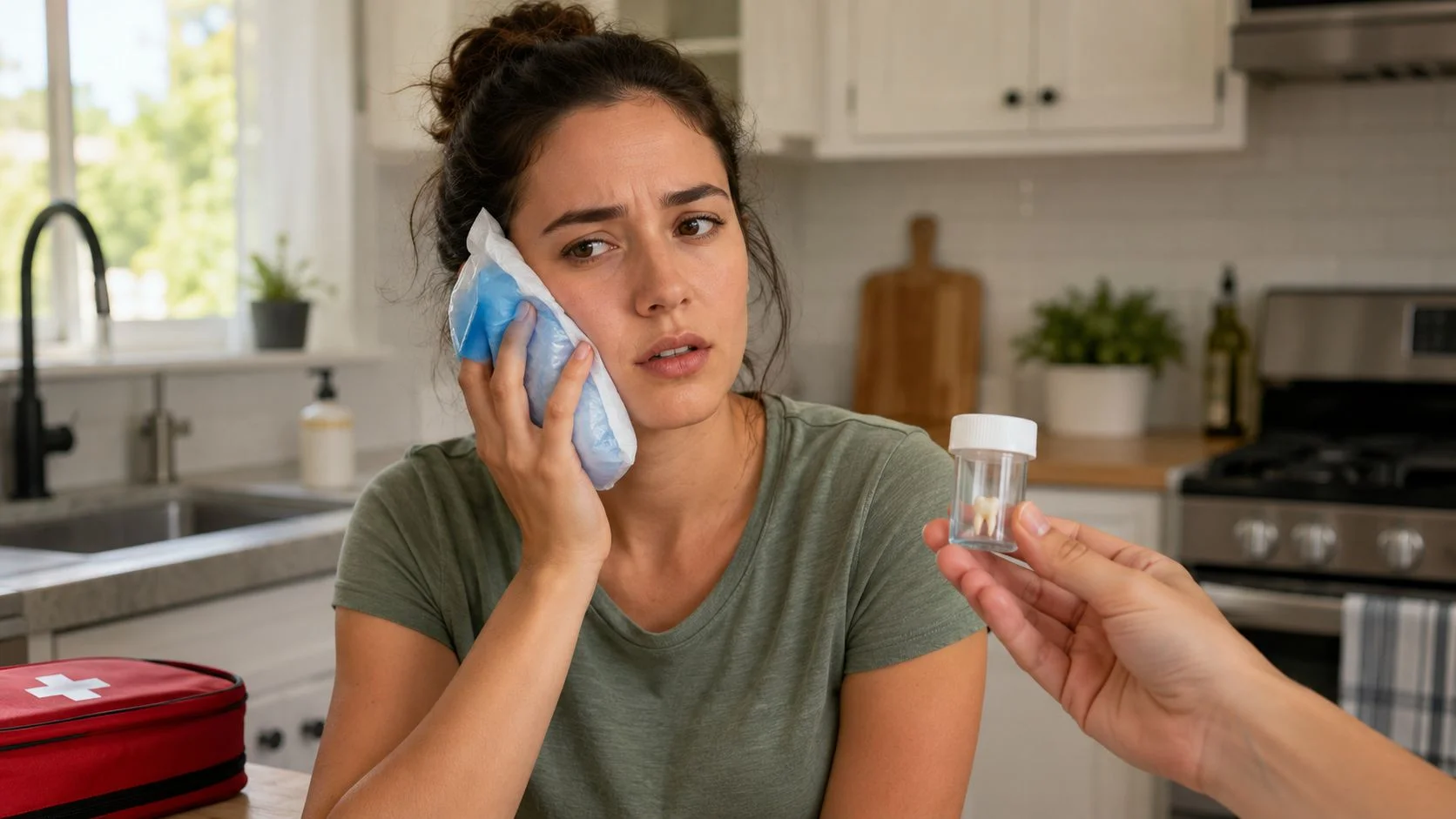
If a tooth gets knocked out
Time affects whether that tooth can be saved.
- Pick it up by the crown. Hold the visible chewing part, not the root.
- Rinse it briefly if it is dirty. Use clean water. Do not scrub, scrape, or use soap or disinfectant.
- Keep it moist. If you can place it back in the socket gently, do so. If not, store it in milk.
- Get dental help right away. A dentist has the best chance of saving the tooth when you act quickly.
If you have a severe toothache
Rinse gently with warm water. Floss carefully if food may be trapped between the teeth. Use a cold compress on the outside of the cheek for 15 to 20 minutes at a time.
Do not place aspirin on the gum or tooth. It can burn the tissue and does nothing for the infection, crack, or inflamed nerve causing the pain. If over the counter pain medicine is safe for you, take it as directed on the label.
If a crown, filling, or part of a tooth breaks
Save any broken piece you can find. Avoid chewing on that side, especially hard foods. If the area has a sharp edge, dental wax or sugar-free gum can cover it short term so it stops cutting your cheek or tongue.
Small breaks can turn into larger fractures overnight. I often see patients who felt only mild sensitivity at first, then woke up with stronger pain because the tooth split further under normal biting pressure.
A short overview can help if you're trying to understand how dentists manage urgent oral injuries:
If swelling is getting worse
Swelling usually means more than irritation. It often points to infection or active inflammation around the tooth or gum. A cold compress can help with comfort, but it will not remove the source of the problem.
Call a dentist promptly if the swelling is increasing, the tooth feels high when you bite, or you notice drainage, a foul taste, or pressure in the gum. Go to the ER if swelling affects breathing, swallowing, or how wide you can open your mouth.
Helpful first aid: Cold compresses, gentle rinsing, saving broken pieces, keeping a knocked-out tooth moist, and avoiding pressure on the area.
What makes things worse: Waiting it out, chewing on the injured side, placing aspirin on the gum, or assuming urgent care or antibiotics alone will fix a dental infection.
Why fast treatment protects the tooth
Emergency treatment is about more than getting through the night. Quick care can mean the difference between a filling and a crown, a crown and a root canal, or saving a tooth and losing it.
That is the part many urgent care searches miss. Medical clinics and ERs can help with serious swelling, fever, or trauma that affects your overall health, but they usually cannot repair the tooth, replace a lost filling, or treat the source of dental pain. An emergency dentist can.
Your Emergency Visit with Dr. Schneider in Walnut Creek
One reason people delay emergency dental care is anxiety. They worry the appointment will be painful, rushed, or full of unfamiliar terminology. In a well-run dental office, the opposite should happen. The visit should feel organized, calm, and focused on relief.
The American Dental Association statistic highlighted on Dr. Schneider's practice profile states that 73% of adults experience dental anxiety. That's why painless injections and sedation dentistry matter so much for patients who need urgent care but feel nervous about treatment.
What patients can expect
An emergency dental appointment typically starts with listening before fixing. The team needs to know where it hurts, how long it's been happening, what triggered it, and whether swelling, trauma, or recent dental work is involved. After that, the exam usually focuses on the specific area and often includes dental X-rays if the tooth or bone needs a closer look.
The next step is deciding what will solve the problem most predictably. That may mean stabilizing a tooth, adjusting a bite, treating infection, planning a root canal, performing a tooth extraction, re-cementing a crown, or discussing restorative dentistry for a larger repair. If the issue affects a visible tooth, cosmetic dentistry may also become part of the conversation once the urgent problem is under control.
Comfort matters during urgent care
Patients in pain often need clear explanations more than long speeches. They want to know what the problem is, whether it can be fixed today, and what the next step looks like. A gentle office answers those questions plainly.
For anxious patients, comfort tools matter. Painless injection techniques can make numbness easier to tolerate, and sedation options can help people who would otherwise avoid treatment. That doesn't just improve the visit. It often makes it possible for someone to accept the care they need before the issue gets worse.
If you've been putting off care because of fear, you're not unusual. Dental offices that take anxiety seriously tend to create better emergency experiences.
The broader role of emergency treatment
An emergency visit may solve the immediate problem, but it often reveals what comes next. Some patients need cleaning and exams after the urgent issue settles. Others need crowns, implants, or follow-up restorative care. If a front tooth was damaged, teeth whitening or cosmetic finishing may come later to help the smile look even again.
That mix of emergency, preventive, restorative, and cosmetic planning is what makes a local dentist valuable. You're not just getting patched up. You're getting a path back to a stable, healthy mouth.
FAQ on Walnut Creek Dental Emergencies
Should I go to urgent care for tooth pain
Usually, no. If the pain is clearly coming from a tooth, filling, crown, or gums, a dentist is more likely to diagnose and treat the cause. Urgent care is better suited to general medical problems.
When should I go to the ER instead of a dentist
Go to the ER if you have trouble breathing, trouble swallowing, uncontrolled bleeding, major facial trauma, or swelling that feels medically dangerous. Those problems go beyond routine dental treatment.
Is a broken tooth always an emergency
Not always in the middle-of-the-night sense, but it should be assessed promptly. Cracks and fractures can deepen, expose sensitive inner tooth structure, and lead to infection or tooth loss if ignored.
Can an emergency dentist help if I lose a crown or filling
Yes, that's a common urgent dental problem. The tooth may need protection, repair, or a replacement restoration depending on how much structure is left.
What if my dental emergency happens on a weekend or at night
Call a dentist's office as soon as you can and follow any after-hours instructions. If the issue becomes medically dangerous, go to the ER. If it remains dental in nature, the goal is to get into a dental office as quickly as possible.
Do emergency visits only focus on pain
No. Pain relief matters, but the visit also helps prevent further damage. A dentist may recommend a filling, crown, root canal, extraction, or long-term restorative care so the problem doesn't come back.
If you're dealing with tooth pain, swelling, a broken tooth, or another urgent dental problem in Walnut Creek, the next step is to contact William M. Schneider, DDS. The practice welcomes patients who need prompt, compassionate care, whether you're looking for an emergency dentist, a long-term dentist in Walnut Creek, CA, or follow-up restorative and cosmetic treatment after the immediate problem is under control.