At-home sleep tests can cost $150 to $500, CPAP machines often run $250 to $1,000 or more, and custom oral appliances from a dentist typically range from $1,500 to $4,500. Surgical treatment is usually much higher, so the primary question isn't just what treatment costs today, but what it will cost you to live with over time.
If you're in Walnut Creek and you've been waking up tired, hearing complaints about snoring, or wondering why you can't get through the afternoon without another coffee, you're probably not just worried about sleep. You're also wondering what it will take to fix the problem, and whether the answer will fit your budget.
That concern is reasonable. Sleep apnea care can involve testing, medical coordination, devices, follow-up visits, and replacements. The price isn't always obvious at first glance, which is why patients often feel stuck between "I need help" and "I don't know what this is going to cost me."
The Hidden Costs of Fatigue in Walnut Creek
A patient in Walnut Creek finally decides to ask about sleep apnea after a few rough months. They are waking up with a dry mouth, fighting through the afternoon, getting nudged about loud snoring, and hearing from a partner that breathing seems to stop at night. The first question is often not about the diagnosis. It is about the cost of fixing it.
That question makes sense. Sleep apnea care rarely ends with one appointment or one device. There is the cost to confirm the problem, the cost to start treatment, and the cost of keeping that treatment working over time.
That last part gets missed.
What patients usually want to know first
Patients typically want practical answers, not a lecture on sleep medicine.
- What am I paying for at the beginning: The first expenses may include an evaluation, sleep testing, and the treatment you choose after a diagnosis.
- What keeps costing money later: Follow-up visits, adjustments, replacement parts, and supply needs can change the total long-term cost.
- Will I use the treatment I pay for: This matters more than many people expect. A lower upfront price is not a bargain if the treatment ends up sitting on the nightstand or in the closet.
I encourage patients to look at sleep apnea treatment in three parts. Diagnosis. Initial treatment. Ongoing ownership.
That framework helps people compare options more clearly, especially when CPAP and oral appliance therapy are both on the table. CPAP may start with a lower sticker price in some cases, but the long-term cost can rise if supplies need regular replacement or the device is hard to tolerate. A custom oral appliance usually costs more upfront, but some patients find the day-to-day upkeep simpler and the treatment easier to stick with.
If you are still sorting out whether your symptoms point to sleep apnea, Dr. Schneider's page on chronic snoring and sleep apnea warning signs is a helpful place to start.
In my experience, people feel less overwhelmed once they stop treating this like a single price tag. The better question is what each option will cost you to live with, month after month, and whether it gives you a realistic path to better sleep.
Why Treating Sleep Apnea Is an Investment In Your Health
People often reduce sleep apnea to snoring. That's a mistake. Snoring may be the symptom that gets attention, but the bigger problem is disrupted breathing and disrupted sleep, night after night.
When your body keeps getting pulled out of normal sleep cycles, the effects carry into the next day. Concentration drops. Energy drops. Patience drops. Work feels harder. Driving can feel harder. Exercise and recovery can feel harder too.
The cost of waiting can be higher
A major reason I encourage patients to think beyond the upfront bill is simple. Untreated sleep apnea has a cost too.
A 2019 economic analysis found that untreated obstructive sleep apnea led to an annual productivity loss of about US$3,727 per affected U.S. worker, while the estimated annual cost of CPAP treatment was US$1,661, as reported in this summary of the sleep apnea productivity analysis. That doesn't mean every patient should choose CPAP. It does show that doing nothing can be financially costly as well as physically draining.
Health value matters as much as price
A treatment isn't a bargain if it doesn't improve your life. The best value usually comes from treatment that:
- Fits your diagnosis: Mild, moderate, and more severe cases don't always point to the same option.
- Matches your habits: A frequent traveler, shift worker, or light sleeper may value convenience differently.
- Gets used consistently: A therapy only helps when it becomes part of real life.
Practical rule: Don't compare sleep apnea treatment by price alone. Compare it by likelihood of use, follow-up needs, and how much better you expect to function once treatment is in place.
For many professionals and families in Walnut Creek, this is a significant turning point. Better sleep doesn't just affect nighttime symptoms. It can improve mornings, workdays, mood, and how manageable the rest of life feels.
A Clear Breakdown of Sleep Apnea Treatment Costs
A patient may hear one price for a sleep test, another for CPAP, and a much higher number for a custom appliance or surgery. That can make sleep apnea treatment feel confusing fast. The better question is not only, "What does it cost to start?" It is, "What will this cost me to use, maintain, and live with over time?"
Diagnostic costs come first
Before any treatment begins, testing usually sets the first part of the budget. As noted earlier, home sleep apnea testing often falls in the lower range, while in-lab overnight studies can cost much more depending on the facility, insurance rules, and how much monitoring is involved. Two Walnut Creek patients can start with very different bills before either one chooses a treatment.
That early difference matters because the testing path often shapes what comes next.
Comparing the main treatment paths
CPAP is still a common recommendation, especially for moderate to severe obstructive sleep apnea. Oral appliance therapy is often appropriate for many patients with mild to moderate obstructive sleep apnea and for some who have tried CPAP and cannot use it consistently. Surgery is usually reserved for select cases where anatomy or other medical findings make it a reasonable option.
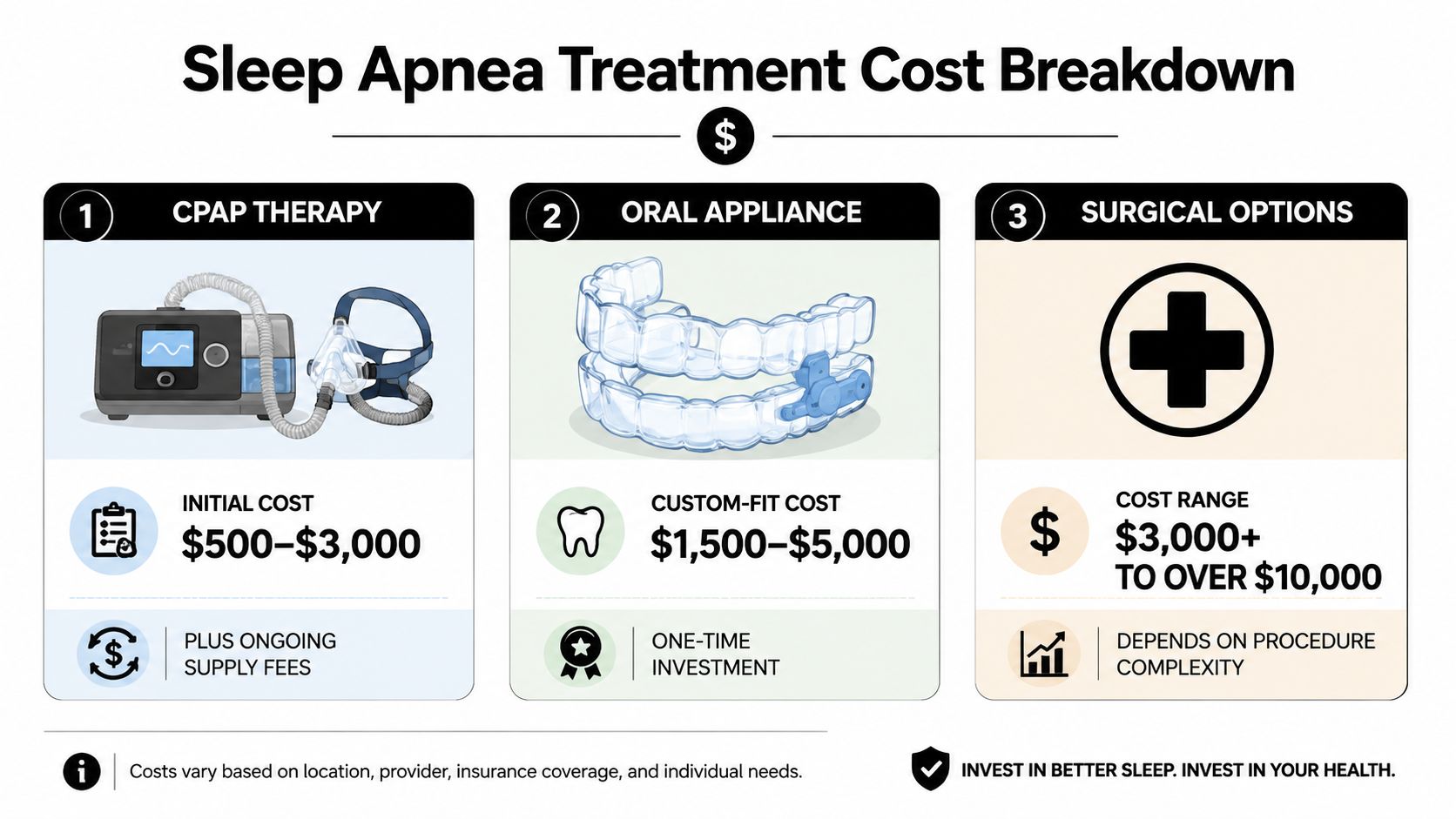
A CareCredit review notes that CPAP devices typically range from $300 to $1,300, custom oral appliances are priced around $2,500 to $4,200, and surgical options can span from under $10,000 to over $80,000 depending on the procedure's complexity, as outlined in CareCredit's review of sleep apnea treatment pricing.
| Treatment | Typical Initial Cost | Best For | Key Consideration |
|---|---|---|---|
| CPAP therapy | $300 to $1,300 | Many patients, often including moderate to severe OSA | Lower starting price for the machine, with ongoing supply and replacement costs |
| Custom oral appliance | $2,500 to $4,200 | Many mild to moderate cases and CPAP-intolerant patients | Higher upfront fee, often tied to custom design, fitting, and adjustment visits |
| Surgery | Under $10,000 to over $80,000 | Select cases based on anatomy and medical recommendation | Wide price range, larger medical commitment, and recovery considerations |
What those prices usually mean in real life
The initial CPAP quote is often the number patients remember. It is rarely the full financial picture. The machine is only one part of treatment. Masks, tubing, filters, humidifier parts, cleaning supplies, and replacement schedules all affect the long-term cost. If the setup is uncomfortable and ends up on the nightstand instead of on your face, the lower entry price loses a lot of its value.
That is the trade-off many patients do not hear clearly enough.
A custom oral appliance usually costs more at the start because the process is more personalized. The fee often reflects the exam, records, appliance design, delivery, bite checks, and adjustments. In a dental practice like ours, the goal is not to hand over a device. It is to fit one that a patient can wear night after night.
Surgery sits in a different category. The cost depends on the procedure, the surgeon, the facility, anesthesia, and follow-up care. For the right patient, surgery may be appropriate. For many others, it is a much bigger financial and medical decision than CPAP or oral appliance therapy.
Price still matters. So does usability.
Patients who compare treatment options by total cost of ownership often reach a different conclusion than patients who compare only the opening quote. A treatment that costs less on day one can become more expensive, more frustrating, or less effective in daily life if it requires ongoing purchases or goes unused. A treatment with a higher initial fee may end up being the better value if it is comfortable, durable, and easy to stick with.
Hidden Factors That Affect Your Final Cost
The headline price is rarely the number that decides what you spend. Your final cost depends on coverage rules, replacement timing, supplies, follow-up care, and whether the treatment fits your life well enough to keep using it.
The five-year question matters
One of the most overlooked parts of sleep apnea treatment cost is replacement timing. Insurance typically replaces CPAP machines and oral appliances every 5 years, but the in-between expenses don't stop there. A review from Sleep Better Columbus notes that patients may still face out-of-pocket costs for supplies such as masks at $5 to $60 per item, non-covered cleaners costing $400+, and dental adjustments for oral appliances that aren't included in the initial $1,500 to $4,500 price range, as explained in this breakdown of long-term sleep apnea expenses.
What to ask before you commit
A smart financial conversation usually includes more than "What's the price?"
Ask what the initial fee includes
Does it cover fitting, adjustments, and follow-up visits, or only the device itself?Ask which supplies are separate
CPAP users often face recurring costs for replacement components. Oral appliance patients may need monitoring and adjustment visits.Ask how your insurance handles replacement cycles
A treatment may seem affordable until you learn how often key items are replaced and which items aren't covered.Ask who helps with the paperwork
The easier the office makes insurance coordination, the easier it is to understand your real out-of-pocket responsibility.
The cheapest option can become the expensive one
Many patients find this process frustrating. They compare a lower initial estimate against a higher one and assume the less expensive quote is the better option. Sometimes that is true. Other times it is not.
If a treatment requires repeated purchases, sits unused, or creates enough hassle that you abandon it, the actual cost rises fast even if the opening price looked attractive.
Budget for ownership, not just purchase. Sleep apnea treatment cost is more like owning a device over time than buying one product once.
That approach helps you avoid financial surprises and also leads to better treatment decisions.
Oral Appliance Therapy A Comfortable and Effective CPAP Alternative
A common Walnut Creek scenario goes like this. A patient is diagnosed with sleep apnea, starts with CPAP because the upfront price looks lower, then struggles with the mask, tubing, noise, or the effort of using it night after night. The machine may be medically effective, but if it stays on the nightstand, the lower starting price does not translate into better value.
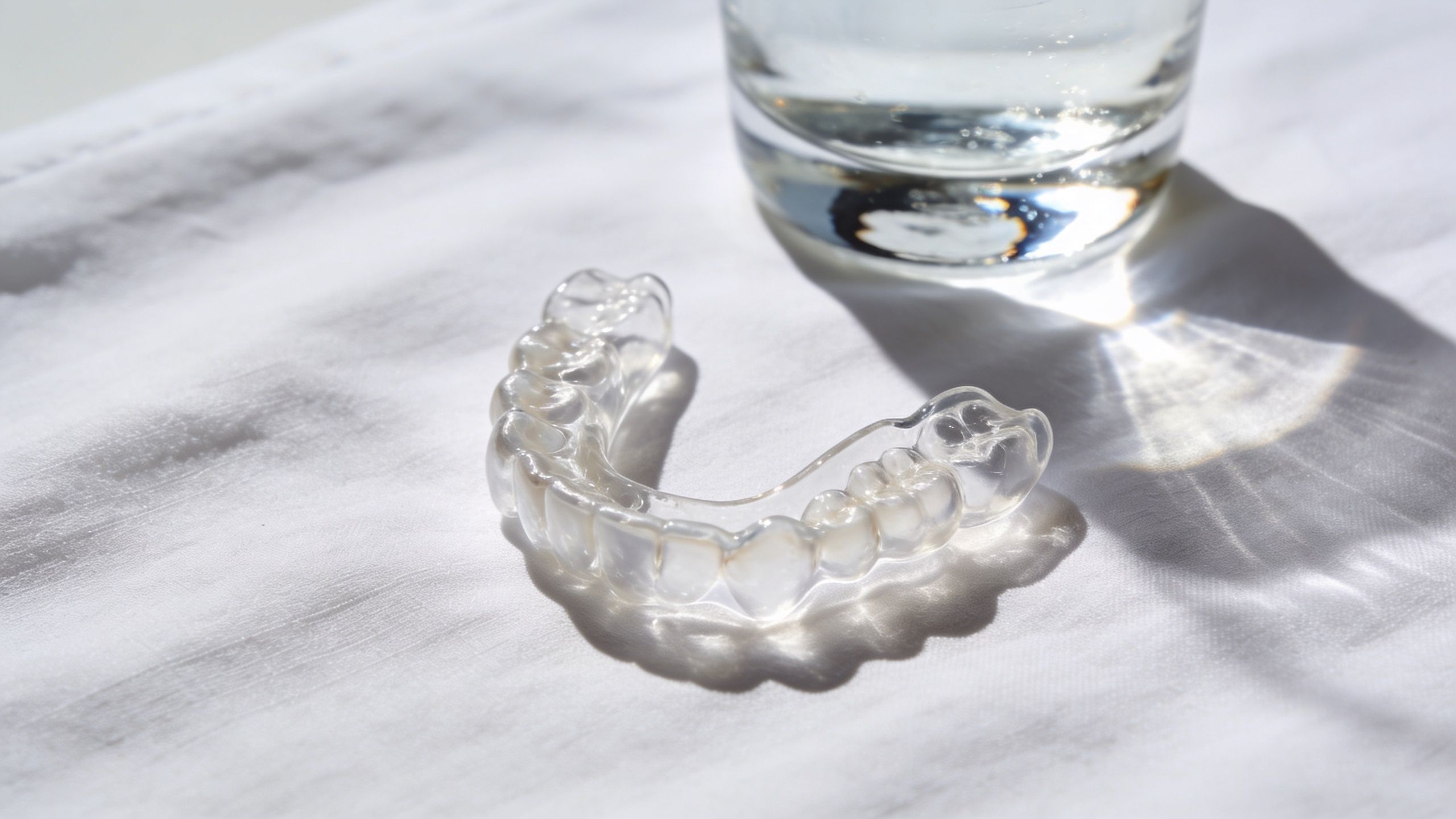
That is why oral appliance therapy deserves a serious look, especially for patients with mild to moderate obstructive sleep apnea or patients who have trouble tolerating CPAP. A custom appliance is worn in the mouth during sleep and is made to fit your bite and jaw position. It is small, quiet, and easy to travel with. For many patients, those practical advantages make consistent use more realistic.
An oral appliance also changes the cost conversation. This comparison is not only machine versus appliance on day one. It is what treatment costs over time, how easy it is to maintain, and whether you will keep using it. CPAP often brings ongoing supply replacement and setup hassles. Oral appliance therapy usually has a higher initial fee, but fewer day-to-day barriers can make it a smarter long-term choice for the right patient.
Why some patients prefer an oral appliance
Patients usually tell me the same things matter at home. They want treatment that fits into normal life, does not disturb a bed partner, and does not turn travel into a packing project.
A custom oral appliance can help on those points:
- Simple nightly routine: No mask, tubing, or machine setup before bed
- Quiet sleep: No equipment noise in the room
- Travel convenience: Easy to pack and carry
- Custom fit: Made for your mouth, then adjusted as needed over time
That last point matters. A professionally made device is different from an over-the-counter mouthpiece. Fit affects comfort, comfort affects use, and use affects results.
A short overview may help if you're comparing options visually:
Where a dentist fits into treatment
For patients exploring a dental option locally, William M. Schneider, DDS provides custom sleep apnea treatment in Walnut Creek that may include oral appliance therapy when it fits the diagnosis and treatment plan.
The goal is not to claim that every patient should avoid CPAP. CPAP remains the right choice for many people. The practical question is whether the treatment works in real life. If an oral appliance is the option you can wear consistently, maintain comfortably, and keep using for years, it may deliver better long-term value than a treatment with a lower initial price and poor follow-through.
Your Sleep Apnea Consultation in Walnut Creek
Patients often put off a consultation because they expect a complicated process or a hard sales conversation. It shouldn't feel that way. A good first visit is a fact-finding appointment that helps you understand what you're dealing with and whether a dental approach makes sense.
What happens at the first visit
The appointment usually starts with your symptoms and sleep history. Snoring, daytime fatigue, dry mouth, morning headaches, and trouble tolerating CPAP all help shape the discussion.
From there, the clinical side focuses on your mouth, jaw, bite, airway-related anatomy, and whether oral appliance therapy appears appropriate. If you don't already have the necessary sleep testing, you'll also discuss what kind of next step is needed for diagnosis and medical coordination.
What you should expect from the cost discussion
The financial part should be clear, not rushed. Patients deserve to know:
- What the recommended treatment includes: appliance, records, fitting, and follow-up
- What may be separate later: adjustments, future replacement, and any medically required testing
- How insurance may affect timing: especially when deductibles or coverage limits are involved
Bring your questions to the consultation. The most useful appointments are the ones where patients ask directly about total ownership cost, not just the first invoice.
If you'd like a clearer sense of the process before booking, Dr. Schneider's page on a sleep apnea treatment center near Walnut Creek outlines how this kind of care is approached in the office.
A consultation should leave you with a recommendation, a realistic understanding of costs, and a next step that feels manageable.
Frequently Asked Questions About Sleep Apnea Treatment
Will insurance cover an oral appliance
Coverage depends on your plan and how treatment is documented. Some patients use medical insurance rather than dental benefits for sleep apnea treatment. The important step is verifying benefits early and asking what documentation is required before treatment begins.
How is a custom oral appliance different from a store-bought guard
A custom appliance is made for your mouth and adjusted for comfort and effectiveness. A generic guard isn't built to treat diagnosed obstructive sleep apnea, and it doesn't offer the same level of fit, monitoring, or professional follow-up.
Is CPAP always the lowest-cost choice
Not necessarily. CPAP can have a lower upfront entry point, but ownership costs can continue through supplies, maintenance, and replacement items. For some patients, a custom oral appliance ends up being the more practical value because it's easier to use consistently.
Can a dentist diagnose sleep apnea
A dentist can screen for signs and discuss treatment options, but confirmation of obstructive sleep apnea typically depends on appropriate sleep testing and medical coordination. Dental care becomes especially relevant when oral appliance therapy is being considered after diagnosis.
If you're comparing sleep apnea treatment cost in Walnut Creek, the next best step is a personalized consultation. William M. Schneider, DDS can help you understand whether oral appliance therapy makes sense for your situation, what the process involves, and how to think about the full financial picture before you commit.