If you've noticed pink in the sink when you brush, gums that feel puffy, or breath that doesn't seem fresh even right after cleaning your teeth, you're not alone. Many patients in Walnut Creek start by searching how to treat gum disease naturally because they want a gentle, practical solution before the problem gets worse.
That instinct makes sense. Natural support can help, especially in the earliest stage of gum irritation. But gum disease has a limit where home care stops being enough, and that line matters if you want to keep your teeth healthy for the long term. The most honest approach is to separate what can improve inflammation at home from what requires in-office treatment.
Your Trusted Walnut Creek Dentist for Healthy Gums
A common story in our Walnut Creek community starts the same way. Someone brushes one morning, sees a little blood, and assumes they brushed too hard. Then it happens again. A few weeks later, their gums feel tender near one back tooth, or they notice their smile looks slightly longer because the gums seem to be pulling back.
Ignoring it isn't born from a lack of concern. Instead, it's ignored because gum disease is usually quiet at first. It doesn't always cause sharp pain, so it's easy to hope a saltwater rinse or a new toothpaste will fix everything.
That hope isn't unreasonable. Early gum inflammation often does respond to better home care. But the right answer depends on what stage you're in, and that's where local, experienced dental care matters.
Care that respects both natural interest and clinical reality
Patients looking for a dentist in Walnut Creek, CA or typing dentist near me often want two things at once. They want a provider who won't dismiss their interest in natural care, and they want clear guidance they can trust. That's a fair expectation.
In practice, the most helpful approach is balanced. Supportive home care can reduce irritation. Professional diagnosis tells you whether you're dealing with simple gingivitis or something deeper that could threaten the bone around your teeth.
Many gum problems don't begin with pain. They begin with bleeding, swelling, and a feeling that something isn't quite right.
For families and professionals across Walnut Creek and the East Bay, gum health also ties into the rest of dentistry. A stable gumline supports routine cleaning and exams, future cosmetic dentistry, and restorative work such as crowns or dental implants near me searches patients often make after losing a tooth.
A local resource for answers and treatment
At 1855 San Miguel Dr., patients can get both education and treatment in one place. Whether the problem can be managed naturally is a good question to bring to a dental visit. Sometimes the answer is yes, with focused hygiene and monitoring. Sometimes the answer is that your gums need more than home remedies.
That distinction can protect your smile. It can also spare you from waiting too long and needing more involved treatment later, whether that's periodontal therapy, tooth extraction, or restorative care to replace a tooth that couldn't be saved.
Understanding Gingivitis and Gum Disease
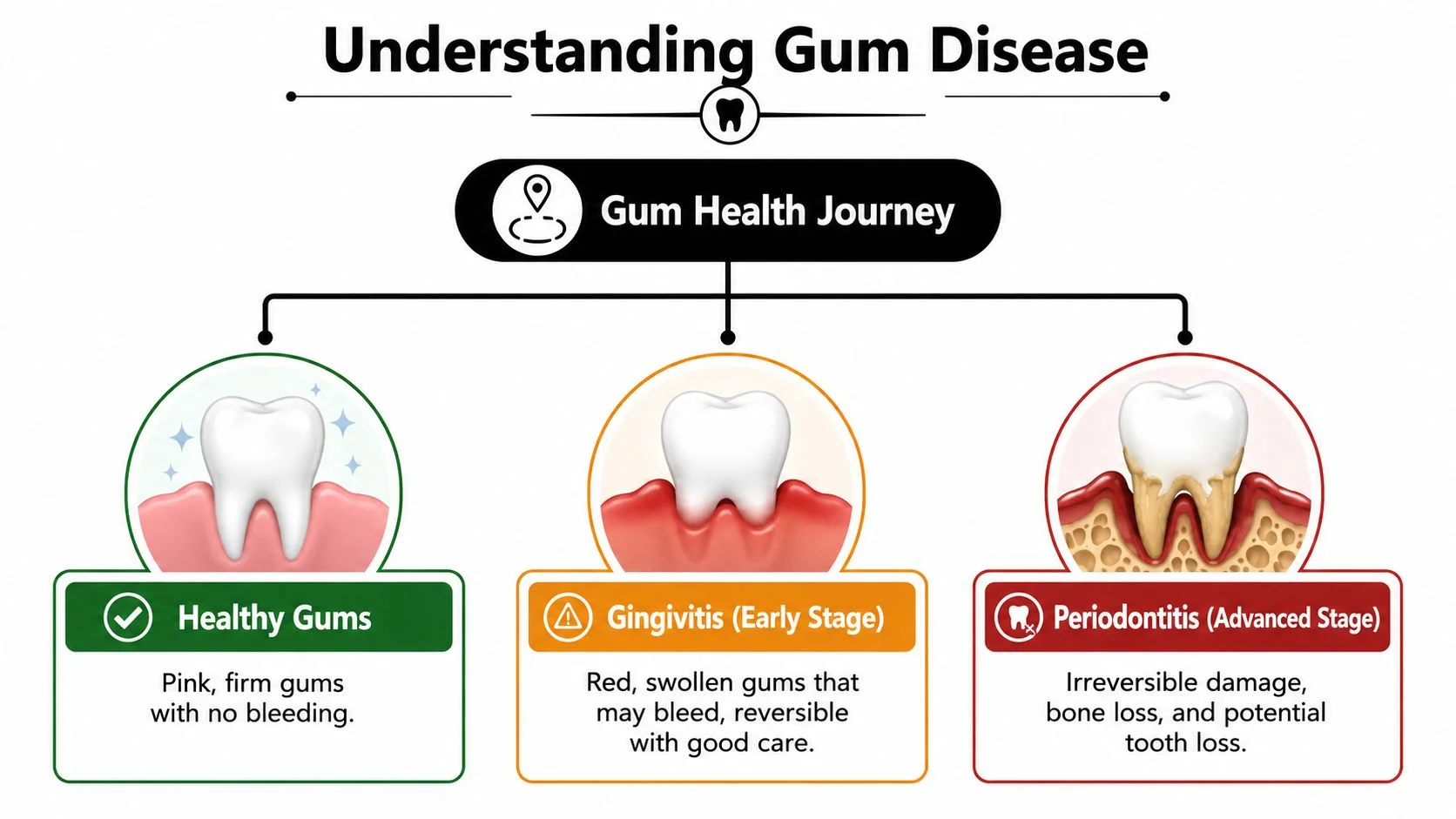
Gum disease starts with plaque, a sticky film of bacteria that gathers around teeth and especially near the gumline. When plaque stays in place, the gums react with inflammation. They may look redder than usual, feel swollen, or bleed when you brush or floss.
The earliest stage is gingivitis. This is the stage people can often improve with good daily care and professional cleanings. The CDC explains that gingivitis can largely be prevented and treated with daily self-care plus professional cleanings, while plaque that isn't removed usually hardens into tartar, which can't be removed by brushing alone.
What patients usually notice first
Gingivitis doesn't always announce itself dramatically. More often, patients describe a few subtle changes:
- Bleeding during brushing or flossing that keeps recurring
- Tender or puffy gums along the edges of the teeth
- Bad breath that seems to come back quickly
- A change in gum color, often from healthy pink to a redder tone
If inflammation continues and tartar builds up, the condition can progress to periodontitis. At that point, the infection moves deeper below the gumline. The supporting tissues become involved, and the gums may begin to pull away from the teeth.
Why the stage matters
The question isn't just whether your gums are irritated. The question is where the irritation is coming from and how deep it goes. That determines whether home care can reverse the problem or only partially soothe it.
A simple comparison helps:
| Stage | What it means | What patients may notice |
|---|---|---|
| Healthy gums | Tissue is stable and clean around the tooth | Firm gums, no bleeding |
| Gingivitis | Early inflammation from plaque near the gumline | Bleeding, swelling, redness |
| Periodontitis | Deeper infection with damage below the gumline | Recession, persistent bleeding, loose feeling, spaces or pockets |
Practical rule: Bleeding that keeps happening is not something to normalize. Healthy gums generally shouldn't bleed with routine brushing and flossing.
Why exams matter
A proper dental exam is important. Looking in the mirror can tell you your gums are inflamed, but it can't tell you how much buildup sits under the gums or whether supporting structures have been affected. That's why new patient exams, periodontal measurements, and when needed, dental x-rays, help clarify what you're dealing with before you rely on home care alone.
Foundational Natural Gum Care at Home
If you're trying to learn how to treat gum disease naturally, start with the part that works best and has the strongest clinical logic. Remove plaque thoroughly and consistently. That is the center of natural gum care, not the add-ons.

For early gingivitis support, the most useful home routine is mechanical plaque disruption. Cleveland Clinic recommends brushing 2–3 times daily with the bristles angled toward the gumline and flossing daily because bacteria hide at the gum line, as described in Cleveland Clinic's guidance on gum disease treatment.
The home routine that actually moves the needle
Natural care doesn't need to be complicated. It needs to be consistent.
Brush with intention
Angle the bristles toward the gumline instead of scrubbing only the front surfaces of the teeth. Here, bacteria collect and many people miss the area that matters most.Floss every day
Brushing can't clean between teeth well enough on its own. Interdental plaque is one of the main reasons gums stay inflamed even when someone says they're brushing carefully. If your flossing technique needs work, this guide on how to floss teeth correctly can help.Use a gentle supportive rinse
A short-term saltwater rinse or mild diluted rinse can soothe irritated tissue. It can be useful support, but it doesn't replace cleaning the teeth and gumline.Watch your response
The question isn't whether a remedy feels calming. The question is whether bleeding, swelling, and redness begin to settle down with proper hygiene.
Natural adjuncts that may help
This is the part many patients are curious about, and some options do have a place. An evidence review on complementary periodontal care notes that lycopene at 8 mg per day may help as an adjunct to standard therapy in a small study, and it also discusses herbal mouthwashes with chamomile, echinacea, myrrh, tea tree oil, and propolis as supportive options for gingival inflammation or plaque control in limited research, according to EBSCO's review of natural treatments for periodontal disease.
That doesn't make these remedies useless. It means they belong in the supportive category.
- Saltwater rinses can calm irritated tissue for some patients.
- Oil pulling is often used as a daily habit by people who prefer natural routines.
- Herbal rinses may offer mild symptom relief when used carefully.
- Diluted essential oils require caution. Undiluted use can irritate soft tissue.
After you've built the basics, some patients like to see a visual demonstration of gum-focused home care:
What doesn't work well enough on its own
Expectations need to stay realistic. Oil pulling doesn't physically remove hardened tartar. Herbal rinses don't clean under the gumline the way professional instruments can. A soothing rinse may make your mouth feel better while the actual disease process keeps going.
If a home remedy reduces soreness but plaque remains in place, the cause of the problem is still there.
For mild, early inflammation, supportive natural methods can be worth adding to a good routine. But the strongest natural strategy is still daily plaque removal with a toothbrush and floss, paired with professional cleanings when needed.
When Natural Remedies Are Not Enough
The internet is full of lists: salt water, coconut oil, turmeric, aloe vera, tea tree oil. What most of those lists skip is the part patients need most. They don't clearly say when home care has reached its limit.
That matters because gum disease can move from reversible irritation to tissue damage without causing dramatic pain. A person may think, "My gums don't hurt much, so I must be okay," while deeper buildup and inflammation continue below the surface.
The hard limit of home care
Once plaque hardens into tartar, a toothbrush won't remove it. Floss won't remove it either. And if the problem has moved under the gumline, even excellent home habits may only control the situation partially.
A useful way to think about it is this:
| Home care can help with | Home care cannot fix alone |
|---|---|
| Early plaque-related irritation | Hardened tartar |
| Mild gum redness and swelling | Deep gum pockets |
| Support during healing | Established infection below the gumline |
| Daily maintenance | Bone loss or significant recession |
The gap in most consumer advice is exactly this point. Home remedies are mainly adjuncts for gingivitis and don't replace professional treatment for periodontitis, deep pockets, or bone loss. Persistent bleeding or recession should be evaluated in the office, as noted in this discussion of when at-home gum care isn't enough.
Signs you shouldn't try to manage alone
Some symptoms should move you out of the DIY mindset and into an exam.
- Bleeding that keeps happening even after you've improved your brushing and flossing
- Gum recession that makes teeth look longer
- A loose or shifting feeling in one or more teeth
- Areas that trap food repeatedly because the gum contour has changed
- Tenderness around one specific site that doesn't settle down
If you're seeing those signs, it's smart to read more about when to see a periodontist for bleeding or receding gums, then book an evaluation promptly.
Relief is not the same as resolution. A mouth can feel calmer while disease remains active below the gums.
Why waiting creates bigger trade-offs
The risk isn't just ongoing bleeding. Untreated periodontal disease can weaken the support around a tooth. That changes the conversation from a simple cleaning to deeper therapy, and in severe cases, to whether the tooth can be saved at all.
This is also where people searching emergency dentist or tooth extraction often arrive unexpectedly. They didn't start with severe symptoms. They started with mild gum inflammation and hoped natural care alone would be enough.
Natural methods have value. But they work best early, and they work best when paired with the willingness to get professional help once the signs point to deeper disease.
Professional Gum Disease Treatment in Walnut Creek
When gum disease has moved beyond simple gingivitis, treatment becomes more precise. The goal isn't just to make the gums look less red. The goal is to remove the source of infection, help the tissue heal, and protect the teeth that depend on that tissue for support.
That starts with a careful diagnosis. A professional exam can identify where inflammation is localized, where buildup sits below the gums, and whether treatment should be preventive, therapeutic, or part of a larger restorative plan.

What treatment may involve
For some patients, a routine professional cleaning and updated home care are enough to calm early inflammation. For others, the deeper issue is tartar and bacteria below the gumline, which often calls for scaling and root planing, also known as a deep cleaning.
Professional care may include:
- New patient exams and periodontal evaluation to identify the stage of disease
- Dental x-rays when the dentist needs to assess supporting structures
- Preventive cleanings for early or stable cases
- Deep cleaning to remove buildup below the gumline
- Maintenance visits to keep inflammation from returning
William M. Schneider, DDS fits into the process as one local option for patients who need evaluation, gum therapy, preventive care, and follow-up treatment in Walnut Creek.
Why professional treatment changes the outcome
The biggest benefit of in-office treatment is access. Instruments can reach the areas that brushing, flossing, rinses, and home gadgets can't. Once those irritants are removed, the gums have a chance to tighten, calm down, and become easier for the patient to maintain.
Professional treatment can also shape the next steps in your broader dental care. After gum health improves, patients may choose to address related concerns such as:
- Restorative dentistry for damaged teeth
- Dental implants near me searches after prior tooth loss from gum problems
- Cosmetic dentist near me goals like improving the look of the smile once the gums are healthy
- Cleaning and exams on a schedule that helps prevent relapse
Stable gums make every other dental treatment work better. They support comfort, function, and long-term predictability.
For many adults in Walnut Creek, this is the turning point. They stop trying to chase the right home remedy and start treating the actual condition in a way that protects their teeth for the future.
What to Expect at Your Appointment with Dr. Schneider
Walking into a new dental office can feel harder than deciding you need help. That's especially true if your gums bleed, you're worried you'll need extensive treatment, or you've had uncomfortable dental visits in the past.
At the Walnut Creek office on 1855 San Miguel Dr., Suite 31, the visit is designed to feel clear and manageable. You aren't rushed from symptom to treatment. The first step is understanding what's happening in your mouth and what level of care makes sense.
Your first visit, step by step
A typical appointment begins with a conversation about what you've noticed. Maybe it's bleeding when you floss. Maybe it's bad breath, recession, or a tooth that feels different when you bite. Those details matter because they often point to where the inflammation started and how long it's been active.
From there, the team gathers the information needed for a diagnosis. That may include a clinical exam, periodontal measurements, and appropriate imaging. The goal is straightforward: identify whether you need routine preventive care, a deeper cleaning approach, or referral-based periodontal support.

Comfort and communication matter
Patients often delay care because they expect a lecture or assume treatment will be painful. Good dental care should feel more respectful than that. Clear explanations help patients understand the trade-offs. Comfort measures help them follow through.
What many people want from a dentist near me search isn't just a nearby office. They want a place where questions are answered plainly, options are explained clearly, and anxiety is taken seriously. That matters whether you're coming in for a periodontal evaluation, routine dental care, or a bigger restorative plan after years of avoiding treatment.
A gum disease visit can also open the door to better overall care. Once the infection is under control, many patients stay on for regular new patient exams, teeth whitening, cosmetic updates, or restorative work that feels worth doing now that the foundation is healthier.
The most reassuring dental visit is usually the one where you finally know what the problem is and what to do next.
If your gums have been bleeding, swelling, or receding, getting checked now is a practical step. It can be simpler than you expect, and it can prevent a small issue from becoming a more difficult one.
If you're looking for honest guidance on natural gum care and professional treatment in Walnut Creek, schedule a visit with William M. Schneider, DDS. A thorough exam can tell you whether home care is enough, where your gums need added support, and what treatment will best protect your teeth and long-term oral health.