If you're reading this, there's a good chance something feels off. Maybe a back tooth stings when you drink something cold. Maybe your child says one side hurts when chewing. Or maybe you looked in the mirror, saw a dark spot, and searched for a dentist near me because you want a clear answer before it gets worse.
That concern is common, and it's fixable. Tooth decay usually doesn't start with a dramatic emergency. It starts subtly, then builds over time. The good news is that once you understand what causes tooth decay, the problem becomes much easier to prevent, catch early, and treat.
For families and professionals looking for a dentist in Walnut Creek, CA, it helps to know that cavities aren't just about “not brushing enough.” Diet, plaque, dry mouth, fluoride exposure, deep grooves in teeth, and even certain medications can all play a role. That's why a smart approach to dental care in Walnut Creek starts with understanding the whole picture.
Your Trusted Dentist for Tooth Decay in Walnut Creek CA
A common story goes like this. Someone notices sensitivity to ice cream, puts off the issue for a few weeks, then suddenly needs help because the tooth starts aching during work or dinner. Parents often see the same pattern with kids. A child avoids chewing on one side, but there's no obvious hole yet, so it's easy to assume it's minor.
In reality, decay often develops before you can clearly see it. That's one reason people looking for a dentist near me or emergency dentist are often surprised that the process started much earlier than the pain did. Early care matters because a small area of decay is usually simpler to manage than a deep cavity or an infected tooth.
Why people get confused about cavities
Many people were taught one short version of the story. Sugar causes cavities. That's partly true, but it leaves out the steps that matter most. Cavities form when bacteria in plaque feed on carbohydrates, create acid, and keep that acid against the tooth long enough to damage enamel.
That means a person can brush every day and still be at risk if they sip sweet coffee for hours, snack on crackers constantly, deal with dry mouth, or miss areas between teeth. It also means two people with similar habits may have different risk levels because their saliva, tooth shape, and medical history aren't the same.
Practical rule: If a tooth feels different, not just painful, it's worth having it checked before the problem gets bigger.
A local, practical approach to care
For patients searching for dental care in Walnut Creek, the most helpful approach is usually a calm, step-by-step one. First, identify the cause. Then decide whether the tooth needs prevention, a filling, a crown, or another restorative option. Some patients also need support beyond cavity treatment, such as cleaning and exams, dental x-rays, new patient exams, tooth extraction, or long-term repair through restorative dentistry.
For others, the visit starts with prevention and leads to broader smile goals, including teeth whitening, cosmetic dentistry, or even dental implants near me after tooth loss. The important part is getting a clear diagnosis instead of guessing.
How a Cavity Forms The Science of Tooth Decay
A cavity usually starts subtly. A child grabs a handful of crackers after school, a parent sips coffee through the afternoon, and nothing feels wrong in the moment. On the tooth, though, repeated exposure works like acid rain slowly wearing down a stone statue. The change is gradual, and it happens one small step at a time.
The four parts that create decay
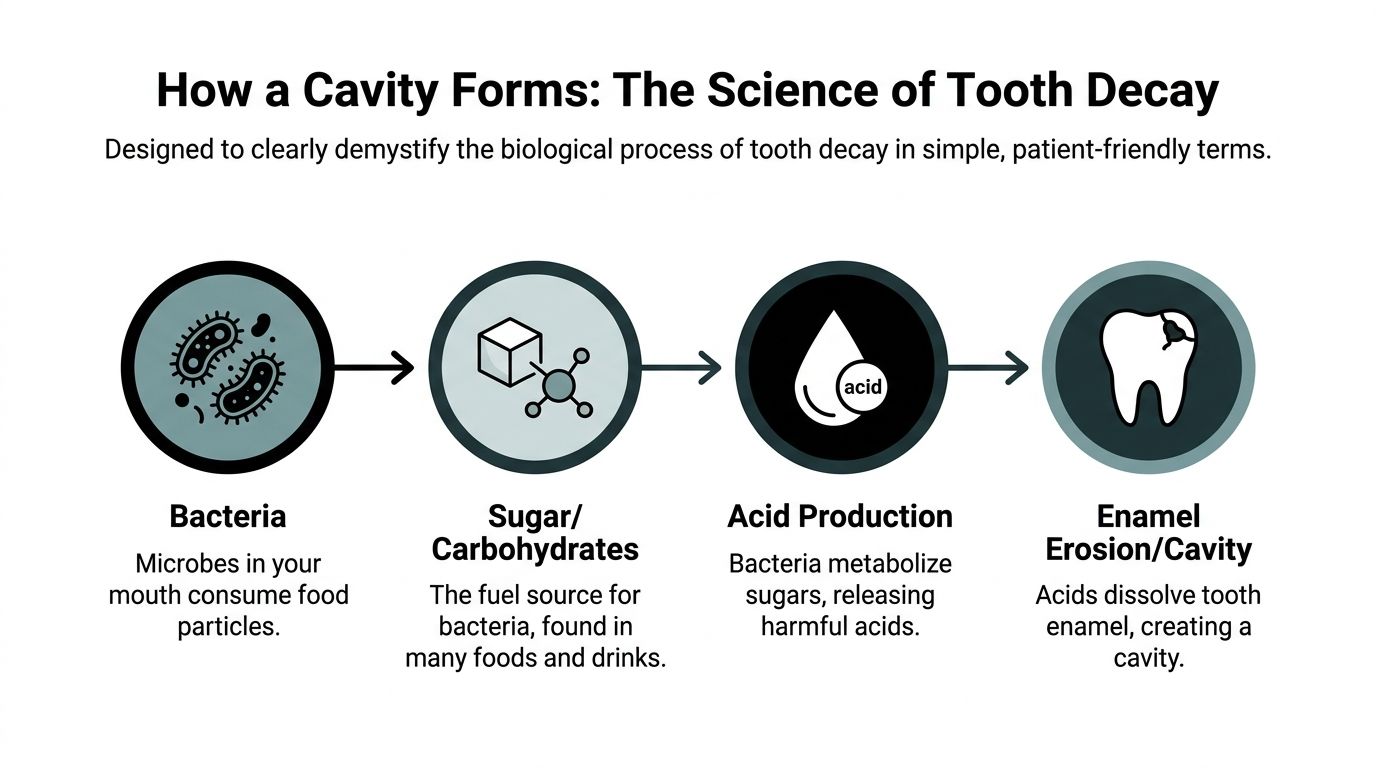
Cavity formation depends on four things meeting in the same place often enough and long enough.
| Part | What it does |
|---|---|
| Bacteria | Certain mouth bacteria live in plaque and feed on food particles |
| Carbohydrates | Sugars and starches give those bacteria fuel |
| Acid | Bacteria turn that fuel into acid |
| Tooth surface | The acid stays on enamel and begins dissolving minerals |
This helps explain a common point of confusion. Candy can fuel decay, but so can foods like crackers, cereal, chips, and bread because the bacteria care about usable carbohydrates, not just obvious sweets. That is one reason cavities can still develop in people who feel they do not eat much sugar.
What demineralization actually means
Enamel is the hardest substance in the body, but it is still made of minerals. When acid sits on the tooth, it pulls some of those minerals out. Dentists call that demineralization.
A helpful way to picture it is a brick wall losing mortar a little at a time. The wall may still look fine at first, yet it is less stable with each loss. Teeth behave in a similar way. Early decay often begins below the surface before a visible hole appears.
Saliva and fluoride can help repair some of that early mineral loss. Recovery is possible when the mouth gets enough time between acid attacks. Trouble starts when eating, sipping, dry mouth, or missed plaque buildup keeps the environment acidic too often.
Enamel begins to dissolve more easily when plaque pH drops to about 5.5, as explained in this patient-friendly summary of cavity formation and critical pH.
Below that pH level, enamel starts losing minerals and becoming weaker. Repeated acid exposure can turn that weakened area into a visible cavity.
Why plaque matters so much
Patients ask this all the time. If the mouth has saliva, why does food cause so much trouble?
Plaque is the reason. It is a sticky biofilm that clings to teeth and gives bacteria a place to stay. Instead of acid being diluted right away, plaque helps hold that acid against the enamel, especially in spots that are harder to clean thoroughly.
That is why decay often starts in:
- Deep grooves on back teeth where food and plaque collect
- Between teeth where a toothbrush cannot clean well
- Along the gumline where plaque can stay undisturbed
- Around older fillings or dental work where tiny edges can trap buildup
Once the surface has been weakened enough, it can break down into the hole we call a cavity. If you or your child has a tooth that feels rough, sensitive, or different, it is smart to have it checked early. In our Walnut Creek practice, we can usually spot these changes before they turn into a larger repair.
Major Causes and Hidden Risk Factors for Tooth Decay
A common Walnut Creek scenario goes like this. A parent cuts back on candy, keeps soda out of the house, makes sure everyone brushes, and still hears that a child has a new cavity. Adults say the same thing after a checkup. They are doing many things right, but a few less obvious risk factors are still feeding the decay cycle.
Sugar matters, and timing matters just as much
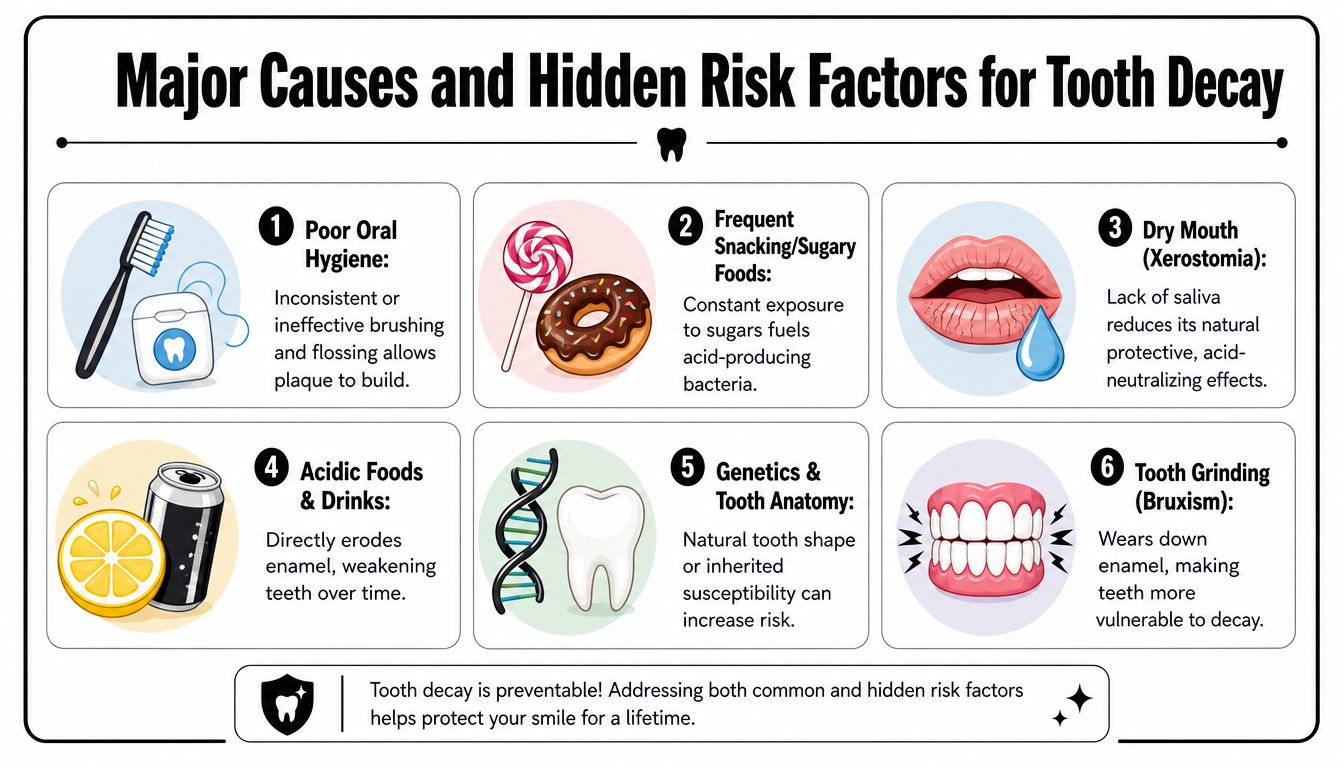
Sugar is a leading cause of cavities because plaque bacteria turn it into acid. The World Health Organization explains this clearly in its fact sheet on sugars and dental caries.
What often surprises patients is that the pattern of eating can matter as much as the food itself. Drinking one sweet beverage with a meal is different from taking small sips for hours. Each exposure gives bacteria another chance to make acid, so the enamel spends more time under stress and less time recovering.
Starches are a hidden source of trouble
This catches many families off guard. Crackers, bread, chips, pretzels, cereal, and granola may seem safer than candy because they do not taste intensely sweet. In the mouth, though, starches break down into sugars that bacteria can use.
The National Institute of Dental and Craniofacial Research explains in its tooth decay overview that bacteria react with sugars and starches to form acid. A simple way to picture it is this. Sticky starches can act like slow-burning fuel. They cling to grooves in molars and between teeth, giving bacteria more time to work.
That is why a child nibbling crackers during after-school activities, or an adult snacking on chips during a long commute, can raise cavity risk even without much candy.
Dry mouth changes the whole environment
Saliva is the mouth's rinse system and repair system at the same time. It helps wash away food, dilute acid, and supply minerals that strengthen enamel. When saliva is low, teeth lose a lot of that protection.
Dry mouth is especially common in adults, and medications are a frequent reason. Antihistamines, decongestants, antidepressants, some blood pressure medicines, and many other prescriptions can reduce saliva. Mouth breathing, poor hydration, certain medical conditions, and cancer treatment can also play a role.
This is one reason cavities can seem to appear suddenly. Someone may keep the same brushing routine for years, start a new medication, and then notice more decay around the gumline or between teeth.
Other risk factors that often work together
Tooth decay usually comes from a combination of causes, not one single mistake. In day-to-day practice, these are some of the patterns we see most often:
- Plaque left in hard-to-reach spots. Back molars, tight contacts between teeth, and the gumline are common starting points.
- Low fluoride exposure. Enamel has a harder time repairing early damage without regular fluoride.
- Deep pits and grooves. Some teeth are shaped in a way that traps food and bacteria more easily.
- Gum recession. Exposed root surfaces are softer than enamel and can decay faster.
- Medical conditions. Diabetes and other health issues can change the oral environment and increase risk.
- Worn or damaged enamel. Grinding, clenching, and long-term wear can leave teeth less protected.
Genetics can influence tooth shape, saliva, and enamel strength too, but genetics rarely acts alone. Habits, diet, medications, and home care still make a big difference.
A practical way to assess your risk
If you want to sort through what may be causing cavities in your home, start with three questions:
- How often are teeth exposed to sugary or starchy foods and drinks?
- Are all tooth surfaces being cleaned well, especially between teeth and along the gumline?
- Is saliva doing its job, or is dry mouth making decay more likely?
Those answers usually point us in the right direction. If you want more home-care ideas, our guide on natural ways to help prevent tooth decay is a good next step.
If you are still getting cavities despite brushing and flossing, that does not mean you have failed. It usually means there is a hidden risk factor that needs attention. At our Walnut Creek office, we help patients pinpoint those causes early and build a prevention plan that fits real life.
Proven Strategies to Prevent Cavities and Protect Your Smile
A common Walnut Creek pattern looks like this. Coffee on the way to work, crackers or a granola bar between errands, sports practice snacks for the kids, then brushing at night and wondering why cavities still show up. Prevention starts to make more sense once you see that teeth are affected by repeated acid attacks across the day, not only by obvious sweets.
What daily prevention should look like
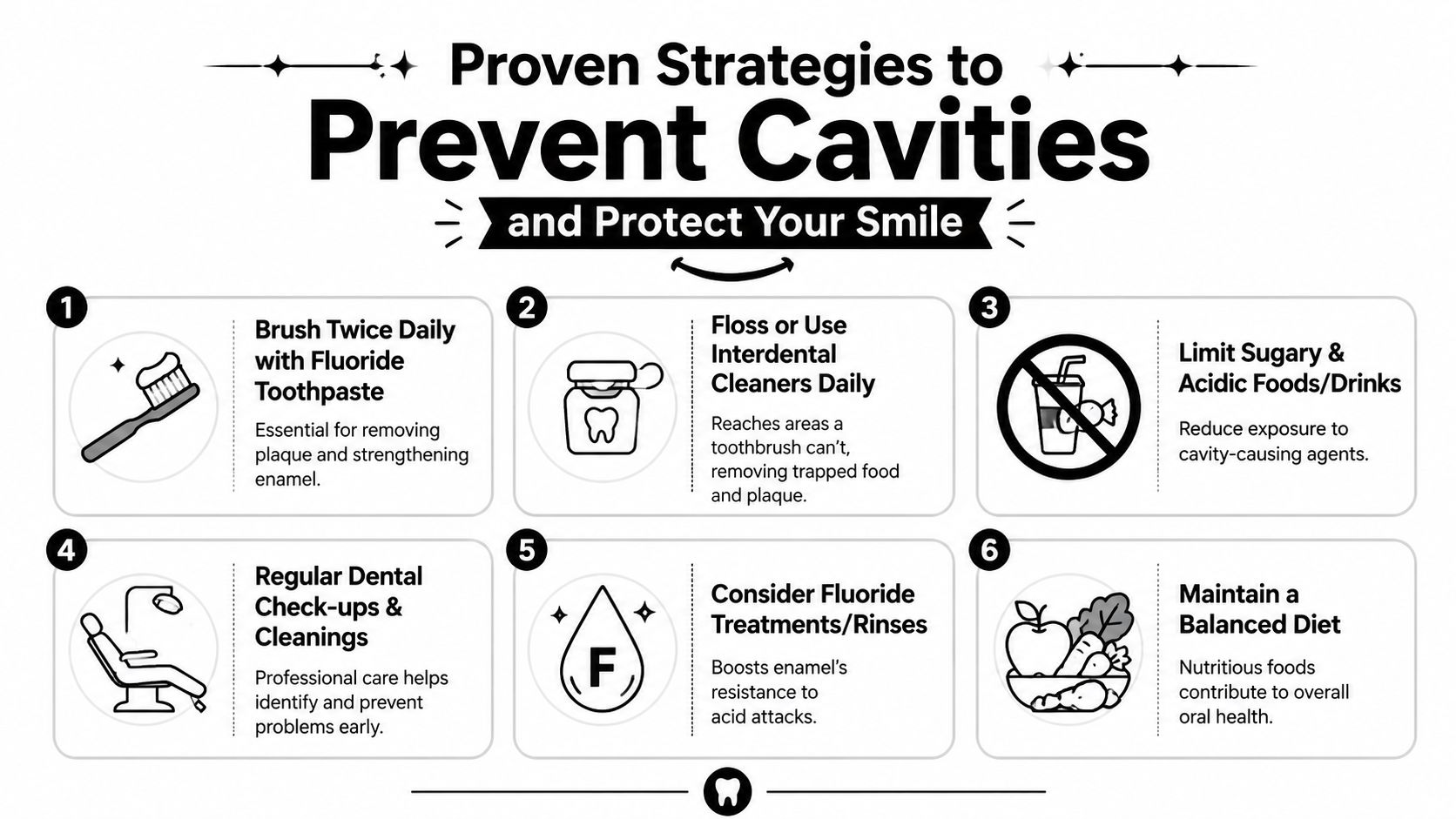
Good prevention works like lowering the number of chances bacteria get to feed and make acid.
- Brush with fluoride toothpaste twice a day. Fluoride helps repair early weak spots in enamel before they turn into larger cavities. Be thorough around the gumline and on the back molars, where plaque often stays behind.
- Clean between teeth every day. Toothbrush bristles miss the tight spaces where many cavities begin. Floss picks, string floss, or other interdental cleaners can all help if you use them consistently.
- Give teeth breaks between meals and snacks. Every snack can restart the acid cycle, even if the food seems harmless. Crackers, chips, bread, dried fruit, and granola can cling to grooves in the teeth and fuel decay much like sugary foods do.
- Choose water often. Water helps wash away food particles and is a better everyday drink than soda, juice, sports drinks, or frequent sweetened coffee.
- Plan snacks with teeth in mind. Cheese, nuts, plain yogurt, and crunchy vegetables are usually easier on teeth than sticky or slow-to-clear foods.
Small changes matter. If your family needs simple at-home ideas, our guide to natural ways to prevent tooth decay can help.
Professional prevention adds protection where home care cannot
Even a strong home routine has limits. Deep grooves in molars, crowded teeth, dry mouth, and early weak spots are hard to judge in the mirror.
Professional care helps in two ways. First, regular exams and cleanings help us catch changes early, before they become painful or expensive to fix. Second, we can recommend targeted protection such as fluoride treatments, x-rays when needed, and sealants for teeth that are more likely to trap plaque and food.
Sealants are especially useful for children and teens because back teeth often have narrow grooves that act like tiny valleys. Some adults benefit too, especially if those grooves are deep or they have a history of cavities.
Prevention for different kinds of patients
| Situation | Helpful focus |
|---|---|
| Busy adult with dry mouth | More water, fluoride toothpaste, review of medications, regular exams |
| Child with frequent snacks | Snack timing, sealants, brushing support, fewer sticky starches |
| Patient with past fillings | Closer monitoring, daily cleaning between teeth, diet review |
| Cosmetic-minded patient | Protect enamel first, then discuss whitening or other cosmetic options |
Key takeaway: Cavity prevention works best when the plan matches your daily life, lowers frequent acid exposure, and addresses hidden risks like starches, dry mouth, and hard-to-clean tooth surfaces.
If you are unsure which habits matter most for you or your child, we can help you sort that out at our Walnut Creek office and build a prevention plan that feels practical and realistic.
Recognizing the Signs and Available Dental Treatments
You may feel fine one week, then notice a cold drink zings one tooth or food starts catching in the same spot over and over. That kind of change is easy to brush off, especially if there is no constant pain. Cavities often begin subtly, which is why early treatment is usually simpler than patients expect.
Early decay can show up in small, easy-to-miss ways. A tooth may develop a chalky white area where minerals have been lost. You might notice mild sensitivity to sweets, cold drinks, or brushing. Some patients describe one spot that feels rough with the tongue, almost like a tiny nick in smooth glass.
As the problem gets deeper, the signs become harder to ignore:
- Brown, tan, or dark spots on a tooth
- Sensitivity that lasts longer than a quick twinge
- Pain when chewing or biting
- Food trapping in one area
- A bad taste or odor around one tooth
- A hole, pit, or rough edge you can feel
If you want a clearer home guide, this article on how to tell if you have a cavity can help you compare symptoms without guessing.
Decay gets worse because the surface of the tooth keeps losing strength. Mouth bacteria feed on leftover carbohydrates, including sugars and many starches, then produce acids that soften enamel. If that cycle keeps repeating, the outer layer can break open. Once that happens, the softer inner dentin is much easier for decay to spread through.
That is also why hidden risk factors matter here. A child who snacks on crackers, an adult with dry mouth from medication, or a parent sipping sports drinks during errands can all develop cavities without eating much candy. The pattern is what matters. Frequent acid attacks give the tooth less time to recover between meals and drinks.
Treatment depends on how far the decay has gone and whether the tooth is still strong enough to save with a simpler repair.
| Sign or stage | Common treatment approach |
|---|---|
| Very early weakened enamel | Monitoring, fluoride support, and changes to home care and diet |
| Small to moderate cavity | Tooth-colored filling to remove decay and rebuild the area |
| Large area of damage | Dental crown to protect the tooth and restore strength |
| Deep decay with nerve involvement | Root canal treatment followed by protection of the tooth |
| Tooth cannot be saved | Tooth extraction and a discussion of replacement options |
A filling works well when the damage is limited. A crown is more like a protective helmet for a tooth that has lost too much structure to safely hold up with only a filling. If the decay reaches the nerve, root canal treatment can remove the infected tissue and help keep the tooth in place.
When a tooth has to be removed, we talk through replacement choices based on your bite, the location of the tooth, and your long-term goals. Some Walnut Creek patients ask about implants. Others are better served by a bridge or another restorative option.
Swelling, severe tooth pain, or a broken tooth should be checked as soon as possible. If you are noticing any of these warning signs, our Walnut Creek office can examine the area, explain what is happening in plain language, and help you choose the treatment that fits your needs.
Your New Patient Exam at Our Walnut Creek Dental Office
A first visit shouldn't feel confusing. Most new patients want to know what's wrong, what isn't, and what needs attention now versus later.

What the appointment usually includes
A new patient exam in Walnut Creek typically starts with a conversation. You might mention sensitivity, pain when chewing, cosmetic concerns, old dental work, dry mouth, or worries about a child's teeth. Those details matter because they help shape what the team looks for.
Then comes the clinical side:
- A thorough exam of teeth, gums, bite, and existing dental work
- Dental x-rays when needed to see between teeth and under the surface
- A professional cleaning, if appropriate for your current oral health
- Clear explanations of any findings and next-step options
Many patients are relieved by how straightforward this feels once they're in the chair. The process is usually less about being lectured and more about getting useful answers.
Comfort matters during the visit
For patients with anxiety, a calm environment makes a real difference. Gentle technique, painless injections when possible, and clear communication can change the whole experience. If you've been putting off care because of nerves, that's something worth mentioning early.
This short video gives a sense of the office experience and approach to patient care.
Planning care without overwhelm
Not every patient needs a long treatment list. Some need only a routine checkup and preventive care. Some need a filling, crown, or help with gum health. Others may be exploring cosmetic dentist near me searches because they want healthier teeth and a brighter smile at the same time, including options such as teeth whitening or Invisalign.
The best first visits leave patients with a simple plan. What needs attention now. What can wait. What will help protect the smile long term.
Schedule Your Dental Care Appointment in Walnut Creek Today
Tooth decay is common, but it isn't random. It usually comes from a pattern. Plaque, frequent sugars or starches, dry mouth, missed fluoride, or hard-to-clean areas all work together over time. Once you know the cause, you can make smart changes and get the right treatment before a small issue turns into pain, infection, or tooth loss.
If you've been searching for a dentist in Walnut Creek, CA, dentist near me, emergency dentist, cosmetic dentist near me, or help with tooth extraction, restorative dentistry, or dental implants near me, this is a good time to stop guessing and get a clear evaluation. Whether you need routine dental care, cleaning and exams, a cavity check, or a full new patient exam, taking action early usually means more comfortable and conservative care.
Walnut Creek families and East Bay professionals deserve dental care that's clear, respectful, and practical. If a tooth feels sensitive, you've noticed a spot, or it's time for a checkup, schedule your visit and get answers you can trust.
If you're ready for thoughtful, complete care, William M. Schneider, DDS welcomes patients in Walnut Creek and the East Bay for preventive, restorative, cosmetic, and emergency dental services. Reach out to schedule your appointment and take the next step toward a healthier, more comfortable smile.