You know that uneasy moment before a dental visit, when you're trying to focus on your teeth but your mind keeps drifting to the bill? That worry is common, especially if you're planning something bigger like a tooth extraction, dental implants, or even an emergency appointment. At William M. Schneider, DDS in Walnut Creek, CA, the goal is to take that uncertainty off your shoulders with a clear, calm insurance verification process that helps you understand costs before treatment begins.

Patients often come in wanting relief, not financial surprises. A careful benefits check is one of the simplest ways a dental office can protect both.
Navigating Dental Costs with Confidence in Walnut Creek
A lot of people search for a dentist near me because they need care now, but they still hesitate when they're unsure what that care will cost. That hesitation is real. It can show up before a cleaning and exam, before a new patient exam, or before more involved treatment like restorative dentistry or cosmetic dentistry.
At a trusted dentist in Walnut Creek, CA, that uncertainty should be met with plain language, not a rushed estimate. Insurance verification helps turn a confusing conversation into a shared plan, so you know what the office has checked and what you can expect next. The point isn't to flood you with insurance jargon, it's to give you enough clarity to make confident decisions about your oral health.
Why this matters before treatment
The strongest patient experience starts before you sit in the chair. When coverage is checked ahead of time, the front desk can talk through likely costs for services like teeth whitening, cosmetic dentistry, restorative care, or a tooth extraction without guessing.
That matters because a patient who understands the financial picture is more likely to feel comfortable saying yes to needed care. It also helps the office keep the visit focused on treatment, comfort, and next steps instead of last-minute billing confusion.
A good benefits check doesn't replace a treatment plan, but it supports one. It gives you a clearer view of how your plan may apply to the care you're considering, so you're not left piecing together the answer after the appointment.
Understanding Your Dental Benefits Before Your Visit
At its simplest, insurance verification is a pre-visit check that confirms whether your coverage is active and how your benefits may apply to the care you need. A useful comparison is checking a flight itinerary before you leave for the airport. If the time changed, the gate changed, or the trip was canceled, you'd want to know before you arrived.
That's the same idea here. The office isn't just asking whether you have insurance. It's checking whether your plan is likely to help cover the specific service you're scheduling, whether that's a new patient exam, dental x-rays, a filling, or a more advanced restorative treatment.
Practical rule: active insurance and usable benefits are not always the same thing.
Active coverage versus usable coverage
Many guides miss the important difference between active coverage and usable coverage. Our process goes beyond confirming your policy is active to check procedure-specific limits, ensuring we answer the most important question: “Will this exact procedure be covered, and what will I owe?” Phreesia explains that distinction clearly.
That's especially important for patients comparing options like Invisalign or other elective or restorative treatments. If you're trying to understand Invisalign treatment costs at our office, verification helps the team discuss your benefits with more confidence before anything is scheduled.
Why offices check more than one detail
Verification looks at the parts of your plan that affect what you may pay, not just whether the card is valid. That includes deductibles, copays, coinsurance, policy limits, and whether the planned procedure needs special approval as outlined in common verification guidance.
When those details are checked early, patients get a more accurate estimate and the office can reduce avoidable surprises. It's a straightforward way to keep the visit about care, not confusion.
A Step-by-Step Look at Our Verification Process
The cleanest insurance workflow starts before the appointment is even on the calendar. Recent guidance recommends verifying benefits at scheduling and then re-verifying them 48–72 hours before the visit to catch last-minute changes as noted in the verification benchmark for dental practices. That rhythm helps the office stay current without turning every visit into a scramble.
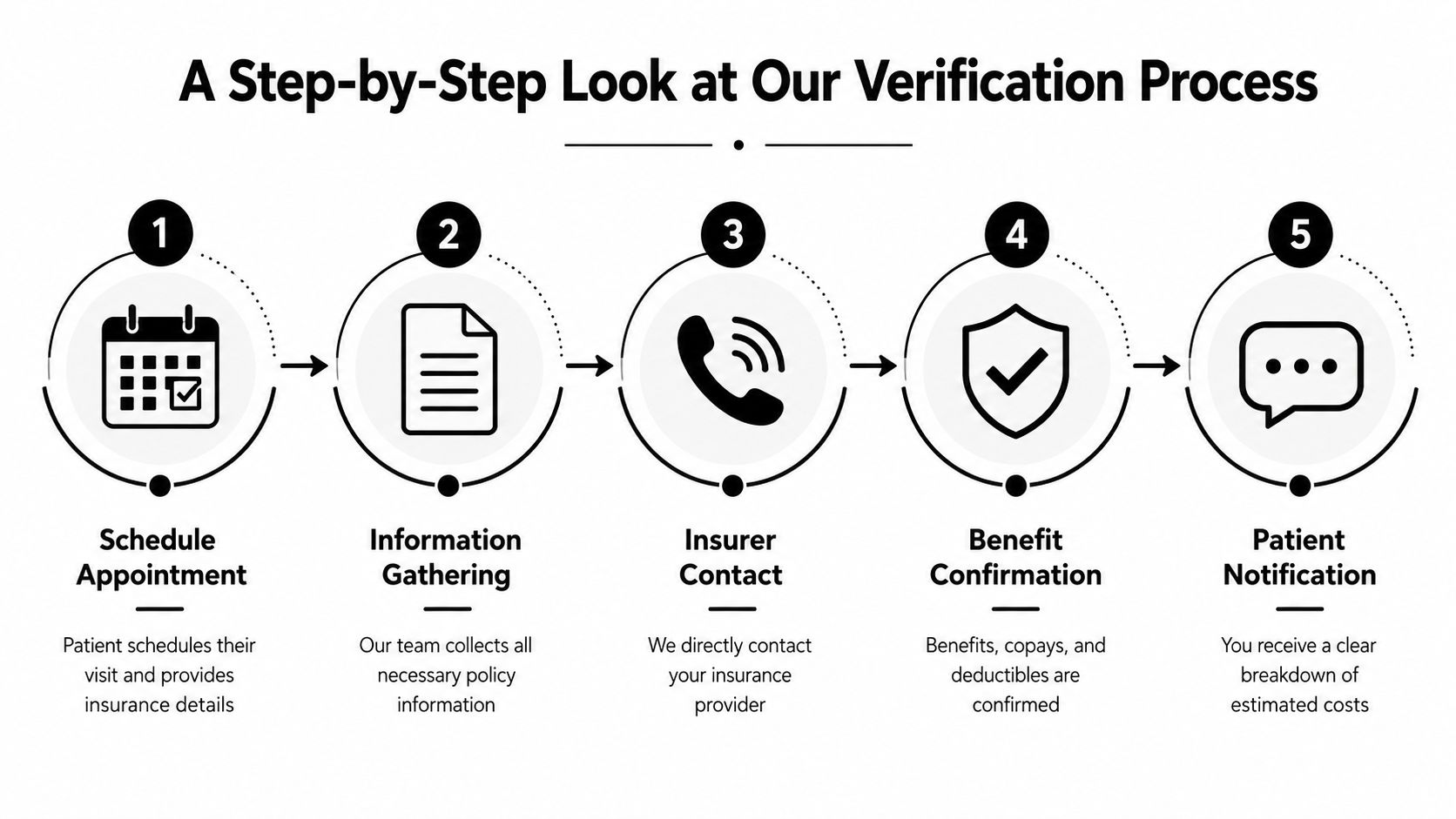
What happens from booking to arrival
The first step is simple. When you schedule, the office collects the information needed to match you to the insurer's records, then checks the plan details tied to your visit.
The second step happens behind the scenes. Staff gather the policy information, contact the payer through the electronic or phone-based workflow, and review the response for any coverage limits or special requirements. For major payers, electronic eligibility checks can return useful benefit details quickly, which helps front-desk staff speak with more confidence before the patient arrives as described in real-time eligibility guidance.
The final step is the one patients notice most. If there's anything important to clarify, the office updates the estimate and lets you know before the visit so you can make informed decisions.
Coverage can change between scheduling and the day of care, so the last check matters as much as the first one.
What this protects you from
This multi-touch process is designed to reduce avoidable surprises. It gives the team a chance to catch changes in coverage, missing authorizations, or other plan issues before they affect your appointment.
For patients, that means fewer awkward billing questions at checkout. For the office, it means cleaner communication and a better chance of creating a visit that feels organized from start to finish.
Common Dental Insurance Terms Explained
Insurance language can feel harder than the treatment itself. Small terms often carry very different meanings, and that is where confusion usually starts.
The words that matter most
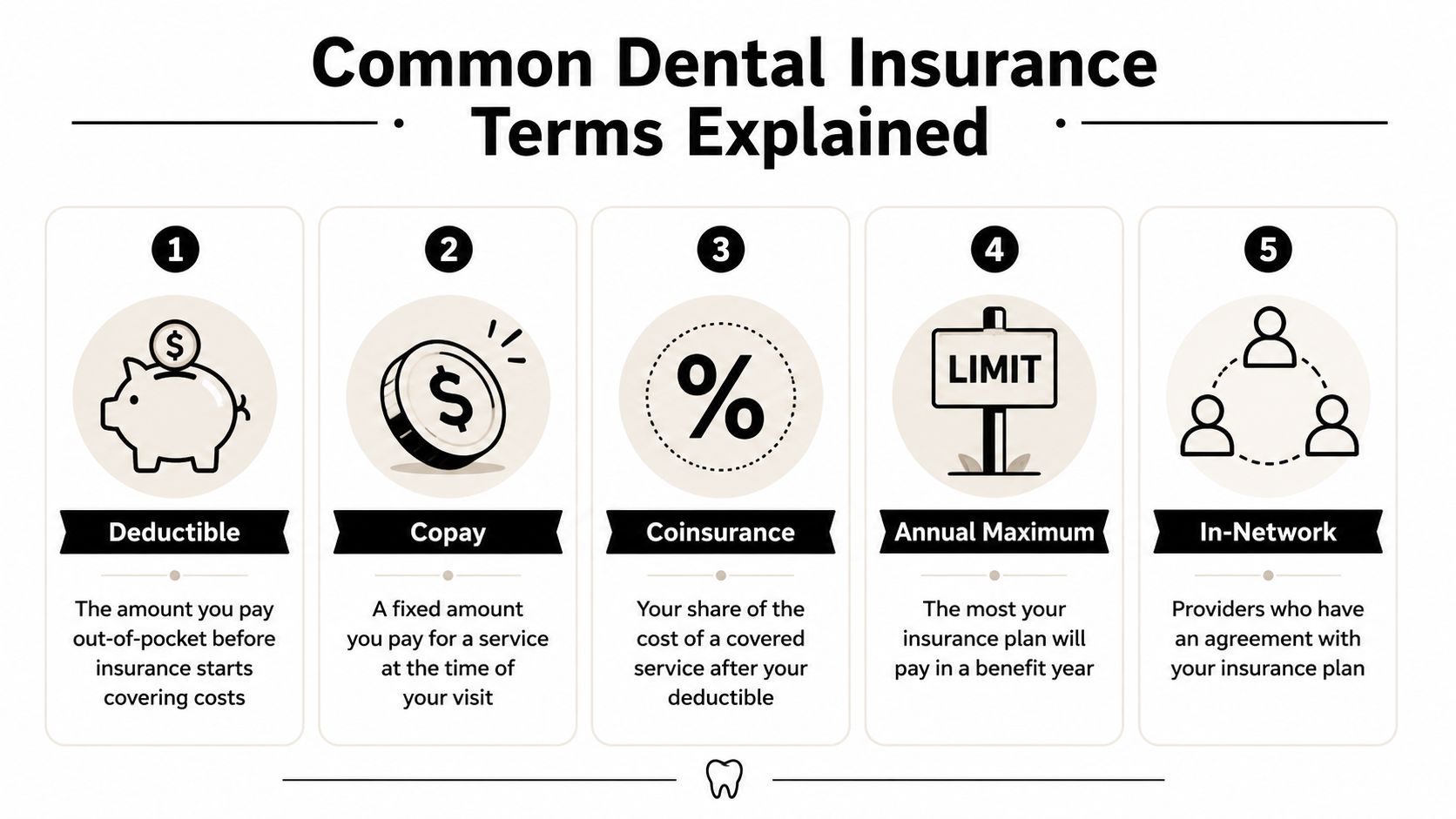
Deductible is the amount you pay first before your plan starts sharing costs. A simple way to understand it is as the amount that has to be met before the benefit part of the plan begins to help.
Copay is a fixed amount you pay for a service at the time of the visit. Coinsurance works differently, because it is your share of a covered service after the deductible has been met.
Annual maximum is the most your insurance plan will pay in a benefit year. In-network refers to providers who have an agreement with your plan.
The office also checks whether pre-authorization is needed. That is the insurer's approval for certain services before treatment begins, and it can matter for more complex dental care.
Why these details change your estimate
Verification is not only about confirming an active plan. It also includes checking deductibles, co-payments, coinsurance, policy limits, and procedure-specific coverage so the office can estimate what you may owe.
That extra detail makes the estimate more useful. A routine preventive visit can look very different from restorative or elective treatment, and the terms on your plan explain why.
Knowing the language helps you follow the estimate and ask better questions before the visit. That is how financial uncertainty starts to feel more manageable.
Estimates, Out-of-Network Care, and What to Bring
Patients usually want three things from the front desk. They want to know what the visit might cost, whether their plan can still help if the office is out of network, and what they should bring so nothing gets delayed.
How the estimate is built
A useful estimate starts with the right identifying information. We begin by collecting your full name, date of birth, insurance provider, policy number, and group number so the office can match your details with the insurer's records before your visit as outlined in standard intake guidance.
That information helps the team create a clearer cost estimate, but it's still an estimate. Plans can process claims differently depending on the final coding, the service delivered, and what the insurer confirms during review.
Out-of-network care in plain language
Out-of-network doesn't mean “no help.” It usually means the office and the insurance company don't have a direct contract, so the way benefits are applied may be different. The practice can still verify your coverage, help you understand what your plan may reimburse, and keep the cost conversation as transparent as possible.
For many patients, that clarity is the difference between postponing care and moving forward. It gives you a realistic picture before you commit to treatment.
What to bring
Bring these items to your first visit:
- Photo ID: This helps the team confirm your identity.
- Insurance card: The front and back can help with member details and policy data.
- Any recent treatment notes: If you're transferring care, this can help the doctor understand what's already been done.
- Your questions: If you're unsure about coverage, ask before treatment starts.
If you're new to the office, you can also review the new patient information here.
Your Patient Checklist and Frequently Asked Questions
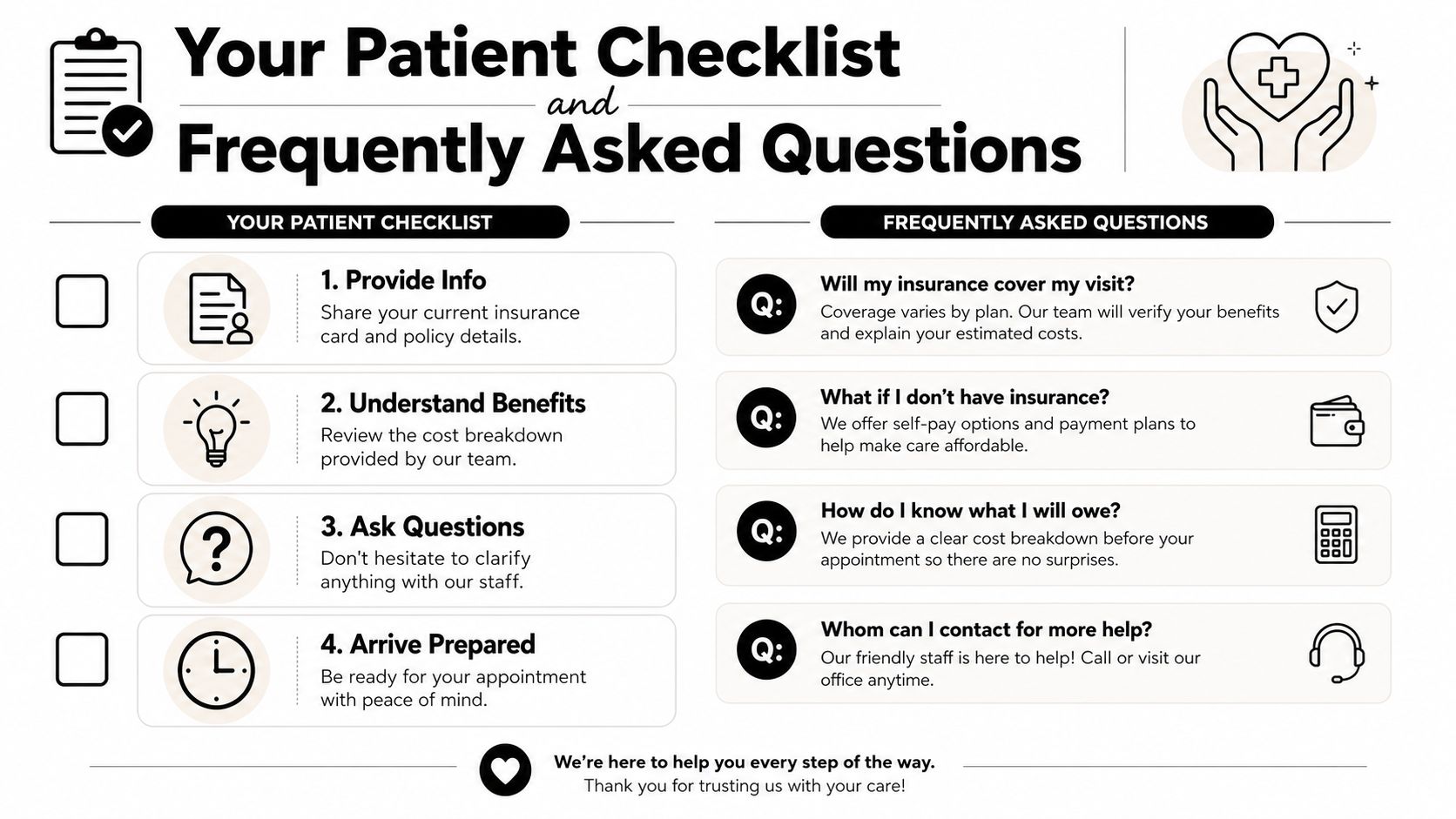
A first visit goes more smoothly when you know what the office is checking and what you can bring to help. The checklist below gives patients a simple way to prepare, ask the right questions, and avoid surprises at the front desk.
Quick checklist
- Provide info: Bring your current insurance card and policy details so the office can match your benefits with the plan on file.
- Understand benefits: Review the cost breakdown your team gives you and ask what is an estimate, what may be covered, and what could still be your responsibility.
- Ask questions: If anything seems unclear, ask the staff to explain it in plain language before treatment starts.
- Arrive prepared: Come in with peace of mind, knowing the office has already taken steps to verify the basics and reduce last-minute guessing.
Common questions
What if my insurance changes after verification? Let the office know right away. A new plan, new group number, or new employer coverage can change the estimate and affect how the claim is handled.
Does pre-authorization guarantee payment? No. It helps confirm approval for certain services, but final payment still depends on the plan rules and the details of the claim.
Why does the office document verification details? For your peace of mind and the practice's records, verification calls or electronic checks are documented with the date and reference number so there is a clear trail if questions come up later as described in compliance guidance.
Can I still ask questions after I've been given an estimate? Absolutely. A good front desk should welcome them, and a clear answer now can prevent confusion later.
For more details on what to expect as a new patient, review our new patient information.
If you're looking for a dentist in Walnut Creek, CA who takes financial transparency seriously, schedule a visit with William M. Schneider, DDS today. You deserve dental care that feels clear, calm, and easy to plan for.
William M. Schneider, DDS is ready to help you understand your benefits, plan your care, and avoid surprise bills. Reach out today to book your appointment and get a straightforward conversation about treatment, coverage, and next steps.