If you've been living with a chipped front tooth, a smile that feels crowded on one side, or a stain that whitening never fully fixed, it's easy to put off making a change. A lot of people in Walnut Creek want a better smile, but they don't want to gamble on how it will look when the work is done. Digital smile design software gives that decision a calmer starting point, because you can see a preview before treatment begins.
For patients searching for a dentist near me, the difference is simple. Instead of trying to picture the result from a verbal description, you and your dentist can look at a digital mockup together, talk through what feels natural, and decide whether the plan fits your face and your goals. At a trusted dentist in Walnut Creek, CA, that conversation can be the moment when a vague idea turns into a real, personalized plan.
Imagining Your New Smile Before Treatment Begins
A lot of patients don't walk in asking for technology. They walk in saying things like, “I just want this one tooth fixed,” or “I've lived with this for years, but I'm not sure I'm ready.” That hesitation is normal. Cosmetic treatment feels different when the result will live in the center of your face every day.
That's where digital smile design software helps. In plain language, it lets a dentist show you a realistic preview of your future smile before any irreversible treatment starts. A chipped tooth, worn edges, dark staining, or uneven gum display can all be evaluated on screen first, so you're not asking yourself to imagine the outcome blind.
A helpful way to think about it is a fitting room. You wouldn't buy a suit online just because the size chart looked promising. You'd want to see how it fits on your body, under real light, from more than one angle. Smile design works the same way, because it gives both the dentist and the patient something concrete to evaluate together.
That matters for more than aesthetics. A preview helps reduce uncertainty, especially for people who've delayed care because they're worried about regret. It also gives the dentist a clearer roadmap when planning cosmetic dentistry, restorative dentistry, or a mix of both. The result is not just a pretty image, it's a guide for the actual treatment that follows.
What Digital Smile Design Software Actually Does
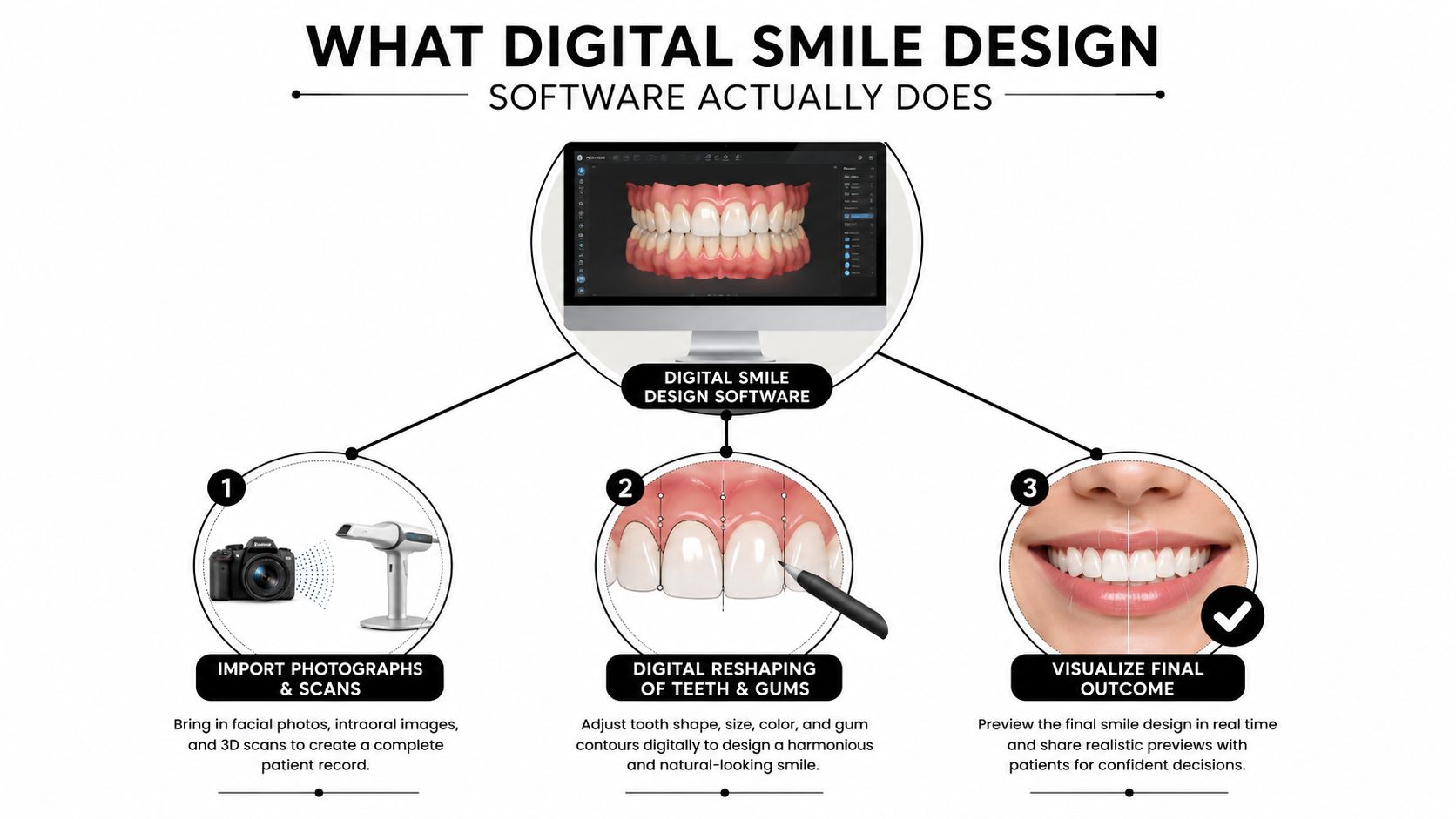
Digital smile design software is a planning tool that combines patient photographs, intraoral scans, and design software to map out a smile on screen. The concept is widely traced to 2007, when Brazilian dentist Christian Coachman introduced it as a digital treatment-planning approach for aesthetic dentistry (peer-reviewed review). In modern use, the dentist aligns facial reference lines, edits tooth shape and proportion, and adjusts gingival display so the preview feels anchored to the patient's real face, not a generic template.
From photos to a digital mockup
The basic workflow is straightforward. First, the dentist captures facial photos and dental scans. Then those files are imported into the software, where the smile can be adjusted on screen. A well-built mockup can show how the teeth relate to the lips, smile line, and face as a whole.
That's the big difference between hoping and seeing. The patient doesn't have to rely on imagination alone, and the dentist doesn't have to guess which shape or length the patient will prefer.
Practical rule: the best design is the one that looks believable in the face, not the one that looks flashy on a monitor.
Why the preview matters
This process is especially helpful when a patient is weighing options like veneers, Invisalign, or implant-based restoration. It can show whether the plan needs only subtle refinement or a more complete change. For patients who like to understand the “why” before they say yes, that clarity can make a hard decision feel manageable.
For a deeper look at the imaging side of this workflow, the practice's page on digital dental imaging helps connect the scan to the final design.
How Dr. Schneider Uses Digital Smile Design in His Walnut Creek Office
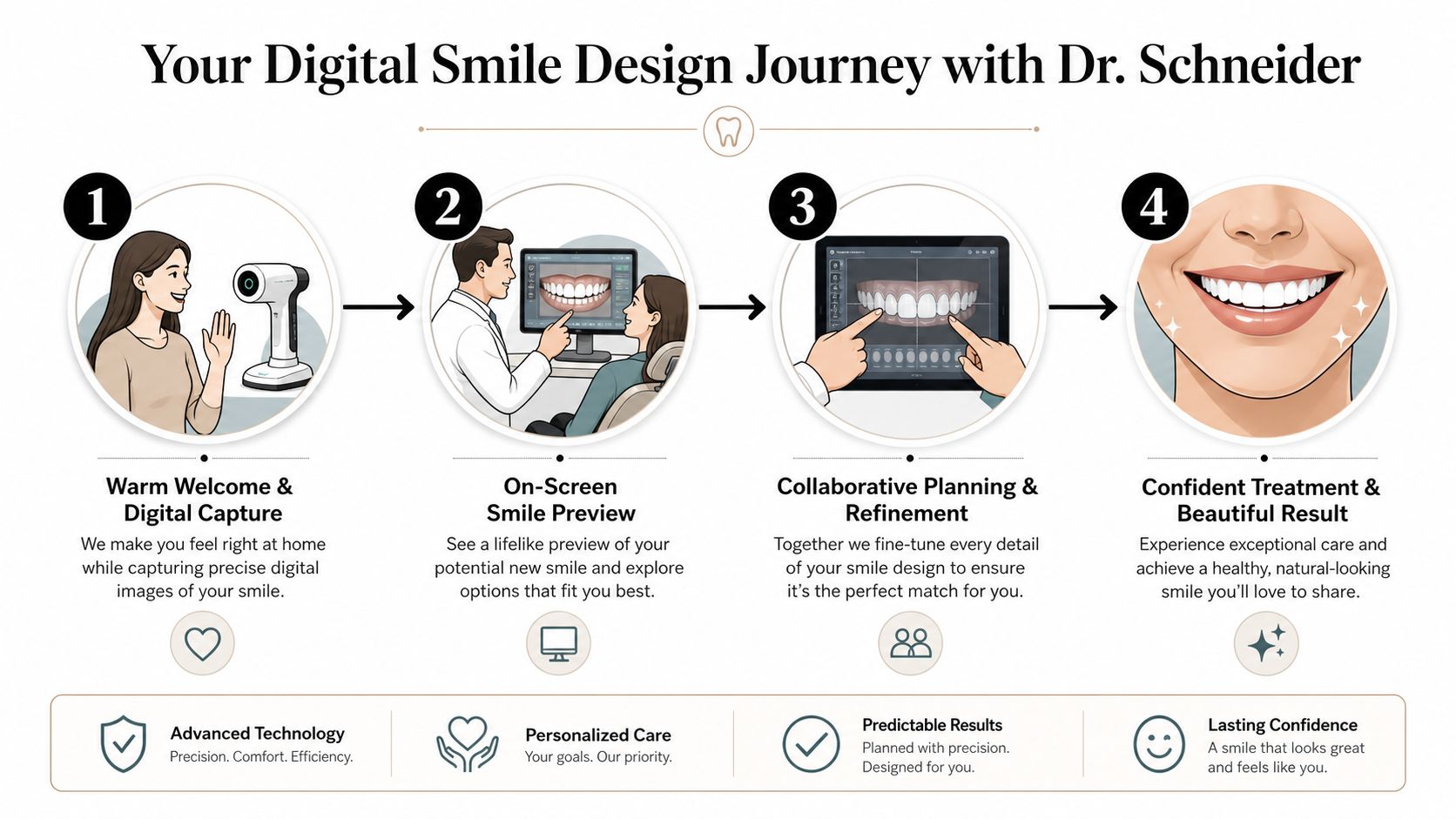
A digital preview feels abstract until you see how it fits into a real appointment at 1855 San Miguel Dr., Ste 31, Walnut Creek. The first visit usually starts with conversation, not equipment. You talk about what bothers you, what you want to keep, and what kind of result would still look like you.
The consultation feels collaborative
From there, the imaging begins. The office captures the photos and scans needed for planning, then uses those records to draft the mockup. That design phase is where a patient can point to the screen and say, “A little shorter here,” or “That looks too square,” before any major treatment decisions are locked in.
Dr. Schneider's background matters in this stage. He brings more than 25 years of experience, education from the University of Minnesota, and advanced training in General Dentistry (AEGD) in San Francisco. That combination helps keep the conversation grounded in both aesthetics and function, which is what patients need when they're deciding between a smile makeover, a conservative fix, or a more restorative plan.
The comfort side matters too. Patients who feel nervous about cosmetic work often care less about the software itself and more about whether the visit feels calm. The office's use of painless injections, sedation when appropriate, and a relaxing environment can make the imaging and planning process easier for anxious patients.
After the design is reviewed, the next visit is usually the reveal. That's the moment when the projected smile appears on screen, and the conversation shifts from “What if?” to “Does this fit my goals?”
A good digital preview should feel like a conversation starter, not a commitment trap.
The same planning workflow also supports the treatment steps that follow. Whether the final plan involves Invisalign, veneers, or implants, the mockup helps connect the preview to the actual clinical work instead of leaving them as separate ideas.
The visual side of that process can feel even clearer in motion.
Matching the Software to Invisalign, Veneers, and Dental Implants
Digital smile design software becomes especially useful when a smile plan includes more than one type of treatment. That's because the software gives the team one visual target to work from instead of making each choice in isolation. For many Walnut Creek patients, that's the difference between feeling overwhelmed and feeling organized.
Invisalign planning with a clear endpoint
For Invisalign, the preview shows where the teeth are headed before the aligners ever go in. That's reassuring for adults who know they want straighter teeth but don't want months of treatment to feel like a mystery. A patient can see the broad shape of the finish line, then decide if the change feels worth the commitment.
If you're comparing aligner care with other options, the practice's Invisalign dentist near me page can help connect that planning to day-to-day treatment.
Veneers with shape, length, and brightness in view
Veneers work differently, because the look is shaped before a single restoration is made. The design process helps patients and dentist agree on tooth length, contour, and brightness together. That keeps the final result from feeling like the lab made every aesthetic choice alone.
Implants planned for the whole smile
Dental implants need functional planning too, especially in visible areas where gum contour and crown shape matter. A digital plan helps guide placement so the replacement tooth fits naturally with the rest of the smile, not just with the bone underneath it. That's important when the goal is a result that looks comfortable in real life, not just in a close-up photo.
The bigger idea is simple. Cosmetic and restorative goals often overlap, and the software helps the dentist plan them together. A patient who needs a straighter smile, a veneer adjustment, or a missing tooth replaced can all start from the same visual conversation.
What Patients Can Expect With Cost, Insurance, and Limitations
Once the technology sounds appealing, you ask the practical questions. That's smart. A preview is useful only if you understand what it does, what it doesn't do, and how it fits into the larger treatment cost.
Cost and insurance feel clearer when the plan is personal
The design consult is usually only one part of the total fee, because the final price depends on the actual treatment path. Invisalign, veneers, implants, or a combination of services all carry different clinical steps, so a one-size-fits-all number wouldn't be honest. Patients should expect a personalized estimate after the planning visit, not a guess before the dentist has seen the case.
Insurance works the same way. Purely cosmetic treatment is often not covered, while restorative work that also improves function may receive partial coverage depending on the plan. The front desk team can help verify benefits before you commit, which lowers the risk of surprises later.
The preview is helpful, not magical
It's also important to be candid about limitations. A mockup is a high-quality prediction, not a guarantee. Biology, gum health, tooth position, and case complexity all influence the final outcome.
That caution matches current evidence. A recent meta-analysis found that AI-based DSD can improve patient and clinician satisfaction and facial esthetic metrics, but it also reported high heterogeneity and publication bias, which means marketing claims can still run ahead of the research (meta-analysis). In other words, the preview is valuable, but it should be treated as part of careful planning, not a promise carved in stone.
Being upfront about those limits builds trust. Patients in Walnut Creek and the East Bay usually don't mind realistic expectations. They mind being surprised.
Best question to ask at the consult: “What parts of this preview are highly predictable, and what parts may still change once treatment starts?”
Choosing a Walnut Creek Provider for Digital Smile Design
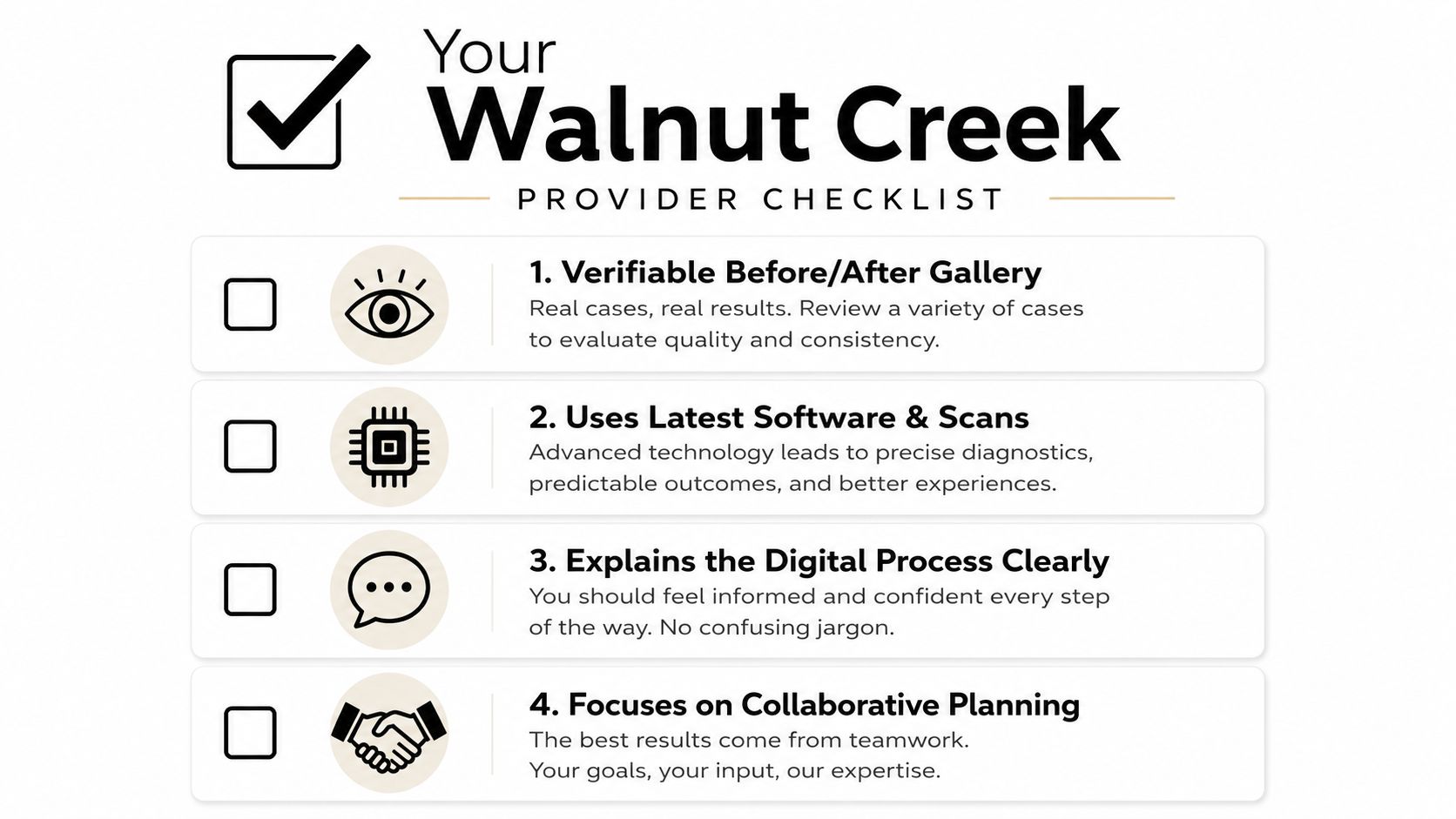
Not every office uses the same standard of care for smile planning. If you're comparing providers, a short checklist can save time and help you avoid a rushed decision. The right practice should be able to show experience, explain the process clearly, and connect the preview to the actual treatment plan.
What to look for before you book
- Verifiable cosmetic and restorative experience: Ask whether the dentist has handled both smile makeovers and functional cases, because the best plans balance appearance with bite and longevity.
- Comfort with the software and scans: The office should explain how the photos, scans, and mockup fit together without making you decode jargon.
- A preview before anything irreversible: You should see the direction of treatment before committing to major work.
- Transparent pricing: A good office breaks down what the design visit includes and what the treatment may cost.
- Support for anxious patients: If you're nervous, ask about sedation options and how the team keeps imaging visits calm.
- A real Walnut Creek location: You want a practice you can visit, not a generic intake line.
Why that checklist matters here
Dr. Schneider's practice checks those boxes in a practical way. The office offers comprehensive care, from preventive cleanings and exams to cosmetic and restorative treatment, and it's built around a patient-friendly environment with clear explanations, painless injections, and sedation when appropriate. The location at 1855 San Miguel Dr., Suite 31 makes it a real East Bay option for people who want continuity, not a one-time consultation.
That's what patients usually want from cosmetic dentist near me searches, or even from people looking for dental implants near me or an emergency dentist they can trust later. They want a team that can handle routine care, a tooth extraction if needed, and more advanced planning without sending them elsewhere for every step.
When a practice can show the smile before the procedure, explain the path forward, and keep the experience comfortable, the decision gets easier. You're not just choosing a technology. You're choosing the team that uses it.
Take the First Step Toward the Smile You Have Been Imagining
Digital smile design software gives you a clear preview before treatment starts, which makes cosmetic and restorative decisions feel less intimidating. In Walnut Creek, it's used to help patients understand options for Invisalign, veneers, and implants in a way that feels personal instead of generic. The consult is where curiosity becomes a plan, and the plan becomes something you can see.
If you've been waiting to find a dentist in Walnut Creek, CA who can talk through your options without pressure, this is a good time to schedule a visit. You'll get a real East Bay address, a straightforward conversation about what's possible, and a team ready to welcome new patients with transparent expectations. If seeing your future smile would help you finally move forward, make the call or request an appointment online.
Frequently Asked Questions About Digital Smile Design Software
Does DSD work for small changes? Yes. It can be just as helpful for a single chipped tooth or subtle alignment change as it is for a full smile makeover.
How many visits does it take? Often one visit for consultation and imaging, then another for the preview and treatment planning discussion, though the exact sequence depends on the case.
Will the preview match the final result exactly? Not always. It's a strong visual guide, but final details still depend on tooth movement, gum health, and how your mouth responds to treatment.
Can anxious patients use sedation? In many cases, yes, when appropriate. Patients in Walnut Creek should ask about comfort options before the imaging visit so the experience feels manageable.
If you're ready to see what your smile could look like before you commit to treatment, contact William M. Schneider, DDS in Walnut Creek and schedule a consultation.