If you've been searching for a dentist near me in Walnut Creek, CA, and you're juggling pain, a cracked tooth, an old crown that doesn't feel right, or just a long-overdue checkup, you probably don't want a cookie-cutter answer. You want someone who will look at your teeth, listen to your concerns, and build a plan that fits your health, your comfort, and your timeline.
That's what personalized treatment plans are for. In a private practice setting, they turn a stressful dental decision into a clear path forward, whether you're coming in for a new patient exam, considering cosmetic dentistry, or trying to decide between restorative dentistry options like dental implants near me, a tooth extraction, or a crown.
Why Walnut Creek Patients Choose Personalized Dental Care
A lot of people walk into the office with the same quiet question, “Can you just tell me what needs to be done?” They may have been putting off care because of fear, cost, or a past visit that felt rushed. In Walnut Creek, patients often want a dentist in Walnut Creek, CA who takes the time to explain the options without pressure.
That's where a personalized treatment plan matters. Personalized care is a collaborative process, meaning the patient and clinician identify the problem together and agree on the goals and actions together. In one major review, the most effective versions were the ones that were more detailed, more intensive, and integrated into routine care, while stand-alone approaches were less helpful (JAMA review).
Why that feels different in the chair
A generic plan might only answer the immediate problem. A personalized one asks what else matters, pain control, appearance, chewing, timing, anxiety, and how the treatment fits real life. That's especially important in a community like Walnut Creek, where many patients are balancing work, family, and a schedule that doesn't leave much room for repeat visits.
Practical rule: If a treatment plan doesn't reflect your goals, your health history, and your comfort level, it's not truly personalized.
The best plans also respect the fact that no two mouths age the same way. One patient may need routine cleaning and exams, another may be looking at teeth whitening or Invisalign, and another may need urgent help from an emergency dentist. A thoughtful dentist doesn't force those patients into the same pathway.
Personalized planning also helps patients feel heard before any drill ever starts. That trust is often the difference between someone avoiding care for another year and someone finally moving forward with confidence.
How Your Personalized Treatment Plan Is Created
The process starts with listening, then moves into a careful clinical exam. At a new patient exam, the team looks at the whole picture, not just the tooth that hurts. That includes the visible problem, the gums, bite, jaw function, existing restorations, and any signs that point to future trouble.
A good plan then brings in data from several places, which is how modern care avoids guesswork. Personalized planning depends on integrating electronic health records, lab results, imaging, demographic data, lifestyle factors, medication history, and sometimes wearable-device signals into one decision-support layer so the clinician can estimate risk, forecast response, and flag adverse effects earlier (personalized treatment planning and AI).
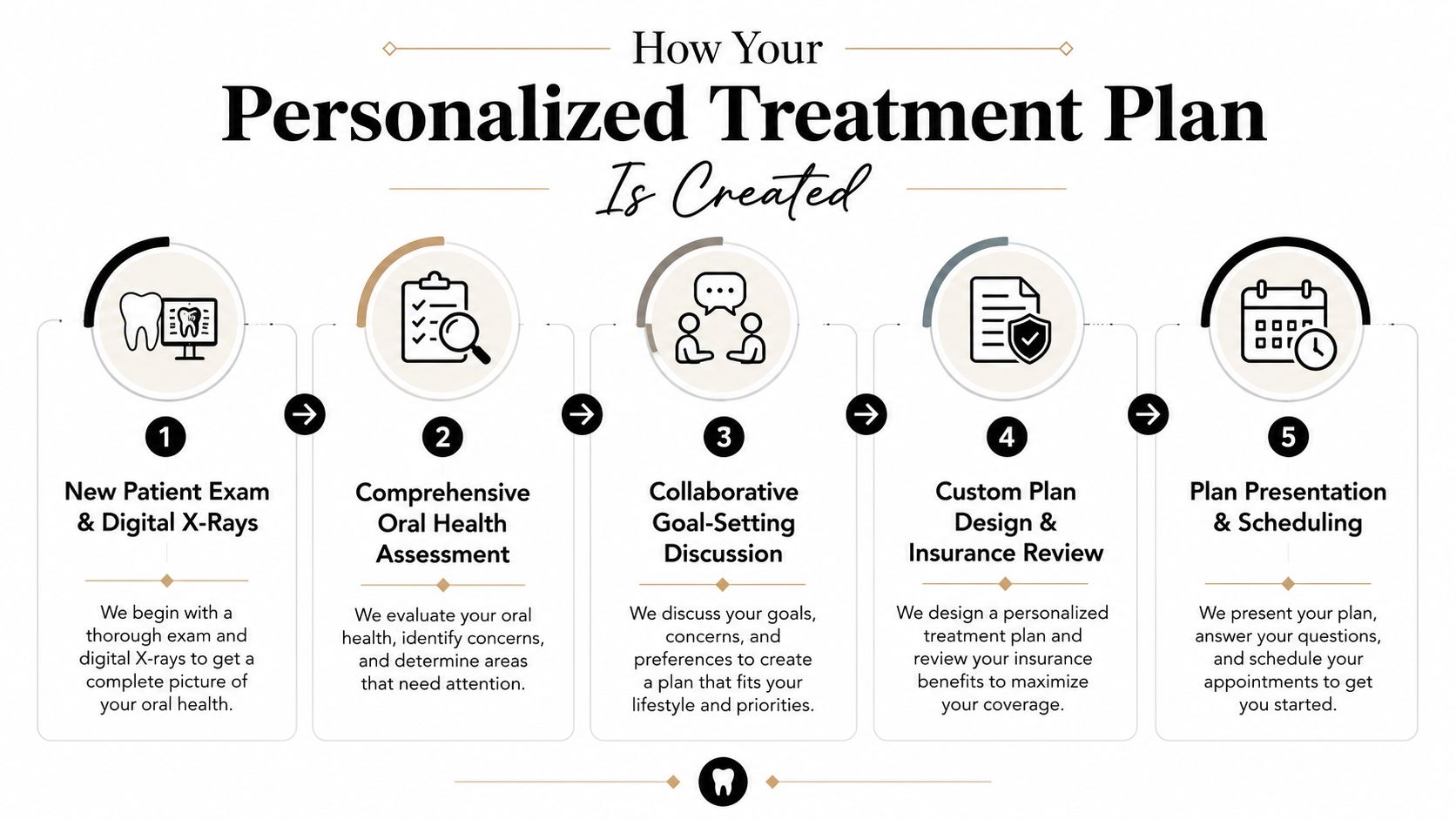
The workflow should feel clear, not mysterious.
- New Patient Exam and Digital X-Rays. These reveal decay, bone levels, hidden infection, and other issues that can't be seen by looking alone.
- Oral Health Assessment. The clinician reviews teeth, gums, bite, comfort, and risk factors.
- Collaborative Goal-Setting Discussion. You talk through pain, aesthetics, timing, and what matters most to you.
- Custom Plan Design and Insurance Review. The team organizes treatment priorities and discusses practical details.
- Plan Presentation and Scheduling. You leave with a written path forward and the next appointment already in motion.
The details matter because patients need to know what happens after the exam, not just what gets diagnosed. For a closer look at what a dental exam usually includes, you can read what happens during a dental exam.
Clear plans reduce confusion. Patients do better when they know what's urgent, what can wait, and why the sequence matters.
That's the core value of the process. It turns findings into priorities, then priorities into action.
The Core Elements of a Truly Personalized Dental Plan
A genuine plan is built from more than a diagnosis. It blends what the mouth needs with what the patient wants, what the data shows, and what the schedule can realistically support. That combination is what separates a careful plan from a rushed recommendation.
At the technical level, personalized treatment planning works best as a two-step optimization problem. First, the clinician or model predicts the likely outcome for each available therapy for that specific patient. Second, an optimization method chooses the strategy that maximizes predicted benefit across the outcome variables (precision medicine review). In plain language, the team compares options instead of guessing.
What goes into the decision
The strongest plans usually weigh four things at once:
- Clinical Data. X-rays, scans, exam findings, health history, and risk patterns.
- Personal Goals. Function, comfort, appearance, and how soon the patient wants change.
- Lifestyle Factors. Diet, habits, medications, and day-to-day routines.
- Financial and Time Considerations. Insurance, visit frequency, and the realistic timeline for care.
That approach matters because personalized care isn't static. In personalized intervention research, tailoring can include choosing psychotherapies, pharmacotherapies, or other treatments, deciding whether to combine them, choosing what to target first, and using continual assessment to adjust based on the patient's progress (personalized intervention review).
The same logic applies in dentistry. A plan that works for one person may be too aggressive, too slow, or too expensive for someone else. The goal is not just to treat disease, it's to choose the sequence that makes sense for that person's mouth and life.
If you've ever wondered how digital tools help a dentist map cosmetic changes, a useful resource is digital smile design software. That kind of planning supports clearer conversations around shape, symmetry, and expected results before treatment begins.
A good plan should answer three questions immediately, what's the problem, what's the next step, and what happens if you wait.
That's the structure patients can trust.
Real Examples of Personalized Dental Treatment Plans
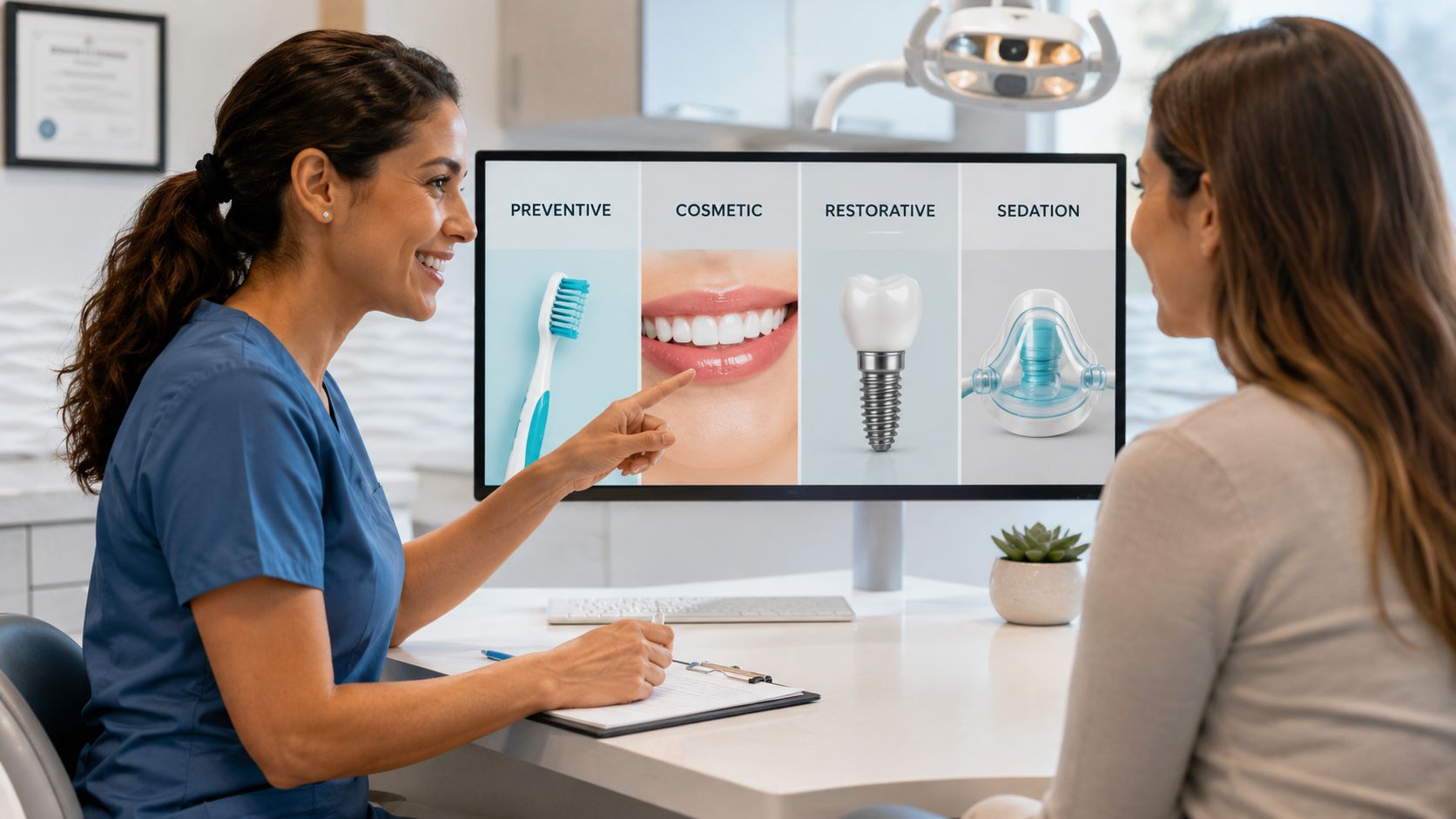
A personalized plan doesn't look the same for every patient, and that's the point. One person may need prevention and maintenance, another may want a brighter smile, and another may need rebuilding after damage or missing teeth.
Preventive care that matches risk
For a patient whose teeth and gums are stable, the plan may focus on cleaning and exams, dental x-rays when appropriate, and close monitoring. If the mouth shows early signs of trouble, the dentist may move sooner instead of waiting for pain to appear. That kind of planning helps keep small problems small.
Cosmetic care that respects the whole smile
A patient asking about teeth whitening or a more complete smile change may need a different sequence. Some start with gum health and hygiene, then move into cosmetic dentistry. Others may combine whitening with Invisalign or shape improvements so the final result looks balanced, not overdone.
Restorative care that rebuilds function
For a broken tooth or missing tooth, the plan may include a tooth extraction, a root canal, a crown, a bridge, or dental implants. The right choice depends on the tooth's condition, the surrounding bone and support, and the patient's long-term goals. A good dentist talks through each option in plain language, not just a list of procedures.
Comfort-focused care for anxious patients
Some patients delay treatment because they're nervous, and that changes the plan too. Sedation-supported care can make a difficult visit more manageable, especially when someone needs several procedures or has avoided dentistry for a while.
In a practice like William M. Schneider, DDS, that planning can also include Invisalign, restorative dentistry, and sedation options when appropriate, so the treatment matches both the clinical need and the patient's comfort.
The pattern is simple. Preventive care protects. Cosmetic care refines. Restorative care repairs. Comfort-focused care helps patients finally get it done.
Benefits of Personalized Care for Your Long-Term Oral Health
Personalized care works because it keeps treatment aligned with the mouth in front of the clinician, not a generic protocol. It helps the dentist catch issues earlier, prioritize the right problems first, and avoid unnecessary steps that don't move the patient toward a healthier result.
That matters in real life. A plan can look “personalized” on paper and still fall short if it never gets used, never gets followed up, or never gets adjusted. A JAMA review found only small improvements in quality of care for diabetes, hypertension, and asthma, with better results when personalized care planning was integrated into routine care (JAMA review). The same lesson carries over to dentistry, personalization helps most when it's part of ongoing care, not a one-time conversation.
What patients usually notice
Patients often value personalized care for a few practical reasons:
- Efficient, targeted treatment. The dentist focuses on what matters most first.
- Predictable timing. The sequence is clearer, so there are fewer surprises.
- Better use of insurance and budgeting. Care is organized around priorities.
- Less anxiety. Clear explanations reduce uncertainty before the appointment.
There's also a trust issue. Current equity and implementation literature says AI can support personalization, but only when models are trained on diverse, representative datasets and paired with safeguards for privacy, access, and bias (equity and implementation guidance). That warning matters in any health setting, including dentistry, because patients want care that reflects their actual needs, not assumptions.
Clinical insight: The best plan is the one the patient can understand, accept, and actually complete.
Personalized care can also reduce the chance of bigger problems by addressing early signs before they become pain, infection, or more complex treatment. For families and professionals in Walnut Creek, that often means fewer urgent disruptions and more control over the pace of care.
The bottom line is simple. A customized plan doesn't just aim for a nicer smile. It aims for a mouth that stays healthier, feels better, and is easier to maintain over time.
What to Expect When Visiting Our Walnut Creek Dental Practice
Walking into a new dental office should feel organized, calm, and clear. At the Walnut Creek practice at 1855 San Miguel Dr., Suite 31, patients can expect a welcoming environment, careful infection control, and a team that explains each step before anything begins. That matters if you've had uncomfortable visits elsewhere or if you're bringing in a child, a nervous spouse, or your own list of questions.
The first thing you'll notice is that the visit isn't rushed. The team reviews your concerns, checks your health history, and explains what the exam shows in everyday language. If you need more than one option, you'll hear the trade-offs so you can make an informed choice.
Comfort and logistics that matter
A good appointment should also be practical. That's why many patients appreciate convenient online appointments and payments, accessibility accommodations, and a clear path for follow-up care. If you're looking for a dentist in Walnut Creek, CA who can help with routine care, cosmetic dentistry, or restorative treatment, those small details make the experience easier from the start.
Sedation options may be available when appropriate, and pain control is handled with a gentle approach, including painless injections when possible. That support can make a real difference for patients who've postponed care because of fear.
The office also serves the broader East Bay community, so new patients from nearby areas can feel confident they're entering a practice built around continuity, not a one-time fix. If you need a cosmetic dentist near me, a dental implant consultation, or help with an urgent problem that feels like an emergency dentist visit, the visit begins with listening and ends with a plan.
Every part of the appointment should answer the same question, what's the safest, most sensible next step for this patient?
Schedule Your Personalized Dental Consultation Today
If you've been waiting to find a dentist who will explain your options clearly, a personalized plan is the right place to start. William M. Schneider, DDS brings more than 25 years of experience to preventive, cosmetic, and restorative care, with treatment that's built around function, appearance, and long-term comfort.
Whether you need a new patient exam, Invisalign, teeth whitening, a tooth extraction, or help deciding about dental implants, the next step is a consultation. For Walnut Creek and East Bay patients, that conversation can turn uncertainty into a practical plan you can trust.
If you're ready to move forward, William M. Schneider, DDS offers personalized treatment plans designed around your goals, comfort, and oral health needs. Call or visit the practice to schedule your appointment and get a clear path toward healthier, more confident dental care.