Can a dental implant be failing even when it doesn't hurt and still feels firmly in place? Yes. The earliest dental implant failure signs often appear as gum bleeding, swelling, a new bad taste, or gradual changes on dental X-rays rather than dramatic pain or wobbling. If something around your implant feels different, noticing it early is a reason to arrange an evaluation, not a reason to panic.
Patients looking for a dentist in Walnut Creek, CA, often assume an implant problem will be obvious. In practice, inflammation and bone changes may develop without obvious warning. A careful clinical exam can distinguish treatable irritation, a loose crown or abutment component, infection around the implant, and loss of the implant's foundation. This guide explains what to watch for and when to contact a Walnut Creek implant dentist.
Recognizing Dental Implant Failure Signs in Walnut Creek
A patient may notice a small streak of blood while brushing, tenderness when chewing, or a gumline that looks slightly different around an implant. It's easy to dismiss those changes as aging, food irritation, or normal sensitivity, especially when the implant doesn't move. That assumption can delay care.
The International Congress of Oral Implantologists identified mobility, pain on function, and bone loss greater than one-half of the implant length as signs of failure in the Pisa Consensus Conference. Another clinical definition included mobility, peri-implant radiolucency, infection, pain or discomfort, and bone loss greater than 2 mm around the implant, as summarized in this clinical review of implant failures. These findings show why diagnosis depends on more than a single symptom.
A subtle change still deserves attention
Suppose your implant crown looks normal, but the gum bleeds each time you floss. Or perhaps your bite feels slightly heavier on that side. Those signs don't prove the implant has failed, and many implants with inflammation remain treatable. They do indicate that the surrounding tissues need assessment.
Peri-implant mucositis affects the soft tissue around an implant and can progress if inflammation continues. Population-level evidence shows that these tissue problems are common enough to warrant routine monitoring. A 2022 meta-analysis of peri-implant diseases reported peri-implantitis prevalence of 19.53% at the patient level and 12.53% at the implant level.
Practical rule: Don't wait for severe pain or obvious movement before calling a dentist near you. New bleeding, swelling, odor, tenderness, or a bite change is enough to justify an appointment.
Early Warning Signs You Should Not Ignore
Early implant problems often involve the gums and supporting tissues before the implant becomes loose. Watch for persistent redness, swelling, bleeding during brushing or flossing, a metallic taste, unusual odor, or tenderness when chewing. Gum recession can also expose more of the abutment or make the implant restoration look longer than it did before.
These symptoms may reflect peri-implant mucositis, peri-implantitis, a mechanical complication, or another local issue. They don't automatically mean the implant is lost. The important distinction is whether inflammation remains limited to the soft tissue or has progressed to bone loss.
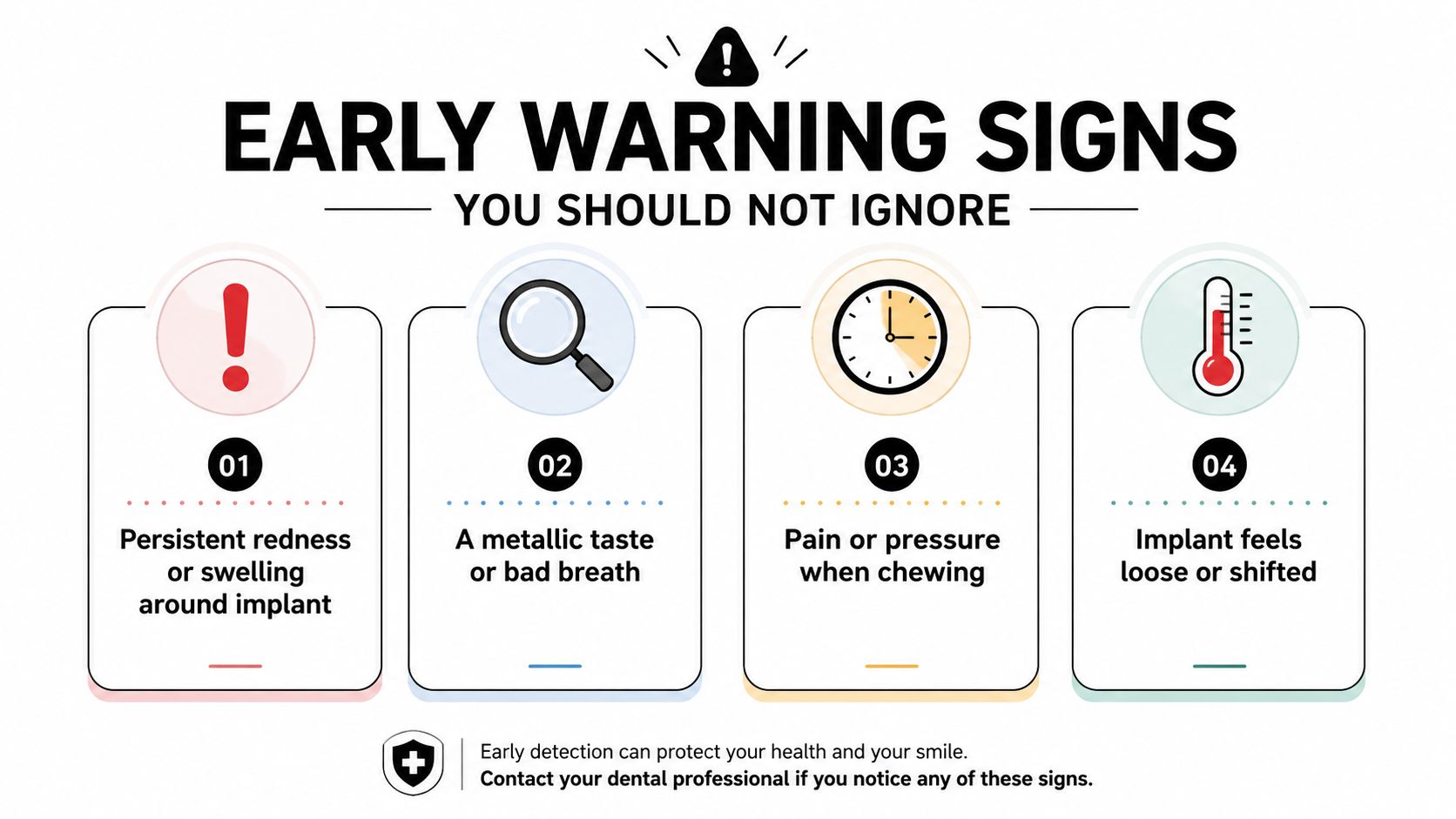
Why quiet symptoms matter
Consensus guidance defines peri-implantitis using a combination of bleeding on probing, increased probing depths, and bone loss after initial healing. When earlier records aren't available, a practical diagnostic threshold includes a radiographic bone level of 3 mm or more, bleeding on probing, and probing depths of 6 mm or more, as described in the consensus report on peri-implant health and disease.
A stable-feeling implant can still have active inflammation around it. Imaging trends and pocket-depth measurements may reveal progression before mobility appears. That's why comparable dental X-rays and standardized probing are more useful than relying on how the implant feels at home.
Common early symptoms include:
- Bleeding: Blood around an implant during routine cleaning deserves evaluation, particularly when it persists.
- Swelling or redness: Tissue that stays puffy or irritated may indicate inflammation rather than simple brushing trauma.
- Bad taste or odor: A metallic taste, unusual odor, or pus can point toward infection.
- Chewing tenderness: Pressure or soreness on biting may reflect inflammation, a bite problem, or a restoration issue.
- Gum recession: Increasing exposure around the restoration can change appearance and leave tissues less protected.
A 2022 review reported mean peri-implant mucositis prevalence of 29.48% at the implant level and 46.83% at the subject level, with peri-implantitis at 9.25% and 19.83%, respectively, in the populations examined in that review. The published evidence on peri-implant disease prevalence supports taking these warning signs seriously, even when discomfort is mild.
Late Stage Indicators of Implant Failure
How can you tell when an implant problem has progressed beyond an early warning sign? Late-stage failure usually involves lost bone support, a mechanical complication, or both. The clearest finding is noticeable mobility. An integrated implant should remain rigid, so movement of the implant body needs prompt evaluation.
Other advanced signs include worsening pain, difficulty chewing, pus or discharge, a sudden bite change, and recession that exposes implant threads. Dental X-rays may show bone loss or a radiolucent area around the implant before the implant feels loose. Comparing current images with earlier X-rays helps determine whether the supporting bone is changing over time.
| Early Warning Signs | Late Stage Indicators |
|---|---|
| Bleeding during brushing or flossing | Implant body feels loose or moves |
| Persistent redness or swelling | Pus, discharge, or worsening infection |
| Mild tenderness during chewing | Significant pain or inability to chew comfortably |
| New odor or metallic taste | Extensive bone loss on dental X-rays |
| Gradual gum recession | Exposed implant threads or major bite change |
Clinical mobility is the cardinal sign of implant failure because it can reflect lost osseointegration or structural damage. Peri-implant radiolucency and a dull percussion sound may also accompany failure, as described in this review of implant failure patterns.
A loose sensation does not always mean the implant itself has failed. The FDA identifies a tooth that feels loose or twists in place as a warning sign, and a loosened abutment screw can create that feeling. Your dentist must examine the implant, restoration, and connecting components to identify the source. The FDA guidance on dental implants explains this distinction.
Seek prompt dental care if you notice movement, pus, severe pain, or a sudden bite change. If bone support is substantially reduced, removing the implant may be necessary. Site preservation or bone grafting can then help prepare the area for a future restoration. Waiting for the implant to fall out risks further tissue damage and makes treatment planning more difficult.
Common Causes and Risk Factors Behind Implant Problems
Implant complications usually develop through an interaction of biological, mechanical, anatomical, and patient-related factors. Understanding that combination helps explain why an implant can function comfortably for a long time and then develop a problem.
Biologically, bacteria can inflame the soft tissue and gradually damage the bone around an implant. Peri-implantitis resembles gum disease around a natural tooth, but the implant's supporting structures respond differently and require specialized examination. Bleeding, swelling, deeper pockets, pus, and bone loss can reflect this pathway.
Mechanical stress creates a different pattern. Grinding or clenching can overload the restoration, while a loose screw, fractured component, or poorly distributed bite force can produce movement or discomfort. The review of dental implant failure causes and treatment also discusses biological, mechanical, and esthetic categories of implant complications.
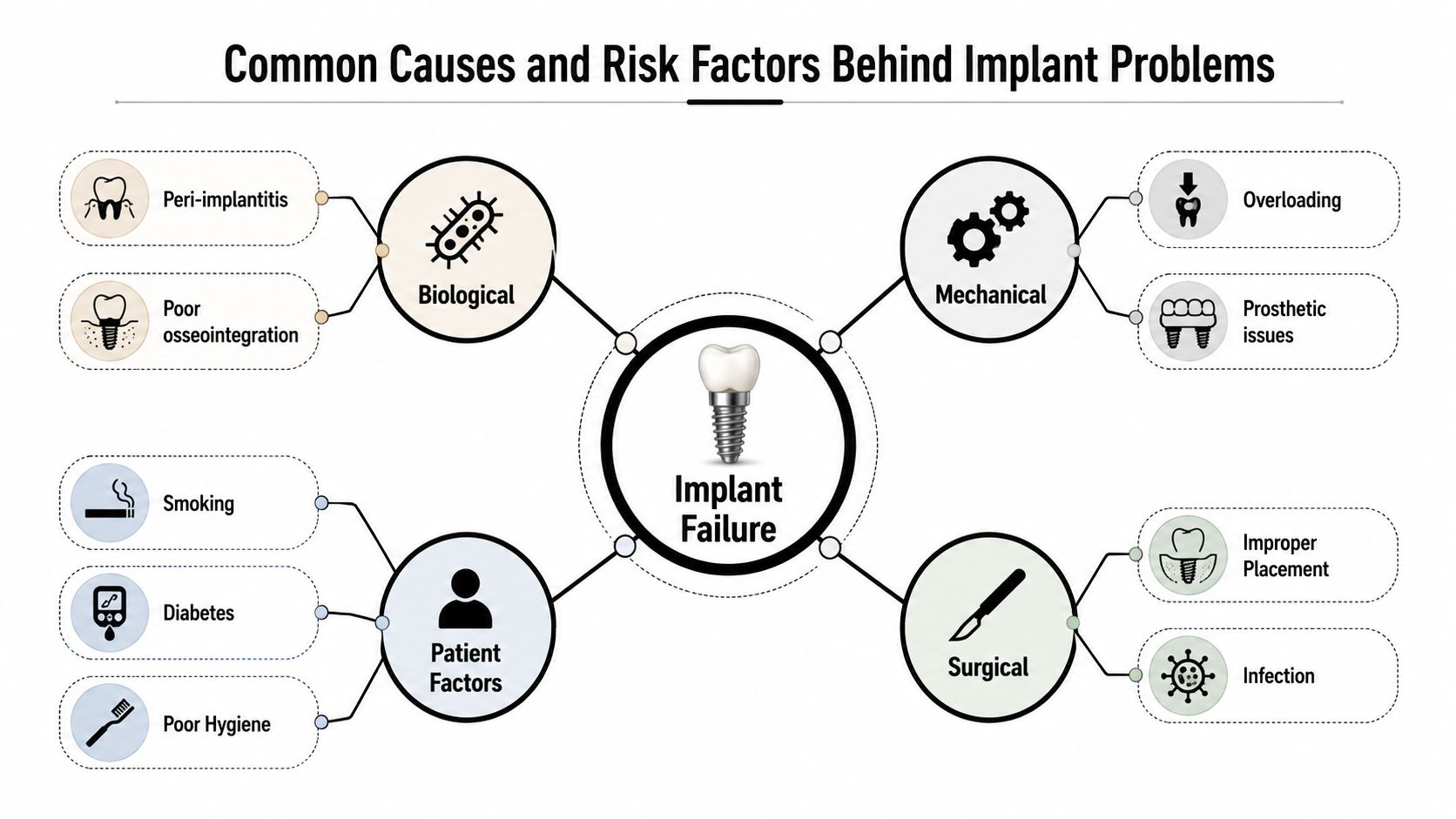
Factors your dentist will review
- Oral health: Inadequate plaque control or untreated periodontal disease can keep the tissues inflamed.
- Implant position: Malposition can affect cleaning access, bite forces, tissue support, and appearance.
- Healing conditions: Insufficient bone, limited blood supply, or inadequate healing before loading can interfere with integration.
- Medical history: Poorly controlled diabetes, autoimmune conditions, immunosuppressive treatment, and a history of radiation therapy may affect tissue health and healing.
- Medications and habits: Some osteoporosis medications may influence bone remodeling, while smoking can impair blood flow and immune response.
- Parafunction: Clenching and grinding can place forces on an implant that natural teeth might tolerate differently.
A 2025 review highlighted that implant malposition can play a significant role in peri-implantitis onset and progression. That matters because not every implant problem results from hygiene alone. A thorough evaluation should consider anatomy, surgical positioning, restoration design, bite function, health conditions, and daily care together.
How Your Dentist Diagnoses Implant Complications
A visit for implant concerns should answer a practical question: What exactly is happening, and can the problem be treated without removing the implant? The examination starts with the gum tissue. The dentist looks for redness, swelling, recession, bleeding, drainage, and changes in tissue contour.
Probing measures the pocket depth around the implant and checks for bleeding or suppuration. Gentle pressure and percussion can identify mobility or an unusual response, but a lack of movement doesn't rule out early disease. Diagnosis depends on comparing current findings with baseline records whenever those records are available.
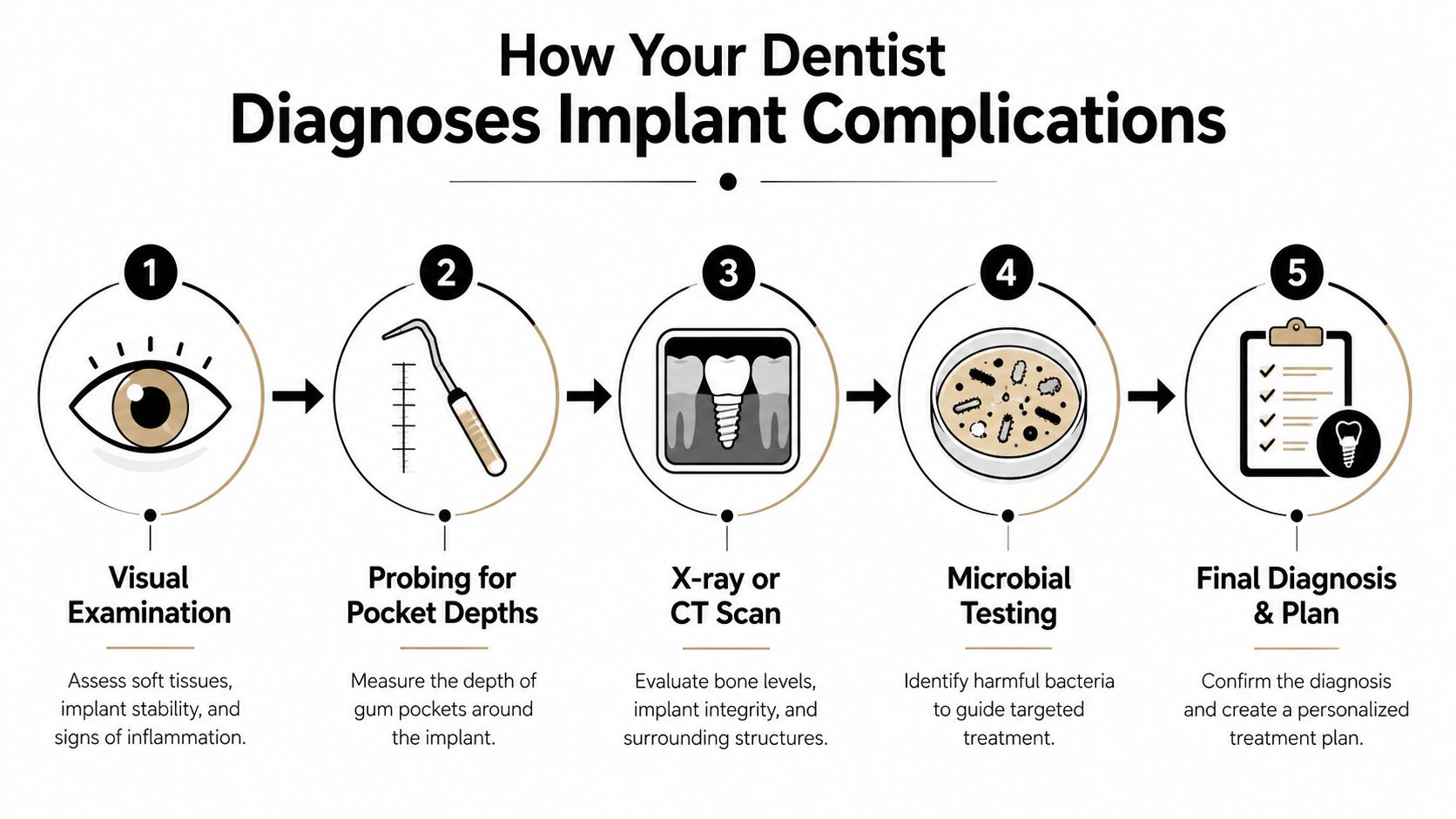
What the appointment may include
- Clinical examination: Your dentist checks the implant, crown, abutment, gumline, and surrounding teeth.
- Probing and mobility testing: Measurements identify pocket changes and tissue bleeding.
- Dental X-rays: Comparable images show whether bone levels are stable or declining.
- Three-dimensional imaging: A cone beam CT scan may help evaluate bone anatomy or a suspected nerve-related concern.
- Bite and component evaluation: Articulating paper can reveal heavy contacts, while the dentist checks for a loose screw, fractured part, or damaged restoration.
Microbial testing may help identify bacteria associated with infection, although it isn't necessary for every patient. The dentist will also review your medical history, medications, smoking status, hygiene routine, and symptoms during chewing.
Patients researching dental implant success rates and long-term care should remember that a success discussion is meaningful only when it includes maintenance, risk assessment, and follow-up. The goal of an evaluation is not to label every inflamed implant as failed. It's to separate reversible inflammation, treatable infection, mechanical complications, and true loss of integration.
Treatment Options and Prevention Strategies
Treatment follows the cause and the stage of the problem. Early gum inflammation may improve with professional cleaning around the implant, antimicrobial care, and a more precise home-care routine. Deeper infection or established bone loss can require surgical cleaning, regenerative procedures, or other periodontal treatment. Subtle bleeding or a gradual change in gum contour can appear before pain or mobility, so these findings deserve attention even when the implant feels normal.
Mechanical complications require a different approach. Your dentist may adjust the bite, tighten or replace a screw, repair a fractured component, or redesign the restoration so chewing forces are distributed more evenly. Implant removal is generally reserved for mobility, severe bone loss, structural compromise, or infection that cannot be controlled. Preserving a stable implant is preferable when the surrounding tissue and components can be treated predictably.
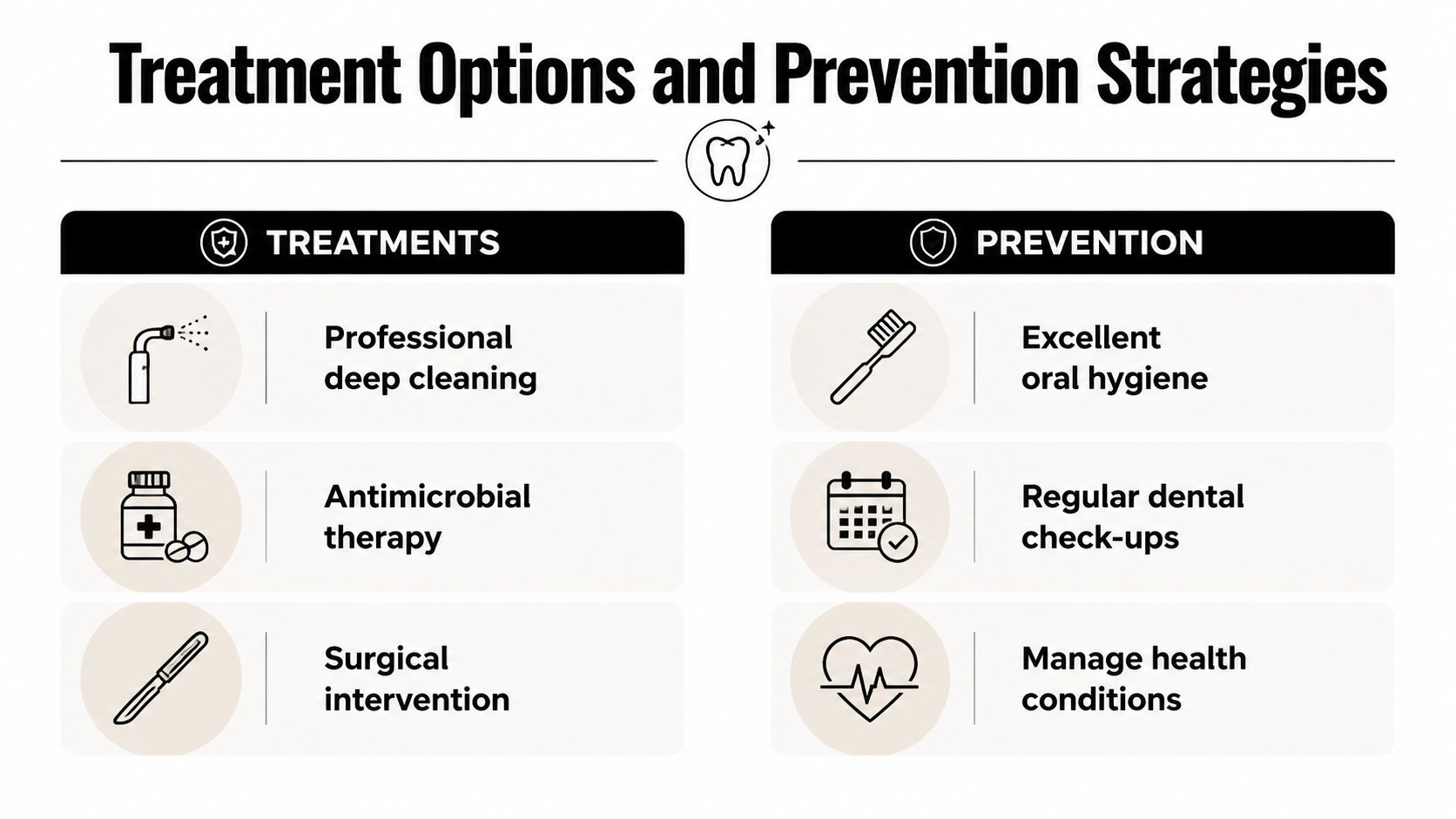
Care that protects the result
- Clean the implant deliberately: Use the toothbrush, interdental brush, or water flosser recommended for your restoration. Ordinary floss may not reach every surface.
- Schedule periodontal maintenance: Regular cleanings and examinations can identify bleeding, pocket changes, and plaque that are difficult to see at home.
- Control bite stress: A night guard may protect the restoration when grinding or clenching places excess force on the implant.
- Address health conditions: Diabetes management, smoking cessation, and discussion of bone-health medications support safer treatment planning.
- Keep comparable records: Follow-up dental X-rays help your dentist identify meaningful bone-level changes instead of relying on one image.
Long-term disease can develop even after an implant has become comfortable. That is why maintenance should continue after healing, with gum findings and X-ray trends compared over time. Patients can also review how long dental implants last when planning ongoing care and replacement expectations.
William M. Schneider, DDS provides general, cosmetic, and restorative dental care in Walnut Creek, including dental implants, crowns, bridges, gum disease treatment, cleanings and examinations, and dental X-rays. The practice can also coordinate care for patients seeking a cosmetic dentist near me, tooth extraction, or related restorative treatment when an implant plan needs to change.
Schedule Your Implant Evaluation in the East Bay
If your implant is bleeding, tender, swollen, producing an unusual taste, changing your bite, or feeling loose, schedule an evaluation before the concern becomes harder to manage. Waiting for obvious pain or mobility can allow inflammation and bone loss to progress.
Patients throughout Walnut Creek and Contra Costa County, including Lafayette, Pleasant Hill, and Danville, can request a clinical assessment with dental X-rays and, when appropriate, three-dimensional imaging. A second opinion or emergency consultation can clarify whether you need maintenance, component repair, infection treatment, tooth extraction, or a revised implant plan.
Call the office or book online when you first notice a change. A prompt examination gives you clearer choices and helps protect the healthy, lasting smile you've invested in.
William M. Schneider, DDS offers careful implant evaluations, restorative treatment, dental X-rays, and personalized maintenance for patients concerned about dental implant failure signs. Visit William M. Schneider, DDS to request an appointment in Walnut Creek and discuss your next step with a welcoming dental team.